Bolts

Tradition / Region: Polish Mythology
Alternate Names: Errors
Category: Forest dweller, Demon


The Myth

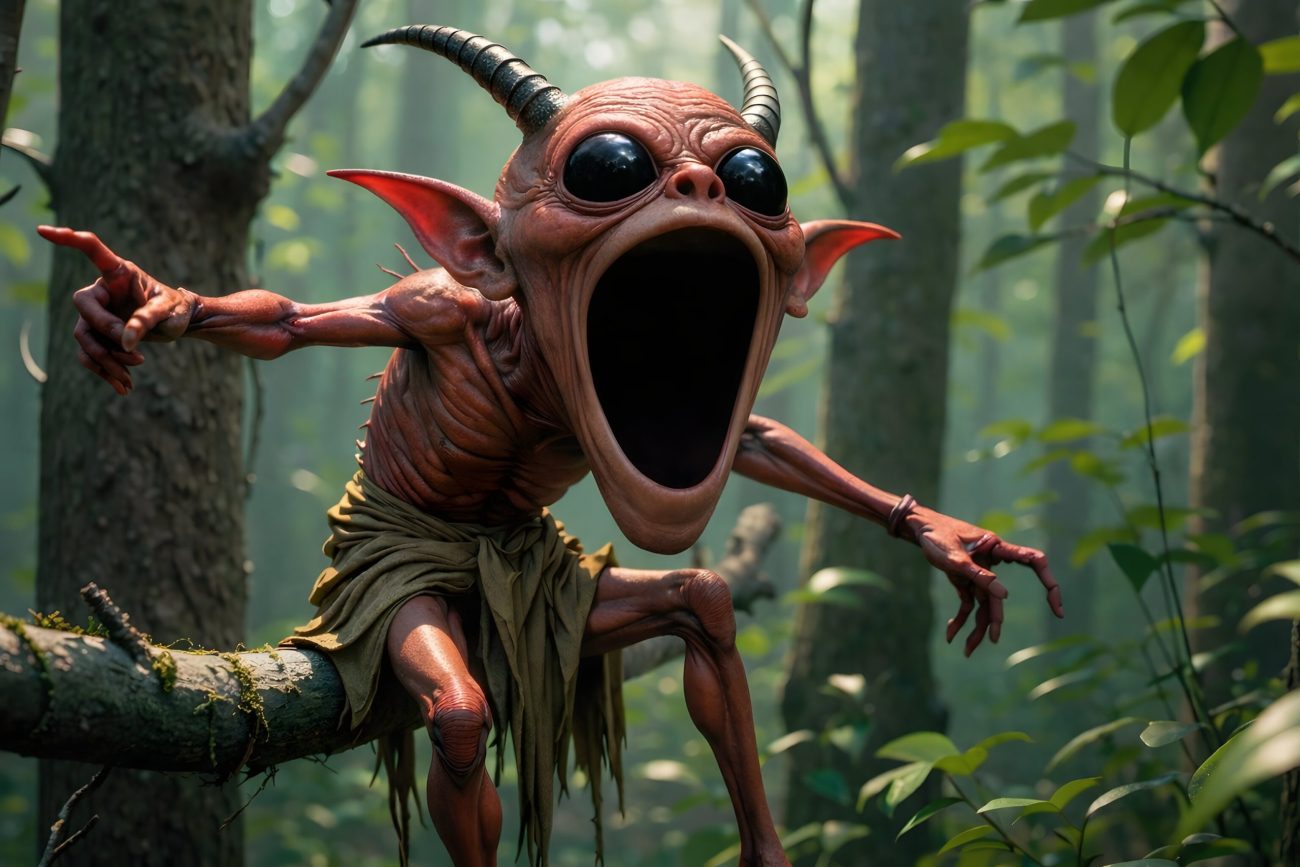
Bolts are malicious forest or field demons known in the folk tales of Eastern Lesser Poland. They are believed to lure people away from proper paths, drawing travelers into wilderness, fields, or unfamiliar terrain where they lose their sense of direction.

These beings are closely associated with confusion and delusion, and are sometimes described as manifestations of madness or devilish influence. In local belief, bolts often appeared to people returning at night—especially those walking home from inns or taverns—leading them astray and preventing them from finding their way.

In the region of the Rzeszów Foothills, bolts were closely related to another figure known as the error, a demon said to sit at crossroads, sometimes beneath stones. Like the bolt, this being led nighttime travelers through open fields, causing spatial disorientation and helpless wandering. Because of these beliefs, people erected roadside shrines at such places and held special processions there, hoping to protect themselves from being misled.

Bolts were thought to nest near roads and highways, choosing places where travelers were most vulnerable. By means unknown, they caused sudden loss of orientation, making familiar routes feel unfamiliar. They seemed to take particular pleasure in confusing those who had spent the evening drinking, and many tales describe people arriving home at dawn ragged, bruised, and without their belongings, claiming that a bolt had led them astray.

In popular explanation, such misfortune was attributed not to human error, but to the direct action of these demons. To say that “a bolt went wild” became a way of explaining unexplained wandering, exhaustion, and loss.

Though later generations joked that the demon itself may have vanished, folklore preserves the belief that the experience of confusion in the night—of losing one’s way without knowing how—has never entirely disappeared.


Sources

Bestiary.us contributors. (n.d.). Bolts. In Bestiary.us, from https://www.bestiary.us/belty/pl

Shatan

Tradition / Region: Belarusian Mythology
Alternate Names: Shatany
Category: Spirit


The Myth

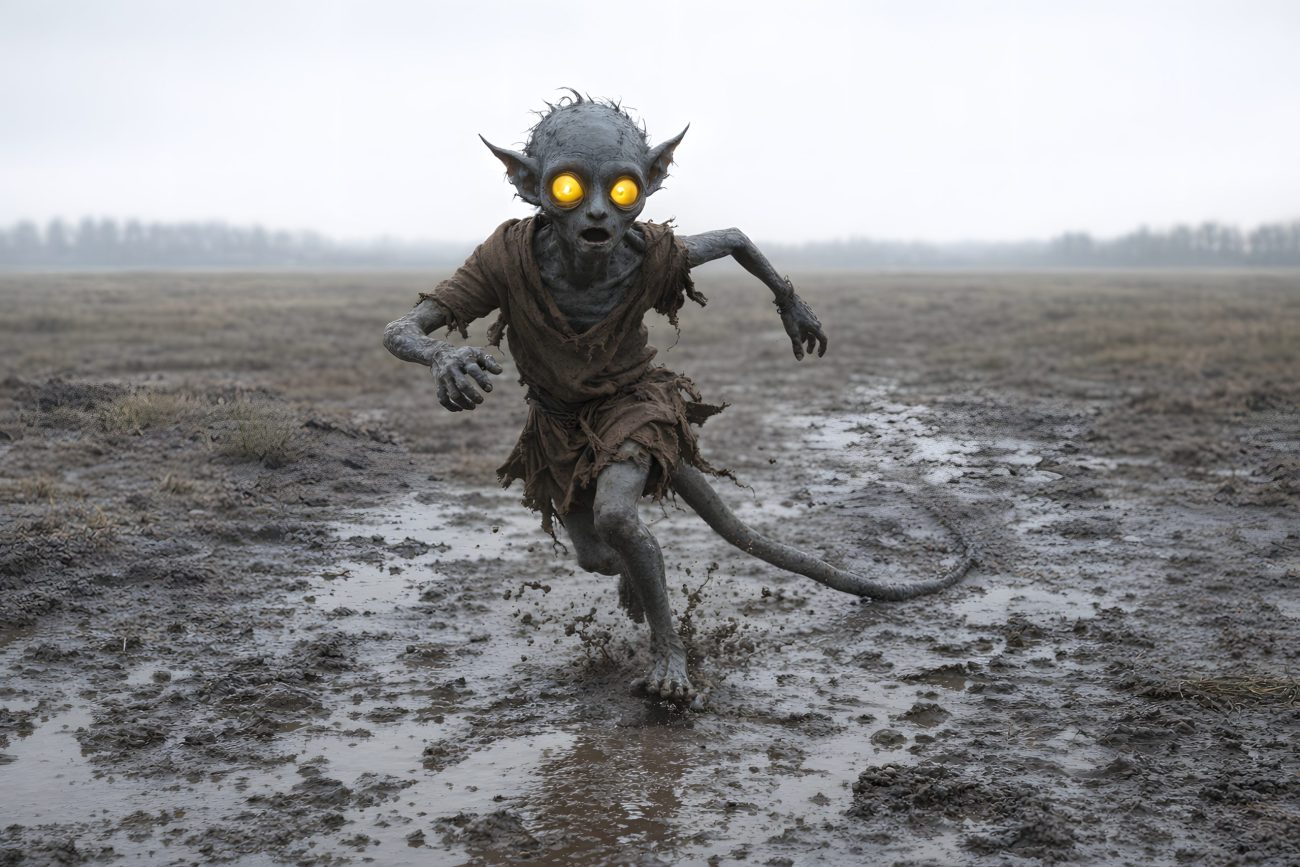
Shatans are strange, odd-looking beings known in Belarusian folklore. They are not considered evil or dangerous, but are instead symbols of idleness and laziness, representing a life without purpose or direction.

Shatans live in a mindless and aimless way. From morning until night, they wander about without any clear goal, never engaging in useful work. Their constant roaming serves no purpose, and those who encounter them may feel drawn into the same pointless drifting, becoming distracted or restless themselves.

They are unable to communicate properly, even among their own kind. When shatans meet one another, they do not form friendships or cooperation. In moments of danger or difficulty, they do not help each other, nor do they attempt to offer rescue or support. Each shatan exists alone, isolated even when surrounded by others.

In folklore, more aggressive supernatural beings—such as witches or other angry spirits—are said to mock, torment, or harass shatans. Being timid and cowardly, shatans usually flee or hide rather than defend themselves. In some tales, they are even killed by hostile spirits, unable or unwilling to protect themselves.

When shatans grow tired of their endless wandering, they sometimes sit down to spin bast shoes. These shoes, however, wear out very quickly, as the shatans soon return to their ceaseless roaming. The repeated making and wearing out of shoes reflects the futility of their existence—work done without meaning, undone almost as soon as it is completed.

Through the figure of the shatan, folklore presents a quiet warning: a life spent without effort, purpose, or responsibility leads only to exhaustion, vulnerability, and emptiness.


Sources

Wikipedia contributors. (n.d.). Shatans. In Wikipedia, The Free Encyclopedia, from https://en.wikipedia.org/wiki/Shatans


Kebō

Tradition / Region: Japanese Mythology
Alternative name: –
Category: Forest dweller


The Myth

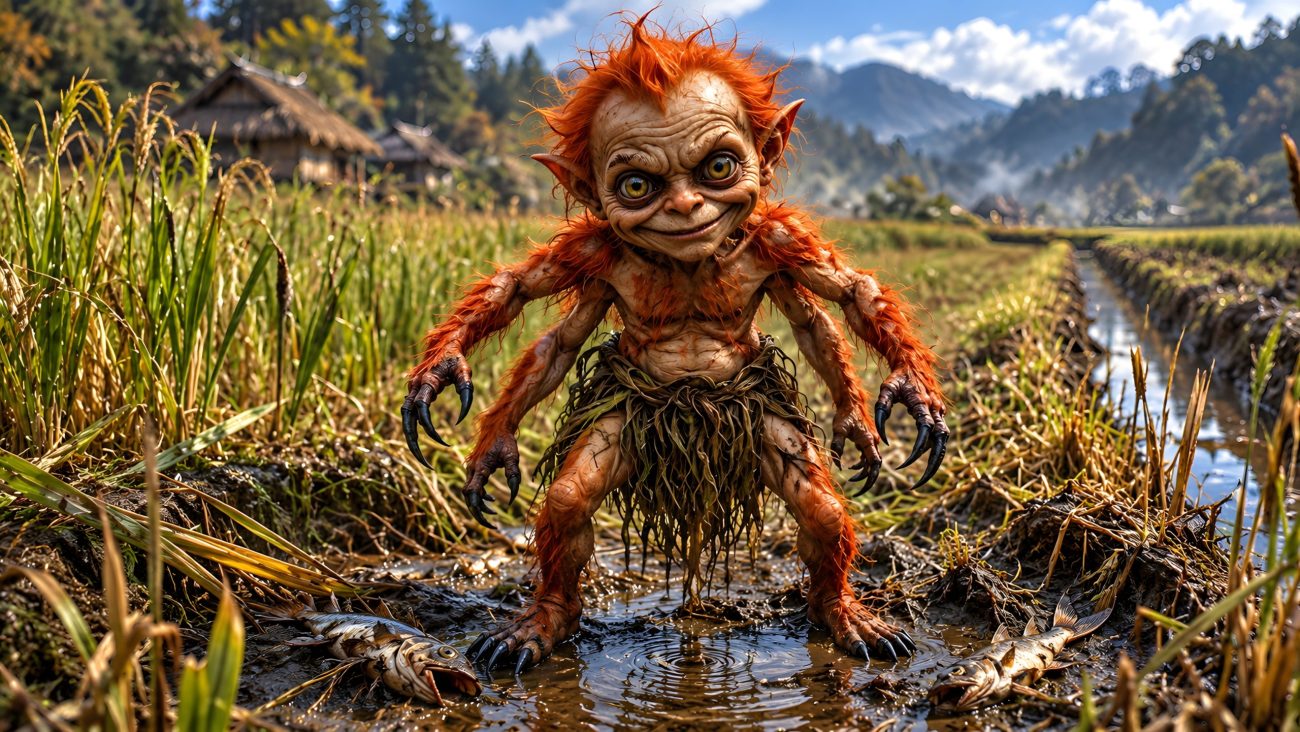
Kebō is a strange yōkai said to have appeared in the fields of Hama in Satsuma Province. It is described as being about the size of a four- or five-year-old child, small but unsettling in form.

Its body is covered in red hair, giving it a wild, unkempt appearance. Kebō has a human-like head and torso, with two arms and four legs, each ending in black, sharp, claw-like tips. Around its waist, thick hair hangs down like a coarse skirt.

Although it resembles a small humanoid, Kebō is also compared to an aged ebi-gani, a creature likened to a shrimp or crab that has lived far beyond its time. This gives it an uncanny, half-human, half-creature quality.

Kebō is said to feed on small fish. It does not cry out or speak, remaining silent at all times. When encountered by people, it does not attack. Instead, it is described as smiling quietly, watching without expression or sound.

Because of its silence, its strange smile, and its unnatural form, Kebō is remembered not as a violent yōkai, but as an eerie presence—one that appears briefly, observes, and disappears without explanation.


Sources

TYZ-Yokai Blog contributors. (n.d.). 化け物屋敷のうわさ (Bakemono-yashiki no Uwasa). In TYZ-Yokai Blog, from https://tyz-yokai.blog.jp/archives/1077511760.html


Hiroshima Tenmachō no Kaibutsu

Tradition / Region: Japanse Mythology
Alternate Names: Hiroshima Tenmacho Kaibutsu
Category: Horse


The Myth

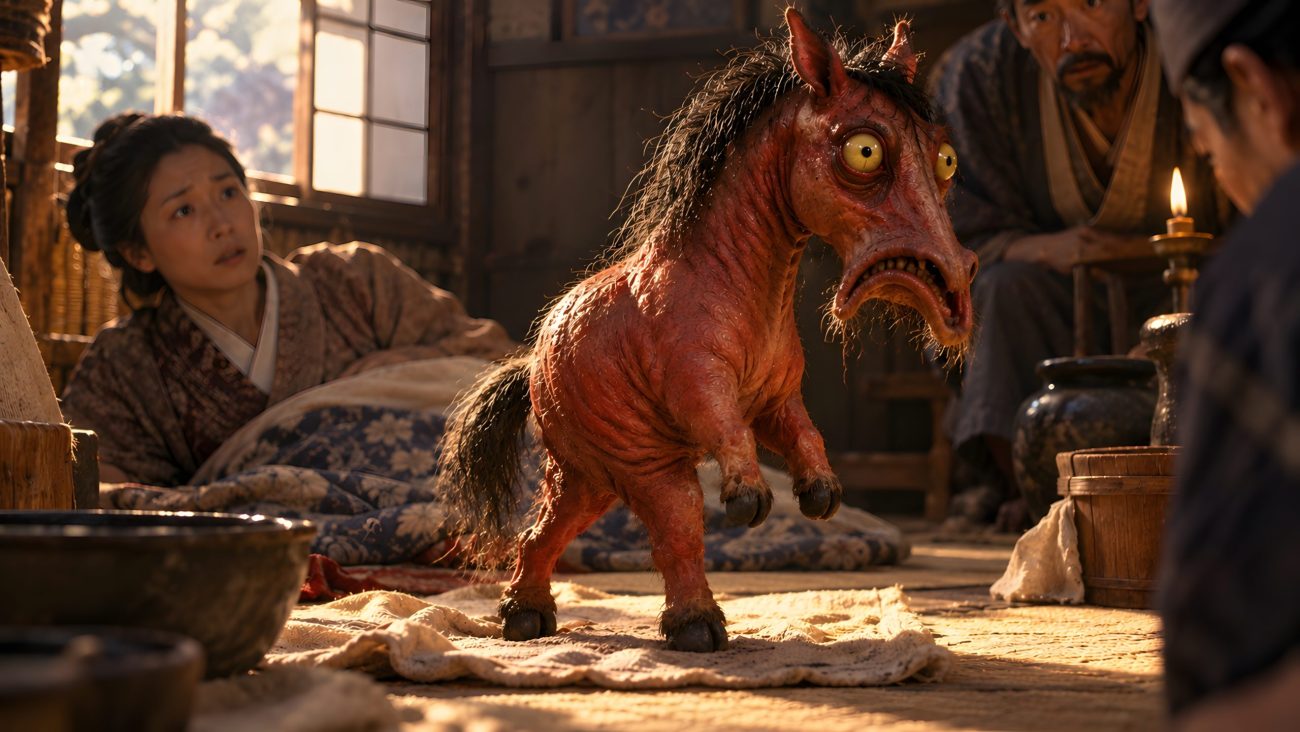
In Tenmacho, Hiroshima, it is said that a strange monster was born to the wife of a horseman named Yukimatsu. The birth took place in February, in an area associated with the land of the dead.

The creature was described as about eighteen inches tall, with very short limbs measuring only three to four inches. It possessed three legs instead of two. Its body was entirely red and horse-like in form. One of its most disturbing features was an enormous scrotum, said to be as wide around as the creature was tall.

The being did not resemble any known animal or human. It was regarded as an unnatural birth and was spoken of simply as a monster, remembered for its unusual shape and disturbing appearance rather than for any actions it took.

The story survives as an account of a bizarre and unsettling creature that briefly entered the human world and became part of local memory.


Sources

TYZ-Yokai Blog contributors. (n.d.). 広島伝馬町の怪物 (Hiroshima Tenmachō no Kaibutsu). In TYZ-Yokai Blog, from https://tyz-yokai.blog.jp/archives/1062856281.html


Petrykivka Mara

Tradition / Region: Ukrainian Mythology
Alternate Names: Petrikov Mara
Category: Forest dweller


The Myth

The Petrykivka Mara is a strange and grotesque figure from the folklore of Eastern Polesia. Unlike many beings called mara in Slavic traditions—where the name usually refers to a dangerous or demonic entity—this mara is considered harmless, though deeply unsettling in appearance and presence.

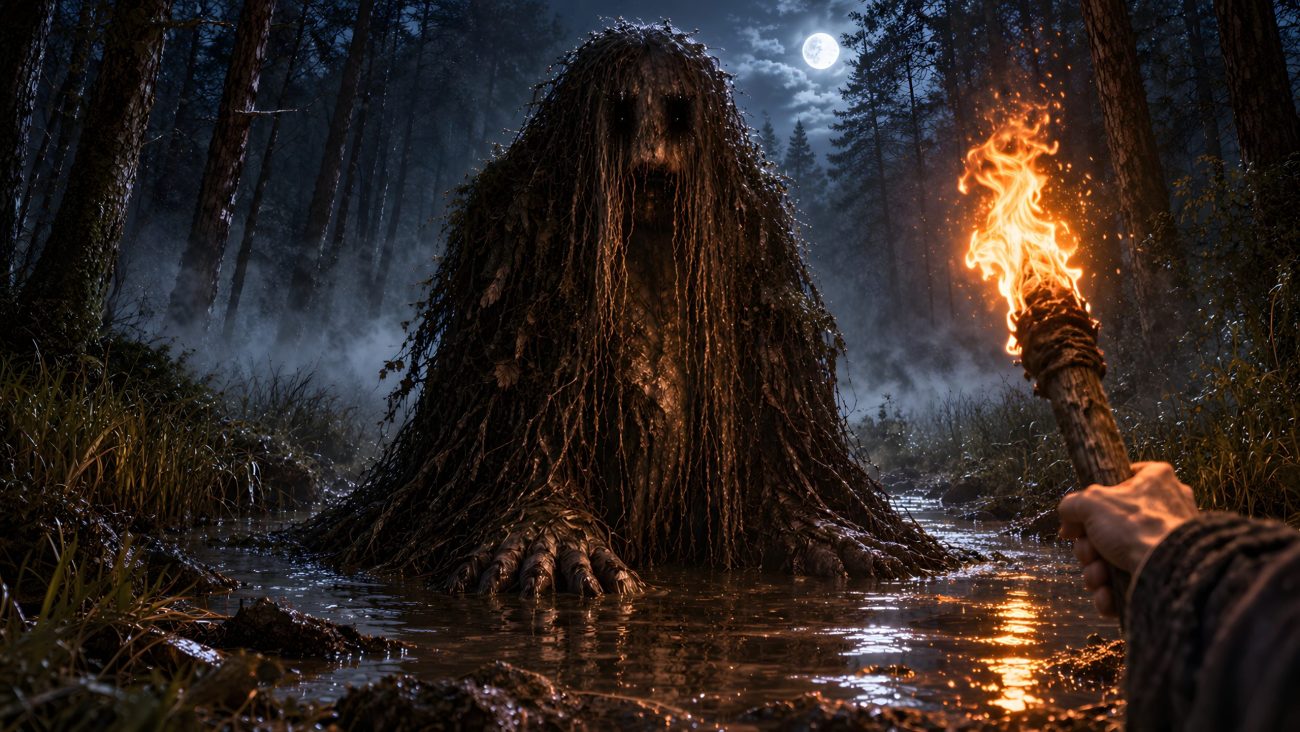
She is described as resembling a thick, upright log or resinous stump, standing vertically on very short legs shaped like badger paws. Her body is massive and heavy-looking, while her legs are disproportionately small. She is always described as black in color. Though frightening to look at, she does not attack or harm people. At most, she startles children or causes confusion and fear, sometimes even becoming a hazard simply by standing in the way.

When the mara moves, she emits metallic sounds, compared to distant blows on a cast-iron cauldron. These noises announce her presence before she is fully seen. Despite her intimidating size, she is said to be terrified of children, reacting to them with fear rather than aggression.

In later times, the mara came to be represented as a straw scare figure, dressed in rags. In this form, she appears suddenly, stands motionless, or slowly follows people who are walking. She never commits any harmful act, but her presence is described as oppressive, filling those who encounter her with a heavy sadness, as if their heart were being clawed at and their soul weighed down.

One well-known story comes from the town of Petrikov, where during the summer months, at dawn each day, a mara appeared at the entrance to the town. She took the form of a log twice the height of a man, standing on short badger-like legs. She would remain motionless, moaning with a human voice, and vanish again at dawn. How the people eventually rid themselves of her is unknown.

The memory of this being lived on not only in stories but also in speech. A saying arose that later became a proverb. When someone is annoying or persistently clinging, people say:
“I’m tired of you like the Petrikov mara. Why are you clinging to me like the Petrikov mara? Get off me, Petrikov mara.”

In this way, the Petrykivka Mara remains in folklore as a figure of silent oppression and strange persistence, frightening not through violence, but through her unsettling presence alone.


Sources

Bestiary.us contributors. (n.d.). Mara Petrikovskaya. In Bestiary.us, from https://www.bestiary.us/mara-petrikovskaya


Urhins

Tradition / Region: English Mythology
Alternate Names: Hurhins, Urchins
Category: Forest dweller


The Myth

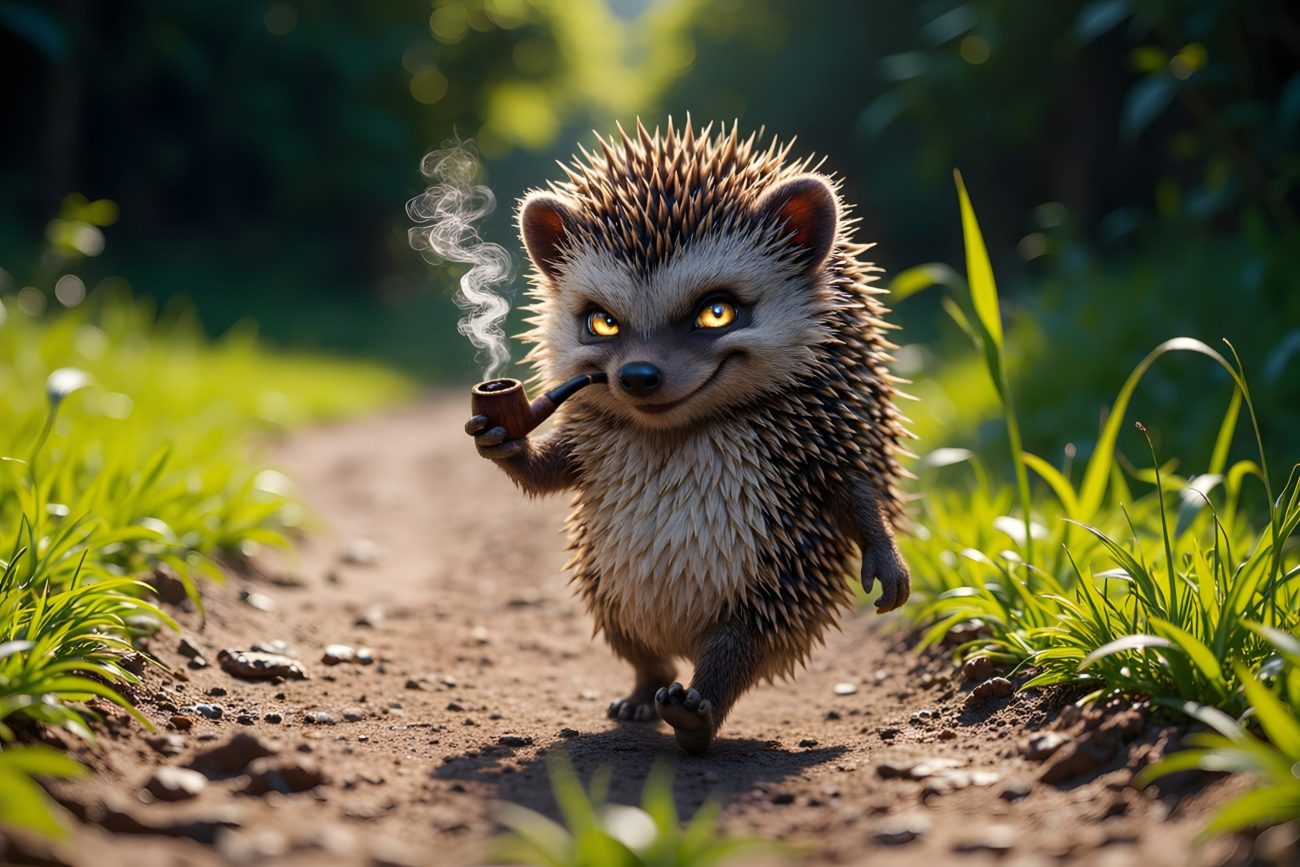
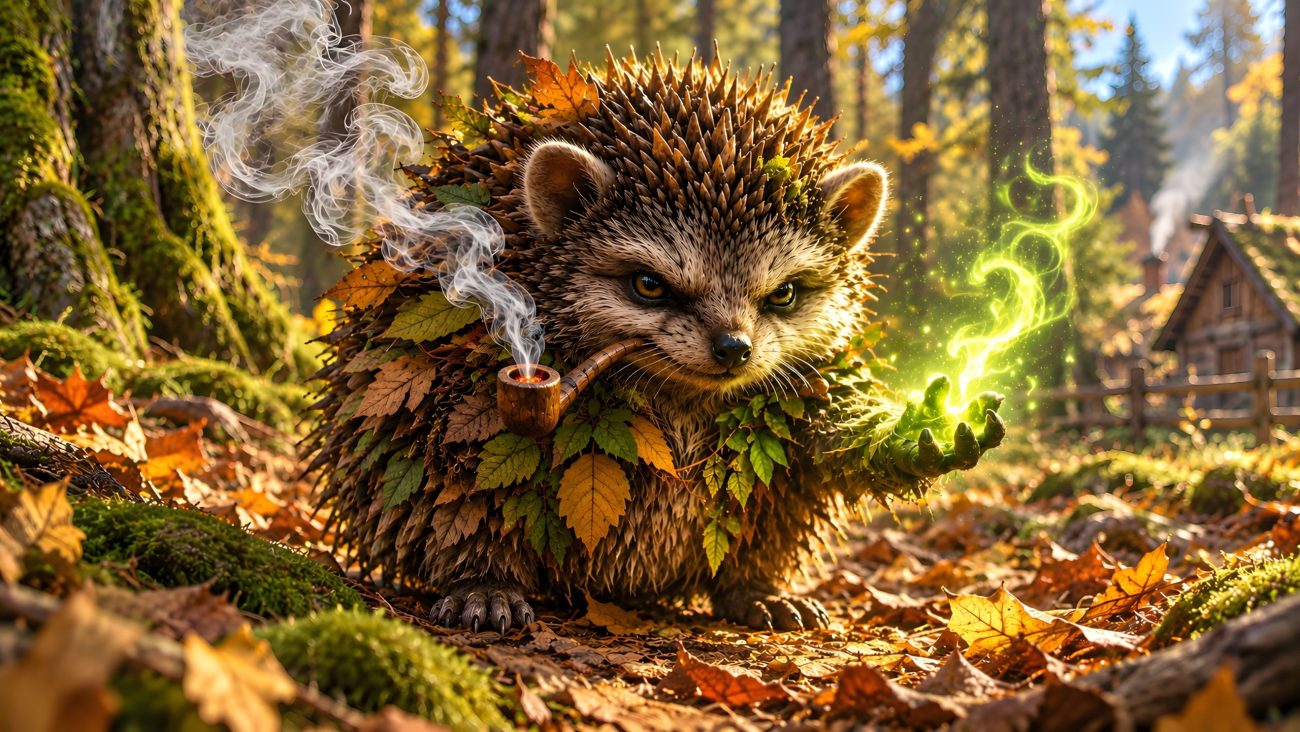
Urhins are small bogies or pixies in British folklore that take the form of hedgehogs. The name urhin or hurhin comes from a dialect word meaning “hedgehog,” and reflects both their appearance and their low, ground-dwelling nature.

These beings are imagined as small, prickly spirits, moving quietly through fields, gardens, and the edges of settlements. Though tiny, they are mischievous and capable of causing discomfort or fear, especially when encountered unexpectedly. Their hedgehog form allows them to remain unnoticed until they choose to reveal themselves.

Urhins are associated with trickery and torment, particularly toward humans who stray into places where such spirits dwell. They are not grand or powerful beings, but persistent and irritating, more likely to harass than to harm outright. Their presence is felt through unease, sudden disturbances, or the sense of being watched from low to the ground.

In English folklore and storytelling, urhins are grouped alongside other small supernatural beings such as fairies and sprites. They are part of the hidden population of the land, creatures that exist just beyond ordinary perception and whose behavior reflects the unpredictable nature of the unseen world.

Over time, the word “urchin” came to be used for mischievous children, echoing the playful yet troublesome qualities once attributed to these hedgehog-like spirits. Though their supernatural meaning has faded in everyday language, the image of the urhin remains rooted in folklore as a small, prickly trickster lurking close to the earth.


Sources

Bestiary.us contributors. (n.d.). Urhiny. In Bestiary.us, from https://www.bestiary.us/Urhiny


Lugovichok

Tradition / Region: Russian Mythology
Alternate Names: Meadow-goose (regional beliefs)
Category: Forest Dweller, Gnome


The Myth

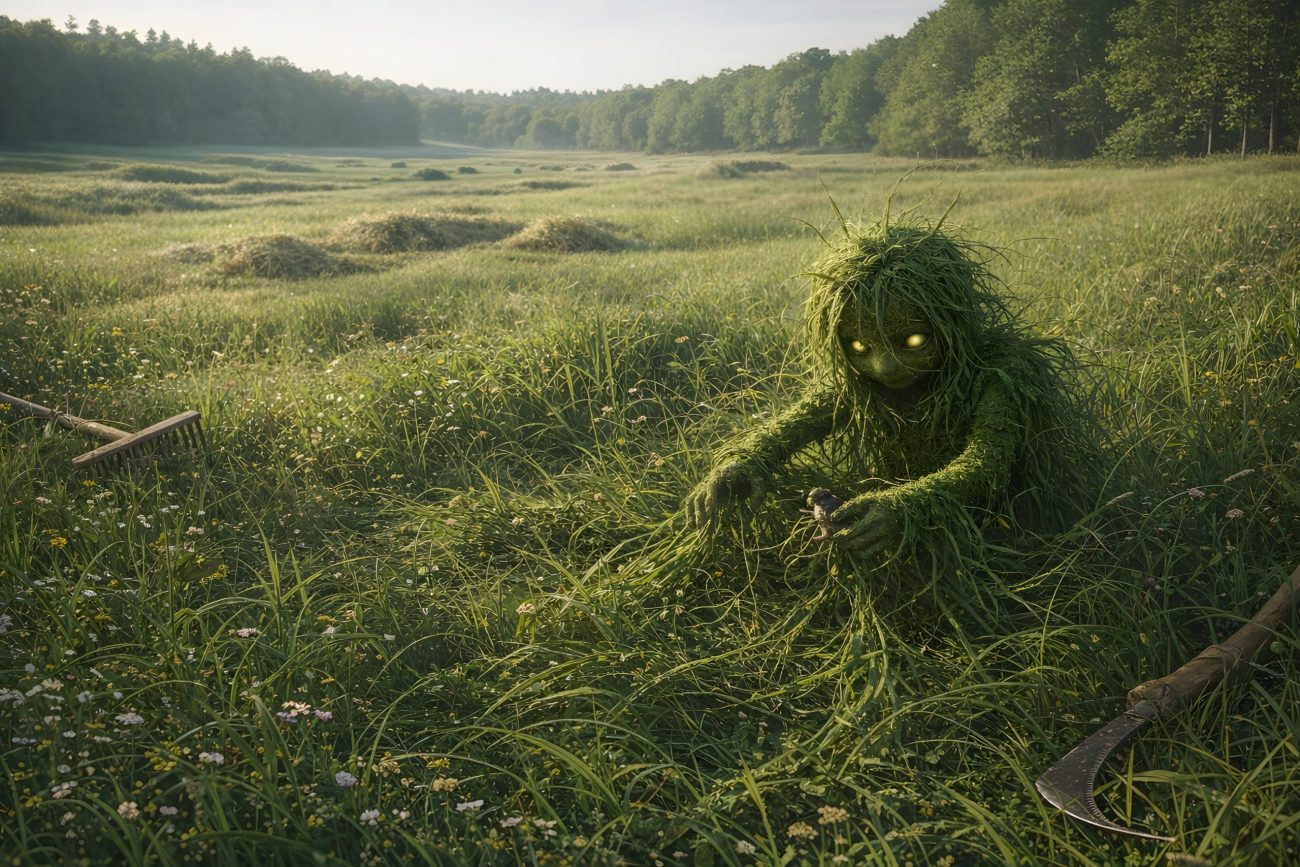
In Slavic mythology, Lugovichok is known as the spirit of the meadows. He is described as a small green man, clothed in grass and vegetation, and is considered one of the children of the field worker, a spirit connected with cultivated land and agricultural labor.

Lugovichok is believed to move swiftly through the meadows, catching birds and bringing them as food to his parent. During haymaking, he may secretly help people, ensuring that the work goes smoothly when it is done properly and at the right time.

However, Lugovichok is easily angered by neglect or improper behavior. When people delay mowing or fail to tend the meadow correctly, he may cause the grass to grow wildly and become tangled, braiding it so tightly that it cannot be cut or torn. In some cases, he is said to dry the grass at the root, ruining the hay altogether. If mowers arrive at the wrong time, Lugovichok can dull their scythes instantly or even break them completely, bringing work to a halt.

The name “Lugovichok” itself is rare and is recorded mainly in northwestern Russia. In other regions, related beliefs appear under different names. Peasants in the Tula province, for example, believed in shaggy meadow beings—alongside the field-goose and well-goose—who lived underground in burrows and emerged only at midday and just before sunset. At these times, such beings were considered dangerous and were thought capable of bringing illness or fever to humans.

Through these beliefs, Lugovichok represents both the helpful and harmful forces of the meadow—rewarding proper care and timing, but punishing neglect, impatience, or disrespect toward the land.


Sources

Bestiary.us contributors. (n.d.). Lugovichok. In Bestiary.us, from https://www.bestiary.us/Lugovichok


Lesavki

Tradition / Region: Belarusian Mythology
Alternate Names: Lesavkas
Category: Forest dweller


The Myth

Lesavki are described as small forest spirits in East Slavic folklore. According to some accounts, they are said to be the children of the Leshy and the Kikimora; in other versions, they are described as the Leshy’s grandfather and grandmother, reflecting differing traditions about their origin and place within the forest world.

In appearance, lesavki are said to be very small, gray, and hedgehog-like, resembling little shaggy balls of hair. They live hidden among last year’s fallen leaves on the forest floor, where they are easily overlooked. Their presence is more often sensed than seen.

Their period of activity lasts from late summer until mid-autumn. During this time, lesavki are constantly in motion: they revel, dance in circles, lift leaves, rustle, and scurry about, filling the forest with quiet movement and soft, restless sounds. After exhausting themselves, they are said to wash and then fall into a long sleep, remaining dormant for an extended period.

Lesavki are known for their mischievous behavior toward humans. They may lead travelers astray, sprinkle dust onto their heads, or wrap them in cobwebs, causing confusion and disorientation in the forest. Those who wander carelessly may suddenly lose their way, unaware that lesavki are nearby, quietly playing their tricks.

Through these stories, lesavki appear as small but active spirits of the forest floor, embodying its hidden life, movement, and playful danger, and reminding humans that the woods are never truly empty or still.


Sources

Bestiary.us contributors. (n.d.). Lesavki. In Bestiary.us, from https://www.bestiary.us/Lesavki


Kushkaftar

Tradition / Region: Dagestan Mythology, Russian Mythology
Alternate Names: Kashkaftar
Category: Forest dweller


The Myth

In the folklore of several peoples of Dagestan, Kushkaftar is an evil forest spirit feared for her terrifying appearance and cruelty. She belongs to the realm of lower mythology and is known among the Tabasarans, Lezgins, Rutuls, Tsakhurs, Laks, and others.

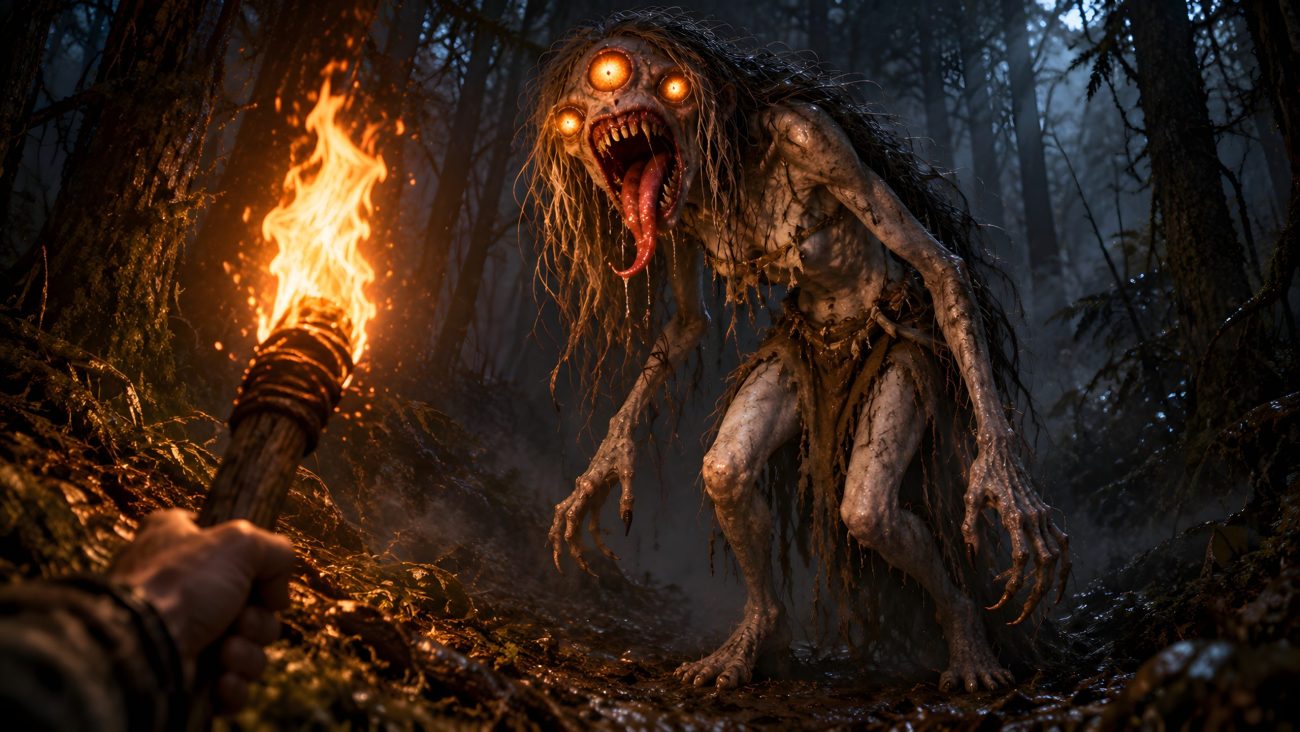
Most commonly, Kushkaftar is described as an ugly old woman. She has sharp fangs protruding from her mouth, fiery eyes, and long, tangled hair that hangs unkempt around her body. Her breasts are described as unusually large, further marking her as unnatural and frightening. According to belief, she lives deep in the forest together with her daughter.

At night, Kushkaftar is said to abduct children, carrying them away into the forest where she devours them. Because of this, she is regarded as a particular danger to families and a figure of terror used to explain disappearances and warn against wandering after dark.

Among the Rutuls, Kushkaftar—often called Kashkaftar—is described in a very different but equally frightening form. In these accounts, she appears as a strange, glowing creature, shining like phosphorus. She walks on two legs and possesses a single enormous eye, flat and plate-like, covering her entire face. From her mouth hangs a bright red tongue, and instead of ears she has burning lanterns, which glow in the darkness.

Despite differences in appearance across regions, Kushkaftar remains consistently portrayed as a malevolent forest being, associated with night, fear, and the consumption of children, embodying the dangers believed to lurk beyond the safety of the village.


Sources

Bestiary.us contributors. (n.d.). Kushkaftar. In Bestiary.us, from https://www.bestiary.us/Kushkaftar


Karango

Tradition / Region: Philippines Mythology
Alternate Names: Carango
Category: Spirit, Forest dweller


The Myth

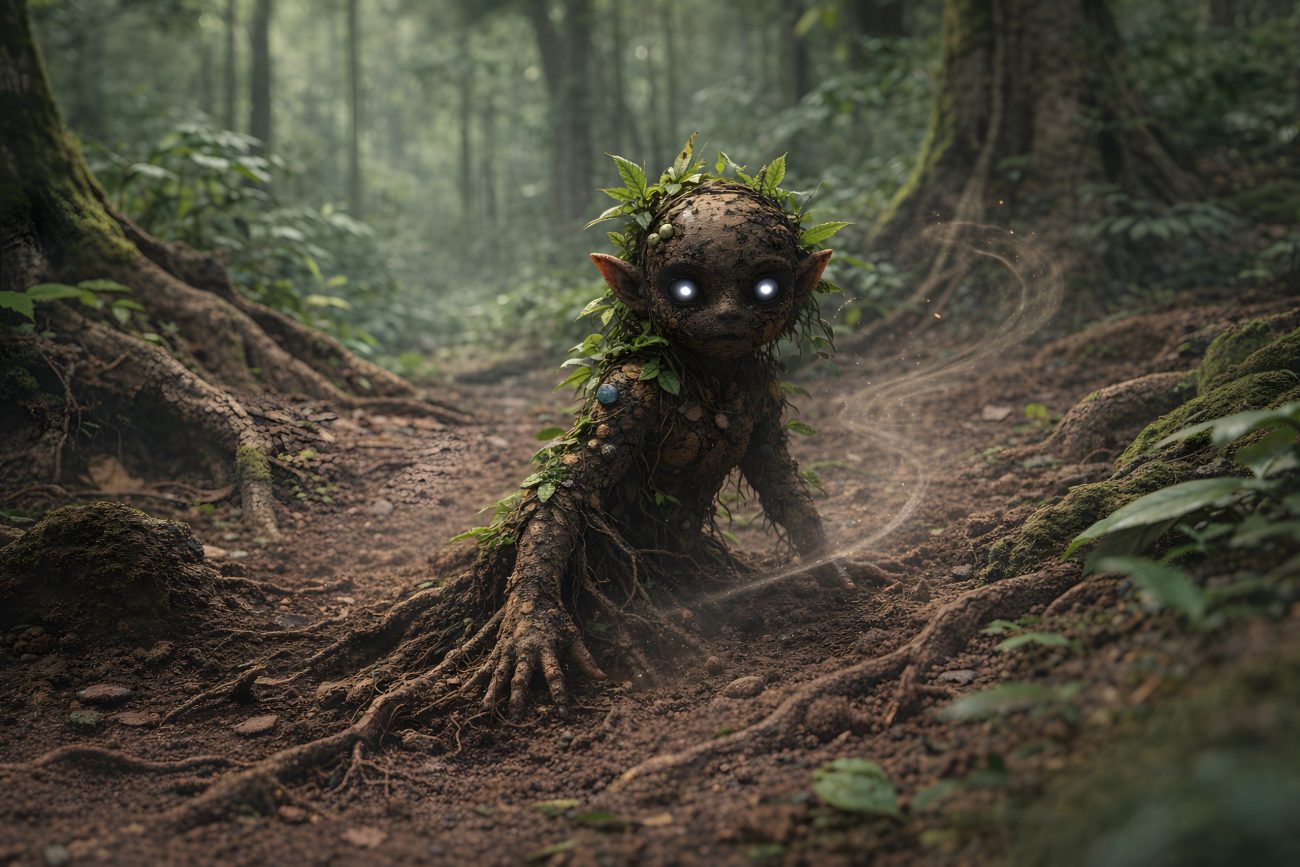
In the folklore of the Ibanag people of northern Luzon, karangos are small nature spirits who dwell throughout the landscape. They inhabit the earth itself, as well as hills, forests, and cultivated fields. These beings are not tied to villages or human structures, but to the land in its natural state.

Karangos are regarded as the true owners of the land. Humans may live, farm, and travel across these places, but the spirits are believed to possess them in a deeper and older sense. Because of this, respect toward the land is essential, and careless or disruptive behavior is considered dangerous.

When summoned by a shaman, karangos are said to answer with a whistling sound, signaling their presence. This sound serves as their form of response rather than speech, marking a boundary between the human and spirit worlds.

Although small, karangos are not harmless. They are known to cause harm to those who disturb their dwellings, whether by damaging the land or failing to observe proper conduct. Their punishment is not described in detail, but their role as guardians of the land makes them figures to be feared as well as respected.

The name Carango appears as a Latinized spelling, but it refers to the same beings known among the Ibanag as karangos—spirits bound to the soil, unseen but ever-present, enforcing the unseen laws of the land they claim as their own.


Gallery


Sources

Bestiary.us contributors. (n.d.). Karango. In Bestiary.us, from https://www.bestiary.us/Karango


Interpretive Lenses

Religious Readings
  • Christian Ascetic Deep Dive
Philosophical Readings
  • Nietzschean Deep Dive
Psychological Readings
  • Jungian Deep Dive
Esoteric Deep Dive
  • Hermetic Deep Dive
Political / Social Readings
  • Marxist Deep Dive
Other
  • How to Invite The Karango