White Cow of Bollendorf

Tradition / Region: Luxembourgish Mythology
Alternative names: —
Category: Cow


The Myth

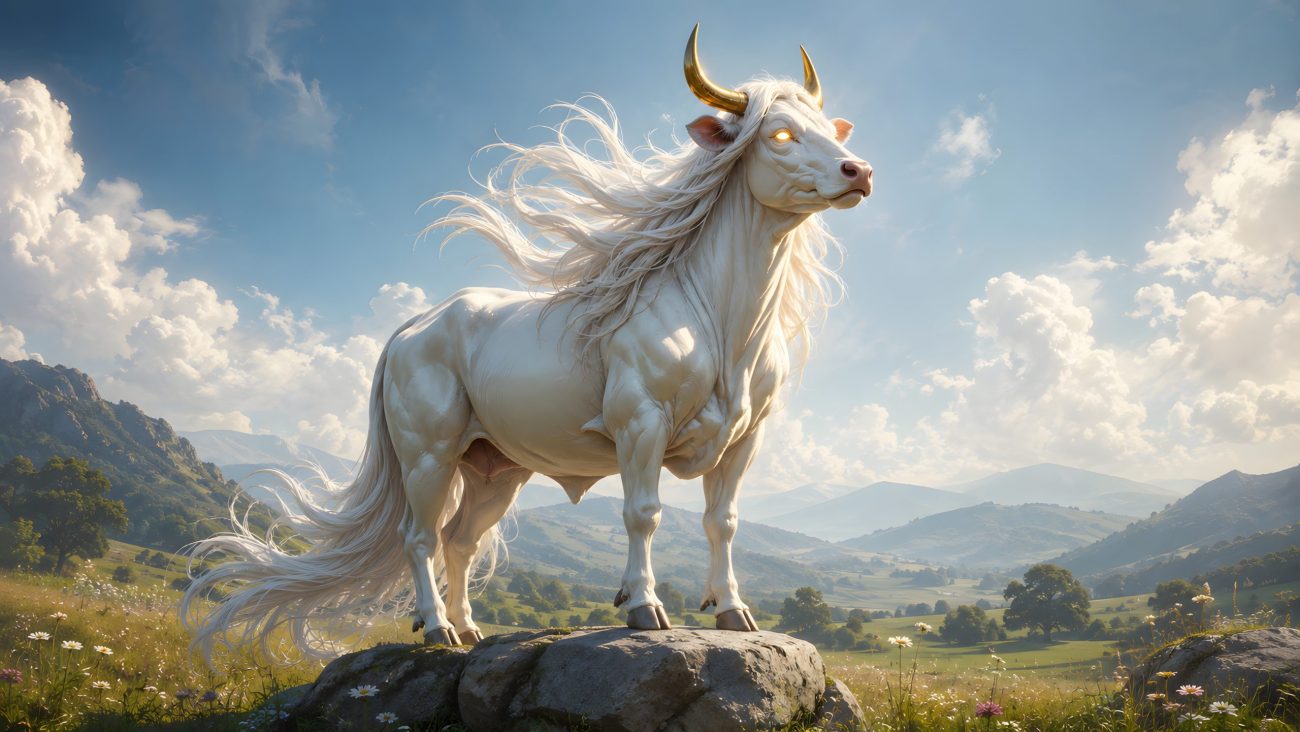
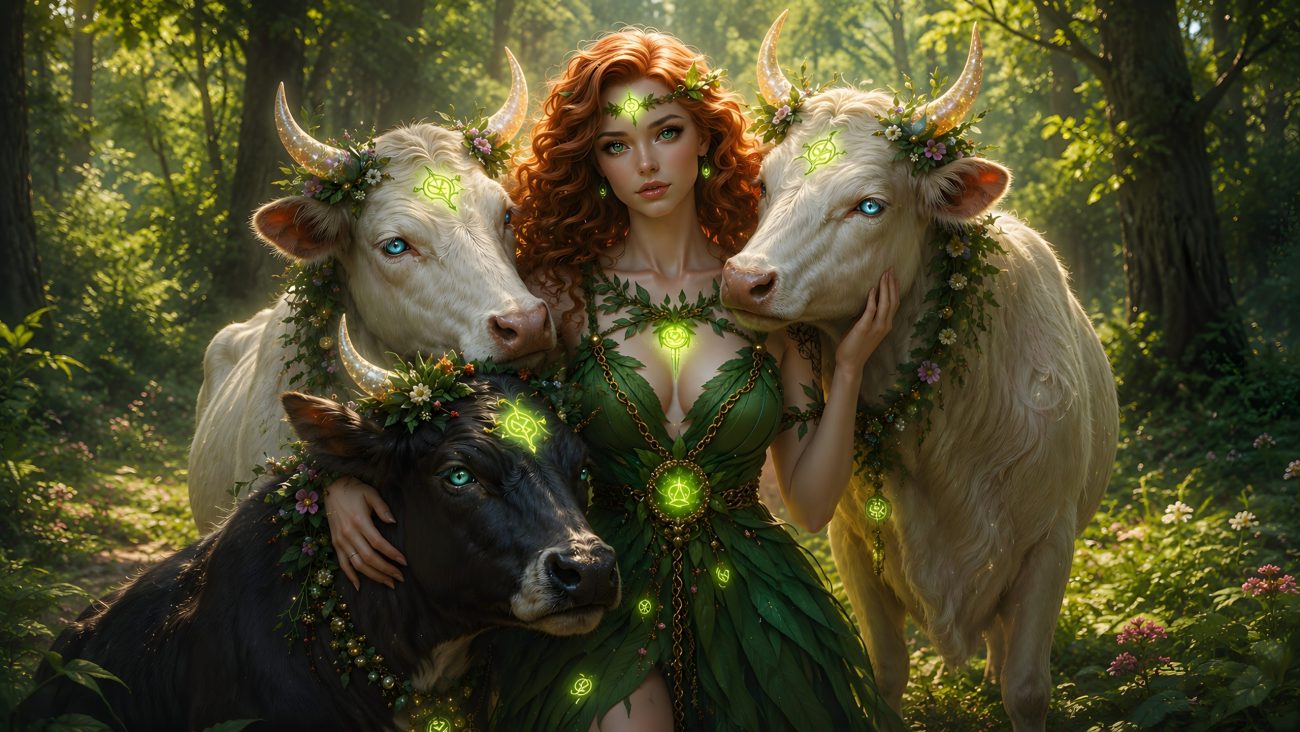
The White Cow of Bollendorf is a supernatural white cow with golden horns that emerges from the forest and joins the village cattle. She appears when the villagers neglect their meadows and allow their cattle to graze for too little time.

According to the legend, the cow would quietly enter the pasture and graze among the village herd. Her presence caused the other cattle to remain in the meadow and feed properly. When the herdsman tried to bring them home in the evening, the white cow refused to move, and none of the other cattle would leave without her.

No shouting or attempts to drive her away could make her yield. The herdsman was forced to remain in the meadow until the mysterious cow decided that it was time to return to the forest.

The white cow continued to appear day after day, always arriving and leaving according to her own will. She never harmed the cattle, but her presence ensured that the herd remained in the meadow long enough to feed properly.

One evening, the herdsman followed her as she returned toward the forest. The cow eventually disappeared into a cleft in the rocks. Inside the grotto he discovered a strange dwarf who guarded the hidden place.

The herdsman demanded payment for the time he had spent watching the cow. The dwarf told him that the cow had not come for his benefit and had never required his care. She had appeared of her own accord and remained only as long as necessary.

Nevertheless, the dwarf opened a chest filled with gold and silver and took out a single worthless coin. This was the payment he gave the herdsman for his service.

After that night, the white cow with golden horns never returned to Bollendorf. The herdsman thereafter took greater care of the meadow, rising earlier and keeping the cattle there longer.


Sources

Gredt, Nikolaus. “Das Wichtlein zu Bollendorf und die Kuh mit goldenen Hörnern.” In Sagenschatz des Luxemburger Landes. Luxembourg, 1883. Reproduced by SAGEN.at. Accessed August 15, 2026. SAGEN.at source


Fuwch Gyfeilior

Tradition / Region: Welsh Mythology
Alternative names: Fuwch Gyfeiliorn, The Stray Cow, Milk-White Cow
Category: Cow


The Myth

The Fuwch Gyfeilior was a beautiful milk-white cow belonging to the Gwragedd Annwn, the fairy women who lived around Llyn Barfog near Aberdyfi. The fairy women were said to appear at dusk dressed in green and accompanied by milk-white hounds and herds of supernatural white cattle.

One day, a poor farmer living near Dyssyrnant discovered that one of the fairy cows had wandered away from the lake and joined his own herd. He managed to catch her and kept her among his cattle.

The cow transformed the farmer’s fortunes. Her milk was extraordinarily abundant, and the butter and cheese made from it were better than anything previously seen in the region. Her calves were equally remarkable, and the farmer soon became wealthy and possessed a great herd of cattle.

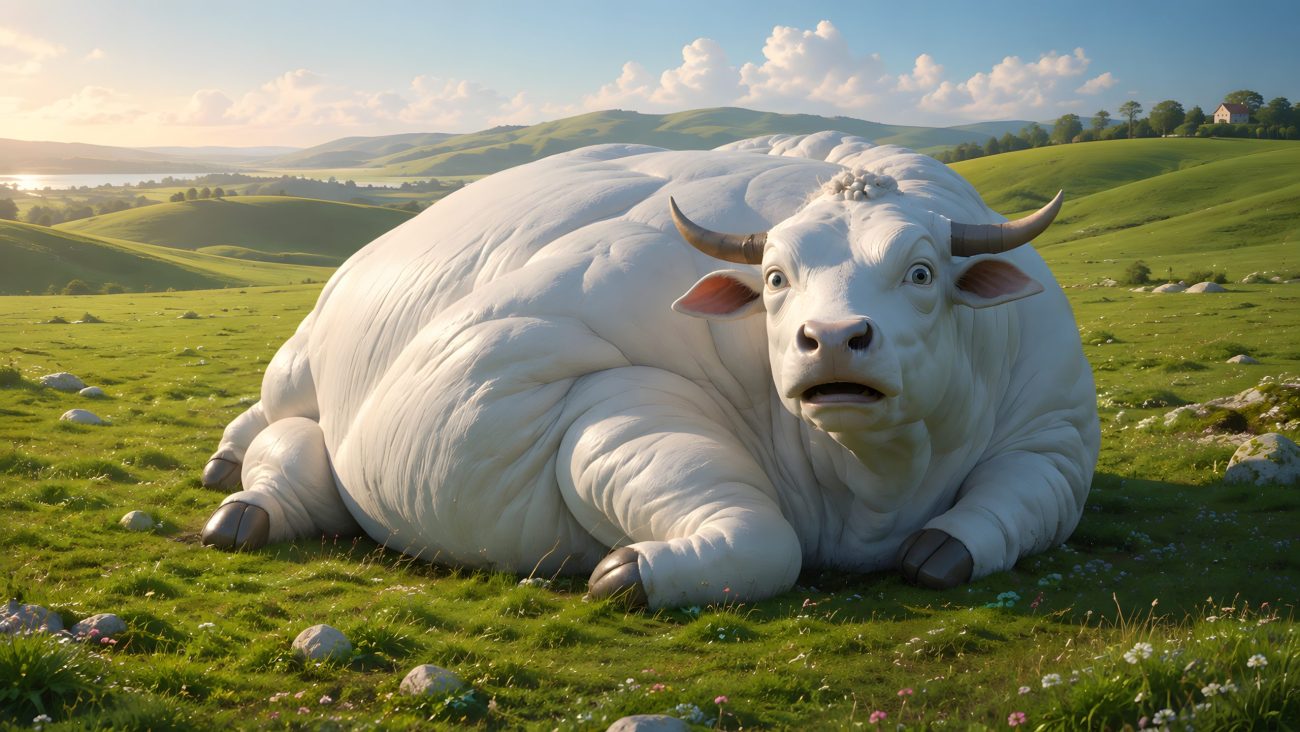
As the Fuwch Gyfeilior grew older, however, the farmer decided that she had become too old to keep. He resolved to fatten her for slaughter. The cow became enormously fat, and when the day of her killing arrived, neighbors gathered to watch the enormous animal being butchered.

The cow was tied down while the butcher prepared to strike. Despite her mournful cries, the farmer ordered him to continue. The butcher raised his club and struck the cow between the eyes.

At that moment, a terrible cry rang across the hills. The blow passed through the cow’s supernatural body and knocked down nine men standing nearby, while the butcher was thrown into a frantic spin.

High above the lake, a green fairy woman appeared upon a rocky crag. She called out to the enchanted cow and summoned her back to the lake. The Fuwch Gyfeilior immediately rose and returned to the fairy women.

Her descendants followed her. All of the cow’s offspring from the third and fourth generations vanished from the farmer’s herd and disappeared over the hills with her.

Only one cow remained. The animal, once milk-white, had mysteriously turned completely black. The farmer, having lost his entire fortune, was overcome with despair and drowned himself in Llyn Barfog.

The black cow remained behind and became the ancestor of the Welsh Black cattle.

Another tradition tells of a miraculous milk-white cow that could provide milk for everyone who asked for it, no matter how many times she was milked. Those who drank her milk were healed of illness and became wiser and happier. The cow traveled throughout Britain, leaving calves wherever she went, until people in the Vale of Towy attempted to kill her for her meat. Before they could do so, she vanished from their hands and was never seen again.


Sources

Sikes, W. (2017). British Goblins: Welsh Folk-Lore, Fairy Mythology, Legends and Traditions (Classic Reprint), Forgotten Books, p. 37.


Foha

Tradition / Region: Greek Mythology
Alternative names: Fohi, Sea Bull
Category: Cow


The Myth

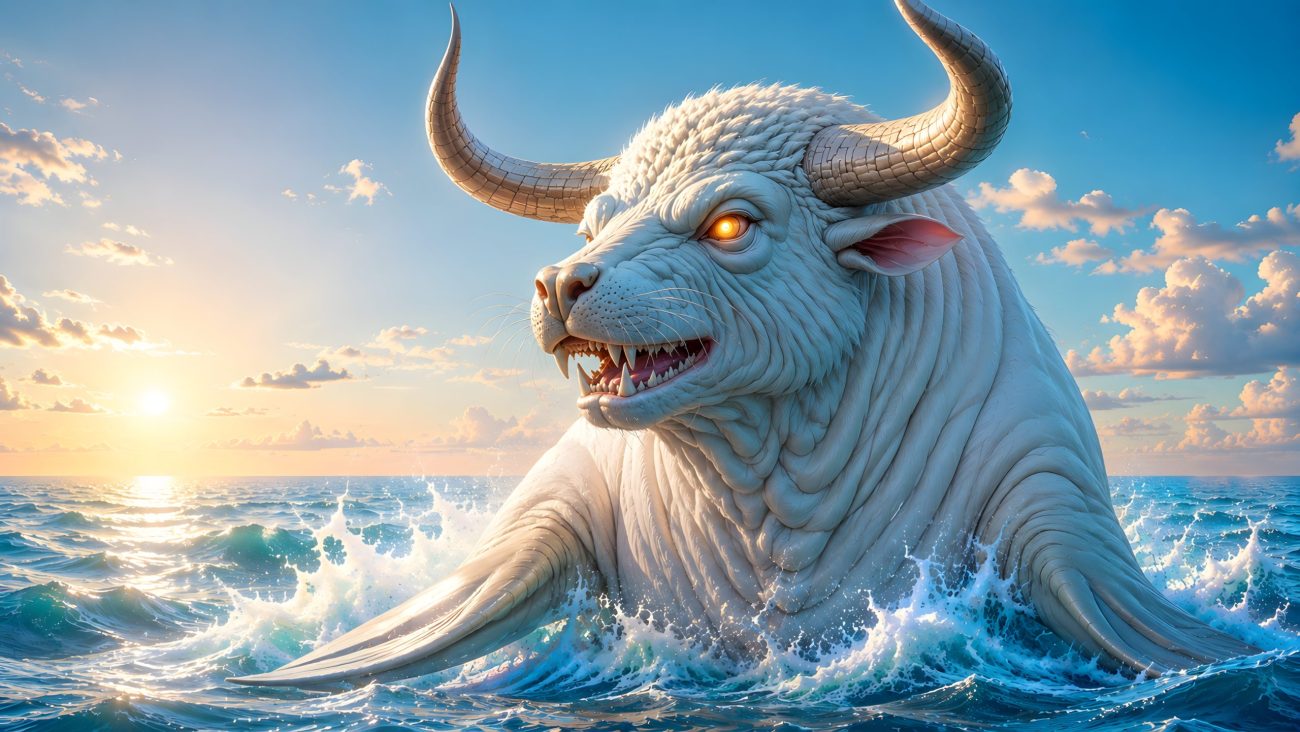
The Foha is an enormous sea bull of legendary strength. It is known for its sedentary nature and tends to remain in one place rather than roaming through the sea. Despite its immense size, it is also said to come onto land in herds to feed on grass without harming people or livestock.

According to the legend, the Foha is exceptionally irascible, especially toward its own kind. Aristotle recorded that these creatures would fight fiercely among themselves, particularly the females.

When a male Foha killed a female during one of these battles, it would seek out another female and continue the same brutal behavior. This succession of violent encounters could continue until the male eventually killed all the females it encountered.

In one account, the Foha is described as a creature with the face of a calf and human-like hands.

Despite its appearance as a gigantic sea bull, the creature was ultimately said to be nothing more than a seal.


Sources

“Фоха (Foha).” New Bestiary (Bestiary.us). Accessed August 15, 2026. https://www.bestiary.us/foha


Forest Bull

Tradition / Region: Roman Mythology, Italian Mythology
Alternative names: Ethiopian Bull, Ethiopian Forest Bull, Taurus Aethiopicus, Taurus Aethiopicus Sylvestris
Category: Cow


The Myth

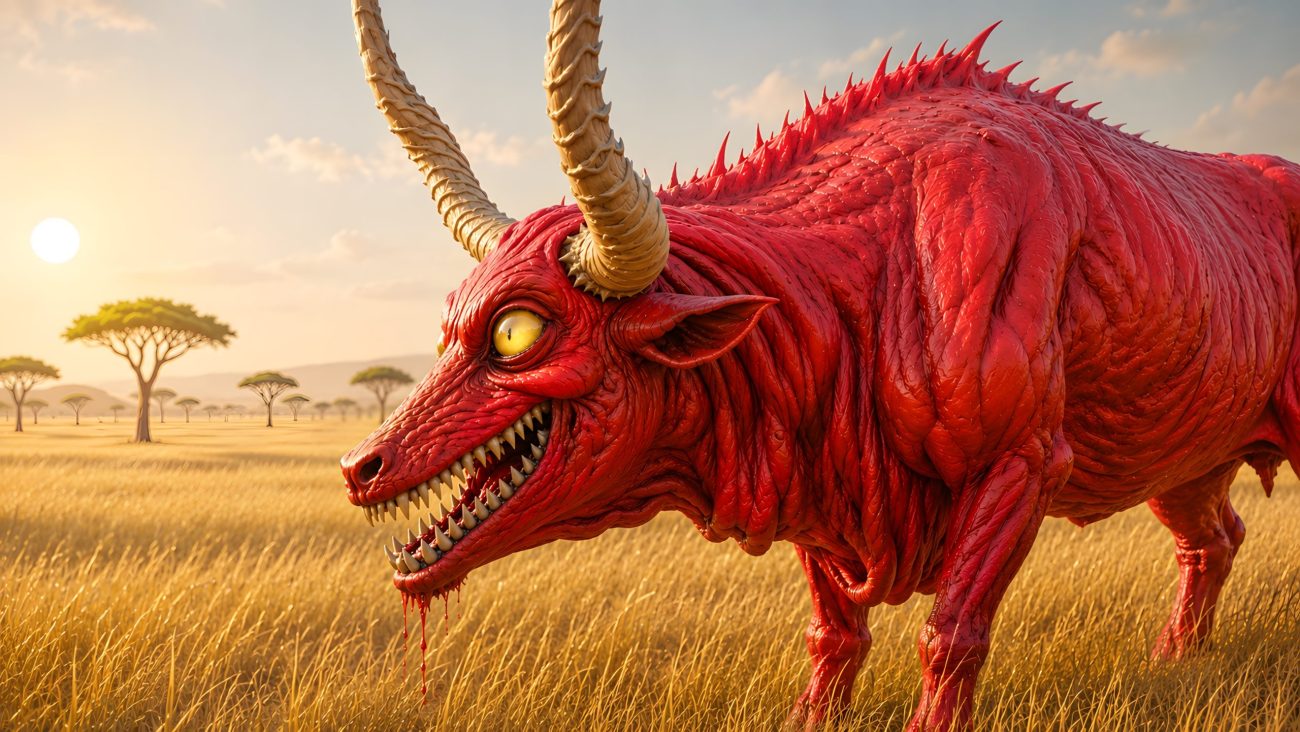
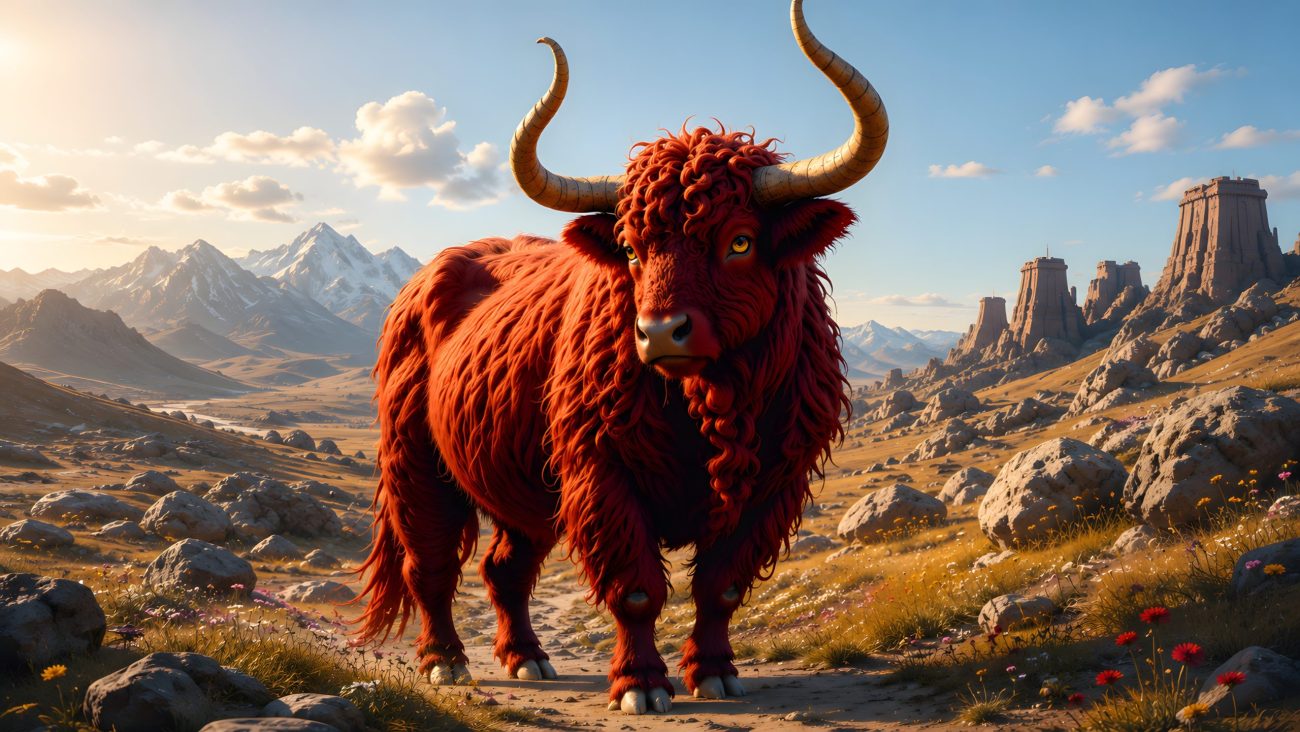
The Forest Bull is a gigantic, tawny-colored breed of wild cattle said to live in the forests of Ethiopia. It is twice the size of an ordinary bull, with red hair, an enormous mouth that opens almost to its ears, and horns capable of turning in any direction. Once raised for combat, its horns remain fixed in that position.

According to ancient accounts, the Forest Bull is one of the fiercest and most savage animals in the world. It is a flesh-eater that hunts herds of wild animals and horses. It is also extraordinarily fast and possesses such great strength that no ordinary weapon can injure it. Spears and arrows are unable to penetrate its hide, while iron weapons are said to rebound from its body.

The Forest Bull uses its movable horns as weapons when fighting. It raises them before attacking and can face an opponent from almost any direction.

Herdsmen living in regions inhabited by the Forest Bulls devised a way to protect their livestock. They dug deep ditches in the ground and allowed the animals to fall into them. Once trapped, the furious bulls were unable to escape and eventually choked on their own rage.

The Troglodytae, a neighboring people who lived in caves, regarded the Forest Bull as the king of beasts. They considered it worthy of the title because it possessed the courage of a lion, the speed of a horse, the strength of a bull, and a hide stronger than iron.


Sources

“Forest Bull.” Wikipedia: The Free Encyclopedia. Wikimedia Foundation. Accessed August 15, 2026. https://en.wikipedia.org/wiki/Forest_Bull


Flidais

Tradition / Region: Irish Mythology
Alternative names: Flidas, Fliodhais, Fliodhas, Foltchaín
Category: Cow, Deity


The Myth

Flidais is a beautiful-haired female figure associated with cattle, fertility, and the abundance of milk. She possesses a magical herd of cattle, and her connection with cattle and milking appears throughout the stories in which she is mentioned.

Flidais is a central figure in Táin Bó Flidhais, where she is the wife of Ailill Finn and the lover of Fergus mac Róich. Fergus carries Flidais and her cattle away from her husband, taking her with him to Erris.

Her cattle possess extraordinary powers. During the Táin Bó Cúailnge, Flidais stays in the tent of Ailill mac Máta, king of Connacht, and her herd provides enough milk to feed the entire army once every seven days.

In Táin Bó Flidhais, Flidais possesses a particularly remarkable white cow known as the Maol. A single night’s milking from this cow is said to provide enough milk to feed three hundred men.

Flidais is also the mother of Nia Segamain, who inherited a supernatural connection with animals from her. Through the power received from his mother, Nia Segamain was able to milk wild deer as though they were domestic cows.

Flidais is also named as the mother of several daughters, including Dinand and Bé Chuille. Dinand and Bé Chuille are described as female farmers in one tradition and as witches in the story of the Second Battle of Moytura, where they enchant trees, stones, and pieces of earth so that they become an armed host.


Sources

“Flidais.” Wikipedia: The Free Encyclopedia. Wikimedia Foundation. Accessed August 15, 2026. https://en.wikipedia.org/wiki/Flidais


Fei

Tradition / Region: Chinese Mythology
Alternative names: –
Category: Cow


The Myth

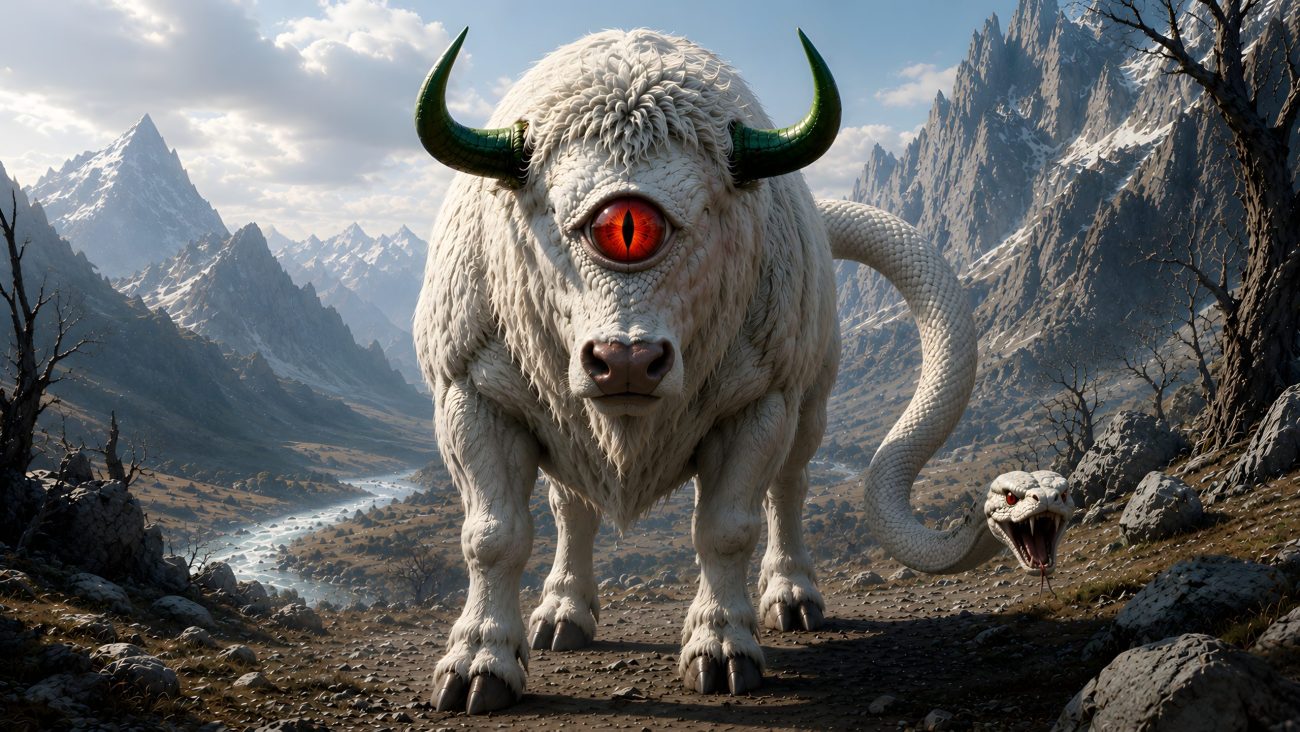
The Fei is a strange beast that resembles an ox with a white head, a single eye, and the tail of a snake. It lives on Mount Tai, a mountain rich in gold, jade, and precious trees.

According to the Classic of Mountains and Seas, the appearance of the Fei brings drought and destruction to the surrounding land. Water sources dry up and vegetation withers wherever the creature is found.


Sources

“蜚 (Fěi).” Chinese Wikipedia. Wikimedia Foundation. Accessed August 15, 2026. https://zh.wikipedia.org/wiki/%E8%9C%9A


Hesat

Tradition / Region: Egyptian mythology
Alternative names: Hesat, Hesat-Hathor
Category: Cow, Deity


The Myth

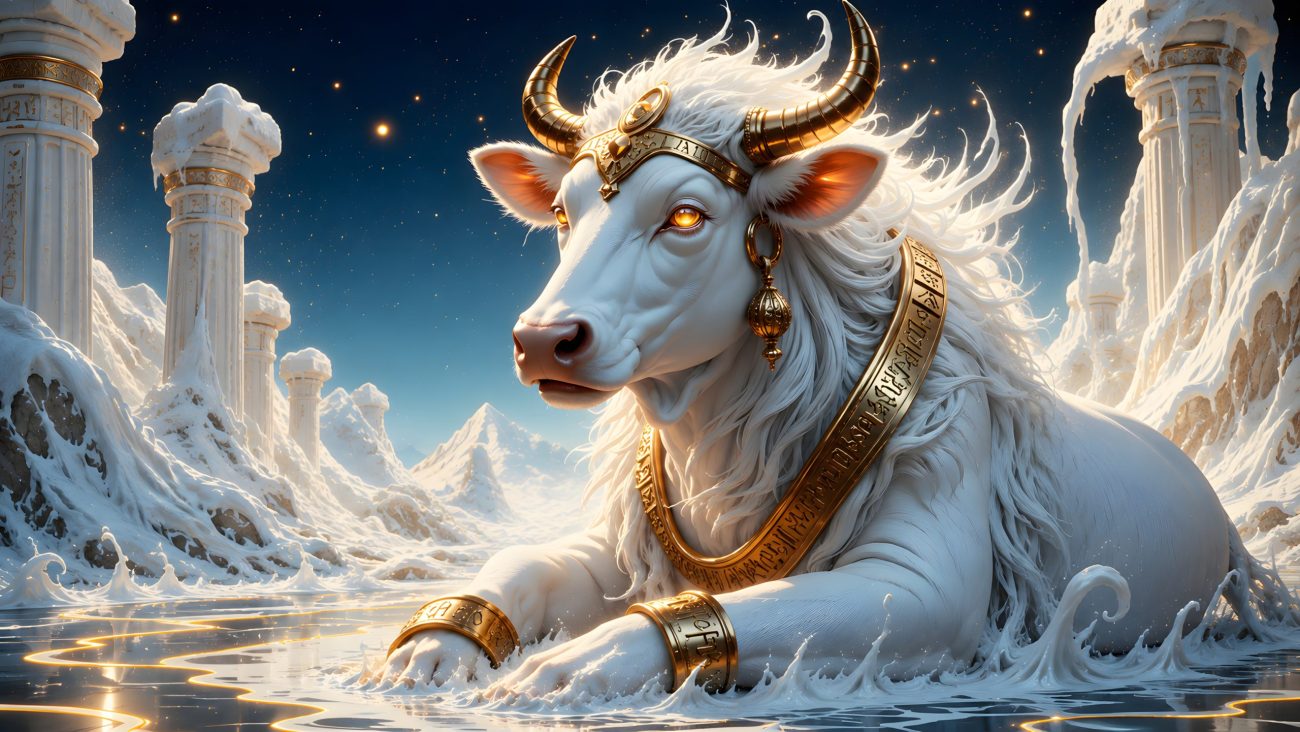
Hesat is a divine cow who provides milk to humanity, the pharaoh, and the sacred bull gods. Her milk was called the beer of Hesat and was regarded as a source of nourishment and life. She was especially connected with Mnevis, the sacred bull of Heliopolis, whose mothers were buried in a cemetery dedicated to Hesat.

In the Pyramid Texts, Hesat is described as the mother of Anubis and of the deceased king. She was regarded as a manifestation of Hathor and was commonly represented as a white cow, associated with purity and the life-giving milk she provides.

During the Ptolemaic period, Hesat became closely associated with Isis.


Sources

“Hesat.” Wikipedia: The Free Encyclopedia. Wikimedia Foundation. Accessed August 15, 2026. https://en.wikipedia.org/wiki/Hesat


Heru-Skhait

Tradition / Region: Egyptian mythology
Alternative names: Heru-Skhait
Category: Cow, Deity


The Myth

Heru-Skhait is an Egyptian cow goddess associated with the protection of Isis and Horus. She is depicted in Egyptian inscriptions as a divine cow who protects and watches over the goddess and her son.


Sources


Budge, E. A. W. (1920). An Egyptian hieroglyphic dictionary : with an index of English words, king list and geological list with indexes, list of hieroglyphic characters, coptic and semitic alphabets, etc. (p. 95) J. Murray.


Henichires

Tradition / Region: Greek Mythology
Alternative names: –
Category: Cow


The Myth

The Henichires is a strange animal said to occur in the Orient. It resembles a bull with short, soft hair like a horse’s mane hanging down from its shoulders. Its body is covered in reddish-brown woolly hair, and its cry resembles the bellowing of a bull. It has curved horns, strong enough to make it a formidable fighter.

The hair on its forehead divides above the eyes and falls toward either side of the head. Its teeth, legs, and tail resemble those of a cow, although its tail is shorter. Its hide is exceptionally tough and can withstand powerful blows.

According to the tradition, the flesh of the Henichires has a sweet taste, and hunters therefore pursue it for its meat. When hunted against its will, however, the animal may suddenly stop and stand completely motionless before turning to defend itself. During such encounters it scatters its dung widely around itself, making it difficult for anyone to approach.

When a female Henichires is about to give birth, the other animals gather around her. They build a barrier of dung around the mother, forming a kind of protective wall that prevents anyone from approaching her or disturbing the birth.


Sources

Biesheuvel, Ingrid, trans. Der Naturen Bloeme. Zutphen: Walburg Pers, 2024. ISBN 9789464563214.


Mukyoku Dōjin

Tradition / Region: Japanese Mythology
Alternative names: Mukyoku Dōjin, Wuji Daoist, Boundless Taoist
Category: Cave dweller


The Myth

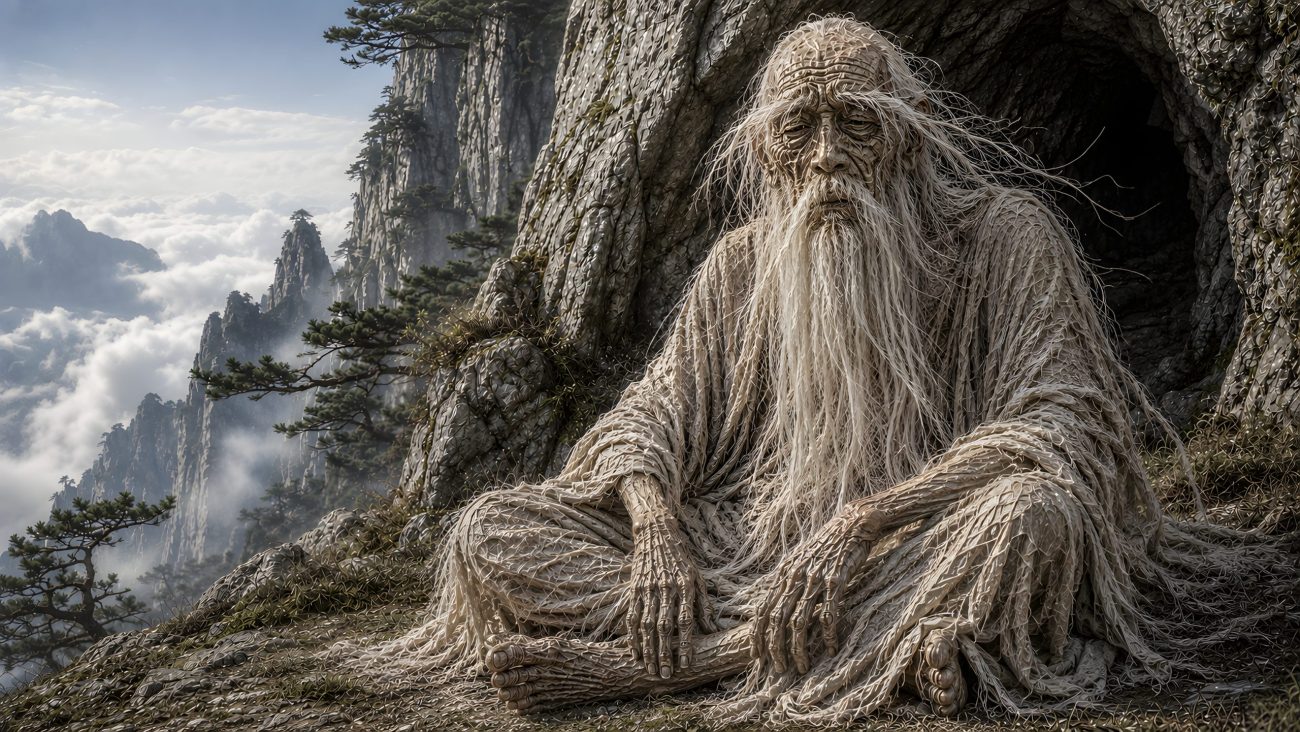
Mukyoku Dōjin appears as an extraordinary Taoist sage with a long white beard and a bald head who lives alone in a cave at the foot of Mount Hōtō, a legendary dwelling place of immortals east of the Bohai Sea. He possesses knowledge of the beginning and end of heaven and earth, the rise and fall of civilizations, the history of humanity, and the future of the world. He has lived through several cycles of birth and death and remembers his former lives.

According to the tale, a learned man named Kontonshi became obsessed with the future of humanity. Although he had studied the writings of many schools of thought, he regarded books as merely the remains of ancient knowledge and could find no answer to the questions that troubled him. His thoughts became so consuming that he neglected both food and sleep.

Kontonshi eventually heard of a Taoist sage living in seclusion in the mountains and immediately traveled to his cave. When he arrived, the withered-looking Mukyoku Dōjin smiled and greeted him before he had even spoken, telling him that he had been waiting for him.

The Taoist then began explaining the history of heaven and earth. He said that he had been born together with heaven and earth and would die together with them, having already experienced five cycles of birth and death. He remembered his previous lives and possessed knowledge of those yet to come.

Mukyoku Dōjin described the formation of the mountains and seas, followed by the appearance of living beings and eventually humanity. He compared the first humans to mushrooms growing in a swamp and maggots gathering around decaying flesh. As the primordial vapors condensed, they formed bodies that gradually developed into living creatures with a monkey-like appearance. These beings learned to obtain food and clothing, eventually reproducing and forming families.

When Kontonshi asked how long the Earth would survive, Mukyoku Dōjin explained that its existence would last 36,000 years. The first 12,000 years would be an uncivilized age, followed by 12,000 years of enlightenment and then 12,000 years of turmoil.

The Taoist said that humanity was currently living during the enlightened period and that its greatest prosperity would come roughly a thousand years later. Civilization would become more advanced and stable, human happiness would reach its greatest level, and the population of the Earth would increase greatly. Machinery would allow people to clear even remote mountains and wilderness and transform them into farmland and pasture.

He then described the final destruction of the Earth. As the age of turmoil approached, the sun would gradually lose its light and heat while the Earth accelerated its rotation. Human vitality would decline, lifespans would become shorter, and people would gradually become smaller.

Eventually the sun would no longer provide enough warmth for crops, animals, or human beings. Cold would spread across the world until the entire surface of the Earth became frozen. When the surface was covered completely in ice, heat trapped inside the planet would cause its axis to rupture. Fire and water would mix together, transforming the Earth into an enormous mass of boiling mud.

The sun itself would also freeze and perish, but the heat released from it would evaporate the surrounding water. From this destruction a new sun would eventually emerge, and the Earth would regain its form. Nature would return and a new generation of humanity would appear.

Mukyoku Dōjin explained that this cycle of destruction and renewal was comparable to the Buddhist concept of the kalpa. He also described countless other worlds existing beyond the Earth. The stars were said to contain their own lands inhabited by people and animals, while the universe consisted of innumerable worlds extending far beyond what human beings could comprehend.

Kontonshi continued questioning the Taoist about laws, philosophy, politics, nations, and the future of humanity, and Mukyoku Dōjin answered each question. When Kontonshi finally asked about the ultimate destiny of politics, nations, and the human heart, however, the Taoist had disappeared.

Only the evening mist remained around the mountain peaks, accompanied by the sound of wind moving through the pine trees. Kontonshi paid his respects at the entrance of the cave and returned home.


Sources

Takahashi, Toshihiro. “無極道人 (Mukyoku Dōjin).” 新版TYZ 妖怪図鑑 (New TYZ Yokai Encyclopedia). August 29, 2019. Accessed August 15, 2026. https://tyz-yokai.blog.jp/archives/1074589374.html