Lupeux

Tradition / Region: French Folklore
Alternate Names:
Category: Wolf Spirit, Swamp dweller


The Myth

The Lupeux is a sinister folkloric being said to haunt the ponds and marshlands of the Brenne region in Berry. Unlike many wolf-creatures, it is rarely seen — it is known almost entirely by its voice.

At night, travelers may hear a soft, human-like laugh drifting across the water:
“Ah… ah… ah…”

Locals know never to answer the sound more than twice. Speaking a third time invites disaster.

The lupeux is believed to have the head of a wolf, though its form varies in different tellings. What never changes is its talent for manipulation. When someone responds to it, the creature begins speaking in a warm, friendly, persuasive voice. It tells gossip, secrets, romantic promises, and scandalous stories tailored to the listener’s desires and fears.

Victims become entranced, following the unseen voice deeper into the marshes or woods. Eventually they are led to a still pool or pond. As they lean over the water — distracted by the thoughts the lupeux has planted in their mind — the creature pushes them in.

The victim drowns while the lupeux watches from a branch, laughing softly.

The tale functions as both a marshland warning legend (don’t wander near water at night) and a moral story about temptation and curiosity: the danger lies not only in the creature, but in the victim’s willingness to listen.


Gallery


Sources

A Book of Creatures. (2017, January 30). Lupeux. From https://abookofcreatures.com/2017/01/30/lupeux/


Interpretive Lenses

Religious Readings
  • Christian Ascetic Deep Dive
Philosophical Readings
  • Nietzschean Deep Dive
Psychological Readings
  • Jungian Deep Dive
Esoteric Deep Dive
  • Hermetic Deep Dive
Political / Social Readings
  • Marxist Deep Dive

Hany Istók

Tradition / Region: Hungarian Mythology
Alternate Names: The Foundling of Hanság; Marsh Child; Haon Ischtok
Category: Swamp dweller


The Myth

On March 15, 1746, two fishermen, Franz Nagy and Michael Molnár, brought a strange boy to the castle of Kapuvár. The child resembled a wild animal more than a human, yet by his size he seemed to be about ten years old. Because he could not speak, he was baptized Hany Istók.

The boy was naked. His head was round, with small eyes, a flat nose, and a wide mouth. His body and head were said to be covered in fish-like scales, and his fingers and toes were unusually long. He would eat nothing but grass, hay, and straw. Whenever he thought himself unobserved, he leapt into the castle moat and swam like a fish.

For almost a year he remained quietly at the castle. In time he began to accept cooked food, and it seemed he might gradually adapt to human life. Because of this, the guards watched him less closely.

Then, without warning, he disappeared.

People believed he had thrown himself into the nearby Rábcza River and escaped back into the marshlands.

A wooden likeness of Hany Istók was later kept at the Esterházy palace of Esterház. From this figure, observers noted strange features: a wrinkled brow, sparse facial hair, and a body whose belly seemed too large for its limbs. These traits made some think the being had not been a child at all, but something older in human form.

After his disappearance, the strange creature was reportedly seen a few more times in the marshes of the Hanság. After that, it vanished entirely, and no one saw it again.


Gallery


Sources

sagen.at contributors. (n.d.). Das Findelkind. In sagen.at, from https://www.sagen.at/texte/sagen/ungarn/findelkind.htm


Interpretive Lenses

Religious Readings
  • Christian Ascetic Deep Dive
Philosophical Readings
  • Nietzschean Deep Dive
Psychological Readings
  • Jungian Deep Dive
Esoteric Deep Dive
  • Hermetic Deep Dive
Political / Social Readings
  • Marxist Deep Dive

The White Cat of Budersberg

Tradition / Region: Luxembourg Mythology
Alternate Names: Budersberg White Cat
Category: Cat, Swamp dweller


The Myth

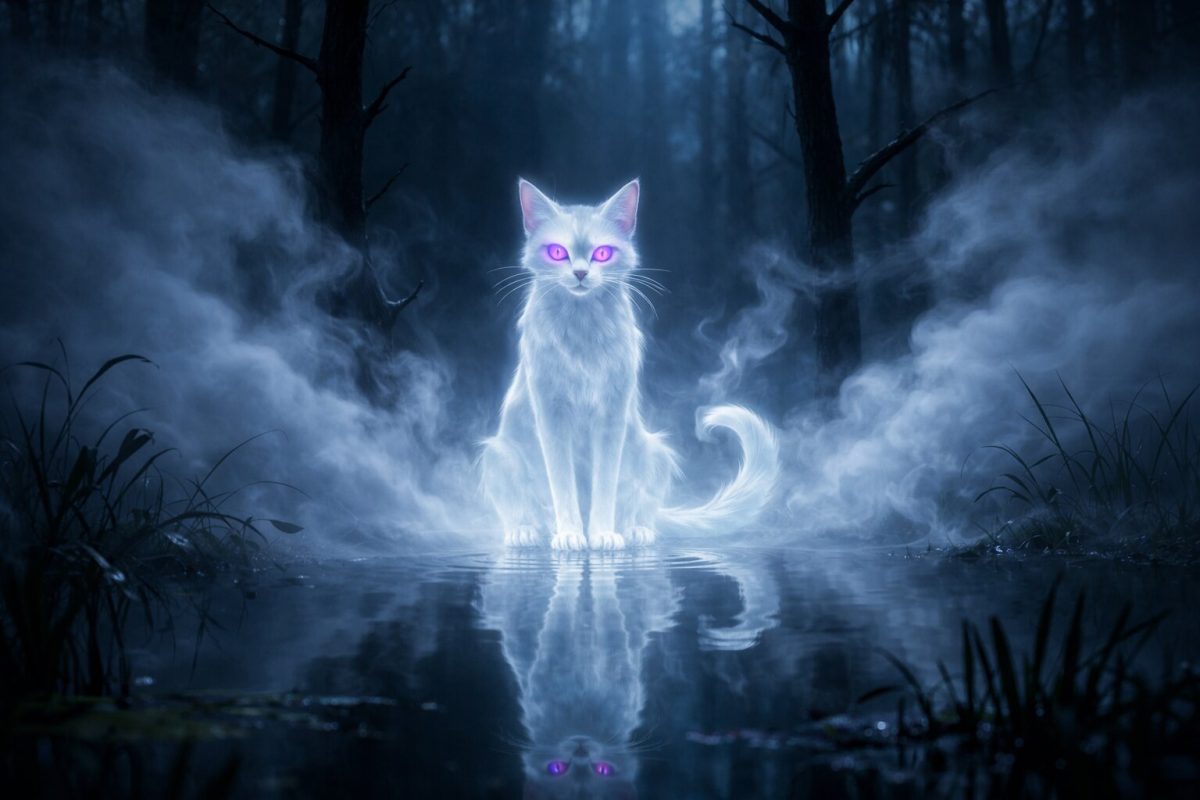
In the meadowlands below the village of Budersberg, a snow-white cat is said to appear on certain nights.

It is sometimes seen where the stream called the Gessel flows into the Brüllchen, but most often it shows itself in the middle of the marsh known as the Fäschtemsmoore. There it moves silently through the darkness and then vanishes again, leaving no trace behind.

Thus the people spoke of the white cat that haunted the meadows and marshes below Budersberg.


Gallery


Sources

sagen.at contributors. (n.d.). Die weiße Katze bei Budersberg. In sagen.at, from https://www.sagen.at/texte/sagen/luxemburg/Katze_Budersberg.html


Interpretive Lenses

Religious Readings
  • Christian Ascetic Deep Dive
Philosophical Readings
  • Nietzschean Deep Dive
Psychological Readings
  • Jungian Deep Dive
Esoteric Deep Dive
  • Hermetic Deep Dive
Political / Social Readings
  • Marxist Deep Dive

Oligsmännchen of the Oligsbaach

Tradition / Region: Luxembourg Mythology
Alternate Names: The Old Man of the Oligsbaach
Category: Swamp dweller


The Myth

At the source of the Oligsbaach, a stream that after a short course flows into the Alt, also called the Gaanerbaach, there was said to roam a fearful being known as the Oligsmännchen.

The stream was known to swell into a raging torrent, and people warned that no one should be seen on the nearby meadow after sunset. For if anyone lingered there in the evening, the grim old spirit would seize him by the hair in an instant and drag him down into the depths, where he would be lost beyond rescue.

Thus the Oligsmännchen was feared as the dark guardian of the spring and its dangerous waters.


Gallery


Sources

sagen.at contributors. (n.d.). Das Plätschmännchen. In sagen.at, from https://www.sagen.at/texte/sagen/luxemburg/Plaetschmaennchen.html


Interpretive Lenses

Religious Readings
  • Christian Ascetic Deep Dive
Philosophical Readings
  • Nietzschean Deep Dive
Psychological Readings
  • Jungian Deep Dive
Esoteric Deep Dive
  • Hermetic Deep Dive
Political / Social Readings
  • Marxist Deep Dive

The Birch Maiden of the Birk

Tradition / Region: Luxembourg Mythology
Alternate Names: Birch Maiden, Birkenjungfer, Birch Damselfly, White Horse of the Birk
Category: Swamp dweller, Ghost, Forest dweller


The Myth

In the birch forests and moors near Mutfort, Ötringen, and the Birk, there was said to wander a mysterious female spirit known as the Birch Maiden.

She often appeared as a young woman dressed in dazzling white. At times she spread a white carpet before travelers, upon which a small goat would suddenly appear. Others saw her walking silently along lonely paths, wearing a white skirt, sometimes with a red apron, or carrying a white switch. She would not answer greetings and vanished as suddenly as she appeared.

At the Birkengraben, many claimed to see her at dusk: a white figure who would utter a shrill cry, rise into the air, and disappear toward the birch moor while a terrible roaring swept through the forest. Some saw her carrying two burning candles, accompanying travelers through the night with a rushing noise in the air until she vanished near the village.

The tale says she had once been the daughter of a wealthy count whose castle stood near Ötringen. She wished to remain unmarried, but her father forced her toward a marriage she refused. On the morning of her wedding she fled into the nearby forest. Pursued by her father’s servants, she ran across the birch moor and vanished into its depths with a cry. Since then she has wandered the place as a restless spirit.

On certain nights before midnight, she is seen lamenting at the edge of the moor, clothed in white and carrying lights. If anyone dares to approach, she disappears with a scream. Should a person follow her to the edge of the bog, she may seize him and drag him down into the depths.

The Birch Maiden is also said to roam the area in another form. In the meadow called Lohkaul, a riderless white horse appears at night, bearing a shining saddle. It bursts from the forest, gallops to the banks of the Syr, and grazes there quietly. When a weary traveler passes, the horse comes tamely and seems to invite him to mount. But anyone who accepts is carried with great speed to the birch moor or to the Pleitringer pond and thrown into the water.

Thus the spirit of the Birch Maiden wanders the forest, the moor, and the meadows, appearing sometimes as a grieving woman in white and sometimes as the ghostly white horse that lures the unwary to destruction.


Gallery


Sources

sagen.at contributors. (n.d.). Die Birkenjungfer oder Birkefrächen. In sagen.at, from https://www.sagen.at/texte/sagen/luxemburg/Birkenjungfer.html


Interpretive Lenses

Religious Readings
  • Christian Ascetic Deep Dive
Philosophical Readings
  • Nietzschean Deep Dive
Psychological Readings
  • Jungian Deep Dive
Esoteric Deep Dive
  • Hermetic Deep Dive
Political / Social Readings
  • Marxist Deep Dive

Böschgretchen of Heßlingen

Tradition / Region: Luxembourg Mythology
Alternate Names: Böschgretchen, Wild Woman of Wölfragrond
Category: Ghost, Swamp Dweller


The Myth

In earlier times, when ghosts were still believed to roam the land, there lived near Heßlingen, by the Wolf’s Mill in the forest called Wölfragrond, a strange being known as Böschgretchen.

She was said to have once been a woman of exceptional height and beauty who had been cursed and bound to the swamp there. People disliked passing that place, though no one was known to have been harmed by her.

One day, an old man known as Burgklees came along the path from Remich. Brave as he was, he went straight past the swamp. But as soon as he neared it, he felt uneasy. Pressing on, he heard someone calling behind him, “Klees, Klees, wait!” He turned and saw Böschgretchen standing before him. Terrified, he tried to flee, but the ground beneath him began to give way. He leapt aside and escaped, reaching home pale and exhausted, collapsing at his door.

The spirit remained in the area for many years and was seen by many. Once, a shepherd grazing his flock near Heßlingen noticed his dog behaving wildly, running and howling so loudly that people came to help. Following the dog, they found Böschgretchen lying dead in a wolf’s den, sunk knee-deep in mud. They pulled the body out, carried it to Ellingen, and buried it in the churchyard, where later the wall was built so that her grave now lies within its foundations.

It was said that once every seven years the dead woman returns by night to the place where she died, and that on stormy nights old people have heard her moaning there.


Gallery


Sources

sagen.at contributors. (n.d.). Das Böschgretchen bei Ellingen. In sagen.at, from https://www.sagen.at/texte/sagen/luxemburg/Boeschgretchen.html


Interpretive Lenses

Religious Readings
  • Christian Ascetic Deep Dive
Philosophical Readings
  • Nietzschean Deep Dive
Psychological Readings
  • Jungian Deep Dive
Esoteric Deep Dive
  • Hermetic Deep Dive
Political / Social Readings
  • Marxist Deep Dive

Topielec

Tradition / Region: Polish Mythology
Alternate Names: Utopiec, Utopce (plural), Vodník, Topnik, Topielica (female form)
Category: Swamp dweller


The Myth

In Slavic lands it was believed that not all who died in water truly left the world. Those who drowned—whether by accident, despair, or violence—might return as restless spirits bound forever to the element that took their lives. Such beings were called Topielce or Utopce.

They were said to dwell in lakes, rivers, marshes, and deep ponds, hiding beneath still water or lurking among reeds and mud. The places where they lived were often silent and treacherous, the surface calm while danger waited below.

These spirits did not rest peacefully. Drawn by envy of the living, they were believed to seize people who came too close to the water’s edge. Bathers, fishermen, children playing on riverbanks, even animals drinking at a pond could suddenly be dragged down into the depths. Many said the spirit would clutch its victim with cold hands and pull them under, adding another soul to the water’s domain.

The female forms, called Topielice, were sometimes said to appear near the shore, luring the unwary closer before the water closed over them.

Because of this, people treated lonely waters with caution. They crossed themselves before swimming, avoided marshes at dusk, and warned children never to mock the river. For it was said that beneath the quiet surface, the drowned were waiting—forever bound to the waters that claimed them, and eager to draw the living down to join them.


Gallery


Sources

Wikipedia contributors. (n.d.). Topielec. In Wikipedia, The Free Encyclopedia. Retrieved February 14, 2026, from https://en.wikipedia.org/wiki/Topielec


Interpretive Lenses

Religious Readings
  • Christian Ascetic Deep Dive
Philosophical Readings
  • Nietzschean Deep Dive
Psychological Readings
  • Jungian Deep Dive
Esoteric Deep Dive
  • Hermetic Deep Dive
Political / Social Readings
  • Marxist Deep Dive
Other
  • How to Invite The Topielec

Grindylow

Tradition / Region: British Mythology
Category:
Related figures: Mermaid, Swamp dweller


The Myth

In the marshes and stagnant ponds of northern England, something waits beneath the surface.

The Grindylow is said to dwell in meres, bogs, and reed-choked pools—especially in Yorkshire and Lancashire. It is described as a small, humanoid creature with scaly green skin, sharp claws, pointed teeth, and long, sinewy arms ending in unnaturally long fingers. Those arms are its most feared feature.

The Grindylow does not roam far from water. It hides below the murky surface, patient and unseen. When a child wanders too close to a pond’s edge, when small feet slip on wet stones or lean too far over still water, the creature strikes. With its powerful grip, it seizes the victim and drags them down into the dark.

Few tales describe what happens beneath the water. The horror lies in the suddenness—the splash, the grasp, the disappearance.


Gallery


Sources

Wikipedia contributors. (n.d.). Grindylow. In Wikipedia, The Free Encyclopedia. Retrieved February 14, 2026, from https://en.wikipedia.org/wiki/Grindylow


Interpretive Lenses

Religious Readings
  • Christian Ascetic Deep Dive
Philosophical Readings
  • Nietzschean Deep Dive
Psychological Readings
  • Jungian Deep Dive
Esoteric Deep Dive
  • Hermetic Deep Dive
Political / Social Readings
  • Marxist Deep Dive
Other
  • How to Invite The Grindylow

Devil Boruta

Tradition / Region: Polish mythology
Alternate Names: Boruta, Błotnik, Borowiec
Category: Demon, Swamp dweller, Shapeshifter


The Myth

In the forests, swamps, and muddy roads of Poland, people long spoke of Devil Boruta, a spirit who delighted in confusing travelers and leading them astray at night. When carts became stuck in the mud or paths vanished in the dark, it was Boruta who was blamed—lurking unseen, laughing as people wandered in circles through marsh and woodland.

Boruta was not always imagined as a horned demon. In older folk belief, he was closer note a wild forest spirit, a remnant of pre-Christian beings who ruled untamed places. After Christianization, this spirit was reshaped into a devil, though he retained his connection to bogs, dams, forests, and muddy crossings. He could appear suddenly as a black dog, slip through reeds as a shadow, or remain unseen while his presence was felt through fear and confusion.

Later stories—especially those popularized in books—portrayed Boruta as a devil dressed like a nobleman, tempting the upper classes with pride, corruption, and excess. Yet among common folk, Boruta was far less refined. He was a błotnik, a swamp devil, called upon when wagons sank into mud or when travelers lost their way. Peasants did not fear him as a tempter of souls so much as a malicious spirit of difficult terrain, a force of nature that punished arrogance and carelessness.

Boruta did not rule hell, nor did he demand worship. He belonged to the borderlands—between forest and field, road and swamp, safety and danger. To meet him was not always fatal, but it was humiliating, exhausting, and frightening. Those who mocked him or wandered carelessly risked being lost until dawn.

In this way, Devil Boruta stands as a shadow of older pagan spirits: no grand lord of evil, but a sly, muddy trickster who reminds humans that the wild places do not belong to them.


Gallery


Sources

Wikipedia contributors. (n.d.). Devil Boruta. In Wikipedia, The Free Encyclopedia, from https://en.wikipedia.org/wiki/Devil_Boruta


Interpretive Lenses

Religious Readings
  • Christian Ascetic Deep Dive
Philosophical Readings
  • Nietzschean Deep Dive
Psychological Readings
  • Jungian Deep Dive
Esoteric Deep Dive
  • Hermetic Deep Dive
Political / Social Readings
  • Marxist Deep Dive
Other
  • How to Invite The Devil Boruta

Błudnik

Tradition / Region: Sorbian Mythology, Polish Mythology, German Mythology
Alternate Names:
Category: Swamp dweller, Flame, Spirit


The Myth

In Sorbian tales, the Błudnik appears at night in places where the land itself is uncertain: bogs, marshes, wetlands, dark forests, and damp meadows. Travelers speak of strange lights drifting low over the ground—flickering, swaying, and always just out of reach. To follow them is dangerous.

The Błudnik is not merely a light, but a being with intent. It lures wanderers from safe paths, drawing them deeper into swamps or endless forest loops. Those who follow its glow find themselves hopelessly lost, walking in circles until exhaustion, fear, or the land itself overcomes them. In some stories, travelers vanish forever after chasing the light.

The spirit delights in confusion. It does not attack openly, nor does it speak. Instead, it misleads with false hope—appearing like a guiding flame, a lantern, or a sign of human presence. Only when it is too late does the victim realize the truth.

Elders warned that the Błudnik appears especially to the careless, the proud, or those who wander at night without respect for the land. To protect oneself, one must ignore strange lights, turn clothing inside out, pray, or mark a cross in the earth—anything to break the spell of deception.

In this way, the Błudnik stands as a reminder that not all light leads to safety, and that the night has its own will.


Gallery


Sources

Wikipedia contributors. (n.d.). Błudnik. In Wikipedia, The Free Encyclopedia (Lower Sorbian), from https://dsb.wikipedia.org/wiki/B%C5%82udnik


Interpretive Lenses

Religious Readings
  • Christian Ascetic Deep Dive
Philosophical Readings
  • Nietzschean Deep Dive
Psychological Readings
  • Jungian Deep Dive
Esoteric Deep Dive
  • Hermetic Deep Dive
Political / Social Readings
  • Marxist Deep Dive
Other
  • How to Invite The Błudnik