Inoshishi Muko

Tradition: Japanese Mythology
Alternative Names: Ino no Muko, Boar Son-in-Law, Wild Boar Bridegroom
Category: Pig


The Myth

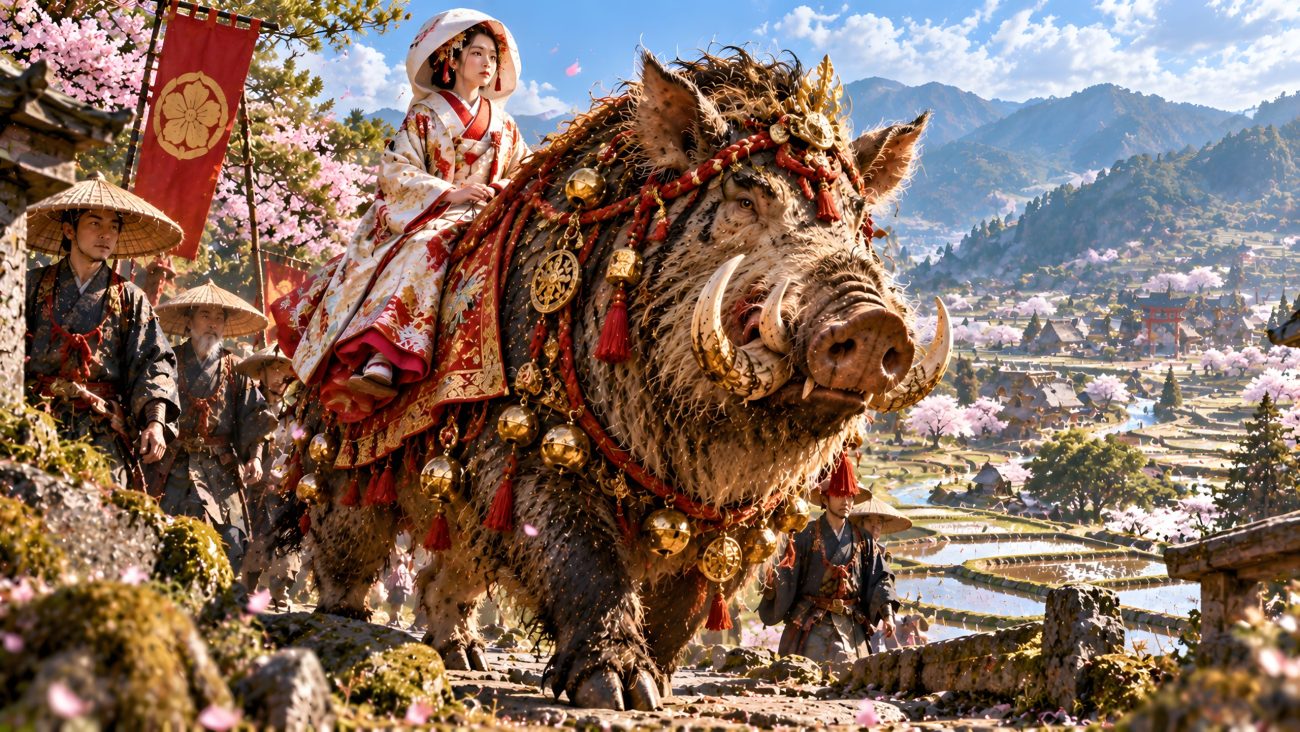
Inoshishi Muko, meaning “Boar Son-in-Law,” is a wild boar that appears as a supernatural bridegroom in Japanese folktales from the Chūgoku and Shikoku regions. These stories belong to the broader “monkey son-in-law” type of folktale, in which an animal demands a human daughter in exchange for helping her family. The boar typically offers to improve farmland or remove obstacles from agricultural land, expecting the old man’s daughter as its reward.

In a tale from Shikinobu Village in Hiroshima Prefecture, an old man with three daughters struggles to cultivate a barren field. A boar offers to plow the land if the old man promises it one of his daughters. After the boar quickly turns over the soil with its snout, the old man agrees. When his two older daughters refuse to marry the animal, the youngest volunteers out of concern for her parents. She takes flint, a fire-starting device, and bundles of thatch with her when the boar comes to collect her. During the journey into the mountains, she secretly ignites the thatch on the boar’s back. The animal runs wildly and eventually dies in the fire, allowing the daughter to return safely to her family.

A similar tale from Shishijima Island in Kagawa Prefecture tells of a boar that demands a daughter in exchange for removing large stones that obstruct farming. As in the Hiroshima story, the daughter burns the boar to death using straw carried on its back. This ending resembles the Japanese folktale Kachi-kachi Yama, in which an animal is defeated through a trick involving fire. However, not every version ends with the boar’s death. In a story from Sera District in Hiroshima, the boar drinks from a pond after bringing his bride home and suddenly transforms into a handsome human man. The couple returns to the girl’s family, leaving her older sisters envious of her good fortune. This version emphasizes the lesson that children should listen to their parents, while the other versions focus on the youngest daughter’s cleverness in escaping a dangerous marriage.


Sources

“Inoshishimuko.” 新版TYZ 妖怪図鑑 (New TYZ Yokai Encyclopedia). https://tyz-yokai.blog.jp/archives/1073540291.html
Zhu Bajie

Tradition: Chinese Mythology
Alternative Names: Zhu Wuneng, Wuneng, Zhu Bajie, Pigsy, Bajie
Category: Pig


The Myth

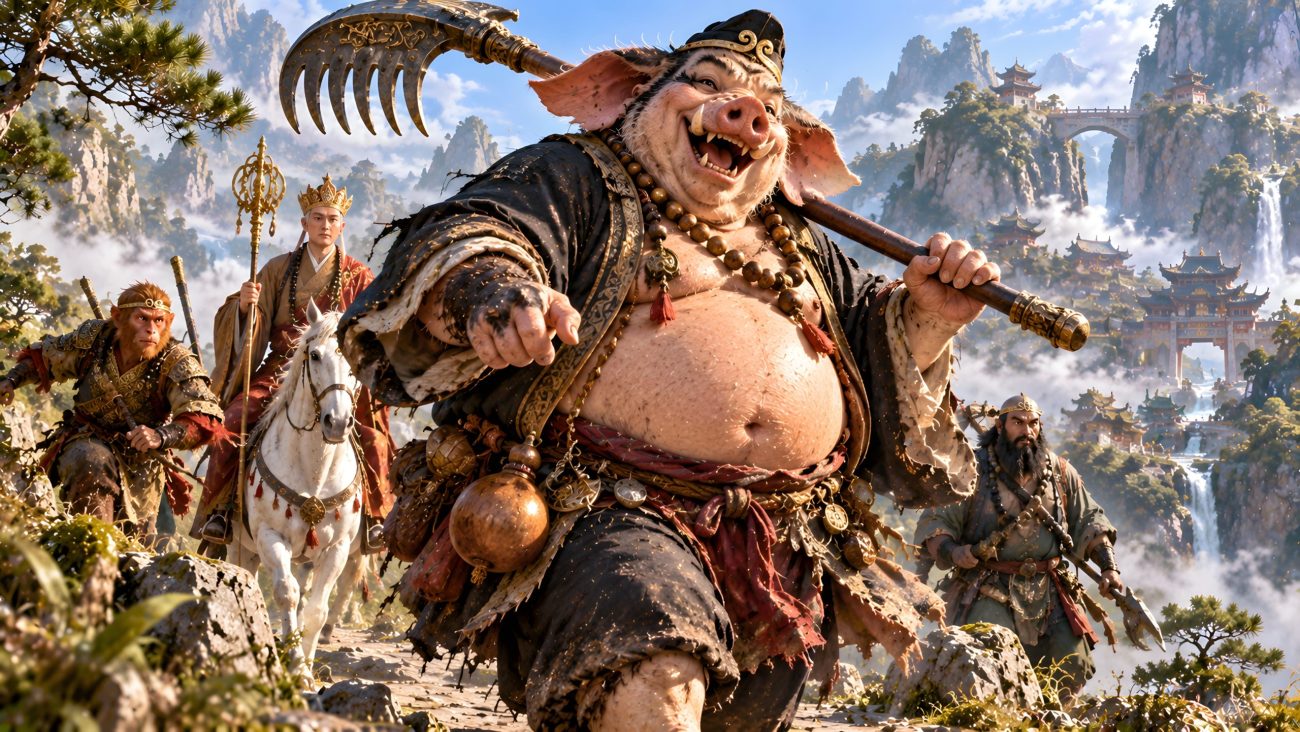
Zhu Bajie, whose Dharma name is Zhu Wuneng, is one of the four disciples of the Buddhist monk Tang Seng in the Chinese classical novel Journey to the West. He has a pig-like face, a human body, and the appearance of a black pig. His unusual appearance reflects his hybrid nature, combining human characteristics with those of a pig.

Zhu Bajie accompanies Tang Seng on his pilgrimage to obtain Buddhist scriptures, travelling alongside Sun Wukong, Sha Wujing, and the White Dragon Horse. Among the group, he is frequently the target of Sun Wukong’s teasing, who often calls him a fool. Despite his role as a disciple on a sacred journey, Zhu Bajie’s pig-like appearance and comic personality make him a distinctive figure in the novel.


Sources

“Zhu Bajie” (猪八戒). Chinese Wikipedia. Wikimedia Foundation. Accessed October 27, 2026.


Lili

Tradition: Chinese Mythology
Alternative Names: Powercat
Category: Pig


The Myth

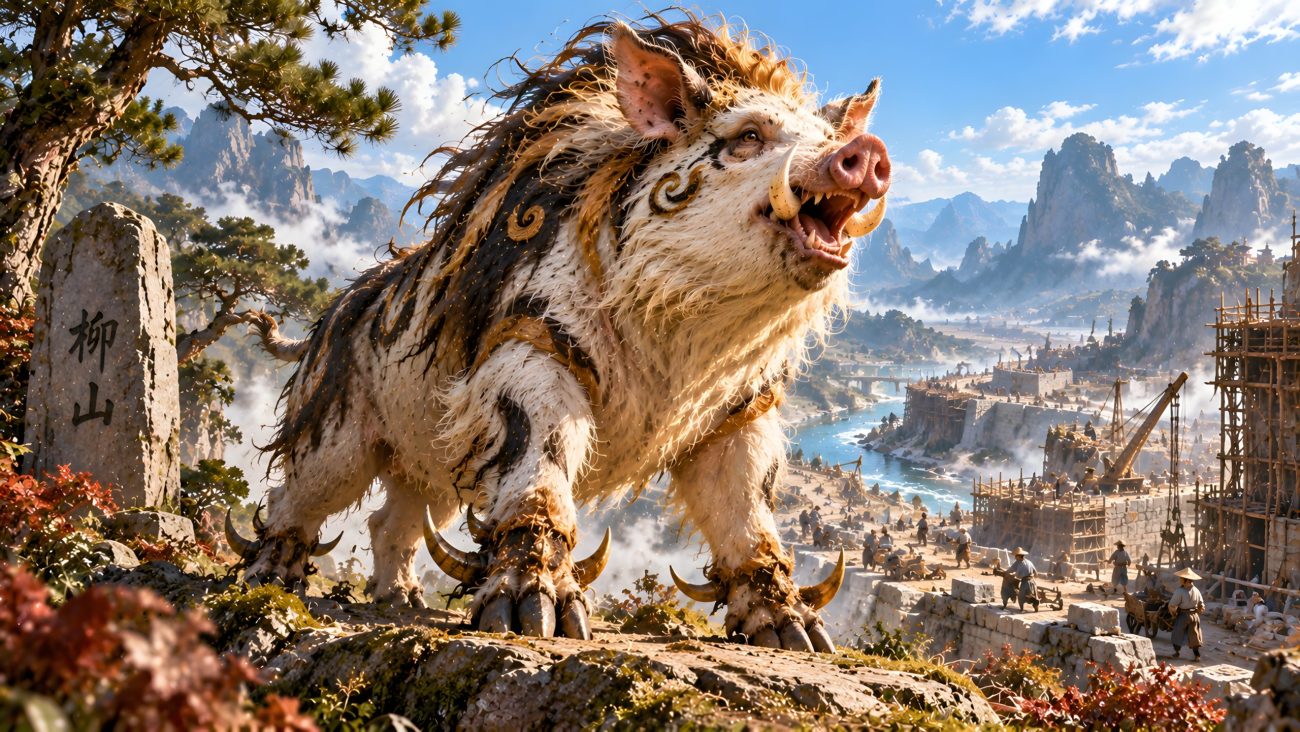
The Lili, also known as the Powercat, is a strange creature said to inhabit the area around Willow Mountain in China. It resembles a pig, but has spurs on its feet, giving it an unusual appearance that sets it apart from ordinary animals.

Despite its pig-like body, the Lili makes a sound like a barking dog. Its appearance is considered an omen rather than merely a strange encounter with wildlife. The creature is said to foretell that extensive earthworks and construction projects will take place in the surrounding district.


Sources

“Lili.” A Book of Creatures https://abookofcreatures.com/2021/05/24/lili/


Watterswyn

Tradition: Dutch Mythology
Alternative Names: Watterswyn
Category: Pig


The Myth

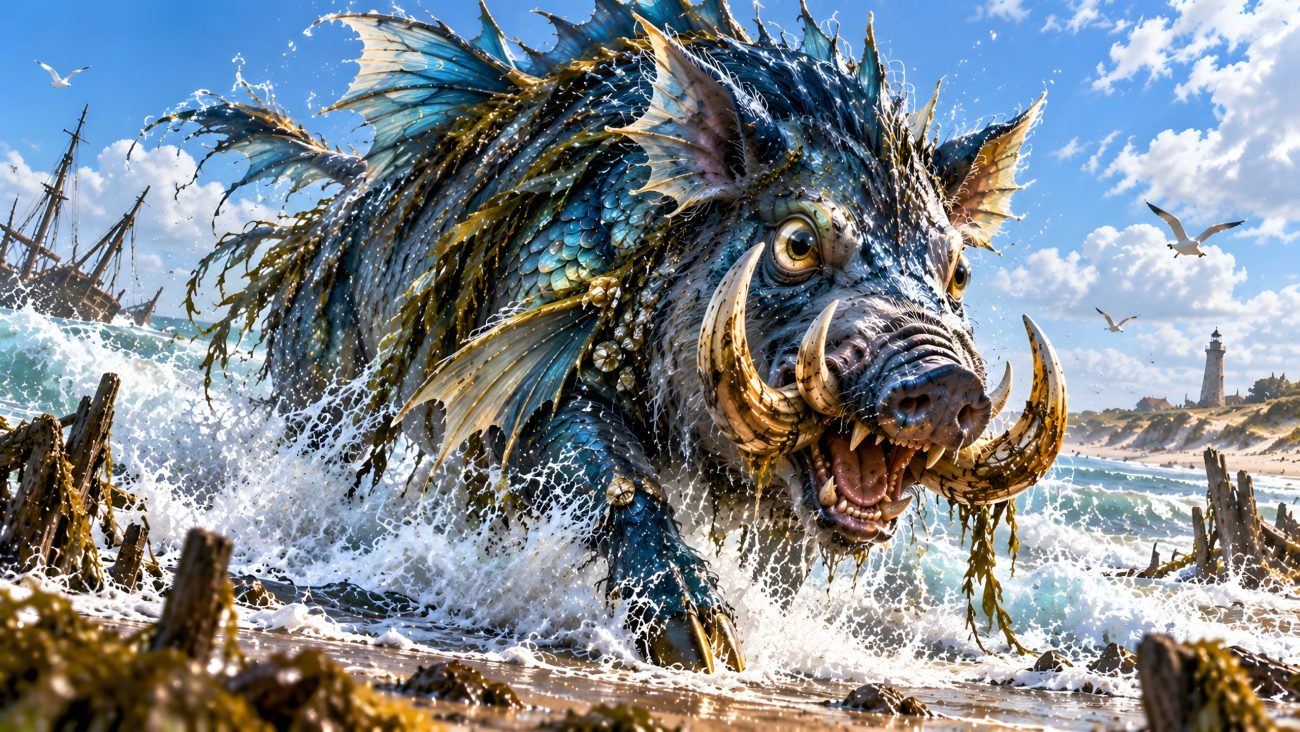
The Watterswyn is a pig-like water spirit from the island of Schiermonnikoog in the Netherlands. According to local tradition, this dangerous creature lurked near the sea and threatened small children who ventured too close to the waves.

The Watterswyn was said to seize children who approached the water’s edge, making it a frightening figure associated with the dangers of the sea. Its story served as a warning to children to keep their distance from the waves and avoid wandering too close to the shoreline.


Sources

Van der Veen, Abe. “Van aardmannetje tot zwarte juffer: Een lijst van Nederlandse en Vlaamse elfen en geesten.” Abe de Verteller.


Sæhrímnir

Tradition: Norwegian Mythology
Alternative Names: Saehrimnir, Sæhrímner
Category: Pig


The Myth

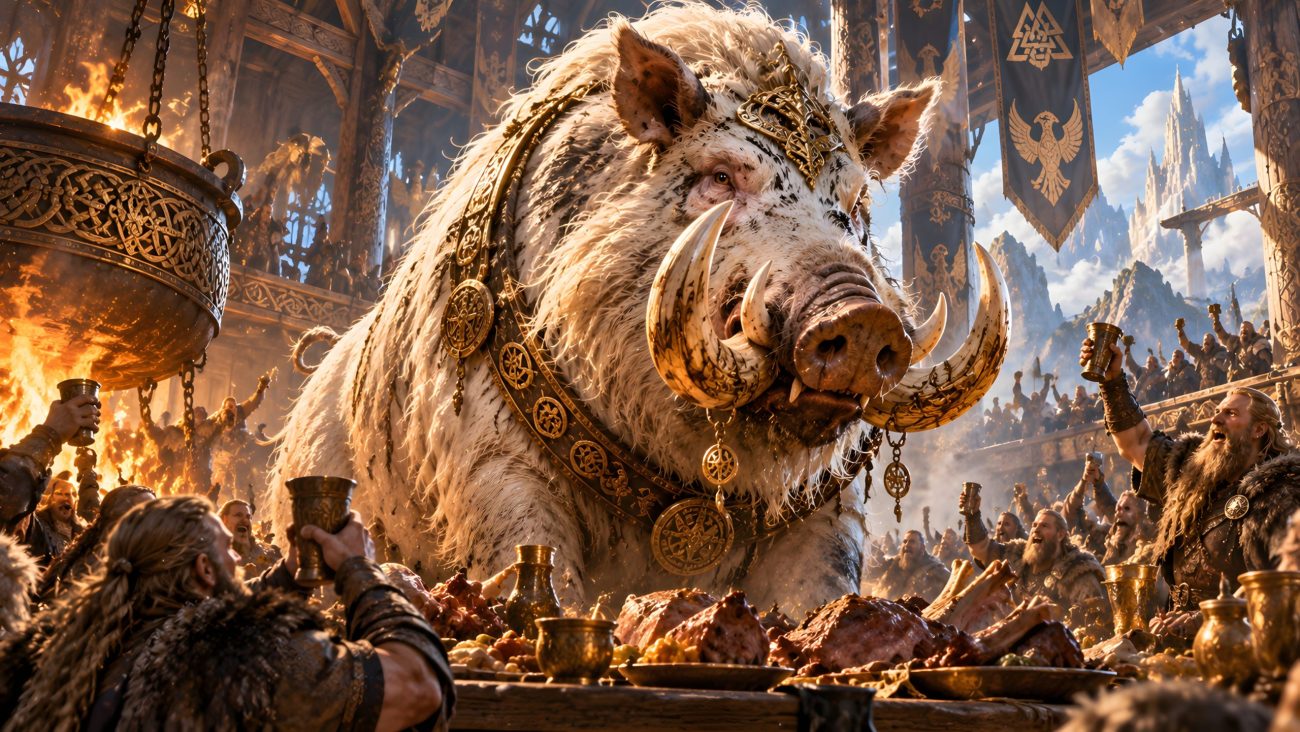
Sæhrímnir is a remarkable creature in Norse mythology that is slaughtered and eaten every night by the Æsir, the gods, and the einherjar, the warriors who dwell in Valhalla. Despite being consumed completely, the animal comes back to life each day, allowing it to provide an endless supply of food for the divine household and the honored dead.

The task of preparing this extraordinary meal falls to Andhrímnir, the cook of the gods. Each night, he slaughters Sæhrímnir and cooks its flesh in the enormous cauldron Eldhrímnir. The feast sustains the inhabitants of Valhalla, and by the following day the creature has been restored to life, ready to be killed and eaten once more. Its continual death and renewal make it a source of inexhaustible nourishment.

Sæhrímnir appears in both the Poetic Edda and Snorri Sturluson’s Prose Edda, texts recorded in the thirteenth century that preserve older Norse traditions. In the Prose Edda, the creature is explicitly identified as a boar. However, some scholars interpret the earlier Poetic Edda passage as referring to an animal without specifying its exact kind. This difference has led to debate about Sæhrímnir’s identity and the meaning of its name. Some scholars have also suggested that the nightly slaughter and restoration of the creature may preserve traces of ritual animal sacrifice in ancient Germanic religion.


Sources

“Sæhrímnir.” Wikipedia: The Free Encyclopedia. Wikimedia Foundation. Accessed October 27, 2026.


Pig-Faced Women

Tradition: English Mythology, Dutch Mythology, French Mythology
Alternative Names: Pig-Faced Lady, Pig-Faced Woman
Category: Pig


The Myth

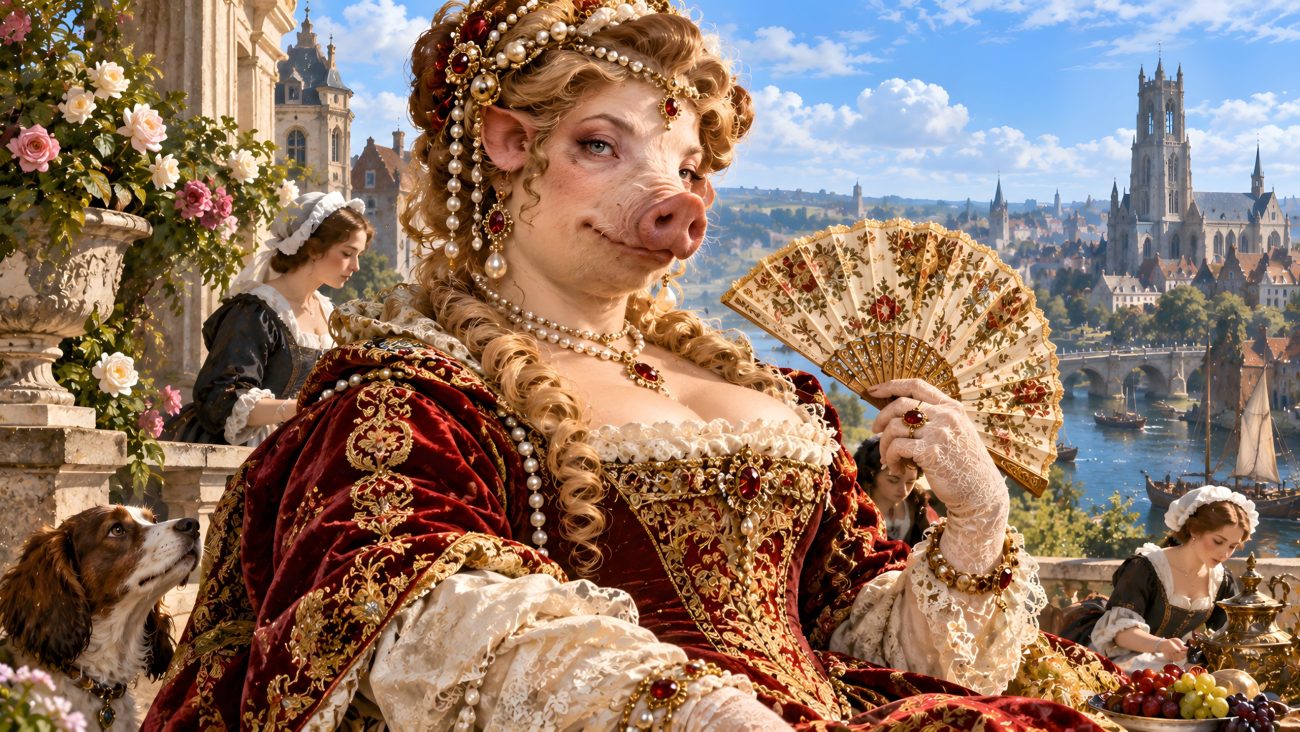
Pig-faced women are figures from a legend that emerged in the Netherlands, England, and France around the late 1630s. The stories describe wealthy women whose bodies are otherwise entirely human but whose faces resemble those of pigs. In the earliest versions, this strange appearance resulted from witchcraft rather than birth or natural causes.

The most familiar version tells of a pig-faced woman who marries a man. On their wedding day, her husband is offered a choice: she can appear beautiful to him but retain her pig-like face in the eyes of everyone else, or appear beautiful to everyone else while looking like a pig to him. When he leaves the decision to his wife, the enchantment is broken, and her human appearance is restored. The tale became particularly popular in England and later spread to Ireland, often presenting the breaking of the curse as a lesson about respect and personal choice.

Over time, the magical elements faded, and stories about pig-faced women increasingly circulated as claims about real people. In early nineteenth-century Dublin, rumours suggested that the reclusive philanthropist Griselda Steevens had hidden herself because she possessed a pig’s face. In London in late 1814 and early 1815, reports spread about a supposed pig-faced woman living in Marylebone, accompanied by alleged portraits that were published as evidence of her existence. Showmen also exhibited supposed pig-faced women at fairs, though some attractions may have involved shaved bears dressed in women’s clothing rather than actual people with unusual faces.

Belief in pig-faced women gradually declined, and the legend had largely disappeared from public attention by the twentieth century. One of the last significant works to present their existence as genuine appeared in 1924. The legend illustrates how a supernatural folktale could evolve into a widely circulated urban rumour, reinforced by sensational journalism and public entertainment.


Sources

“Pig-Faced Women.” Wikipedia: The Free Encyclopedia. Wikimedia Foundation. Accessed October 27, 2026.


Henwen

Tradition: Welsh Mythology
Alternative Names: Hen Wen, Old White
Category: Pig


The Myth

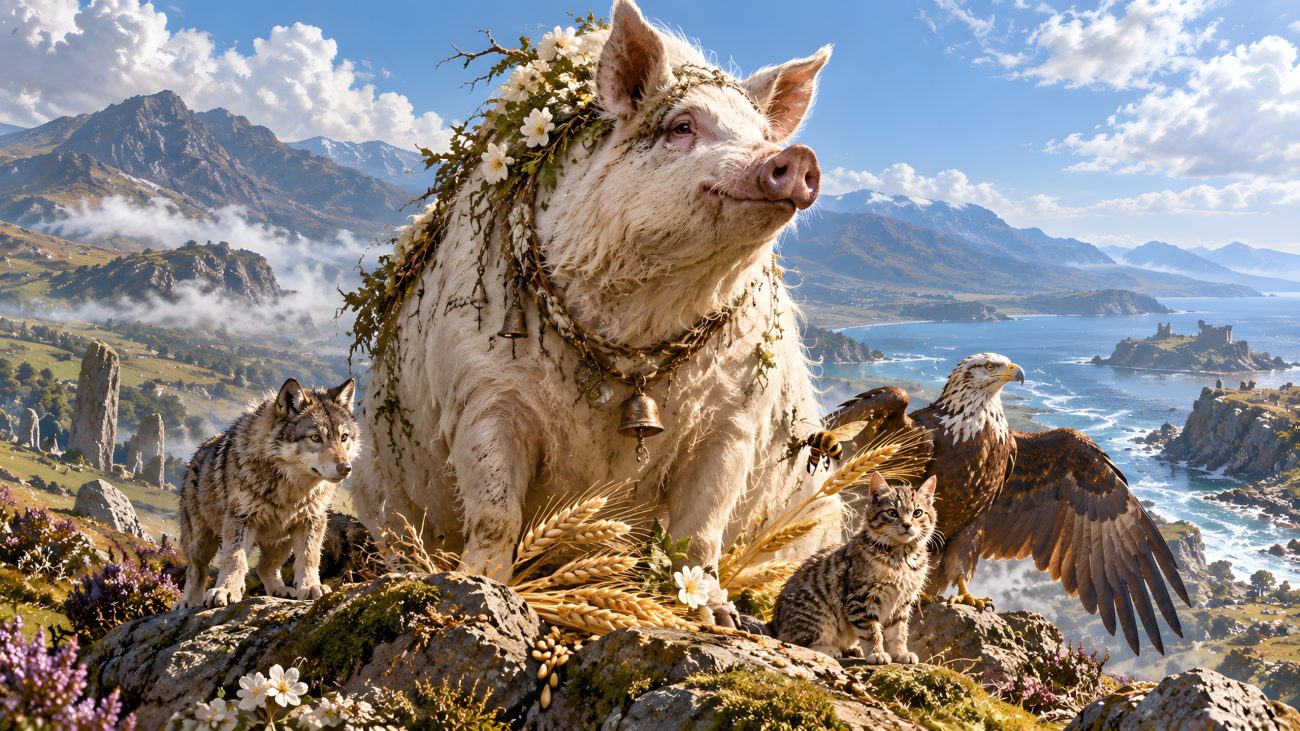
Henwen, whose name means “Old White,” was a sow in Welsh mythology whose offspring included both beneficial and dangerous creatures. According to the Welsh Triads, she was kept by Coll son of Collfrewy, a swineherd serving Dallwyr Dallben. When Henwen was about to give birth, a prophecy warned that her offspring would bring misfortune to Britain. She was therefore pursued until she plunged into the sea at Penrhyn Awstin in Cornwall, eventually emerging at Aber Tarogi in Gwent Is-coed.

As she travelled across Wales, Henwen gave birth to a remarkable variety of offspring. At Maes Gwenith in Gwent, she produced a grain of wheat and a bee. At Llonion in Pembroke, the accounts differ over whether she gave birth to barley, wheat, or a piglet, while another tradition records a grain of rye at Lleyn in Arfon. On the hill of Cyferthwch in Snowdonia, she produced a wolf cub and an eaglet, and beneath the Black Rock at Llanfair in Arfon, she gave birth to a kitten. Her offspring thus included creatures associated with agricultural abundance as well as animals regarded as potentially dangerous.

The wolf cub and eaglet were adopted by prominent men, but both supposedly brought trouble to their keepers. The swineherd took the kitten and threw it into the Menai Strait. On the island of Anglesey, known in Welsh as Ynys Môn, the sons of Palug raised the kitten until it became Cath Palug, a monstrous cat. This creature later appeared in Arthurian tradition as an opponent of either Cai, also known as Sir Kay, or King Arthur himself. Henwen’s legend connects a mysterious animal’s journey across Wales with the origins of both prosperity and monstrous threats.


Sources

“Henwen.” Wikipedia: The Free Encyclopedia. Wikimedia Foundation. Accessed October 27, 2026.


Ustreł

Tradition: Bulgarian Mythology
Alternative Names: Usov
Category: Pig, Vampire


The Myth

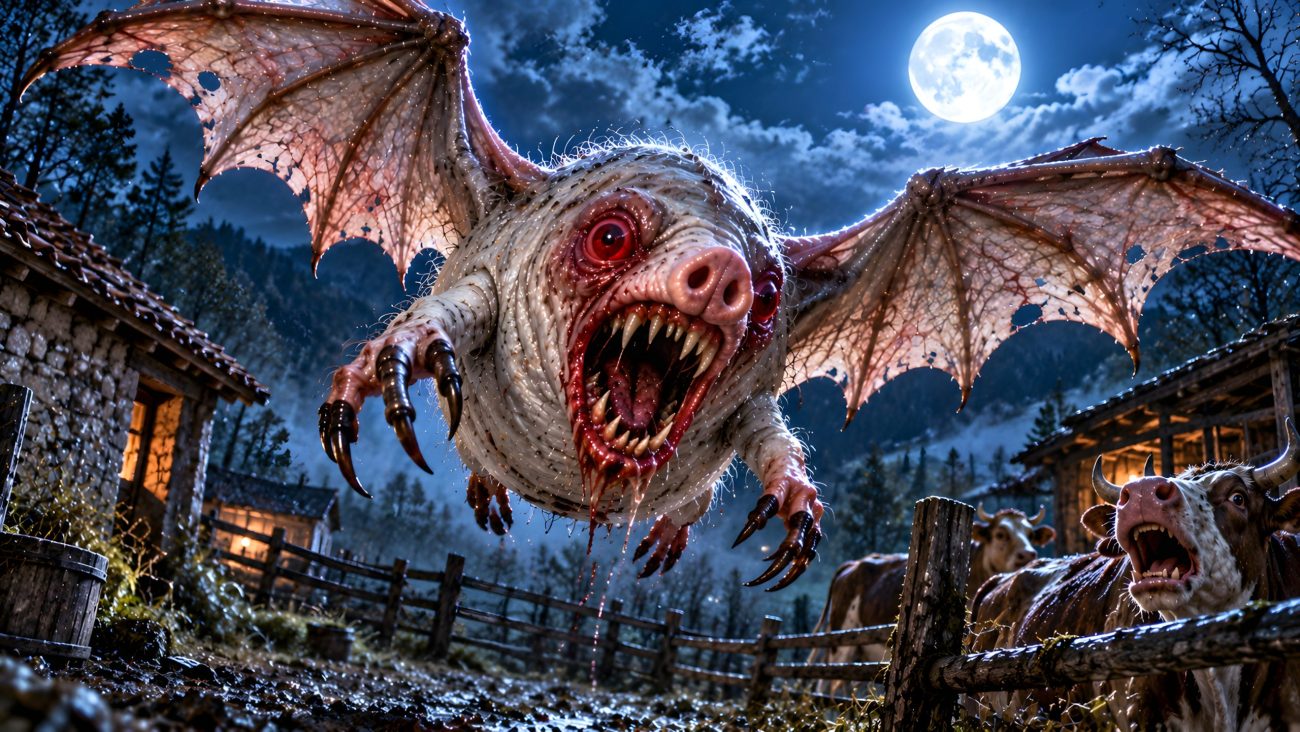
Ustreł is a vampiric demon from southeastern Bulgaria, particularly associated with the regions around Burgas and Malko Tarnovo. It originates from the spirit of a child conceived on a Saturday and dying unbaptized. Nine days after burial, the child’s corpse transforms into a strange creature resembling a squirrel, which digs its way out of the grave and emerges into the world. It hunts only at night, feeding on the blood of cattle, sheep, and oxen before eventually attacking humans when it has regained enough strength. During the day, it retreats to its grave.

The Ustreł changes its appearance as it grows, passing through three distinct stages. In its earliest form, it resembles a smooth, bulging bagpipe bellows, without legs, wings, a tail, or a neck. It has a short, pig-like snout, human-like eyes with intensely red corners and eyelids, two holes in place of a nose, and short limbs ending in long, curved black claws. Its body has no bones. At this stage, it can only be killed with a hawthorn stake.

As it grows stronger, the Ustreł begins hiding among the horns of livestock. It then resembles a featherless owl without legs or a beak, possessing only membranous wings. When captured, it cries like a human baby. During this stage, it can be killed with either hawthorn or a silver coin. After approximately six months, it reaches its final stage and can transform into either a human or an animal. In human form, it appears almost ordinary, except that it lacks the cartilage separating the nostrils, leaving a single opening instead.

The Ustreł drains the blood of animals, causing them to die on the same night they are attacked. Its victims can be recognised by bluish, swollen humps or bellies where the demon has bitten them. Once it has fed sufficiently, it may become so heavy that it cannot move easily, or so light that it can perch among the horns of cattle or on their udders. It avoids Saturdays, when it loses its strength, and fears both wolves, which can see it, and fire. After becoming human, it may produce offspring that are themselves vampires. The demon can be destroyed by a person born on a Saturday or driven away with living fire, created by rubbing dry limewood together. Such fire was used to lead afflicted people and animals through the flames, while specially baked bread could carry the Ustreł away from a village.


Sources

“Ustreł.” Wikipedia, wolna encyklopedia (Polish Wikipedia). Wikimedia Foundation. Accessed October 11, 2026. https://pl.wikipedia.org/wiki/Ustre%C5%82


Ankwunyab the Pig

Tradition / Region: Cameroon Mythology
Alternative names: Ankwunyab, Friend-of-Mine
Category: Pig


The Myth

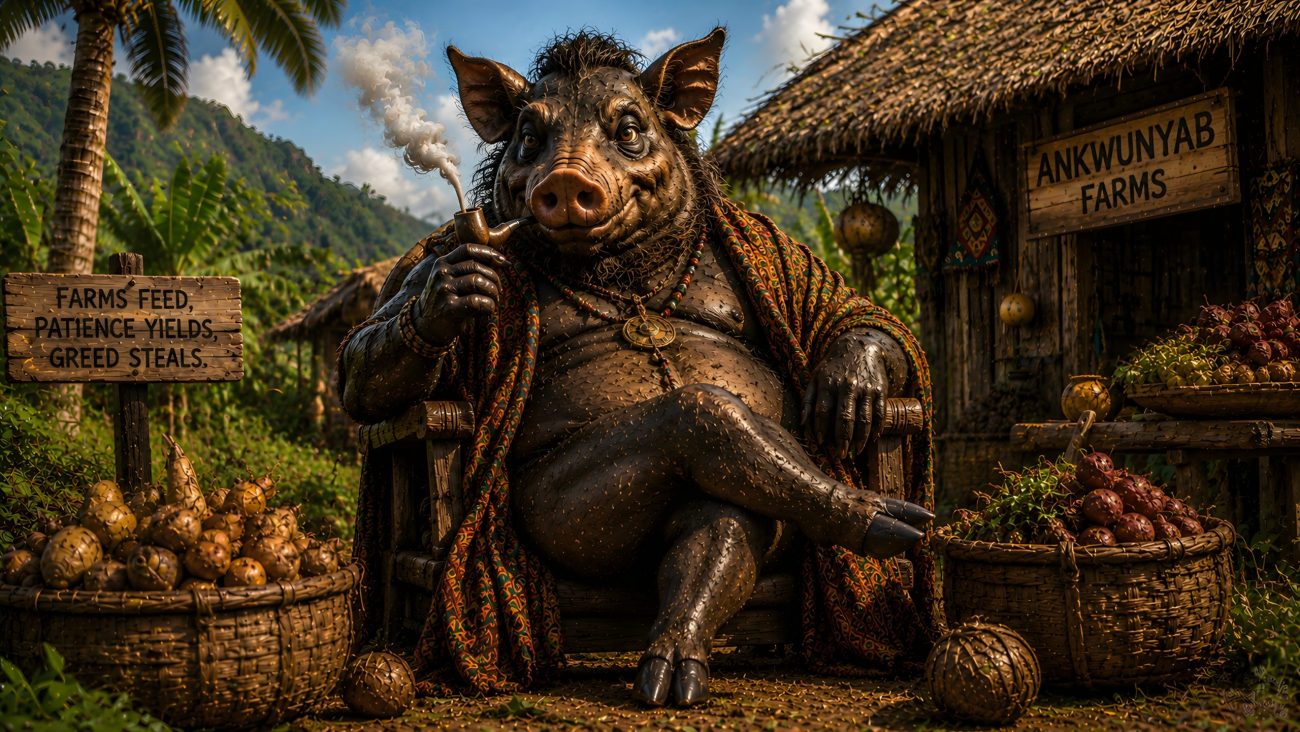
Ankwunyab the Pig appears in Central African animal folklore as a massive, wealthy, hot-tempered pig known for his endless appetite and relentless work ethic. Unlike many trickster animals, Pig is not lazy or foolish by nature. He is industrious, prosperous, and respected for his enormous farms and overflowing harvests. His great hunger is said to drive his tireless labor, making him one of the richest animals in the community.

Pig’s appearance is usually imagined as huge and imposing: a broad-bodied boar with a powerful snout, thick hide, restless little eyes, and an earth-stained body from constantly rooting through farms and soil. His grunts and heavy breathing are emphasized throughout the tale, giving him an intimidating physical presence. Yet despite his strength and wealth, Pig is emotionally vulnerable to manipulation and social obligation.

His greatest weakness is his friendship with Torokee the Tortoise.

Tortoise is everything Pig is not — lazy, cunning, extravagant, and deceitful. For years he borrows food, tools, seeds, oil, and money from Pig without repayment. Eventually Pig lends him a large sum again after Tortoise promises to host a grand feast for visiting in-laws and names Pig as an honored guest.

But moon cycle after moon cycle passes without repayment.

Pig repeatedly visits Tortoise demanding his money, only to hear excuses about failed harvests and hard times. Finally Pig loses patience and threatens serious consequences if the debt is not repaid within eight days.

Tortoise responds with a trap.

On the appointed day, Tortoise hides by pulling himself into his shell while instructing his wife to ignore Pig completely. When Pig arrives, furious and snorting, Mrs. Tortoise silently continues grinding spices with her stone as though he does not exist.

Enraged by the disrespect, Pig finally grabs the grinding stone and hurls it into the bushes.

At that exact moment Tortoise emerges from hiding and pretends horror at what Pig has done. His wife begins crying dramatically, claiming Pig has ruined her ability to cook. Tortoise then calmly declares that Pig cannot receive repayment until the missing grinding stone is recovered.

Pig realizes he has been trapped.

But the debt is so large that he cannot abandon it. Desperate, he begins searching through the earth for the stone.

According to the tale, this is why pigs forever root through dirt with their snouts.

The story transforms Pig into a folkloric explanation for real animal behavior while also presenting him as a tragic figure: hardworking but gullible, powerful but psychologically outmatched by trickster intelligence. Unlike many greedy beasts in folklore, Pig is not evil — merely blinded by anger, appetite, and pride.


Sources

Makuchi. (2008). The sacred door and other stories: Cameroon folktales of the Beba. Athens, OH: Ohio University Press.


Oriogorukho

Tradition / Region: Papua New Guinea Mythology
Alternate Names: Oriogoruho
Category: Pig, Forest Dweller


The Myth

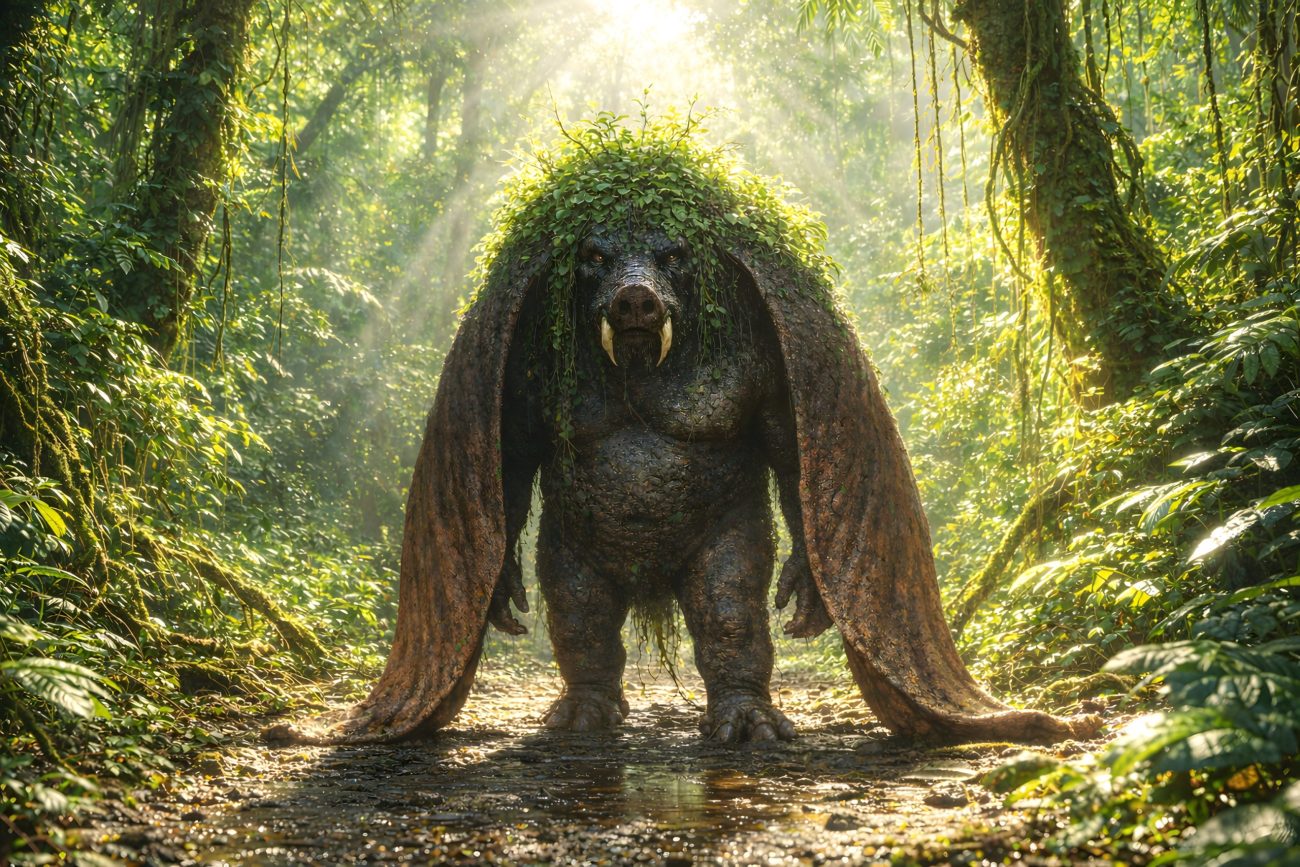
In the folklore of the Kiwai Papuans, Oriogorukho is described as an evil mythical creature that resembles a human in general form, but is clearly distinguished by several frightening features. Most striking are its enormous ears, which hang down to the ground. At night, the creature uses these ears to cover itself while it sleeps.

Although its body is broadly human-like, the Oriogorukho’s legs end in pig-like hooves. From its mouth protrude two pairs of sharp fangs, and instead of hair, bushes and creeping plants grow upon its head. Despite this monstrous appearance, the Oriogorukho possesses the ability to take on the shape of an ordinary human being. When it does so, it can be very difficult, or even impossible, to recognize it for what it truly is.

Oriogorukho are said to live in the forest, where they attack people. Their diet further sets them apart from humans. In addition to human flesh, they consume raw meat, fish, and unripe fruits. According to belief, a person who eats such improper food may themselves begin to transform into an Oriogorukho, with the first visible sign being the growth of the creature’s characteristic drooping ears.

In one tale, a man who has been shamed by his wife leaves his village and wanders into the forest. There he encounters an Oriogorukho and agrees to live together with it. Stories such as this suggest that although the Oriogorukho is regarded as a clearly negative and dangerous being, it is capable of treating people well if they themselves behave well toward it.


Gallery


Sources

Bestiary.us contributors. (n.d.). Oriogorukho. In Bestiary.us, from https://www.bestiary.us/Oriogorukho/


Interpretive Lenses

Religious Readings
  • Christian Ascetic Deep Dive
Philosophical Readings
  • Nietzschean Deep Dive
Psychological Readings
  • Jungian Deep Dive
Esoteric Deep Dive
  • Hermetic Deep Dive
Political / Social Readings
  • Marxist Deep Dive
Other
  • How to Invite The Oriogorukho