Bingfeng

Tradition: Chinese Mythology
Alternative Names: 并封, 並封, Pingfeng, Pingpeng (屏逢, 屏蓬)
Category: Pig


The Myth

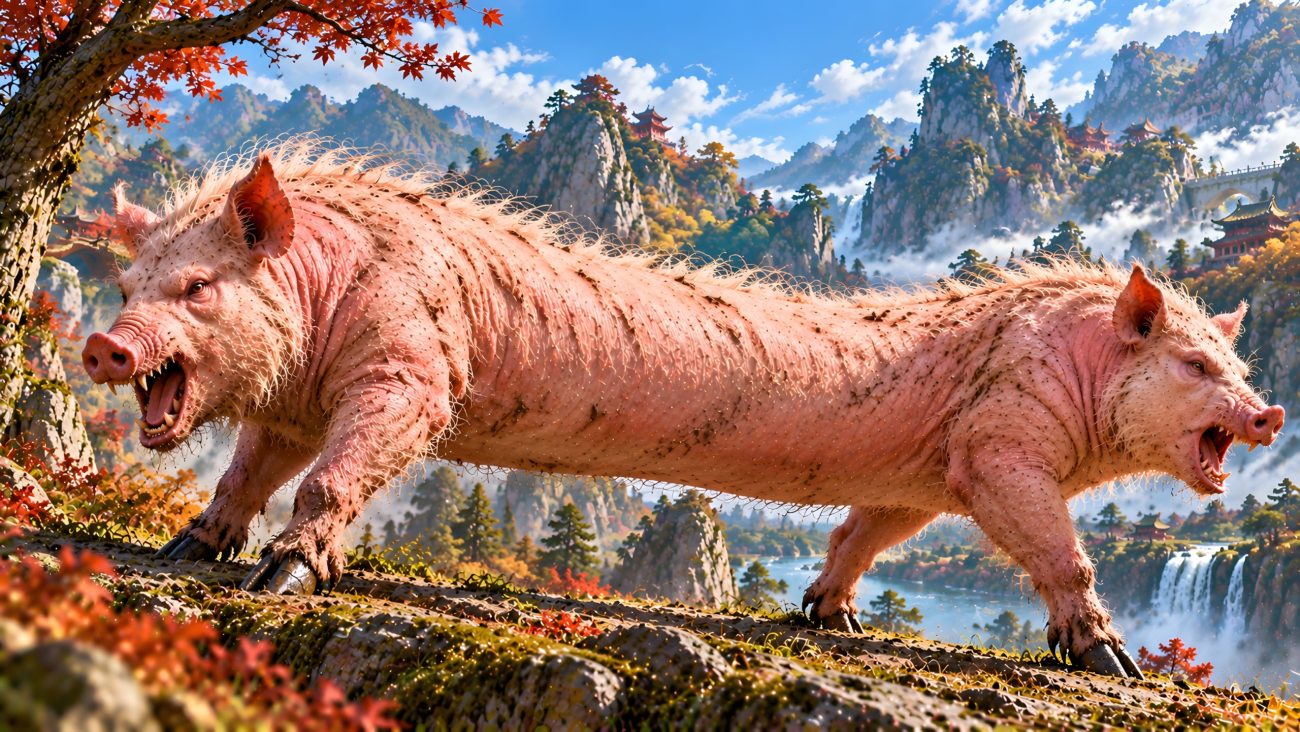
Bingfeng is a strange creature from Chinese mythology described in the Classic of Mountains and Seas (Shanhaijing). According to the Classic of the Regions Beyond the West, it lives east of the Land of Wuxian. It resembles a pig but has two heads, one at the front and one at the back, and its body is black.

The creature is also associated with Pingfeng, another unusual beast mentioned in the Great Wilderness of the West section of the Shanhaijing. The scholar Yuan suggested that Bingfeng and Pingfeng originally shared a name meaning “joined” or “combined,” referring to creatures whose bodies or heads are joined together. This interpretation connects Bingfeng with other mythological animals possessing two heads, including two-headed snakes and birds, which were understood as strange, transformed beings.

One commentary on the Shanhaijing, attributed to Guo Pu, interprets Bingfeng as a totemic image made from the dried remains of two pigs with their heads joined together. A two-headed pig also appeared in the illustrated publication Dianshizhai Pictorial during the Qing dynasty. The creature was later included in Shigeru Mizuki’s Illustrated Book of Chinese Yokai, preserving its place among the unusual beasts of Chinese mythology.


Sources

“Bingfeng” (并封). Chinese Wikipedia. Wikimedia Foundation. Accessed October 27, 2026. https://zh.wikipedia.org/wiki/%E5%B9%B6%E5%B0%81?utm_source=chatgpt.com
Reicho

Tradition: Japanese Mythology
Alternative Names: 霊猪, Divine Boar, Sacred Boar
Category: Pig


The Myth

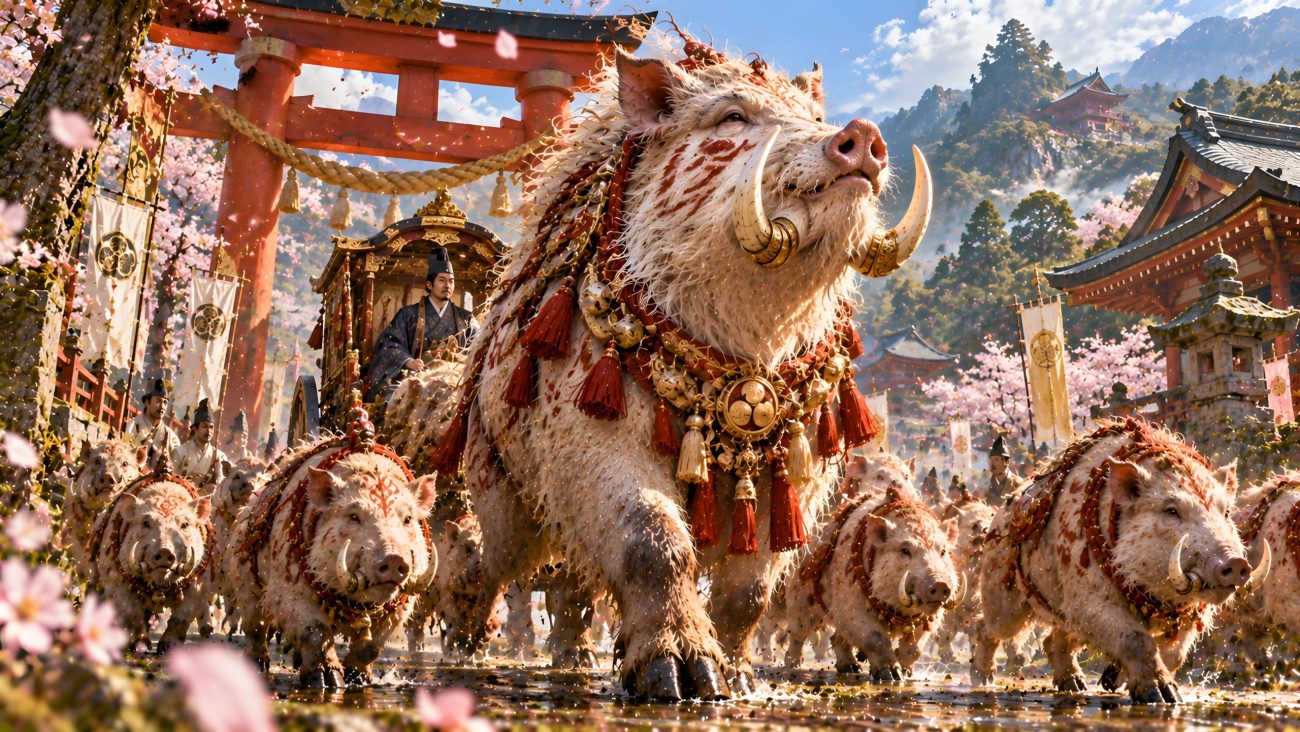
Reicho, meaning “Sacred Boar” or “Divine Boar,” refers to the boars associated with the Japanese statesman Wake no Kiyomaro and worshipped as divine messengers. At Gōō Shrine in Kyoto, stone boars stand in place of the guardian dogs commonly found at Shinto shrines. Images of sacred boars can also be found at other shrines connected with Kiyomaro, including Wake Shrine in Wake, Okayama Prefecture, and Adachi Myōken Shrine in Kokura, Kitakyushu. These traditions commemorate legends in which wild boars came to Kiyomaro’s aid during times of danger.

According to the Shoku Nihongi, Kiyomaro fell into conflict with the powerful monk Dōkyō and incurred the anger of Empress Shōtoku, who had placed great trust in Dōkyō. He was stripped of his name, renamed Himebe no Kegamaro, and exiled to Ōsumi Province. Dōkyō also sent assassins to kill him, but a thunderstorm prevented their attempt. After the empress died and Dōkyō lost his influence, Kiyomaro was rehabilitated under Emperor Kōnin and appointed governor of Buzen Province. Later, when Kiyomaro was unable to stand because of an affliction affecting his legs, he travelled by palanquin to worship the Hachiman deity in Usa District. A herd of approximately three hundred wild boars appeared, formed a procession, and guided him along more than ten ri of the journey before disappearing into the mountains. Witnesses were astonished, and Kiyomaro was reportedly able to stand and walk again on the day he visited the shrine.

Other versions place the boars’ intervention earlier in Kiyomaro’s life, during his mission to verify an oracle from Usa Hachiman Shrine concerning Dōkyō’s possible accession to the throne, or after assassins had severed the tendons in his legs while he was travelling to give thanks at the shrine. Although the details differ, the stories established a lasting association between Kiyomaro and the boar as a divine protector. From the Meiji period onward, statues of boars were dedicated to shrines connected with him. Boars also appeared on some ten-yen banknotes issued from the Meiji period until before the Second World War, alongside Kiyomaro’s portrait and Gōō Shrine. Certain designs featured boars on the reverse or within the decorative border, leading to the notes being popularly nicknamed “wild boars.”


Sources

“Reicho.” 新版TYZ 妖怪図鑑 (New TYZ Yokai Encyclopedia). https://tyz-yokai.blog.jp/archives/1073384916.html?utm_source=chatgpt.com


Tōkō

Tradition: Chinese Mythology
Alternative Names: 当康, 當康, 當庚, Dang Kang, Yázhū (牙豚), Tusked Pig
Category: Pig


The Myth

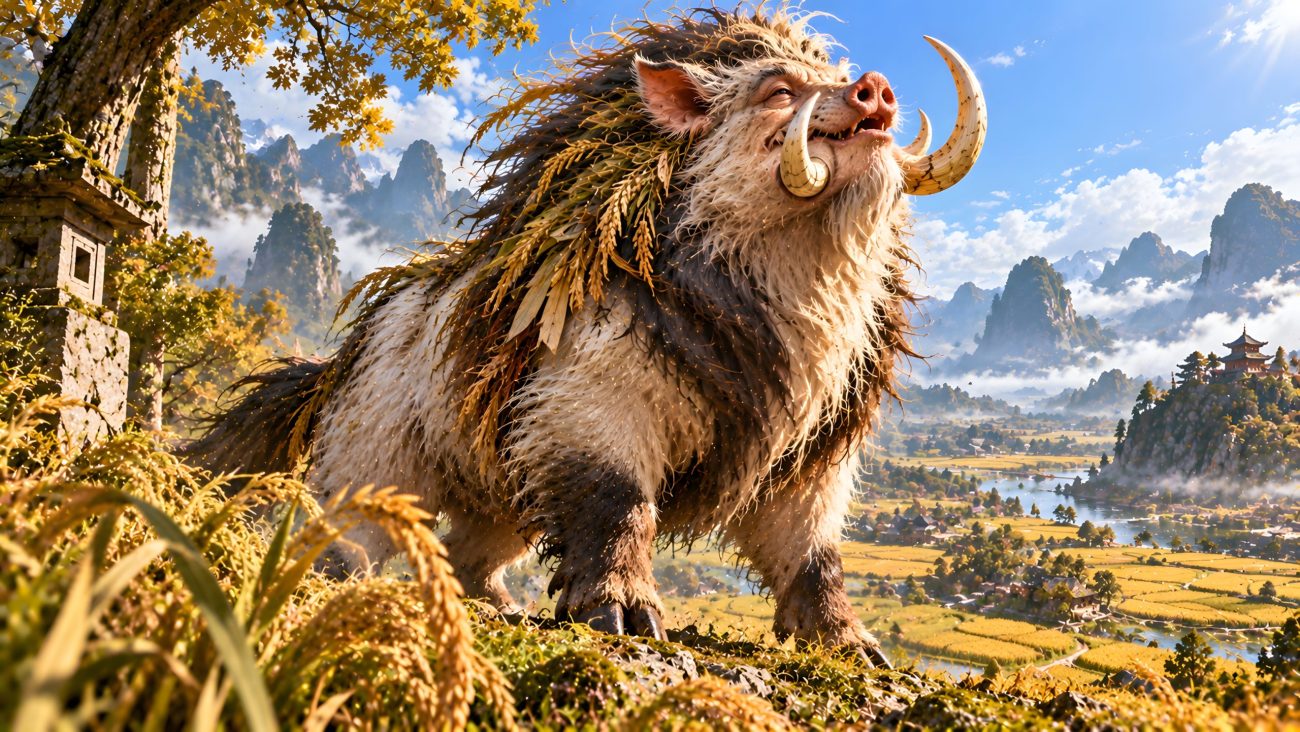
Tōkō, also known as Dang Kang, is a mythical beast described in the ancient Chinese geographical text Shanhaijing (The Classic of Mountains and Seas). According to the Eastern Mountains Classic, it inhabits Qin Mountain, a place rich in gold and jade. The creature resembles a pig and possesses prominent tusks. When it cries out, it calls its own name, “Dang Kang,” with its name understood to imitate the sound it makes.

The appearance of Tōkō is considered an auspicious omen. According to the Shanhaijing, when the creature appears, the world enjoys abundant harvests. Its association with agricultural prosperity is also reflected in the interpretation of its name. The Chinese historian of antiquity Itō Seiji suggested that the character kang is connected to the word for rice husks, originally referring to mature, hardened grain. Tōkō may therefore have been welcomed as a wild beast whose arrival heralded a successful harvest.

Knowledge of Tōkō reached Japan through Chinese texts, including the Shanhaijing and encyclopedic reference works. It appears in the illustrated animal section of the Edo-period Morokoshi Kinmō Zui, as well as in picture scrolls depicting strange creatures from the Asian mainland. In the Kaiki Chōjū Zukan (Illustrated Scroll of Strange Birds and Beasts), Tōkō is portrayed with the body of a pig or wild boar and a human face. Although the scroll preserves the creature’s traditional habitat, distinctive cry, and association with abundant harvests, it does not describe its physical appearance in the accompanying text.


Sources

“Dang Kang.” 新版TYZ 妖怪図鑑 (New TYZ Yokai Encyclopedia). https://tyz-yokai.blog.jp/archives/1073598500.html?utm_source=chatgpt.com


Twrch Trwyth

Tradition: Welsh Mythology
Alternative Names: Trwyd, Troynt, Troit, The Great Boar
Category: Pig


The Myth

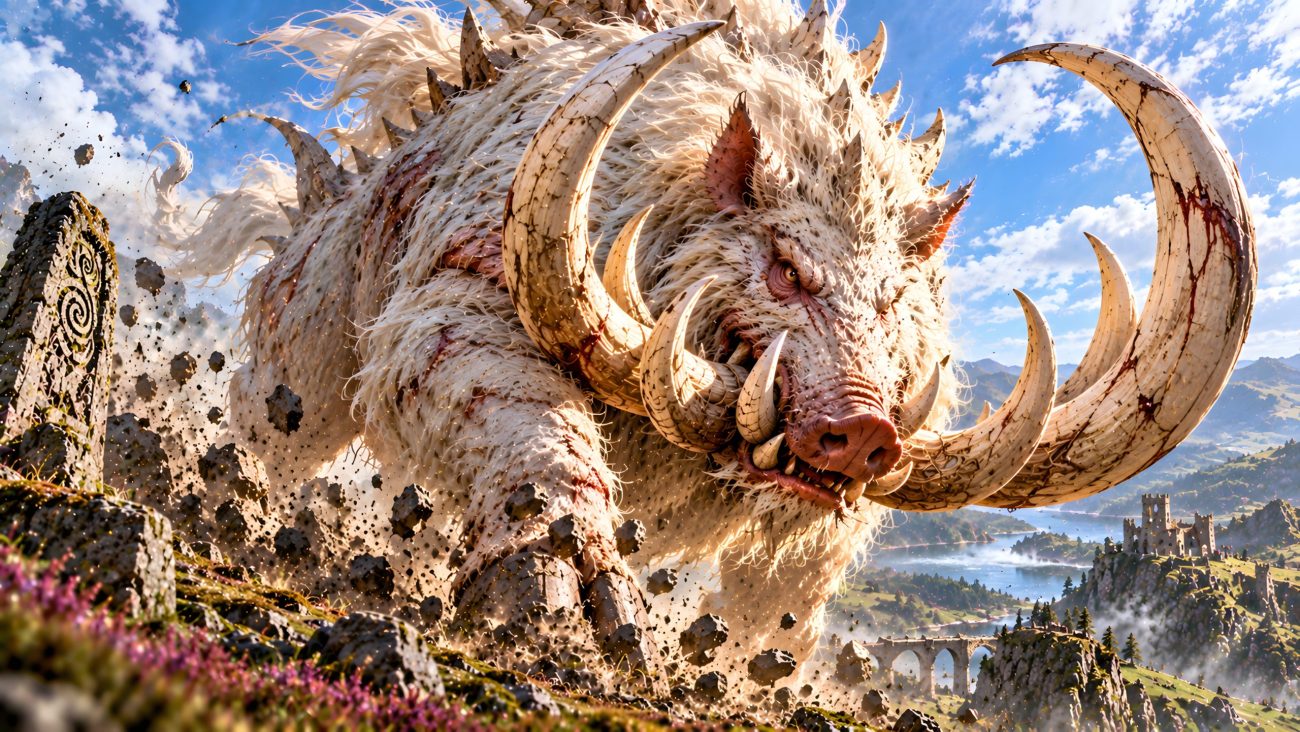
Twrch Trwyth is a monstrous wild boar from Welsh Arthurian mythology, best known from the medieval prose tale Culhwch and Olwen. According to the story, Twrch was originally the son of Prince Taredd, but God transformed him into a swine as punishment for his sins. The beast possessed venomous bristles capable of injuring those who approached it and carried a comb, a pair of scissors, and a razor between its ears. These objects were essential to the tasks imposed on Culhwch by Ysbaddaden, a giant whose daughter Olwen Culhwch wished to marry. To complete the tasks, Culhwch had to obtain the implements from the boar and recruit Arthur and his warriors to help him.

The hunt for Twrch Trwyth became a vast undertaking requiring specially chosen hunting dogs, skilled handlers, equipment, and numerous warriors. The most important hound was Drudwyn, the only dog said to be capable of hunting the boar, while Mabon ap Modron was the only person able to control it. Arthur and his companions eventually discovered Twrch and its seven offspring in Ireland. Menw son of Teirgwaedd transformed himself into a bird and flew to the boar’s lair to confirm that the required implements were on its head. When he attempted to seize one, he managed only to pluck a silver bristle. Twrch shook itself violently, scattering venom that wounded Menw.

Arthur’s forces pursued the boar from Ireland into Wales and onward toward Cornwall. Twrch ravaged the countryside, causing numerous casualties as it passed through southeastern Wales. Although Arthur’s warriors attempted to stop it near the mouth of the River Severn, the animal escaped. During its passage through the river, the hunters managed to seize the razor, scissors, and eventually the comb from its head. Twrch then fled toward Cornwall and was finally driven out to sea, still pursued by the hounds Aned and Aethlem. The tale does not reveal what ultimately happened to the beast, leaving open the possibility that it survived. Its hunt is one of the central episodes of Culhwch and Olwen, while an earlier account in the ninth-century Historia Brittonum already associates Arthur and his hound Cavall with the pursuit of a great boar.


Sources

“Twrch Trwyth.” Wikipedia: The Free Encyclopedia. Wikimedia Foundation. Accessed October 31, 2026.
https://en.wikipedia.org/wiki/Twrch_Trwyth


Erymanthian Boar

Tradition: Greek Mythology
Alternative Names: Erymanthian Wild Boar, Erymanthian Boar (ὁ Ἐρυμάνθιος κάπρος), Aper Erymanthius
Category: Pig


The Myth

The Erymanthian Boar was a gigantic, savage beast in Greek mythology, described as shaggy, untamable, enormously heavy, and foaming at the jaws. It inhabited the mountainous wilderness of Arcadia, particularly the wooded heights of Mount Erymanthus and the surrounding valleys and marshes. From its forest refuge, the boar would descend to ravage the groves of Arcadia and devastate the countryside around Psophis, threatening farmers and their lands. Its habitat was also associated with Mount Erymanthus, a region connected with Artemis, the goddess of the hunt and wild animals.

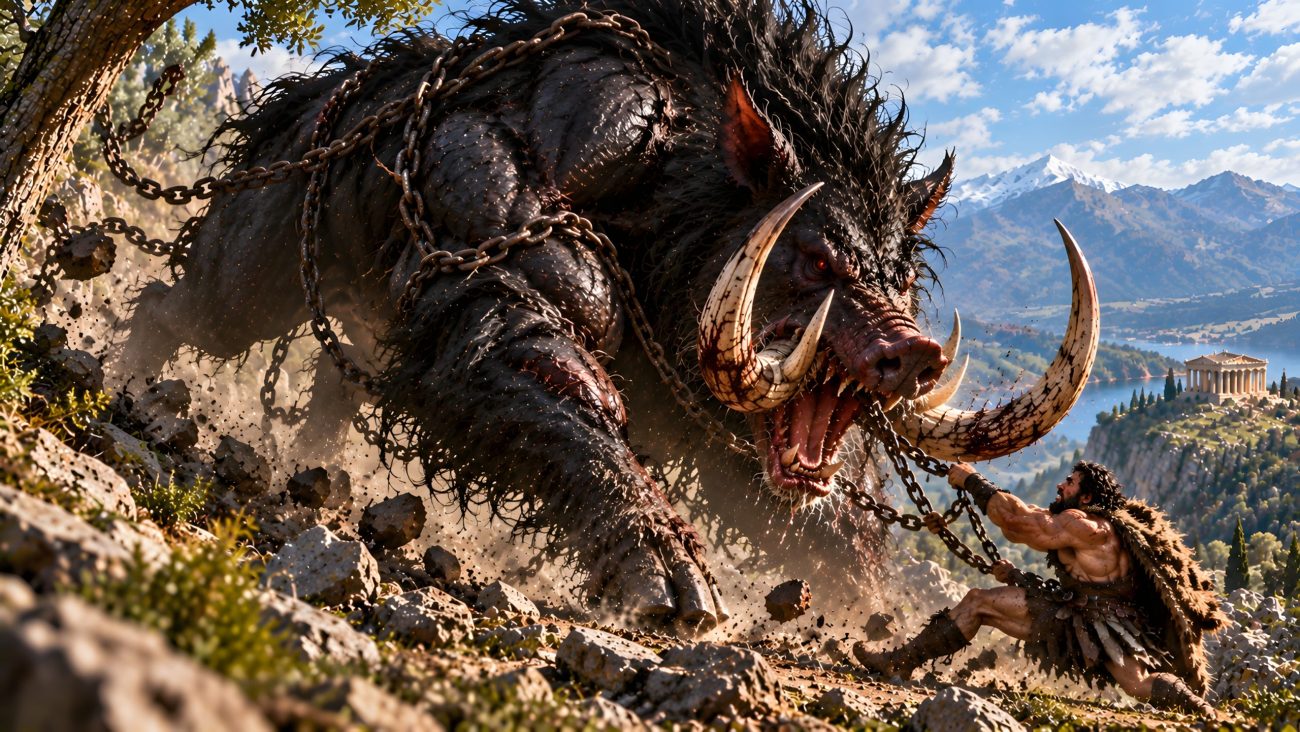
The capture of the Erymanthian Boar was the fourth labour of Heracles, who was ordered by King Eurystheus to bring the animal back alive to Mycenae. Heracles pursued the beast through the wilderness, driving it from its hiding place with loud shouts before forcing it into deep snow. Exhausted and trapped by the snow, the boar could no longer escape. Heracles bound it in chains and carried it on his shoulder to Mycenae, completing his task despite the animal’s size and strength. When Eurystheus saw the hero approaching with the enormous boar, he was so terrified that he hid inside a bronze vessel.

According to one tradition, the inhabitants of Cumae claimed that the tusks preserved in the sanctuary of Apollo there belonged to the Erymanthian Boar, although this identification was regarded as highly improbable. The creature also reflects the danger that wild boars represented in ancient Greek traditions. When Artemis was angered, she could send a devastating boar to ravage a region, as in the story of Meleager and the Calydonian Boar. The Erymanthian Boar thus embodied the destructive power of the untamed wilderness and the challenge faced by heroes who sought to master it.


Sources

“Erymanthian Boar.”


Beast of Dean

Tradition: English Mythology
Alternative Names: The Beast of the Forest of Dean
Category: Pig


The Myth

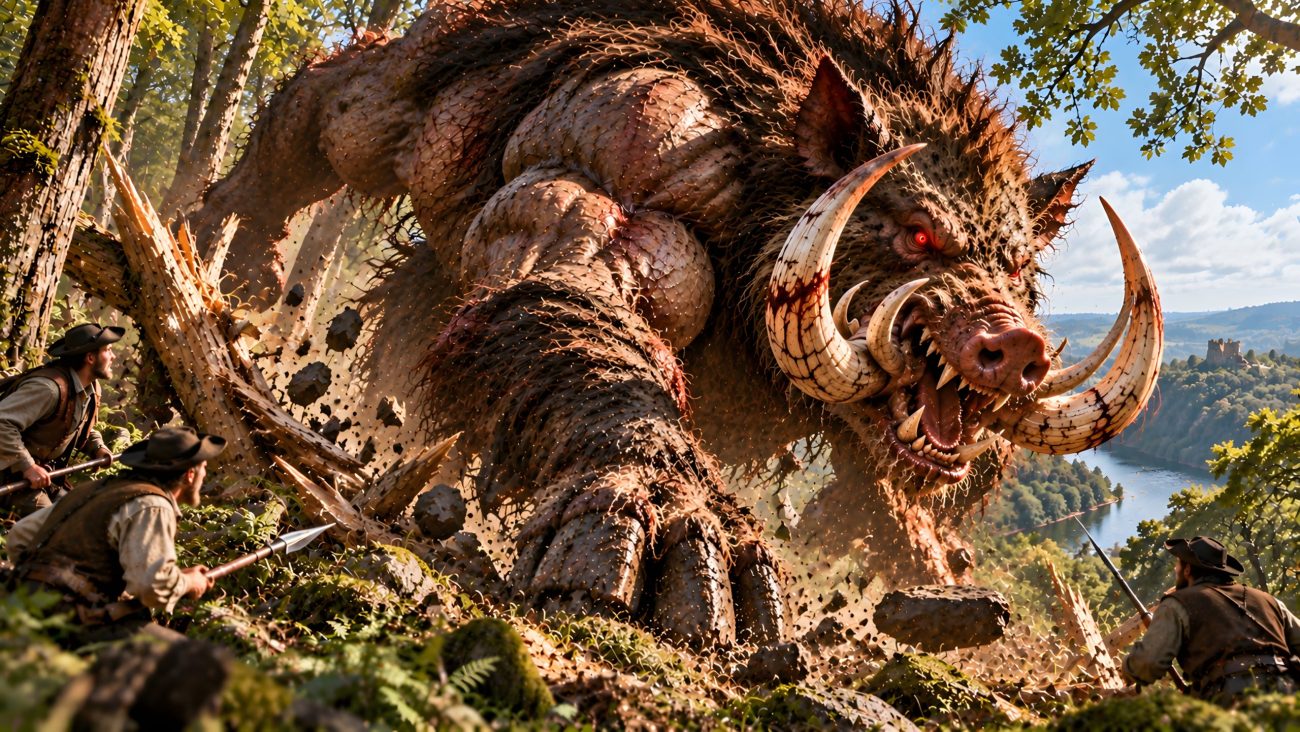
The Beast of Dean is a legendary animal said to inhabit the Forest of Dean in Gloucestershire, England, an ancient woodland bounded by the rivers Severn and Wye. Tales of the creature appear to have originated in the eighteenth or early nineteenth century. It was reportedly a gigantic wild boar, so powerful that it could knock down trees and hedges, and it became the subject of local attempts to hunt and kill it.

In 1802, farmers from the village of Parkend organized an expedition to capture and kill the beast. Their search was unsuccessful, and they found no animal matching the descriptions. Nevertheless, nineteenth-century accounts describe large populations of wild boar in the forest, with vast herds apparently allowed to forage there during autumn. These reports suggest that the legend may have developed around the region’s real wild boar population, although the existence of the enormous Beast of Dean has never been scientifically established.

The Beast continued to appear in later accounts of cryptozoology, whose proponents sometimes suggested that it was a real but scientifically unknown animal. Wild boar still inhabit the Forest of Dean, but there is no scientific evidence that a creature matching the legendary descriptions ever existed. In 2007, the science-fiction television series Primeval reimagined the Beast as a living gorgonopsid, a prehistoric predator that had travelled from the Permian Period into the modern world through a wormhole.


Sources

“Beast of Dean.” Wikipedia: The Free Encyclopedia. Wikimedia Foundation. Accessed October 27, 2026.


Wild Boar

Tradition: Luxembourg Mythology
Alternative Names: Das wilde Schwein, The Hellish Beast
Category: Pig


The Myth

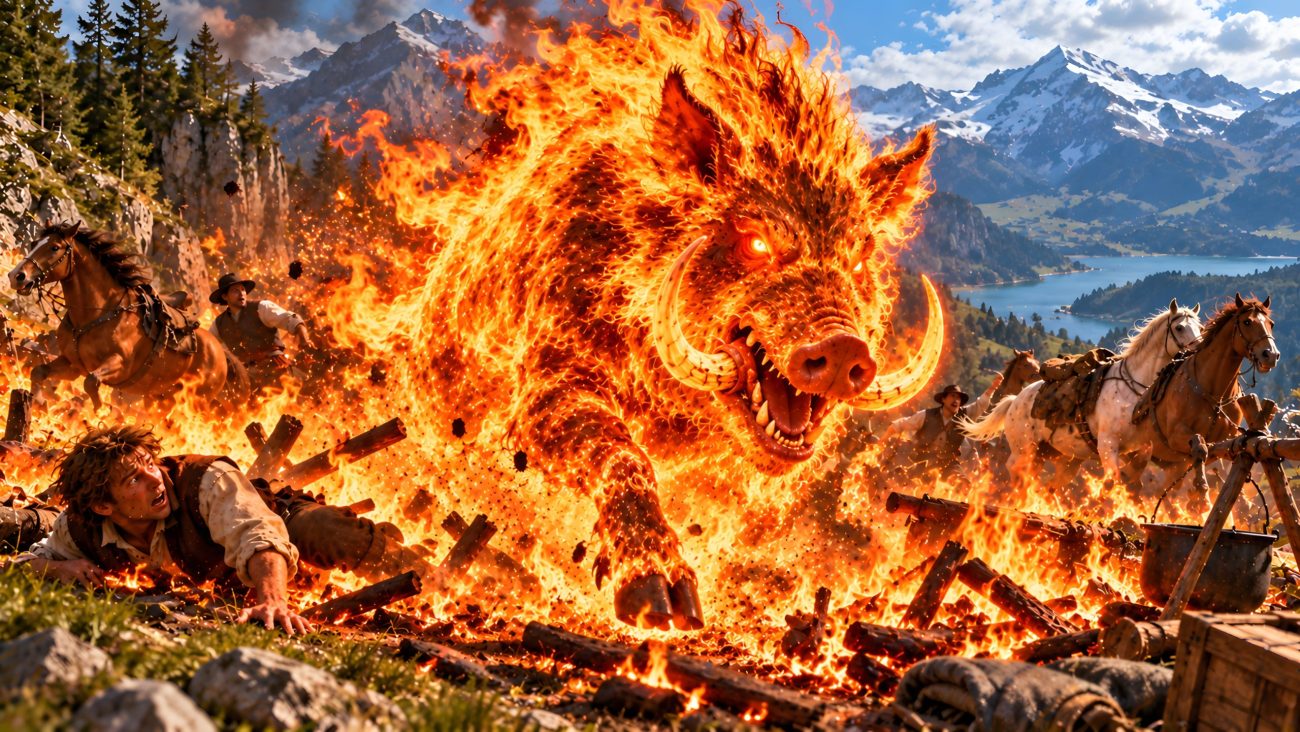
The Wild Boar is a terrifying creature described in a Luxembourgish legend about young horse herders who spent their nights taking horses out to pasture. An old farmer recalled that strange and frightening events often occurred during these nocturnal excursions. Among them, he particularly remembered a wild boar that periodically charged through their herders’ campfires, sending countless sparks flying into the air and leaving the men’s faces blackened by morning.

The appearance of this hellish beast brought disaster to the herders. Whenever they saw it, their horses would scatter in every direction, forcing them to search for the animals afterward. On one occasion, the boar suddenly sprang between the legs of one of the young men, compelling him to endure a terrifying ride through forests and rough terrain until he reached a distant, towering rock.

The unfortunate herder was trapped on the rock for seven days. Only on the eighth day did he manage to escape, facing numerous dangers along the way. He eventually returned to his companions, half-starved and covered in blood. The tale portrays the Wild Boar as a demonic and dangerous creature whose supernatural strength could carry people away and bring chaos to those tending horses at night.


Sources

La Fontaine, Edmond de. Luxemburger Sagen und Legenden. Luxembourg, 1882.


Village Pig

Tradition: Swiss Mythology
Alternative Names: Dorfsschwein, Village Pig
Category: Pig


The Myth

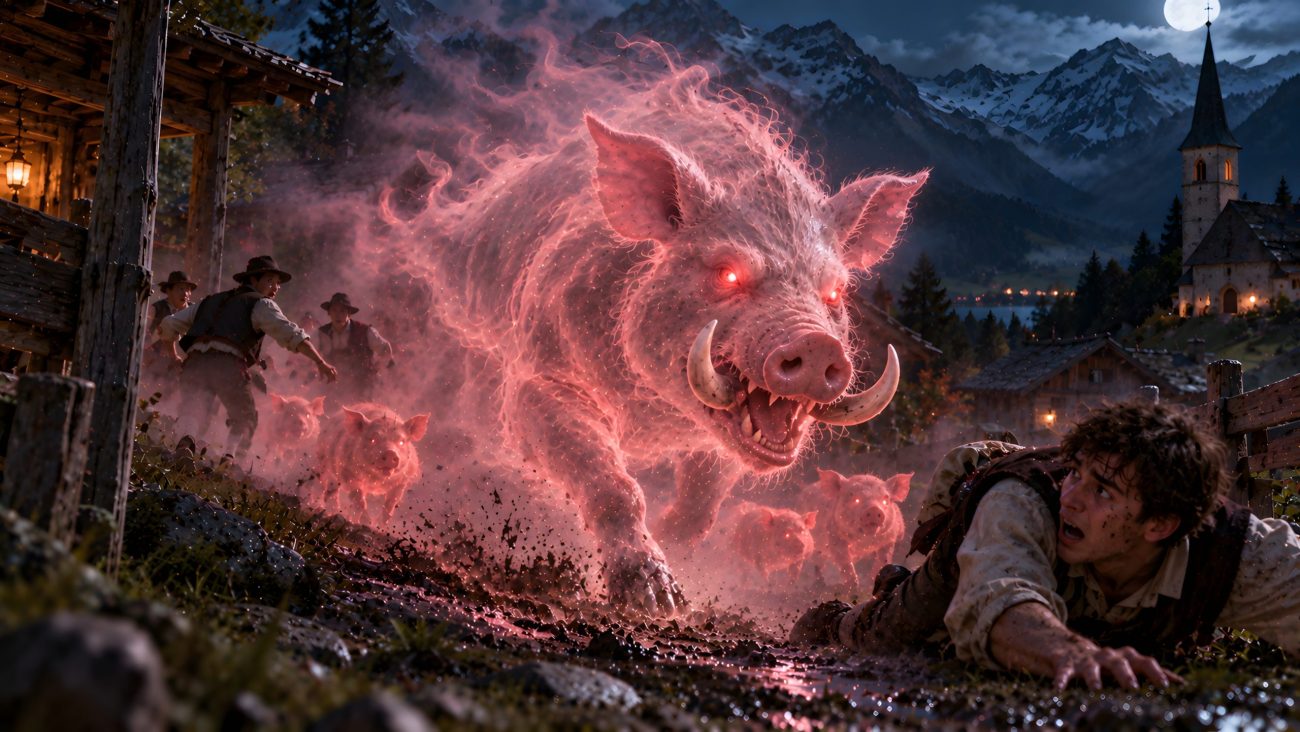
The Village Pig is a mysterious supernatural creature from the legends of the Canton of St. Gallen, Switzerland, recorded by Jakob Kuoni in 1903. It was particularly known in stories told by the Stubetiknaben, young men who went out at night along country fields, forest paths, and village streets. During these nocturnal wanderings, a pig would suddenly appear among them and prove extraordinarily difficult to escape.

Some accounts describe the creature forcing itself between a man’s legs and carrying him away to a distant dwelling or barn. It would apparently continue its journey as long as it could find a house or livestock shelter. In other stories, the Village Pig pursued bachelors who had fled into barns, peering through windows or looking through barn doors while standing on a ladder. One man harassed by the creature in the meadows encountered a whole group of young piglets accompanying it.

The man eventually ordered the supernatural animals to leave in the name of the Devil. They immediately withdrew with grunts and squeals and disappeared into nearby woods. Another legend from Altstätten claims that the Village Pig once entered a church. When the clergyman and sacristan attempted to catch it, the clergyman mounted the animal, only to be carried away on its back. These stories portray the Village Pig as a mischievous and persistent nocturnal creature that tormented people who encountered it after dark.


Sources

“Dorfschwein.” SAGEN.at. https://www.sagen.at/texte/sagen/schweiz/st_gallen/dorfschwein.html?utm_source=chatgpt.com


Honton

Tradition: Japanese Mythology
Alternative Names: 賁豚, 奔豚, Honto, Bentun, Kidney Accumulation
Category: Pig


The Myth

Honton, also known as Bonton or Bentun, is a creature-like manifestation of illness described in traditional Japanese medical literature. The term bentun refers to a condition in Chinese and Japanese medicine involving sudden attacks in which sensations of rising energy and palpitations seem to surge upward from the area around the navel. The disorder was associated with the kidneys and was believed to arise from an accumulation of pathological energy within the body.

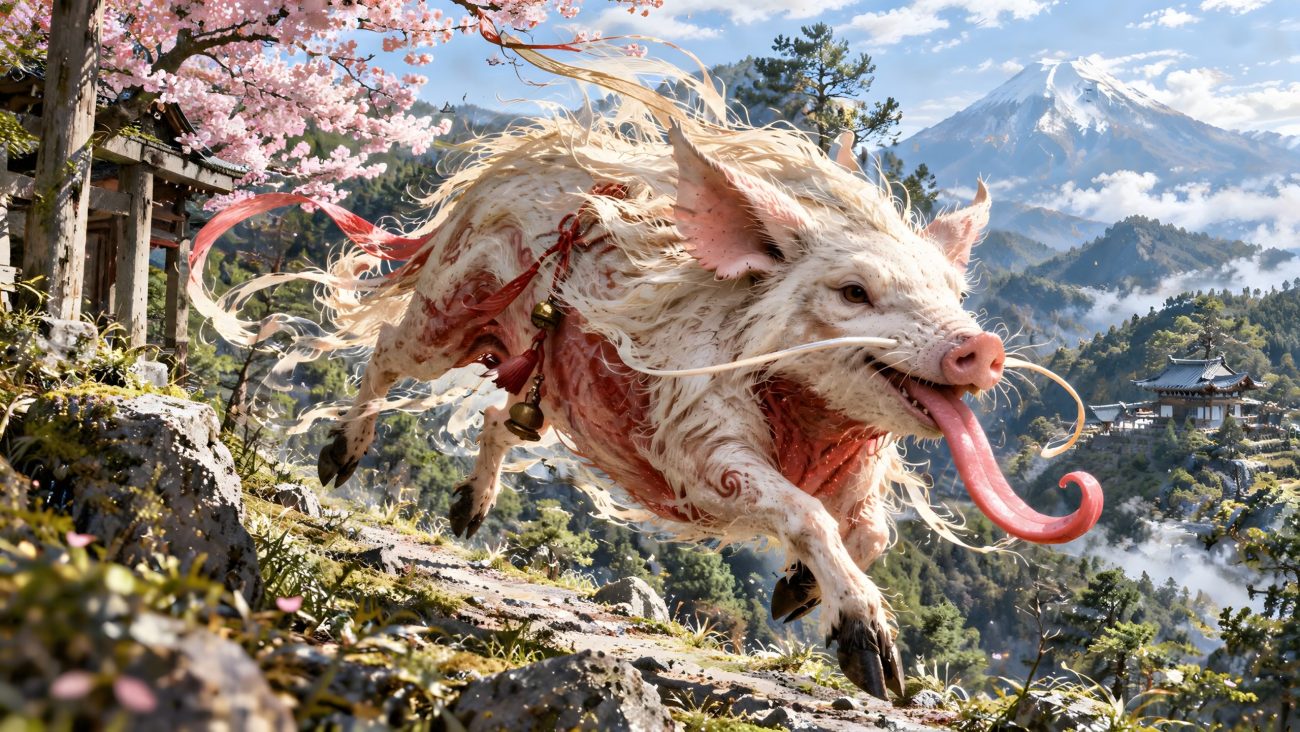
An illustration of Honton appears in the medical text Hari Kiki-gaki (Needle Notes), which depicts various creatures believed to form inside the human body and cause disease. Honton is shown as a four-legged animal resembling a running young pig, with a white face and back, a red belly, two whiskers, and a long tongue protruding from its mouth. It was believed to move constantly up and down from the region below the navel, never remaining in one place.

Traditional explanations associated the area below the navel with the north and the element of water. Because water was understood to move continuously, Honton’s restless movement was interpreted as reflecting this elemental quality. People believed to suffer from the associated kidney disorder were said to develop darkened skin, crave salty foods, and experience severe bad breath. The medical text mentions several methods of acupuncture treatment but does not provide specific instructions, apparently assuming that the details would be transmitted orally.


Sources

“Honton.” 新版TYZ 妖怪図鑑 (New TYZ Yokai Encyclopedia). https://tyz-yokai.blog.jp/archives/1073608506.html?utm_source=chatgpt.com


Buta Bake Bijo

Tradition: Japanese Mythology
Alternative Names: 豚化け美女, Buta Baké Bijō, Pig Transformed into a Beautiful Woman, Pig-Woman
Category: Pig


The Myth

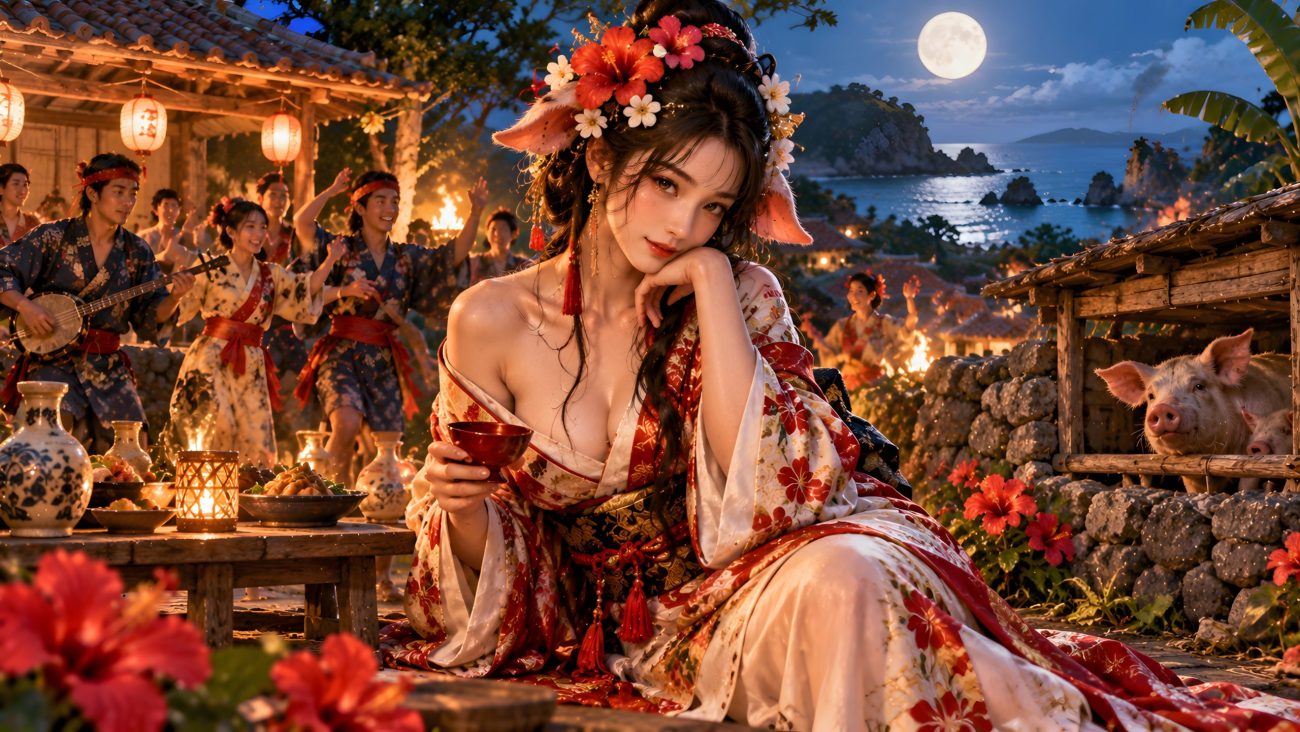
Buta Bake Bijo, meaning “Beautiful Woman Transformed from a Pig,” is a supernatural figure from Okinawan tradition in which pigs can take on human appearances. Tales collected in Folktales of Yonagusuku: Stories Told by Grandfathers and Grandmothers, published by the Yonagusuku Village Board of Education in 1989, describe pigs disguising themselves as beautiful women and appearing among young people gathered for nighttime singing, dancing, and socializing.

In one story, young men and women gather in the village of Nōbe for mōashibi, a traditional Okinawan custom in which young people meet outdoors at night to sing, dance, eat, and socialize. A beautiful woman arrives and joins the dancing. Captivated by her appearance, one of the young men follows her after the gathering. To his surprise, she enters a pigsty: the beautiful woman was actually a pig in disguise.

Another tale, reportedly heard in Yambaru by a resident of Tōbaru in Yonagusuku, concerns a large pig that had lived for eight years in a household in Kanna, Ginoza Village. The animal would eat when the household’s mother fed it but refused food from the young daughter-in-law. One day, when the woman tried to feed it again, the pig suddenly attacked her, grunting loudly. After she told her husband what had happened, the animal fled into the mountains.

Later, while young people were gathering for mōashibi near the racecourse at Kanna, a strange woman appeared among them, making pig-like grunting sounds. Recognizing the possibility that the escaped animal was a supernatural pig, the young people fled in fear. The story spread throughout the village, and young men reportedly began pursuing the pig with sticks each night, believing that it had to be killed.


Sources

“Butababijo.” 新版TYZ 妖怪図鑑 (New TYZ Yokai Encyclopedia). https://tyz-yokai.blog.jp/archives/1073560156.html?utm_source=chatgpt.com