Honton

Tradition: Japanese Mythology
Alternative Names: 賁豚, 奔豚, Honto, Bentun, Kidney Accumulation
Category: Pig


The Myth

Honton, also known as Bonton or Bentun, is a creature-like manifestation of illness described in traditional Japanese medical literature. The term bentun refers to a condition in Chinese and Japanese medicine involving sudden attacks in which sensations of rising energy and palpitations seem to surge upward from the area around the navel. The disorder was associated with the kidneys and was believed to arise from an accumulation of pathological energy within the body.

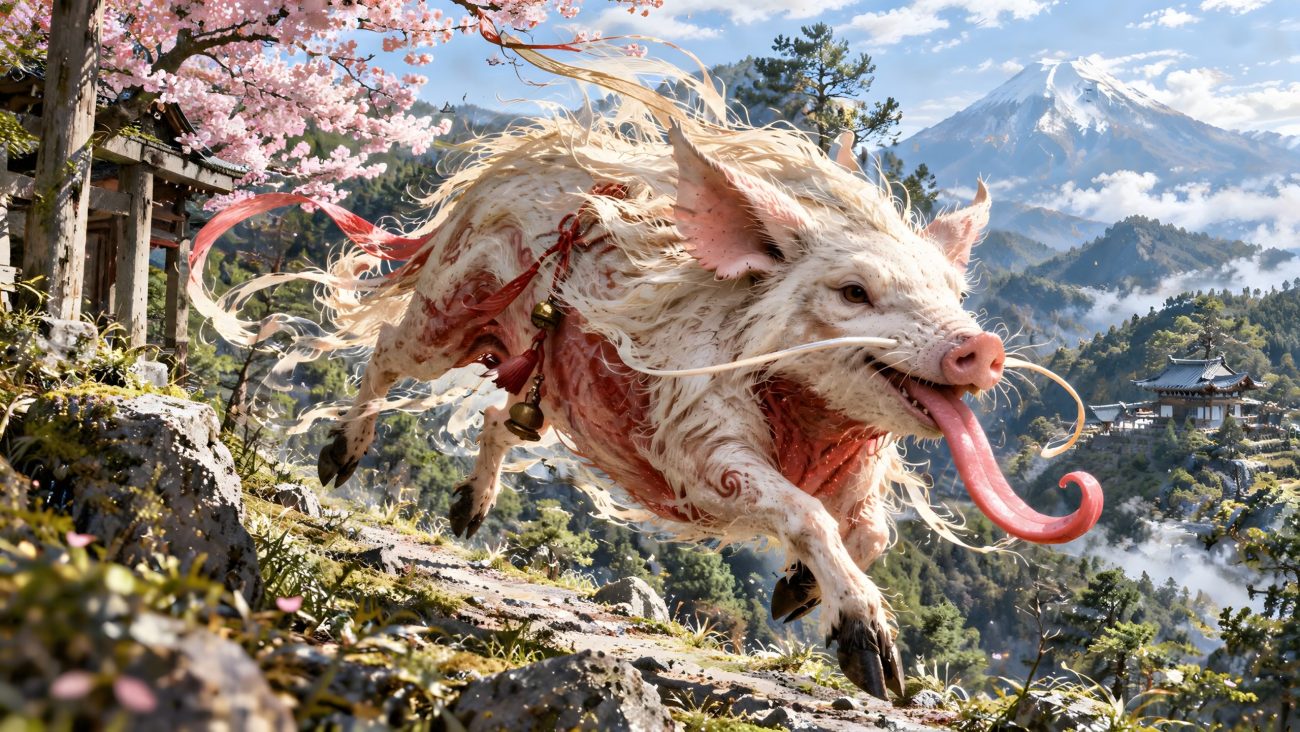
An illustration of Honton appears in the medical text Hari Kiki-gaki (Needle Notes), which depicts various creatures believed to form inside the human body and cause disease. Honton is shown as a four-legged animal resembling a running young pig, with a white face and back, a red belly, two whiskers, and a long tongue protruding from its mouth. It was believed to move constantly up and down from the region below the navel, never remaining in one place.

Traditional explanations associated the area below the navel with the north and the element of water. Because water was understood to move continuously, Honton’s restless movement was interpreted as reflecting this elemental quality. People believed to suffer from the associated kidney disorder were said to develop darkened skin, crave salty foods, and experience severe bad breath. The medical text mentions several methods of acupuncture treatment but does not provide specific instructions, apparently assuming that the details would be transmitted orally.


Sources

“Honton.” 新版TYZ 妖怪図鑑 (New TYZ Yokai Encyclopedia). https://tyz-yokai.blog.jp/archives/1073608506.html?utm_source=chatgpt.com
Buta Bake Bijo

Tradition: Japanese Mythology
Alternative Names: 豚化け美女, Buta Baké Bijō, Pig Transformed into a Beautiful Woman, Pig-Woman
Category: Pig


The Myth

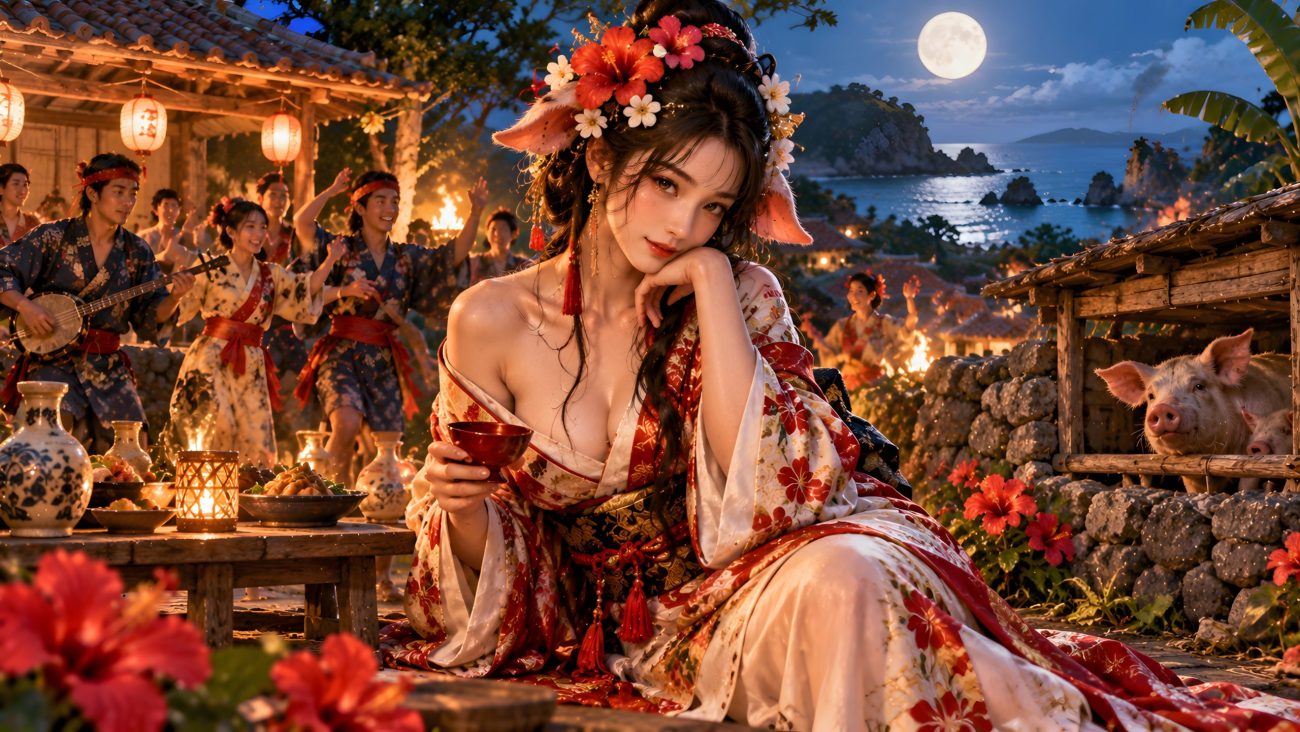
Buta Bake Bijo, meaning “Beautiful Woman Transformed from a Pig,” is a supernatural figure from Okinawan tradition in which pigs can take on human appearances. Tales collected in Folktales of Yonagusuku: Stories Told by Grandfathers and Grandmothers, published by the Yonagusuku Village Board of Education in 1989, describe pigs disguising themselves as beautiful women and appearing among young people gathered for nighttime singing, dancing, and socializing.

In one story, young men and women gather in the village of Nōbe for mōashibi, a traditional Okinawan custom in which young people meet outdoors at night to sing, dance, eat, and socialize. A beautiful woman arrives and joins the dancing. Captivated by her appearance, one of the young men follows her after the gathering. To his surprise, she enters a pigsty: the beautiful woman was actually a pig in disguise.

Another tale, reportedly heard in Yambaru by a resident of Tōbaru in Yonagusuku, concerns a large pig that had lived for eight years in a household in Kanna, Ginoza Village. The animal would eat when the household’s mother fed it but refused food from the young daughter-in-law. One day, when the woman tried to feed it again, the pig suddenly attacked her, grunting loudly. After she told her husband what had happened, the animal fled into the mountains.

Later, while young people were gathering for mōashibi near the racecourse at Kanna, a strange woman appeared among them, making pig-like grunting sounds. Recognizing the possibility that the escaped animal was a supernatural pig, the young people fled in fear. The story spread throughout the village, and young men reportedly began pursuing the pig with sticks each night, believing that it had to be killed.


Sources

“Butababijo.” 新版TYZ 妖怪図鑑 (New TYZ Yokai Encyclopedia). https://tyz-yokai.blog.jp/archives/1073560156.html?utm_source=chatgpt.com


Inoshishi Muko

Tradition: Japanese Mythology
Alternative Names: Ino no Muko, Boar Son-in-Law, Wild Boar Bridegroom
Category: Pig


The Myth

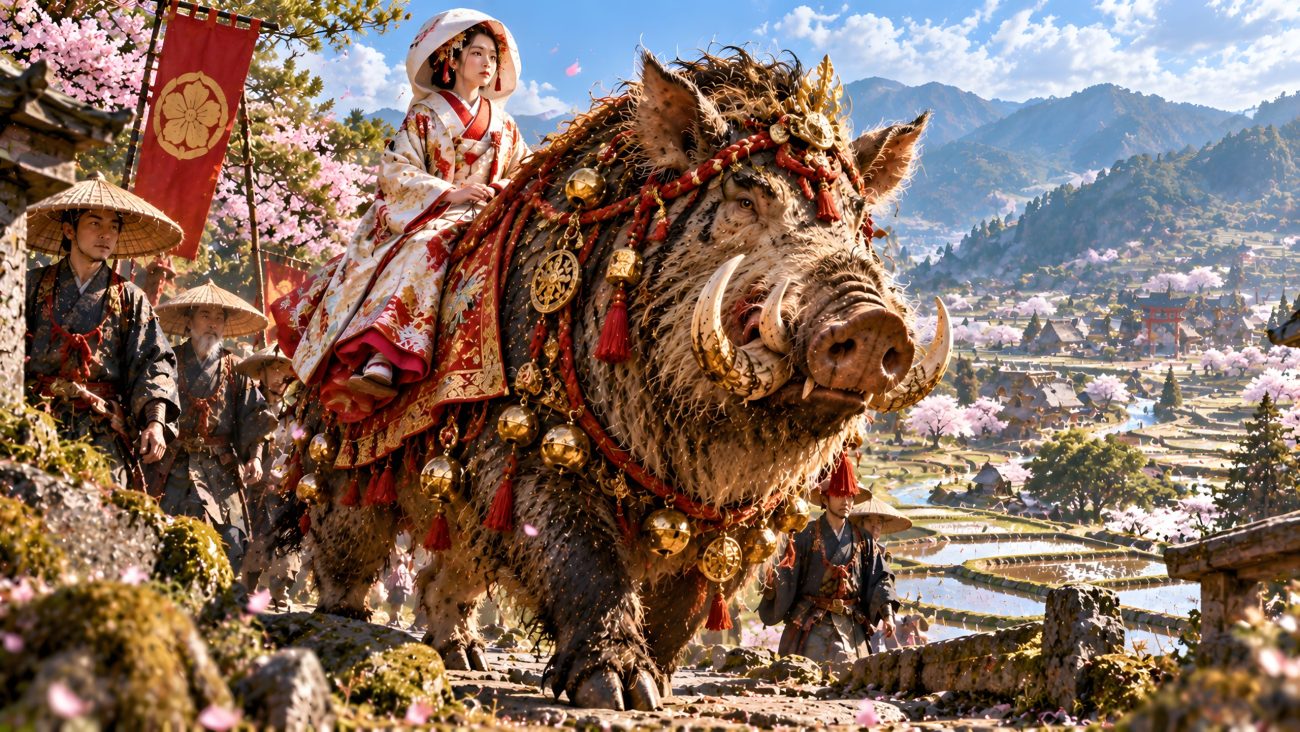
Inoshishi Muko, meaning “Boar Son-in-Law,” is a wild boar that appears as a supernatural bridegroom in Japanese folktales from the Chūgoku and Shikoku regions. These stories belong to the broader “monkey son-in-law” type of folktale, in which an animal demands a human daughter in exchange for helping her family. The boar typically offers to improve farmland or remove obstacles from agricultural land, expecting the old man’s daughter as its reward.

In a tale from Shikinobu Village in Hiroshima Prefecture, an old man with three daughters struggles to cultivate a barren field. A boar offers to plow the land if the old man promises it one of his daughters. After the boar quickly turns over the soil with its snout, the old man agrees. When his two older daughters refuse to marry the animal, the youngest volunteers out of concern for her parents. She takes flint, a fire-starting device, and bundles of thatch with her when the boar comes to collect her. During the journey into the mountains, she secretly ignites the thatch on the boar’s back. The animal runs wildly and eventually dies in the fire, allowing the daughter to return safely to her family.

A similar tale from Shishijima Island in Kagawa Prefecture tells of a boar that demands a daughter in exchange for removing large stones that obstruct farming. As in the Hiroshima story, the daughter burns the boar to death using straw carried on its back. This ending resembles the Japanese folktale Kachi-kachi Yama, in which an animal is defeated through a trick involving fire. However, not every version ends with the boar’s death. In a story from Sera District in Hiroshima, the boar drinks from a pond after bringing his bride home and suddenly transforms into a handsome human man. The couple returns to the girl’s family, leaving her older sisters envious of her good fortune. This version emphasizes the lesson that children should listen to their parents, while the other versions focus on the youngest daughter’s cleverness in escaping a dangerous marriage.


Sources

“Inoshishimuko.” 新版TYZ 妖怪図鑑 (New TYZ Yokai Encyclopedia). https://tyz-yokai.blog.jp/archives/1073540291.html