Shisa

Tradition / Region: Ryukyu Islands (Okinawa, Japan)
Alternate Names:
Category: Guardian beast / talisman


The Myth

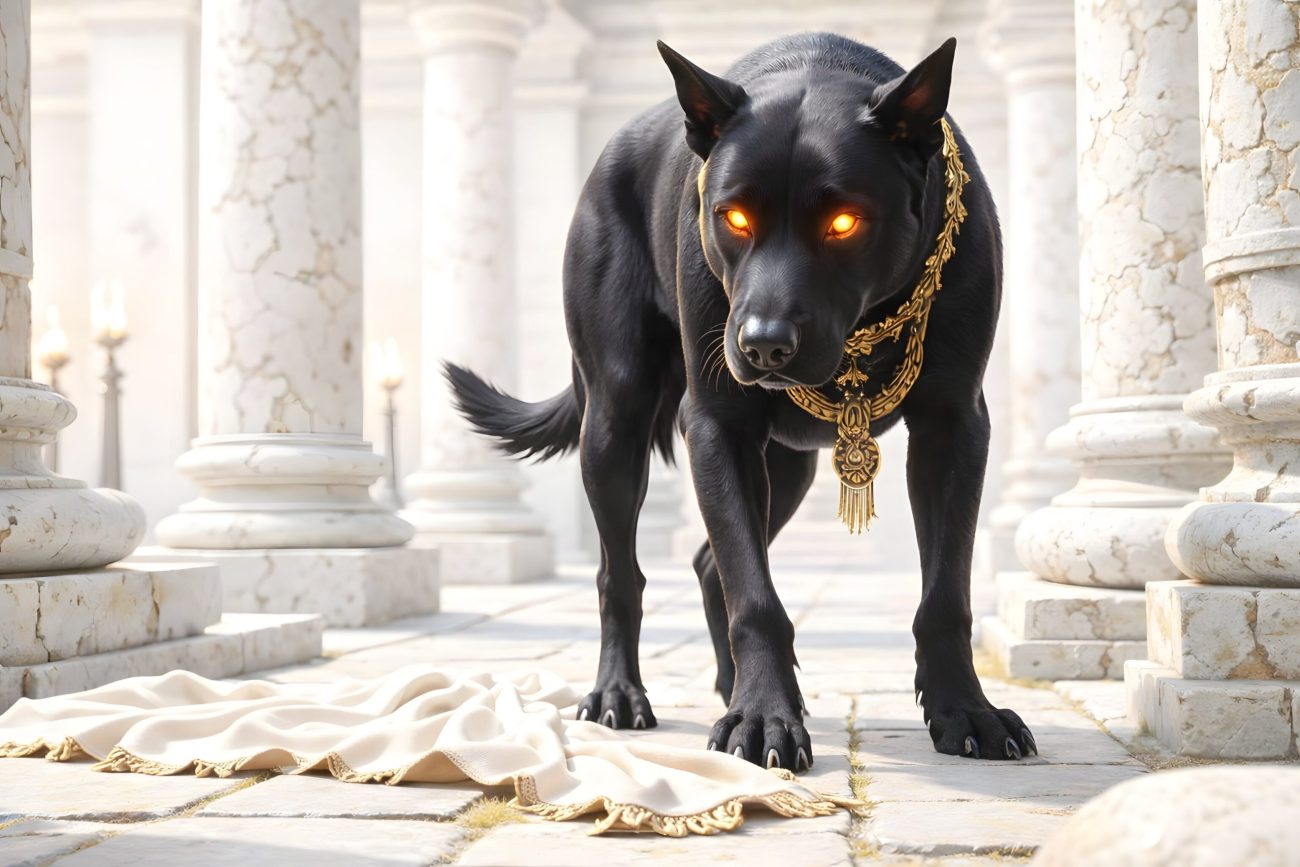
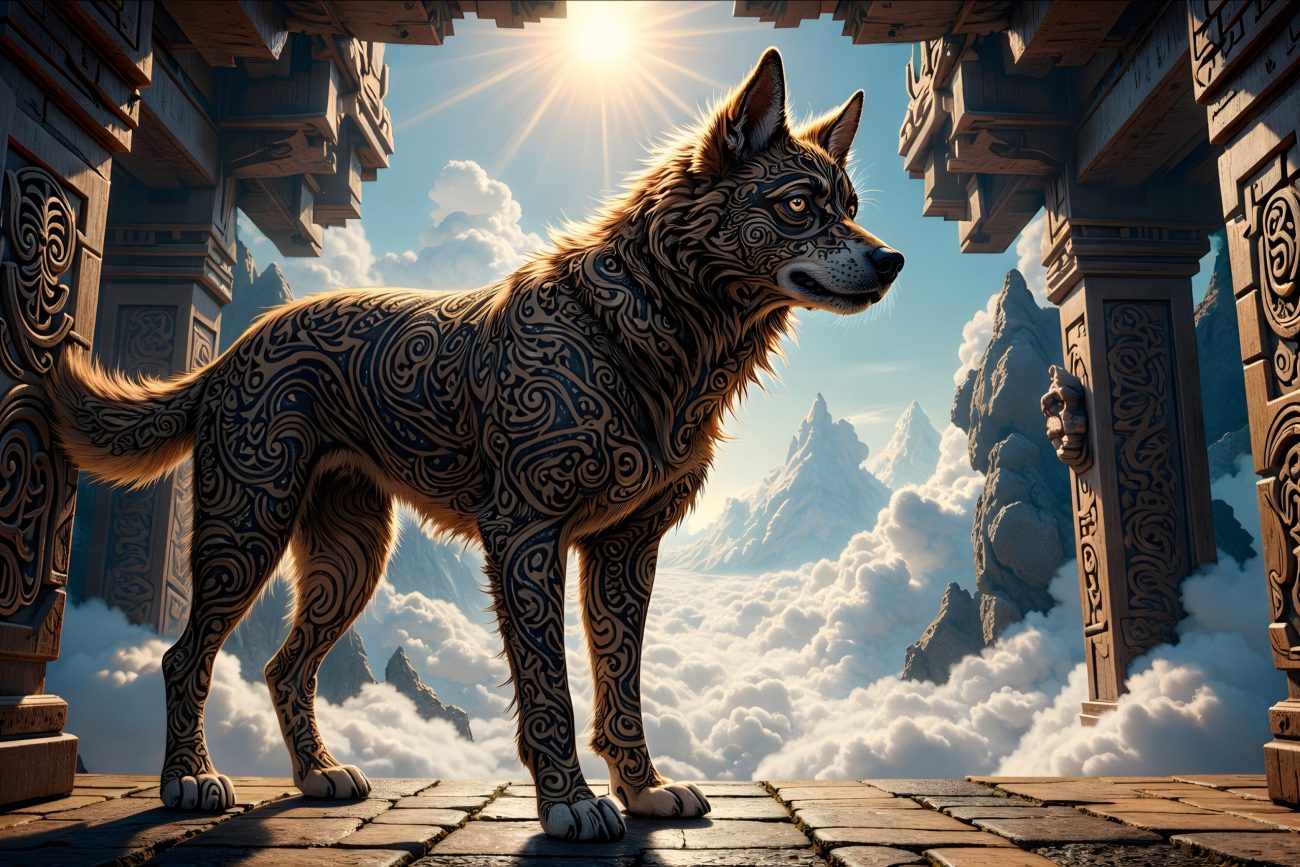
Shisa are guardian figures found throughout the Ryukyu Islands, especially in Okinawa. Their name comes from the local pronunciation of the word “lion,” and they are believed to descend from lion figures that spread from the ancient Orient through China and into Japan. Though commonly seen as statues, Shisa are understood as living protectors in spirit.

Shisa are most often placed on rooftops, gates, and walls of houses. There they stand watch over homes and villages, guarding against fire, misfortune, and evil spirits. They are typically made of stone, ceramic, or plaster. In many cases, Shisa appear as a pair: one with an open mouth and one with a closed mouth. One is said to ward off evil, while the other is said to invite good fortune and prosperity.

According to Ryukyuan tradition recorded in the Kyuyo, the national history of the Ryukyu Kingdom, the origin of the Shisa is linked to a time when fires repeatedly broke out in a village. A feng shui master advised that a lion statue be placed facing a particular direction—toward Yaese Takashi—to suppress the destructive force. After the statue was set in place, the fires ceased. The oldest Shisa connected to this account is said to still exist in Yaese.

Over time, Shisa became widespread across Okinawa. Each household placed them according to local custom, believing that the guardian beasts watched constantly, standing between the human world and unseen dangers. Though unmoving in form, Shisa are remembered as ever-vigilant protectors whose presence alone was enough to keep disaster at bay.


Interpretive Lenses

Religious Readings
Philosophical Readings
Psychological Readings
Esoteric Deep Dive
Political / Social Readings
Other

Olde Marolde

Tradition / Region: Netherlands (Achterhoek; Drenthe)
Alternate Names: Marolde
Category: Witch / night spirit


The Myth

Olde Marolde is a figure from folk belief in the eastern Netherlands, remembered in a Drents poem as a witch who flies naked through the night sky. She is said to move unseen through the air, traveling great distances as darkness falls.

According to tradition, Olde Marolde steals children from their cradles and carries them away to the witches’ sabbath. Her presence was feared, especially at night, when illness, restlessness, or misfortune struck a household.

Despite her danger, people believed there was a way to protect themselves from her influence. A spoken rhyme could be used to transfer illness—especially fever—to Olde Marolde herself. To perform this act, one had to walk three times around an old oak tree or bind a garter around its trunk, and then recite:

“Olde Marolde,
Ik hebbe de kolde,
Ik hebbe ze now,
Ik gève ze ow,
Ik bind em hier neer,
Ik krieg em neet weer.”

Through this ritual, the sickness was believed to be passed on to Olde Marolde and bound to the tree, never to return.

In these stories, Olde Marolde appears as a flying witch of the night, a child-stealer and bearer of illness, yet also a being whose power could be resisted through ritual words and actions rooted in the landscape itself.


Interpretive Lenses

Religious Readings
Philosophical Readings
Psychological Readings
Esoteric Deep Dive
Political / Social Readings
Other

Bardha

Tradition / Region: Albanian Mythology
Alternate Names: E Bardha (“The White One”)
Category: Nymph


The Myth

Bardha, whose name means “the White One,” is a mythological figure in Albanian folklore. She appears either as a zana, a nymph-like being of nature, or as an ora, a fate spirit connected with human destiny and fortune. Bardha is associated with goodwill and good luck, and is believed to favor humans rather than harm them.

In the beliefs of the people of the Dukagjini Mountains, there are three types of Ora. Bardha is the one who brings good fortune and wishes people well. Alongside her are e Verdha (“the Yellow One”), who brings misfortune and casts harmful spells, and e Zeza (“the Black One”), who determines death. Among these three, Bardha is the most benevolent.

In older folklore that treats her as a nymph-like being, Bardha is said to resemble the zana e malit, the mountain nymph. She is described as pale and nebulous in form, sometimes appearing indistinct or ghostlike. In some traditions, she is believed to dwell beneath the earth rather than openly in forests or mountains.

To gain Bardha’s favor or avoid offending her, people would leave offerings such as sugar or small cakes on the ground. These gifts were meant to appease her and invite her goodwill, ensuring luck and protection rather than misfortune.

Through these traditions, Bardha is remembered as a gentle and auspicious spirit, moving quietly between the worlds of fate and nature, and watching over human lives with benevolent intent.


Sources

Wikipedia contributors. (n.d.). Bardha. In Wikipedia, from https://en.wikipedia.org/wiki/Bardha


Saratan

Tradition / Region: Arabic folklore and medieval Islamic literature
Alternate Names: Zaratan
Category: Crab / sea monster


The Myth

The Saratan is a colossal sea creature described in Arabic literature as a monstrous crab of unimaginable size. Sailors believed it lived far out at sea, where it remained so still and vast that it was often mistaken for an island. Its back was said to be covered with soil, plants, and even trees, giving the illusion of solid land rising from the ocean.

According to accounts repeated by sailors, ships sometimes anchored beside what appeared to be an island, and crews went ashore to rest. They lit fires, gathered wood, and explored valleys and fissures, unaware that the land beneath them was alive. When the heat of the fire reached the Saratan’s shell, the creature stirred and began to move, sliding back into the sea with everything on its back. Only those who realized the danger in time and fled were said to survive.

The ninth-century scholar Al-Jahiz, writing in Kitāb al-Ḥayawān (The Book of Animals), reported these stories but noted that he had never met anyone who could truthfully claim to have seen the Saratan with their own eyes. He placed it among other legendary sea monsters such as the sea-dragon and the great whale, repeating sailors’ tales while acknowledging their fantastical nature.

The Saratan also appears in The Wonders of Creation by al-Qazwini, where it is listed among the marvels of the seas. In the tales of One Thousand and One Nights, the creature is echoed in the first voyage of Sinbad the Sailor, where sailors land on what they believe to be an island, only to discover it is a living monster that dives beneath the waves.

Across these stories, the Saratan is remembered as a deceptive giant of the sea—silent, immobile, and deadly—whose vast shell lured the unwary and whose awakening meant sudden destruction.


Bolotnik

Tradition / Region: Belarusian Mythology, Polish Mythology, Russian Mythology, Ukrainian Mythology
Alternate Names: Balotnik, Bolotianyk, Błotnik, Swamp Devil, Swamp Old Man
Category: Swamp dweller


The Myth

Bolotnik is a male swamp spirit who inhabits bogs, marshes, and quagmires, places long feared in Slavic tradition as dangerous and unclean. He is most often described as a man or old man with large frog-like eyes, a green beard, and long hair. His body is covered in mud, algae, fish scales, and swamp growth. In some regions, especially the Vitebsk Governorate, he is said to be eyeless, fat, and motionless, sitting silently at the bottom of the swamp. Other accounts give him long arms and even a tail.

Bolotnik is known to lure people and animals toward the edge of the swamp and drown them. He imitates familiar sounds to deceive travelers, quacking like a duck, mooing like a cow, gurgling like birds, or calling out with human-like cries. At night, he may create strange lights on the surface of the water or grow stupefying plants near the swamp, drawing victims closer. Once a person steps into the mire, Bolotnik seizes them by the feet and slowly drags them down into the depths.

Some legends say Bolotnik lives alone, while others claim he is married to Bolotnitsa, a female swamp spirit. In many regions, swamp spirits were not clearly distinguished and were often confused with other beings such as the vodyanoy, leshy, chort, rusalka, or kikimora. In certain Ukrainian and Belarusian stories, Bolotnik appears deceptively hospitable: he invites passers-by into beautiful rooms filled with music and dancing, offering gifts and feasts. When the illusion fades, the victims find themselves sitting in a swamp, holding only rubbish instead of treasures.

Different types of swamp spirits were sometimes distinguished. Orzhavinik was said to inhabit iron-rich swamps and appeared as a creature with dirty ginger fur, a thick belly, and thin legs. Bagnik lived deep in bogs and never surfaced, grabbing people only by the legs, its presence marked by bubbles and pale lights. Lozoviki dwelled among willows and vines near swamps, entangling travelers before sometimes helping them escape. Another spirit, Virovnik, lived in deep pools within marshes.

Bolotnik was believed to originate like other evil spirits, as a fallen angel cast down from heaven or as a creation of Satan. In some creation legends, swamps themselves were formed when the devil spat out earth he had hidden in his mouth. Medieval sources record that pre-Christian Slavs made sacrifices to swamps, suggesting that such spirits were once propitiated rather than avoided.

Unlike many demons, Bolotnik is not afraid of lightning, as thunderbolts lose their power upon striking swamp water. He is said to perish when swamps are drained or when they freeze solid in winter. In Polish folklore, the błotnik appears as a pitch-black man carrying a lantern, leading travelers astray into marshes, and is sometimes associated with Boruta.

Bolotnik remains a feared embodiment of the swamp itself—deceptive, suffocating, and inescapable—waiting patiently for those who stray too close to the water’s edge.


Couzzietti

Tradition / Region: Belgian Mythology, French Mythology
Alternate Names:
Category: Dwarf


The Myth

The Couzzietti is a forest-dwelling dwarf from the folklore of the Ardennes. He is said to haunt wooded areas near streams and washing places, where washerwomen come to clean their linen.

According to tradition, the Couzzietti sets traps to steal the freshly washed cloth. His presence is announced by loud cries echoing through the forest, shouting, “O Couzzietti, O Mould of Coutteni!” Those who hear the shouts know he is near.

The Couzzietti is remembered as a mischievous and thieving forest dwarf, whose tricks target washerwomen and whose voice betrays his hiding place among the trees.


Atua

Tradition / Region: Polynesia Mythology, Hawaiian Mythology, Maori Mythology
Alternate Names:
Category: Demon


The Myth

Atua are supernatural beings known in the traditional beliefs of the Polynesian world. Among Hawaiians, Māori, and other Polynesian peoples, atua are regarded as powerful entities that exist beyond the human realm.

They are described as deities or demons, feared and revered alike, whose presence influences the natural world and human life. Atua may dwell in specific places, manifest through natural forces, or act invisibly, shaping events according to their will.

Through tradition, atua are remembered as ever-present supernatural beings, forming a vital part of Polynesian cosmology and belief.


Octopus Girl

Tradition / Region: Japan (late Edo period)
Alternate Names:
Category: Yōkai


The Myth

Octopus Girl is a monster depicted in Yoshimori’s Shinban Bakemono Tsukushi, created at the end of the Edo period. She appears as a female yōkai distinguished by her gigantic head, which dominates her form.

Beyond her appearance, little is recorded about her behavior or origin. She is remembered primarily through illustration, existing as one of the many strange beings cataloged in late Edo yōkai imagery.


Interpretive Lenses

Religious Readings
Philosophical Readings
Psychological Readings
Esoteric Deep Dive
Political / Social Readings
Other

Micibichi

Tradition / Region: Algonquian peoples (Great Lakes and surrounding regions, North America)
Alternate Names: Mishibijiw, Mishipeshu
Category: Water panther / lake spirit


The Myth

The Micibichi is a powerful being said to dwell in deep lakes, rivers, and underground waters. It is most often described as a great feline, resembling a lynx or panther, but far larger and more dangerous than any ordinary animal. Its body is sleek and muscular, armed with sharp claws, and it moves with sudden speed. Though it is a creature of the water, it also inhabits caves and places beneath the earth.

In many tellings, the Micibichi has a humanoid head, sometimes bearing horns, and its eyes shine with unnatural awareness. It is closely associated with copper and other riches hidden within the earth, and is said to guard these resources fiercely. For this reason, it is both feared and respected as a powerful spirit tied to survival and wealth.

The Micibichi rules liminal places where land, water, and the underground meet. It creates whirlpools, sudden storms, and dangerous currents, and is blamed for drownings and disappearances. Canoes that pass over its domain without proper respect may be overturned, and travelers pulled beneath the surface. Yet the Micibichi is not always hostile. Fishermen and travelers who offer tobacco, food, or other gifts may pass safely, believing the spirit has accepted their acknowledgment.

The creature is said to change in size. At times it may appear no larger than a common lynx; at other times it grows into a monstrous panther capable of crushing canoes and dragging prey into the depths. Its presence is often known before it is seen, through disturbances in the water or unexplained sounds rising from below.

In the wider order of the world, the Micibichi is understood as a counterpart to the great sky beings, dwelling below while others rule above. Its power balances the forces of the heavens, and its actions shape the fate of those who depend on water for travel, food, and life itself.

Thus the Micibichi remains a feared and revered spirit of the deep—guardian of waters and hidden riches, a being that punishes carelessness and rewards respect, and whose domain marks the boundary between the human world and forces far older and stronger than humankind.


Interpretive Lenses

Religious Readings
Philosophical Readings
Psychological Readings
Esoteric Deep Dive
Political / Social Readings
Other

Lou Carcolh

Tradition / Region: France (Gascony; Hastingues)
Alternate Names: Carcolh, Liu-Karkul
Category: Snail / dragon


The Myth

Lou Carcolh is a monstrous creature of Gascon folklore, whose name means “snail.” It is said to dwell in a deep cavern beneath the town of Hastingues in southwestern France. Half serpent and half mollusk, Lou Carcolh possesses a vast, elongated body crowned by an enormous shell as large as a house.

From its gaping mouth extend numerous long, hairy tentacles, slick with mucus. These appendages spread outward from the cave, lying flat against the ground and coated in thick slime. The tentacles can reach great distances, and anything that comes within their grasp is seized and dragged back toward the cave. Once pulled inside, the victim is swallowed whole.

People said that the creature’s slime could sometimes be seen long before Lou Carcolh itself appeared, glistening on the ground as a warning of its presence. Those who followed the trail too closely risked being taken without a sound, hauled away by the creature’s unseen reach.

Lou Carcolh became so closely associated with Hastingues that the creature’s name was used as a nickname for the town itself, which stands upon a rounded hill. In local tradition, the men of Hastingues were said to warn young women playfully, “The Carcolh will catch you,” invoking the lurking monster beneath the ground.

Through these stories, Lou Carcolh is remembered as a vast, slimy dragon-snail, hidden beneath the earth, whose silent tentacles stretched outward to claim the unwary and pull them into the darkness below.


Interpretive Lenses

Religious Readings
Philosophical Readings
Psychological Readings
Esoteric Deep Dive
Political / Social Readings
Other