Stretching Lynx

Tradition / Region: American Mythology
Alternative names: Lynx of Old Man’s Tale
Category: Cat


The Myth

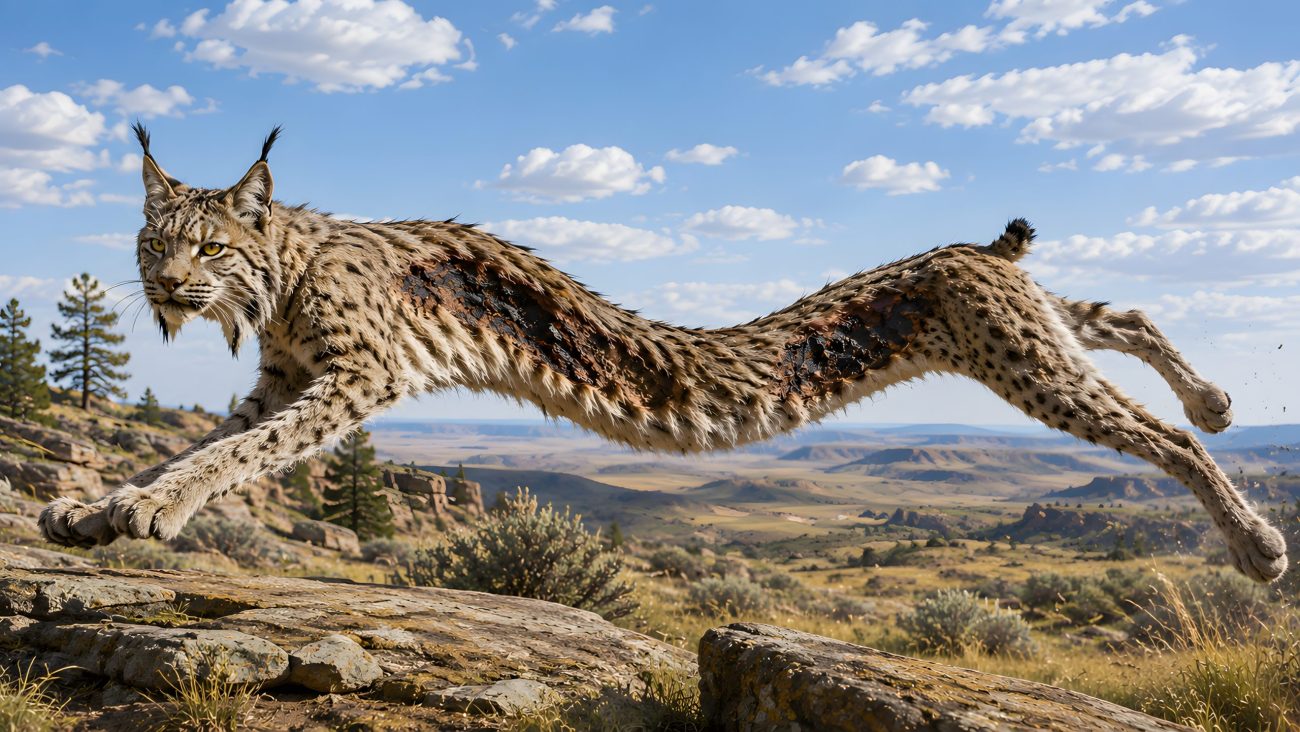
The Stretching Lynx appears as a large wild lynx whose body already resembles that of a modern lynx, though its final appearance is explained through the actions of Old Man, the Blackfoot trickster and culture hero.

One day Old Man encountered a group of squirrels playing a game in hot ashes. The squirrels would bury one another beneath the hot ashes and quickly dig each other out before they were burned. Although they warned Old Man that he would not understand the game, he tricked them into letting him bury them all at once. Instead of rescuing them, he piled on more hot ashes until nearly all the squirrels were roasted alive, sparing only a pregnant squirrel who had begged for mercy.

Old Man built a scaffold from red willow branches and laid the roasted squirrels upon it to cool before eating them. After satisfying his hunger, he lay down to sleep, leaving his Little Brown-Eye to keep watch. While he slept, a lynx quietly approached and devoured every squirrel on the scaffold. Although Little Brown-Eye tried to warn him, Old Man slept through the alarm. Furious when he awoke to find his meal gone, he blamed Little Brown-Eye and burned it with a burning willow stick, creating the origin of the foul-smelling stinking wood.

Old Man then followed the lynx’s greasy tracks until he found it asleep upon a great flat rock. Seizing the animal, he declared that it deserved punishment for stealing his food. He broke off part of its tail, leaving the lynx with its short tail. Standing the animal upright, he grabbed its forelegs and stretched its body until it became long and lean. He then smashed its snout against a rock until it became broad and flat, tore out a handful of hair and fixed it to the animal’s face to create its whiskers, and finally held it over a fire, scorching its sides. These punishments explained why the lynx has its distinctive short tail, flattened face, whiskers, elongated body, and mottled coat.

Afterward, Old Man rested again, but the burn on Little Brown-Eye caused him such discomfort that he repeatedly called for the wind to blow harder to cool it. The wind grew into a violent storm that carried Old Man tumbling across hills and mountains. He grabbed at bushes and trees until only a sturdy birch held firm. When the storm finally subsided, Old Man angrily blamed the birch for ending his wild ride and slashed its bark repeatedly with his knife. According to the tale, the scars still visible on birch trees are the marks left by Old Man’s blade.


Sources

Wissler, Clark, and D. C. Duvall. Mythology of the Blackfoot Indians. Vol. 2, Anthropological Papers of the American Museum of Natural History. New York: The Trustees of the American Museum of Natural History, 1908. Accessed July 28, 2026. https://archive.org/details/mythologyblackf01duvagoog
Splintercat

Tradition / Region: American Mythology
Alternative names: None known
Category: Cat


The Myth

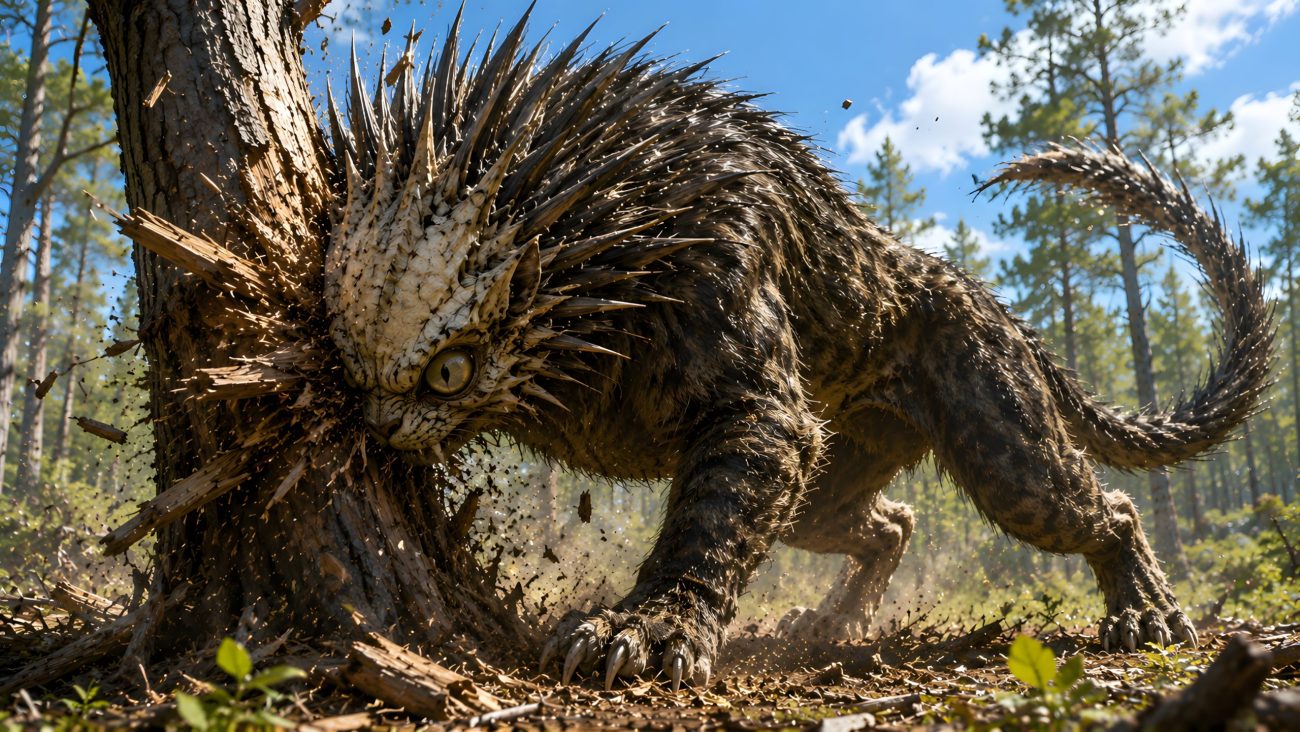
The Splintercat is a fierce nocturnal feline that flies through the air at tremendous speed. It is said to smash headfirst into large trees, knocking off their branches and leaving the trunks dead and stripped bare like pale ghostly snags. It performs this remarkable feat to expose raccoons and wild bees hiding inside the trees for food. Constantly battering trees with its head leaves the creature with a perpetual headache, making it notoriously ill-tempered and dangerous to approach.

An alternate tradition from Nova Scotia describes the Splintercat as emerging from trees during winter after spending the summer hibernating inside them. The loud cracking sounds heard in frozen forests are said to be the creature breaking free from its tree. In this version, it has exceptionally long claws, powerful legs, and fur patterned like tree bark, allowing it to remain perfectly camouflaged until it suddenly leaps from the shadows to ambush its prey.


Sources

“Splintercat.” Wikipedia: The Free Encyclopedia. Wikimedia Foundation. Accessed July 28, 2026. https://en.wikipedia.org/wiki/Splintercat


Cactus Cat

Tradition / Region: American Mythology
Alternative names:
Category: Cat


The Myth

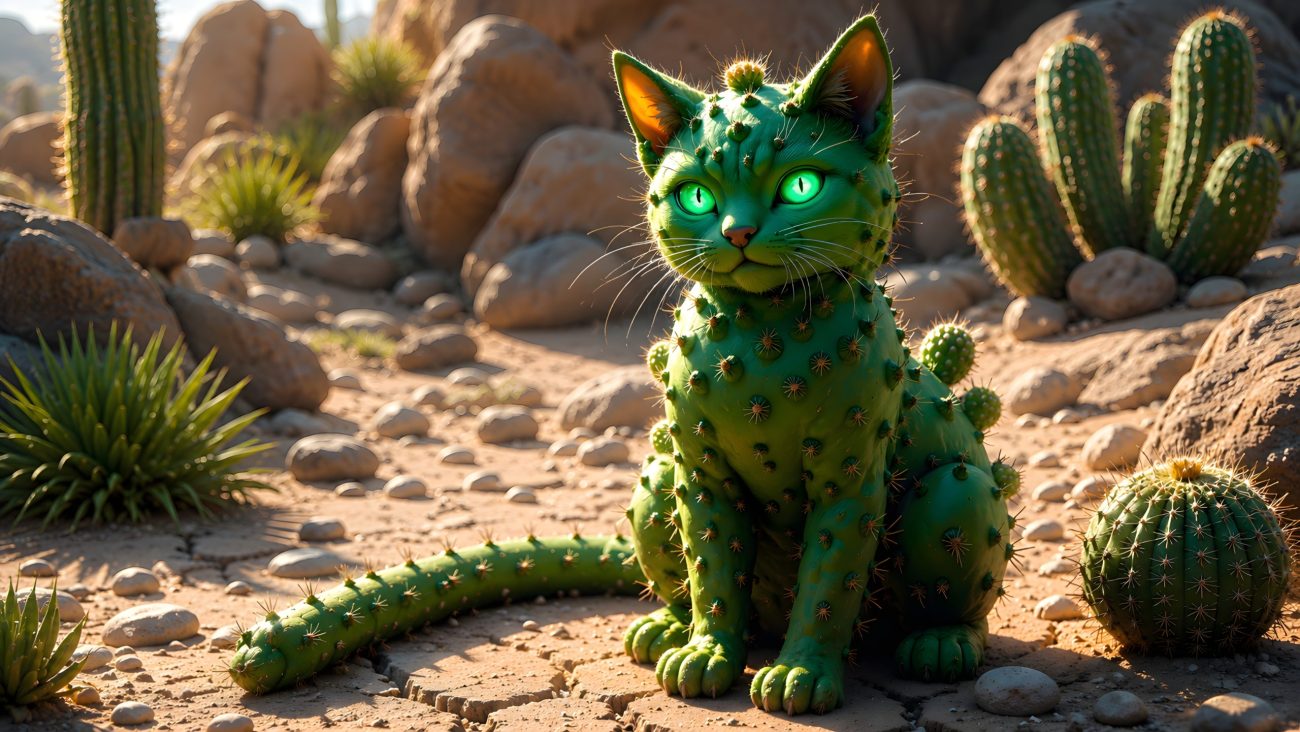
The Cactus Cat is a legendary creature of the American Southwest, resembling a bobcat covered in sharp, cactus-like spines. Long thorns project from its legs, and its branching, armored tail is likewise covered in deadly spikes. Its coat blends perfectly with the desert, making it almost impossible to spot.

According to legend, the Cactus Cat emerges at night to slash giant cacti with its thorn-covered body. The cuts allow the cactus juice to flow freely. After leaving the sap to ferment for several nights, the creature returns to drink the intoxicating liquid.

The Cactus Cat is closely associated with the harsh deserts of the American Southwest and is often regarded as a living embodiment of the desert itself. It was said to haunt the arid wilderness, where its camouflage and thorny body made it perfectly adapted to its unforgiving home.

The legend was passed down through oral tradition and was later shared among frontiersmen, miners, and cowboys, ensuring that tales of the mysterious, spine-covered feline continued to roam the deserts long after its supposed tracks had vanished.


Sources

“Cactus Cat.” Wikipedia: The Free Encyclopedia. Wikimedia Foundation. Accessed July 28, 2026. https://en.wikipedia.org/wiki/Cactus_cat


Ball-Tailed Cat

Tradition / Region: American Mythology
Alternative names: Dingmaul, Sliver Cat
Category: Cat


The Myth

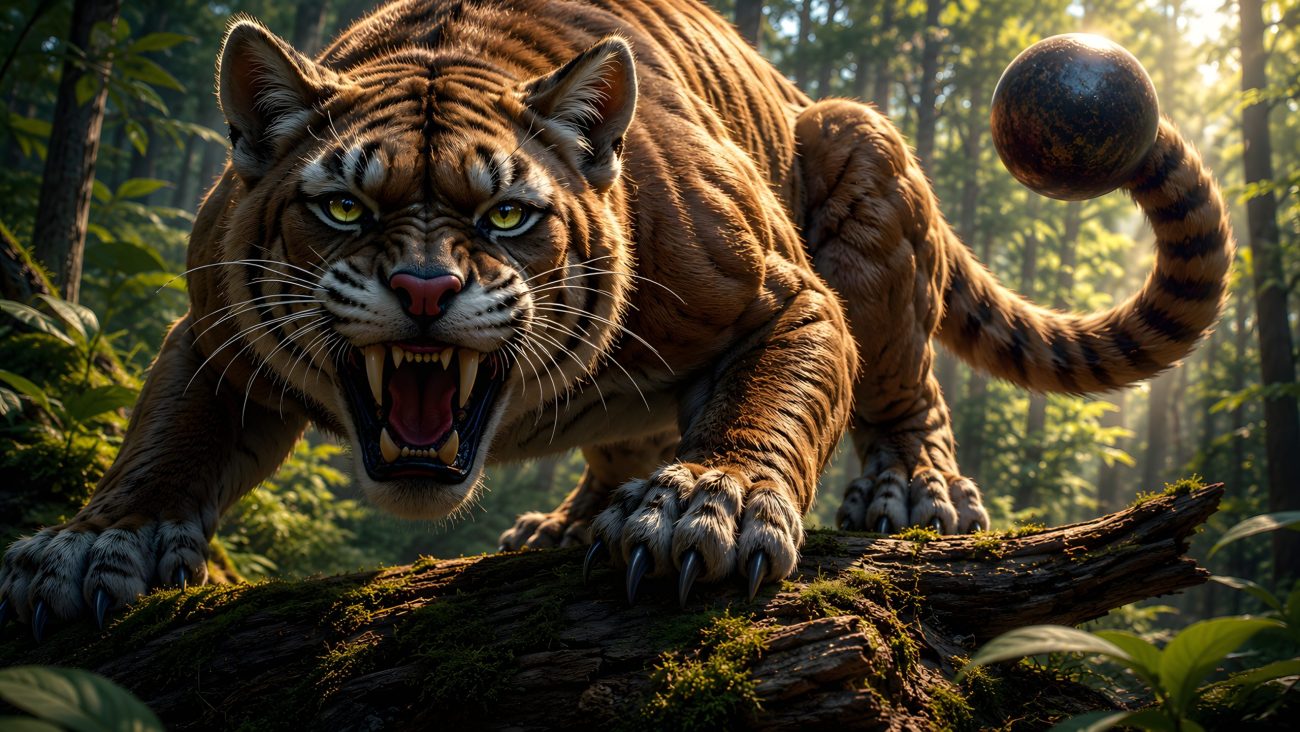
The Ball-Tailed Cat is a fearsome beast said to resemble a mountain lion, distinguished by an extraordinarily long tail ending in a heavy, solid ball.

The creature hunts by swinging its powerful tail with tremendous force, striking prey unconscious before moving in to kill it. Travelers who wandered too close were said to be knocked senseless by a single blow from the tail.

Some stories describe a more dangerous variety known as the Sliver Cat. Instead of a smooth club, one side of its tail ends in sharp spikes. After stunning its victim with the smooth side, it turns the tail and drives the spiked side into its prey, holding it fast before delivering the final attack.

Another variant, the Dingmaul, is similarly known for using its massive tail as its primary weapon, making the Ball-Tailed Cat one of the most feared creatures said to roam the forests of North America.


Sources

“Ball-tailed Cat.” Wikipedia: The Free Encyclopedia. Wikimedia Foundation. Accessed July 28, 2026. https://en.wikipedia.org/wiki/Ball-tailed_cat


Mishipeshu

Tradition / Region: Algonquian Mythology, American Mythology
Alternate Names: Mishibijiw, Mishipeshu
Category: Cat


The Myth

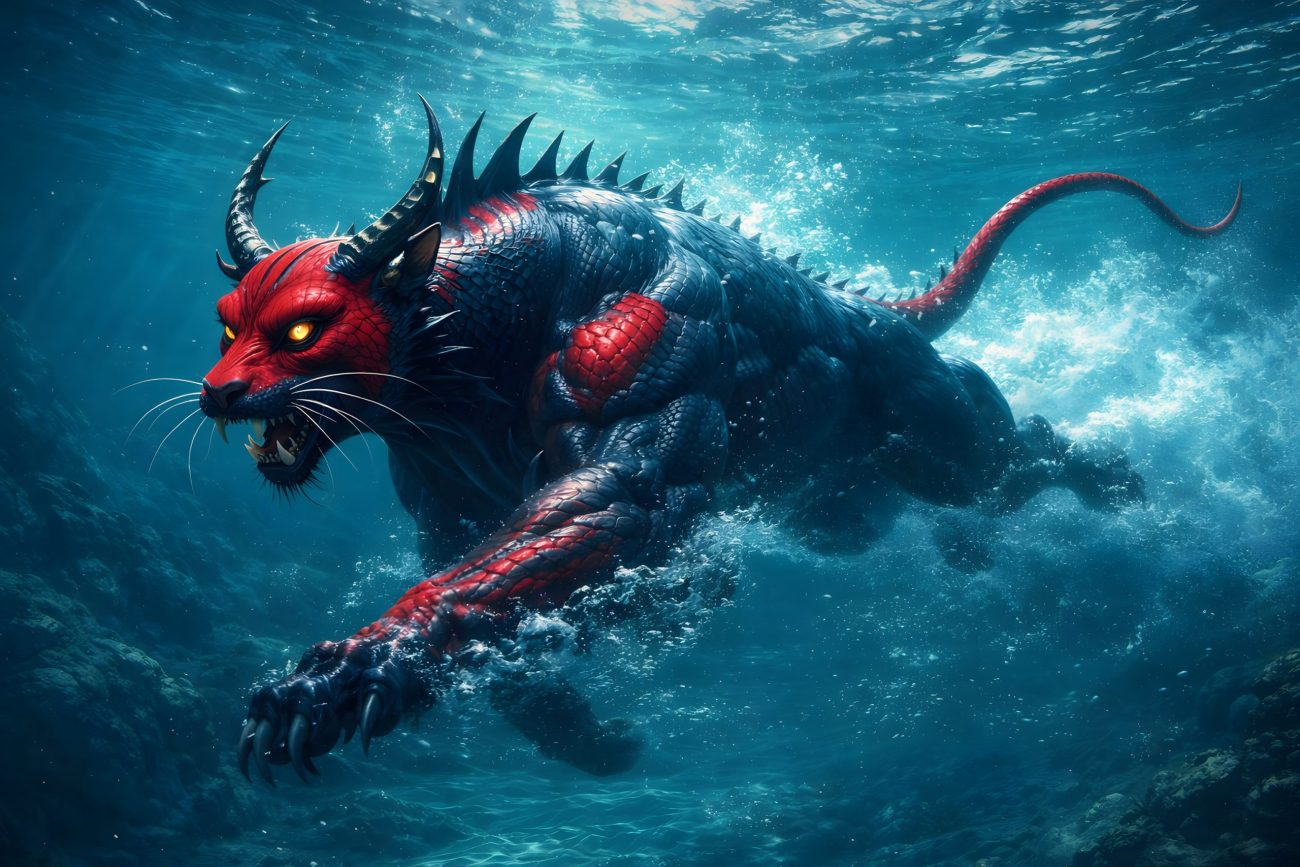
The Micibichi is a powerful being said to dwell in deep lakes, rivers, and underground waters. It is most often described as a great feline, resembling a lynx or panther, but far larger and more dangerous than any ordinary animal. Its body is sleek and muscular, armed with sharp claws, and it moves with sudden speed. Though it is a creature of the water, it also inhabits caves and places beneath the earth.

In many tellings, the Micibichi has a humanoid head, sometimes bearing horns, and its eyes shine with unnatural awareness. It is closely associated with copper and other riches hidden within the earth, and is said to guard these resources fiercely. For this reason, it is both feared and respected as a powerful spirit tied to survival and wealth.

The Micibichi rules liminal places where land, water, and the underground meet. It creates whirlpools, sudden storms, and dangerous currents, and is blamed for drownings and disappearances. Canoes that pass over its domain without proper respect may be overturned, and travelers pulled beneath the surface. Yet the Micibichi is not always hostile. Fishermen and travelers who offer tobacco, food, or other gifts may pass safely, believing the spirit has accepted their acknowledgment.

The creature is said to change in size. At times it may appear no larger than a common lynx; at other times it grows into a monstrous panther capable of crushing canoes and dragging prey into the depths. Its presence is often known before it is seen, through disturbances in the water or unexplained sounds rising from below.

In the wider order of the world, the Micibichi is understood as a counterpart to the great sky beings, dwelling below while others rule above. Its power balances the forces of the heavens, and its actions shape the fate of those who depend on water for travel, food, and life itself.

Thus the Micibichi remains a feared and revered spirit of the deep—guardian of waters and hidden riches, a being that punishes carelessness and rewards respect, and whose domain marks the boundary between the human world and forces far older and stronger than humankind.


Sources

Wikipedia contributors. (n.d.). Underwater panther. In Wikipedia. Retrieved June 29, 2026, from https://en.wikipedia.org/wiki/Underwater_panther