Hiisi

Tradition: Finnish Mythology
Alternative Names: Hiidet (plural), Hiiden eukko (Hiisi Queen)
Category: Goblin


The Myth

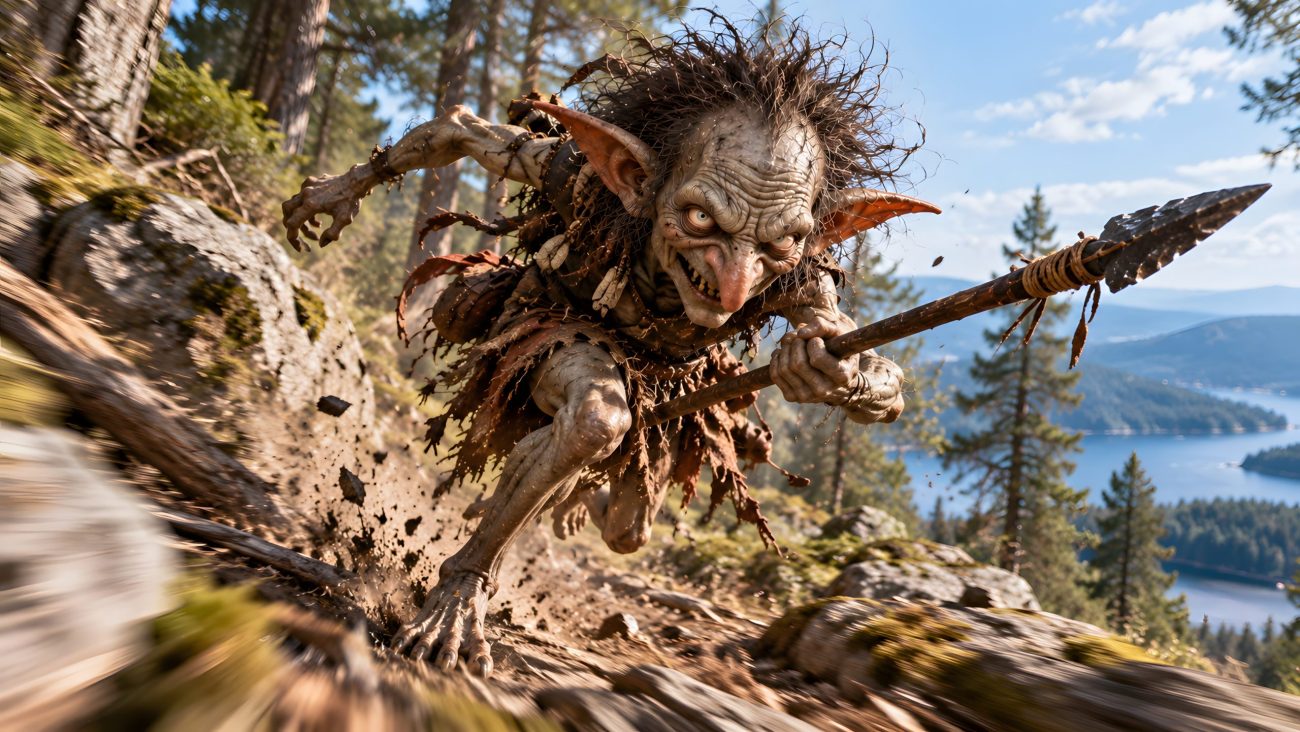
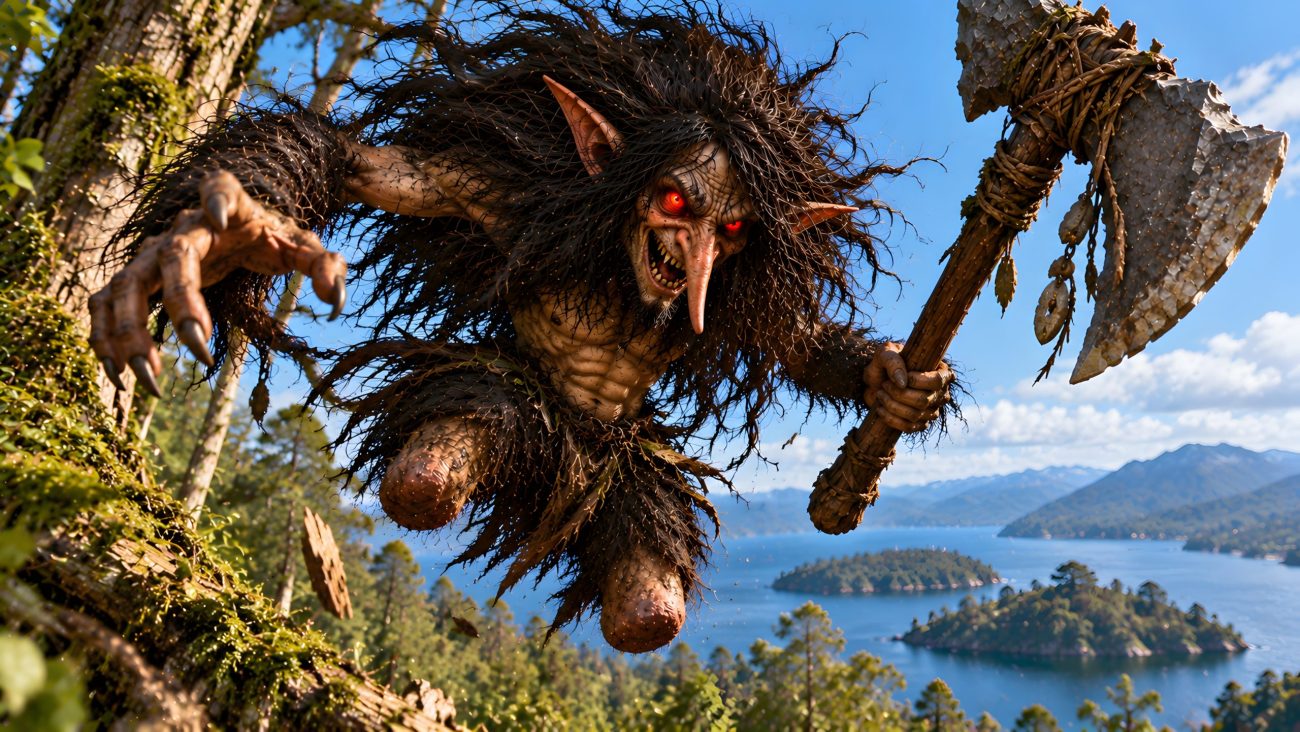
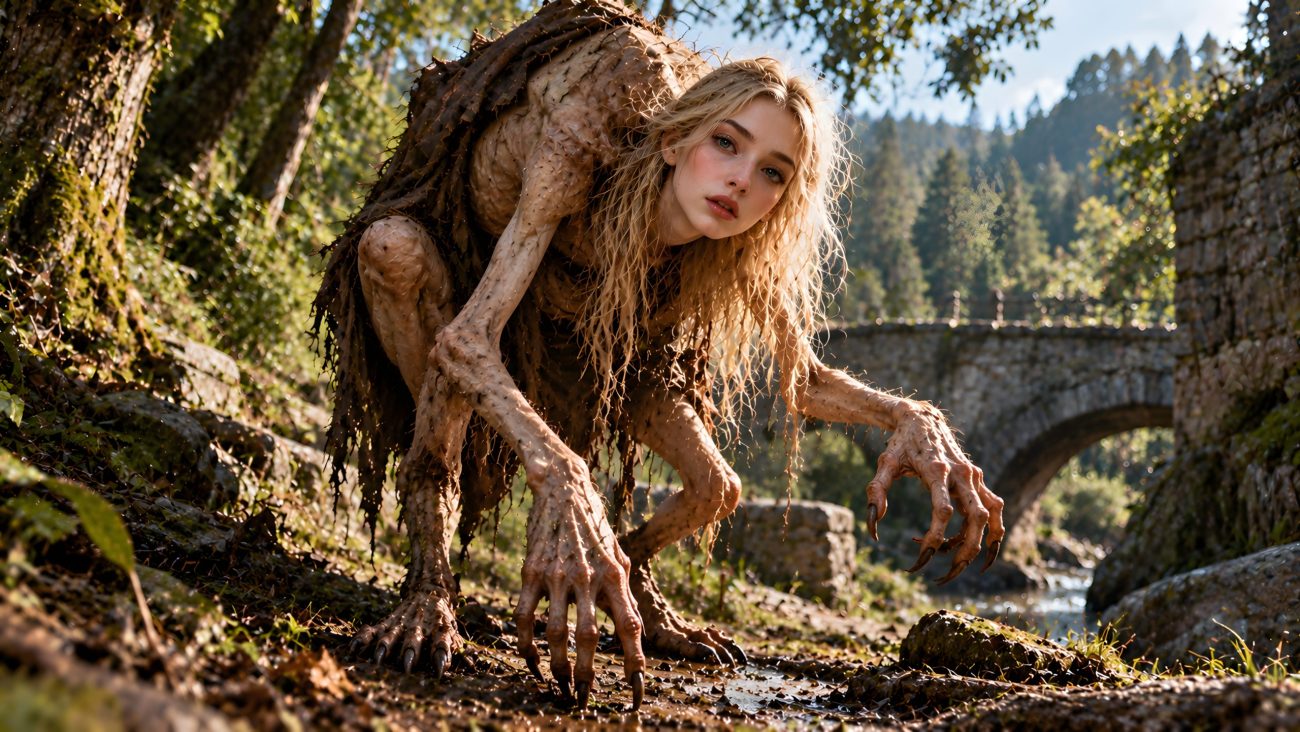
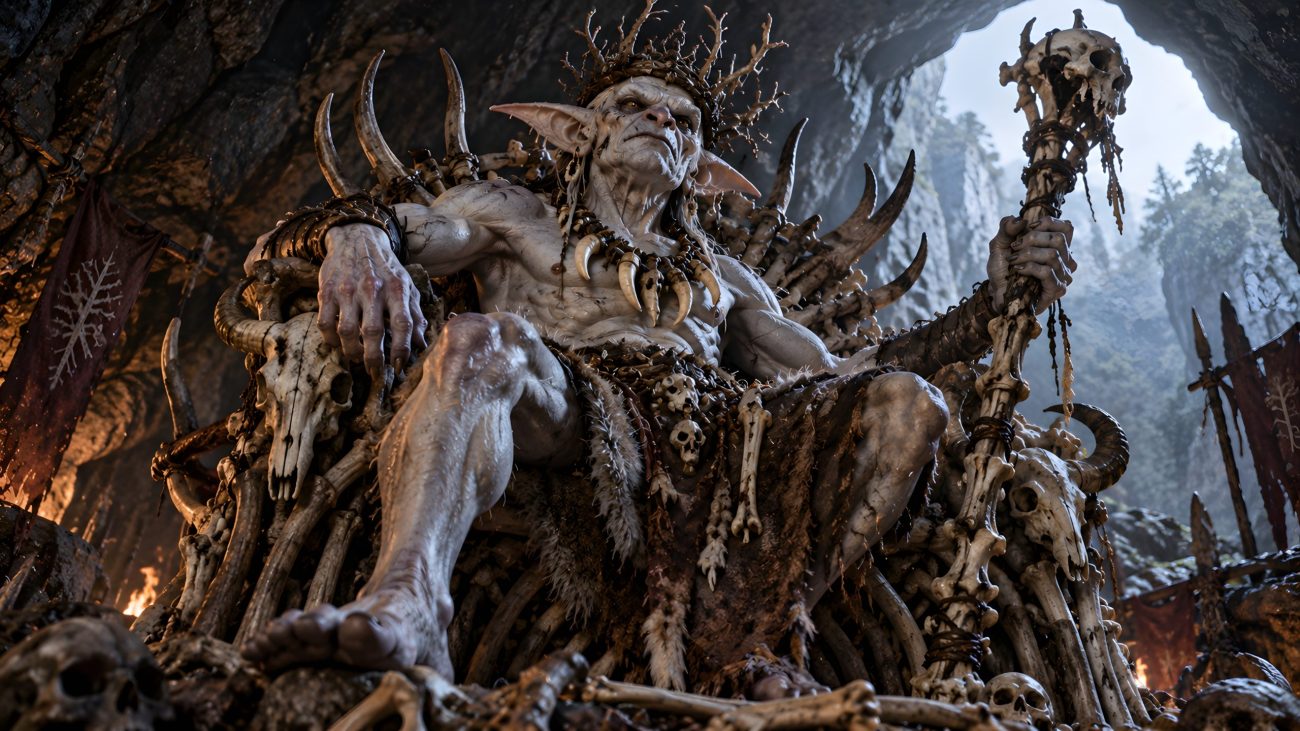
The Hiisi are supernatural beings associated with Finland’s deep forests, mountains, caves, crevices, and waters. Their forms vary considerably: some accounts describe them as small, goblin-like creatures living in rocky places, while others portray them as giants capable of moving enormous boulders into remarkable formations. They are also regarded as powerful ancient nature gods. The giant’s kettles found in Finnish landscapes are traditionally called hiidenkirnu, meaning Hiisi’s churn, reflecting the beings’ association with extraordinary rock formations.

The Hiisi inhabit wild places known as their own lands. Mountains are called Hiisi’s Castles, and forests are considered their territory. In Finnish tradition, different kinds of Hiisi are associated with particular environments, including the forest Hiisi, water Hiisi, mountain Hiisi, and earth Hiisi. Their presence was treated with caution, and people entering their domains were advised to protect themselves with magical iron equipment. Traditional Finnish magical songs describe iron caps, coats, helmets, gloves, and boots worn by those venturing into Hiisi’s lands.

The Hiisi are sometimes portrayed as a supernatural household consisting of Hiisi himself, the Hiisi Queen, their daughters and sons, servants, and animals. The mountains serve as their castles, and human men may travel there seeking brides among the Hiisi daughters. Upon arriving, they are received by the Hiisi Queen, who assigns them tasks. The Hiisi thus inhabit a distinct otherworldly society, complete with family relationships, servants, dwellings, and skilled craftspeople.

In older Finnish religious tradition, Hiisi was associated with the forest and the success of hunters. Bishop Mikael Agricola included Hiisi in his list of ancient Finnish gods in 1551, describing him as a forest god who helped hunters obtain prey. The name also referred to sacred places in forests where people made sacrifices to the gods. Over time, however, the Hiisi increasingly acquired darker characteristics and became associated with devils and malevolent supernatural forces.

In their more dangerous aspect, the Hiisi attack humans and animals, cause accidents, and inflict mysterious pain. Together with their companion Lempo, they are said to shoot invisible arrows into living creatures. In the Kalevala, the Finnish shaman Väinämöinen suffers a severe injury when Hiisi and Lempo interfere with his axe, causing it to strike rock and send fragments into his knee. Yet the Hiisi retain their older status as formidable nature powers, and their aid can still be invoked in difficult circumstances.

Finnish healers and shamans call upon the Hiisi to help stop bleeding and overcome harmful supernatural influences. Invocations summon the mountain Hiisi, the Water Goblin, or the entire Hiisi household and nation, calling upon their power to consume or destroy the source of an affliction. They may also be summoned to punish evildoers. In traditional spells, Hiisi’s bloody cloak or gory covering is invoked against people who use the evil eye, curse others, or attempt to cause harm through malicious observation.

The Hiisi are also renowned as master blacksmiths who forge weapons inside mountain smithies. Their supernatural craftsmanship extends to the creation of extraordinary animals. According to Finnish magical songs, they fashioned a horse from iron and steel, with a stone head and rocky hooves. They also created the Hiisi elk, Hiiden hirvi, into which they breathed an evil spirit before sending it into the world to spread chaos. Through these traditions, the Hiisi emerge as ambiguous powers: ancient guardians of the wild, skilled creators, and dangerous spirits whose influence can bring either assistance or destruction.


Sources

“Goblins: Bloody Cloth.” Finnish Mythology, June 23, 2018. https://finnmyth.wordpress.com/2018/06/23/goblins-bloody-cloth/
Manilaq

Tradition: Canadian Mythology
Alternative Names: Manilaq
Category: Goblin


The Myth

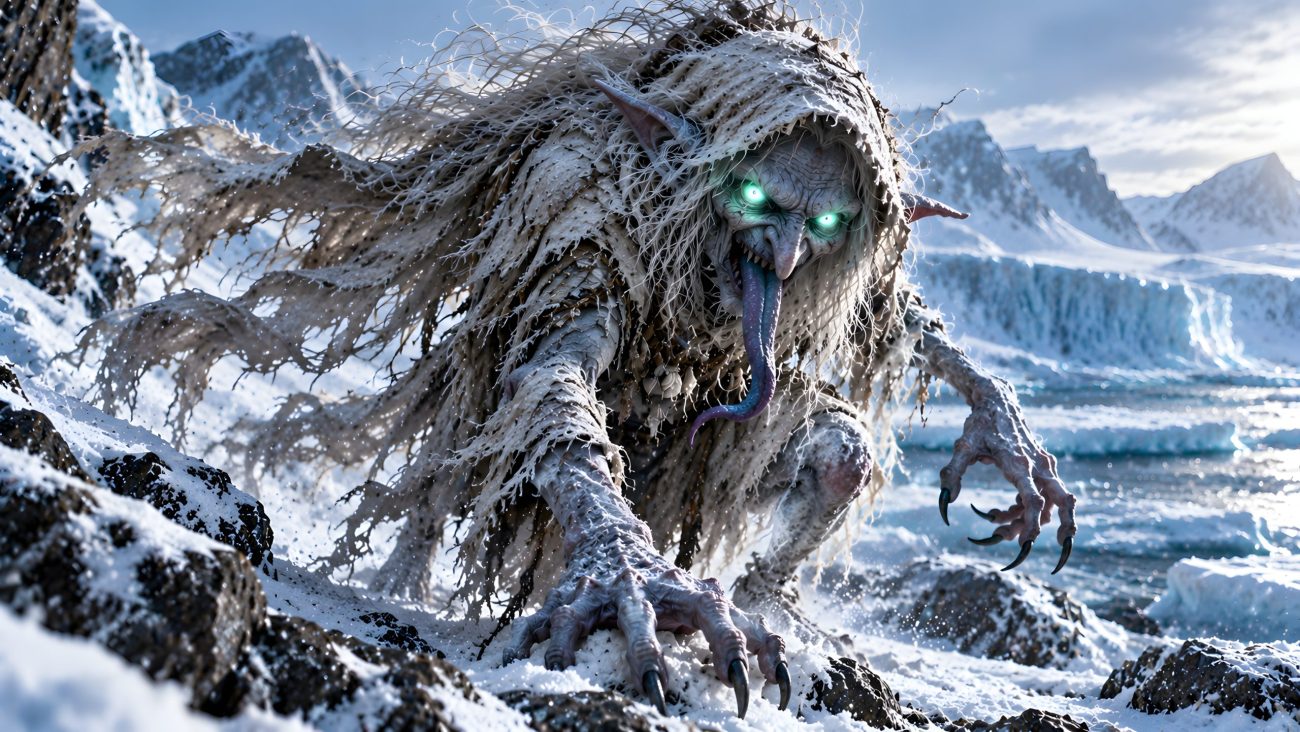
Manilaq is a frightening female supernatural being associated with the pack ice in Inuit Canadian mythology. Her appearance is described as so terrifying that encountering her can cause a person to collapse and lose consciousness. Despite her frightening nature, she can become a helping spirit to those who encounter her.

One hunter met Manilaq during the previous summer while wandering in the mountains. Her dreadful appearance caused him to fall unconscious. He only regained consciousness when his dog licked his navel. Following this encounter, Manilaq became his helping spirit.

Manilaq has a particular ability to assist hunters in obtaining prey. Her speciality is securing quarry through the mother of the sea animal, suggesting a connection to the supernatural forces governing marine animals and hunting success. Although her appearance inspires terror, her role as a helping spirit makes her a valuable ally to the hunter.


Sources

Rasmussen, Knud. Intellectual Culture of the Hudson Bay Eskimos. Copenhagen: Gyldendalske Boghandel, 1930. https://archive.org/search.php?query=creator%3A%22Rasmussen%2C+Knud%2C+1879-1933%22


Chaneque

Tradition: Mexican Mythology
Alternative Names: Chanekeh, Ohuican Chaneque
Category: Goblin


The Myth

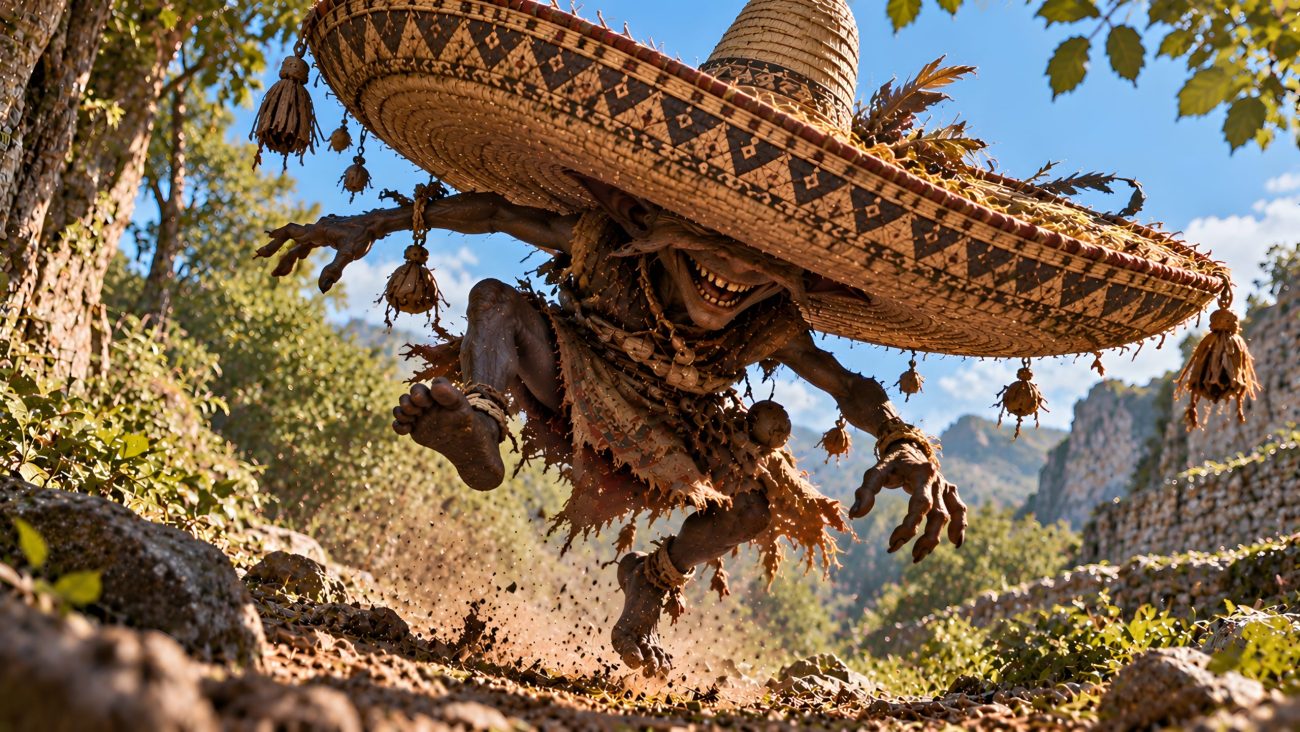
Chaneques are small, sprite-like supernatural beings associated with forests, rivers, caves, and other places connected to the natural world. They are usually described as short in stature and often naked. Some accounts portray them as childlike figures with the faces of elderly men or women, while others describe a little black man who hops and jumps, sometimes wearing a wide-brimmed sombrero. Their appearance varies between regions and traditions. Children are said to see them more easily than adults, and they may reveal their presence through singing, screaming, or crying.

The Chaneques are closely connected to the earth and water and are regarded in many traditions as guardians of nature. They can communicate with jungle animals and protect the places they inhabit. Some are believed to watch over crops, guard homes against intruders, and prevent evil beings from entering. In exchange for their protection, villagers traditionally left them offerings. Travellers entering the forest could also wear their clothing inside out as a means of protection against these spirits.

Despite their protective role, Chaneques are unpredictable and can become mischievous or hostile. They enjoy leading people astray, sometimes causing victims to wander for several days and suffer memory lapses. Some legends explain these experiences by claiming that the Chaneques carry their victims into the underworld, Mictlán or Chiconauhmictlán. The entrance to this realm is sometimes located inside a dried kapok tree. Other accounts describe Chaneques frightening intruders so severely that their souls leave their bodies. Without a special ritual to reunite the soul with its body, the victim may fall ill and die.

Chaneques can also inflict physical harm. In some stories, they bruise people, provoke terror, or play cruel tricks on those who anger them. They have also been associated with sexual encounters and the abduction of young men and women. A historical document from 1676 records a young man’s account of sexual experiences with a female duende, a term sometimes used for beings comparable to Chaneques. These accounts reflect the varied and sometimes troubling roles attributed to the spirits in Mexican folklore.

The character of the Chaneques differs considerably across local traditions. Some are helpful guardians, while others are troublesome or dangerous beings that delight in frightening humans and disrupting their lives. Historical accounts influenced by Christianity sometimes portrayed them as demons associated with the Devil. In a colonial-era tale by Artemio de Valle-Arizpe, a Chaneque torments a woman named Doña Luisa, inflicting bruises and causing fear. Such stories illustrate how older beliefs about nature spirits became intertwined with Christian interpretations of supernatural beings.

Known by names such as Chanekeh and Ohuican Chaneque, these beings form part of a broader tradition of small supernatural figures found throughout Mexico and Mesoamerica. Their association with forests, water, crops, and household protection reflects a belief that the natural world is inhabited by unseen beings that may help or harm those who encounter them. Respect, offerings, and protective customs were ways of maintaining a cautious relationship with these unpredictable spirits.


Sources

“Chaneque.” Wikipedia: The Free Encyclopedia. Wikimedia Foundation. Accessed October 17, 2026. https://en.wikipedia.org/wiki/Chaneque


Curupira

Tradition: Brazilian Mythology, Paraguayan Mythology, Guyana Mythology
Alternative Names: Currupira, Korupira
Category: Goblin


The Myth

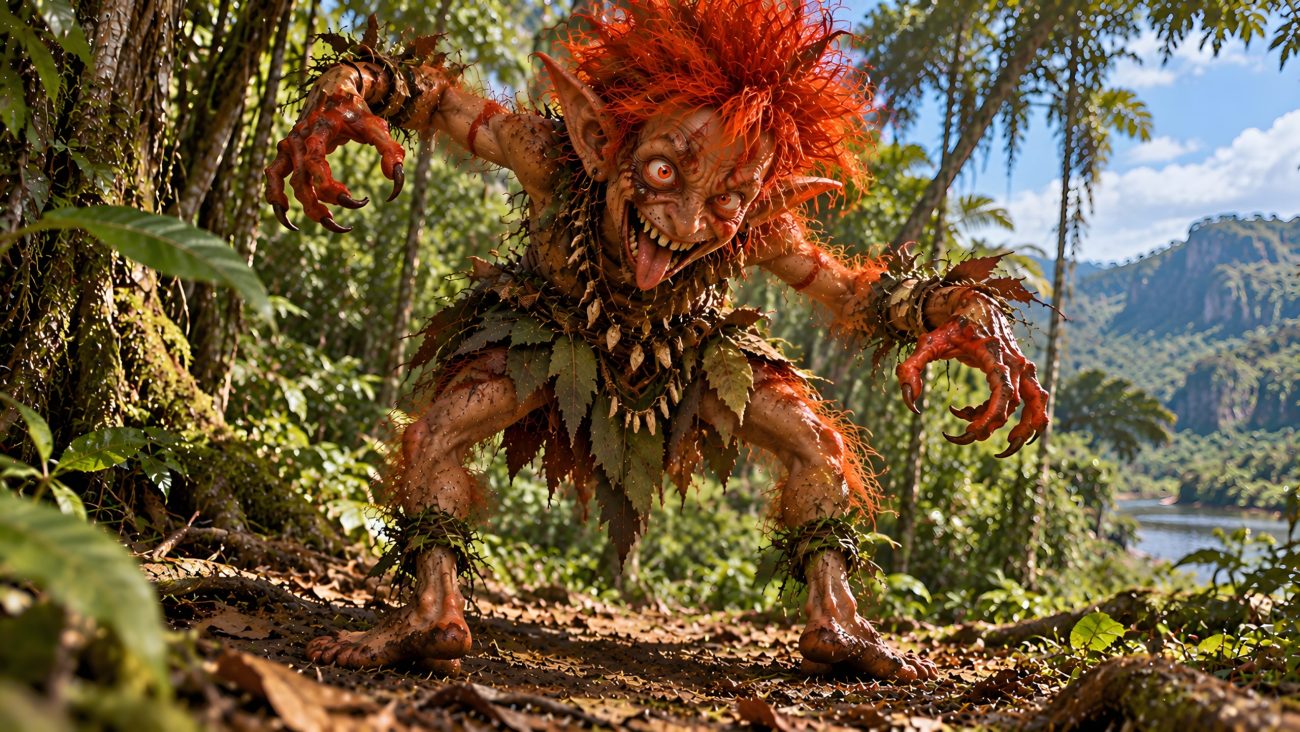
The Curupira is a small, humanoid forest spirit known for its unusual appearance and backward-facing feet. Its feet point in the opposite direction from those of an ordinary human, allowing it to leave footprints that mislead trackers. It is commonly described as a short Indigenous-looking figure, sometimes bald on the head but covered in long, shaggy body hair. Some accounts give it enormous ears and blue or green teeth, while others describe a bright red face, cloven feet, or a single eye. Its hair is sometimes portrayed as red or orange, although this feature may reflect confusion with another Brazilian forest spirit, the Caipora. The Curupira’s appearance varies considerably between regions.

The Curupira inhabits forests across Brazil, Paraguay, and the Guianas, where it acts as a guardian of the natural world. It punishes people who recklessly cut down trees or exploit the forest. One of its characteristic tricks is to make intruders lose their way, causing them to wander endlessly among the trees without finding their way home. Its backward-facing footprints make it especially difficult to follow its movements: anyone attempting to track or escape the creature may instead find themselves following it deeper into the wilderness. The Curupira can also cause nightmares, inspire troubling thoughts, and sow distrust and discord between people.

The Curupira’s temperament differs between accounts. Early Jesuit descriptions from São Paulo portray it as a feared supernatural being capable of inflicting terrible injuries, whose favour could be secured through offerings. In other traditions, it appears as a mischievous trickster that sometimes bungles its schemes and allows humans to outsmart it. Despite this more playful portrayal, it remains dangerous, capable of causing misfortune and death. Its ability to confuse and deceive people has also led to its association with lies and misleading thoughts.

According to some traditions, the Curupira has a wife and children who live inside the hollow trunks of dead trees. Its female relatives are described as having long hair, and the family sometimes enters cultivated fields to steal manioc. Other accounts portray its wife as an ugly, malicious woman who assists in its misdeeds. Some versions even identify the youngest child as Saci, another well-known figure in Brazilian folklore. The Curupira is also sometimes depicted riding a deer, rabbit, pig, or peccary, and in stories from Pernambuco it may be accompanied by a dog named Papa-mel.

Hunters can sometimes appease the Curupira by leaving offerings of tobacco or cachaça, a spirit distilled from sugarcane. The creature is particularly fond of tobacco and may reward hunters who provide it, although they are expected to keep the arrangement secret from their wives. These offerings reflect the belief that the forest spirit can be approached through respect and gifts, even though its behaviour remains unpredictable.

As a guardian of the forest, the Curupira embodies both the dangers of the wilderness and the consequences of exploiting it. It protects trees and wildlife by confusing, frightening, or punishing those who abuse the natural environment. Its backward feet, deceptive tricks, and shifting appearance make it a formidable opponent for anyone who enters the forest without respect for the supernatural forces believed to dwell there.


Sources

“Curupira.” Wikipedia: The Free Encyclopedia. Wikimedia Foundation. Accessed October 17, 2026. https://en.wikipedia.org/wiki/Curupira


Pukwudgie

Tradition: American Mythology
Alternative Names: Puk-Wudjie, Pukwudgee, Puck Wudj Ininee, Bokwjimen, Bgoji-nini, Bagwajinini
Category: Goblin


The Myth

Pukwudgies are small, humanoid supernatural beings that resemble little wild men of the forest. They are usually described as knee-high, standing around two to three feet tall, with gray skin, unusually large noses and ears, and long fingers. These creatures can change their shape into dangerous animals, including cougars and porcupines, and can appear or disappear at will. Some traditions also warn that a Pukwudgie can harm a person simply by staring at them.

The nature of Pukwudgies varies between Indigenous traditions. In some Ojibwe accounts, they are mischievous little people whose tricks cause trouble, while Wampanoag traditions portray them as more dangerous and menacing. They are associated with the wilderness and can use poisoned arrows, short knives, and spears to attack people. They may lure travellers to their deaths in the forest, push victims from cliffs, start fires, blind people by throwing sand at them, and kidnap children. Their unpredictable behaviour makes them beings that should not be treated with disrespect.

One Ojibwe story describes the origin of the Pukwudgies through a boy named Wa-Dais-Ais-Imid, who lived with his sister and possessed the ability to become invisible. He hunted animals and repeatedly stole prey gathered by the culture hero Manabozho. Although the boy initially escaped detection, Manabozho eventually became determined to kill him. The boy fled into the mountains and among the rocks, telling his sister that he would henceforth be known as Puck Wudj Ininee. This figure became associated with the little people of the wilderness.

In Wampanoag mythology, the Pukwudgies were originally well-intentioned helper spirits, although their efforts frequently went wrong. Over time, they became increasingly mischievous and hostile, causing suffering among humans. The people appealed to the giant Maushop and his wife, Granny Squanit, for protection. Maushop gathered up many Pukwudgies and scattered them across New England, killing some and leaving the survivors disoriented. However, the surviving creatures eventually regrouped and resumed their mischief. They began kidnapping children and driving people to seek refuge deeper in the woods.

Pukwudgies therefore occupy an ambiguous place in Indigenous folklore: they may be troublesome tricksters, but in some traditions they are dangerous forest beings capable of serious harm. Their ability to shapeshift, vanish, and exploit the wilderness makes them unpredictable supernatural neighbours whose behaviour can range from bungling mischief to deadly hostility.


Sources

“Pukwudgie.” Wikipedia: The Free Encyclopedia. Wikimedia Foundation. Accessed October 17, 2026. https://en.wikipedia.org/wiki/Pukwudgie


Trauco

Tradition: Chilean Mythology
Alternative Names: —
Category: Goblin


The Myth

The Trauco is a small humanoid creature that inhabits the deep forests of Chiloé, an island in southern Chile. Resembling a dwarf or goblin, it has an ugly face and legs that end without feet. According to local mythology, it is the offspring of Coi Coi-Vilu, the powerful serpent deity. The Trauco is married to Fiura, a wicked and ugly supernatural being.

The Trauco possesses a powerful, supernatural magnetism that attracts young and middle-aged women. It carries a small hatchet with a stone head, which it uses to strike trees in the forest as a symbolic expression of its sexual potency. Its allure is said to be irresistible, and its victims are believed to be unable to resist its influence, even when asleep. Some men on Chiloé fear the creature because they believe that meeting its gaze can cause death.

The Trauco also features prominently in local explanations of unexpected pregnancies. When an unmarried woman becomes pregnant and no man acknowledges himself as the father, the community may attribute the pregnancy to the Trauco. Because the creature is considered irresistibly alluring, the woman is traditionally regarded as blameless. In this way, the legend provides a supernatural explanation for sudden or unwanted pregnancies, particularly among unmarried women.

The Trauco is therefore both a feared forest creature and a figure associated with sexual power and mysterious pregnancies. Its small stature and grotesque appearance contrast with the extraordinary influence it is believed to exert over human beings.


Sources

“Trauco.” Wikipedia: The Free Encyclopedia. Wikimedia Foundation. Accessed October 17, 2026. https://en.wikipedia.org/wiki/Trauco


Dokkaebi

Tradition: Korean Mythology
Alternative Names: Korean Ogres
Category: Goblin


The Myth

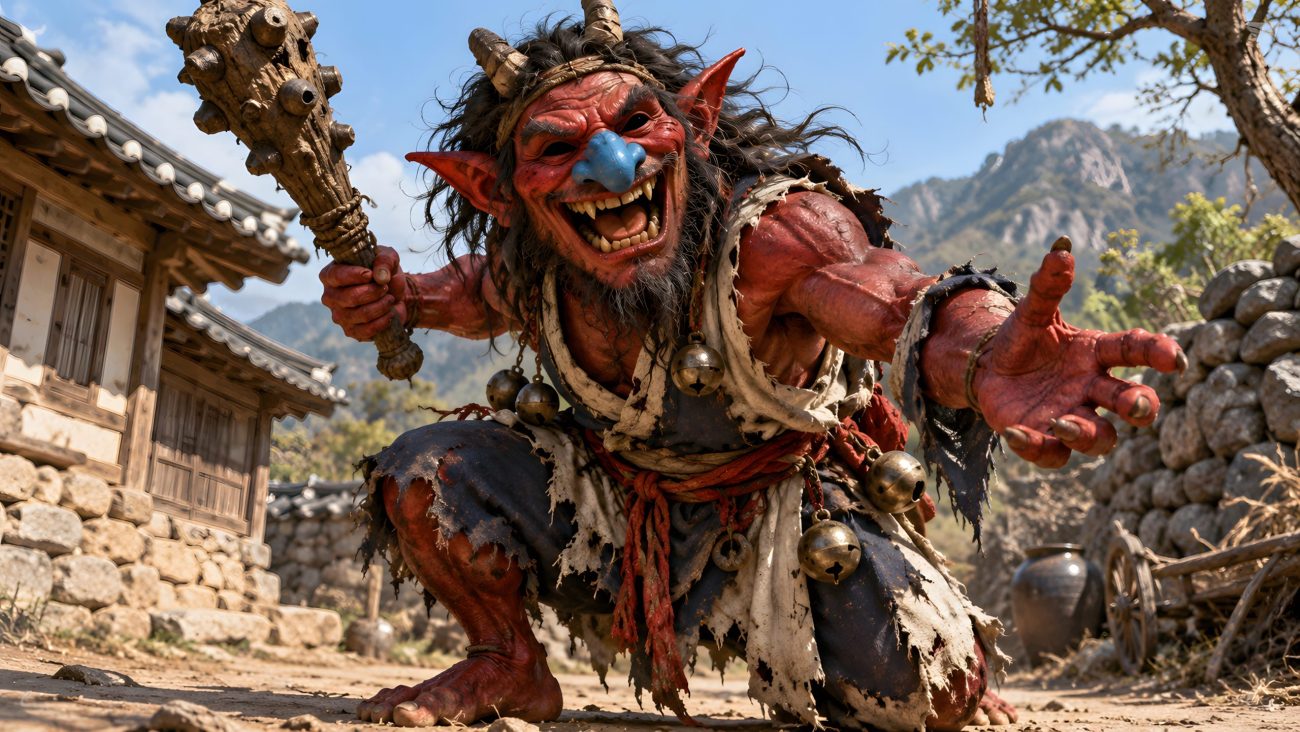
Dokkaebi are supernatural beings from Korean mythology and folklore, renowned for their extraordinary powers and varied appearances. They may look frightening and awe-inspiring, sometimes resembling grotesque figures inspired by traditional Korean roof tiles decorated with dokkaebi patterns. Some depictions show them wearing hanbok, traditional Korean clothing. Unlike ghosts, known as gwishin, Dokkaebi are not formed from the spirits of dead humans. Instead, they arise when inanimate objects, such as old discarded household tools or objects stained with human blood, become possessed by spiritual forces.

Dokkaebi have unpredictable personalities. Some are harmless but mischievous, delighting in playing tricks on people or challenging travellers to ssireum, a traditional Korean wrestling match, before allowing them to pass. They are exceptionally skilled wrestlers and can be difficult to defeat. According to some traditions, however, they have a weakness: exploiting their right side can secure victory. Other accounts describe Dokkaebi as having only one leg, in which case an opponent can win by hooking the leg and pushing the creature over.

One of the most striking signs of their presence is the dokkaebi fire, a mysterious glimmering light or tall blue flame that heralds their arrival. They also possess magical objects that grant remarkable abilities. The dokkaebi gamtu, a magical hat, makes its wearer invisible, while the dokkaebi bangmangi, a magical club, can summon objects and produce things at will. These items reflect the creatures’ ability to manipulate the world through supernatural means.

Despite their frightening appearance and fondness for mischief, Dokkaebi are not necessarily evil. They can bring good harvests, plentiful catches, and great fortune, and they are sometimes regarded as defenders against evil spirits. People may offer them buckwheat jelly, known as memilmuk, and red bean rice cakes during rituals intended to gain their favour. In other traditions, Dokkaebi are blamed for misfortune, fires, and contagious diseases, and ceremonies are performed to drive them away. On Jeju Island, the Durin-gut healing ceremony is said to expel Dokkaebi associated with mental illness. Their role in Korean folklore is therefore complex: they can be mischievous adversaries, supernatural benefactors, or dangerous spirits whose influence must be controlled.


Sources

“Dokkaebi.” Wikipedia: The Free Encyclopedia. Wikimedia Foundation. Accessed October 17, 2026. https://en.wikipedia.org/wiki/Dokkaebi


Egbere

Tradition: Nigerian Mythology
Alternative Names: —
Category: Goblin


The Myth

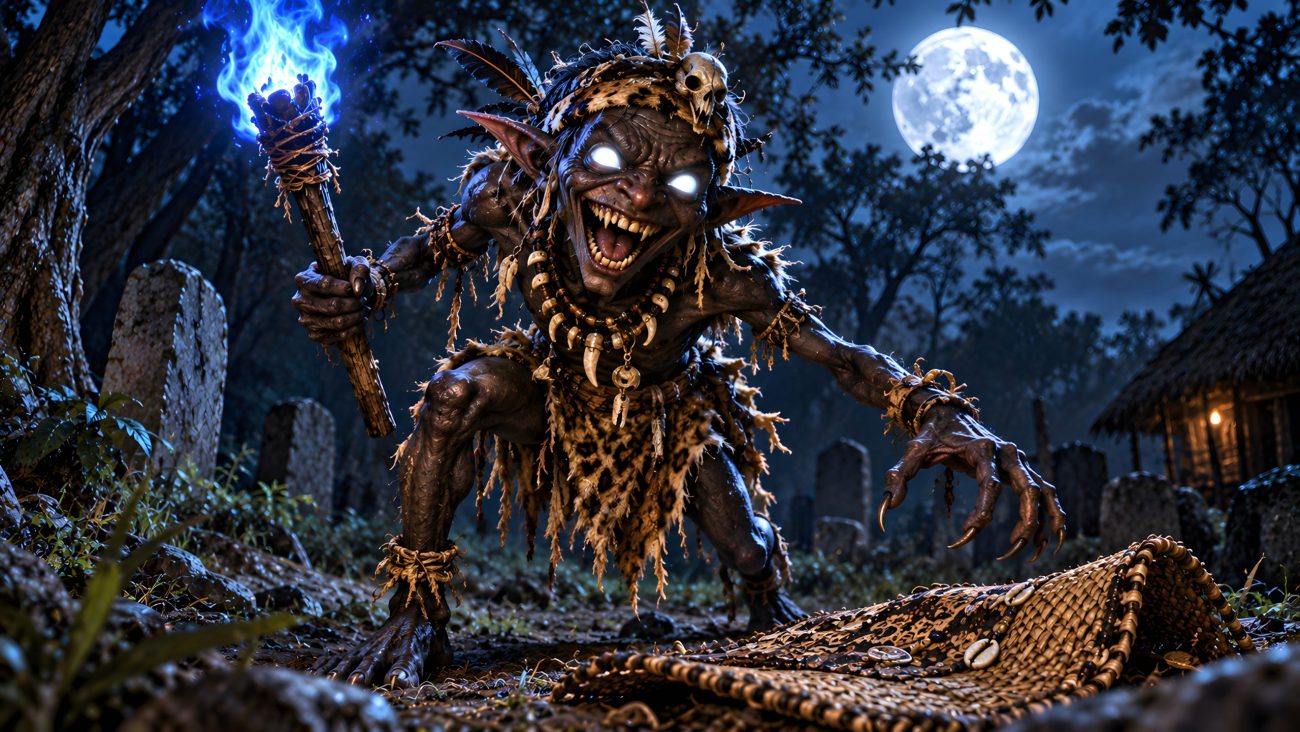
The Egbere are short, malevolent humanoid beings in Yoruba mythology that inhabit wooded areas and are active only at night. They are also associated with graves, emerging around midnight and returning to their resting places at dawn. An early account compares their nocturnal habits to those of vampires and describes them as creatures that ride sheep and bring disease upon them.

The Egbere are particularly associated with a small mat known as the mat of wealth. According to tradition, anyone who manages to take this mat from an Egbere will gain unimaginable riches. This belief makes the creatures both feared supernatural beings and potential sources of extraordinary wealth.

The Egbere are also said to cry constantly, although their tears are regarded with suspicion and their sincerity is questioned. Their combination of nocturnal activity, association with graves, harm to livestock, and connection to a mat of great value gives them a distinctive place among the supernatural beings of Yoruba folklore. Their precise physical appearance beyond their short stature is not described in the available accounts.


Sources

“Egbere.” Wikipedia: The Free Encyclopedia. Wikimedia Foundation. Accessed October 17, 2026. https://en.wikipedia.org/wiki/Egbere


Aufhocker

Tradition: German Mythology
Alternative Names: Huckup, Aufhocker
Category: Goblin


The Myth

The Aufhocker, also known as the Huckup, is a dangerous shapeshifting spirit in German folklore. Its appearance is unpredictable, as it can take the form of a goblin, a beautiful woman, a dead person, or various animals. The name Aufhocker means “leap upon,” referring to its habit of suddenly jumping onto the backs of unsuspecting victims. It is often described as a pressure spirit or perching spirit, weighing down those unfortunate enough to encounter it.

The Aufhocker commonly attacks lone travelers, old women, and people believed to deserve punishment, such as thieves and criminals. Its attacks frequently occur in isolated or ominous places, including bridges, crossroads, springs, forests, hollow paths, and cemeteries. Once it leaps onto a victim’s back, it becomes impossibly heavy, forcing the unfortunate traveler to struggle beneath its growing weight. No matter how hard the victim tries, the creature cannot be shaken off or killed. Its weight increases with every step, and its victims may eventually die from exhaustion. According to some versions of the legend, a person can escape if they manage to reach home before the spirit kills them.

In more violent accounts, the Aufhocker does not simply exhaust its victims but tears out their throats. This version is associated with vampirism, giving the creature a more explicitly predatory nature. Sunlight and church bells, traditionally associated with protection against vampires, have been suggested as possible defenses against it. However, the legends do not provide a single, universally established method of defeating the creature.

The Aufhocker has also been interpreted as a symbol of emotional burdens that cling to a person no matter how desperately they try to escape them. Like the spirit weighing down a traveler’s back, painful memories and unresolved experiences can become increasingly difficult to carry. In some interpretations, the old woman targeted by the creature represents time itself and the fear of growing older, with accumulated memories becoming a burden that cannot be discarded. Other interpretations connect the legend to night terrors. Similar beings appear in other European traditions, including the Ganipote in the French region of Charente-Maritime and the Uhaml in formerly German-speaking parts of Bohemia.


Sources

“Aufhocker.” Wikipedia: The Free Encyclopedia. Wikimedia Foundation. Accessed October 17, 2026. https://en.wikipedia.org/wiki/Aufhocker


Ponaturi

Tradition: Māori Mythology, New Zealand Mythology
Alternative Names: —
Category: Goblin


The Myth

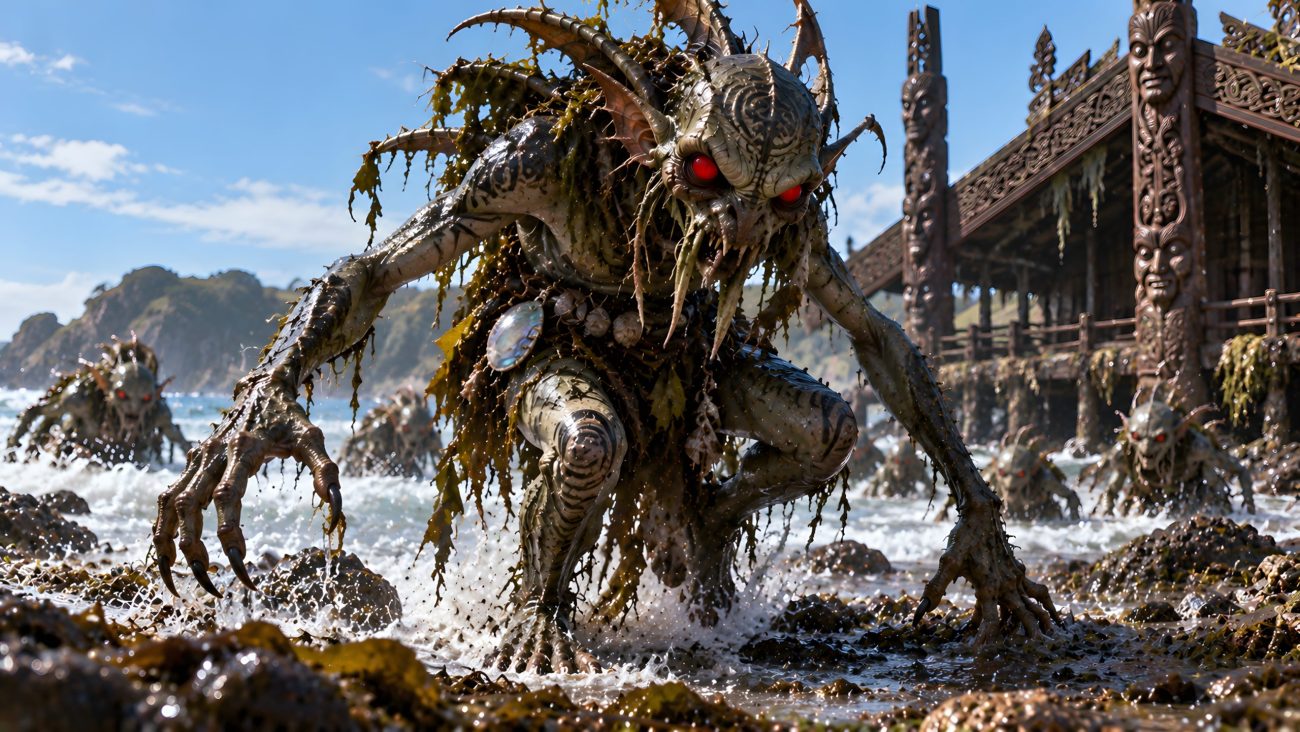
The Ponaturi are hostile, goblin-like creatures who dwell beneath the sea during the day and return to shore each evening to sleep in their house, Manawa-Tāne. They dread daylight, which is fatal to them. This weakness plays a central role in the stories of the Māori heroes Tāwhaki and Rātā, whose families suffer at the hands of these dangerous beings.

In the story of Tāwhaki, the Ponaturi kill his father, Hemā, and carry away his body. They also capture his mother, Urutonga, forcing her to serve as the doorkeeper of Manawa-Tāne. Seeking revenge, Tāwhaki and Urutonga block every opening in the house, making the Ponaturi believe that night still surrounds them. They then suddenly allow the sunlight to enter. Deceived by the false darkness, the creatures are caught by the fatal rays of the sun and destroyed.

The Ponaturi also appear in the story of Rātā, who seeks to recover his father’s bones after the creatures carry them away. The Ponaturi use the bones to keep time while practising their magical arts. Rātā hides himself, learns their incantations, and masters a more powerful spell called Titikura. He then attacks the creatures, kills their priests, and recovers the bones. The surviving Ponaturi regroup and pursue him, but Rātā and his warriors use their strength and powerful incantations to defeat them, killing a thousand of their number.

In another version of the Tāwhaki story, the grey mullet, known as the kanae, accompanies the Ponaturi when they emerge from the sea and enter Manawa-Tāne. Tāwhaki and his companion Karihi kill the creatures to avenge Hemā, but the mullet escapes by repeatedly leaping until it reaches the sea again.

A related tale concerns Ruapupuke, whose young son is drowned and taken by Tangaroa, the sea deity, to the bottom of the ocean. There, the child is transformed into a carved figure placed above the doorway of Tangaroa’s house. Ruapupuke descends into the sea to find him and encounters Hinematikotai, who explains that the inhabitants return at sunset and that daylight will kill them. Ruapupuke waits for their return before allowing the light to enter, destroying the inhabitants and burning their house. He takes some of its carvings back to the human world to serve as models for human carvers. Although this account does not explicitly call the inhabitants Ponaturi, it presents a similar pattern of sea-dwelling beings destroyed by exposure to daylight.


Sources

“Ponaturi.” Wikipedia: The Free Encyclopedia. Wikimedia Foundation. Accessed October 17, 2026. https://en.wikipedia.org/wiki/Ponaturi