Qawqam

Tradition / Region: Malta Mythology
Alternative names: Qawqam
Category: Cow


The Myth

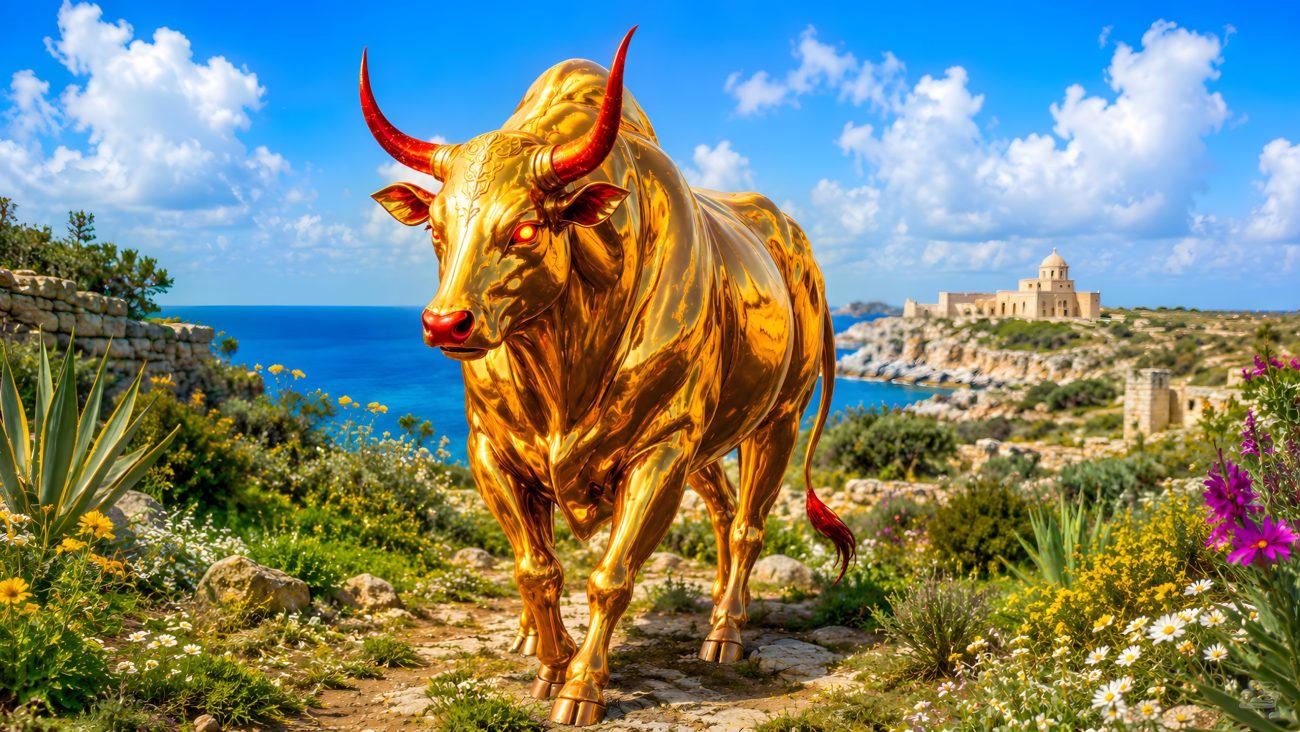
The Qawqam is a mysterious supernatural ox from Maltese folklore that roams the rocky countryside, hills, and isolated roads of the island at night. It is described as an enormous wild ox with immense strength and long powerful horns rising high above its head. Golden in color, it appears both beautiful and frightening, standing apart from ordinary animals.

The creature moves silently through open fields, low brushlands, and abandoned paths, appearing suddenly out of darkness before disappearing again without warning. Villagers believed that encountering the Qawqam was extremely dangerous. People who crossed its path risked injury or death, and its mere appearance was enough to drive travelers indoors after sunset.

The Qawqam was said to travel not only across the surface of the land but also beneath it. Certain hills and rocky places were believed to contain hidden passages through which the beast entered the underworld and returned again. Because of this, the ox was considered a creature that moved between worlds, belonging partly to the realm of the living and partly to unseen places below the earth.

At times the Qawqam was seen grazing quietly in the wilderness, glowing gold beneath moonlight as though it were part of the land itself. Yet people believed it could never truly be captured, owned, or followed. It always vanished before anyone could approach too closely.

Farmers and herdsmen sometimes connected the creature to the fragile nature of wealth, labor, and possession. The Qawqam represented power that could not be controlled — something valuable yet untouchable, capable of disappearing without trace.

The Qawqam remains remembered as a horned night-beast of Malta: a golden ox wandering lonely hills, hidden tunnels, and dark roads between the visible world and the unseen depths beneath the island.


Sources

Mifsud, S. D. (2014). The Maltese bestiary: An illustrated guide to the mythical flora and fauna of the Maltese Islands (p. 28).
Vrykolakas

Tradition / Region: Greek Mythology, Macedonian Mythology
Alternative names: Vrykolakas, Vourkolakas, Vampyras, Vompiras
Category: Vampire


The Myth

The Vrykolakas is one of the most feared undead beings in Balkan folklore — a corpse that rises from the grave at night to wander among the living. In Macedonian and Greek traditions it was believed to strangle people, drink the blood of humans and animals, spread disease, damage homes and tools, and terrify entire villages.

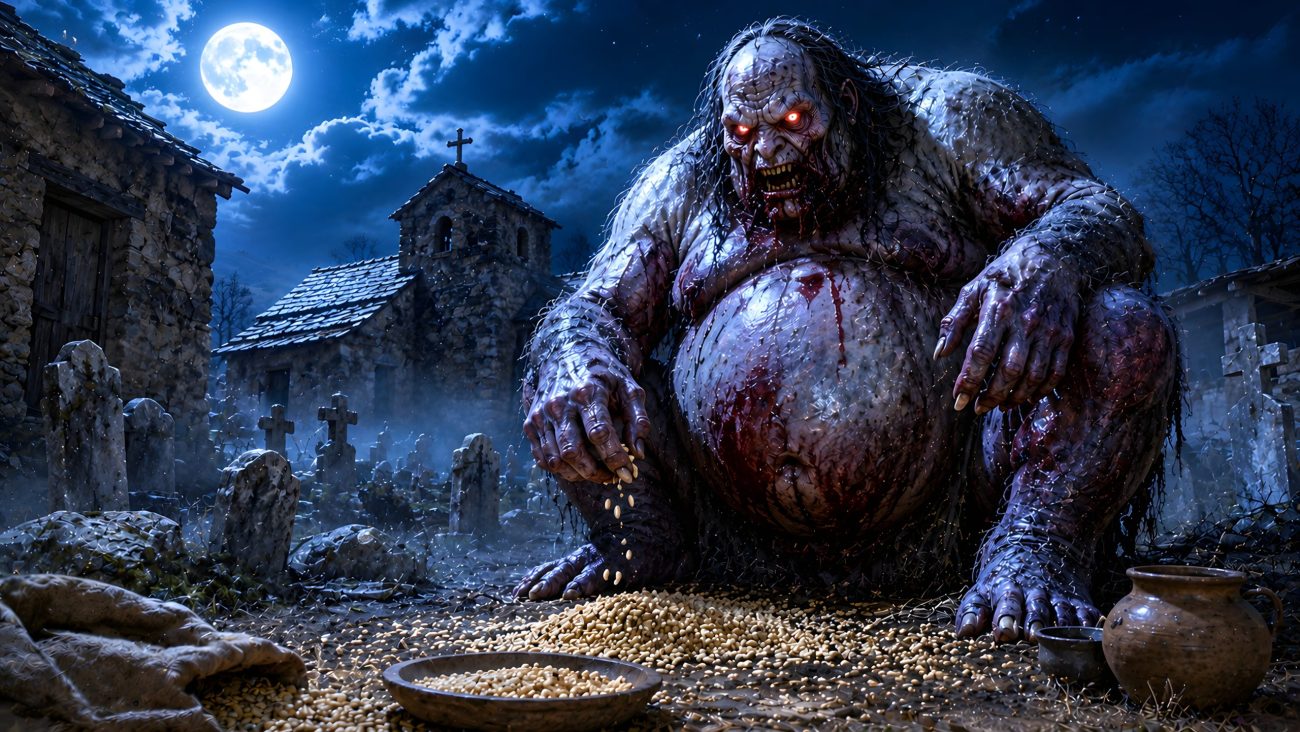
The creature was described as a swollen animated corpse, bloated like a skin filled with blood, with burning eyes glowing like live coals in the dark. Unlike a ghost or spirit, the Vrykolakas possessed a physical body and walked the earth during the night before returning to its grave before dawn.

People believed someone could become a Vrykolakas for several reasons. A corpse found undecayed or lying face-down in the grave was considered a sign of vampirism. Another dangerous omen was a cat jumping over a dead body before burial. Because of this, relatives watched corpses throughout the night to prevent animals from crossing them. If a cat touched the body, large needles were immediately driven through the corpse to stop the transformation.

When a suspected vampire was discovered, horrifying rituals were performed. Corpses were dug up, scalded with boiling oil, pierced through the stomach or navel with iron nails, and nailed into the grave. Sometimes millet or mustard seed was scattered over the tomb because people believed the Vrykolakas would be forced to stop and count every grain before continuing its wanderings. Dawn or the first rooster crow would then force it back underground.

The Vrykolakas feared iron, nails, thorns, fire, and sharp objects. Doors were barricaded with thorn bushes and rooftops covered with mustard seed to keep it away. In some regions stakes or iron spikes were driven through the body, while elsewhere the corpse was burned entirely.

The superstition also extended to animals. Some traditions believed in vampire-like spirits that attacked cattle and sheep at night, riding on their backs and drinking their blood until the animals weakened or died. Wandering dervishes and folk-magicians claimed they could hunt and destroy these creature.

Certain people were believed to possess special power over Vrykolakas. Those born on a Saturday, called Sabbatarians, were said to see ghosts and vampires invisible to ordinary people. Stories tell of Sabbatarians trapping Vrykolakas inside barns, forcing them to count piles of grain before pinning them to walls with iron nails.

The Vrykolakas wandered only during the deepest hours of the night, usually from before midnight until the first crow of the rooster. At dawn it vanished back into the earth, leaving behind fear, sickness, and stories of the dead walking among the living.


Sources

Abbott, G. F. (1903). Macedonian folklore. Cambridge: Cambridge University Press.


Drymiais

Tradition / Region: Macedonian Mythology
Alternative names: Drymiais (Δρύμιαις), Drymmata
Category: Spirit


The Myth

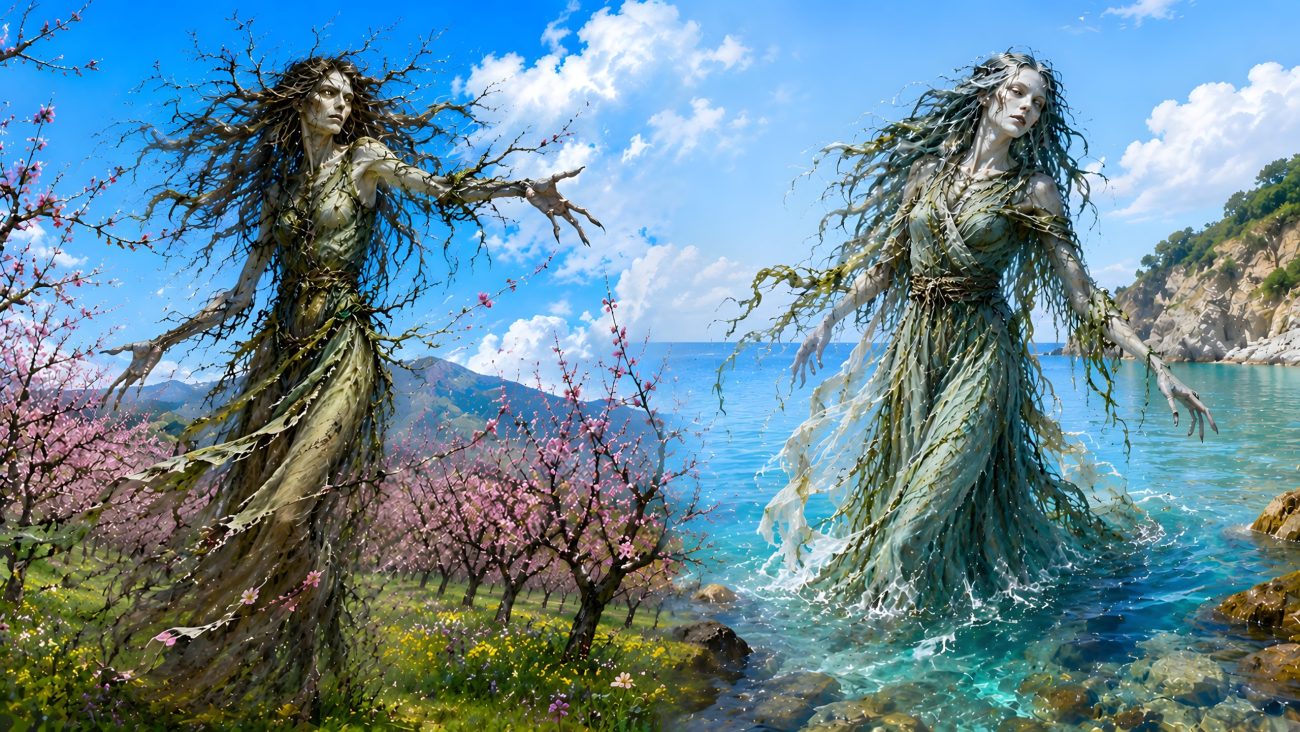
The Drymiais are mysterious supernatural beings connected with the dangerous days at the beginning and end of March and August in Macedonian folklore. They were feared throughout coastal Macedonia and the Aegean islands as invisible forces capable of damaging trees, clothing, crops, water, and even the human body.

The first three days of March and the first three days of August were considered especially dangerous and were called the Days of the Drymiais. In many places the final three days of these months, along with certain Wednesdays and Fridays, were also feared. During these periods people avoided cutting trees or vines because they believed the plants would immediately wither and die. Clothes were not washed because they were thought to decay or rot, and people avoided bathing in the sea because the Drymiais could cause the body to swell or become sick.

Some traditions imagined the Drymiais as a type of nature spirit related to ancient nymphs. The March Drymiais were associated with forests and trees, while the August Drymiais were linked to water and the sea. Folk sayings reflected this belief:

“August is bad for linen,
And March for trees.”

Another version stated directly:

“The Drymiais of August affect the linen,
And those of March affect the woods.”

Although vague and mysterious, the Drymiais were treated as living supernatural beings rather than simple unlucky dates. This appears in the custom of carrying rusty iron nails while bathing during August. People believed iron protected them from the Drymiais and prevented the spirits from approaching. Similar beliefs throughout European and Middle Eastern folklore held that iron repelled fairies, elves, demons, ghosts, and jinn.

The Drymiais were therefore understood as ancient hostile spirits tied to unstable seasonal transitions — beings of sea, forests, decay, storms, and sickness who became active during the dangerous turning points between seasons.


Sources

Abbott, G. F. (1903). Macedonian folklore. Cambridge: Cambridge University Press.


Karakondzhul

Tradition / Region: Serbian, Macedonian, Bulgarian, Turkish, Albania, Kosovo
Alternative names: Karakondzhal, Karakoncolos
Category: Demon


The Myth

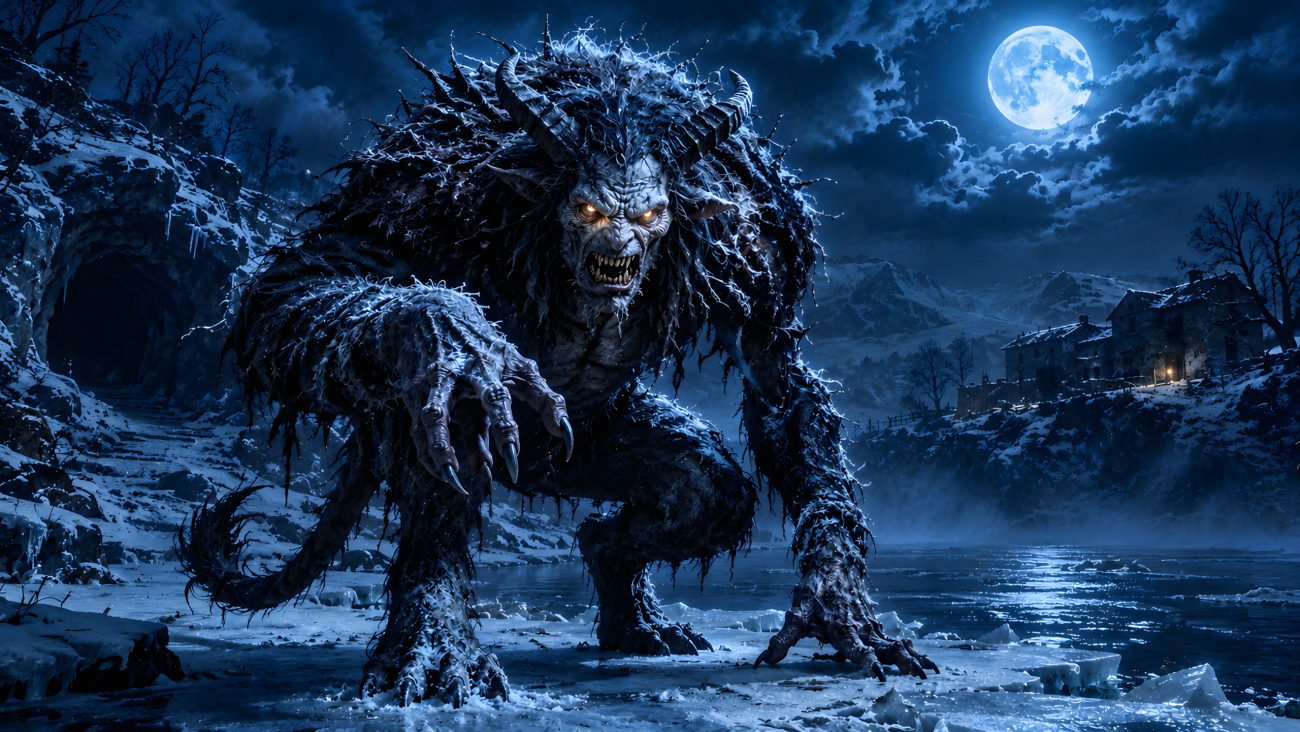
The Karakondzhul is a terrifying winter demon from Balkan and Anatolian folklore that appears during the darkest and coldest days of midwinter. These creatures emerge during the dangerous period between Christmas and Epiphany, especially during severe frosts and the “unbaptized days” of winter when the boundary between the human world and the spirit world was believed to weaken.

The demons rise from rivers, caves, frozen lakes, abandoned places, and other unclean locations after midnight. They wander through villages, fields, and riverbanks until the first rooster crows at dawn. During these nights people avoided traveling alone because the Karakondzhuls were believed to attack travelers, leap onto their backs, and force them to run wildly through the darkness until exhaustion or death.

In Serbian tradition, Karakondzhuls were associated with the spirits of children conceived or dead during the impure winter period. They were believed to especially target women and children, scratching faces, drinking blood, and devouring victims.

The appearance of the Karakondzhul changes constantly. Folklore describes them as shaggy black or red humanoids with horns and tails, naked thorn-covered creatures, horse-bodied beings with human heads and wings, monstrous little people that lure victims onto dangerous ice, or animals such as dogs, sheep, and calves. Some traditions considered them werewolf-like beings capable of changing shape freely.

In Turkish and Anatolian folklore, the related Karakoncolos appears as a small black hairy creature roughly the size of a monkey, child, or cat. It roams winter roads at night questioning travelers with strange riddles such as “Where are you from?” and “Where are you going?” The answer had to include the word kara, meaning “black.” If the traveler failed, the creature attacked them using a massive comb.

People believed iron, fire, bread, salt, ashes from the Christmas badnjak fire, and sharp metal objects could repel the demon. In some regions combs were hidden during winter so the Karakoncolos could not use them as weapons.

The Karakondzhul was feared not simply as a monster, but as a spirit of the dangerous winter season itself — a creature of darkness, frost, wilderness, and the chaotic nights when the world temporarily fell outside divine protection.


Sources

Bestiary.us. (n.d.). Karakonj. Retrieved May 16, 2026, from https://www.bestiary.us/karakonj


Almajonas

Tradition / Region: Portuguese Mythology
Alternative names: Armajonas, Almazonas
Category: Giant


The Myth

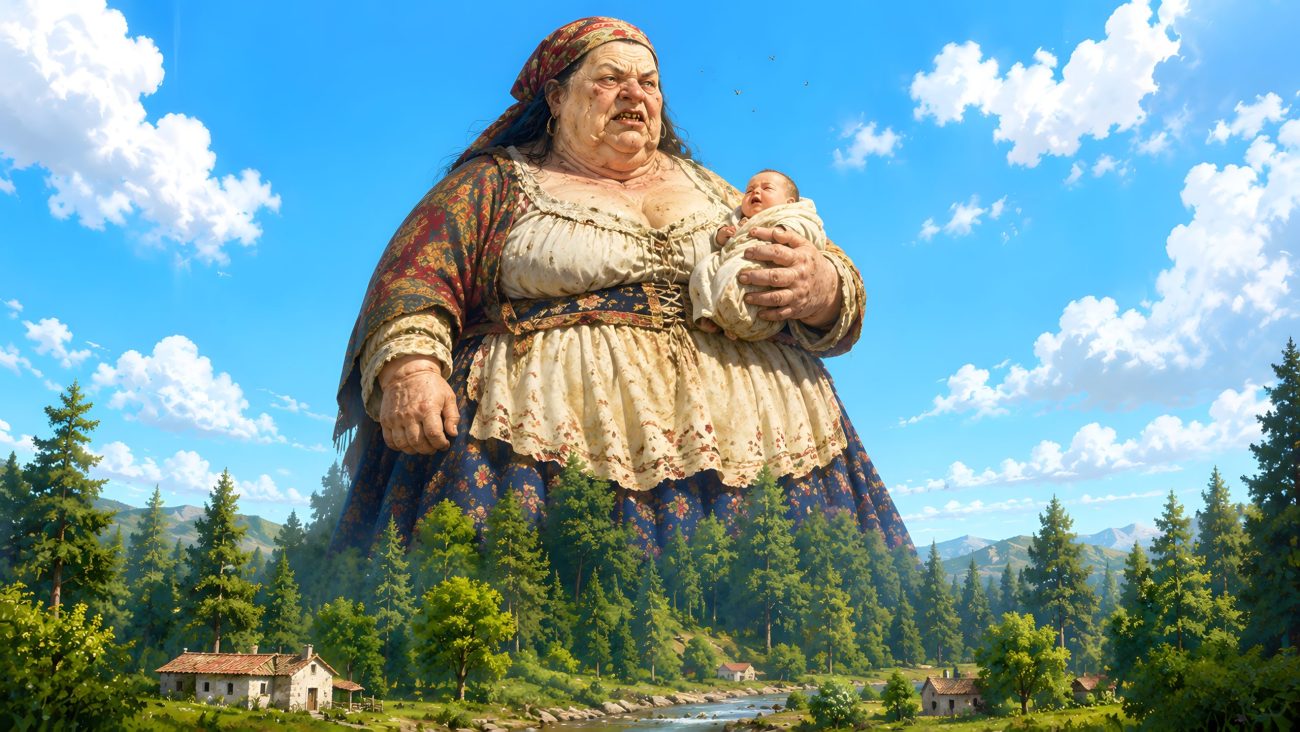
The Almajonas are enormous supernatural women from Portuguese folklore believed to be wandering souls of the dead. They appear as gigantic human-like females who roam through remote places carrying children on their backs. According to popular belief, they are almas penadas — restless spirits unable to find peace.

The Almajonas are described as unnaturally tall and powerful, towering over ordinary people. Some traditions portray them almost like female giants wandering silently across hills, forests, and lonely roads. Their appearance was both frightening and strange because despite their monstrous height they still resembled ordinary women.

Folklore says they carried babies or children strapped to their backs while traveling. Some accounts describe them with extremely long breasts which they pulled over their shoulders in order to nurse the children they carried.

In older Portuguese traditions, the word “amazon” was sometimes used as another name for “wild woman,” and the Almajonas seem connected to that idea. Their husbands were sometimes called Alamões, who were also described as very tall supernatural beings.

The Almajonas were not always portrayed as openly violent creatures, but they were feared because they belonged to the world of wandering dead souls and appeared in isolated places far from villages and settlements.


Sources

The Narrator. (2020). Corrilários. In portuguesecreaturesandlegendsgalore.wordpress.com, from https://portuguesecreaturesandlegendsgalore.wordpress.com/2020/01/17/corrilarios/


Balborinho

Tradition / Region: Portuguese Mythology
Alternative names: Borborinho, Barborinho, Belborinho
Category: Spirit


The Myth

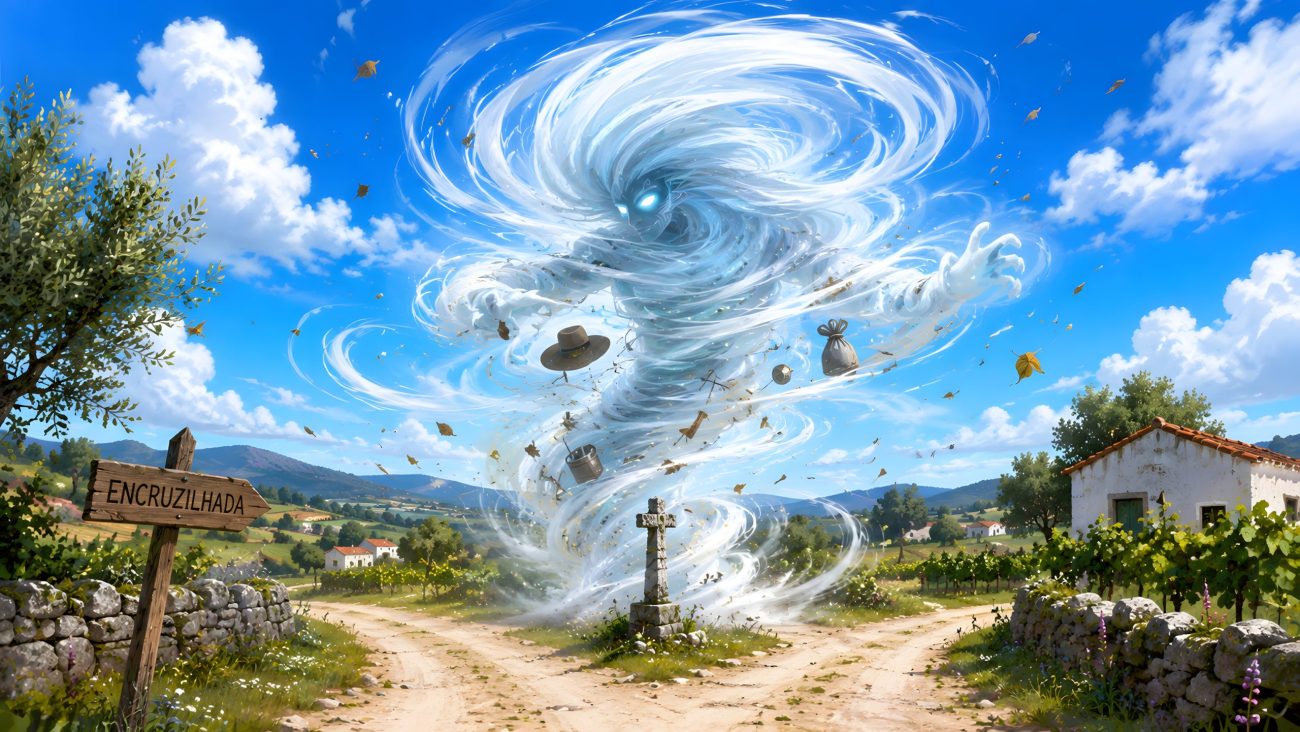
The Balborinho is a supernatural whirlwind from Portuguese folklore that appears suddenly on roads, fields, and crossroads during hot open hours of the day. It looks like a spinning column of dust, straw, leaves, and wind moving violently across the land. People believed something alive moved inside it.

According to tradition, the Balborinho contains the tormented souls of peasants who committed crimes involving land, theft, or agriculture during life. These dead souls cannot enter heaven because they still owe a debt to the living. The whirlwind wanders endlessly, carrying straw and debris as it searches for rest.

In many regions of Portugal people believed witches, devils, or evil spirits hid inside the spinning wind. In Minho and Moncorvo, villagers threw knives or open razor blades into the center of the whirlwind to drive away the spirit inside it. Elsewhere people crossed themselves and shouted protective prayers or insults at the storm.

Some traditions claimed the straw carried by the Balborinho came from stolen fields and marked places where injustice or wrongdoing had happened. In Guimarães there was even a belief that every leaf spinning inside the whirlwind carried a tiny devil riding upon it.

The Balborinho was especially feared in isolated rural places where sudden whirlwinds could appear without warning. In Beira Alta it was described as a violent localized wind capable of lifting entire piles of straw into the air with loud cracking sounds. People connected these unnatural winds directly with demonic forces.

Although terrifying, the Balborinho was not always seen as purely evil. Some stories described it as a suffering spirit trapped between worlds, wandering because of sins committed in life and unable to find peace.


Sources

Wikipedia contributors. (n.d.). Balborinho. In Wikipédia. Retrieved May 16, 2026, from https://pt.wikipedia.org/wiki/Balborinho


Bicho do Cidrão

Tradition / Region: Portuguese Mythology
Alternative names: None recorded
Category: Ghost


The Myth

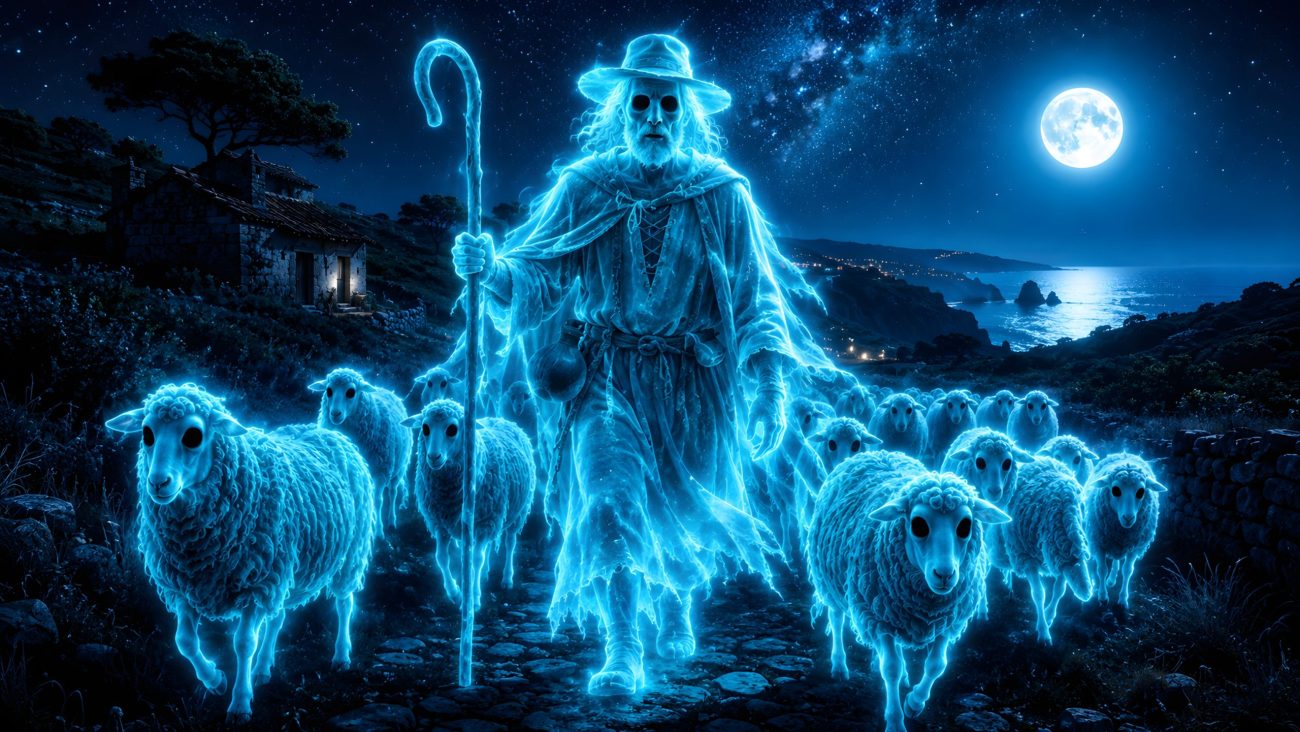
The Bicho do Cidrão is a ghostly being from the mountains of Madeira said to wander the highlands with an invisible flock of sheep. People never clearly see the creature itself, but they hear strange cries echoing through the mountains — sounds identical to the bleating of lambs. These cries are believed to foretell rain, storms, or approaching bad weather.

According to legend, the creature was once a human shepherd who lived in Montado do Cidrão in the region of Curral das Freiras. One day his beloved sheepdog disappeared into the mountains. Desperate and overwhelmed with grief, the shepherd silently promised his soul to the devil if the dog would return.

Soon afterward, the missing dog came back.

After the shepherd eventually died, he did not rest peacefully. Instead, he became the Bicho do Cidrão, a strange supernatural being condemned to roam the mountains forever with his unseen flock. Travelers sometimes claimed to hear phantom sheep moving through foggy valleys or across rocky slopes even when no animals could be seen.

The creature’s mournful cries were feared because they announced storms and rain approaching the island. In older times people in Madeira said the sound could be heard clearly through the mountains during dark or misty weather, though many later claimed the cries had not been heard for many years.


Sources

Bestiary.us. (n.d.). Bishu du Sidran. Retrieved May 16, 2026, from https://www.bestiary.us/bishu-du-sidran/


Aluel

Tradition / Region: Sudanese Mythology
Alternative names: Lioness-Girl Aluel
Category: Lion


The Myth

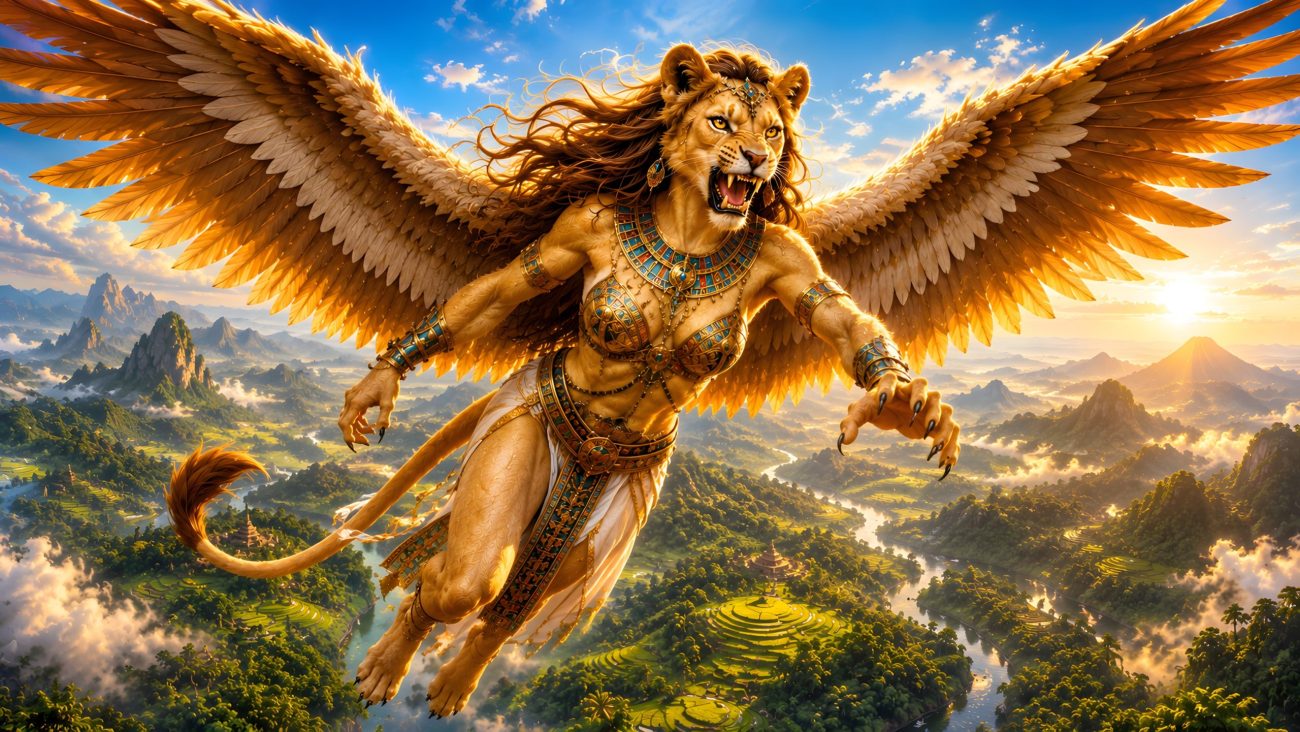
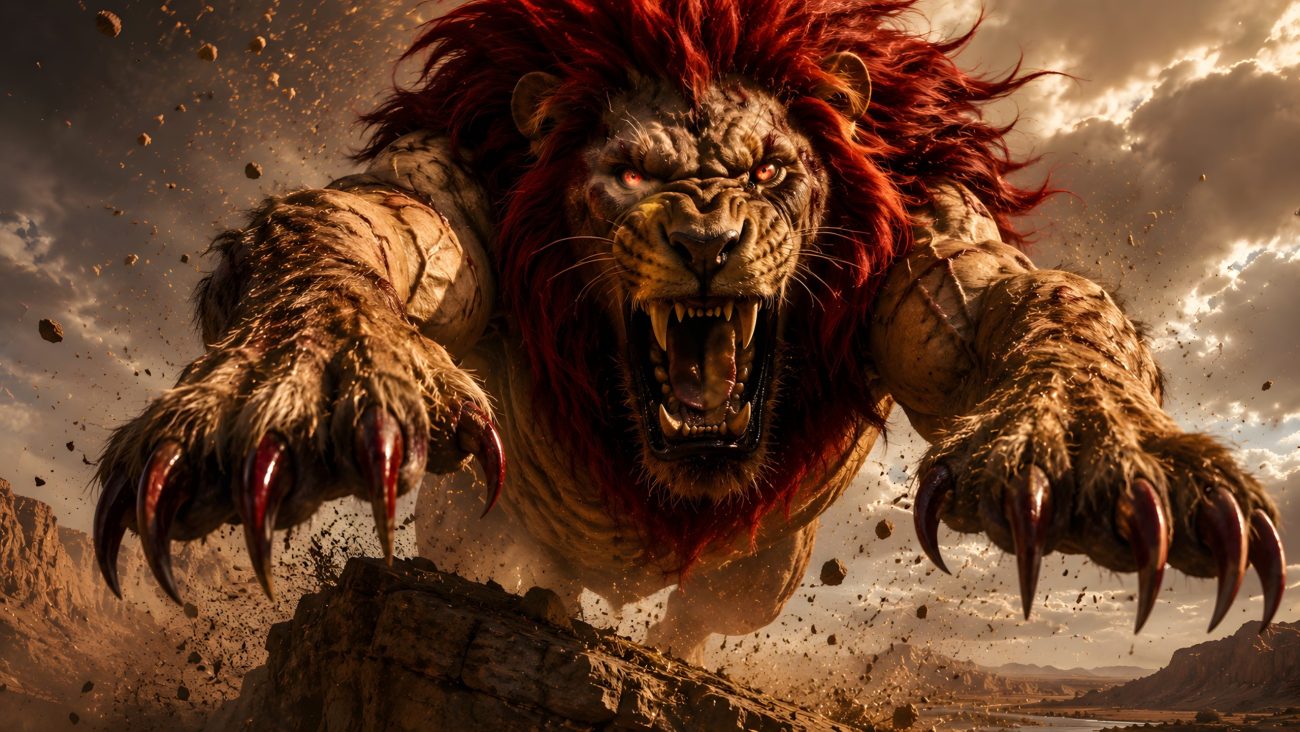
Aluel was a terrifying lioness-woman from Dinka mythology who lived between the human world and the wilderness. She appeared as a supernatural young woman but possessed the nature and strength of a monstrous lioness. Wild, powerful, and feared, she hunted human beings and moved through the bush with unnatural speed and ferocity. Some stories describe her almost like a spirit of the untamed land itself.

Aluel became obsessed with a girl named Atholong, whose beauty had spread across the cattle camps. Atholong had been raised from birth by a man named Chol, who loved her from the moment she was born and later intended to marry her. When Aluel heard of the girl’s beauty, she secretly came to the cattle-camp and hid nearby, waiting for a chance to seize her.

One night Atholong wandered near the edge of the camp, and Aluel attacked. The lioness seized her and carried her away deep into the wilderness. Aluel was so powerful and wild that she could fly through the air while carrying her victim. Yet after taking Atholong, she found herself unable to kill her. Each time she prepared to devour the girl, she became overwhelmed by her beauty and delayed the act again. Instead, she brought her meat, cared for her, and kept her hidden in the forest.

The two lived together for a long time in the bush. Atholong would sing mournful songs about her disappearance and about Chol, while Aluel answered her from the darkness of the forest. Eventually warriors from the cattle-camp tried to rescue the girl, but all fled in terror when they encountered the lioness. Even Atholong’s former suitor failed to face her. Only Chol continued onward alone, carrying many sharpened spears.

When Chol finally reached the place where Atholong was held, Aluel was preparing a special platform covered with grass so the girl’s skin would not touch dirt when she ate her. Before fighting, the lioness repeatedly transformed herself into a more savage and monstrous form. Her tongue changed color from red to green to nearly black as she became fully wild and supernatural. Only then did Chol attack her with his spear.

Mortally wounded, Aluel accepted death calmly. Before dying, she blessed Atholong’s future marriage and children. She ordered Chol and Atholong to dedicate a calf to her spirit once their first daughter married, promising fertility, health, and prosperity in return. Chol later fulfilled the command, and Atholong gave birth to many children, becoming the ancestor of a vast family.


Sources

Deng, F. M. (1974). Dinka folktales: African stories from the Sudan. New York: Africana Publishing Company.


Agany

Tradition / Region: Sudanese Mythology
Alternative names: None recorded
Category: Hero, Human Creature


The Myth

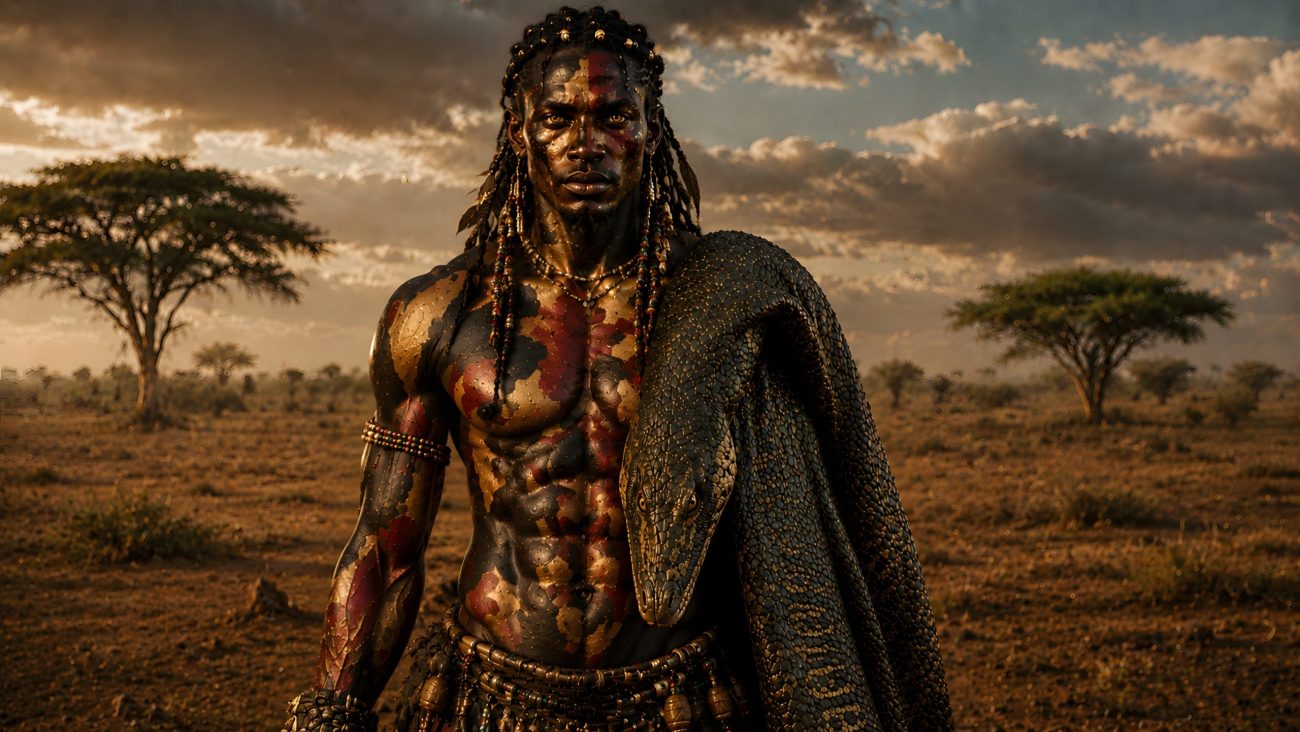
Agany was a supernatural man from Dinka folklore whose true appearance was hidden beneath the skin of a monstrous reptile. Outwardly he appeared terrifying — tall, scaled, awkward, and almost inhuman — because he wore a full suit made from the stitched hides of giant monitor lizards. His body was covered in rough green-black scales, with clawed hands, stiff reptilian limbs, and an elongated lizard-like face. People feared him and treated him like a strange creature rather than a man.

Beneath the disguise, however, Agany possessed extraordinary beauty. When his lizard skin was removed, he appeared as an impossibly handsome young cattle-warrior with glowing skin marked by shifting patterns of black, bronze, pale gold, and deep red like living ritual paint. His body seemed almost radiant beside the fires of the cattle-camp. He was tall and lean yet strongly built, with calm amber-gold eyes, thick dark braided hair decorated with beads and feathers, and graceful movements that fascinated everyone who saw him.

Agany matured unnaturally quickly, growing from infancy into adulthood in a short time. As he grew older, he became famous for his dancing during the goor ceremonies held in the great Dinka cattle-camps beneath the open savannah sky. At dusk, while cattle moved through dust and smoke drifted from the fires, Agany danced among singers and spear-warriors with hypnotic elegance. His presence overwhelmed people despite his quiet voice and calm behavior.

The story describes Agany as a hidden supernatural being whose frightening outer form concealed an almost divine nature. Those who judged only the monstrous reptilian disguise failed to recognize the powerful and beautiful figure hidden beneath it.


Sources

Deng, F. M. (1974). Dinka folktales: African stories from the Sudan. New York: Africana Publishing Company.


Miyar

Tradition / Region: Sudanese Mythology
Alternative names: Muyar
Category: Lion


The Myth

Miyar was a powerful lion-chief from Dinka folklore who ruled over a hidden settlement of lions living like human cattle-herders deep in the wilderness. He was the son of Yor, a lion warrior, and the nephew of a lioness who had once raised two human brothers named Deng.

After the lioness was killed by her own son for attacking his human foster-brother, Yor came seeking revenge but was himself slain. Before dying, Yor warned that his son Miyar would someday avenge him.

Miyar later became chief among the lion people. His cattle-camp was feared and well known, and both lions and strange hornless cattle lived under his rule. These hornless cattle were believed to belong to the lions and could themselves become lions and lionesses.

The two brothers eventually traveled into the land of the lions to confront Miyar before he could attack them first. Carrying only axes and a club, they searched through lion settlements while singing a song announcing themselves and the deaths of Miyar’s relatives.

When Miyar finally heard the song, he recognized Deng immediately and came out to meet him. Instead of attacking like a wild beast, Miyar chose to wrestle as though he were human. The two fought for a long time before Deng threw Miyar to the ground. Deng’s brother then struck Miyar in the head with an axe and killed him.

After Miyar’s death, panic spread through the lion camp. The lions fled into the wilderness, and the hornless cattle transformed into lions and disappeared with them into the forest. Only ordinary horned cattle remained behind for the brothers to take home.


Sources

Deng, F. M. (1974). Dinka folktales: African stories from the Sudan. New York: Africana Publishing Company.