Yamachichi

Tradition: Japanese Mythology
Alternative Names: Yamajiji, Satorikai, 山地乳
Category: Monkey


The Myth

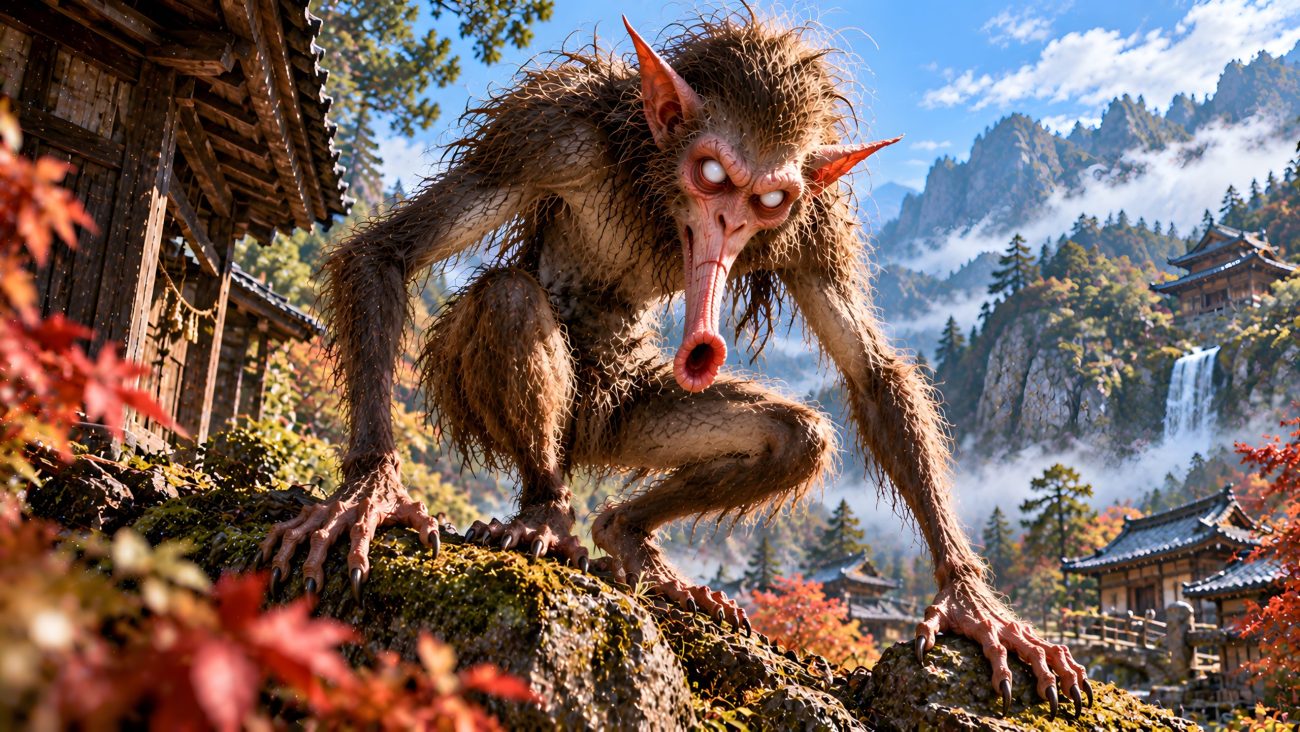
The Yamachichi is a monkey-like yokai that inhabits the secluded mountains of northeastern Japan. It has a pointed mouth and peculiar, sucking lips suited to its unusual way of feeding. Yamachichi are believed to originate from bats: a long-lived bat transforms into a Nobusuma, which eventually becomes a Yamachichi after many more years. Because of its resemblance to the Satori, a supernatural being associated with the mountains, the Yamachichi is sometimes called Satorikai.

These creatures descend from the mountains late at night and enter houses where people are sleeping. They approach their victims and use their pointed lips to suck the breath from their mouths, draining away their life force. Once the victim’s breath has been stolen, the Yamachichi taps them on the chest before fleeing into the darkness. A person whose breath is taken in this way is said to die the following day.

However, the Yamachichi’s power can be reversed if its attack is interrupted. If the sleeping person awakens or another witness catches the creature stealing someone’s breath, the Yamachichi immediately flees. Rather than dying, the intended victim is said to have their lifespan greatly extended. The creature is known primarily from an Edo-period collection of supernatural tales, and little else is known about its origins beyond its association with remote mountain regions.


Sources

“Yamachichi.” Yokai.com. https://yokai.com/yamachichi/

Shoucai Gui

Tradition: Chinese Mythology
Alternative Names: Money-Guardian Ghost, Money Chest Ghost, Flying Ghost, Swift Ghost, Life-Taking Ghost, 守财鬼
Category: Monkey


The Myth

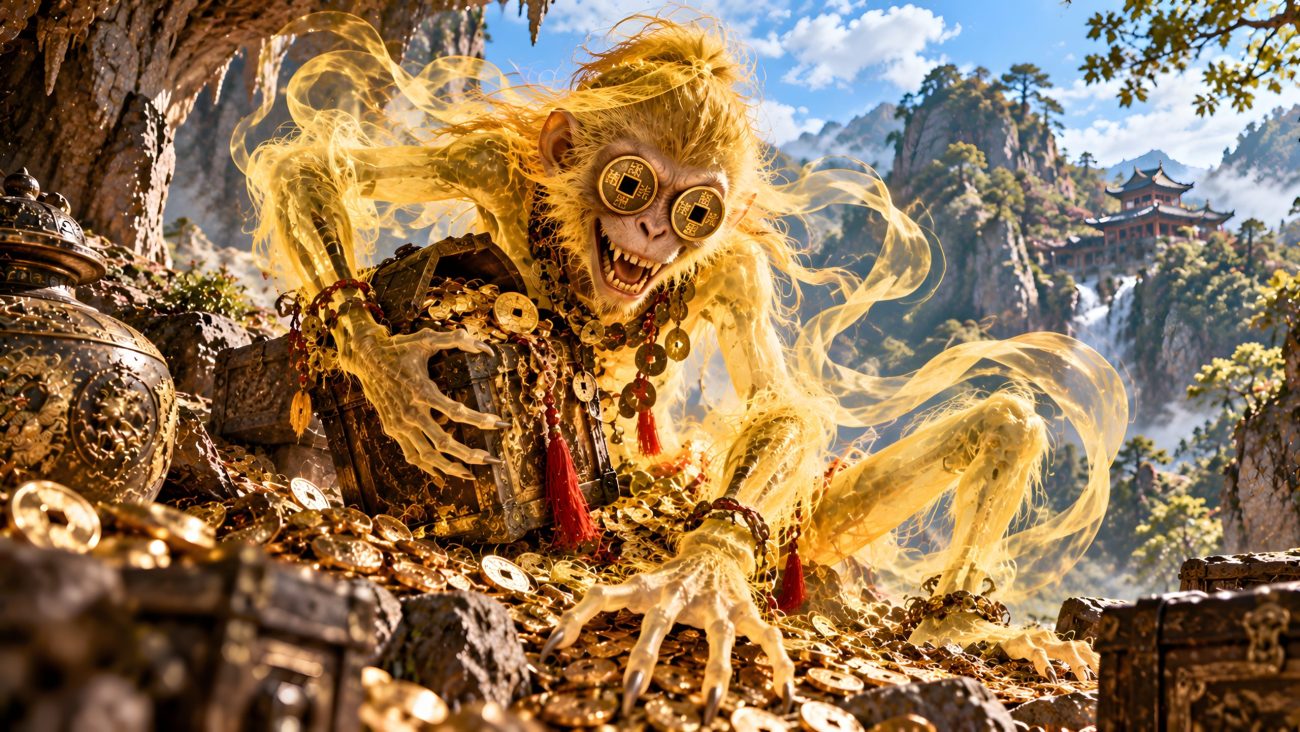
The Shoucai Gui, or Wealth-Guarding Ghost, is a supernatural being associated with the yakshas, a class of spirits known for their connections to treasures and hidden riches. It is also called the Money Chest Ghost, Flying Ghost, Swift Ghost, or Life-Taking Ghost. According to legend, the creature guards a hidden treasure vault, remaining near its riches while waiting for a person destined to discover and claim them.

Despite its association with wealth, the name Shoucai Gui can also refer to a miser: someone who hoards money and refuses to spend it. The creature therefore embodies both the supernatural guardianship of hidden treasure and the human tendency to cling possessively to wealth.


Sources

“Money-Keeping Ghost” (守財鬼). Chinese Wikipedia. Wikimedia Foundation. Accessed October 20, 2026. https://zh.wikipedia.org/wiki/%E5%AE%88%E8%B4%A2%E9%AC%BC


Sarumuko

Tradition: Japanese Mythology
Alternative Names: Saru no Mukosama, Saru no Nyōbō, Monkey Bridegroom, 猿婿入り
Category: Monkey


The Myth

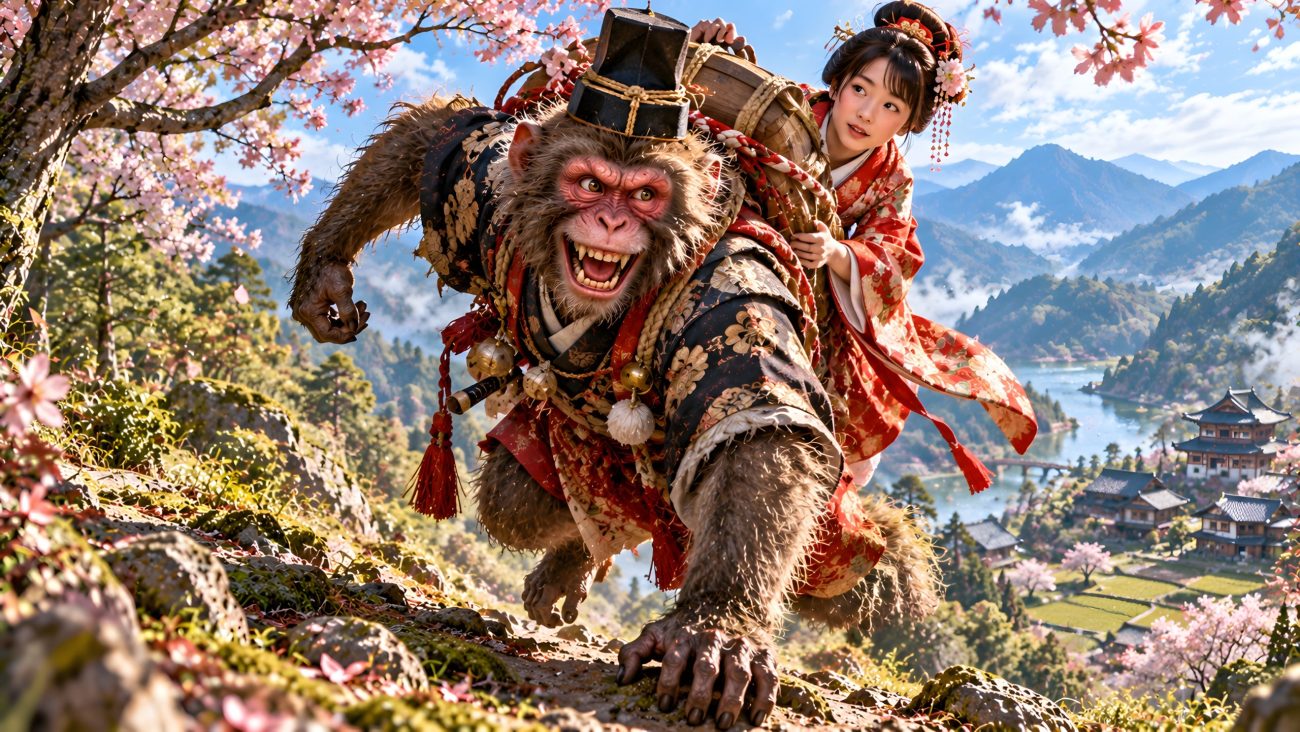
Sarumuko, or the Monkey Bridegroom, is a traditional Japanese folktale found in many regions of Japan. It belongs to the widespread tradition of stories about marriages between humans and supernatural or animal beings. The tale usually begins when a farmer promises his daughter to a monkey in exchange for its help with agricultural work. In some versions, the farmer desperately needs water for his rice fields during a drought. A monkey overhears him wishing that someone would irrigate the fields in return for a daughter’s hand in marriage, and promptly brings water to the fields. In other versions, the monkey plants seeds, weeds the fields, or performs other difficult tasks. Bound by his promise, the farmer must offer one of his daughters to the monkey. The elder daughters refuse, but the youngest agrees to marry it and goes to live in the mountains.

In the eastern Japanese version, the bride is eventually permitted to visit her family during the Girls’ Festival in the third month. Before leaving, she prepares rice cakes and asks her monkey husband to carry a heavy mortar on his back. Along the way, she also asks him to retrieve a branch of mountain cherry blossoms growing beside a deep pool. As the monkey reaches for the branch, the weight of the mortar pulls him into the water, where he drowns. Before dying, he laments that his own death matters less to him than the sorrow his wife will feel. The daughter, however, secretly wishes for the mortar to remain above the monkey and the monkey beneath it, then flees home. Other versions substitute wisteria flowers or persimmons for the cherry blossoms. Some even describe the monkey dressing formally in traditional robes before descending from the mountains to claim his bride.

In western Japan, the daughter often defeats the monkey on the very day of their wedding. She has him carry a large water jar intended as part of her marriage possessions. When they reach a river, she deliberately drops her hairpin or mirror into the water, prompting the monkey to climb in and retrieve it. Water fills the jar on his back, making it impossible for him to escape, and he eventually drowns. In both regional versions, the youngest daughter uses her intelligence to overcome a dangerous marriage imposed upon her and return safely to her family. The story shares themes with the medieval Japanese tale Fujibukuro no Sōshi, in which a farmer’s promise leads to a daughter being taken by a monkey, only for her to be rescued by a skilled archer and his dogs.


Sources

“Sarumuko.” 新版TYZ 妖怪図鑑 (New TYZ Yokai Encyclopedia). https://tyz-yokai.blog.jp/archives/1063422280.html


Sarutsura Kozō

Tradition: Japanese Mythology
Alternative Names: Sarutsura Kozo, さるつら小僧, Monkey-Faced Boy
Category: Monkey


The Myth

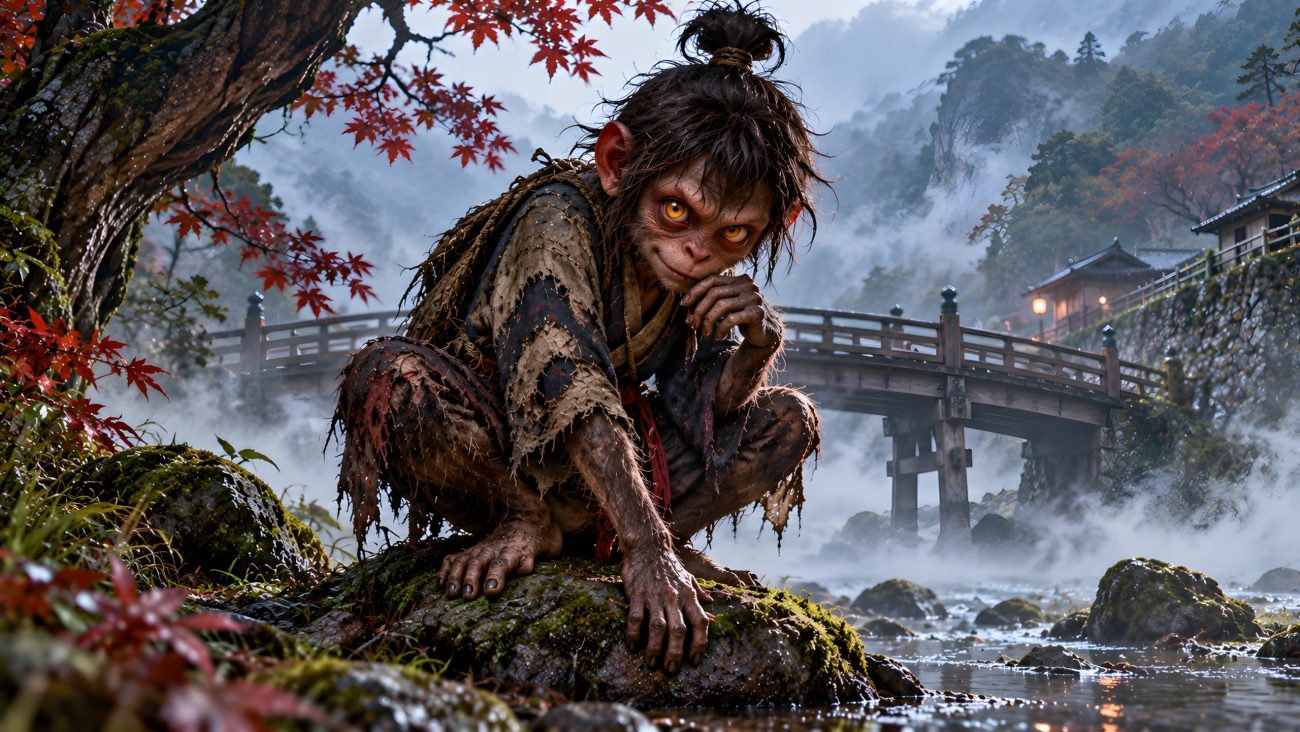
Sarutsura Kozō is a mysterious yokai depicted in a type of supernatural creature card game produced during Japan’s Edo period. As its name suggests, it takes the form of a young boy with a monkey-like face. Its image appeared on a picture card accompanied by the phrase “Sarutsura Kozō of Saruhashi,” linking the creature to a place called Saruhashi.

The name Saruhashi probably refers to the bridge of that name spanning the Katsura River, also known as the Sagami River. However, it is uncertain whether Sarutsura Kozō was ever the subject of an actual local legend. The creature is primarily known through its depiction on the old yokai card, which later inspired the manga artist Shigeru Mizuki to create an illustration of another yokai called Kawazaru, or River Monkey.


Sources

“Kozou.” 新版TYZ 妖怪図鑑 (New TYZ Yokai Encyclopedia). https://tyz-yokai.blog.jp/archives/1049652018.html


Funakoshi-mura no Kikai

Tradition: Japanese Mythology
Alternative Names: 船越村の奇怪, The Strange Incident of Funakoshi Village
Category: Monkey


The Myth

In June 1716, a farmer named Sagouemon lived with his wife and three children in Funakoshi Village, in Musashi Province. Night after night, strange lights appeared outside their home, accompanied by a terrifying presence that caused their youngest daughter, a two-year-old girl, to scream in fear. Whenever the light from outside approached the house, another glowing light emerged from the inner rooms and confronted it near the window. While the two lights clashed, the child would stop crying, and the disturbance would end. Despite prayers, purification rituals, and attempts to discover the cause, the family could not rid themselves of the phenomenon.

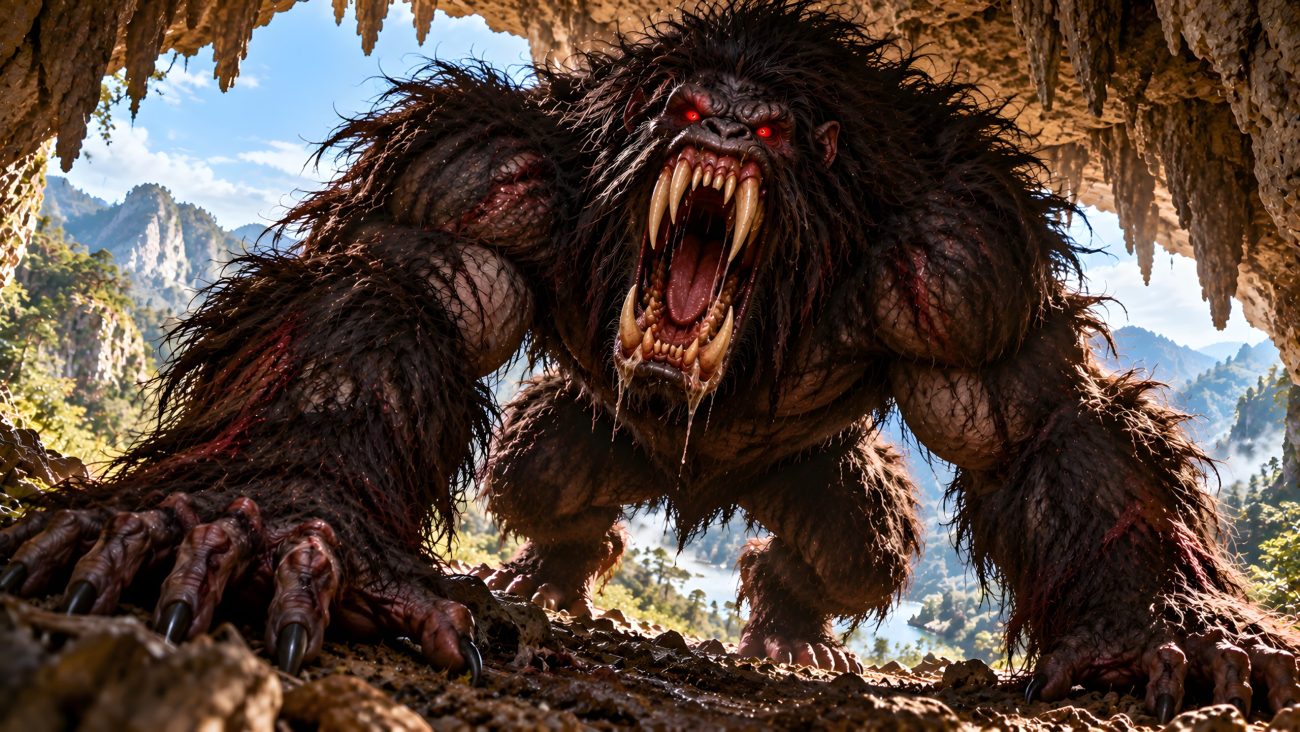
During a thorough cleaning of the house, Sagouemon’s wife discovered an old, soot-blackened paper talisman stuck to a wall in the inner room. Without recognizing its significance, she discarded it with the rubbish. That night, the outside light returned, smashed through the bamboo lattice, and entered the house. The protective light did not appear. The creature seized the little girl and tried to carry her away, but Sagouemon struck it with a sickle. Although he felt the blow land, the creature escaped with the child. The following morning, villagers followed a trail of blood from the house into the nearby hills, where they discovered a large, ape-like beast hiding in a small cave. They beat it to death, discovering that it was an aged monkey on the verge of becoming a hihi, a fearsome Japanese ape-like monster. The missing girl was never found.

When the village officials investigated, they also asked about the second light, which had ceased appearing after the talisman was discarded. The family and villagers searched the drainage ditch where the rubbish had been thrown and recovered an old, blackened Kumano Gohō talisman, a sacred protective charm revered by Sagouemon’s ancestors. They came to believe that the talisman had housed a divine presence that had protected the family by opposing the beast. From then on, the villagers treated the charm with great reverence, and the mysterious disturbances never returned.


Sources

“Funakoshi Monkey.” 新版TYZ 妖怪図鑑 (New TYZ Yokai Encyclopedia). https://tyz-yokai.blog.jp/archives/1046235949.html


Youyan

Tradition: Chinese Mythology
Alternative Names: 幽鴳
Category: Monkey


The Myth

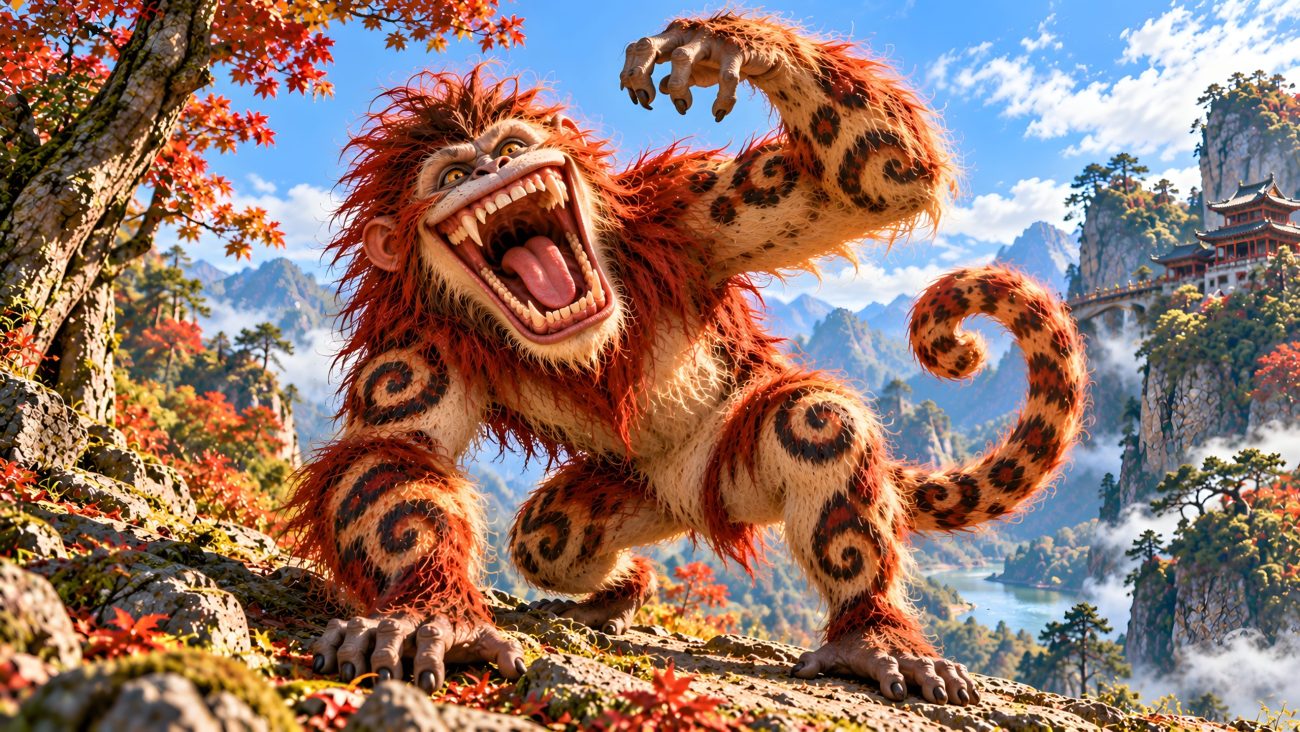
The Youyan is a strange monkey-like creature recorded in the Classic of Mountains and Seas. It has patterned markings across its body and lives on Bianchun Mountain. Unlike an ordinary monkey, it is known for its peculiar and amusing behavior.

The Youyan enjoys laughing, and its cry sounds like the pronunciation of its own name. Whenever it encounters a human, it immediately lies down, displaying an unusual reaction to people. Its laughter, distinctive call, and curious habit of flopping onto the ground make it a memorable creature among the strange beasts of Chinese mythology.


Sources

“You-ho” (幽鴳). Chinese Wikipedia. Wikimedia Foundation. Accessed October 20, 2026. https://zh.wikipedia.org/wiki/%E5%B9%BD%E9%B4%B3


Tongbi Shenhou

Tradition: Chinese Mythology
Alternative Names: Tongbei Ape, Tongbi Yuanhou, 通臂猿猴
Category: Monkey


The Myth

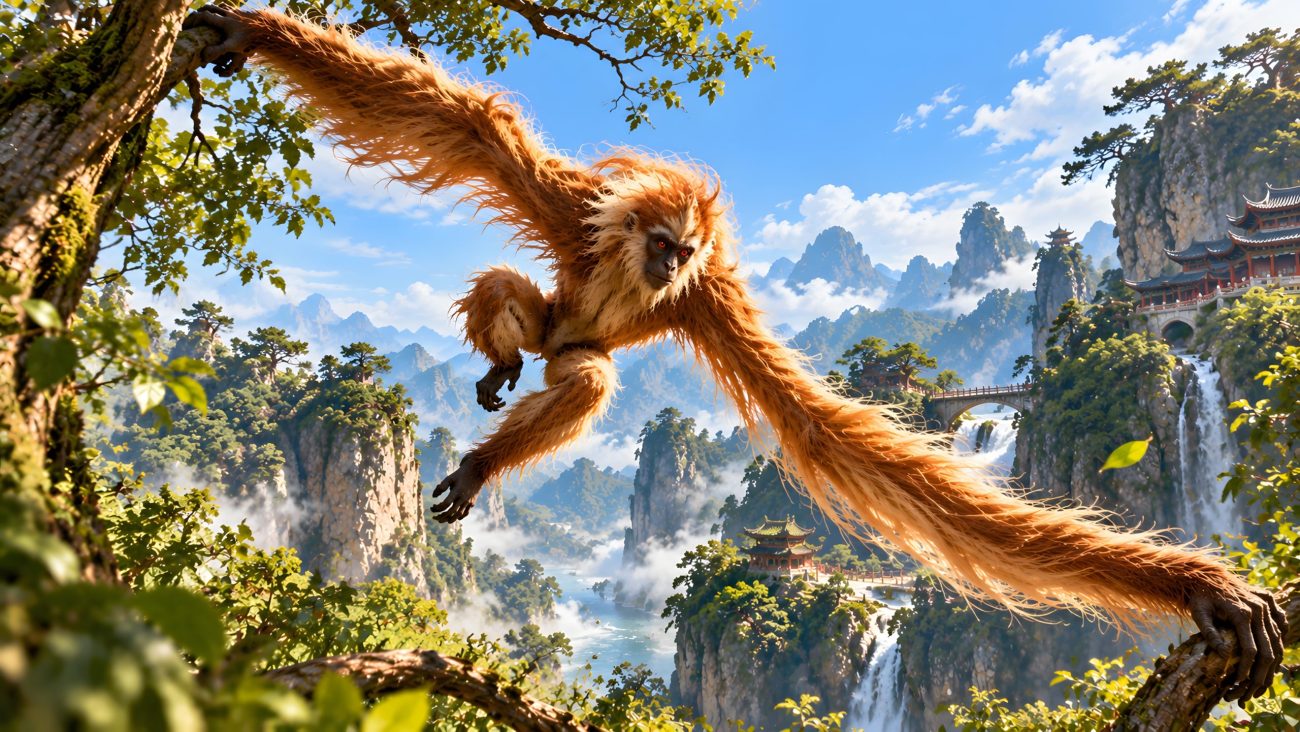
The Tongbi Shenhou is a legendary ape traditionally associated with the gibbon, whose unusually long arms allow it to climb, swing, and leap between trees with remarkable agility. Its arms extend below its knees, making it a distinctive figure among mythical primates. The characteristics of this ape also inspired the principles of Tongbi Quan, a Chinese martial art that studies the creature’s physical abilities and movements rather than simply copying its actions.

In Journey to the West, the Tongbi Shenhou is counted among the Four Divine Monkeys, alongside the Lingming Stone Monkey, the Chikou Horse Monkey, and the Six-Eared Macaque. It possesses extraordinary supernatural abilities, including grasping the sun and moon, shrinking vast mountains, discerning fortune and misfortune, and manipulating the workings of the universe. These powers place it among the remarkable beings whose abilities reach far beyond those of ordinary monkeys.

In the television adaptation Journey to the West II, starring Benny Chan, the Tongbi Shenhou calls himself the Chaotian Dasheng, or Great Sage Who Defies Heaven.


Sources

“Tongbi Macaque” (通臂猿猴). Chinese Wikipedia. Wikimedia Foundation. Accessed October 20, 2026. https://zh.wikipedia.org/wiki/%E9%80%9A%E8%87%82%E7%8C%BF%E7%8C%B4


Butatsch Cun Ilgs

Tradition: Swiss Mythology
Alternative Names: Butatsch Cun Ilgs, Cow’s Stomach, Monster of Lüschersee
Category: Mollusc


The Myth

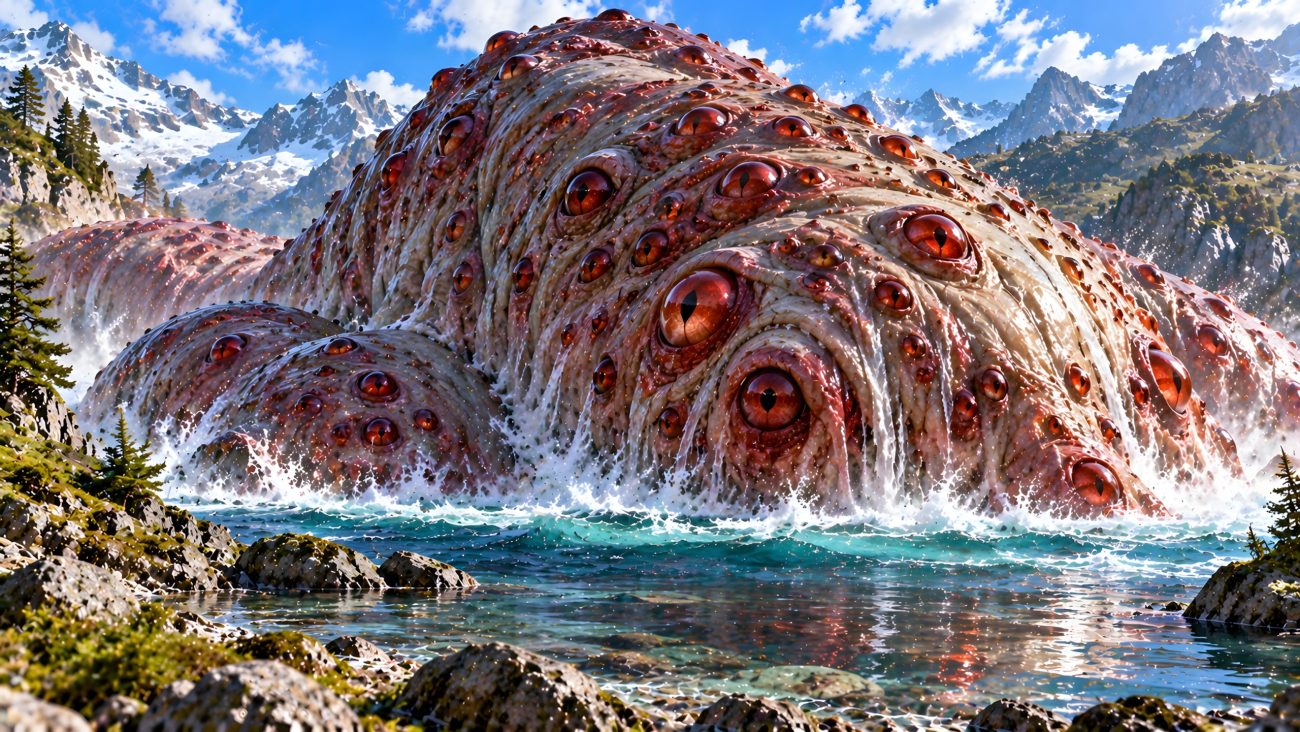
Butatsch Cun Ilgs, whose name means “Cow’s Stomach,” is a monstrous creature said to inhabit Lüschersee, a small alpine lake in Graubünden, Switzerland. According to legend, the lake reaches all the way to the center of the Earth, where eternal fires burn beneath its waters. The creature resembles an enormous cow’s stomach covered in thousands of eyes. These eyes possess hypnotic powers, and when they focus on a single point, they unleash flames so intense that they can melt bone.

Long ago, a group of cruel noblemen returned from an ibex hunt and found cattle and sheep grazing peacefully beside the lake. For amusement, they slaughtered the animals and drove the survivors into the water to drown, while the helpless shepherds watched. Suddenly, the lake began to foam and bubble, and Butatsch Cun Ilgs hauled itself onto the shore. Mesmerized by its countless eyes, the noblemen stood helpless as the enormous mass trampled and crushed them all. The creature then slipped back into the lake, leaving the shepherds terrified but unharmed. Its appearance became a tale of supernatural vengeance against those who abused their power and tormented the innocent.

Butatsch Cun Ilgs is said to have emerged from Lüschersee only three times, with a century separating each appearance. During its second emergence, it carved out the rapids of the Nolla River as it moved across the land. Its third appearance occurred during a terrifying thunderstorm, when it slithered through a stream, tore apart its banks, triggered massive landslides, and created deep ravines. This final manifestation became known as the starmentusa notg, or “Night of Terror.” The monster has not been seen since, but shepherds still claim that an eerie bellow sometimes rises above the lake’s quiet waters. When they hear it, they say, “The Lüschersee roars,” and hurry to bring in their hay.


Sources

“Butatsch Cun Ilgs.” A Book of Creatures, September 23, 2015. https://abookofcreatures.com/2015/09/23/butatsch-cun-ilgs/


Kraken

Tradition: Norwegian Mythology
Alternative Names: Kraken, Krake, Hafgufa
Category: Mollusc


The Myth

The Kraken is a gigantic sea monster said to inhabit the waters off the coast of Norway, particularly the Norwegian Sea. It is commonly imagined as an enormous octopus or squid capable of dragging ships and sailors beneath the waves. Its immense size and deadly reputation made it one of the most feared creatures in sailors’ legends. Some accounts describe it as so vast that its appearance could be mistaken for an island or a great mass rising from the ocean, although descriptions of its exact form and size vary.

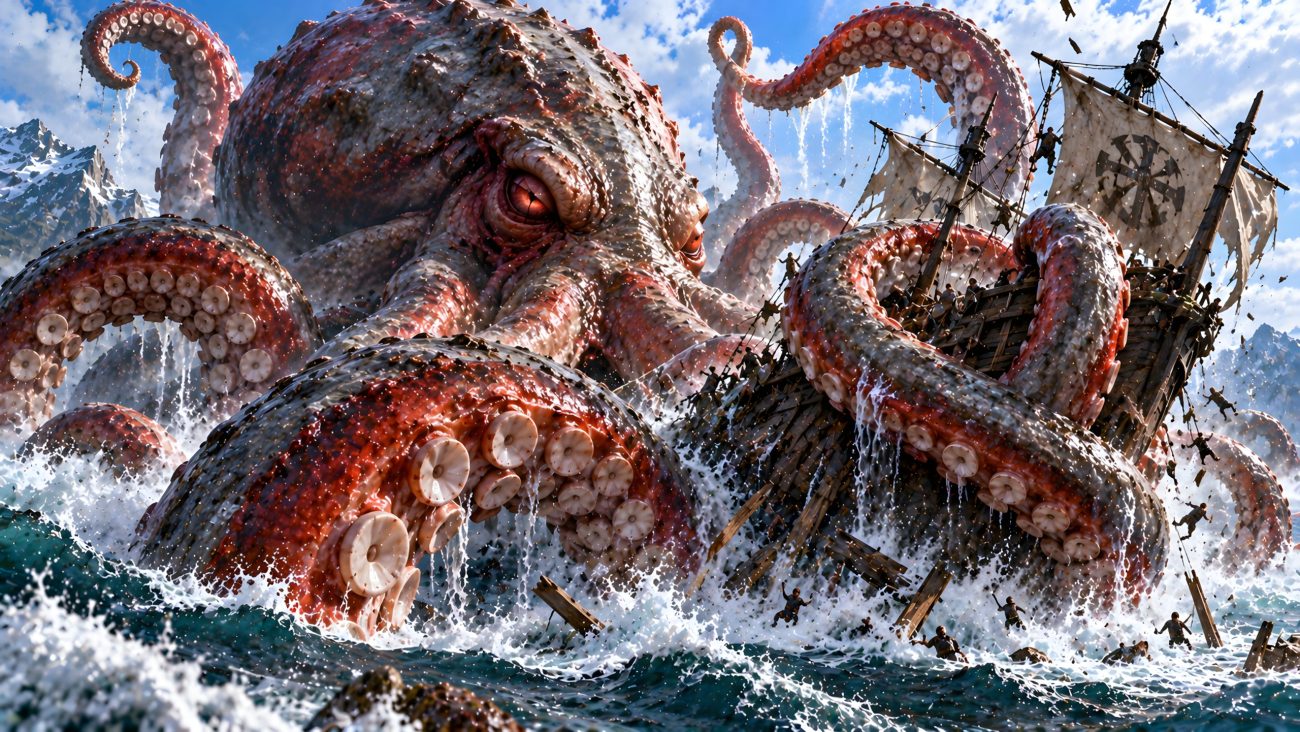
The Kraken became especially notorious for its supposed ability to attack ships. Sailors feared that the creature might seize a vessel with its powerful tentacles and pull it into the depths. Stories of enormous sea creatures were associated with sightings of giant squid, which can grow to considerable lengths. The Kraken also became connected in some accounts with the hafgufa, a legendary sea monster described in medieval Scandinavian writings as one of the largest creatures inhabiting northern waters. The hafgufa was said to live in the Greenland Sea, and some later writers treated the two monsters as the same being, although this identification remains uncertain.

The Kraken gradually became a familiar figure in European tales of the sea. It appeared in accounts of northern maritime wonders and later inspired depictions of enormous, man-hunting cephalopods in literature. In some medieval descriptions, the hafgufa’s behaviour was more reminiscent of a whale than an octopus, and the creature’s name has been interpreted as meaning something like “sea reeker.” Nevertheless, the Kraken is most strongly associated with the image of a colossal squid or octopus lurking beneath the waves, a terrifying explanation for the mysterious dangers of the open sea.


Sources

“Kraken.” Wikipedia: The Free Encyclopedia. Wikimedia Foundation. Accessed October 20, 2026. https://en.wikipedia.org/wiki/Kraken#Mythical_identifications


Akkorokamui

Tradition: Japanese Mythology
Alternative Names: Atkor Kamuy, Atkorkamuy, Akkoro Kamui
Category: Mollusc


The Myth

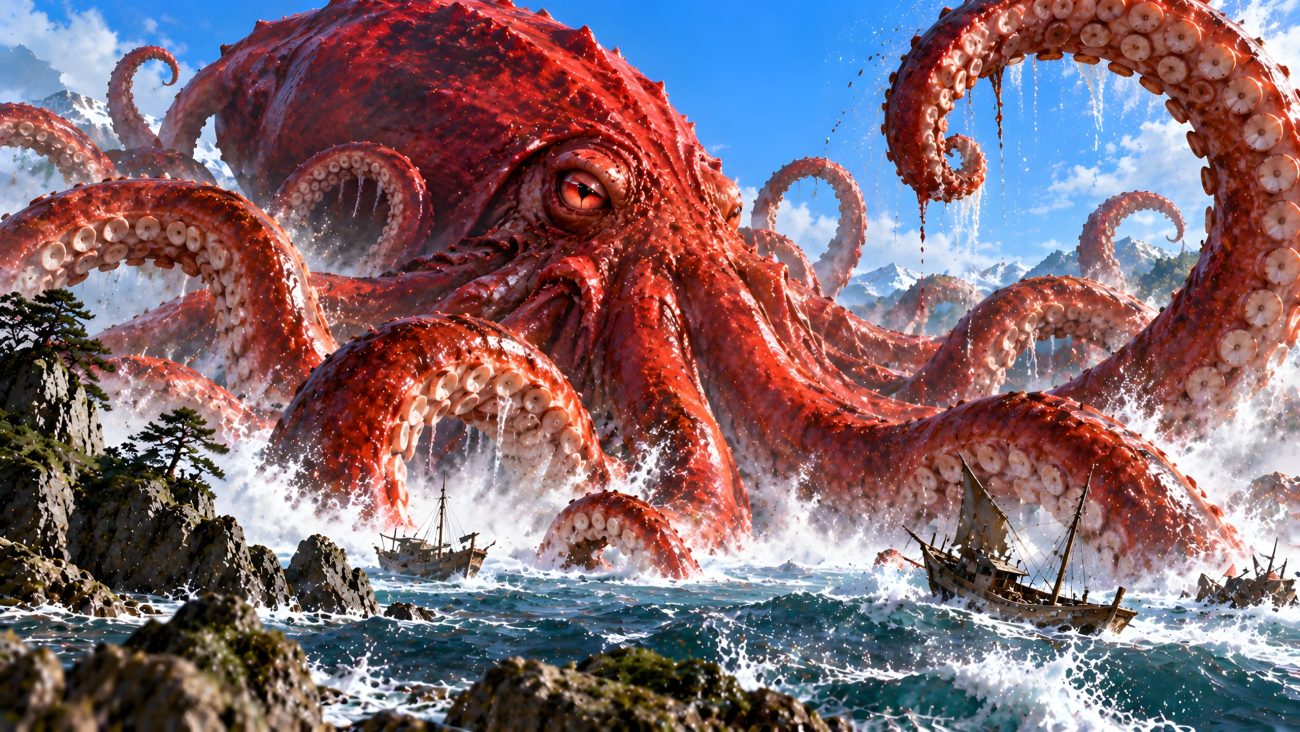
Akkorokamui is a gigantic red octopus deity that inhabits Uchiura Bay in Hokkaido, Japan. When it spreads its tentacles, its enormous body is said to cover an area of more than a hectare. It is large enough to swallow boats and even whales whole. Its brilliant red coloration is so intense that, when it rises from the water, the sea and sky appear to turn deep red. As a powerful water deity and the lord of Uchiura Bay, Akkorokamui inspires both reverence and fear.

Ships that venture too close to the creature risk being swallowed whole. For generations, local people have avoided the water whenever the sea and sky turn red. Fishermen and sailors who have no choice but to venture out carry scythes for protection against the enormous being. Its name derives from the Ainu name Atkor Kamuy, often interpreted as “string-holding kamuy,” referring to its long, string-like tentacles. The word kamuy denotes a divine or spiritual being in Ainu belief.

According to legend, Akkorokamui was once a gigantic spider named Yaushikep that lived in the mountains near the village of Rebunge. Its enormous red body covered more than a hectare, and one day it descended from the mountains and began rampaging through the village, shaking the earth and destroying everything in its path. The terrified villagers prayed for help, and Repun Kamuy, the god of the sea, answered their pleas. He dragged Yaushikep into Uchiura Bay, where the monstrous spider transformed into a gigantic octopus. From then on, it became the divine ruler of the bay, known as Atkor Kamuy, or Akkorokamui.


Sources

“Akkorokamui.” Yokai.com. https://yokai.com/akkorokamui/