Tradition: German Mythology
Alternative Names: Huckup, Aufhocker
Category: Goblin
The Myth
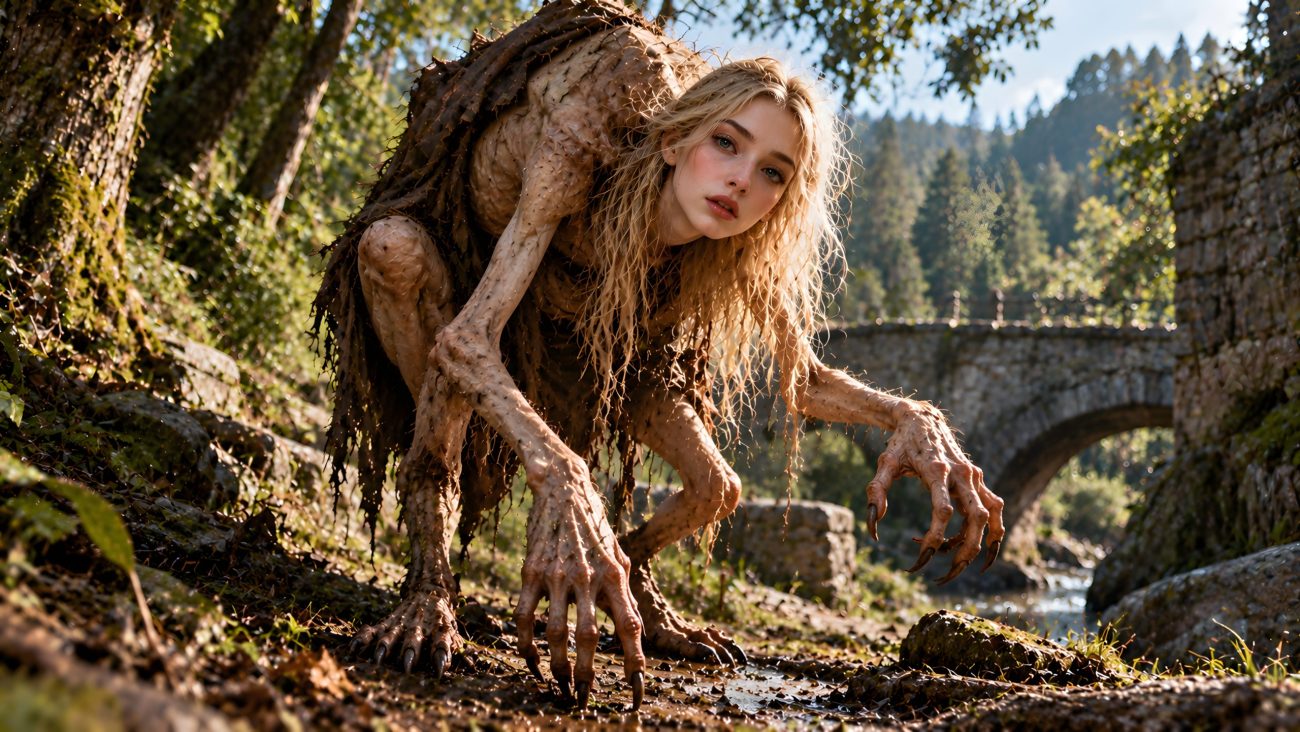
The Aufhocker, also known as the Huckup, is a dangerous shapeshifting spirit in German folklore. Its appearance is unpredictable, as it can take the form of a goblin, a beautiful woman, a dead person, or various animals. The name Aufhocker means “leap upon,” referring to its habit of suddenly jumping onto the backs of unsuspecting victims. It is often described as a pressure spirit or perching spirit, weighing down those unfortunate enough to encounter it.
The Aufhocker commonly attacks lone travelers, old women, and people believed to deserve punishment, such as thieves and criminals. Its attacks frequently occur in isolated or ominous places, including bridges, crossroads, springs, forests, hollow paths, and cemeteries. Once it leaps onto a victim’s back, it becomes impossibly heavy, forcing the unfortunate traveler to struggle beneath its growing weight. No matter how hard the victim tries, the creature cannot be shaken off or killed. Its weight increases with every step, and its victims may eventually die from exhaustion. According to some versions of the legend, a person can escape if they manage to reach home before the spirit kills them.
In more violent accounts, the Aufhocker does not simply exhaust its victims but tears out their throats. This version is associated with vampirism, giving the creature a more explicitly predatory nature. Sunlight and church bells, traditionally associated with protection against vampires, have been suggested as possible defenses against it. However, the legends do not provide a single, universally established method of defeating the creature.
The Aufhocker has also been interpreted as a symbol of emotional burdens that cling to a person no matter how desperately they try to escape them. Like the spirit weighing down a traveler’s back, painful memories and unresolved experiences can become increasingly difficult to carry. In some interpretations, the old woman targeted by the creature represents time itself and the fear of growing older, with accumulated memories becoming a burden that cannot be discarded. Other interpretations connect the legend to night terrors. Similar beings appear in other European traditions, including the Ganipote in the French region of Charente-Maritime and the Uhaml in formerly German-speaking parts of Bohemia.
Sources
“Aufhocker.” Wikipedia: The Free Encyclopedia. Wikimedia Foundation. Accessed October 17, 2026. https://en.wikipedia.org/wiki/Aufhocker