Brunswick Lion

Tradition: German Mythology
Alternative Names: Lion of Brunswick, Heinrich’s Lion
Category: Lion


The Myth

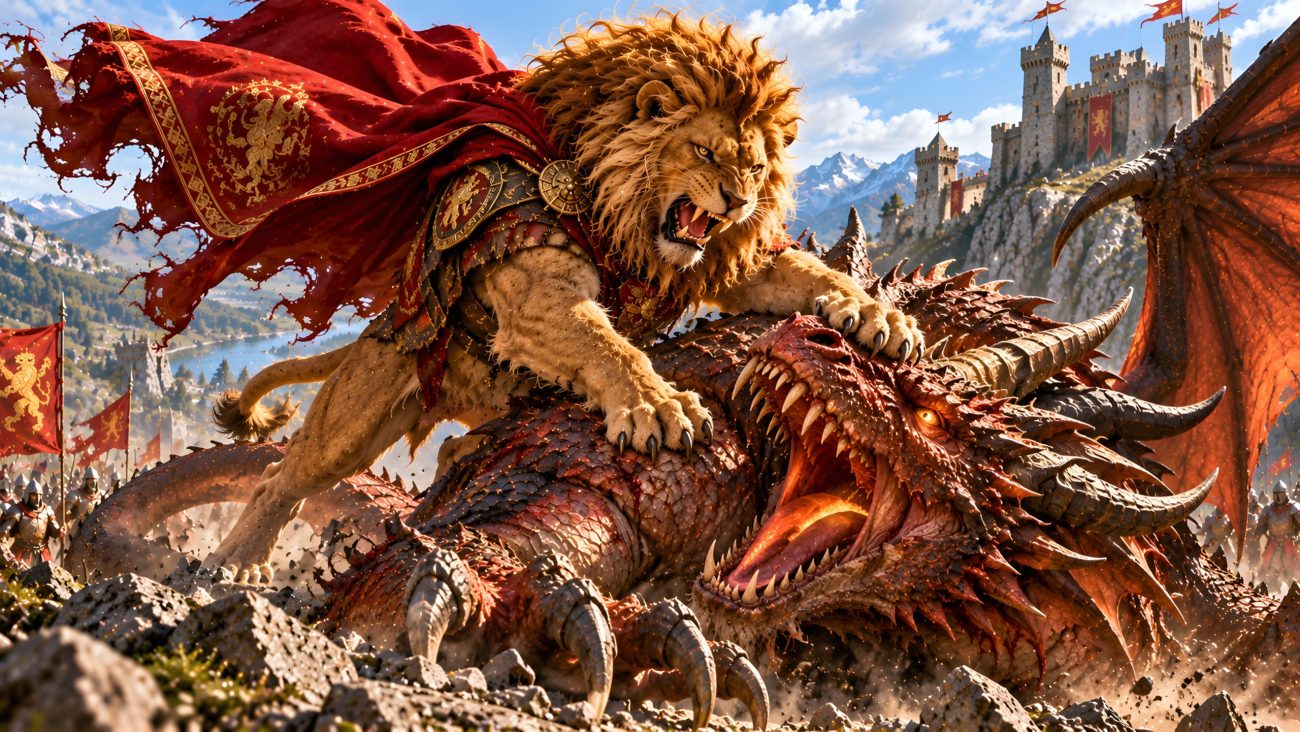
The Brunswick Lion is a legendary lion whose story is connected to Henry the Lion, the medieval Duke of Saxony and Bavaria. According to the legend, Henry encountered a lion fighting a fierce dragon while on a pilgrimage to the Holy Land. Rather than leaving the beast to face the monster alone, Henry joined the battle and helped the lion defeat the dragon. Grateful for his aid, the lion became devoted to Henry and accompanied him on his journey home.

The lion remained faithfully at Henry’s side until the duke’s death in 1195. Overcome with grief at the loss of its master, the animal refused to eat and eventually died upon Henry’s grave. Its extraordinary loyalty moved the people of Brunswick, who erected a statue in the lion’s honour. The monument commemorated the bond between the duke and his faithful companion, preserving the memory of a creature whose devotion endured even beyond death.


Sources

“Brunswick Lion.” Wikipedia: The Free Encyclopedia. Wikimedia Foundation. Accessed October 21, 2026. https://en.wikipedia.org/wiki/Brunswick_Lion
Lion of Cithaeron

Tradition: Greek Mythology
Alternative Names: Thespian Lion, Ravine Lion
Category: Lion


The Myth

The Lion of Cithaeron was a monstrous lion that descended from Mount Cithaeron to prey upon cattle and terrorize the surrounding lands. It threatened the herds belonging to King Amphitryon and King Thespius, while other traditions associated it with King Megareus of Megara. The beast was so dangerous that it became the target of a hunt by heroes seeking to end its reign of terror.

When Heracles was eighteen years old, King Thespius tasked him with killing the lion. The hunt lasted fifty days, as Heracles pursued the beast through its territory. At last, he succeeded in slaying it. Heracles then took the lion’s hide for himself and wore its scalp as a helmet, making the slain predator’s own strength and fearsome appearance part of his heroic equipment. In this tradition, the Lion of Cithaeron was one of the great beasts Heracles overcame before his famous battle with the Nemean Lion.

Another account tells of the lion’s destruction by Alcathous. According to the people of Megara, the beast had killed many victims, including Euippus, the son of King Megareus. The king promised his daughter’s hand and succession to the throne to whoever could kill the monster. Alcathous accomplished the deed, winning the reward and eventually becoming king. In commemoration of the victory, he established sanctuaries dedicated to Artemis the Huntress and Apollo the Hunter.


Sources

“Lion of Cithaeron.” Wikipedia: The Free Encyclopedia. Wikimedia Foundation. Accessed October 21, 2026. https://en.wikipedia.org/wiki/Lion_of_Cithaeron


Shisa

Tradition: Japanese Mythology
Alternative Names: Shīsā, Okinawan Lion
Category: Lion


The Myth

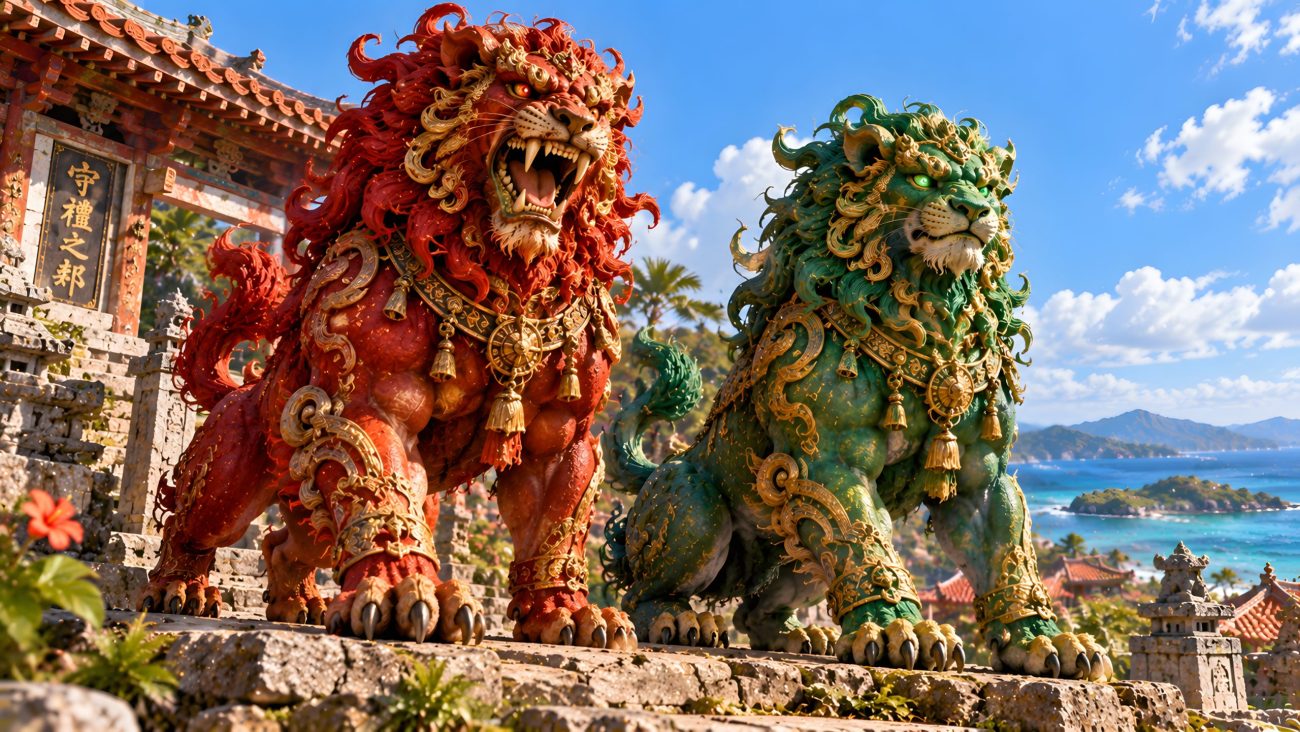
The Shisa is a powerful lion-like guardian creature from the Ryukyu Islands, especially Okinawa. Its statues are commonly made from stone, pottery, or plaster and placed on rooftops to protect homes from fires, evil spirits, and misfortune. Shisa are often depicted in pairs, with one opening its mouth to form the sound A and the other closing its mouth to form Un. One is believed to attract good fortune, while the other drives away evil, allowing the pair to protect a household from both danger and bad luck.

According to a traditional account, fires once frequently threatened the island, and a feng shui master advised the people to place a lion statue facing Yaese-Take. The statue was believed to protect the surrounding settlement from destructive flames. This ancient guardian remains associated with Yaese, preserving the memory of the creature’s protective power.

The Shisa continues to stand watch over houses and sacred places, its fierce lion-like appearance serving as a warning to malevolent spirits. Though represented by statues, it is regarded as a supernatural guardian whose presence can defend people against disaster and bring good fortune.


Sources

“Shisa.” 新版TYZ 妖怪図鑑 (New TYZ Yokai Encyclopedia). https://tyz-yokai.blog.jp/archives/1060919789.html


Zouyu

Tradition: Chinese Mythology
Alternative Names: Zou Wu, Zou Ya
Category: Lion


The Myth

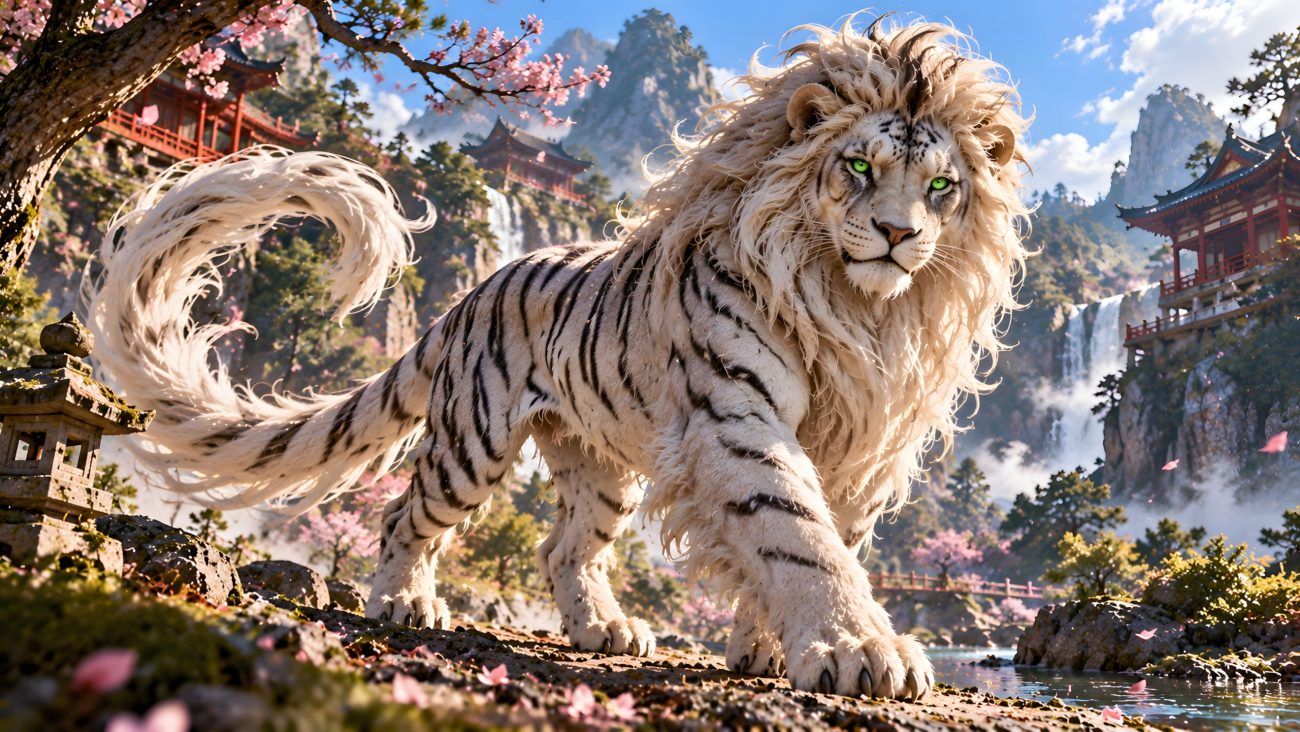
The Zouyu is a benevolent mythical beast with the body of a tiger and the head of a lion. Its fur is white with black stripes, and it has an unusually long tail. Despite its fearsome appearance, the Zouyu possesses a gentle and compassionate nature, making it a symbol of kindness and virtue.

Unlike ordinary predators, the Zouyu refuses to eat living animals. Its merciful nature distinguishes it from other powerful beasts, as it does not harm creatures that are still alive. The Zouyu is therefore regarded as a benevolent creature whose strength is accompanied by restraint and compassion.


Sources

“Zōu yú” (騶虞). Chinese Wikipedia. Wikimedia Foundation. Accessed October 21, 2026. https://zh.wikipedia.org/wiki/%E9%A8%B6%E8%99%9E


Shezmu

Tradition: Egyptian Mythology
Alternative Names: Schesmu, Shesmu
Category: Lion


The Myth

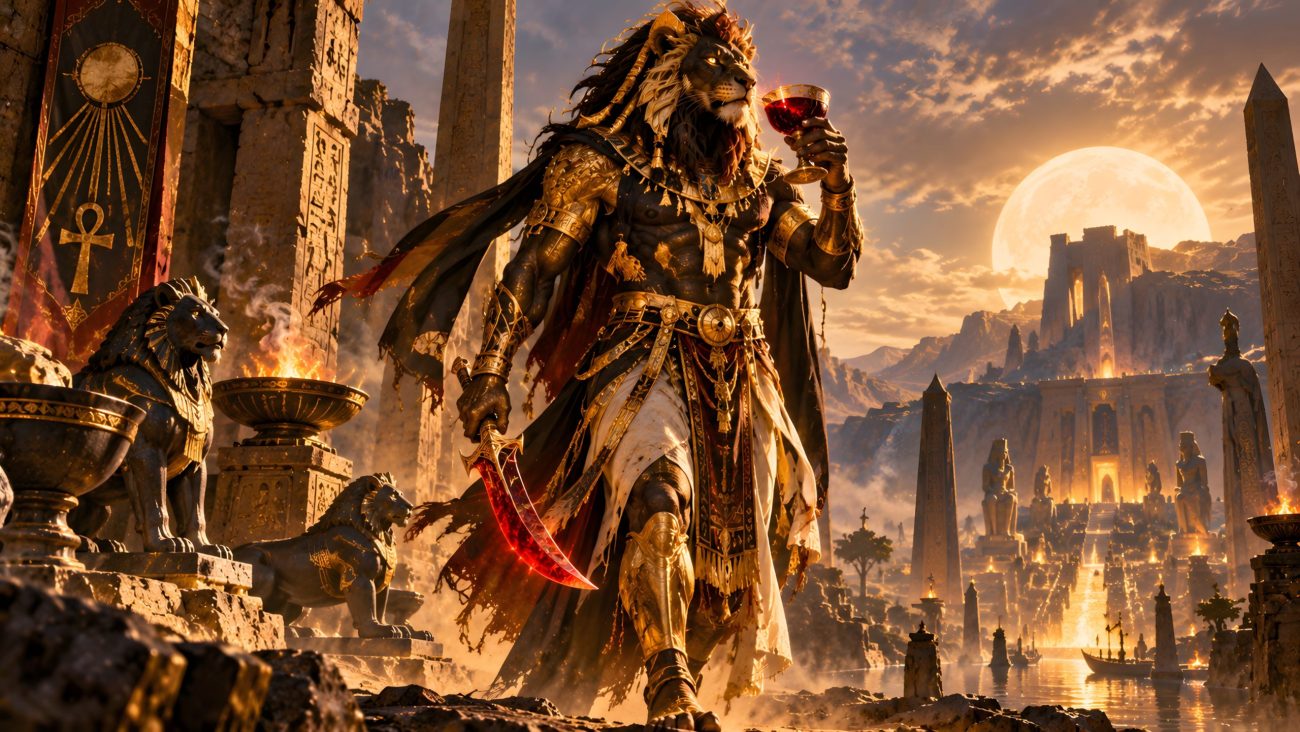
Shezmu is a powerful and fearsome Egyptian deity associated with wine, perfume, ointments, embalming, blood, and the judgment of the dead. He is usually depicted as a man with the head of a lion, holding a butcher’s knife, though some depictions show him with the head of a vulture or in the form of a lion. His nature is deeply contradictory: he brings the pleasures of wine, fragrance, music, dancing, and festivities, yet he is also a violent executioner capable of slaughtering and dismembering other gods.

As a judge of the underworld, Shezmu oversees the punishment of the damned. His association with blood and butchery makes him a terrifying presence among the dead, while his connection to oils, perfumes, and ointments links him to the preparation and preservation of bodies. Wine unites these contrasting aspects of his nature, serving as a symbol of celebration while also being associated with blood and sacrificial offerings.

Shezmu also plays a vital role in defending the cosmic order. During the sun god Ra’s nightly journey through the underworld, he battles and defeats Apep, the enormous serpent of chaos that threatens to destroy the sun and plunge the world into nonexistence. By overcoming this monstrous enemy, Shezmu protects Ra and ensures that the sun can rise again. Though feared for his brutality, he is therefore also a defender of the world against the forces of destruction.


Sources

“Shezmu.” Wikipedia: The Free Encyclopedia. Wikimedia Foundation. Accessed October 21, 2026. https://en.wikipedia.org/wiki/Shezmu


Ugallu

Tradition: Mesopotamian Mythology, Iraqi Mythology
Alternative Names: Big Weather-Beast, Ugallū
Category: Lion


The Myth

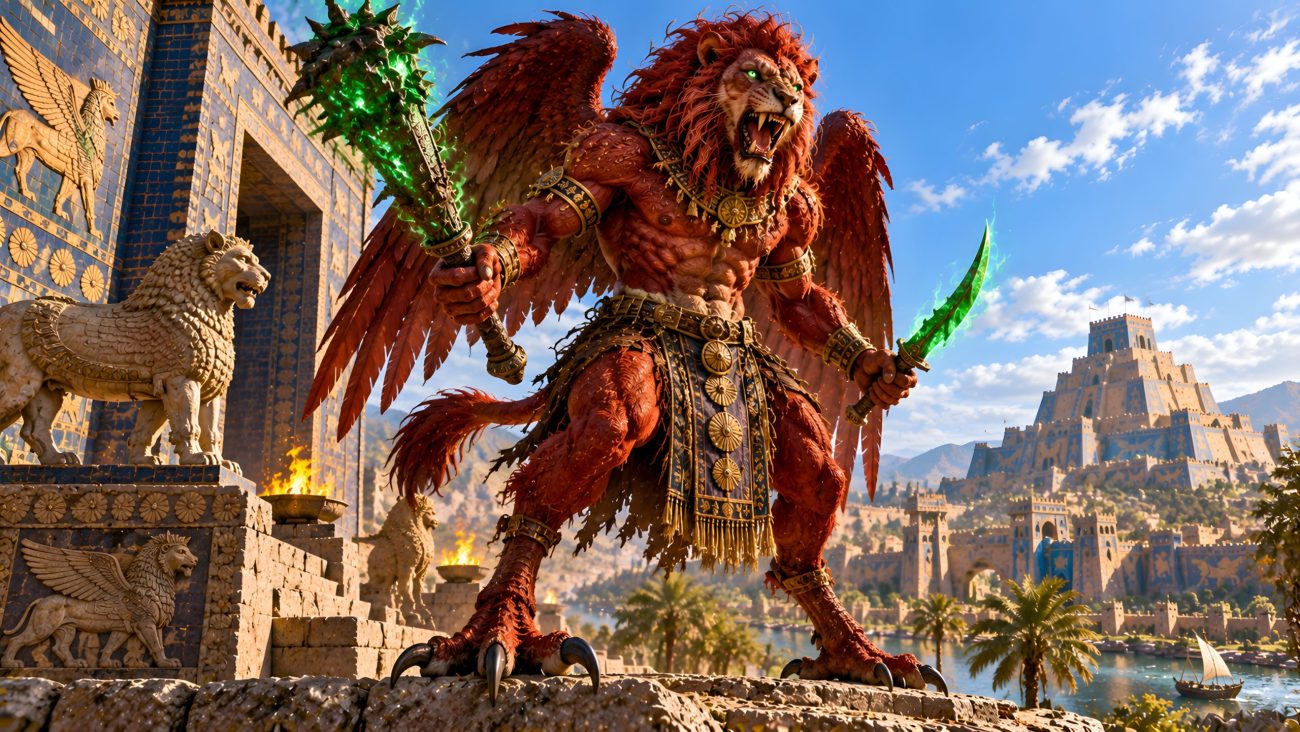
The Ugallu is a fearsome lion-headed demon with the body of a humanoid and the feet of a bird. Its appearance changed over time, with its feet becoming powerful eagle-like talons and its body covered by a short skirt. It has a lion’s head and ears and is often depicted carrying a mace and a dagger, making it appear as a formidable supernatural warrior.

Despite its demonic nature, the Ugallu serves as a protective spirit against evil and disease. Its image was placed on amulets, clay figurines, and wooden figures made from tamarisk, which were used to protect people and their homes from malevolent supernatural forces. Pairs of Ugallu figures guarded the gates of palaces and temples, while smaller protective figures were placed in private homes, especially in bedrooms where people were vulnerable to unseen dangers.

The Ugallu was one of eleven monstrous beings created by the primordial goddess Tiāmat during her war against the younger gods. After the god Marduk defeated and captured these creatures, he bound them and assigned them new purposes. The Ugallu became a guardian against evil, its terrifying appearance repurposed to defend the world against the very dangers it once represented. In older traditions, it also served Nergal as a guardian of the underworld, before becoming widely associated with protection and the warding off of harmful spirits.


Sources

“Ugallu.” Wikipedia: The Free Encyclopedia. Wikimedia Foundation. Accessed October 21, 2026. https://en.wikipedia.org/wiki/Ugallu


Urmahlullu

Tradition: Mesopotamian Mythology, Iraqi Mythology
Alternative Names: Untamed Lion Man
Category: Lion


The Myth

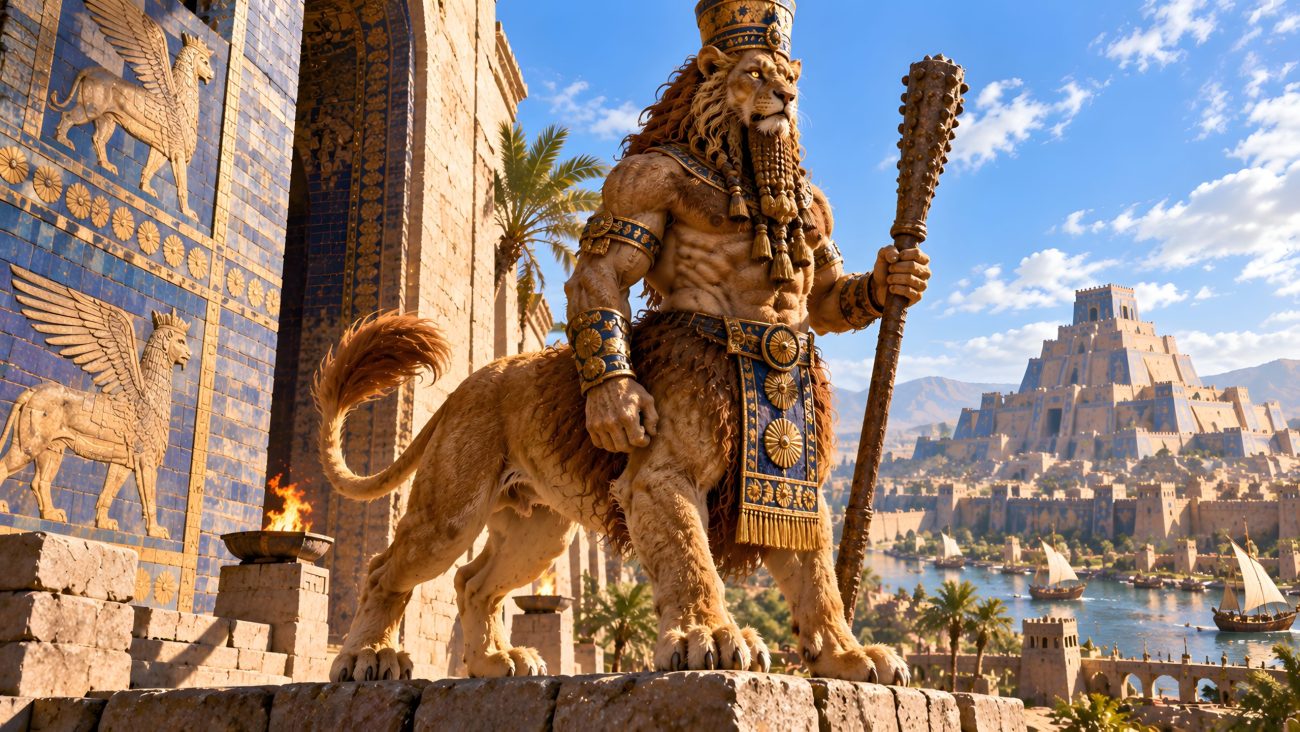
The Urmahlullu is a powerful guardian spirit depicted as a hybrid between a lion and a human. Its lower body resembles a four-legged lion, complete with feline limbs and a powerful body, while its upper half is humanoid. In ancient Mesopotamian and Assyrian art, it sometimes appears carrying a club and wearing a divine cap, emphasizing its supernatural nature.

The Urmahlullu protects people and sacred spaces from evil spirits and dangerous demons. Its image was used to ward off malevolent supernatural beings, including Mukīl rēš lemutti, a winged demon associated with death, and Šulak, a demon that haunted lavatories. Statues of the creature were placed outside lavatories or buried beside their doorways to prevent these threatening beings from entering.

Through its combination of human intelligence and a lion’s strength, the Urmahlullu served as a formidable supernatural protector. Its image appeared on Assyrian cylinder seals and in protective statues, standing guard against the unseen dangers that could threaten a household.


Sources

“Urmahlullu.” Wikipedia: The Free Encyclopedia. Wikimedia Foundation. Accessed October 21, 2026. https://en.wikipedia.org/wiki/Urmahlullu


Donestre

Tradition: Egyptian Mythology
Alternative Names: Donestre
Category: Lion


The Myth

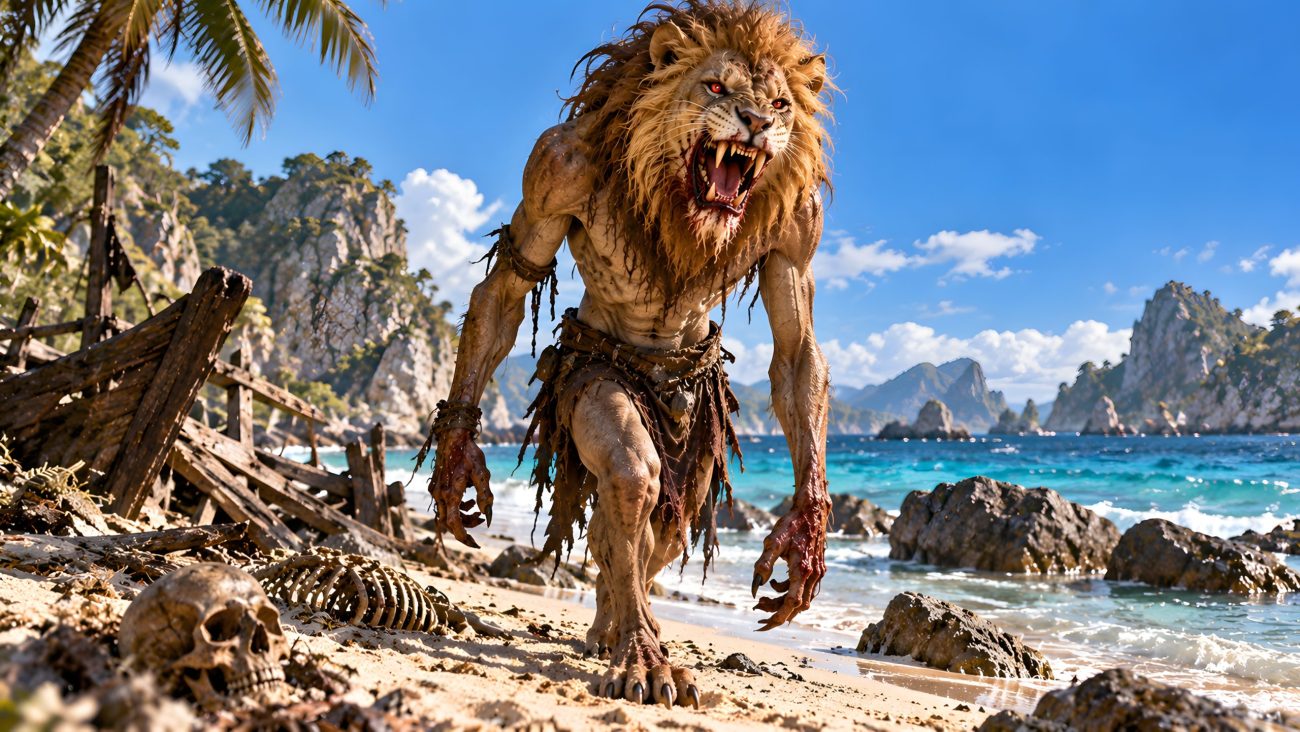
The Donestre is a monstrous humanoid with the body of a human and the head of a lion. Despite its terrifying appearance and appetite for human flesh, it possesses human intelligence and can speak every language. It is also said to possess the gift of prophecy. The creature lives on an island in the Red Sea, where it waits for travelers arriving from distant lands.

The Donestre uses its extraordinary ability to speak any language to befriend unsuspecting travelers. It welcomes them, speaks with them in their native tongues, and gains their trust before revealing its monstrous nature and devouring them. After the meal, it leaves behind the victim’s severed head and sits beside it, weeping and mourning the person it has killed.

This strange behavior makes the Donestre an unusual monster: although it mercilessly preys on human beings, it appears to grieve for its victims after their deaths. Its combination of intelligence, deception, cannibalism, and sorrow makes it a particularly unsettling creature of medieval legend.


Sources

“Donestre.” Mythus Wiki. https://mythus.fandom.com/wiki/Donestre


Léwfrächen

Tradition: Luxembourg Mythology
Alternative Names: Lion Maiden, Lioness of Oak
Category: Lion


The Myth

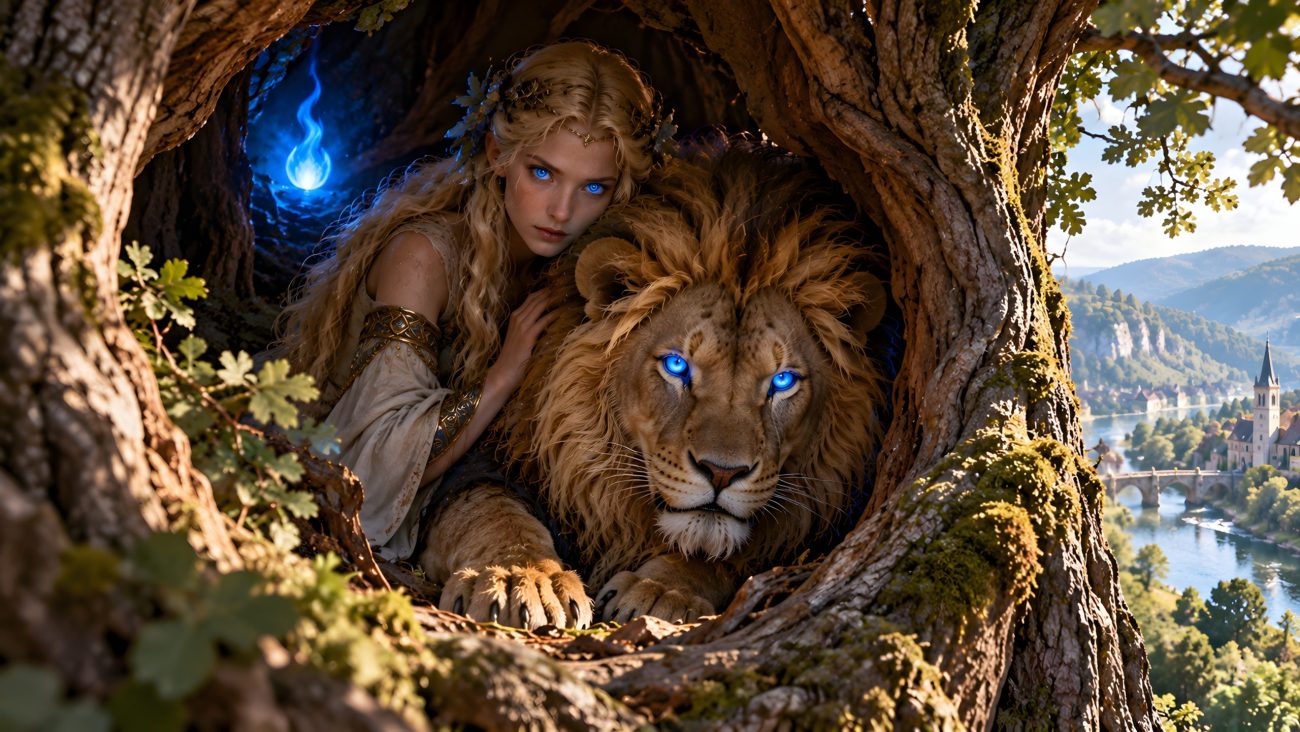
Léwfrächen was a mysterious maiden who lived inside a thick, hollow oak tree near the village of Eich in Luxembourg. She kept a tame lion, which gave her the name Lion Maiden. The hollow tree, known as the Léwfrächeshielchen, stood beside an old path leading into the meadows along the Alzette River. The path became known as the Lion Maiden’s Path, preserving the memory of the strange woman and her feline companion.

The hollow oak was also associated with a will-o’-the-wisp that emerged from its trunk every evening, appearing as a mysterious light in the gathering darkness. The tree became so closely linked to the local landscape that some claimed the village of Eich itself took its name from the hollow oak. Little else is known about Léwfrächen, her lion, or the mysterious light that appeared from their unusual dwelling.


Sources

“Löwenfräulein.” SAGEN.at. https://www.sagen.at/texte/sagen/luxemburg/Loewenfraeulein_Eich.html


Karajishi

Tradition: Japanese Mythology
Alternative Names: Chinese Lion
Category: Lion


The Myth

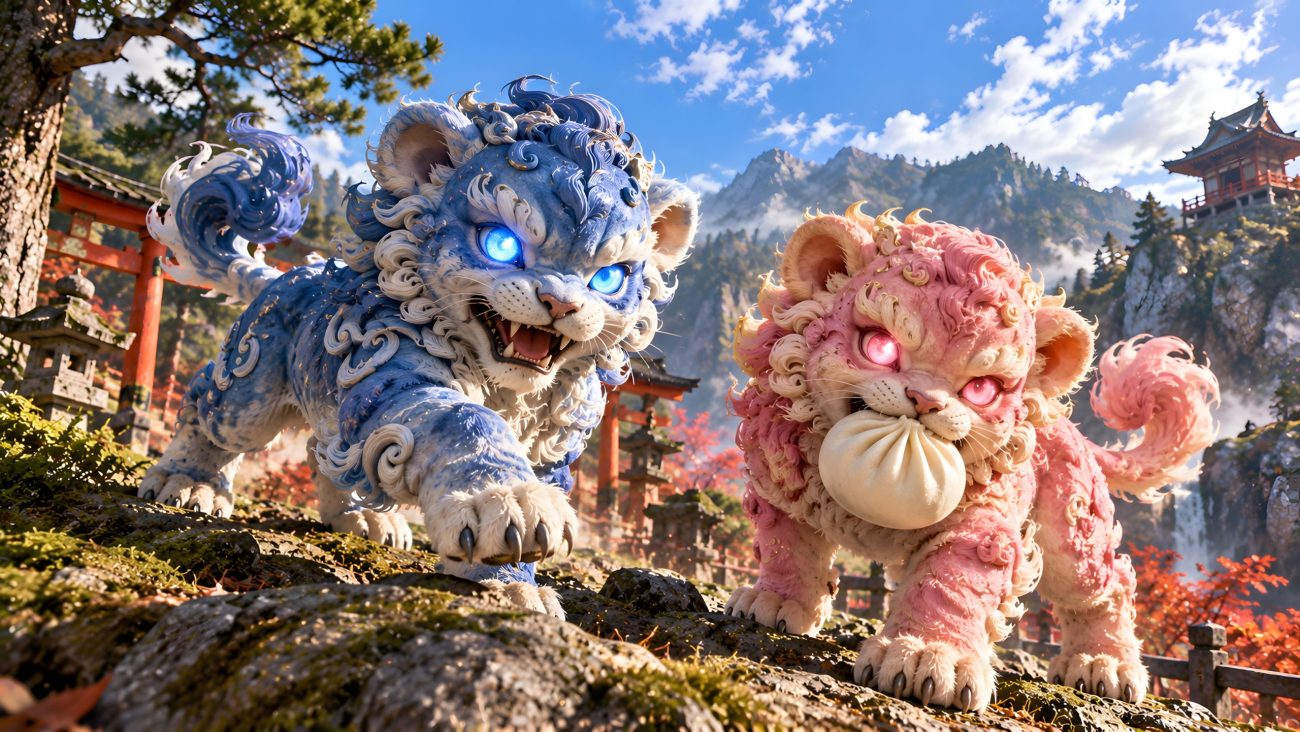
The Karajishi is a legendary Chinese lion associated with the local guardian deity of Miwa in Kagawa Prefecture, Japan. A male and female pair serve as protectors of people who work in the mountains, watching over them as they carry out their labor in the wilderness.

When commanded by the guardian deity, the male Karajishi transforms into a dog and runs off on its mission, with the female following close behind. The female has a curious habit: she always carries a round dumpling in her mouth to eat for lunch. Together, the pair serve the deity and protect those who venture into the mountains.


Sources

“Karajishi.” 新版TYZ 妖怪図鑑 (New TYZ Yokai Encyclopedia). https://tyz-yokai.blog.jp/archives/1073699423.html