Menhet

Tradition: Egyptian Mythology
Alternative Names: Menhit, Menchit, Menkhet
Category: Lion


The Myth

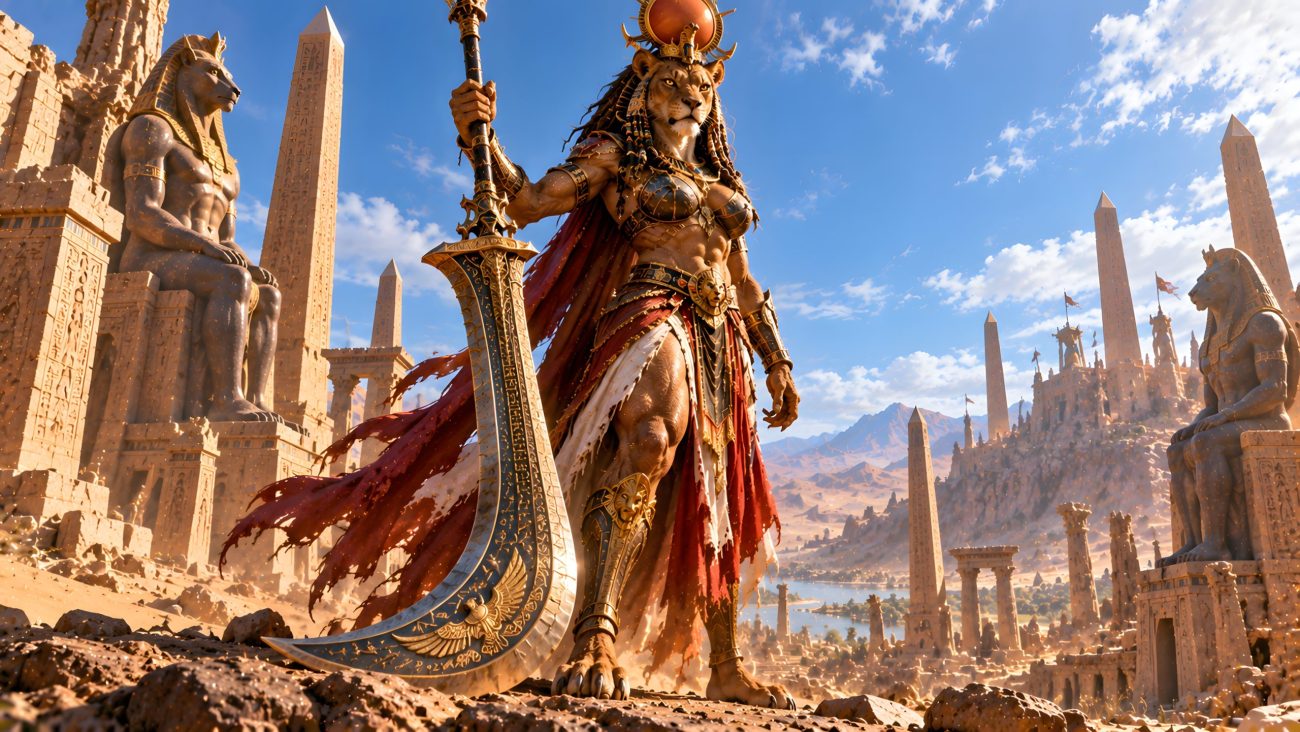
Menhet was a lion goddess of Nubian origin whose name means “the one who sacrifices.” She was also known as “the slaughterer,” reflecting her fierce nature as a goddess of war. She was believed to lead the pharaoh’s troops into battle, bringing her destructive power against Egypt’s enemies. Menhet was depicted as a woman with the head of a lion, wearing a solar disc crowned with the royal uraeus, the sacred cobra associated with kingship and divine protection. Despite her fearsome appearance, she also possessed calmer aspects, being associated with the Nebty, the “Two Ladies” who represented the pharaoh’s rule over Upper and Lower Egypt, and with the north wind.

Menhet was closely connected with several other Egyptian goddesses, including Neith, an ancient goddess of war, with whom she was associated at Esna. She was also linked to the “Eye of Ra,” a powerful manifestation of the sun god’s divine authority, and was compared with Tefnut, Sekhmet, and Hathor. These associations connected Menhet with both the destructive force of divine anger and the protection of the established cosmic and royal order.

Her family relationships varied according to the place where she was worshipped. In Upper Egypt, Menhet was regarded as the wife of Khnum and the mother of Heka, while at Thinis she was the consort of Anhur, also known as Onuris. In Heliopolis she was identified with Isis, and at Leontopolis she was considered an aspect of Tefnut. The myth of the distant goddess who fled to Nubia and was brought back by Shu and Thoth may originally have concerned Menhet and Anhur, whose name means “he who brings back the distant one.” Through these different traditions, Menhet embodied the fierce, protective power of the lioness and the divine forces that upheld the pharaoh’s rule.


Sources

“Menhit.” Ancient Egypt Online. https://ancientegyptonline.co.uk/menhet/

Maahes

Tradition: Egyptian Mythology
Alternative Names: Maches, Michos, Miysis, Mios, Maeches
Category: Lion, Deity


The Myth

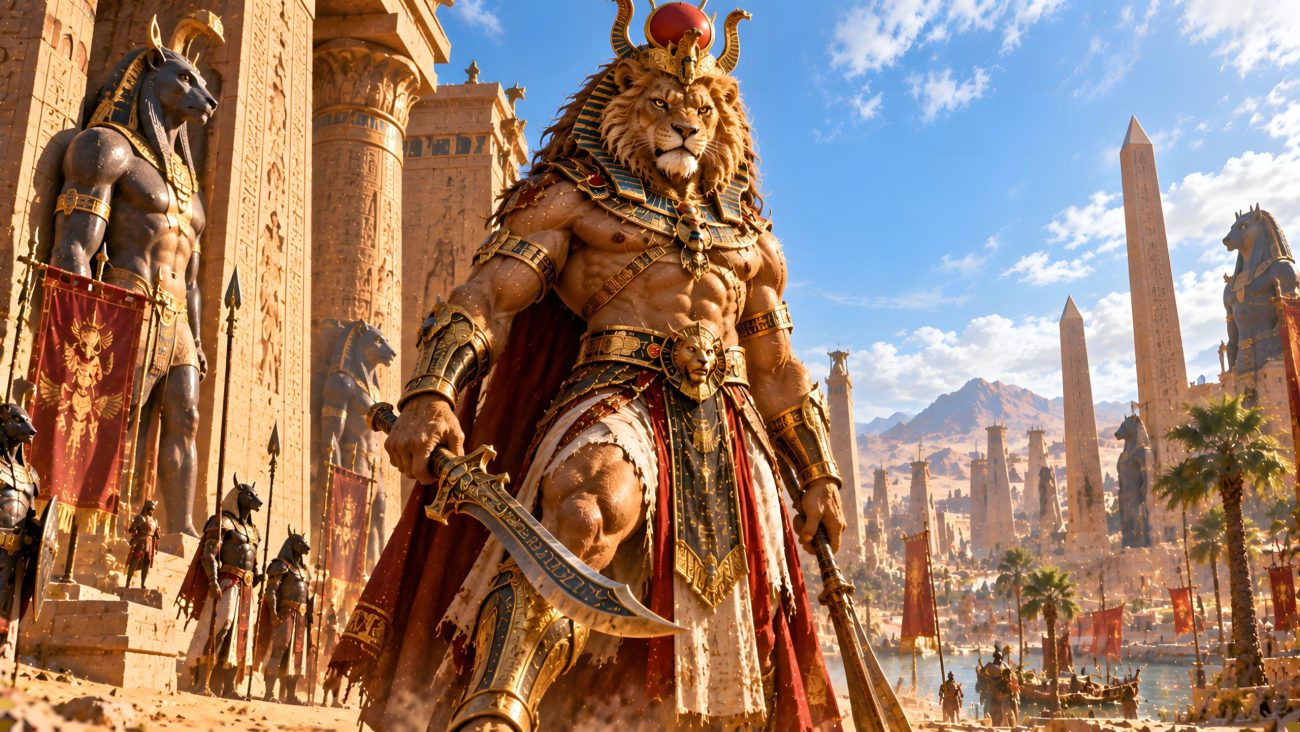
Maahes was an ancient Egyptian lion-headed god associated with war, protection, and the weather. He was usually depicted as a man with the head of a male lion, sometimes wearing a crown decorated with two uraei and carrying knives. In other representations, he held a bouquet of lotus flowers, reflecting his connection with Nefertem, a deity symbolized by the lotus. His name has been interpreted as meaning “he who is true beside her.” As a powerful feline deity, Maahes embodied the strength and ferocity of the lion, an animal associated with royal power and authority in ancient Egypt.

Maahes was regarded as the son of the creator god Ptah and either Bastet, worshipped especially in Lower Egypt, or Sekhmet, associated with Upper Egypt. Both goddesses were lion-like or feline deities whose fierce qualities Maahes shared. His principal cult centres were Taremu and Per-Bast, important religious centres associated with Sekhmet and Bastet. He was also sometimes connected with Nefertem, another son of Sekhmet, and his attributes included knives, lotuses, and the devouring of captured enemies.

As a god of war and protection, Maahes played a role in defending the divine order against its enemies. During the nightly journey of Ra through the underworld, he was said to fight Apep, the great serpent who threatened the sun god. Through his association with battle, royal power, and divine protection, Maahes represented the destructive force of the lion turned against the enemies of the gods and Egypt.


Sources

“Maahes.” Wikipedia: The Free Encyclopedia. Wikimedia Foundation. Accessed October 21, 2026. https://en.wikipedia.org/wiki/Maahes


Shezmu

Tradition: Egyptian Mythology
Alternative Names: Schesmu, Shesmu
Category: Lion


The Myth

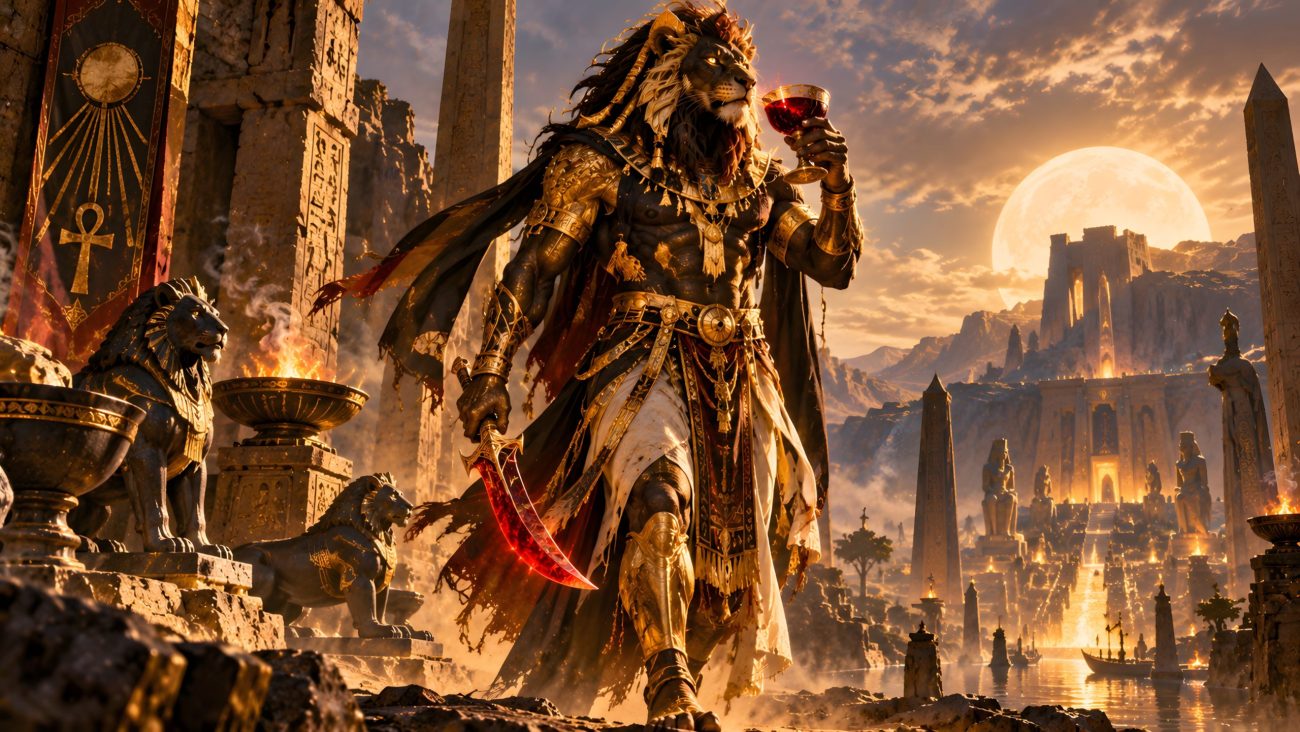
Shezmu is a powerful and fearsome Egyptian deity associated with wine, perfume, ointments, embalming, blood, and the judgment of the dead. He is usually depicted as a man with the head of a lion, holding a butcher’s knife, though some depictions show him with the head of a vulture or in the form of a lion. His nature is deeply contradictory: he brings the pleasures of wine, fragrance, music, dancing, and festivities, yet he is also a violent executioner capable of slaughtering and dismembering other gods.

As a judge of the underworld, Shezmu oversees the punishment of the damned. His association with blood and butchery makes him a terrifying presence among the dead, while his connection to oils, perfumes, and ointments links him to the preparation and preservation of bodies. Wine unites these contrasting aspects of his nature, serving as a symbol of celebration while also being associated with blood and sacrificial offerings.

Shezmu also plays a vital role in defending the cosmic order. During the sun god Ra’s nightly journey through the underworld, he battles and defeats Apep, the enormous serpent of chaos that threatens to destroy the sun and plunge the world into nonexistence. By overcoming this monstrous enemy, Shezmu protects Ra and ensures that the sun can rise again. Though feared for his brutality, he is therefore also a defender of the world against the forces of destruction.


Sources

“Shezmu.” Wikipedia: The Free Encyclopedia. Wikimedia Foundation. Accessed October 21, 2026. https://en.wikipedia.org/wiki/Shezmu


Donestre

Tradition: Egyptian Mythology
Alternative Names: Donestre
Category: Lion


The Myth

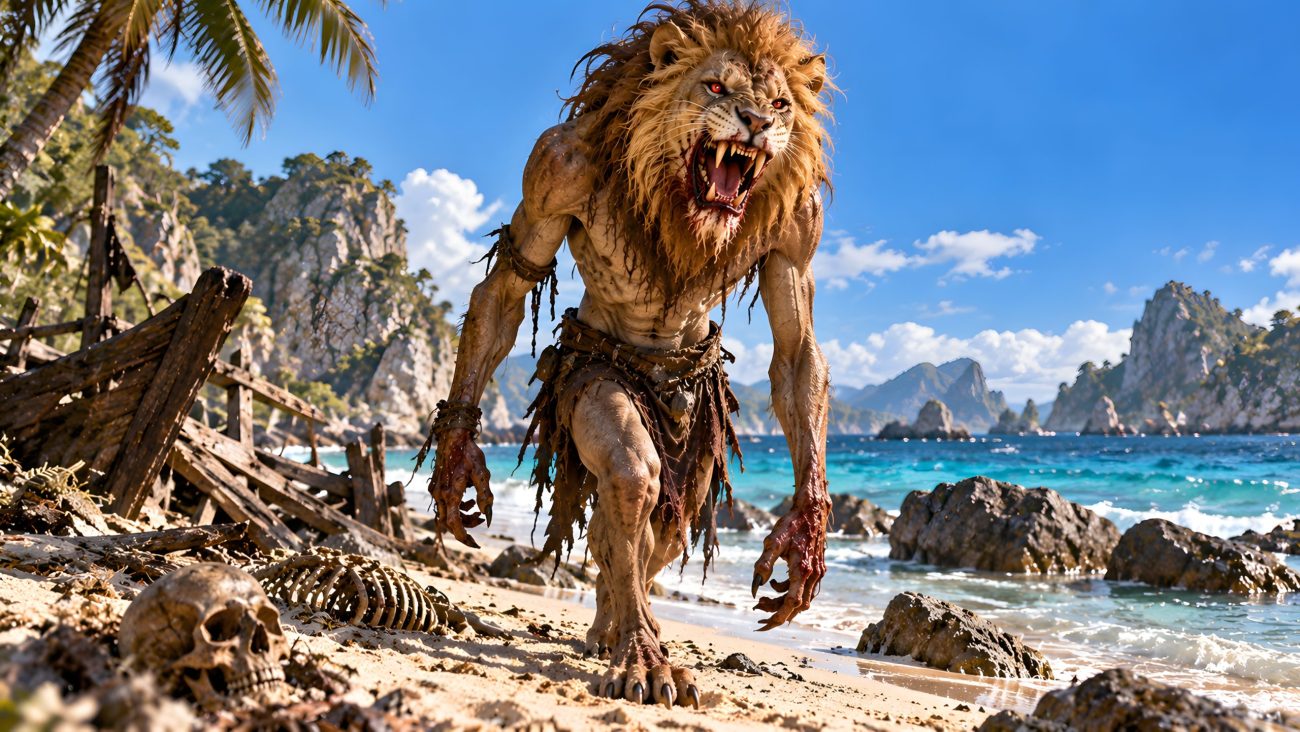
The Donestre is a monstrous humanoid with the body of a human and the head of a lion. Despite its terrifying appearance and appetite for human flesh, it possesses human intelligence and can speak every language. It is also said to possess the gift of prophecy. The creature lives on an island in the Red Sea, where it waits for travelers arriving from distant lands.

The Donestre uses its extraordinary ability to speak any language to befriend unsuspecting travelers. It welcomes them, speaks with them in their native tongues, and gains their trust before revealing its monstrous nature and devouring them. After the meal, it leaves behind the victim’s severed head and sits beside it, weeping and mourning the person it has killed.

This strange behavior makes the Donestre an unusual monster: although it mercilessly preys on human beings, it appears to grieve for its victims after their deaths. Its combination of intelligence, deception, cannibalism, and sorrow makes it a particularly unsettling creature of medieval legend.


Sources

“Donestre.” Mythus Wiki. https://mythus.fandom.com/wiki/Donestre