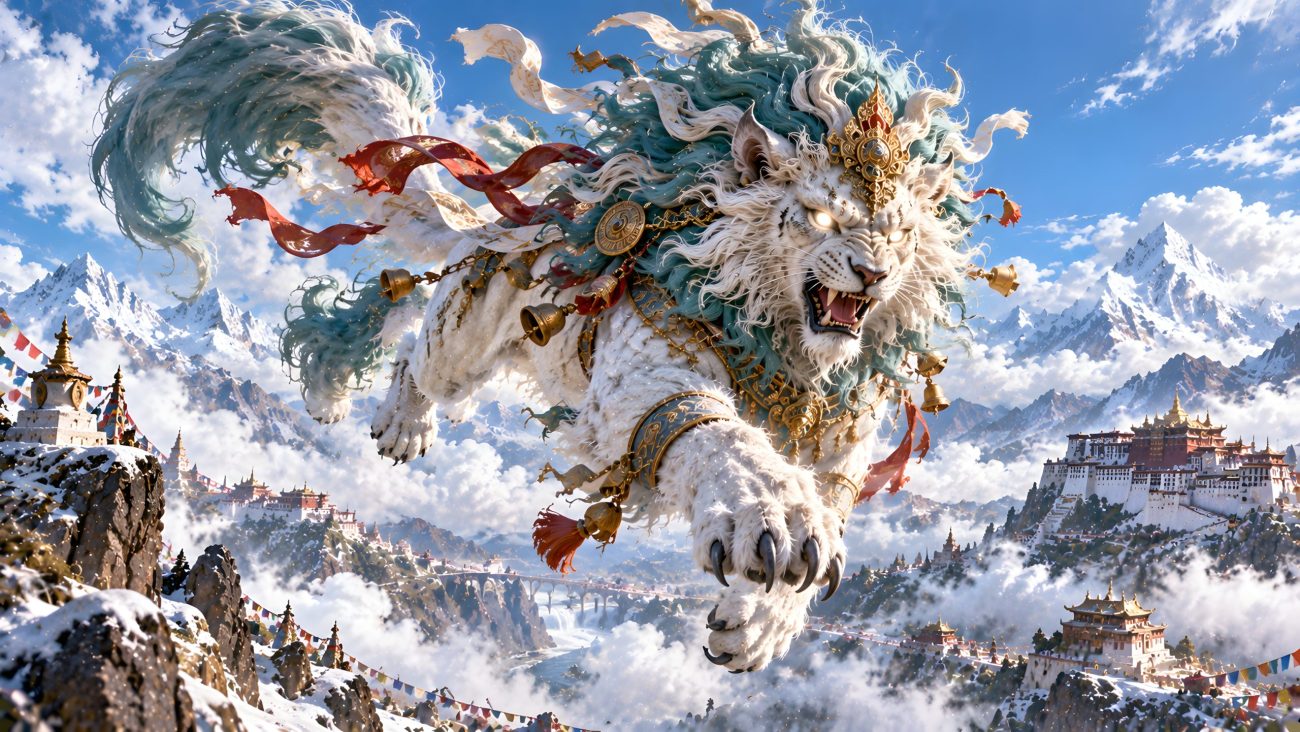
Snow Lion

Tradition: Tibetan Mythology, Chinese Mythology
Alternative Names: Sengge, Gangs Seng Ge, Snow Lioness
Category: Lion


The Myth

The Snow Lion is a celestial beast of Tibetan mythology, commonly depicted with a white body and a flowing turquoise mane. It inhabits the highest mountains and snowy glaciers of Tibet, where it reigns as the king of beasts. Its appearance symbolizes the power and majesty of the mountains, while its strength represents fearlessness, joy, and spiritual vitality. The Snow Lion is one of the Four Dignities and is associated with the east and the element of earth. Although it leaps playfully from mountain peak to mountain peak, its feet never touch the ground, reflecting its supernatural nature.

The Snow Lion appears in Tibetan legends, songs, and proverbs, and is sometimes associated with hermits and yogis who live in remote mountain regions. Tibetan culture heroes such as Gesar and Milarepa were said to have been raised by a Snow Lioness. Her milk was believed to possess extraordinary healing properties, restoring the body to harmony and serving as a symbol of spiritual purity. In Buddhist teachings, the milk represents the Dharma, the sacred teachings of Buddhism, which cannot be obtained through wealth alone. According to legend, the Snow Lioness produces milk from her paws and may pour it into hollow balls with which she plays.

The Snow Lion’s roar is a symbol of courage, truth, and the emptiness central to Buddhist philosophy. Its powerful voice represents the fearless proclamation of the Buddha’s teachings and the call to spiritual awakening. According to legend, a single roar could cause seven dragons to fall from the sky. The Snow Lion also appears in Tibetan art and ceremonial dances, where performers embody its joyful, energetic movements. Through these traditions, it represents both the untamed power of the natural world and the spiritual freedom celebrated in Tibetan Buddhism.


Sources

“Snow Lion.” Wikipedia: The Free Encyclopedia. Wikimedia Foundation. Accessed October 21, 2026. https://en.wikipedia.org/wiki/Snow_Lion
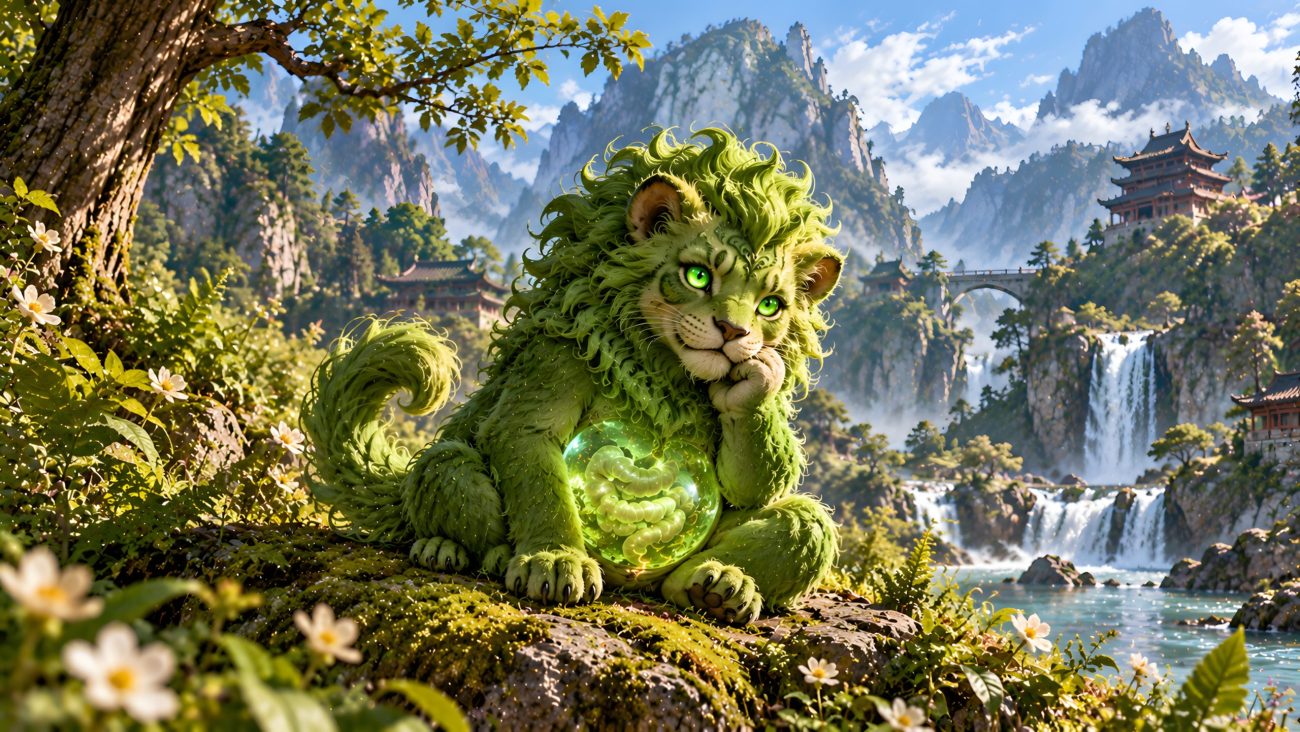
Yaoshou

Tradition: Chinese Mythology
Alternative Names: Medicine Beast, Yao Shou (药兽)
Category: Lion


The Myth

The Yaoshou is a legendary medicinal beast in Chinese mythology, described as resembling a small lion with a transparent, glowing belly. Its translucent abdomen reveals its intestines clearly, allowing observers to see whether the plants and insects it consumes are poisonous. Unlike ordinary lions, the Yaoshou is associated with healing and the discovery of medicinal remedies.

According to legend, the Yaoshou lived during the time of Shennong, the legendary divine ruler associated with agriculture and medicine. When someone became ill, they could approach the beast, explain the cause of their sickness, and speak to it in a mysterious language. After listening, the Yaoshou would run into the wilderness and return carrying a blade of grass in its mouth. The plant could then be crushed to extract its juice, which the sick person would drink to recover.

The tradition further relates that the Yellow Emperor instructed Fenghou to record which plants cured particular illnesses. Over time, these observations supposedly produced a reliable record of medicinal remedies. According to this account, the Yellow Emperor learned medicine from the Yaoshou rather than discovering medicinal plants solely by tasting them himself.


Sources

“Yao Beast” (药兽). Chinese Wikipedia. Wikimedia Foundation. Accessed October 21, 2026. https://zh.wikipedia.org/wiki/%E8%8D%AF%E5%85%BD


Zouyu

Tradition: Chinese Mythology
Alternative Names: Zou Wu, Zou Ya
Category: Lion


The Myth

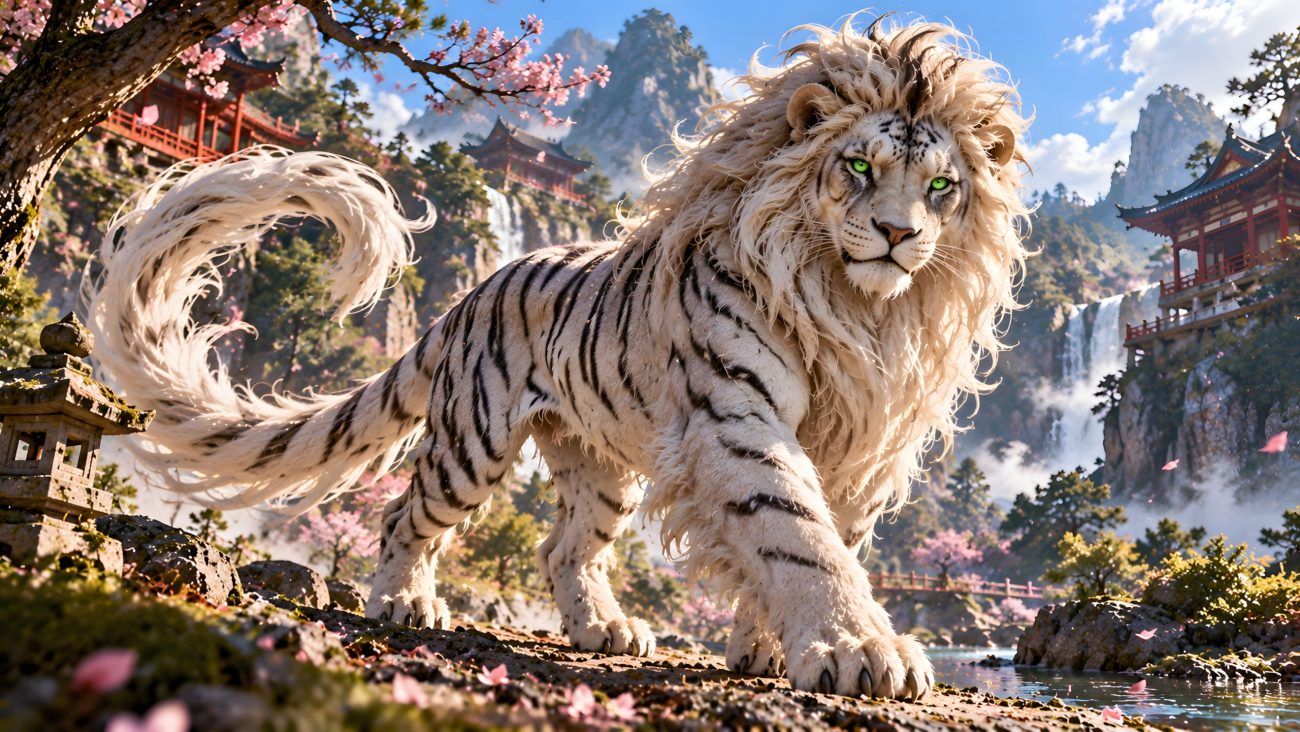
The Zouyu is a benevolent mythical beast with the body of a tiger and the head of a lion. Its fur is white with black stripes, and it has an unusually long tail. Despite its fearsome appearance, the Zouyu possesses a gentle and compassionate nature, making it a symbol of kindness and virtue.

Unlike ordinary predators, the Zouyu refuses to eat living animals. Its merciful nature distinguishes it from other powerful beasts, as it does not harm creatures that are still alive. The Zouyu is therefore regarded as a benevolent creature whose strength is accompanied by restraint and compassion.


Sources

“Zōu yú” (騶虞). Chinese Wikipedia. Wikimedia Foundation. Accessed October 21, 2026. https://zh.wikipedia.org/wiki/%E9%A8%B6%E8%99%9E