Komainu

Tradition: Japanese Mythology
Alternative Names: Guardian Dogs, Lion-Dogs
Category: Lion


The Myth

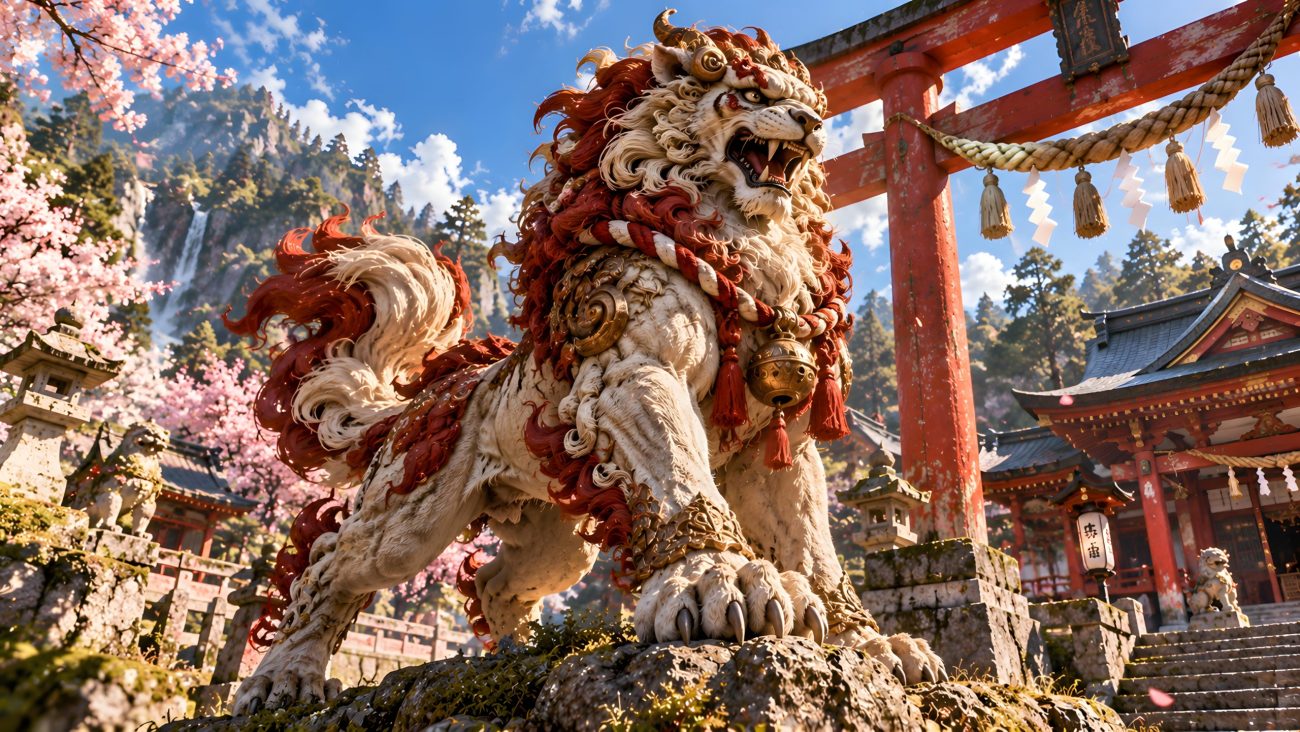
Komainu are large, dog-like or lion-like creatures that guard the entrances of Shinto shrines and Buddhist temples, protecting sacred places from evil. They are usually depicted as a pair of imposing stone statues facing one another, standing on either side of an entrance, main hall, or sanctuary. One has its mouth open, forming the sound A, while the other keeps its mouth closed, forming Un. These two forms stand together as guardians against harmful forces. Traditionally, the open-mouthed figure is identified as a lion, while the closed-mouthed figure is the horned komainu, although both are commonly called komainu today.

The creatures are believed to possess protective and sometimes miraculous powers. Stories from different regions tell of people who suffer misfortune after disrespecting the guardian statues, as well as tales in which the spirits of the statues leave their stone bodies and appear in human form. Their images also adorn objects such as incense burners, censers, and folding screens, where they continue to serve as guardians.

One tale preserved among Japan’s hidden Christians describes a lion-dog rescuing the devout son of a king from a great wave. The story presents the guardian creature as a miraculous protector capable of saving the faithful from disaster. Through such traditions, the Komainu are more than decorative statues: they are watchful guardians whose presence keeps evil away and whose supernatural power can intervene in the lives of human beings.


Sources

“Komainu.” 新版TYZ 妖怪図鑑 (New TYZ Yokai Encyclopedia). https://tyz-yokai.blog.jp/archives/1069301438.html
Hanattara Shishi

Tradition: Japanese Mythology
Alternative Names: Hanattara-shishi,洟垂獅
Category: Lion


The Myth

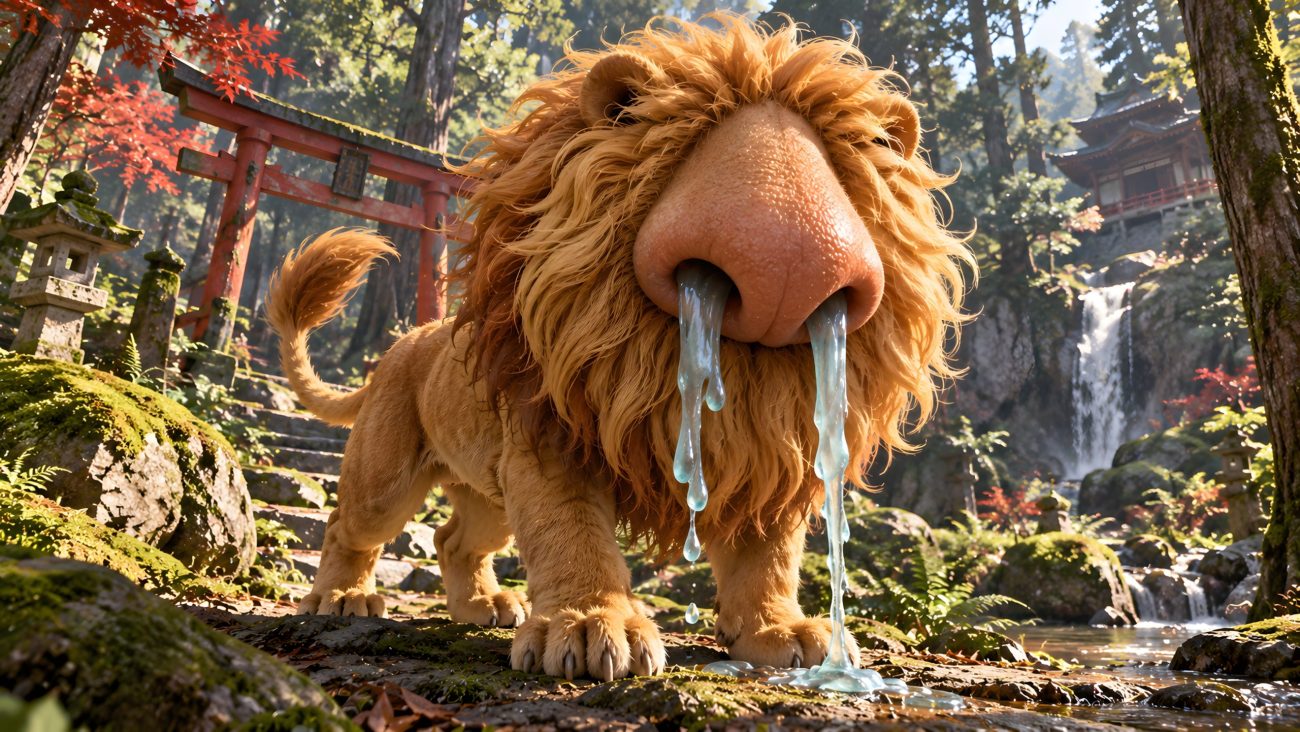
The Hanattara Shishi is a strange lion-like creature with an otherwise ordinary lion’s body and face, distinguished by an enormous nose. From both nostrils, thick blue mucus streams down like that of a small child with a runny nose, giving the beast a childish and comical appearance.

The creature inhabits the Boy’s Country, an island nation encountered by the fisherman Musō Byōe during his fantastical journey through distant lands. In this peculiar country, everyone lives their entire lives as children, and childish behavior fills the land. The Hanattara Shishi appears among the unusual creatures associated with this strange island, reflecting its inhabitants’ perpetual immaturity.


Sources

“Hanatarashishi.” 新版TYZ 妖怪図鑑 (New TYZ Yokai Encyclopedia). https://tyz-yokai.blog.jp/archives/1061090453.html


Myrmecoleon

Tradition: Greek Mythology
Alternative Names: Ant-Lion, Myrmicioleon, Formicaleon, Formicaleun, Mirmicioleon
Category: Lion


The Myth

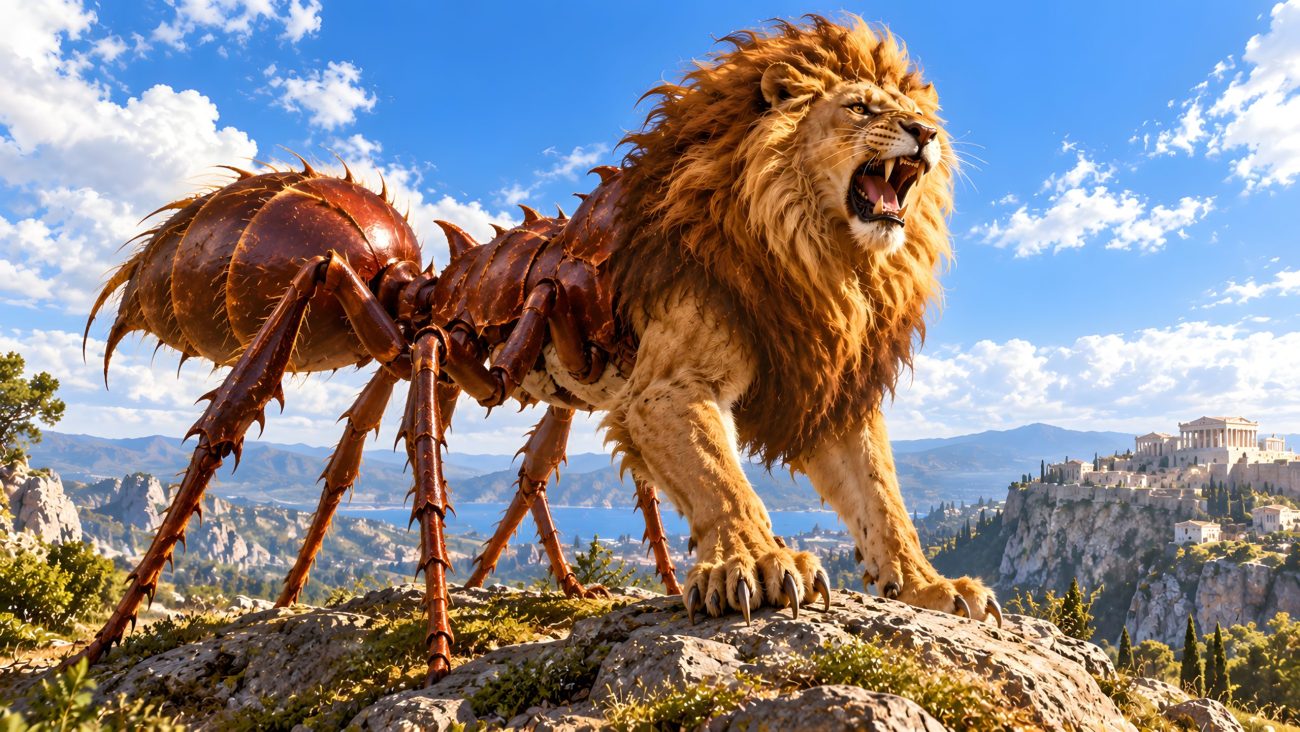
The Myrmecoleon, or Ant-Lion, is a fantastical creature combining the ant and the lion. Its name comes from the Greek words myrmex, meaning ant, and leon, meaning lion. The creature appears in ancient and medieval Christian bestiaries, where it became a strange symbol of the natural world’s contradictions. Its name may have originated from a translation error in the Greek version of the Book of Job, before the creature appeared in the Physiologus, an early Christian collection of stories about animals and their spiritual meanings.

The Myrmecoleon was preserved in medieval bestiaries, including the Hortus Sanitatis of 1491. Its identity as an ant-lion made it a curious creature of the bestiary tradition, linking the small ant with the mighty king of beasts. It was also known by several alternative names, including Formicaleon and Formicaleun.

A separate description in the Aberdeen Bestiary gives the name mermecoleon to a remarkable sea stone. Hollow and round, the stone is divided into two parts that can close together. It rests on the seabed and comes alive in the early morning, rising toward the surface and opening its mouth to collect heavenly dew. As sunlight shines upon it, the dew develops inside the stone into a precious, radiant pearl. In this account, the creature’s name is associated not with a hybrid animal, but with a wondrous marine object that produces a pearl through the meeting of heavenly moisture and sunlight.


Sources

“Myrmecoleon.” Wikipedia: The Free Encyclopedia. Wikimedia Foundation. Accessed October 21, 2026. https://en.wikipedia.org/wiki/Myrmecoleon


Hihi

Tradition: Japanese Mythology
Alternative Names: Hihi, 狒々, Baboon Monster
Category: Monkey


The Myth

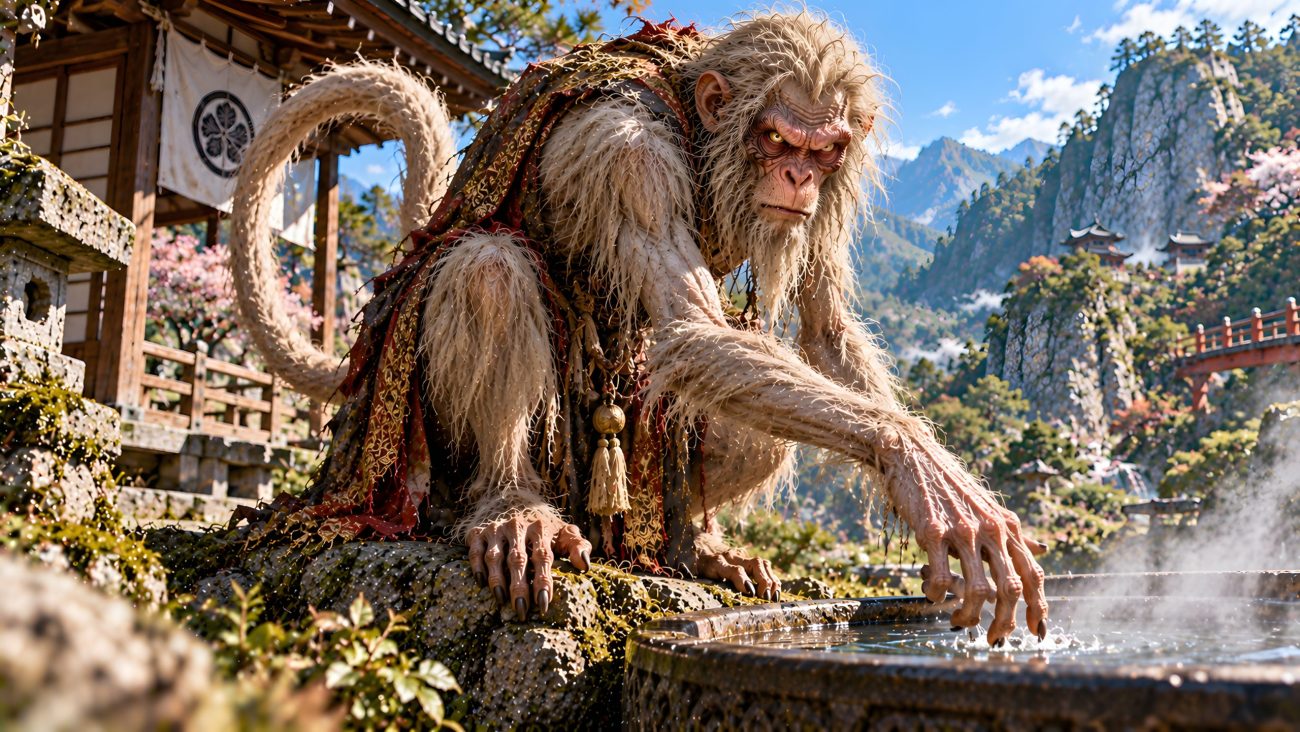
The Hihi is a monstrous ape said to inhabit mountainous regions throughout Japan. It resembles an ordinary monkey that has grown to an enormous size, becoming a powerful and dangerous beast. Its origins lie in Chinese accounts of baboon-like creatures, which describe them as towering humanoid apes covered in black fur, with long hair concealing their heads and unusually large lips. When the Hihi laughs, its upper lip rises so far that it covers its eyes. These monsters are extraordinarily strong and can run swiftly enough to catch humans, whom they seize and devour while laughing.

Older accounts describe a male and female pair of these creatures presented during the Jianwu era of the Liu Song dynasty. They reportedly possessed reddish fur, could speak human languages, and understood matters of life and death. Their intelligence made them particularly dangerous, as they could recognize and pursue human prey. One traditional method of capturing a Hihi involved tricking it into grasping a bamboo tube that resembled a human hand. When the creature raised its lips to laugh before eating its supposed victim, a hunter could stab its exposed mouth with an awl and blind it.

Stories of Hihi extermination became widespread in Japanese legends and popular literature. One famous example concerns Iwami Jūtarō, a travelling avenger who hunts down criminals, defeats enormous snakes and monstrous apes, and rescues a girl destined to be sacrificed. His adventures culminate in a confrontation with the gang of Hirose Gunzō at Amanohashidate. Battles between Jūtarō and Hihi were frequently depicted in illustrated prints and picture scrolls. The creature also appears in Toriyama Sekien’s Konjaku Gazu Zoku Hyakki, where a rough illustration depicts a giant Hihi pinning down a wild boar beneath a massive tree.


Sources

“Hihi.” 新版TYZ 妖怪図鑑 (New TYZ Yokai Encyclopedia). https://tyz-yokai.blog.jp/archives/1048990699.html


Sun Wukong

Tradition: Chinese Mythology
Alternative Names: Monkey King, Sun Wu Kong, 孫悟空, 齊天大聖 (Great Sage Equal to Heaven)
Category: Monkey


The Myth

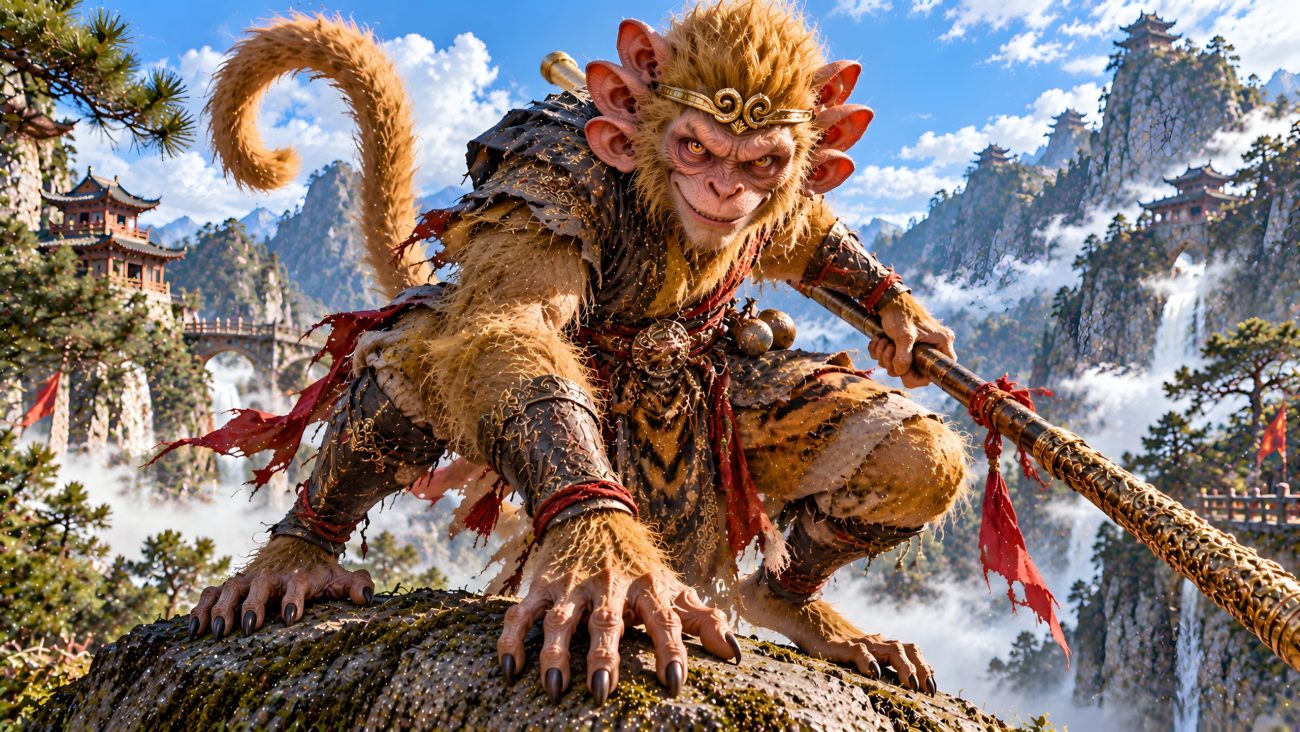
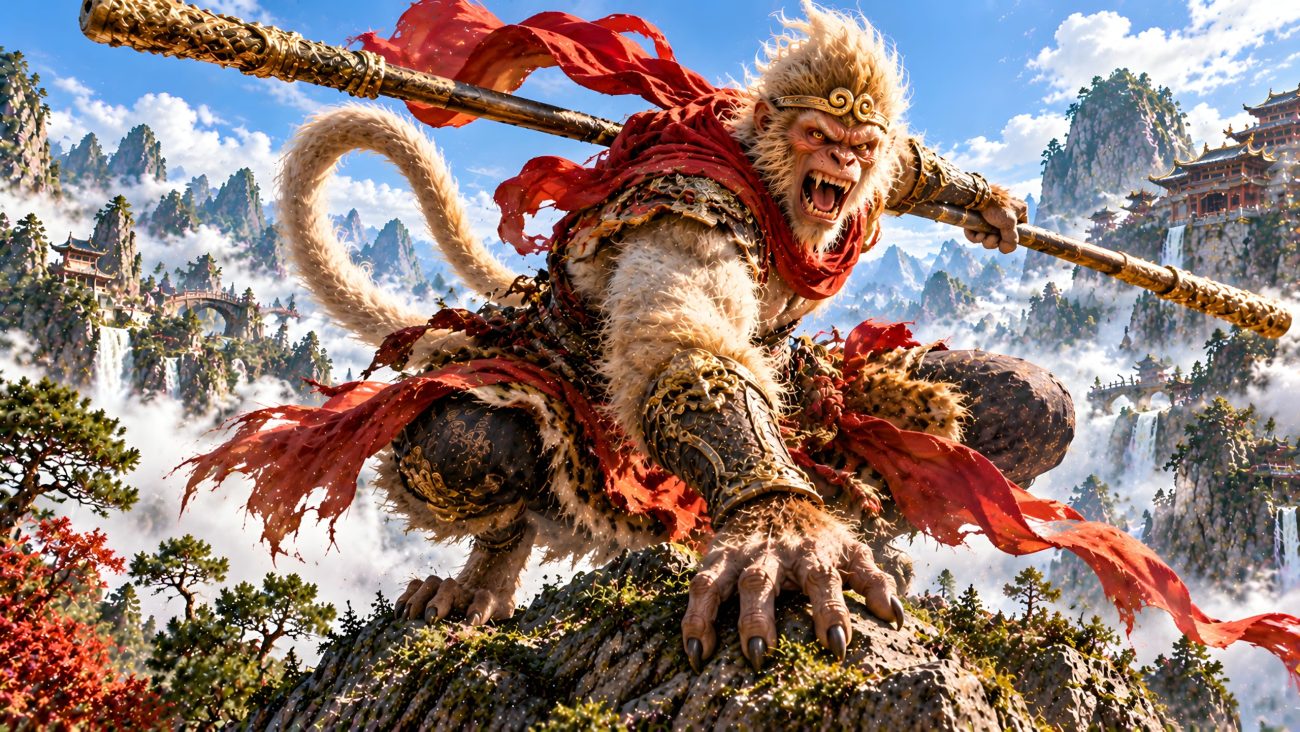
Sun Wukong, the Monkey King, is one of the central characters in the sixteenth-century Chinese novel Journey to the West. Born from a stone, he becomes the king of the monkeys and acquires extraordinary supernatural powers through Taoist practices and the consumption of heavenly food. He possesses immense strength, incredible speed, and the ability to perform seventy-two transformations, allowing him to take the forms of different animals and objects. His magical hairs can become copies of himself, weapons, or other creatures, while his mastery of combat makes him a formidable opponent even for the greatest warriors of Heaven. He can also become invisible, manipulate the weather to a limited extent, and immobilize enemies with spells.

Sun Wukong eventually rebels against Heaven and challenges its authority. After fighting the celestial armies, he is captured and imprisoned beneath a mountain by the Buddha. Five hundred years later, he is released to accompany the Buddhist monk Tang Sanzang on a pilgrimage to the Western Paradise to obtain sacred Buddhist scriptures. Travelling alongside Zhu Bajie, Sha Wujing, and the White Dragon Horse, Sun Wukong protects the monk from demons and other dangers. Although powerful and mischievous, he must learn discipline and obedience as he faces the challenges of the journey.

Among his many abilities are his Fiery Eyes and Golden Pupils, which allow him to see through illusions, recognize supernatural disguises, and distinguish truth from falsehood. He can travel enormous distances in a single somersault, create protective barriers by drawing circles with his staff, and use spells to avoid fire and travel through water. However, these powers have limitations: his fire-avoidance spell cannot protect him from the True Samādhi Fire, and although he can move through water, he cannot fight effectively underwater. His combination of supernatural strength, cunning, rebelliousness, and eventual service to Buddhism makes him one of the most recognizable figures in Chinese mythology and literature.


Sources

“Sun Wukong.” Wikipedia: The Free Encyclopedia. Wikimedia Foundation. Accessed October 20, 2026. https://en.wikipedia.org/wiki/Sun_Wukong


Zhu Yan

Tradition: Chinese Mythology
Alternative Names: Zhuyan, 朱厭
Category: Monkey


The Myth

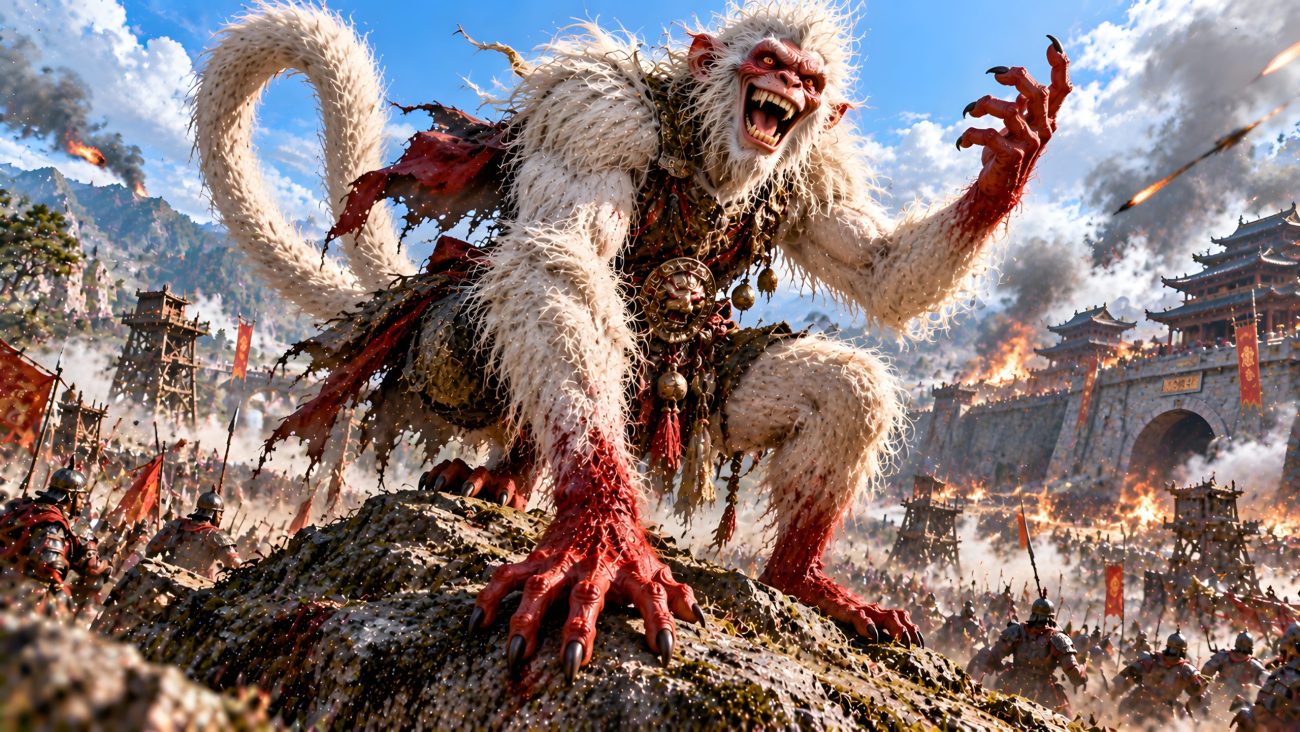
Zhu Yan is a fearsome supernatural ape from Chinese mythology, described in the Classic of Mountains and Seas. It resembles a monkey but has a striking appearance, with a white head and bright red feet. Although little else is known about its behavior or habits, its presence carries a terrifying significance.

According to legend, whenever Zhu Yan appears, great warfare follows. Its sighting is an omen of major military conflict, bringing the threat of armies clashing and widespread bloodshed. The creature is therefore remembered less for its actions than for the calamities foretold by its arrival.


Sources

“Zhu Ni” (朱厭). Chinese Wikipedia. Wikimedia Foundation. Accessed October 20, 2026. https://zh.wikipedia.org/wiki/%E6%9C%B1%E5%8E%AD


Liu Er Mihou

Tradition: Chinese Mythology
Alternative Names: Six-Eared Macaque, Six-Eared Monkey, 六耳猕猴
Category: Monkey


The Myth

The Liu Er Mihou, or Six-Eared Macaque, is a supernatural monkey appearing in the Chinese novel Journey to the West. It belongs to the Four Divine Monkeys, a group of extraordinary primates that exist outside the ordinary classifications of celestial beings and creatures. The other three are the Lingming Stone Monkey, represented by Sun Wukong; the Red-Rumped Horse Monkey; and the Tongbi Ape. The Six-Eared Macaque possesses six ears and supernatural perception, allowing it to hear events from a thousand miles away, understand human speech, discern the nature of things, and know what has happened and what is yet to come.

The Six-Eared Macaque is virtually indistinguishable from Sun Wukong. It copies his golden eyes, yellow hair, golden headband, tiger-skin skirt, travelling clothes, boots, and magical iron staff. Its martial abilities and supernatural powers are also equal to those of the original Monkey King. Even Sun Wukong’s companions, Guanyin, the celestial gods, and the judges of the underworld cannot determine which monkey is genuine.

The creature appears after Sun Wukong is expelled from the pilgrimage following a dispute with Tang Sanzang. Taking advantage of his absence, the Six-Eared Macaque assumes his appearance, attacks Tang Sanzang, steals the pilgrims’ luggage, and returns to Flower-Fruit Mountain. There, it gathers demon monkeys disguised as Tang Sanzang, Zhu Bajie, Sha Wujing, and the White Dragon Horse, intending to establish a false pilgrimage of its own. When the real Sun Wukong returns, the two identical monkeys fight across the South Sea, Heaven, and the underworld, but nobody can distinguish them. The underworld deity King Qinguang eventually consults the supernatural hound-like being Di Ting, which recognizes the truth but refuses to reveal it directly, advising the monkeys to seek the Buddha instead.

At the Great Thunderclap Monastery, the Buddha identifies the impostor as the Six-Eared Macaque. He explains that its extraordinary hearing allows it to perceive distant events and understand the thoughts expressed through human speech, accounting for its ability to imitate Sun Wukong so perfectly. Terrified at being exposed, the creature attempts to flee, but the Buddha traps it beneath a golden alms bowl, forcing it to reveal its true form. Sun Wukong then kills the Six-Eared Macaque with his Ruyi Jingu Bang, ending the deception.


Sources

“The Six-Eared Macaque” (六耳獼猴). Chinese Wikipedia. Wikimedia Foundation. Accessed October 20, 2026. https://zh.wikipedia.org/wiki/%E5%85%AD%E8%80%B3%E7%8D%BC%E7%8C%B4


Changyou

Tradition: Chinese Mythology
Alternative Names: 长右, Chang You
Category: Monkey


The Myth

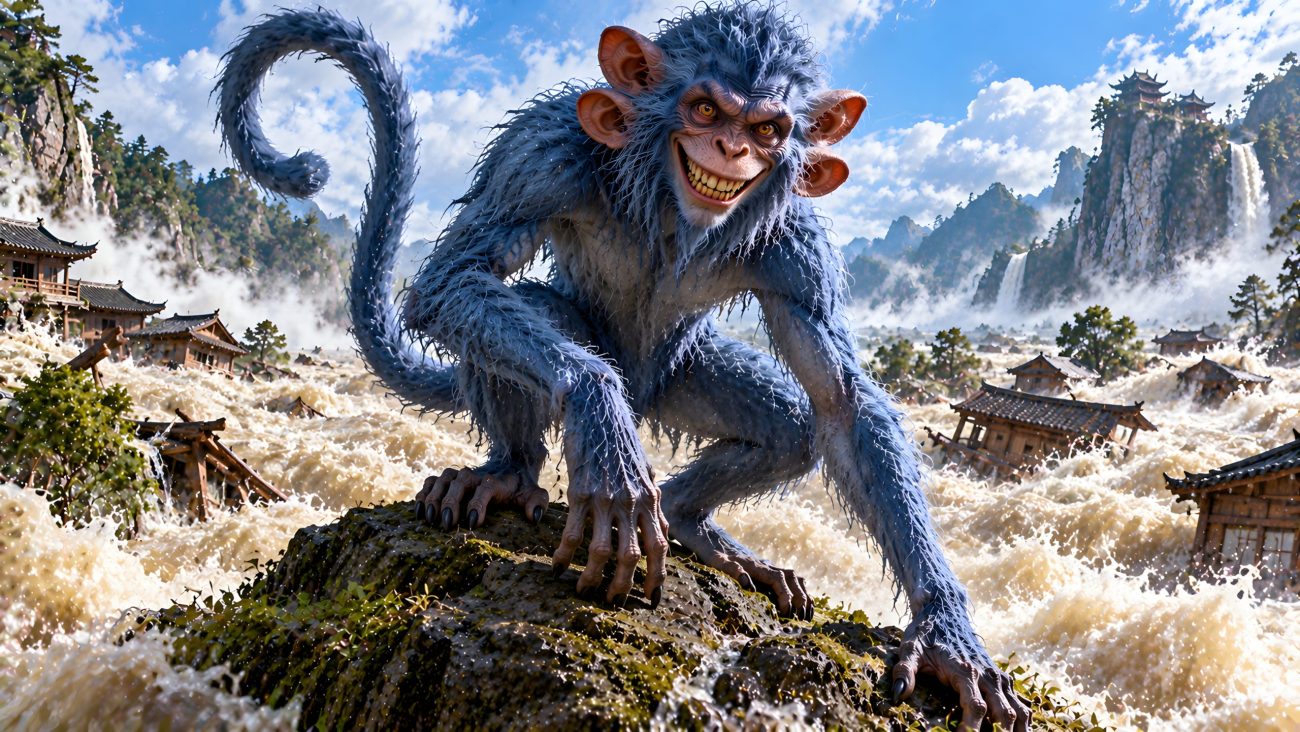
The Changyou is a strange beast from Chinese mythology that resembles a monkey but possesses four ears. It lives on Changyou Mountain, a place described as having abundant water but no vegetation. Its cry sounds like a human groaning or moaning, giving the creature an eerie voice that distinguishes it from ordinary monkeys.

According to the Classic of Mountains and Seas, the appearance of a Changyou is an omen of catastrophic flooding. Whenever the creature is sighted, great floods are said to strike the surrounding districts, bringing destruction to human settlements. Its connection to water has led to comparisons with other legendary ape-like water monsters, such as Wuzhiqi.

Tradition also connects the Changyou to the time when Yu the Great was attempting to control the great floods of ancient China. The creature reportedly appeared three times on Mount Tongbai, where violent thunderstorms and fierce winds repeatedly obstructed the flood-control efforts. Unable to make progress, Yu called upon the gods to capture the monster. Only after the Changyou was subdued could the work of controlling the waters proceed successfully.


Sources

“Changyou” (长右). Chinese Wikipedia. Wikimedia Foundation. Accessed October 20, 2026. https://zh.wikipedia.org/wiki/%E9%95%BF%E5%8F%B3


Germakochi

Tradition: Laz Mythology, Russian Mythology
Alternative Names: Germakochi
Category: Monkey


The Myth

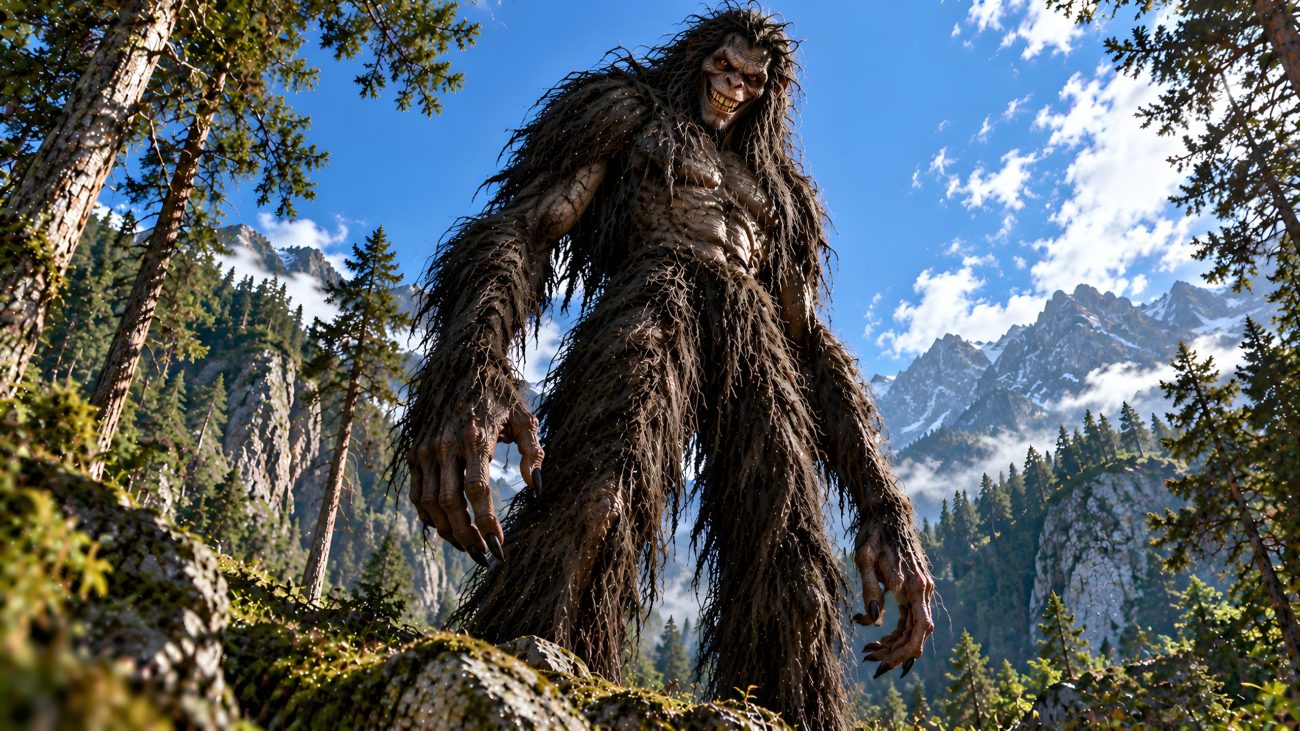
Germakochi is a mysterious forest-dwelling creature from the mythology of the Laz people. It is described as a tall, hairy figure with a body that resembles a mixture of a human and a monkey. Living deep in the forests, Germakochi is curious about humans and sometimes approaches them, although its presence is feared. In earlier times, the Laz people were said to abandon their villages when they believed Germakochi had entered them.

Despite its frightening appearance, Germakochi is known for its curiosity and willingness to interact with people. According to tradition, the way to escape from it is to make a fire. The creature takes the fire but immediately bursts into flames, after which it flees toward the Black Sea and plunges into its waters. Its resemblance to the forest creature Ochokochi of Georgian mythology has also been noted, while some accounts compare it to the Kallikantzaros of Anatolian traditions.


Sources

“Germakochi.” Wikipedia: The Free Encyclopedia. Wikimedia Foundation. Accessed October 20, 2026. https://en.wikipedia.org/wiki/Germakochi


Tamaki

Tradition: Japanese Mythology
Alternative Names: Gyokukan, 玉環
Category: Monkey


The Myth

Tamaki, also known as Gyokukan, is a supernatural figure who appears in Kokuji Nue Monogatari, an illustrated tale published in 1808. He is one of three siblings born to Ishikawa Yoshitoshi and Ukihashi, and his childhood name is Saeda. After growing into a handsome young man, he takes the name Gyokukan and enters the service of the imperial court. However, he becomes entangled in a political conspiracy involving Bifukumon-in and Han’i. Captured and tortured alongside Han’i, he dies and becomes one of three vengeful spirits whose grudges continue to influence the living.

After the monstrous Nue is defeated by Minamoto no Yorimasa and Inojunta, the vengeful spirits continue their revenge through supernatural transformations. Han’i becomes a snake, while Gyokukan transforms into an old monkey. Together, they manipulate events and bring misfortune upon Yorimasa and his son Nakatsuna. The spirits’ hatred eventually extends to the children of Inojunta and his wife Gunhagi, who have retreated to Nishiyama Village in Harima. Their three sons are named Nueta, Nueji, and Nuesan after monsters their father had defeated, provoking the spirits’ anger.

The revenge unfolds through a series of horrifying incidents. Han’i appears as a phantom to the young Nueta, causing a matchlock to seem to attack the boy. When his father Hayata attempts to cut the weapon away, he accidentally strikes his son, killing him; the supposed matchlock is revealed to be a dead snake. Later, Nueji disappears while playing with a grass tiger. Hayata sees what appears to be a real tiger carrying the child, but it is actually a tiger skin that had disappeared from the family home. Hayata’s arrow triggers a catastrophe, and he is crushed beneath a rock. Finally, an old monkey enters the family grounds and throws the youngest child, Nuesan, into a basin of boiling water, killing him. The monkey is caught and killed, and Han’i finally reveals the truth about the spirits’ revenge before taking his own life. A hidden flame escapes from his wound and flies away.

The deaths expose the chain of vengeance connecting the spirits, their enemies, and the children of those involved. Nobutoshi Amano recognizes his own role in the past crimes that helped create the tragedy and buries his daughter, whose grave becomes known as Ayame Mound. Eventually, Nashinosuke, Yorimasa’s daughter, establishes a shrine at Nishitsu to appease the three sisters’ spirits, enshrining them as Himemiya Daimyōjin. The sisters appear in a lady-in-waiting’s dream, bow respectfully, and depart. The story concludes with the vengeful spirits of the Beast Mound finally being pacified, while protective charms and the blessings of Kannon are said to have safeguarded the surviving children.


Sources

“Tamaki.” 新版TYZ 妖怪図鑑 (New TYZ Yokai Encyclopedia). https://tyz-yokai.blog.jp/archives/1084390218.html