Pazuzu

Tradition: Mesopotamian Mythology, Iraqi Mythology
Alternative Names: Pazuzu, Pà.zu.zu
Category: Lion


The Myth

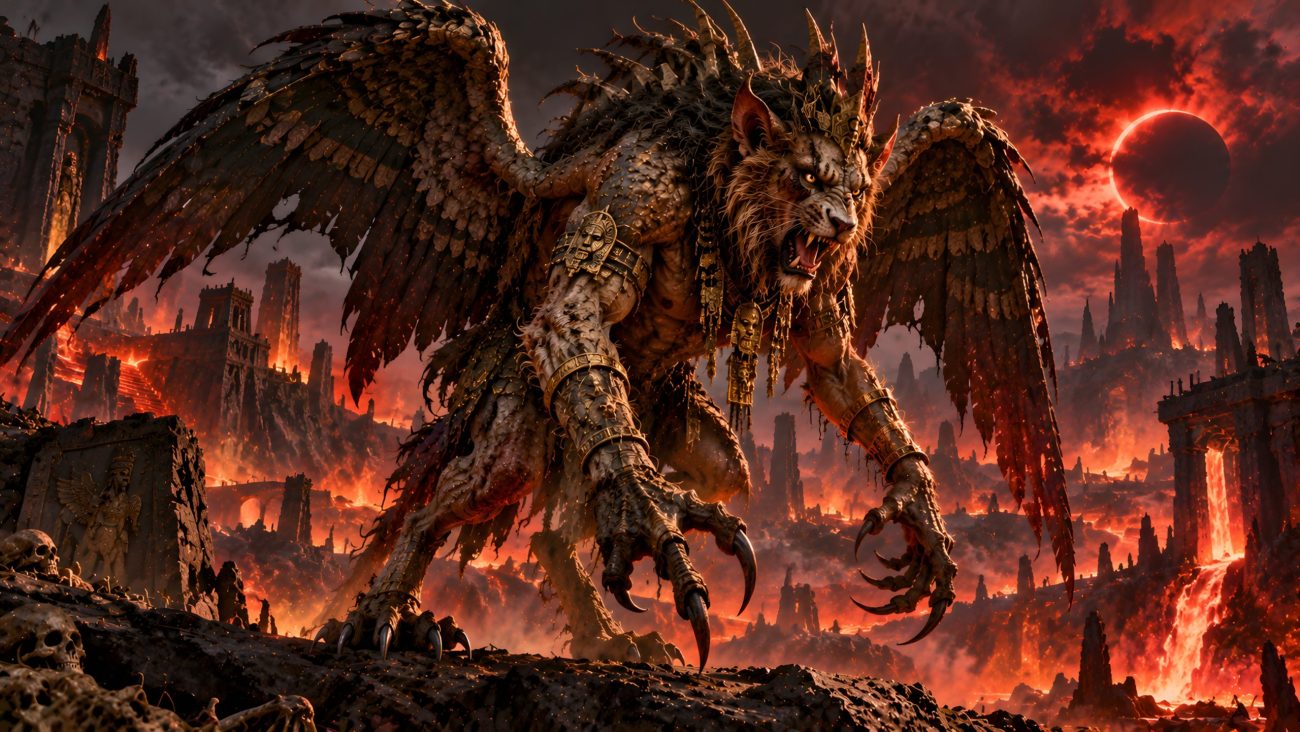
Pazuzu was a powerful demonic deity worshipped in ancient Assyria and Babylonia. He had a grotesque, hybrid appearance, with a canine-like face, bulging eyes, a scaly body, the talons of a bird, and usually a pair of wings. His body also included a serpent-headed penis. He was regarded as the son of Hanbi and was associated with destructive winds that swept down from the mountains, carrying disease and suffering. In an incantation, Pazuzu describes ascending mighty mountains and encountering evil winds, whose wings he breaks to prevent them from spreading harm.

Although Pazuzu was feared as a dangerous wind demon, he could also be invoked as a protector against other supernatural threats. His most important rival was Lamashtu, a malevolent demoness who endangered pregnant women, caused miscarriages, and attacked infants. Pazuzu was believed to be capable of driving her back into the underworld, making his frightening appearance a source of protection against evil. His image was therefore used in protective magic, particularly to safeguard pregnant women, mothers, and young children from illness and demonic attacks.

Amulets bearing Pazuzu’s head were worn as necklaces, especially by pregnant women, while larger figures and stone charms were placed inside homes or near entrances to repel harmful spirits. These objects were made from materials including bronze, terracotta, gold, glass, and bone. Some depicted him standing or crouching, with his gaze directed outward toward supernatural enemies. Rituals and incantations also invoked his power to banish sickness and prevent Lamashtu from entering a home. Pazuzu thus embodied a dangerous but useful supernatural force: a destructive demon whose terrifying power could be turned against other demons and used to protect the living.


Sources

“Pazuzu.” Wikipedia: The Free Encyclopedia. Wikimedia Foundation. Accessed October 21, 2026. https://en.wikipedia.org/wiki/Pazuzu
Anzû

Tradition: Mesopotamian Mythology, Iraqi Mythology
Alternative Names: Imdugud, Anzu, Zû, Anzud
Category: Lion


The Myth

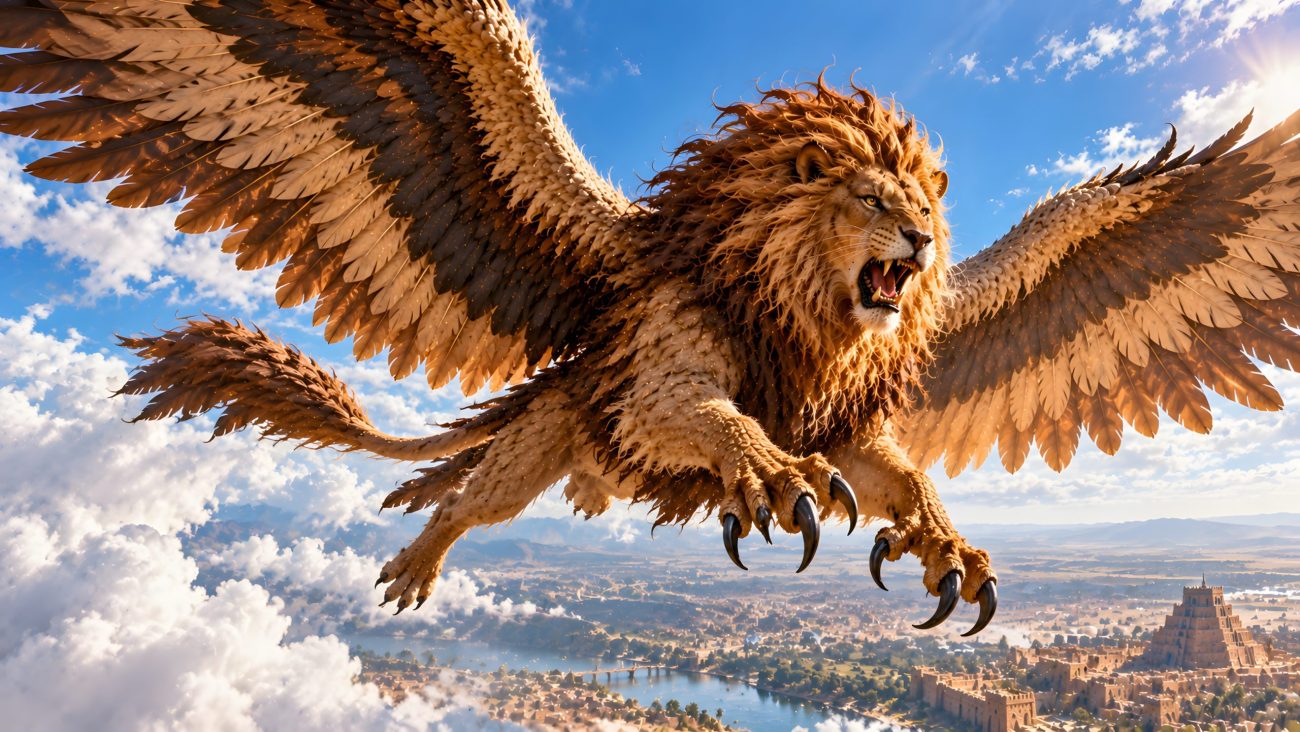
Anzû was a monstrous divine storm-bird in Mesopotamian mythology, depicted as an enormous bird or as an eagle with the head of a lion. Some traditions portrayed him as a half-human, half-bird creature capable of breathing both fire and water. He was associated with the southern wind and thunderclouds and was regarded as a powerful supernatural being. His origins vary between traditions: he was described as the offspring of the cosmic freshwater ocean Abzu and Mother Earth Mami, while other accounts named Siris as his parent.

Anzû is best known for stealing the Tablet of Destinies from Enlil, the god who held authority over the divine order. By taking the tablet, Anzû challenged Enlil’s power and threatened the organization of the gods and the world they governed. The other gods feared the formidable storm-bird, and Anu ordered them to recover the stolen object. Anzû concealed the tablet on a mountaintop, making its retrieval a dangerous undertaking.

Different versions of the myth describe Anzû’s defeat in different ways. In one account, the god Marduk killed the monstrous bird, while another tells how Ninurta pursued and slew him with arrows. His story reflects the struggle to preserve divine authority against a powerful creature capable of challenging the established cosmic order. Anzû also appears in the Sumerian tale of Lugalbanda and the Anzud Bird, as well as in the story of Inanna and the Huluppu Tree.


Sources

“Anzû.” Wikipedia: The Free Encyclopedia. Wikimedia Foundation. Accessed October 21, 2026. https://en.wikipedia.org/wiki/Anz%C3%BB


Lamashtu

Tradition: Mesopotamian Mythology, Iraqi Mythology, Deity
Alternative Names: Lamaštu, Dimme, Kamadme
Category: Lion


The Myth

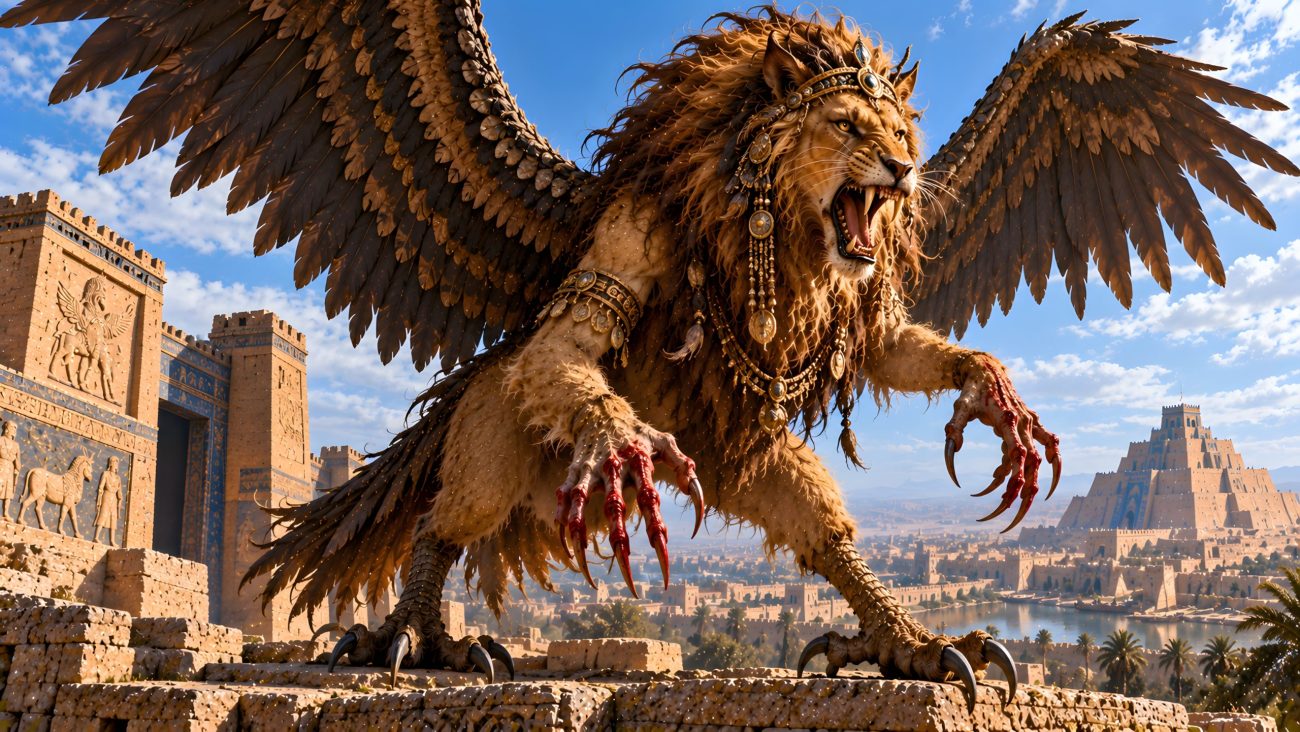
Lamashtu was a fearsome demonic goddess in Mesopotamian mythology, the daughter of Anu, the god of the sky. She had the head of a lion, the teeth of a donkey, a hairy body, and long fingers tipped with sharp fingernails. Her feet belonged to Anzû, a monstrous bird-like creature. She was depicted with bare breasts and hands stained with blood, giving her a terrifying appearance. Unlike many other malevolent beings, Lamashtu acted according to her own will rather than carrying out the commands of other gods.

Lamashtu was especially feared by pregnant women and families with newborn children. She was blamed for miscarriages, the deaths of infants, and illnesses that afflicted people of all ages. According to tradition, she could touch a pregnant woman’s stomach seven times to kill the unborn child or steal a baby from its wet nurse. Her victims were not limited to infants, as she could also bring disease and suffering to adolescents, adults, and the elderly.

To protect themselves against Lamashtu, people used amulets and talismans intended to ward off her attacks. She was also associated with donkeys and was believed to travel in a boat along the river of the underworld. Although regarded as a demoness, her ability to cause harm independently of the other gods marked her as a powerful and autonomous divine figure.


Sources

“Lamashtu.” Wikipedia: The Free Encyclopedia. Wikimedia Foundation. Accessed October 21, 2026. https://en.wikipedia.org/wiki/Lamashtu


Ugallu

Tradition: Mesopotamian Mythology, Iraqi Mythology
Alternative Names: Big Weather-Beast, Ugallū
Category: Lion


The Myth

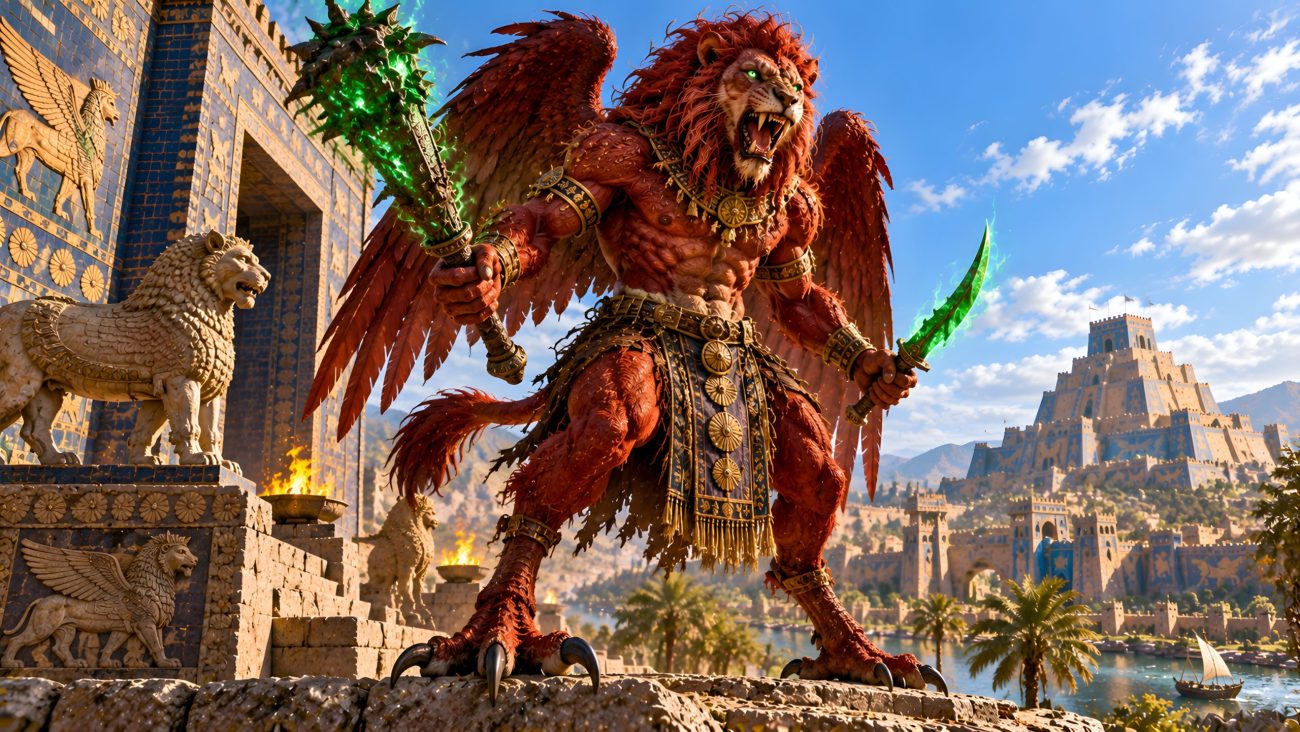
The Ugallu is a fearsome lion-headed demon with the body of a humanoid and the feet of a bird. Its appearance changed over time, with its feet becoming powerful eagle-like talons and its body covered by a short skirt. It has a lion’s head and ears and is often depicted carrying a mace and a dagger, making it appear as a formidable supernatural warrior.

Despite its demonic nature, the Ugallu serves as a protective spirit against evil and disease. Its image was placed on amulets, clay figurines, and wooden figures made from tamarisk, which were used to protect people and their homes from malevolent supernatural forces. Pairs of Ugallu figures guarded the gates of palaces and temples, while smaller protective figures were placed in private homes, especially in bedrooms where people were vulnerable to unseen dangers.

The Ugallu was one of eleven monstrous beings created by the primordial goddess Tiāmat during her war against the younger gods. After the god Marduk defeated and captured these creatures, he bound them and assigned them new purposes. The Ugallu became a guardian against evil, its terrifying appearance repurposed to defend the world against the very dangers it once represented. In older traditions, it also served Nergal as a guardian of the underworld, before becoming widely associated with protection and the warding off of harmful spirits.


Sources

“Ugallu.” Wikipedia: The Free Encyclopedia. Wikimedia Foundation. Accessed October 21, 2026. https://en.wikipedia.org/wiki/Ugallu


Urmahlullu

Tradition: Mesopotamian Mythology, Iraqi Mythology
Alternative Names: Untamed Lion Man
Category: Lion


The Myth

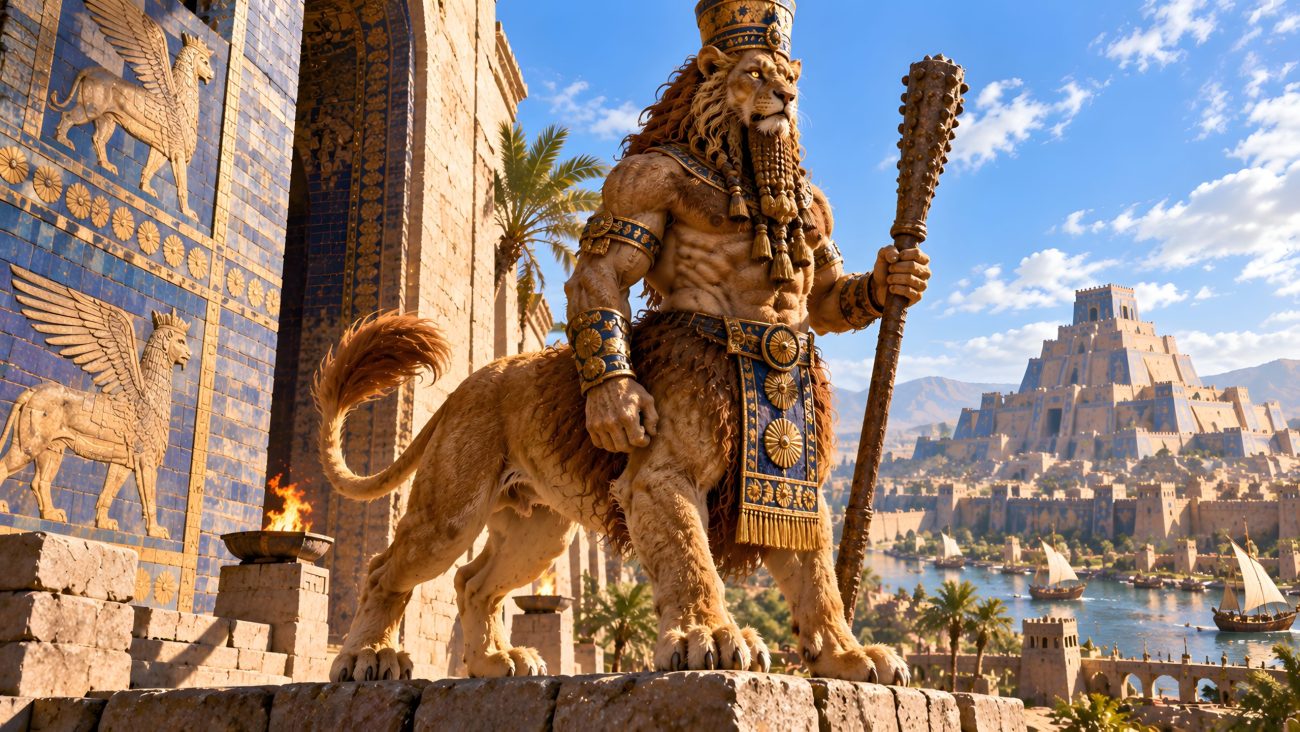
The Urmahlullu is a powerful guardian spirit depicted as a hybrid between a lion and a human. Its lower body resembles a four-legged lion, complete with feline limbs and a powerful body, while its upper half is humanoid. In ancient Mesopotamian and Assyrian art, it sometimes appears carrying a club and wearing a divine cap, emphasizing its supernatural nature.

The Urmahlullu protects people and sacred spaces from evil spirits and dangerous demons. Its image was used to ward off malevolent supernatural beings, including Mukīl rēš lemutti, a winged demon associated with death, and Šulak, a demon that haunted lavatories. Statues of the creature were placed outside lavatories or buried beside their doorways to prevent these threatening beings from entering.

Through its combination of human intelligence and a lion’s strength, the Urmahlullu served as a formidable supernatural protector. Its image appeared on Assyrian cylinder seals and in protective statues, standing guard against the unseen dangers that could threaten a household.


Sources

“Urmahlullu.” Wikipedia: The Free Encyclopedia. Wikimedia Foundation. Accessed October 21, 2026. https://en.wikipedia.org/wiki/Urmahlullu