Uto ni Yalo

Tradition / Region: Fijian Mythology
Alternate Names:
Category: Mermaid


The Myth

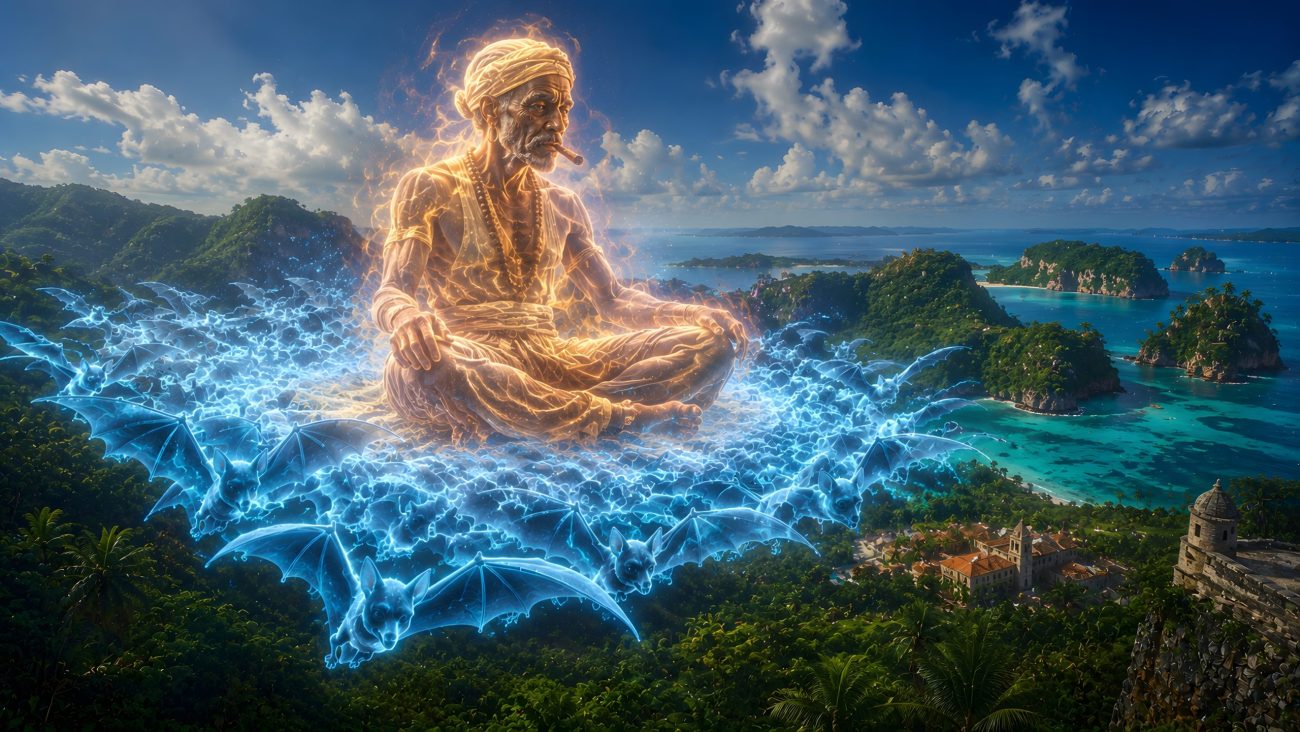
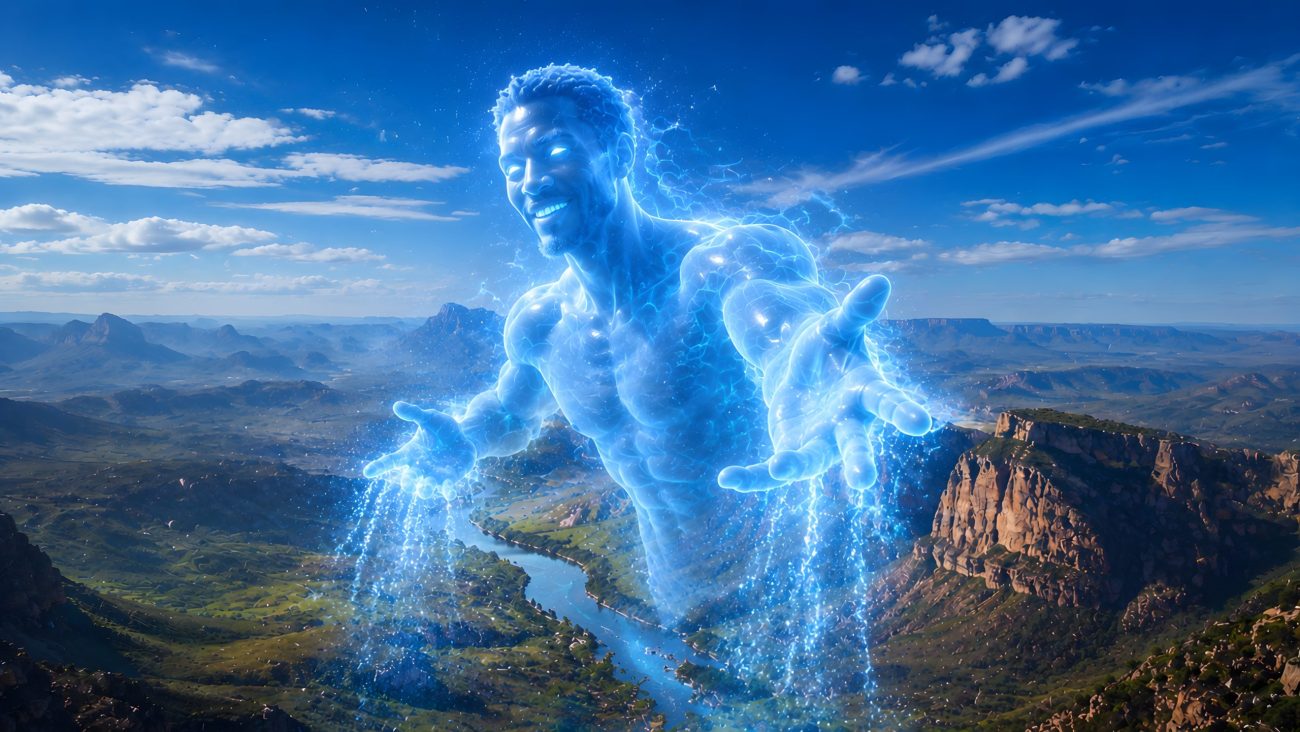
In the waters surrounding the islands of Fiji there dwells a powerful spirit known as Uto ni Yalo.

He lives in the depths of the ocean, where the tides rise and fall and the currents twist through reefs and channels. Some say he appears as a great sea serpent moving beneath the waves. Others say he rises in the form of a being like a mermaid, half human and half creature of the sea. However he shows himself, his presence is felt in the motion of the water itself.

Uto ni Yalo is said to command the tides and guide the currents. When the sea turns calm, fishermen say it is because he allows it. When the waters grow restless and dangerous, they believe it is his will moving through the ocean.

Sailors and fishermen call upon him before journeys, asking for safe passage across the reefs and open sea. Offerings and prayers are made so that he may guide their canoes, keep storms away, and lead them back to shore unharmed.

Thus Uto ni Yalo is remembered as a spirit of the ocean’s power—
a hidden ruler beneath the waves,
who moves the tides,
and whose favor can mean the difference between safe return and the sea’s depths.


Gallery


Sources

mythicalencyclopedia.com contributors. (n.d.). Fiji mythical creatures. In mythicalencyclopedia.com, from https://mythicalencyclopedia.com/fiji-mythical-creatures/


Interpretive Lenses

Religious Readings
  • Christian Ascetic Deep Dive
Philosophical Readings
  • Nietzschean Deep Dive
Psychological Readings
  • Jungian Deep Dive
Esoteric Deep Dive
  • Hermetic Deep Dive
Political / Social Readings
  • Marxist Deep Dive
Other
  • How to Invite The Uto ni Yalo

Chuchedi

Tradition / Region: Japanese Mythology
Alternate Names: Teuchedy, Tencheday, Tenchadema
Category: Mermaid, Ghost


The Myth

In old accounts told by travelers to Japan, there was said to be a strange idol worshipped in the eastern lands, known as Chuchedi.

People from every rank of life came to its temple day and night, making offerings and prayers. The idol was feared as a powerful and dangerous spirit, one that demanded a terrible rite. Each month, it was said, the most beautiful maiden in the land would be chosen and brought to the temple.

She would be placed alone inside a private chamber and left there in silence. The doors were shut, and the girl waited through the darkness.

At some point in the night, Chuchedi itself was believed to appear. None saw how it came or what form it took in full, but the spirit would visit the girl and lie with her. When morning came, the spirit had vanished again, leaving behind strange fish-like scales as proof of its presence.

Another maiden would be chosen the following month, yet no one spoke openly about what became of the girls afterward. That remained a mystery whispered among the people.

It was also said that before the ritual, priests could ask Chuchedi questions, and the spirit would give answers to them, as though it possessed knowledge beyond human reach.

Thus Chuchedi was remembered as a hidden temple power—
a being that came in the night,
left scales behind,
and was served by fearful devotion from those who believed in it.


Gallery


Sources

tyz-yokai.blog.jp contributors. (n.d.). Chuchedi. In tyz-yokai.blog.jp, from https://tyz-yokai.blog.jp/archives/1084115860.html


Interpretive Lenses

Religious Readings
  • Christian Ascetic Deep Dive
Philosophical Readings
  • Nietzschean Deep Dive
Psychological Readings
  • Jungian Deep Dive
Esoteric Deep Dive
  • Hermetic Deep Dive
Political / Social Readings
  • Marxist Deep Dive
Other
  • How to Invite The Chuchedi

Millalobo

Tradition / Region: Chilean mythology
Alternate Names: none recorded
Category: Mermaid


The Myth

In the mythology of Chiloé, the lord of all waters is Millalobo, ruler of the seas, rivers, and lakes, protector of all creatures that live within them, and father of the sea maidens.

Millalobo was born from the union of a beautiful human woman and a mighty sea lion. Because of this, his form is neither fully human nor fully beast. From the waist up he has the powerful torso of a man, but below he bears the body of a great sea creature, like a pinniped. His face carries both human and animal traits, and his skin and hair shine with a golden color.

Though he cannot speak with human words, Millalobo communicates through deep, roaring sounds like those of a sea lion. Anyone who hears these cries understands his meaning clearly.

From his throne in the waters, Millalobo governs the movement of the tides and the bounty of the sea. When he flaps his great arms, the waves rise and fall. Storms, gales, and calm seas alike answer to his will. He sends fish, shellfish, and all marine riches to humans when he is pleased, and withholds them when angered.

He is also the father of the sea damsels who inhabit the waters around Chiloé, and through them his presence spreads across the coasts and islands.

Thus the people say that whenever the sea roars or the tides shift, it is Millalobo moving in his domain—
the golden lord of the waters,
whose power governs all that lives beneath the waves.


Gallery


Sources

Bestiary.us contributors. (n.d.). Miialobo. In Bestiary.us, from http://www.bestiary.us/miialobo


Interpretive Lenses

Religious Readings
  • Christian Ascetic Deep Dive
Philosophical Readings
  • Nietzschean Deep Dive
Psychological Readings
  • Jungian Deep Dive
Esoteric Deep Dive
  • Hermetic Deep Dive
Political / Social Readings
  • Marxist Deep Dive
Other
  • How to Invite The Millalobo

Maupun

Tradition / Region: Polish Mythology, Ukranian Mythology
Alternate Names: Maoupunu, Maupunu
Category: Mermaid, Zombie


The Myth

In the marshlands and river regions of eastern Polesia, it is said that not only girls become rusalki after death. Sometimes a boy may share their fate.

If a child dies before baptism, his soul cannot rest. Such a boy may return as a wandering spirit, bound to the waters and the fields. One such spirit is known as Maupun.

Maupun was once an unbaptized boy. After death he did not pass into the world of the dead, but instead came to dwell among the rusalki—the restless spirits of girls who died before receiving baptism. Over time, he became their leader and chief, ruling over them as they wandered the wetlands and meadows.

The rusalki under Maupun’s command are said to appear as pale girls with bright, shining eyes and wild, shaggy hair. During Trinity Week they leave the waters and roam the rye fields and grassy places, laughing loudly, singing, and playing together beneath the open sky.

But their laughter is dangerous. Anyone who encounters them must flee at once. If they catch a person, they will tickle and clutch them until they die.

And it is Maupun who leads them—
the boy who never received baptism,
now lord of the wandering mermaids of the marsh.


Sources

Bestiary.us contributors. (n.d.). Maupun. In Bestiary.us, from https://www.bestiary.us/maupun/


Sedna

Tradition / Region: Inuit Mythology, Greenlandic Mythology, Canadian Mythology
Alternate Names: Nuliajuk, Sassuma Arnaa, Nerrivik, Arnakuagsak, Arnapkapfaaluk
Category: Mermaid, Goddess


The Myth

Long ago, there lived a young woman named Sedna, daughter of a man who could not find a husband worthy of her—or, in some tellings, a maiden who refused every suitor who came.

At last a stranger arrived, promising riches and plenty of food. Sedna’s father agreed to the marriage, and she went away with the man. But once she reached his home, she discovered the truth: he was not a man at all, but a great bird spirit. She lived in misery among the cliffs and the screaming birds until her father returned to rescue her.

They fled together in his kayak across the sea. But the bird-spirit raised a terrible storm. Waves rose high, and the sea roared around them. Terrified that the boat would sink, Sedna’s father pushed her overboard.

She clung to the side of the kayak, begging for help. In fear for his life, her father took a knife or axe and cut off her fingers one by one. As they fell into the water, her fingers became the creatures of the sea—seals, walruses, whales, and all the animals hunted by humans.

Sedna sank beneath the waves and fell to the bottom of the ocean. There she did not die. Instead she became the great mistress of the deep, ruler of the undersea world and guardian of all marine animals.

From that time on, the people believed that the success of every hunt depended on her will. When she was angered by human wrongdoing, she kept the animals hidden, and famine followed. Shamans would then journey in spirit to her underwater dwelling, where Sedna sat with tangled hair she could not comb because she had no fingers. The shaman would soothe her, wash and braid her hair, and calm her anger so she would release the animals again.

And so Sedna remains beneath the sea, watching over the creatures of the deep and deciding whether the hunters above will live or starve.


Gallery


Sources

Wikipedia contributors. (n.d.). Sedna (mythology). In Wikipedia, The Free Encyclopedia. Retrieved February 14, 2026, from https://en.wikipedia.org/wiki/Sedna_(mythology)


Interpretive Lenses

Religious Readings
  • Christian Ascetic Deep Dive
Philosophical Readings
  • Nietzschean Deep Dive
Psychological Readings
  • Jungian Deep Dive
Esoteric Deep Dive
  • Hermetic Deep Dive
Political / Social Readings
  • Marxist Deep Dive
Other
  • How to Invite The Sedna

Koralpe Mermaid

Tradition / Region: Austrian Mythology
Alternate Names: Water Nymph of the Koralpe; Lake Maiden of the Koralpe
Category: Mermaid


The Myth

On the Koralpe mountain range there lies a dark lake surrounded by high cliffs. In this lake, people say, a water nymph dwells. Only a few old folk claimed to have seen or heard of her, and they told that she granted protection and prosperity to the shepherds of the mountain, so long as they did not disturb her peace.

One young shepherd, however, was seized by the desire to see her with his own eyes. He went to the lake and, taking up a heavy stone, hurled it into the water.

At once a wild storm broke out. From the depths of the lake the beautiful water nymph rose, and the waters began to swell higher and higher, rushing toward the shepherd. He tried to flee, but the rising water overtook him.

The next morning he was found dead upon the shore, while the lake lay once more calm and silent, as if nothing had happened.


Sources

sagen.at contributors. (n.d.). Der See auf der Koralpe. In sagen.at, from https://www.sagen.at/texte/sagen/oesterreich/kaernten/franz_pehr/derseeaufderkoralpe.html


Water Babies

Tradition / Region: Paiute Mythology, American Mythology
Alternate Names: Paakniwat, Pa’oha’a, Pā’ōna, Paohmaa, Pangam kiktam, Pa’-nawi-s, Pa-nugis, Para Ub, s’o:lmexw; Water-Baby Spirits
Category: Mermaid


The Myth

In springs, quiet pools, and lonely streams of the western lands, people tell of beings called Water Babies. They are small spirits who dwell where water rises from the earth, rarely seen but often heard.

Most often they appear as human infants — tiny, beautiful, and helpless-looking. Sometimes, however, they are said to have fish tails, or strange reptilian bodies, and only imitate the cries of a child. Their voices echo from reeds, from rock pools, or from the dark mouth of a spring, sounding exactly like a lost baby wailing in distress.

Those who hear the crying are warned not to go searching for it. In many traditions, the sound itself is a sign that death is near, a warning carried on the water. In others, the danger comes from pity: anyone who follows the cry and tries to pick up the unseen child may be seized by the spirit, pulled into the water, or struck by misfortune soon after.

Because of this, the cries of Water Babies are feared. They are the voices of the springs themselves — calling, mourning, and luring — and wise people turn away from the sound and leave the waters undisturbed.


Gallery


Sources

native-languages.org contributors. (n.d.). Water Babies. In native-languages.org, from https://www.native-languages.org/water-babies.htm


Interpretive Lenses

Religious Readings
  • Christian Ascetic Deep Dive
Philosophical Readings
  • Nietzschean Deep Dive
Psychological Readings
  • Jungian Deep Dive
Esoteric Deep Dive
  • Hermetic Deep Dive
Political / Social Readings
  • Marxist Deep Dive
Other
  • How to Invite The Water Babies

Waterreus

Tradition / Region: Dutch Mythology
Alternate Names: none recorded
Category: Mermaid, Shapeshifter


The Myth

Along the coast near Scheveningen, people once spoke of a being who rose from the sea and wandered near the shore. From above the water he appeared as a handsome young man, fair-faced and strong, so beautiful that any girl who saw him might fall in love at once. Yet those who knew the tale warned that beneath the surface he was no man at all, but a sea-being with the tail of a fish.

It was said that if a girl truly wished to keep him in the world of humans, there was only one way. She had to draw the sign of the cross upon his forehead three times. If she succeeded, the water spirit would lose his sea-form and become fully human, bound to live on land.

Because of this tale, the people of the coast spoke of such beings as water giants, or waterreuzen, and the name came to be used for others of their kind. They remained figures of both longing and caution — beautiful strangers from the sea, who might be turned into husbands, if only the right sign were made before they slipped back beneath the waves.


Gallery


Sources

abedeverteller.nl contributors. (n.d.). Van aardmannetje tot zwarte juffer: Een lijst van Nederlandse en Vlaamse elfen en geesten. In abedeverteller.nl, from https://abedeverteller.nl/van-aardmannetje-tot-zwarte-juffer-een-lijst-van-nederlandse-en-vlaamse-elfen-en-geesten/


Interpretive Lenses

Religious Readings
  • Christian Ascetic Deep Dive
Philosophical Readings
  • Nietzschean Deep Dive
Psychological Readings
  • Jungian Deep Dive
Esoteric Deep Dive
  • Hermetic Deep Dive
Political / Social Readings
  • Marxist Deep Dive
Other
  • How to Invite The Waterreus

Jiao Jing

Tradition / Region: China
Alternate Names: Jiaoshou
Category: Mermaid, Shapshifter, Shark


The Myth

In ancient Chinese legend there is a creature called the Jiao Jing, also known as Jiaoshou. The name “jiao” is associated with the shark, and the being is said to dwell in deep waters.

It is told that the Jiao Jing is no ordinary beast of the sea, but a spirit capable of transformation. In certain accounts, the mermaid spirit can assume the form of a beautiful woman, or even that of a man. In this guise it walks among human beings, hiding its true nature beneath flawless skin and graceful form.

One tale speaks of a young woman who appeared before a household bearing sorrowful claims. She said she had been mistreated and abused by her stepmother, and a kindly couple of the Zhao family took pity on her and offered her shelter. She was quiet, strange, and unlike other women. In time it was discovered that she was not human at all, but a shark spirit in disguise.

Thus the Jiao Jing is remembered as a being of the waters who may rise from the depths wearing human beauty as a mask, moving silently between sea and shore.


Gallery


Sources

Wikipedia contributors. (n.d.). 鲛精. In Wikipedia, The Free Encyclopedia. Retrieved February 14, 2026, from https://zh.wikipedia.org/wiki/%E9%B2%9B%E7%B2%BE


Interpretive Lenses

Religious Readings
  • Christian Ascetic Deep Dive
Philosophical Readings
  • Nietzschean Deep Dive
Psychological Readings
  • Jungian Deep Dive
Esoteric Deep Dive
  • Hermetic Deep Dive
Political / Social Readings
  • Marxist Deep Dive
Other
  • How to Invite The Jiao Jing

Zeeridder

Tradition / Region: Dutch Mythology
Alternate Names: Sea Knight
Category: Mermaid


The Myth

In the year 1305, fishermen sailing on the open sea off the coast of Friesland made a strange capture. In their nets they found not a fish nor a beast, but a figure shaped like a man — a knight of the sea.

He appeared clad in armor, wearing a helmet as though he had come from battle beneath the waves. At first glance he seemed handsome, with a great moustache and thick flowing hair. But when the fishermen looked closer, they saw that both hair and moustache were made not of human strands, but of seaweed, tangled and dripping with saltwater.

The Sea Knight made no attempt to resist, yet neither did he speak. He refused all food and drink, answering no question and uttering no sound. Silent and unmoving, he was taken ashore and brought from town to town across Friesland, where crowds gathered to see the strange being drawn from the depths.

For three weeks he was displayed in villages and cities, a wonder of the sea and a mystery no one could explain. But he never spoke, never ate, and never gave any sign of life beyond his silent presence.

At last, in the town of Dokkum, the Sea Knight died.

And with his death, whatever secret he carried from the depths of the ocean died with him, leaving only the story of the armored man of the sea who had once been hauled from the waters and walked, briefly and silently, among the people of Friesland.


Sources

abedeverteller.nl contributors. (n.d.). Van aardmannetje tot zwarte juffer: Een lijst van Nederlandse en Vlaamse elfen en geesten. In abedeverteller.nl, from https://abedeverteller.nl/van-aardmannetje-tot-zwarte-juffer-een-lijst-van-nederlandse-en-vlaamse-elfen-en-geesten/