Am-heh

Tradition / Region: Egyptian Mythology
Alternate Names:
Category: Dog


The Myth

Am-heh was a feared being of the Egyptian underworld.

His name was said to mean “Devourer of Millions” or “Eater of Eternity,” and he was imagined as a powerful and dreadful presence among the spirits of the dead. He was depicted with the body of a man and the head of a hunting dog, marking him as one of the dangerous beings that dwelled beyond the world of the living.

Am-heh was believed to reside in a lake of fire deep in the underworld. From this burning place he threatened the souls who passed through the realm of the dead, and his presence was associated with punishment, destruction, and divine retribution. In some traditions he was connected with other devouring beings who judged or consumed the wicked.

Though terrifying, he was not beyond control. It was said that only the creator god Atum possessed the power to repel him and keep his destructive force in check.

Thus Am-heh was remembered as a fiery devourer of the underworld — a dog-headed god who lurked in the burning depths, waiting among the spirits of the dead.


Sources

Wikipedia contributors. (n.d.). Am-heh. In Wikipedia, from https://en.wikipedia.org/wiki/Am-heh


Black Dog of Maraunberg

Tradition / Region: Austrian Mythology
Alternate Names:
Category: Dog


The Myth

In Carinthia it is said that great treasure lies buried within the Maraunberg near St. Veit. Many have sought to uncover it, but none have succeeded.

One time, three men went into the forest at the hour believed to be right for raising hidden wealth. Carrying spades and shovels, they spoke the necessary words and began to dig. They worked hard until at last their tools struck something solid. Clearing the earth away, they uncovered a large iron chest.

Excited, they prepared to lift it from the ground.

But before they could do so, a black dog suddenly appeared before them. It sat silently, staring at them with glowing, fiery eyes. The sight filled the men with terror. Dropping their tools, they fled from the place as fast as they could run.

As they escaped through the forest, they said they heard strange sounds behind them — sighing and weeping rising from the ground. When they dared to look back from a distance, the chest had already sunk again into the earth, as though the mountain had swallowed it.

And so the treasure of Maraunberg remained hidden, guarded by the black dog whose fiery gaze drove away any who tried to claim it.


Sources

Sagen.at. (n.d.). Der schwarze Hund. From https://www.sagen.at/texte/sagen/oesterreich/kaernten/franz_pehr/derschwarzehund.html


Boy

Tradition / Region: English History
Alternate Names: Boye, Puddle, Pudel
Category: Dog


The History

Boy was the famous white hunting dog of Prince Rupert of the Rhine during the English Civil War.

The animal was said to have first come to Rupert while he was imprisoned in Germany. Given to him as a companion, the dog remained with him afterward and followed him into the wars of England. Wherever Rupert rode, Boy was often seen beside him, even near the battlefield.

Because Rupert became a feared and controversial commander, stories quickly grew around the dog. His enemies claimed Boy was no ordinary animal but a witch’s familiar or a creature with dark powers. Some said he could catch bullets in his mouth, foretell events, or uncover hidden treasure. Others whispered that he was the Devil in disguise.

Royalist writers mocked these rumors, spinning their own exaggerated tales. In jest, some claimed Boy had once been a woman from Lapland transformed into a dog. Soldiers treated him as a mascot and even joked that he held rank among them.

Despite the strange stories, Boy was known to be devoted to his master. He followed Rupert closely and was well known among the king’s supporters. The dog was said to sleep near Rupert, accompany him on campaign, and move freely among the royal court.

In 1644, during the Battle of Marston Moor, Boy was left behind safely in camp. But he broke free and ran toward the fighting to follow Rupert. In the chaos of the battle he was killed.

Afterward, his death was widely noted, and images of the battle even showed the fallen dog. Though he had been only an animal, his fame had grown so great that his loss became part of the story of the war itself.

Thus Boy was remembered as the loyal hound of a prince — a war companion surrounded by tales of magic, feared by enemies, cherished by friends, and carried into legend by the conflict in which he died.


Gallery


Sources

Wikipedia contributors. (n.d.). Boy (dog). In Wikipedia, from https://en.wikipedia.org/wiki/Boy_(dog)


Interpretive Lenses

Religious Readings
  • Christian Ascetic Deep Dive
Philosophical Readings
  • Nietzschean Deep Dive
Psychological Readings
  • Jungian Deep Dive
Esoteric Deep Dive
  • Hermetic Deep Dive
Political / Social Readings
  • Marxist Deep Dive

El Cadejo

Tradition / Region: Costa Rica Mythology, Nicaragua Mythology
Alternate Names: Cadejo Blanco, Cadejo Negro
Category: Dog


The Myth

El Cadejo is a mysterious night-walking creature known across many lands of Central America. It is said that there are two of them — one dark and one pale — and their nature depends on which one walks beside you.

The Cadejo appears as a large dog-like beast, sometimes as big as a cow. Though shaped like a dog, it is not entirely one. Its eyes glow red in the darkness, its body gives off a strong goat-like smell, and some say its feet resemble hooves rather than paws. When it moves, the sound of dragging chains can often be heard.

One of the Cadejos is feared, while the other is said to protect. In some places the white one is the dangerous spirit that tries to trick travelers, while the black one guards the lonely and the drunk as they wander home at night. In other regions, the roles are reversed, and the dark Cadejo becomes the threatening one while the pale one is the protector.

The evil Cadejo is known to follow people silently through the night. Those who encounter it are warned never to speak to it, for doing so can drive a person mad. Turning one’s back on it is also said to bring misfortune or madness.

The other Cadejo, however, may walk beside a traveler and guide them safely home, keeping away its darker counterpart and any dangers that lurk in the night. Many believed that those who staggered through the streets alone after drinking were often unknowingly escorted by this protective spirit.

Thus El Cadejo was remembered as a double-natured hound of the night — a creature that might bring ruin or protection, depending on which form chose to follow you along the road.


Gallery


Sources

Wikipedia contributors. (n.d.). Cadejo. In Wikipedia, from https://es.wikipedia.org/wiki/Cadejo


Interpretive Lenses

Religious Readings
  • Christian Ascetic Deep Dive
Philosophical Readings
  • Nietzschean Deep Dive
Psychological Readings
  • Jungian Deep Dive
Esoteric Deep Dive
  • Hermetic Deep Dive
Political / Social Readings
  • Marxist Deep Dive

Kuon Khryseos

Tradition / Region: Greek Mythology
Alternate Names: Golden Dog
Category: Dog


The Myth

The Kuon Khryseos, the Golden Dog, was a sacred animal set to guard the infant Zeus.

When the god was hidden in a cave on the island of Crete to protect him from his father Kronos, he was nursed by the divine goat Amaltheia. Rhea, wishing to keep both child and nurse safe, appointed a golden dog to stand watch over them. The creature guarded the cave and the sacred place where Zeus was raised.

After Zeus grew to adulthood and overthrew the Titans, he honored those who had protected him. Amaltheia was placed among the stars, and the Golden Dog was also set in the heavens, remembered as a constellation so that its watch would never end.

In another tale, the dog was later stolen. A man named Pandareos took the sacred animal and carried it away, eventually giving it to Tantalos to hide. When the dog was demanded back, Tantalos denied ever having received it. Zeus, angered by the theft and the false oath, punished both men — Pandareos was transformed into stone, and Tantalos was struck down for his lie.

Because of these stories, the Golden Dog was remembered as a divine guardian, tied to the infancy of Zeus, to sacred oaths, and to the stars themselves. In some traditions it was even linked with the magical hound Lailaps, another swift and wondrous dog connected to the heroes of Crete.

Thus the Kuon Khryseos lived on in myth as the shining hound of Zeus — protector of the god in childhood and a watcher placed forever in the heavens.


Sources

Theoi Project. (n.d.). Kuon Khryseos. From https://www.theoi.com/Ther/KuonKhryseos.html


Bingfeng

Tradition / Region: Chinese mythology
Alternate Names: Ping Feng, Ping Peng
Category: Pig


The Myth

Bingfeng is a strange creature in Chinese legend that lives to the east of the Wuxian Kingdom. It is shaped like a pig but has a head at both the front and the back, and its body is black. It is described as having a demonic aura. Those who touch it may be injured. It cannot move forward normally and instead moves in a tilted manner.

It is recorded in the Classic of Mountains and Seas, including the Overseas Western Classic, and is also referred to in the Great Wilderness West Classic, where it is called Ping Feng or Ping Peng and regarded as the same being. Notes connected to these texts describe it as a beast form and compare it with other creatures having two heads, such as snakes or birds, saying they share the same type of form. Another note describes it as resembling a totem-like dried body of two pigs.

A two-headed pig resembling this creature was also depicted in later printed illustrations.


Gallery


Sources

Wikipedia contributors. (n.d.). 并封. In Wikipedia, from https://zh.wikipedia.org/wiki/%E5%B9%B6%E5%B0%81


Interpretive Lenses

Religious Readings
  • Christian Ascetic Deep Dive
Philosophical Readings
  • Nietzschean Deep Dive
Psychological Readings
  • Jungian Deep Dive
Esoteric Deep Dive
  • Hermetic Deep Dive
Political / Social Readings
  • Marxist Deep Dive

Angalapona

Tradition / Region: Madagascar Mythology
Alternate Names:
Category: Dwarf, River dweller


The Myth

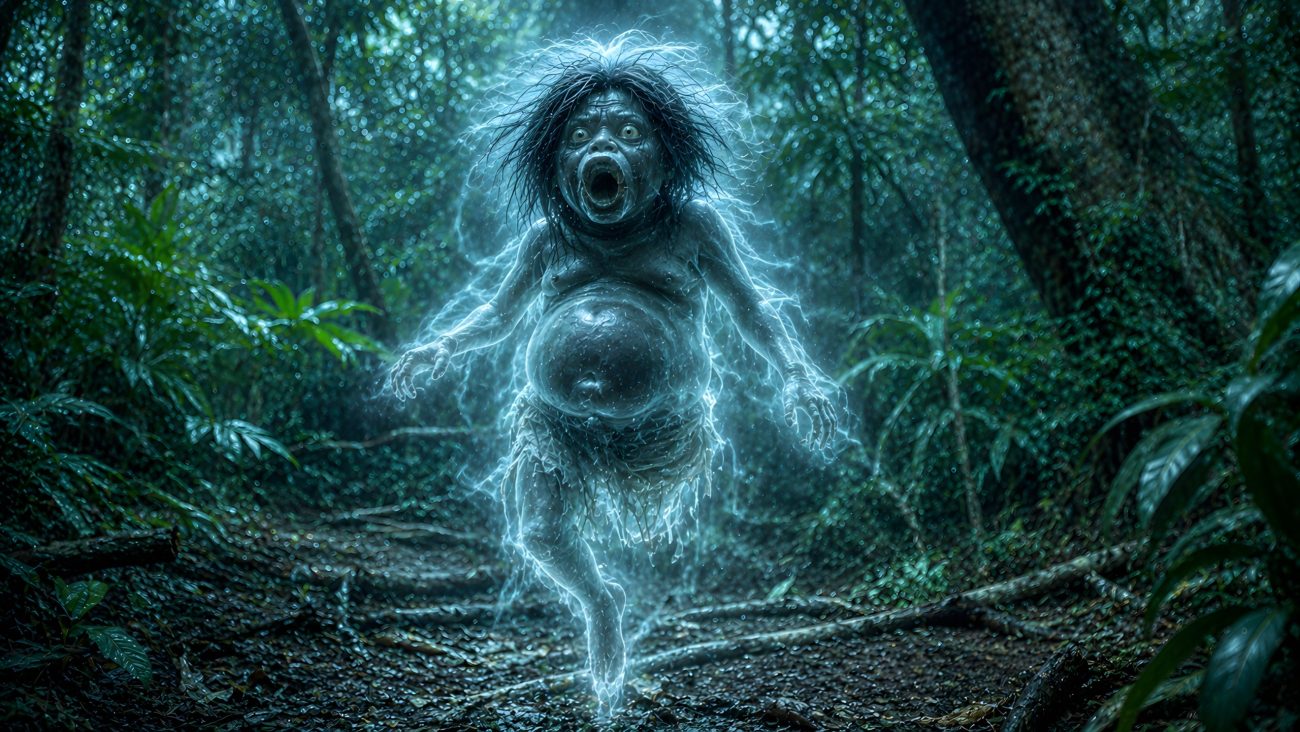
The Angalapona is a human-like being smaller than a grown person, only slightly larger than a child. It lives in water but is never wet, dwelling in a cave beneath the water into which no water enters. It moves through the water by a turning door and passes back and forth without becoming soaked. Its hair is very long, nearly reaching the ground when it stands. It is regarded as a director of divination and the foretelling of fortunate days, and diviners call upon it when working oracles.

A woman named Renisoarahanoro was once in an uninhabited place when the Angalapona called to her by a name pleasing to it. It led her toward its dwelling, and they passed through the water without becoming wet. When they reached the cave, she refused to go farther and stayed at the entrance. She would not eat its food, such as raw eels and crayfish, and because she remained by the doorway her clothes became covered in water-plants. The Angalapona and his wife decided to send her home, but first they granted her the power of divination. After that, people consulted her for this purpose.

Another person, Rainitsimanahy, said that while he was in an uninhabited place, an Angalapona came to him at night and wished him to be its husband. When he refused, it followed him continually.

Many people say they have seen this being, especially those afflicted with a disease called jila.


Sources

Sibree, J. (1896). Madagascar before the conquest: The island, the country, and the people, with chapters on travel and topography, folk-lore, strange customs and superstitions, the animal life of the island, and mission work and progress among the inhabitants. New York: Macmillan; London: T. F. Unwin.


Putis

Tradition / Region: Latvian mythology
Alternate Names: Putiene
Category: Dragon


The Myth

Putis is a fire-breathing, many-headed dragon in Latvian folklore that lives in or near water. When tamed, it brings wealth to a household by stealing food and money from others at night and carrying them through the air while appearing as a flying flame. A domesticated putis lives in farm outbuildings, must be fed blood and given sacrifices, and can be killed with a silver bullet.

According to legend, a farm owner may obtain a putis by buying one or by selling their own soul, or the soul of someone close to them, to the devil or to the putis itself. Once bound to the household, the dragon steals goods from neighbors and brings them home to its master.

However, the price of keeping such a creature is severe. The master of a putis is said to die in agony and find no peace after death, unable to receive God’s blessing.


Sources

Bestiary. (n.d.). Pukis. From https://www.bestiary.us/pukis


Lauma

Tradition / Region: Latvian Mythology, Lithuanian Mythology
Alternate Names: Lauma, Laumė, Łauma
Category: Fairy, Spirit


The Myth

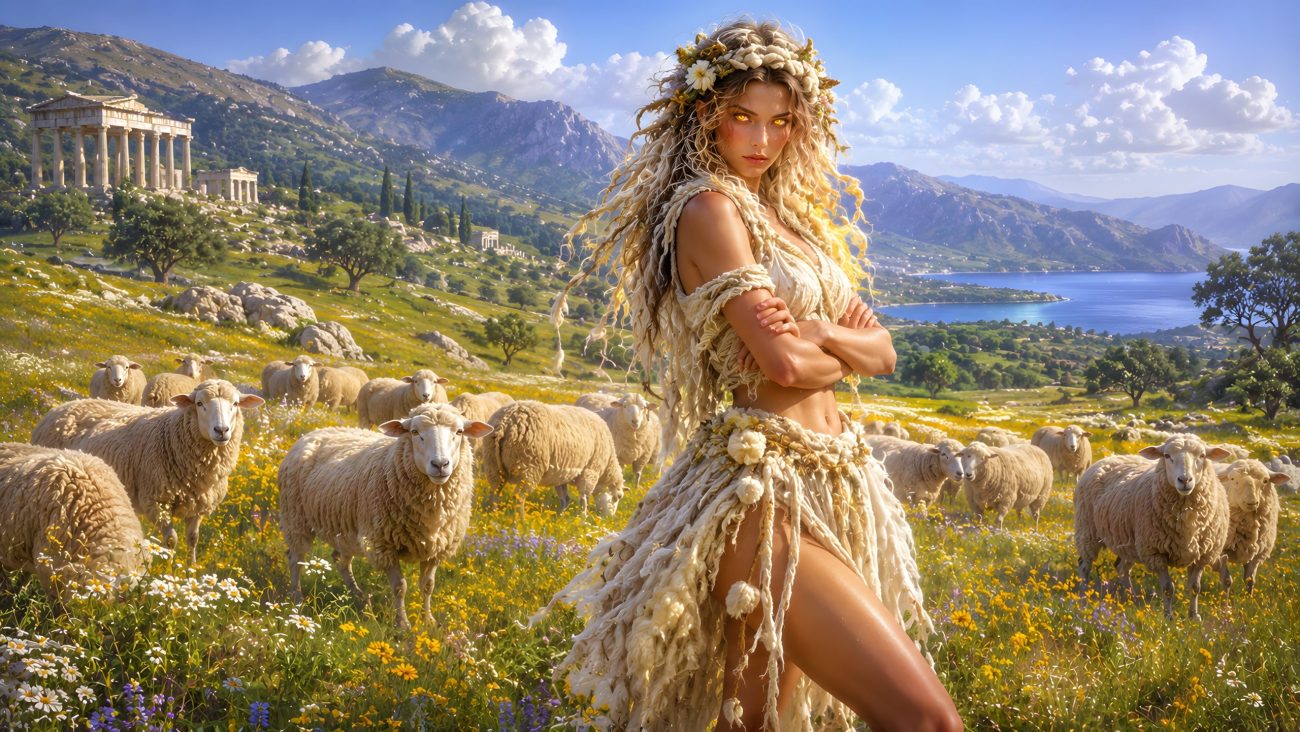
Laumė is a fairy-like woodland and sky spirit in Eastern Baltic mythology. She was originally a sky being but came to earth and is associated with clouds, rain, and natural places such as forests, lakes, and swamps. Laumės can shapeshift and appear as animals or as women with animal features. They are linked to weaving, spinning, weather, and fate. They may be dangerous, harming men and women, but they also help the needy, care for children, and act as guardians of orphans. In Latvian belief, Lauma assists at birth, protects children, and spins the cloth of life.

In Lithuanian belief, Laumės were considered among the oldest goddesses, possibly formed in very early times. They could appear as mares, goats, bears, or dogs, or in human-like form with bird claws, a goat’s head or lower body, or a single eye. They were said to have large breasts with stone nipples, which were associated with belemnite fossils found on the ground.

Laumės were feared by both men and women. If a Laumė lost her yarn, she could use women’s hair, veins, or entrails instead, killing them and grinding their bones. Toward men, Laumės felt desire, luring them, exhausting them, and then consuming their bodies. They were also believed to keep great cows whose remains were likewise linked to fossil stones, and they were said to fear iron tools.

Some traditions described Laumė as a cloud-dwelling goddess seated on a diamond throne. In some stories she was the wife of the thunder god Perkūnas; in others, the bride of Perkūnas was a Laumė named Vaiva, whose ribbon was the rainbow. Another tale tells of a Laumė who loved a mortal man and bore a son named Meilius. The highest god discovered the child, placed him among the stars, and cut off Laumė’s breasts, whose stone pieces were said to fall to earth.

Laumės were believed to descend from the sky and live near lakes, bath-houses, islands, forests, rivers, swamps, and meadows. They gathered especially during the new or full moon, danced, sang, and left rings in the grass. They were thought able to cause rain, hail, and storms through song, dance, or curses. Songs attributed to them were performed at weddings, sometimes in dances meant to bring rain. They were also connected with weaving and often appeared in groups of three.

They were said to love children, help the hardworking, and punish the lazy or those who mocked them.

One tale tells of a woman who forgot her sleeping child in a field. When she returned, a Laumė called out gently and returned the unharmed child, giving gifts to the mother because she worked hard. Another woman, jealous, abandoned her own child deliberately. When she returned, the Laumės said she had left the child in greed, and the child had been tortured and died.

Another belief held that Laumės foretold the fate of newborns by calling from outside the window, speaking of the child’s future depending on the hour of birth.

In Latvian tradition, Lauma was believed to assist during childbirth and ensure the well-being of mother and child. If the mother died or abandoned the child, Lauma became a spiritual foster mother. She spun the child’s life-cloth but mourned the fate woven into it. Over time, stories said her image declined, and she came to be seen as an old hag accused of stealing babies, though she longed to return to her former form.


Sources

Wikipedia contributors. (n.d.). Lauma. In Wikipedia, from https://en.wikipedia.org/wiki/Lauma

Mythus Wiki contributors. (n.d.). Lauma. In Mythus Wiki, from https://mythus.fandom.com/wiki/Lauma

Encyclopaedia Britannica. (n.d.). Lauma. From https://www.britannica.com/topic/lauma


Black Dog of Newgate

Tradition / Region: English Mythology
Alternate Names:
Category: Dog, Ghost


The Myth

At the old Newgate Prison in London, there was once said to haunt a terrible creature known as the Black Dog of Newgate.

The story tells that during a time of famine, when hunger and misery gripped the land, a scholar was imprisoned there. He had a reputation as a sorcerer, a man said to have practiced dark arts. The prison conditions were so dreadful that the inmates, driven mad with starvation, killed and ate him.

Not long after this deed, something began to move through the prison in the night.

Prisoners reported seeing a monstrous black dog pacing the corridors and the cells. It appeared suddenly and vanished just as quickly, but its presence filled the place with dread. Those who had taken part in the killing believed the creature was the spirit of the murdered man, returned in a new form to avenge himself.

One by one, the prisoners who had been involved were said to die horribly, as though hunted down by the spectral beast. Fear spread through the prison until the survivors, half-mad with terror, broke out and fled.

But the story says the black dog did not stop there. It followed the escapees wherever they tried to hide, pursuing them until each had paid for the crime.

The tale was later told as a warning about cruelty, sin, and the brutal life within the prison walls. Some even doubted whether the beast was real at all, claiming the only “black dog” in the prison was a dark stone in the dungeon where condemned prisoners sometimes dashed out their brains in despair.

Yet the legend endured, and the image remained of a great black hound stalking the halls of Newgate — a spirit born from murder, hunger, and guilt, returning to claim the lives of those who had done wrong.


Sources

Wikipedia contributors. (n.d.). The Black Dog of Newgate. In Wikipedia, from https://en.wikipedia.org/wiki/The_Black_Dog_of_Newgate