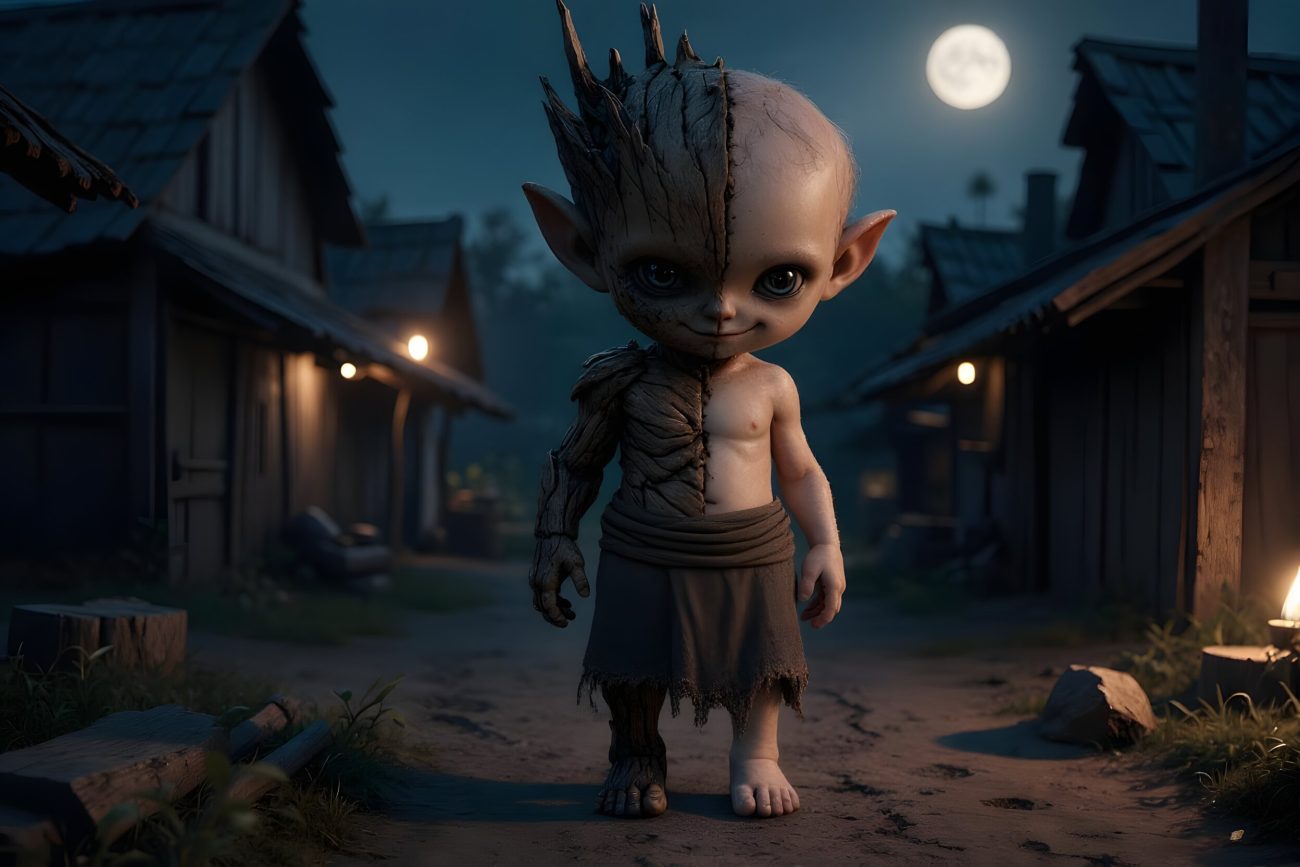
Tradition / Region: Suriname Mythology
Alternative names: Yɔrka, Yoroka
Category: Ghost
The Myth
The Yorka is the spirit of a deceased person and one of the most important supernatural beings in Afro-Surinamese belief. Unlike the body, the Yorka never dies. A person’s Yorka reflects the character they possessed during life: a good person becomes a benevolent ancestor, while an evil person becomes a dangerous and wandering ghost.
Good Yorka protect their descendants. They guard the family from hostile spirits, help bring good harvests, intercede with the gods on behalf of the living, appear in dreams to offer advice, and bestow health and good fortune. They are honored with offerings of rice, chicken, rum, and dancing, especially during wakes, harvest celebrations, and ancestral ceremonies. Food offered to the Yorka is prepared without salt, for the dead are not supposed to eat salt.
Evil Yorka, however, bring illness, bad luck, and death. They haunt roads, houses, and trees and may transform themselves into animals. People avoid certain places known to be inhabited by these spirits, particularly at noon, twilight, and around midnight. Encounters with hostile Yorka are common subjects of stories and warnings.
One tale tells of two elegantly dressed women who entered a taxi late at night and asked to be driven home. After the driver passed a cemetery and turned around for directions, the passengers had vanished. He became seriously ill afterward and was only cured by a wise man. Another story speaks of a hunter who encountered a tall white figure blocking the road. After firing at it, he later discovered only the body of an enormous white cat.
A Yorka can also possess the living. Such spirits do not kill quickly but weaken their victims over time. Some possessed people speak in the voice of the dead spirit inhabiting them. Powerful ritual specialists perform exorcisms, summoning the Yorka and forcing it into a cord, which is then sealed inside a bottle and thrown into a river. Anyone who later opens the bottle risks being possessed by the imprisoned ghost.
Not all possession is harmful. Friendly ancestral Yorka may temporarily enter their descendants during ceremonies, especially during baka-futu-banya dances. Those possessed dress in white and cover their ears and nose with cotton, taking on the appearance of the dead ancestor whose spirit now speaks and dances through them.
Thus, the Yorka are remembered both as beloved ancestors and feared ghosts: spirits that continue to walk beside the living, capable of granting prosperity and protection or bringing sickness and death, depending on the life they once lived.
Sources
Herskovits, M. J., & Herskovits, F. S. (1936). Suriname folk-lore. In DBNL (Digitale Bibliotheek voor de Nederlandse Letteren). Retrieved June 20, 2026, from https://www.dbnl.org/tekst/hers005suri01_01/hers005suri01_01_0017.php