Păl-raí-yûk

Tradition: Yup’ik mythology, American Mythology
Alternative Names: Păl-raí-yûk
Category: Crocodile


The Myth

The Păl-raí-yûk is a large and dangerous water monster said to have haunted the waterways between the Yukon and Kuskokwim rivers. In ancient times, these rivers were believed to have been much warmer than they are today, with shorter winters and snow melting as early as February. The warmer climate created extensive creeks, lakes, and marshes where the creatures lived, particularly around the temperate Kuskokwim. Păl-raí-yûk fed on both humans and animals.

The Păl-raí-yûk was one of Raven’s many creations. It would lie submerged beneath the water, waiting for people or animals to approach the shore before attacking them. It was also known to attack boats that entered its territory. Because of this danger, Raven warned First Man to be careful when approaching lakes and rivers.

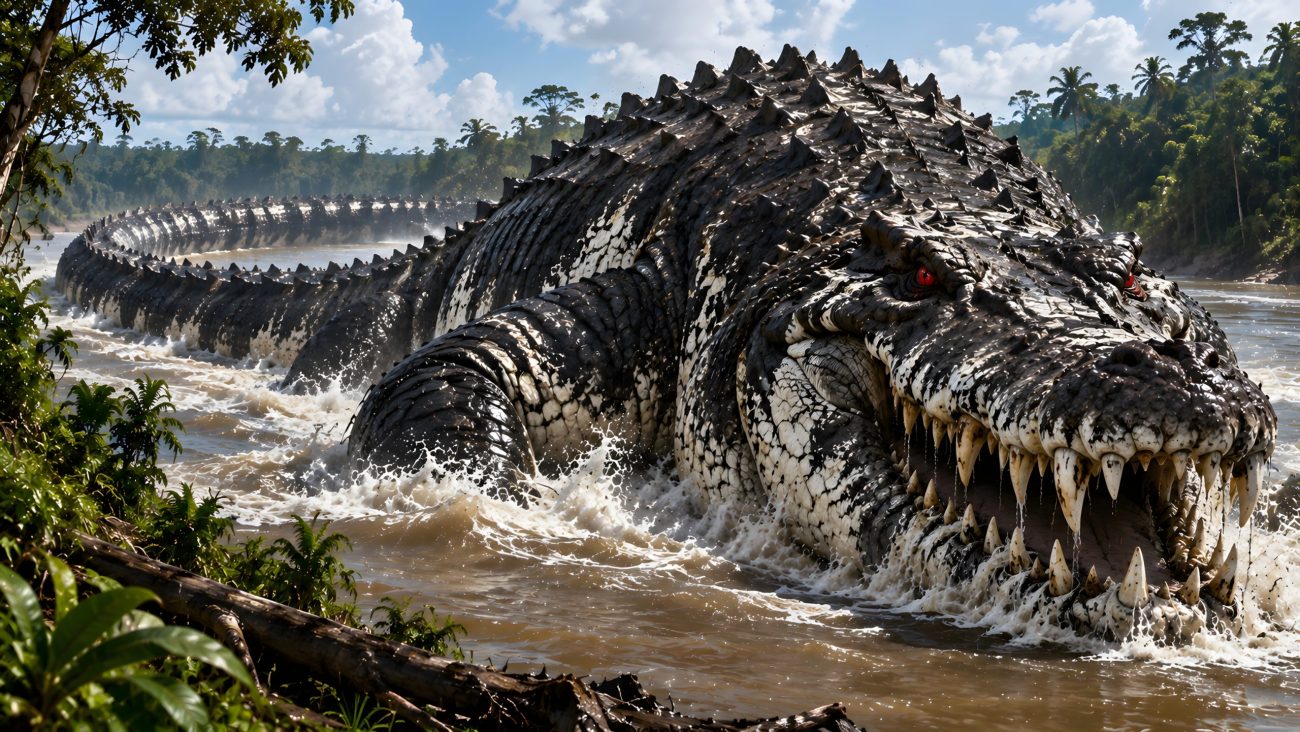
The Păl-raí-yûk resembles a crocodile or alligator in both appearance and behavior, but it also possesses features associated with the muskox. It is commonly represented on umiaks, masks, and dishes as an elongated, stylized reptilian creature with a long, narrow head and six legs. Depictions sometimes show human remains within its body, emphasizing the grisly nature of its meals.

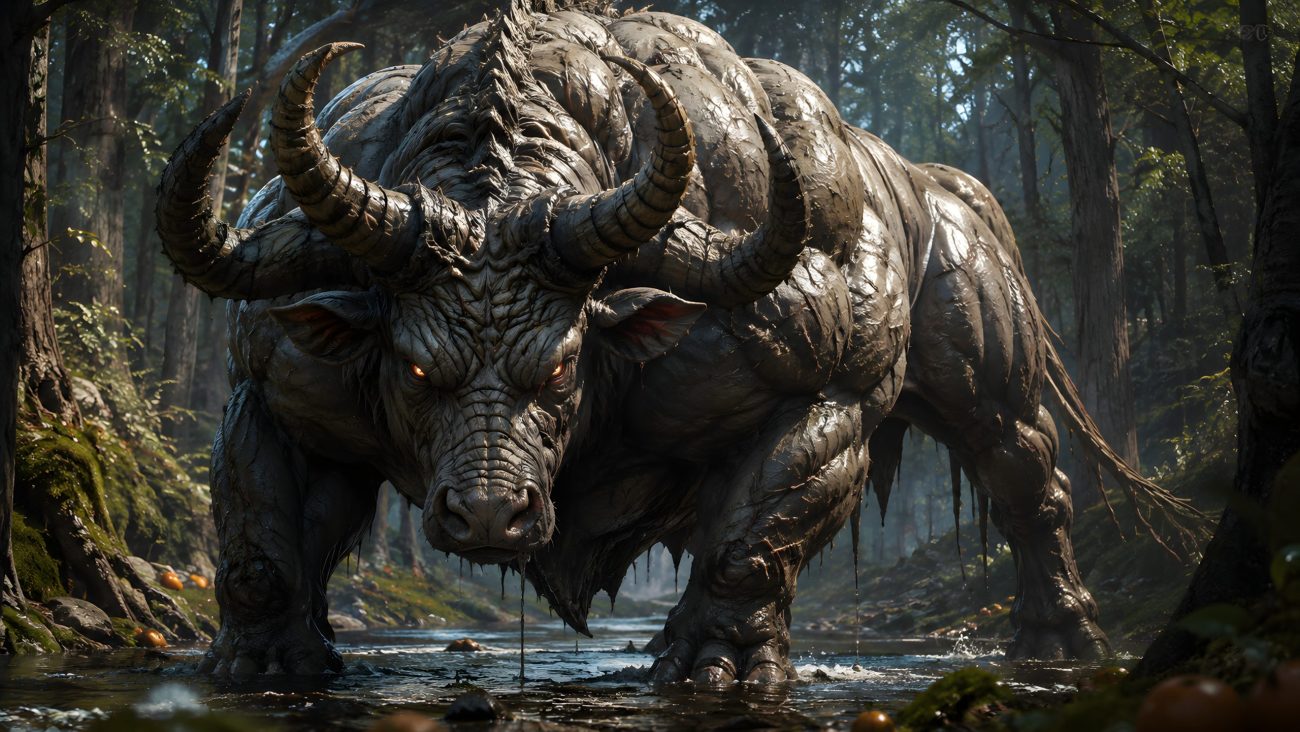
One Păl-raí-yûk killed by the Sky People had six legs: the hind legs were long, the forelegs were short, while the smaller middle legs hung from its abdomen. It had small eyes and a body covered in fine, dense, very dark fur like that of a shrew. The fur was longest around its feet. A pair of horns grew from its head, extending forward and outward before curving back.

Păl-raí-yûk were large and bulky creatures, yet they were said to be capable of lying upon grass without bending the stems. After death, however, their bodies became extraordinarily heavy and would sink into the ground unless they were supported. Killing one therefore required several hunters, who would hold the creature down with logs while smashing its head with clubs.

The last known Păl-raí-yûk was killed by a hunter after the creature attacked and ate his wife while she was fetching water from a lake.


Sources

Countess Sica. “Păl-raí-yûk.” A Book of Creatures. October 30, 2015. https://abookofcreatures.com/2015/10/30/pal-rai-yuk
Sobek

Tradition: Egyptian mythology
Alternative Names: Suchus, Souk
Category: Crocodile, Deity


The Myth

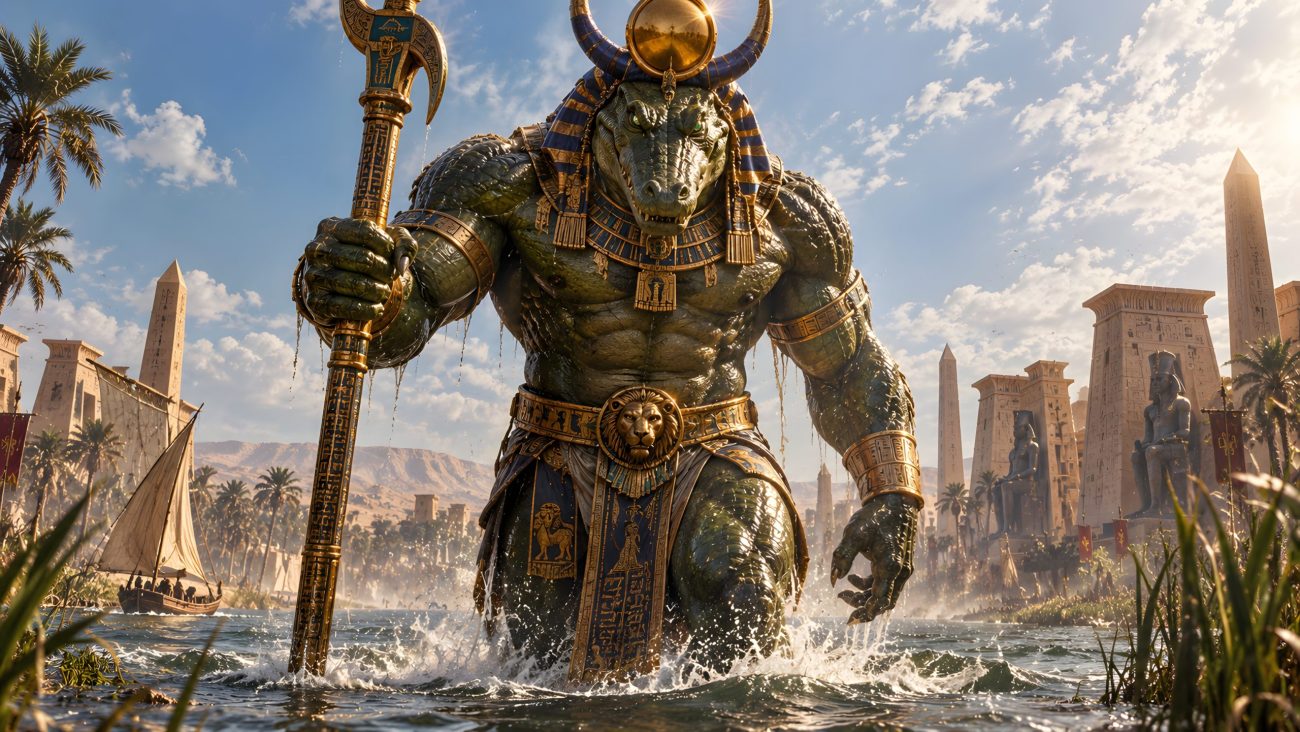
Sobek is an ancient Egyptian deity associated with the Nile crocodile. He is usually represented either as a crocodile or as a human figure with the head of a crocodile. He was associated with pharaonic power, fertility, military prowess, and protection, particularly protection from the dangers of the Nile.

Sobek was worshipped from the Old Kingdom through the Roman period, but became especially prominent during the Middle Kingdom. He was strongly associated with the Faiyum, where crocodiles were worshipped as living manifestations of the god. Crocodiles were raised at temples dedicated to Sobek, and after their deaths they were mummified and presented as sacred manifestations of the deity.

Sobek possessed a fierce and aggressive nature reflecting that of the crocodile. Some of his epithets describe him as one who loves robbery, one who eats while he mates, and one who is sharp of teeth. Yet this dangerous character was accompanied by a protective nature. His fierceness could be directed against evil while defending the innocent, making him a powerful protective deity.

Sobek also became connected with Horus and, through this association, with Osiris and Isis. In this role he was associated with the healing of the dead Osiris after his murder by Set. Some interpretations of Sobek’s name connect it with the idea of impregnating, while another interpretation associates it with uniting or restoring the dismembered limbs of Osiris. His association with healing strengthened his role as a protective deity.

In the Old Kingdom, Sobek already appeared in the Pyramid Texts. One spell praises the pharaoh as an incarnation of the crocodile god, presenting him in the form and power of Sobek. The god later became associated with the sun through his connection with Horus, eventually producing the composite deity Sobek-Ra, who combined the crocodile god with the great Egyptian sun god Ra.

The Faiyum was the principal center of Sobek’s worship. His most prominent form there was Sobek Shedety, the patron deity of Shedet, the region’s capital. Other communities worshipped localized forms of the god, and temples maintained priests whose duties included caring for sacred crocodiles and their bodies.

Sobek’s cult continued into the Ptolemaic and Roman periods. During this time, crocodiles were frequently preserved as mummies and offered at his cult centers. Some crocodile mummies were found with young crocodiles in their mouths or on their backs, emphasizing the protective and nurturing aspect of the otherwise fierce god.

Sobek was therefore a deity of contrasts: an aggressive crocodile god associated with violence, fertility, kingship, and military power, but also a healer and protector. His frightening nature was itself part of his protective power, allowing him to ward off evil and defend those under his protection.


Sources

“ Sobek.” Wikipedia: The Free Encyclopedia. Wikimedia Foundation. Accessed September 5, 2026. https://en.wikipedia.org/wiki/Sobek


Xochitonal

Tradition: Aztec mythology, Mexican Mythology
Alternative Names: Xochitónal
Category: Crocodile


The Myth

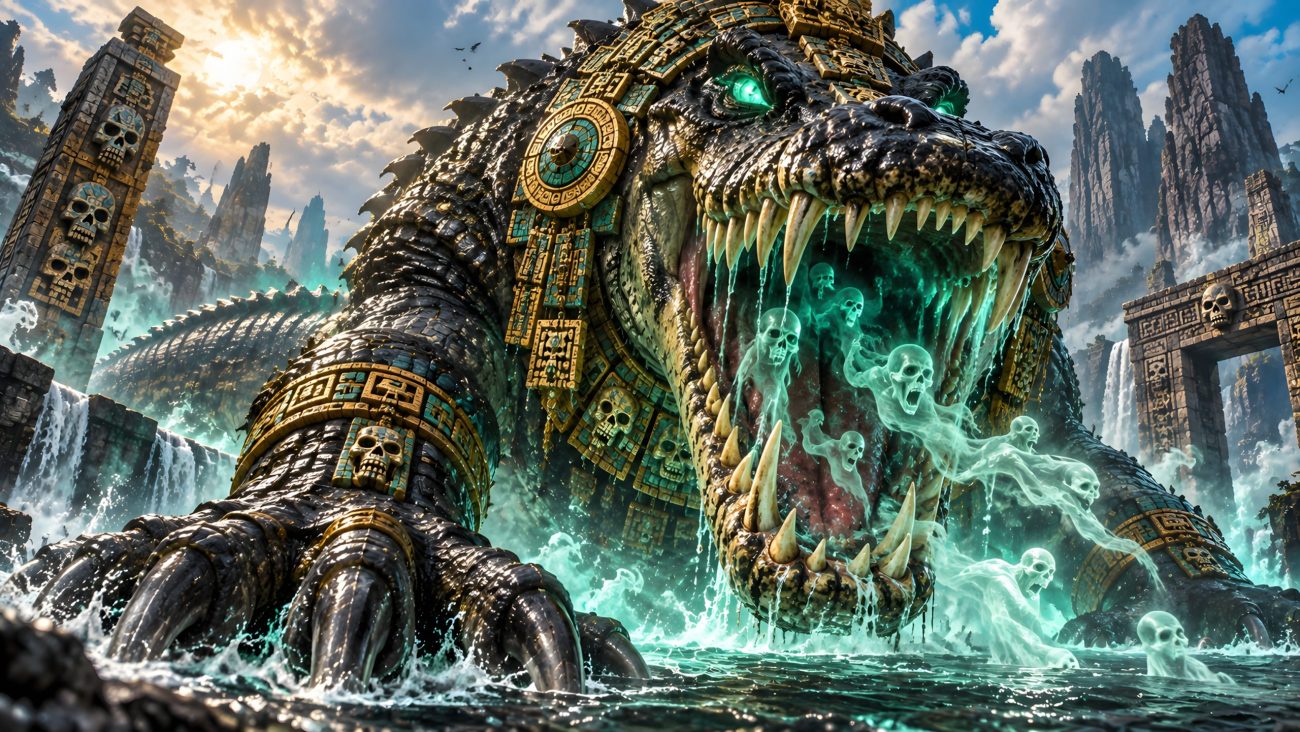
Xochitónal is a gigantic reptilian creature that guards one of the passages through which the souls of the dead must travel on their journey to Mictlan, the realm of the dead. It is described in different traditions as a gigantic iguana or lizard, while representations commonly give it the form of a caiman or alligator.

The creature is said to dwell in the black waters of Apanuiayo, an immense body of dark water that forms one of the obstacles confronting the dead. Xochitónal guards the passage across these waters and prevents the souls of the dead from reaching the other side. Souls must therefore evade or overcome the creature in order to continue their journey.

The journey begins with the dead person being given a sheaf of javelins so that the soul will not have to face the dangers of the Other-world completely defenseless. The spirit first passes between two enormous mountains that may fall together and crush it if it cannot escape them. A terrible serpent then blocks its path, and after overcoming this monster, the soul encounters the fierce Xochitónal.

After passing the waters guarded by Xochitónal, the journey is still far from complete. The hapless spirit must cross eight deserts and a corresponding number of mountains, while also enduring a whirlwind sharp as a sword that can cut through solid rocks.

Accompanied by the shade of its favorite dog, the exhausted soul continues through the Other-world and encounters further terrifying beings, including Izpuzteque, a demon with the backward-bent legs of a cock, and Nextepehua, the fiend who scatters clouds of ashes.

Eventually, after overcoming these many dangers, the soul reaches the gates of the Lord of the Dead, Mictlantecuhtli. There it pays reverence before him, and after completing the trials of the underworld, it is finally able to reach the realm of the dead and join those who have gone before.


Sources

“Xochitónal.” Wikipedia, la enciclopedia libre (Spanish Wikipedia). Wikimedia Foundation. Accessed September 5, 2026. https://es.wikipedia.org/wiki/Xochit%C3%B3nal

Spence, Lewis. The Myths of Mexico and Peru. London: George G. Harrap & Co., 1913.


Wabodame

Tradition: Papua New Guinea Mythology
Alternative Names: –
Category: Crocodile


The Myth

Wabodame was a famous old crocodile of enormous size who lived in the Binaturi River. The young crocodiles that lived there were said to bring parts of the people they caught to the old monster.

Wabodame was not merely a dangerous crocodile, however, but a powerful spirit associated with secret knowledge. When people wished to learn about hidden or secret matters, they would send a young boy who had not yet learned to be afraid to sleep in a place where Wabodame had previously slept, marked by the impression left by the crocodile’s body in the ground. During the boy’s sleep, the spirit of the crocodile would appear to him in a dream and give him the information that was required. When the boy awoke, he would tell the man who had sent him everything he had learned.

Eventually, Wabodame was shot and killed by a man from Dirimo who wanted to take revenge upon the whole people because of an injury he had suffered. After the crocodile had been killed, a boy was again sent to sleep in the place where it had rested. There, Wabodame’s spirit appeared to him and warned him that a great sickness was going to spread across the country.

The warning proved true. Men, women, and children began to die, and two people were sometimes buried in each grave. The people were forced to flee from their villages, and several tribes were entirely wiped out by the sickness.

Wabodame was also associated with sorcery and the supernatural killing of enemies. Sorcerers were said to appeal to the old crocodile when they wished to cause someone’s death. One method involved placing a croton twig in a creek and speaking a spell, causing the twig to transform into a crocodile that would seize the person whose name had been spoken.

Another method used the edible root called auhi to create a fictitious crocodile. A crocodile’s tooth was inserted into a suitable part of the root to represent its mouth, and medicine was spat onto it. The sorcerer then invoked Wabodame, saying, “Wabodame, you send devil belong you go catch that man,” and naming the intended victim.

The auhi was then placed in the river, where it transformed into a real crocodile. The crocodile went to the person named by the sorcerer, killed him, and brought his body back to the place. Afterwards, it returned to the form of an auhi.

When the sorcerer came back, he removed the crocodile tooth from the auhi and kept it, while the root itself was replanted in the garden. In some cases, the root would begin to grow again. Whenever this method was used, the auhi was taken from the same garden.


Sources

Landtman, Gunnar. The Kiwai Papuans of British New Guinea: A Nature-Born Instance of Rousseau’s Ideal Community. New York: Johnson Reprint Corp., 1970. https://archive.org/details/kiwaipapuansofbr0000land


Zhuhuai

Tradition: Chinese mythology
Alternative Names: –
Category: Cow


The Myth

The Zhuhuai is a strange man-eating beast said to inhabit North Peak Mountain, located two hundred li farther north. The mountain is covered with thorny orange trees, jujube trees, and hardwood trees.

The creature has the form of an ox, but possesses four horns, human-like eyes, and the ears of a pig. It is called the Zhuhuai.

The Zhuhuai makes a sound resembling the cry of a goose. Despite its ox-like appearance, it is a dangerous creature and is said to prey upon and devour human beings.


Sources

Strassberg, Richard E., ed. and trans. A Chinese Bestiary: Strange Creatures from the Guideways Through Mountains and Seas. Berkeley: University of California Press, 2002.


Zubro

Tradition: Czech Mythology, Polish Mythology
Alternative Names: Zubro
Category: Cow


The Myth

Most Zubros are said to live in Bohemia, though they are also found in Poland, where they are believed to be smaller and less powerful. Wherever it appears, the Zubro is known as a terrifying kind of wild bull.

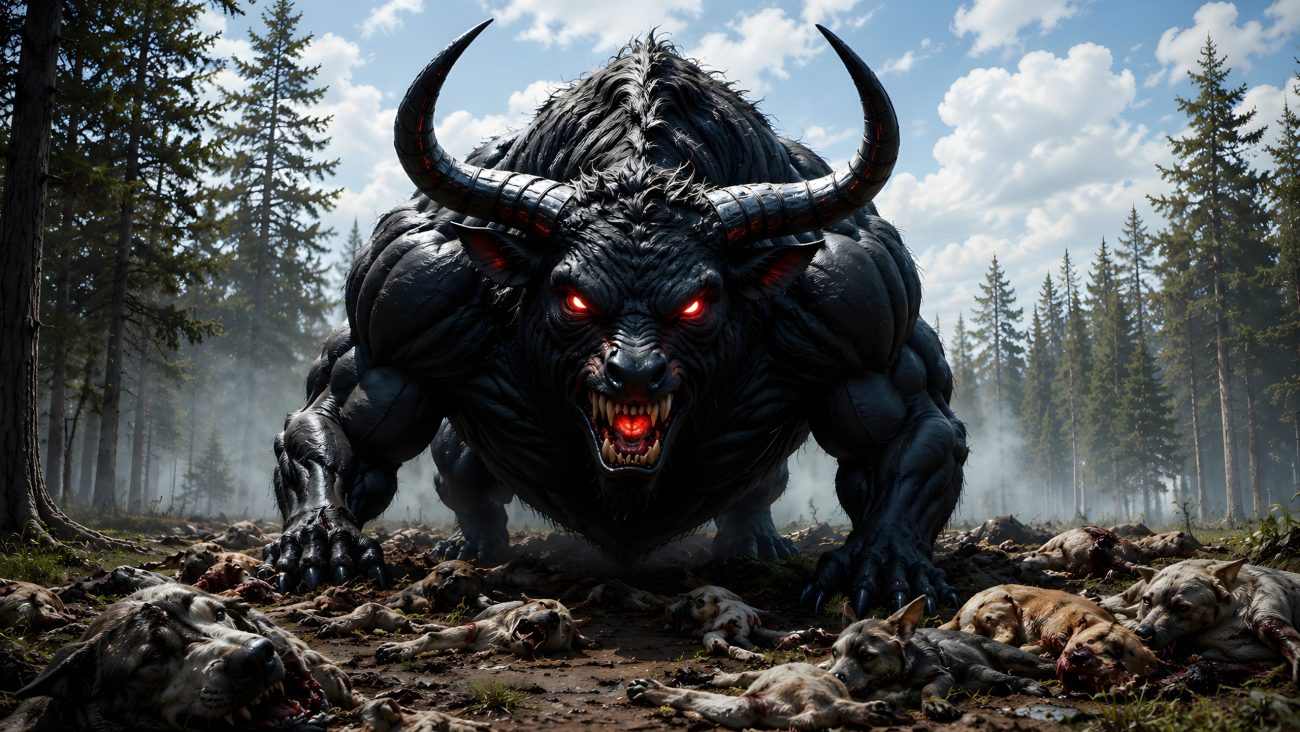
The Zubro is described as an enormous beast, reaching up to fifteen meters in length. Its hide is marked with dark brown and black coloring, and its horns can grow to a length of one and a half meters. The animal is swift and aggressive, and it can easily be driven into a state of uncontrollable fury.

When people attempt to hunt the Zubro, it does not flee helplessly. Instead, it defends itself with frightening intelligence. It blinds pursuing dogs by throwing its own dung at them. If it manages to seize a dog or a human, it hurls the victim into the air with its horns and catches them again as they fall, repeating this until the victim is dead.

Yet even such a creature can be defeated by cunning rather than strength. A skilled hunter first wears the Zubro down by driving it relentlessly with dogs. Once the animal is exhausted, the hunter positions himself beneath a tree with his spear. The enraged Zubro charges straight toward him, but the hunter hides behind the trunk. The beast thrusts its horns past the tree on both sides, and in that moment the hunter steps forward and kills it with a single thrust.


Sources

Van Maerlant, J. (2024). Der Naturen Bloeme (I. Biesheuvel, Trans.), p.74.


Zeekalf

Tradition: Dutch Mythology
Alternative Names: Zeekalf
Category: Cow


The Myth

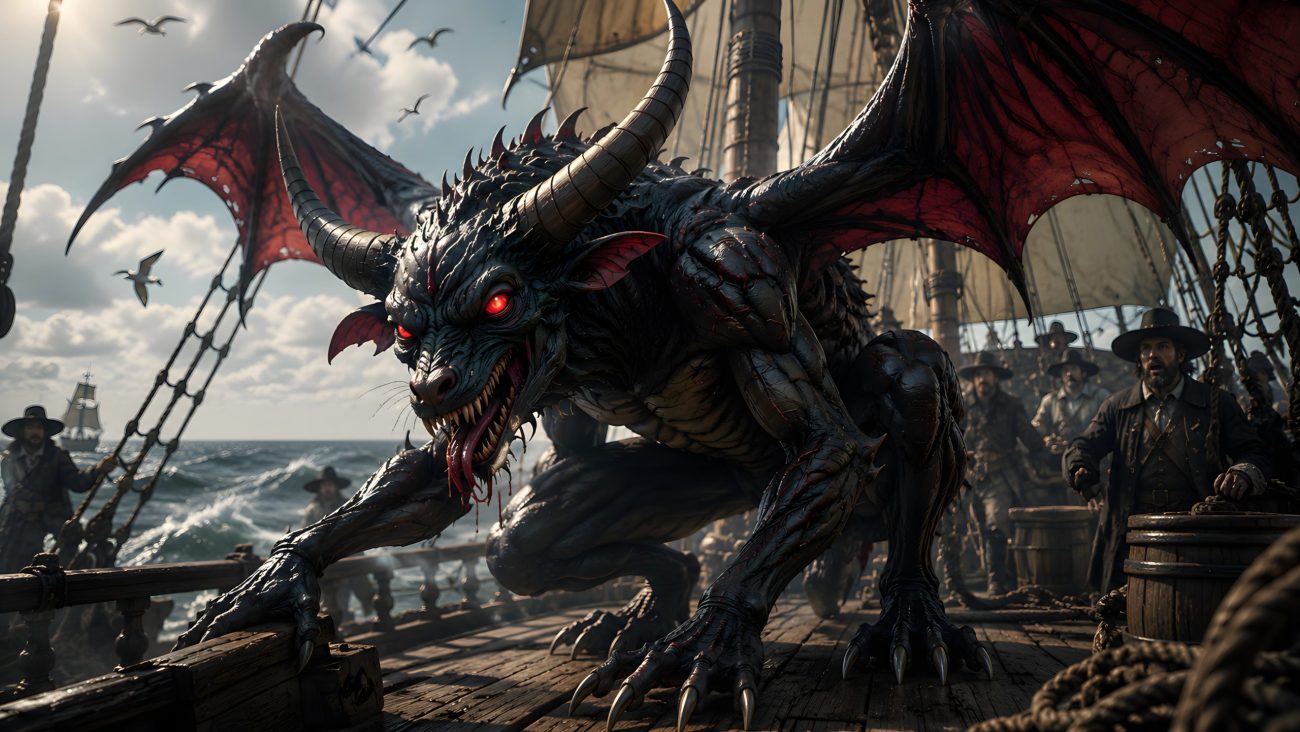
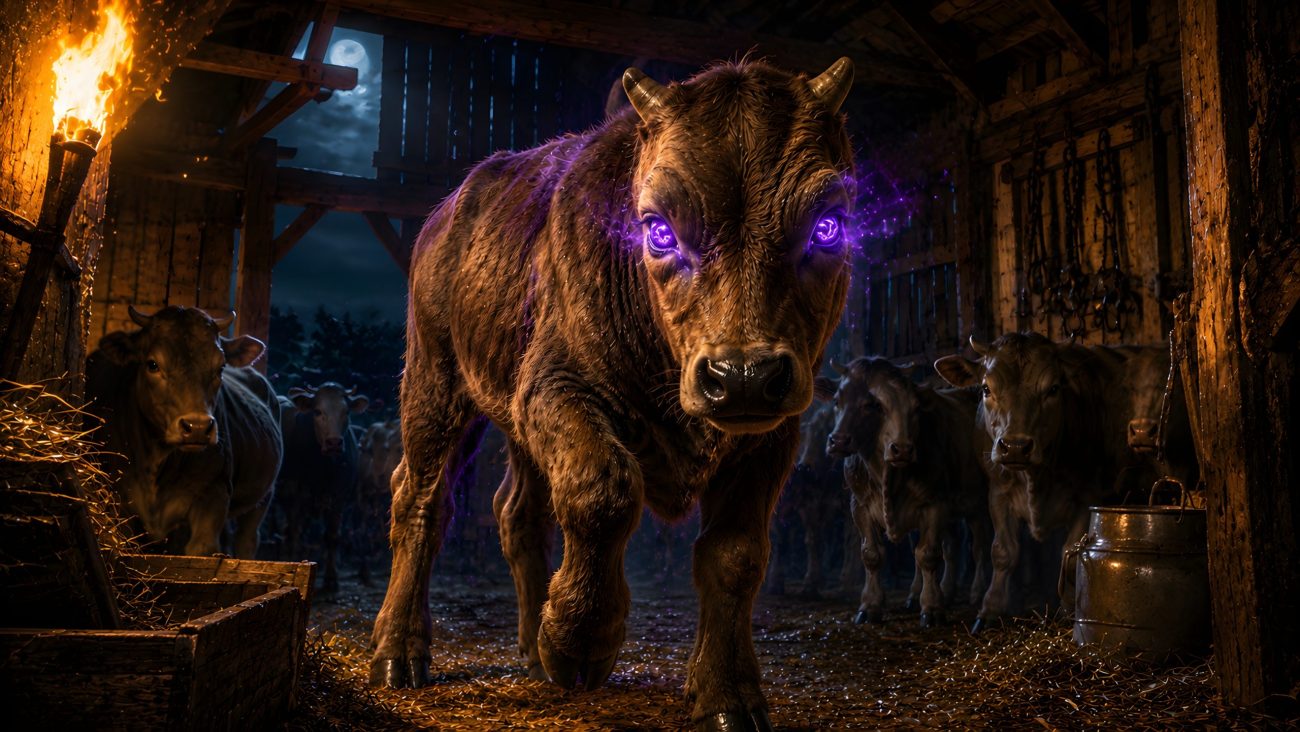
The Zeekalf is an enormous sea monster from the folklore of Harderwijk. It has fiery eyes, a drooling mouth, and legs resembling those of a bat.

Sailors who swear too much may cause the creature to appear aboard their ship. Once the Zeekalf has come aboard, however, there is a way to drive it away. If the sailors pray to God, the devilish creature will flee from them.


Sources

“Van aardmannetje tot zwarte juffer: Een lijst van Nederlandse en Vlaamse elfen en geesten.” Abe de Verteller. Accessed August 30, 2026. https://abedeverteller.nl/van-aardmannetje-tot-zwarte-juffer-een-lijst-van-nederlandse-en-vlaamse-elfen-en-geesten/


Zwergenkuh

Tradition: German Mythology
Alternative Names: Dwarf Cow
Category: Cow


The Myth

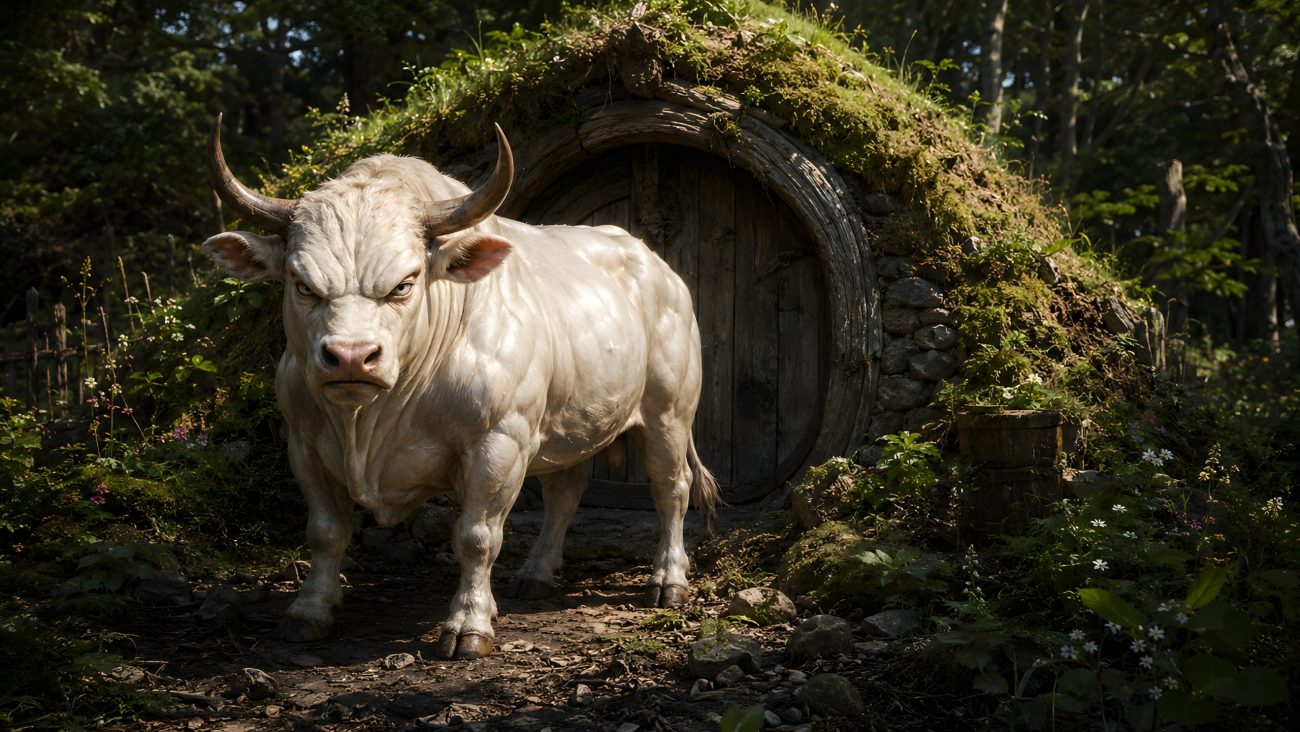
About half an hour from the village of Goldbeck, in the direction of Rinteln, there are caves in a mountain where dwarfs were once said to have lived. Near these caves stood a farmer’s farm, and his herd usually grazed in the area around them. The shepherd noticed that every morning a strange cow would join his animals. She was so smooth and beautiful that she seemed to glitter and shine like gold. Yet every evening, when the shepherd drove the herd home, the mysterious cow would suddenly disappear near the caves.

One evening, the shepherd told his master about the strange animal. The farmer replied, “For that they could surely give you a tip, since you drive their cow out to pasture with yours every day.” The dwarfs, who liked to remain invisibly in the farmer’s house, overheard what he had said.

The following morning, when the shepherd once again drove his herd past the dwarfs’ caves, he found a penny lying in front of one of them. From then on, a penny appeared there every day.

When the farmer heard about this, he said to the shepherd, “If they can do that, surely they can give you breakfast as well.” The next morning, when the shepherd passed the cave again, he found a pancake lying beside the penny. From that day onward, he found a pancake there as well.


Sources

Zaunert, Paul. “Die Zwergenkuh.” In Westfälische Sagen. 1927. Reproduced by SAGEN.at. (sagen.at)
https://www.sagen.at/texte/sagen/deutschland/nordrhein_westfalen/diezwergenkuh.html


Witch as a Calf

Tradition: German Mythology
Alternative Names: Witch as a Calf
Category: Cow


The Myth

In the Schöllang area of the Allgäu, a farmer was plagued by misfortune in his barn. His cows would not give milk, no matter how much he fed them, and one misfortune after another seemed to fall upon him. The farmer eventually confided his troubles to a man, who gave him strange advice. He told the farmer to get up at midnight and inspect the barn. A calf, he said, would be loose and running around among the other cattle. If the farmer found it, he should not hesitate to cut off both of its ears and then return to bed.

That night, the farmer went to the barn at midnight. Just as he had been told, he found a calf running freely among the other cattle. The farmer took a carving knife and cut off both of the calf’s ears. Having done what he had been instructed to do, he returned to bed without further investigation.

The following morning, the calf was standing unharmed in its usual place. There was nothing apparently wrong with it. But when the farmer looked around the barn, he noticed an old woman sitting in one of the corners. Her ears had been cut off.

The farmer immediately understood what had happened. He shouted, “There you have it!” and chased the old woman out of the stable. After this, the witchcraft that had plagued the farmer and his cattle ceased. His cows once again gave milk, and the farmer and his cattle were happy once more.


Sources

“Hexe als Kalb.” In Allgäuer Sagen, selected from K. A. Reiser’s Sagen, Gebräuche und Sprichwörter des Allgäus, by Hulda Eggart, no. 248, p. 259. Kempten and Munich, 1914. Reproduced by SAGEN.at. https://www.sagen.at/texte/sagen/deutschland/bayern/allgaeu/hexe_kalb.html


Yamiyo no Ushi-oni

Tradition: Japanese mythology
Alternative Names: 闇夜の牛鬼
Category: Cow


The Myth

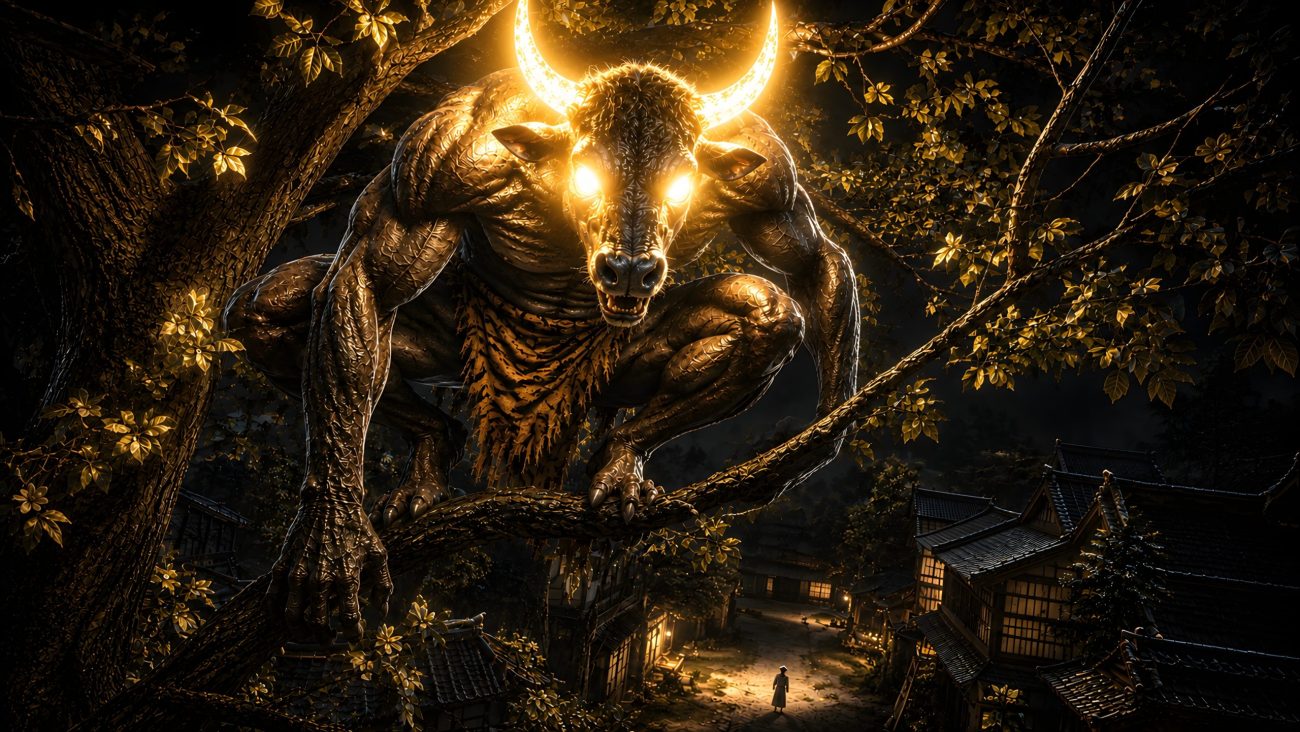
The Yamiyo no Ushi-oni is a strange yokai described in the Tamakushige. It has the head of a bull and the body of a human, with a tiger’s hide wrapped around its waist. Its face shines with an intense light that radiates outward, illuminating the darkness around it. In the tale, the creature is also able to perch high in the branches of a tree despite its large and powerful form.

The story takes place during the time when Ukita Naoie ruled Bizen Province. Kuroshima Sakon Nyūdō Munetsuna was a warrior from Kuroshima in Sanuki and was said to be a descendant of Tawara no Tōta Hidesato. Through circumstances of marriage and inheritance, Munetsuna came to succeed the household of Hatano and entered the service of Hoshiga Tōnai, the lord of Shūsō Castle in Bizen.

One night, Munetsuna was invited to the home of another retainer of Hoshiga Tōnai, Dokura Kamanosuke, where the two became absorbed in playing go. By the time they finished, it was already deep into the night. Around the hour of Ushi Mitsu, Munetsuna set out for home accompanied by his attendant, Mimizawa Riemon.

As they traveled along the road, they suddenly saw an extraordinarily bright light in the otherwise completely dark night. It was so brilliant that they could clearly see people’s faces and even the crests on their clothing. There was no fire nearby, and it was far too early for sunrise.

Wondering what could possibly be producing such light, Munetsuna looked around. About fifty ken ahead stood the residence of a samurai named Motoki Shichirō. From within its gate grew a large paulownia tree, and high among its branches was something that appeared to be a calf of about three years old—a large and powerful bull.

Its eyes shone like mirrors, while intense light also poured from its two raised horns, illuminating the surrounding area.

The creature’s head pointed toward the east and its tail toward the west. Despite its enormous and powerful appearance, it was crouched among the branches of the paulownia, resting upon one of the thinnest branches with the lightness of a dog or a butterfly.

Munetsuna, being a fearless man, was not frightened. Instead, he approached the gate and declared that this must be the Ushi-oni he had heard about. He considered himself fortunate to have encountered such a strange monster and decided that he would see exactly what it was.

The monster suddenly leapt toward him.

Munetsuna, who was highly skilled in martial arts, quickly grappled with the creature and forced it to the ground. He then drove his sword through its body.

At that very moment, the Ushi-oni vanished without leaving a trace. The brilliant light disappeared with it, and the surroundings immediately returned to darkness.

Munetsuna then turned around and discovered that his attendant, Riemon, had seen the light and had fainted from terror. Munetsuna gave him medicine and cared for him until he regained consciousness, after which the two continued back to their residence.

The strange events were connected to the household of Motoki Shichirō, whose property the Ushi-oni had appeared beside. Motoki had recently become deeply interested in a form of magic known as the Izuna technique. He had attempted to learn and practice the art himself, but had failed to complete it and eventually abandoned his efforts.

Afterward, strange supernatural events were said to occur continually within the Motoki household. On one occasion, a light appeared to walk through the air. On another, a severed human arm fell into the middle of a gathering. Strange noises caused the house to shake, while objects were mysteriously hurled through the air in phenomena associated with tengu.

These supernatural disturbances frightened the women and children of the household.

After Munetsuna defeated the Ushi-oni, however, the strange phenomena gradually ceased. The disturbances that had plagued the Motoki household fell silent, and before long the supernatural activity disappeared altogether.


Sources

Takahashi, Toshihiro. “闇夜の牛鬼 [やみのよ‐うしおに] (Yami no Yo Ushi-oni).” 新版TYZ 妖怪図鑑 (New TYZ Yokai Encyclopedia). June 30, 2018.
https://tyz-yokai.blog.jp/archives/1071487382.html