Gancanagh

Tradition: Irish Mythology
Alternative Names: Ganconer, Geancánach, Love-Talker
Category: Fairy


The Myth

The Gancanagh was a male fairy associated with seduction and dangerous love. He was described as a small fairy man, sometimes resembling a leprechaun, and in one tradition as a handsome, dark-eyed being with no shadow. A mist accompanied his approach, and he was especially known for appearing to women such as shepherdesses and milkmaids. His name was associated with the idea of a “love-talker,” reflecting his ability to charm and seduce women. Meeting him was considered extremely unlucky, and a man who wasted his money pursuing women could be said to have met a Gancanagh.

The Gancanagh could also appear as one of a larger community of fairy people. Some traditions described little men living in caves under the leadership of Captain Dearg, the Red Captain. In one tale, a Gancanagh abducts a human woman, and her lover attempts to rescue her on Halloween night. He catches her at a crossroads, but she becomes trapped between him and the fairies and dies. In another story, a group of Gancanagh play hurling and carry away a widow’s cow into their fairyland beneath Loughleagh. The widow manages to recover the animal, but when someone nearby speaks the name of God, the cow suddenly sinks into the earth and disappears forever.

The most dangerous form of the Gancanagh was the seductive fairy who left his victims wasting away after their encounter. His beautiful appearance and enchanting manner concealed a deadly nature, and the sign of the cross could drive him away, though sometimes only after he had already ensnared his victim. Other traditions give the Gancanagh a more mischievous role, similar to that of a leprechaun: one was captured and forced to reveal where his gold was hidden, only to deceive the person holding him. Gancanaghs could also appear as fairy warriors, with Captain Dearg and his supernatural followers riding through the air.


Sources

“Gancanagh.” Wikipedia: The Free Encyclopedia. Wikimedia Foundation. Accessed October 5, 2026.

Iele

Tradition: Romanian mythology
Alternative Names: Dânse, Drăgaice, Vâlve, Rusalii, Vântoase, Domniţe, Măiestre, Frumoase, Fetele Codrului, Împărătesele Văzduhului
Category: Fairy


The Myth

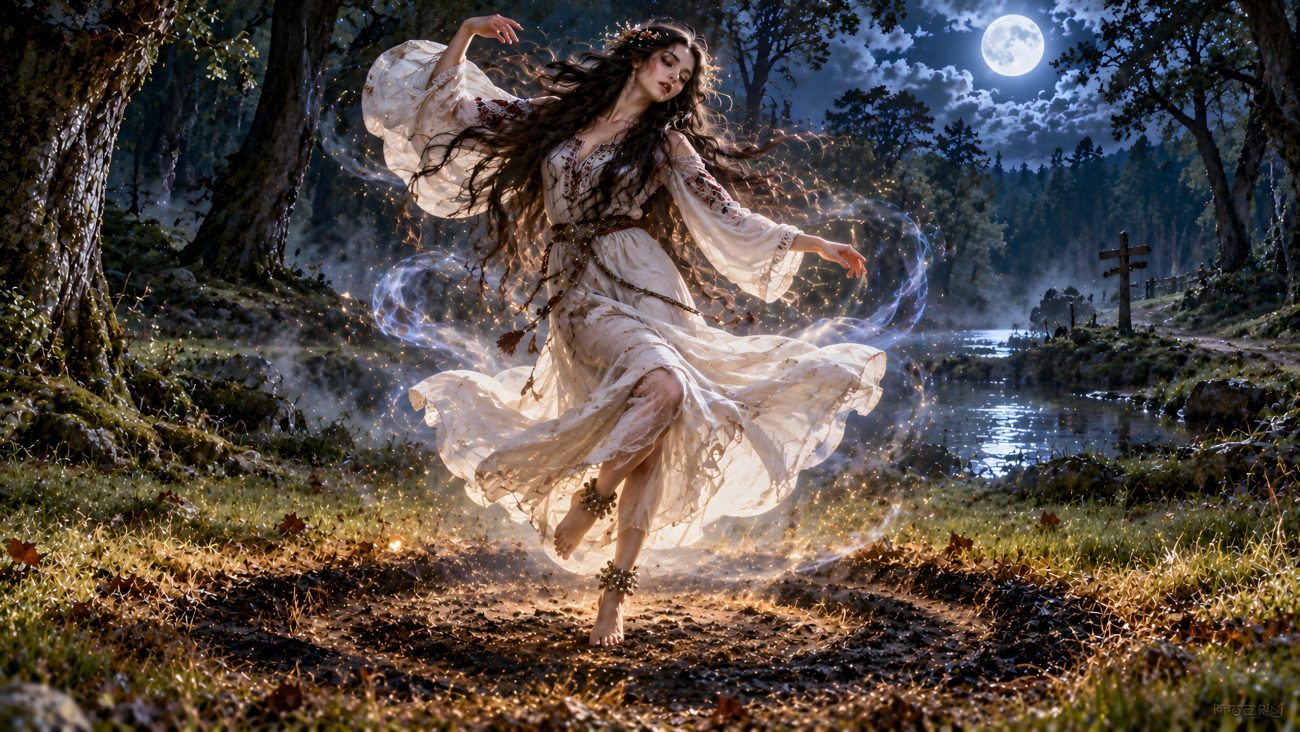
The Iele were beautiful feminine supernatural beings who appeared as young, voluptuous women with an enchanting presence. They could be visible or completely incorporeal, and were sometimes said to fly with wings and sometimes without them. They gathered in groups, most commonly three or seven, and could travel through the air at incredible speed, sometimes riding fiery chariots. They inhabited forests, caves, isolated mountain cliffs, springs, ponds, crossroads, and the open sky. At night, especially under the moon, they appeared in secluded places and danced in circles, often naked with their disheveled hair covering their bodies, bells around their ankles and candles in their hands. Their voices and music were extraordinarily beautiful, and anyone who heard their songs could become enchanted. The places where they danced were left scorched, with blackened ground and withered or burned vegetation.

The Iele were not necessarily evil, but they were proud, dangerous, and easily angered. They punished anyone who watched them dancing, imitated their movements, disturbed their sacred places, slept beneath trees belonging to them, or drank from their springs and wells. Those who refused an invitation to dance could suffer terrible supernatural punishment, while someone who accidentally heard their songs could lose the ability to speak. A person caught watching the Iele dance might be surrounded by their frantic Hora until he fell into sleep and delirium, after which the fairies would carry him away and he might disappear forever. Their beautiful voices could lure people like the songs of sirens, while their dancing could leave a victim confused, entranced, or driven into madness. In some traditions they were also spirits of vengeance, acting on behalf of God or the Devil and forcing those they were sent against into the center of their dance until the victim died from madness or torment.

The Iele could be appeased by respecting the days dedicated to them, particularly the festivals associated with Rusaliile. Those who worked when such days were supposed to be kept sacred risked their anger, which could bring vertigo, paralysis, mysterious deaths, hail, floods, withered trees, or fires. People protected themselves with garlic and mugwort worn on the body or hung from their clothing, while other protective customs included displaying a horse’s skull outside the house. The most important defense was the ritual dancing of the Călușari, whose movements were believed to protect people from the power of the Iele. In this way, the Iele remained both beautiful and dangerous beings of the Romanian landscape: enchanting spirits of the night who could grant no simple distinction between benevolent fairy and terrifying supernatural avenger.


Sources

“Iele.” Wikipedia: The Free Encyclopedia. Wikimedia Foundation. Accessed October 5, 2026. https://en.wikipedia.org/wiki/Iele

Fausserole

Tradition: French Mythology
Alternative Names: Fausserole
Category: Fairy


The Myth

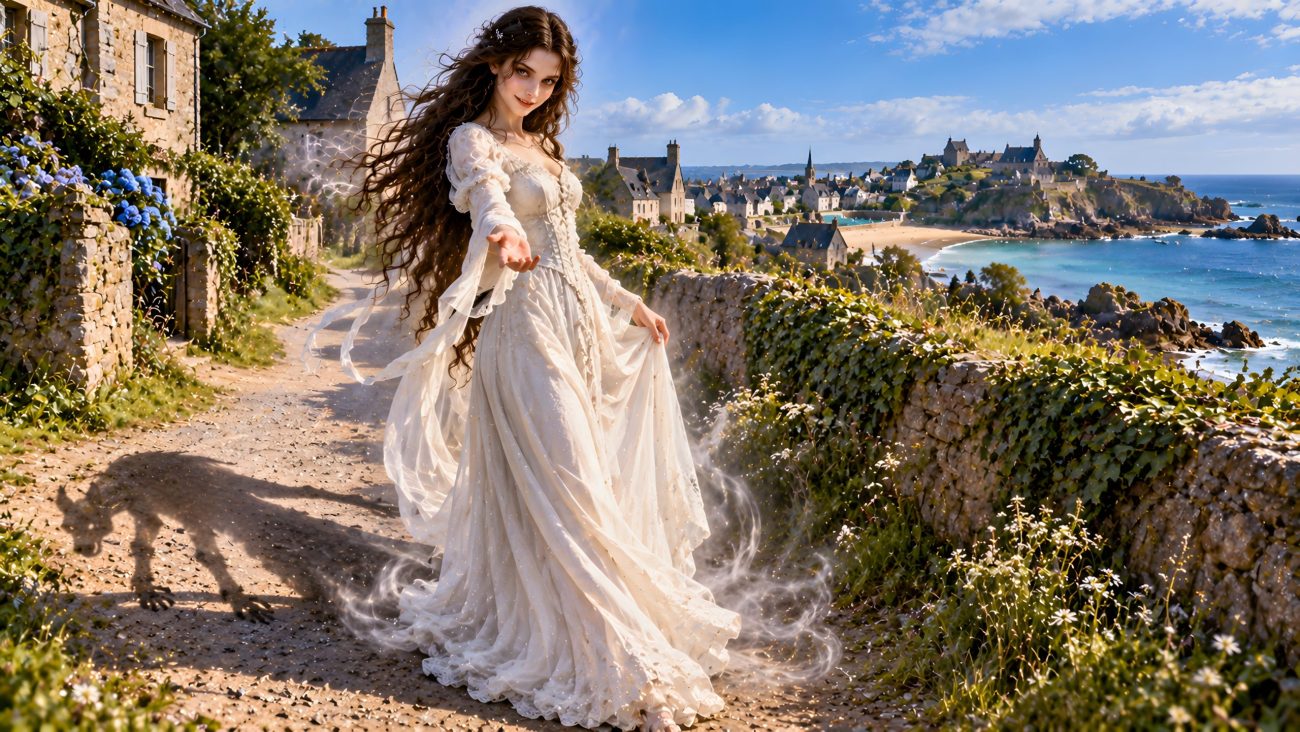
The Fausserole was a malevolent supernatural creature associated with Saint-Cast in Brittany. It was said to take the form of a dog or a calf and to attack people by knocking them over. The creature was blamed for an incident in 1832 when it allegedly knocked down the rector of the village church. A place called La Fausserole still carried the creature’s name, although the tradition does not make clear whether the beast took its name from the place or the place from the beast.

The Fausserole was also described as a lutin capable of changing its form. In another tradition, it was a beautiful young woman dressed in white, said to have been banished from the fairy realm because of her wickedness. She wandered from village to village, making herself beloved by the people around her and seeking a husband. Once she succeeded in marrying, however, her true nature was revealed: she killed her husband by absorbing his vital essence.

The Fausserole therefore appeared in several frightening forms, from an animal-like creature that violently knocked people down to a beautiful fairy who concealed her murderous nature beneath an innocent appearance. Its ability to change form made it particularly dangerous, allowing the creature to disguise its malevolent nature until its victim was unable to escape.


Sources

“Fausserole.” Wikipédia, l’encyclopédie libre (French Wikipedia). Wikimedia Foundation. Accessed October 5, 2026. Wikipedia
https://fr.wikipedia.org/wiki/Fausserole


Pie-Pie-Van-Van

Tradition: French Mythology
Alternative Names: Pie-Pie-Van-Van
Category: Gnome


The Myth

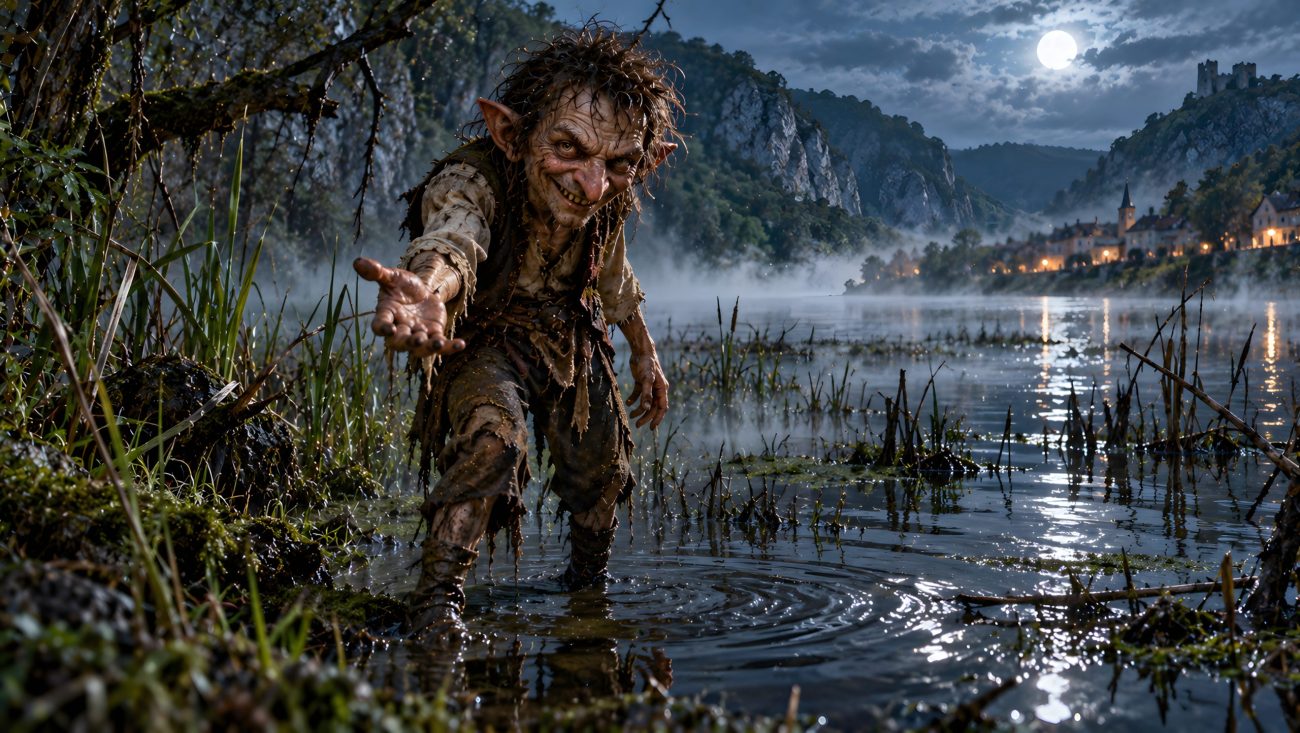
The Pie-Pie-Van-Van were horrible malevolent lutins said to inhabit the valley of the Meuse, particularly between Bogny-sur-Meuse and Braux. They were associated with the waters and marshes of the valley and were feared for their habit of luring travelers into the water. Once a person had been drawn into their reach, the lutins would drown them and then mock their victim by dancing upon the corpse.

Their danger was especially feared by travelers who wandered near the water. One miserly young man known as Bayeux was lured by the Pie-Pie-Van-Van into a marsh. He managed to escape only after crying out desperately for help. A blacksmith from Braux also encountered the creatures and succeeded in escaping them by covering his face.

The Pie-Pie-Van-Van were therefore remembered as dangerous little spirits of the Meuse Valley, whose apparent playfulness concealed a deadly purpose. They used the landscape itself—its waters and marshes—to trap unsuspecting people before turning their deaths into a grotesque spectacle.


Sources

“Pie-Pie-Van-Van.” Wikipédia, l’encyclopédie libre (French Wikipedia). Wikimedia Foundation. Accessed October 5, 2026. https://fr.wikipedia.org/wiki/Pie-Pie-Van-Van


Oriande

Tradition: French Mythology
Alternative Names: Oriande of Rosefleur
Category: Fairy


The Myth

Oriande was a powerful fairy who took the abandoned child Maugis, son of Beuves d’Aigremont, under her protection. After Maugis had been abducted by Sorgalant and later found by Oriande, she raised him at Rosefleur, or Rocheflor, near Mongibel on Mount Etna in Sicily. She became his guardian and guide, nurturing him until he was ready to enter the world of heroic adventure.

When Maugis had grown, Oriande set him a great trial to prove his abilities and establish his status as a true hero. She commanded him to free the miraculous horse Bayard, which was imprisoned beneath the volcanic island of Bocan, or Boucam, traditionally associated with the Lipari Islands. Maugis succeeded in overcoming the supernatural challenge and released the extraordinary horse from its underground prison.


Sources

“Oriande.” Wikipédia, l’encyclopédie libre (French Wikipedia). Wikimedia Foundation. Accessed October 5, 2026. Wikipedia
https://fr.wikipedia.org/wiki/Oriande


Alvas

Tradition: Icelandic Mythology, Norwegian Mythology, Swedish Mythology
Alternative Names: Álfar, Álfr, Alv, Ælfur, Ljósálfar, Dökkálfar, Svartálfar
Category: Elf


The Myth

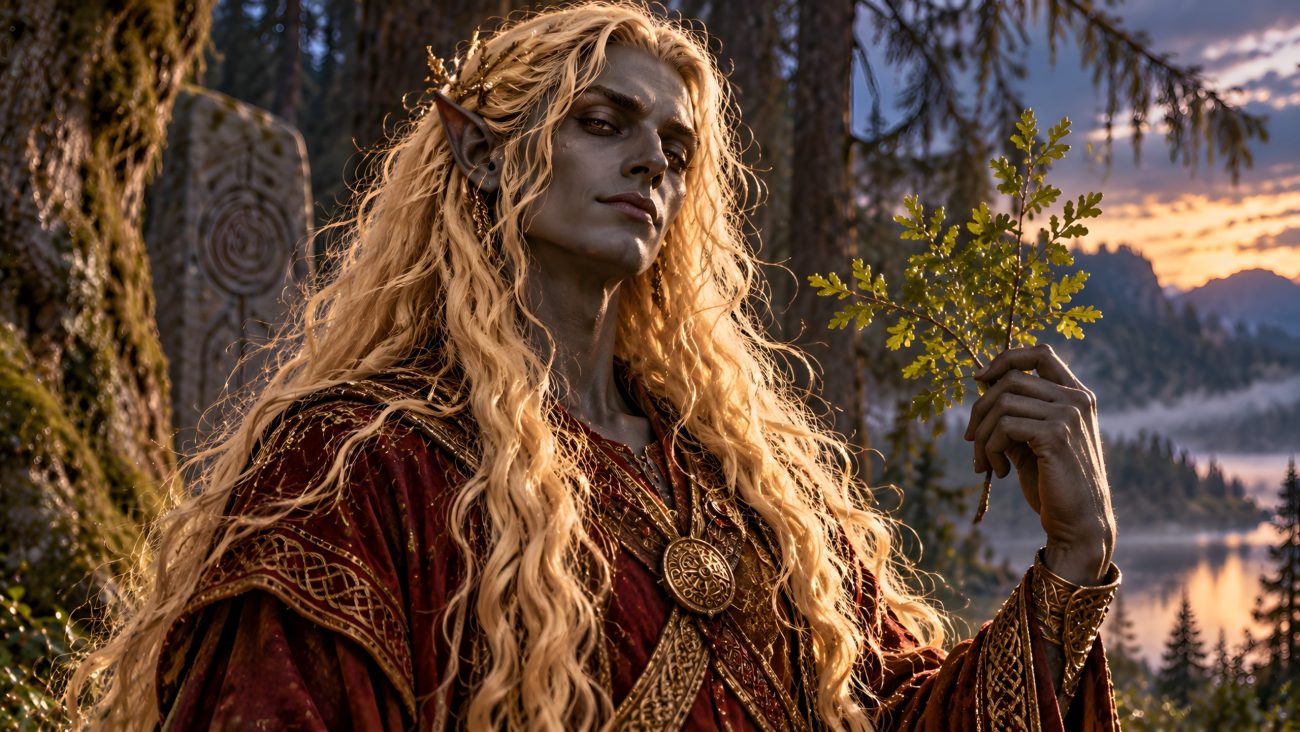
The Alvas were lower nature spirits of Scandinavian mythology and were regarded as the original beings behind the later tradition of elves. Their name appears in several Scandinavian forms: Ælfur in Icelandic, Álfar in Old Norse, Álvar in Swedish, and Alv in Norwegian. They were supernatural beings connected with nature, fertility, and the unseen world. The tradition also distinguished different kinds of elves, including the luminous Ljósálfar and the dark Dökkálfar or Svartálfar.

In the Elder Edda, the elves are presented as a distinct supernatural group alongside the Æsir, although the traditions sometimes blur the boundary between elves and dwarves. The distinction between light and dark elves gives the Alvas a divided nature: the Ljósálfar are associated with light, while the Dökkálfar and Svartálfar belong to the darker side of the supernatural world. The elves therefore occupied an important place among the various non-human beings of the Norse cosmos.

The Alvas were also associated with fertility and received their own cult in Scandinavian tradition. In the Elder Edda, the smith Völundr is called the “prince of the elves,” showing that the elves could possess their own hierarchy and prominent supernatural figures. They were consequently not simply small magical creatures, but a broader class of nature spirits inhabiting the supernatural world alongside gods, dwarves, and other beings.


Sources

“Alv.” New Bestiary (Bestiary.us). Accessed October 5, 2026.
https://www.bestiary.us/alv


Boggart

Tradition: English Mythology
Alternative Names: Boggard, Baggard, Bogle, Buggerd, Boggert
Category: Goblin


The Myth

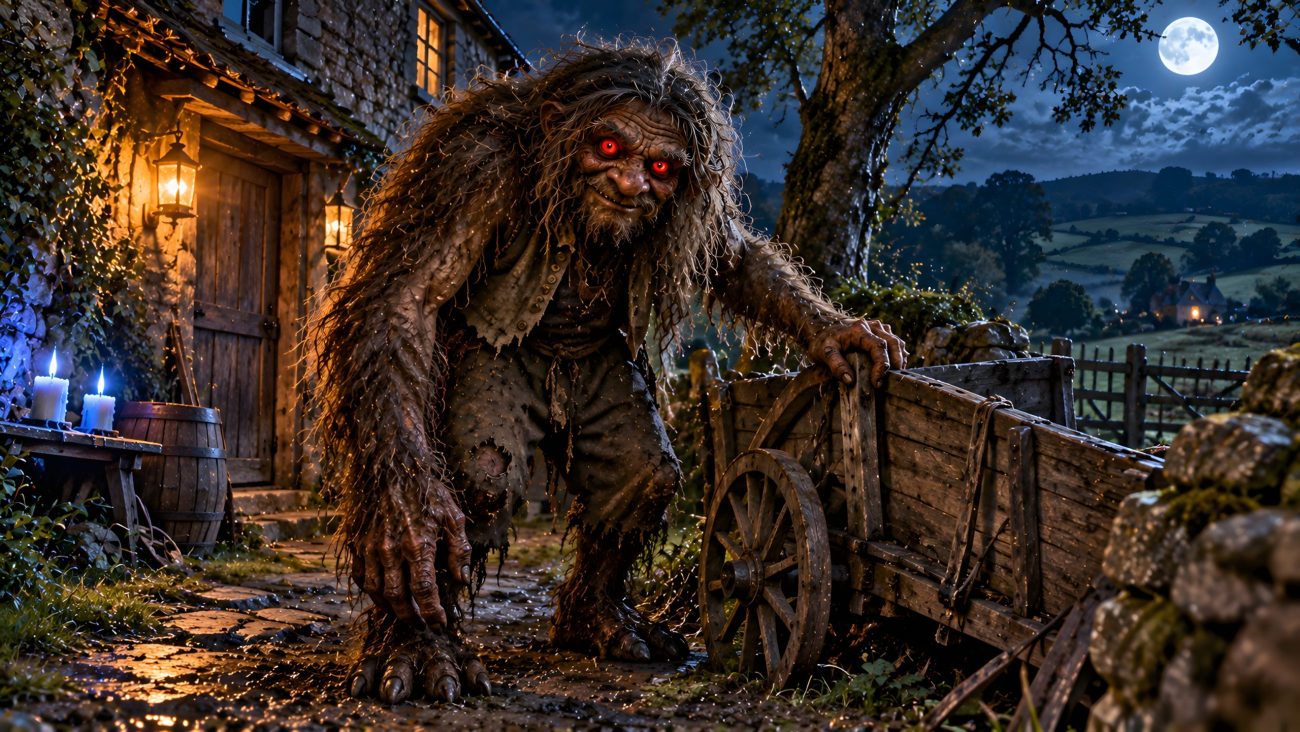
A boggart is a solitary supernatural being whose appearance varies greatly from place to place. Many are described as squat, hairy, ugly humanoids with uncouth or bestial features, sometimes possessing enormous arms and great physical strength. Others take entirely animal-like forms. The Boggart of Longar Hede in Yorkshire was said to be the size of a calf, covered in long shaggy hair, with enormous saucer-like eyes and a long chain trailing behind it that sounded like baying hounds. The boggart of Hackensall Hall in Lancashire appeared as a huge horse, while another Lancashire boggart called Nut-Nan was said to flit through hazel bushes with a shrill scream. Some could change their form into animals or more frightening creatures, while the Lancashire boggarts were said to have a master called Owd Hob, who appeared as a horned, cloven-hoofed, tailed creature resembling a satyr or devil.

Boggarts could inhabit houses, farms, roads, hills, caves, fields, and other isolated places, becoming spirits closely associated with the places where they lived. Household boggarts were particularly troublesome, disturbing families at night by making noises, banging doors, frightening horses, overturning carts, pulling away bedclothes, or crawling into people’s beds and pressing clammy hands against their faces. One Lancashire tradition warned that a household boggart should never be given a name, because naming it made the creature impossible to reason with and caused it to become uncontrollable and destructive. At Grizlehurst, an old couple claimed that their local boggart had been buried beneath an ash tree together with a cockerel pierced by a stake, yet it continued to cause disturbances. A farmer’s wife later heard doors banging and terrible laughter at night, then saw three blue-burning candles and a creature with red glowing eyes leaping outside the house. The following morning, cloven hoofprints were found around the building.

Boggarts could also be encountered in the countryside, where they sometimes behaved more like troublesome land spirits. In the tale of the Farmer and the Boggart, a squat, hairy, foul-smelling boggart inhabits a farmer’s land and agrees to divide each harvest with him. The boggart first chooses everything growing beneath the ground, so the farmer plants barley and leaves the creature with nothing but roots and stubble. The next year the boggart chooses everything above ground, so the farmer plants potatoes and again defeats him. Enraged by being tricked, the boggart eventually abandons the land. Another version has the two agreeing to harvest a wheat field from opposite sides, but the farmer secretly plants iron rods throughout the boggart’s portion. The creature’s scythe is repeatedly blunted against them, allowing the farmer to harvest almost the entire crop.


Sources

“Boggart.” Wikipedia: The Free Encyclopedia. Wikimedia Foundation. Accessed October 5, 2026. https://en.wikipedia.org/wiki/Boggart

Lovestruck Elf

Tradition: Luxembourgish Mythology
Alternative Names: The Light Elf of Junglinster
Category: Elf


The Myth

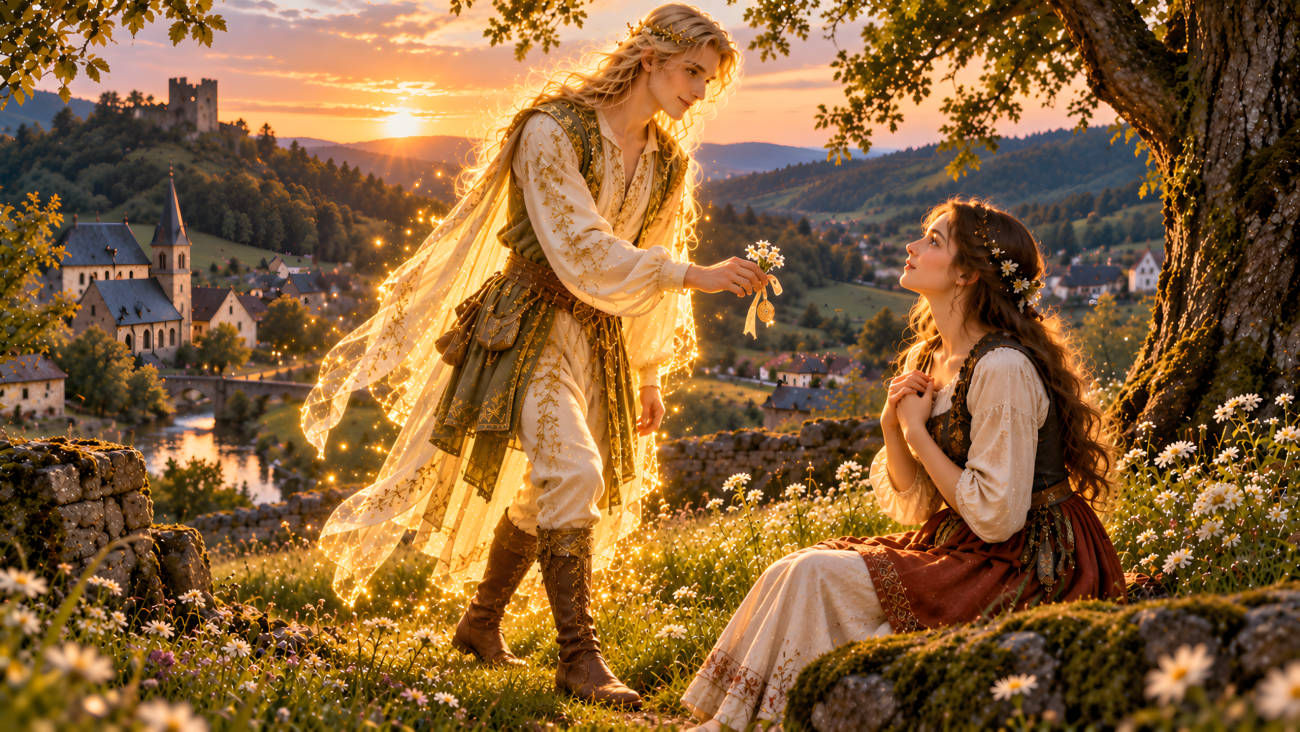
A Light Elf fell deeply in love with a young girl from Junglinster, and the two exchanged tokens of affection and lived together in the happiness of an innocent love. Their relationship eventually came to the attention of the local pastor, who regarded the elf as a heathen being. He strictly forbade the girl from having any further contact with him, threatening her with punishment both in this life and the next. The poor girl reluctantly promised to obey, but separating the lovers proved far more difficult than the pastor expected. The elf was not considered a devil or a spirit of Hell, so the usual means used against Satan and his servants seemed useless. Even locking the girl inside a convent would accomplish little, since elves were believed capable of slipping through the smallest keyholes.

The pastor therefore summoned an old and experienced shepherd and asked him for advice. The shepherd smiled and explained that the elf’s refined nature and delicacy had to be taken into account. He proposed that the girl prepare a small bread made from salt, lard, garlic, and sulfur. She was to eat the bread and, when the elf approached her again, discreetly press her flat hand against her body. The girl followed the shepherd’s instructions. That evening, the Light Elf appeared before his beloved with joy shining in his eyes, but as he approached her, she made the faintest sound.

The elf was immediately offended and fled in indignation. He never returned to the girl again, and their strange romance came to an end.


Sources

La Fontaine, Edmond de. Luxemburger Sagen und Legenden. Luxembourg: Jos. Beffort, 1882.


Fairy of Gutenberg

Tradition: Liechtenstein Mythology
Alternative Names: Fairy of Gutenberg
Category: Fairy


The Myth

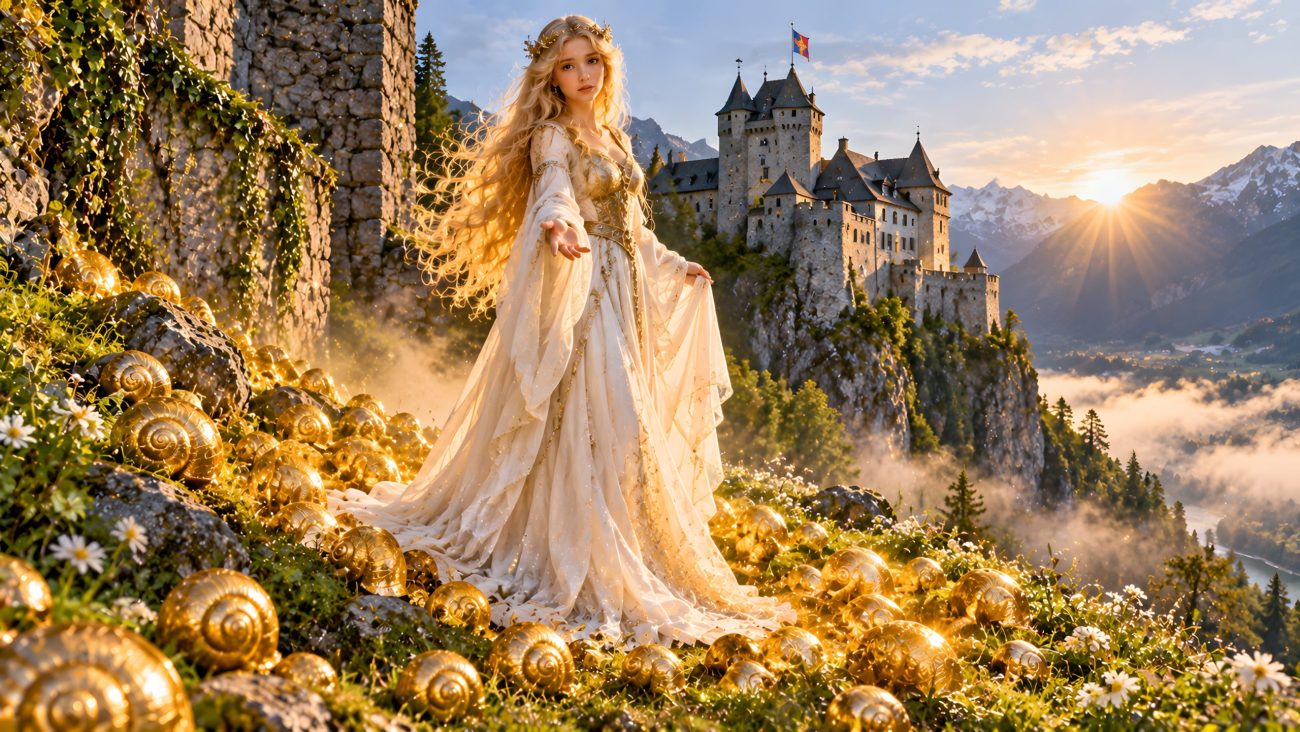
The Fairy of Gutenberg appears as an extraordinarily beautiful woman dressed in flowing white robes, with long blond hair and gentle, soulful eyes. She is an enchanted princess who has been trapped for hundreds of years and is bound to a treasure hidden near Gutenberg Castle. Every hundred years, on a particular day, she is allowed to return to the earthly world with her treasure, but she must remain there guarding it until the time passes.

One morning at sunrise, a peasant boy walking past Gutenberg Castle notices a dazzling gleam above the castle wall. Climbing the slope, he discovers countless snail shells scattered through the grass, but these are no ordinary shells: they are made entirely of gold. As he admires the treasure, the fairy appears and tells him that he can gain both her freedom and the treasure if he has enough courage. He must take her in his arms and swing her around three times without speaking or letting go. The boy eagerly agrees. He succeeds with the first turn and then the second, while the fairy sighs with growing happiness. During the third and final turn, however, he suddenly feels cold snakes in his hands. Horrified, he cries out and releases her. The snakes vanish, leaving his hands empty.

The boy has failed at the final moment. The fairy mourns that she must now guard Gutenberg’s treasure for another hundred years, and she disappears into the morning sunlight like mist. At the same instant, the golden treasure vanishes, leaving only ordinary snail shells scattered through the grass. The boy searches through the undergrowth but finds nothing and eventually returns to the road without the fortune he had imagined would buy him a farm, cows, horses, and an alpine pasture. Yet the encounter leaves him wondering whether another opportunity might await someone who passes the castle again a century later.


Sources

Dino Larese. “Die Fee von Gutenberg.” In Liechtensteiner Sagen. Basel, 1970, p. 52. Reproduced by SAGEN.at. https://www.sagen.at/texte/sagen/liechtenstein/larese/fee_gutenberg.html


Elf of Sterpenich

Tradition: Luxembourgish Mythology
Alternative Names: Wichtelchen of Sterpenich, Elf of Sterpenich
Category: Elf, Dwarf


The Myth

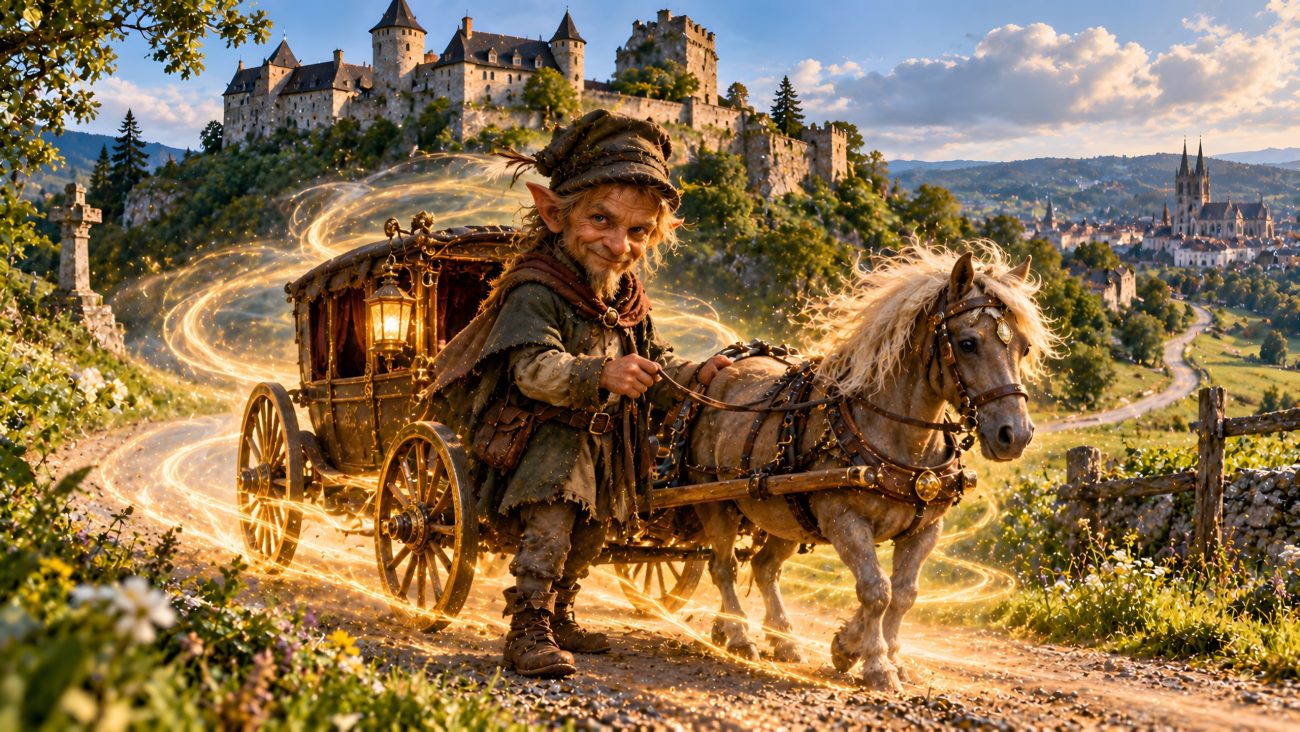
The Elf of Sterpenich was a small supernatural being who appeared to a poor serf near the castle of Sterpenich. In ancient times, the village did not yet exist and only a castle stood there, inhabited by a cruel nobleman who spent his days thinking of ways to torment his impoverished subjects. One day, the nobleman ordered one of his serfs to carry a letter to Metz and return with the answer within thirteen hours, before sunset. The task seemed completely impossible, but terrified of immediate punishment, the poor man set out at once. Beyond the first hill, however, he encountered an elf waiting with a small carriage and a team of horses.

The elf took the serf into his carriage and drove him to Metz and back with incredible speed, allowing him to complete the impossible journey. When they reached the castle again, the elf gave the serf a final message for his cruel master: he was to deliver the requested answer, but also tell the nobleman that the elf himself would come that very day to collect him and carry him into eternity. The serf repeated the message exactly as instructed. When the lord heard the elf’s warning, he cried out in terror, asking whether he was going to die, and immediately collapsed and died.

Afterward, the name Sterpenich remained attached to the castle and later to the village that grew around it. The little elf therefore became part of the legend explaining the place’s name, appearing as a mysterious supernatural messenger who punishes the cruel lord while rescuing the helpless servant from an impossible task.


Sources

“Das Wichtlein von Sterpenich.” SAGEN.at – Traditionelle Sagen aus Luxemburg. Reproduced by SAGEN.at.
https://www.sagen.at/texte/sagen/luxemburg/Wichtlein_Sterpenich.html