Elf of Sterpenich

Tradition: Luxembourgish Mythology
Alternative Names: Wichtelchen of Sterpenich, Elf of Sterpenich
Category: Elf, Dwarf


The Myth

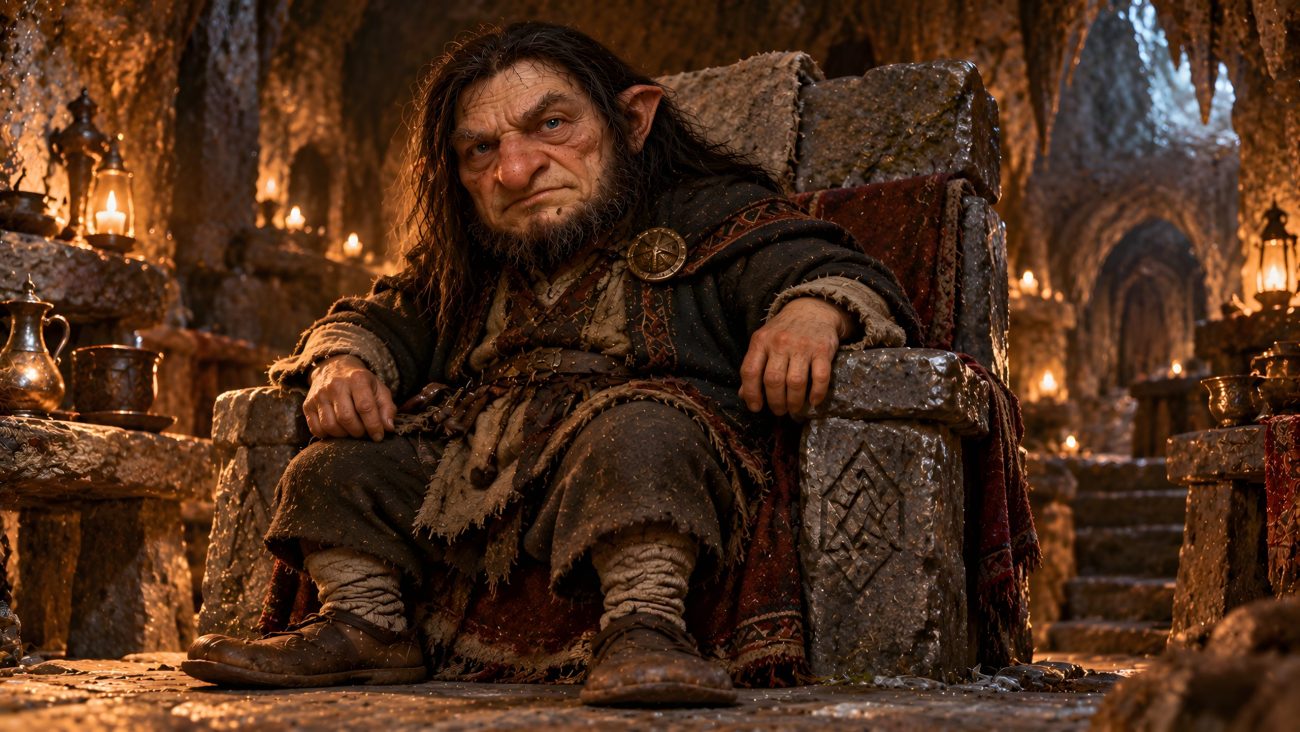
The Elf of Sterpenich was a small supernatural being who appeared to a poor serf near the castle of Sterpenich. In ancient times, the village did not yet exist and only a castle stood there, inhabited by a cruel nobleman who spent his days thinking of ways to torment his impoverished subjects. One day, the nobleman ordered one of his serfs to carry a letter to Metz and return with the answer within thirteen hours, before sunset. The task seemed completely impossible, but terrified of immediate punishment, the poor man set out at once. Beyond the first hill, however, he encountered an elf waiting with a small carriage and a team of horses.

The elf took the serf into his carriage and drove him to Metz and back with incredible speed, allowing him to complete the impossible journey. When they reached the castle again, the elf gave the serf a final message for his cruel master: he was to deliver the requested answer, but also tell the nobleman that the elf himself would come that very day to collect him and carry him into eternity. The serf repeated the message exactly as instructed. When the lord heard the elf’s warning, he cried out in terror, asking whether he was going to die, and immediately collapsed and died.

Afterward, the name Sterpenich remained attached to the castle and later to the village that grew around it. The little elf therefore became part of the legend explaining the place’s name, appearing as a mysterious supernatural messenger who punishes the cruel lord while rescuing the helpless servant from an impossible task.


Sources

“Das Wichtlein von Sterpenich.” SAGEN.at – Traditionelle Sagen aus Luxemburg. Reproduced by SAGEN.at.
https://www.sagen.at/texte/sagen/luxemburg/Wichtlein_Sterpenich.html

Dwarf of Sterpenich

Tradition: Luxembourgish Mythology
Alternative Names: Das Wichtlein zu Sterpenich
Category: Dwarf


The Myth

The dwarf of Sterpenich was a mysterious little being who appeared before a cruel knight who lived at Sterpenich many centuries ago. The knight was feared throughout the surrounding country for his cruelty. One day, he ordered one of his serfs to travel to Metz, twelve hours away, and return with an answer before the end of the day. He threatened the man with severe punishment if he failed. The poor peasant immediately set off at full speed, desperately trying to cover the enormous distance within the time allowed.

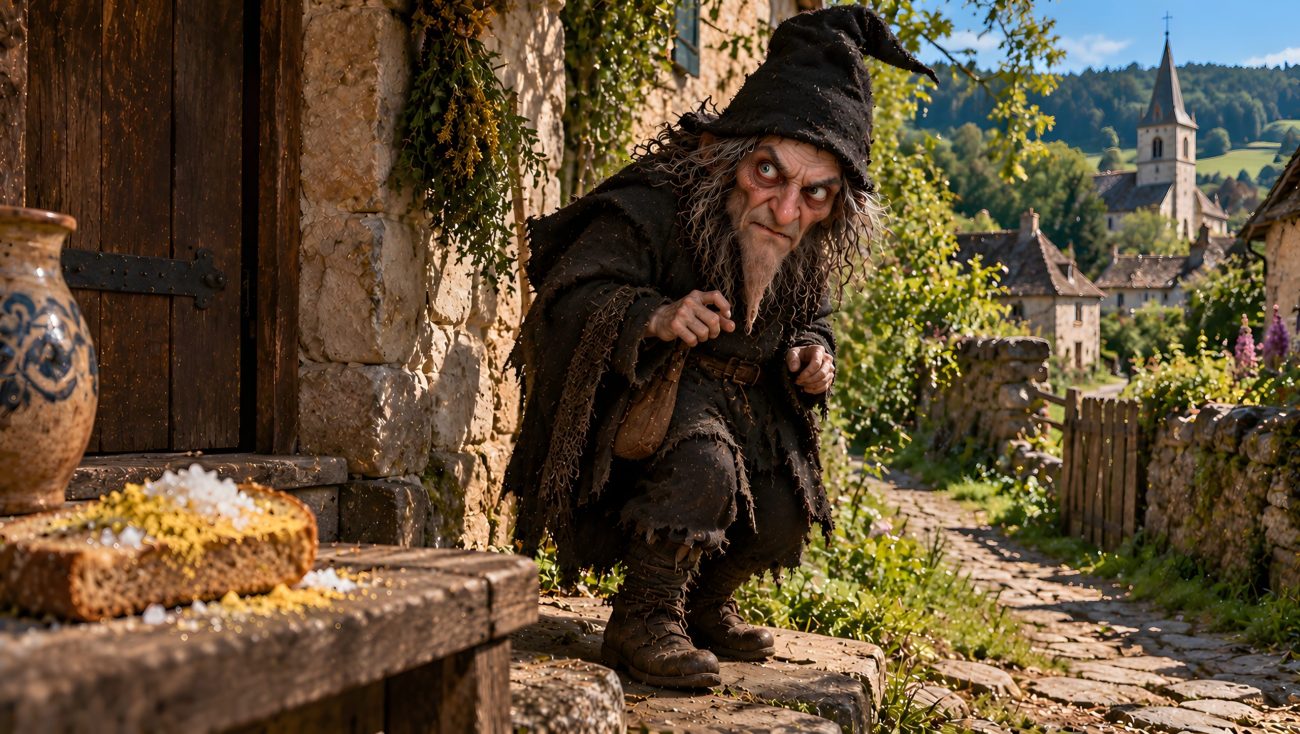
Before he reached the village, however, a dwarf appeared to him beside the road. The little being was sitting in a carriage drawn by three white horses and offered to take the peasant to Metz and back. The man gladly accepted, and the strange carriage carried him over the great distance so quickly that he was able to return and deliver the required answer to his master before sunset. The knight was astonished and demanded to know how his servant had managed to travel so far in such a short time. The peasant honestly told him about the dwarf and his miraculous carriage, then added that the dwarf had said he would soon return with another carriage to take the knight to his final dwelling.

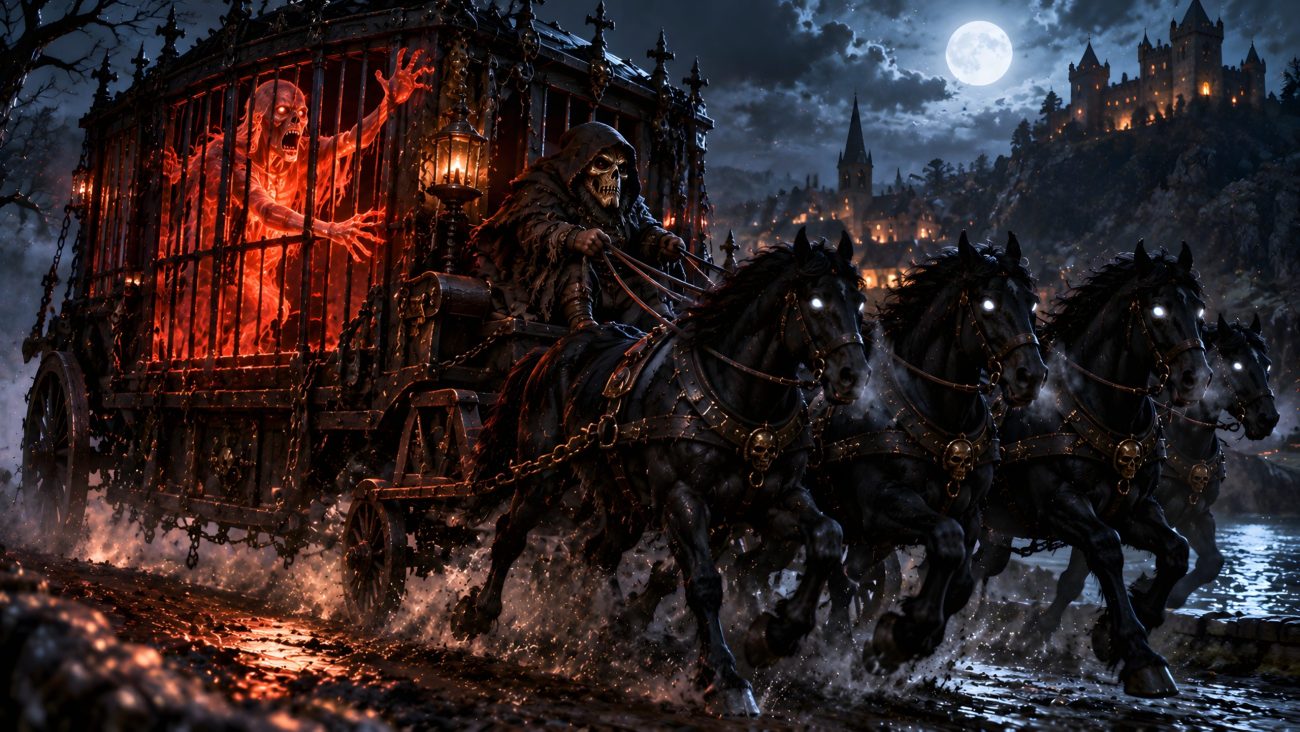
The knight was struck with terror at these words. He cried out, “Die – me?” and immediately collapsed. That evening, a hearse drawn by four black horses was seen leaving through the castle gate. The driver was the same mysterious dwarf, who had returned as promised—this time to carry away the dead knight of Sterpenich.


Sources

“Das Wichtlein von Sterpenich.” SAGEN.at – Traditionelle Sagen aus Luxemburg. Reproduced by SAGEN.at. https://www.sagen.at/texte/sagen/luxemburg/Wichtlein_Sterpenich.html

Dwarf of Reckingen

Tradition: Luxembourgish Mythology
Alternative Names: The Little Gnome of Reckingen
Category: Dwarf


The Myth

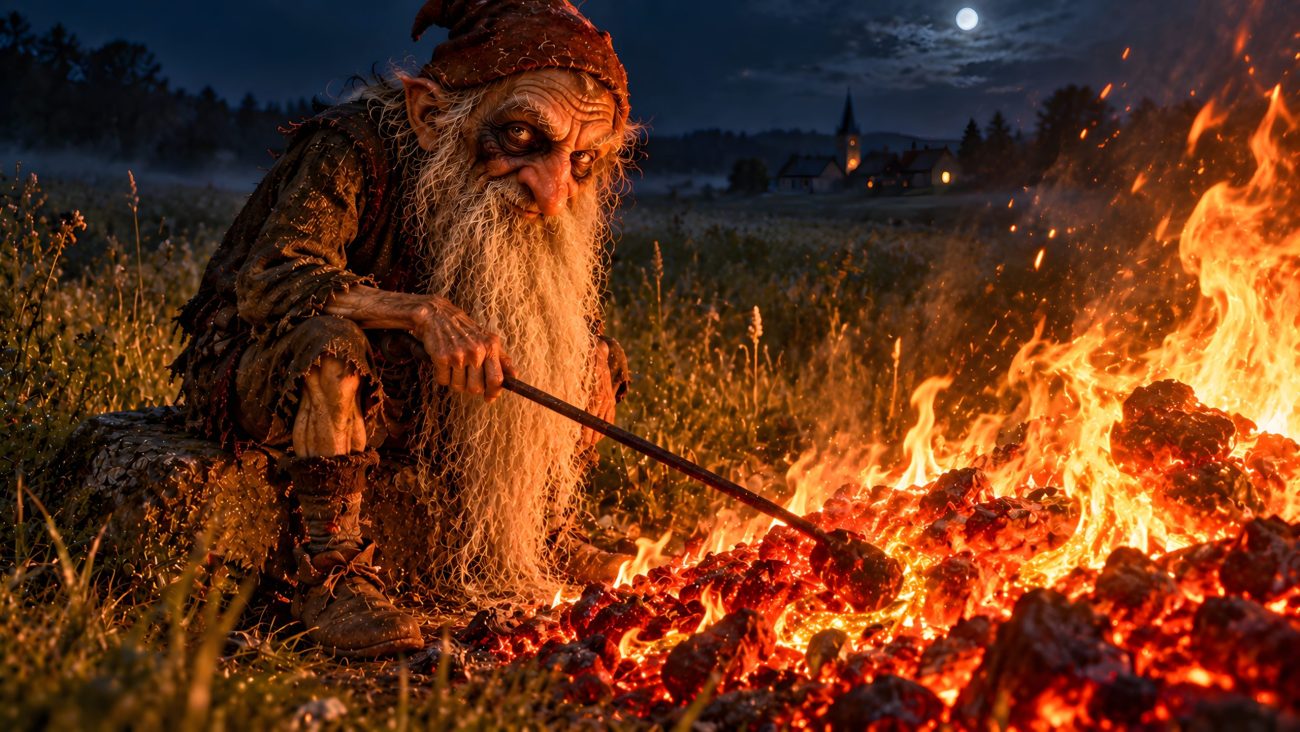
The little elf of Reckingen was a small gnome who appeared to Peter, the son of a poor widow living near Mersch. The family had lost its farm horse and could no longer afford to replace it, leaving them unable to work their fields. Peter went to his uncle in Rollingen and asked to borrow his horse, hoping to save his family’s harvest, but his hard-hearted uncle refused. On his journey home to Reckingen, Peter walked sadly along the road until a little gnome approached him and asked why he was so unhappy.

When Peter explained that his family could no longer cultivate their fields, the little gnome offered to help. He instructed Peter to have his neighbors bring the necessary farming tools and seeds to whichever field he wished to sow first that evening. Peter followed his instructions and returned home. The following morning, he discovered that the field had already been completely plowed, sown, and harrowed.

The mysterious help continued day after day. Each evening Peter prepared another field with the tools and seeds as the gnome had instructed, and each morning he found the work finished. In this way, the little elf quietly cultivated every field belonging to the poor family, allowing the widow and her son to continue farming despite having no horse and no means to replace it.


Sources

“Das Wichtlein von Reckingen.” SAGEN.at – Traditionelle Sagen aus Luxemburg. Reproduced by SAGEN.at. https://www.sagen.at/texte/sagen/luxemburg/Wichtlein_Reckingen.html


Dwarf of Junglinster

Tradition: Luxembourgish Mythology
Alternative Names: The Junglinster Dwarf
Category: Dwarf


The Myth

The Dwarf of Junglinster was a persistent supernatural dwarf who became involved with a young woman from the village. When the pastor learned of their relationship, he warned the girl seriously and she promised to avoid the dwarf. She told him of her decision, but he refused to leave her alone and somehow continued to find her wherever she went.

Frightened by his continued advances, the girl returned to the pastor and begged him for help. The pastor called upon an old shepherd from Beidweiler who was reputed to know various secret remedies. After considering the problem, the shepherd prepared a strange protection. He dissolved a handful of salt in water, dipped a piece of bread into it, covered the bread heavily with sulfur, and left it to dry on the stove. The girl was instructed to eat the bread before the dwarf’s next visit and then press it against her body when he appeared.

She followed the shepherd’s instructions. When the dwarf came again, a faint sound was heard, and the supernatural visitor immediately recoiled in disgust. From that moment onward, the dwarf abandoned the girl and was never seen again.


Sources

“Der Zwerg von Junglinster.” SAGEN.at – Traditionelle Sagen aus Luxemburg. Reproduced by SAGEN.at. https://www.sagen.at/texte/sagen/luxemburg/Zwerg_Junglinster.html


Fire Dwarf of Straßen

Tradition: Luxembourgish Mythology
Alternative Names: The Little Man of the Geldfeuer
Category: Dwarf


The Myth

A small, thin man sits beside a mysterious fire burning on a meadow near a house in Straßen. He quietly tends the glowing embers while the fire burns continuously through the night. His connection with the supernatural fire is revealed when a poor servant girl approaches him looking for coals to relight the dead hearth in her master’s house.

The girl has been working for a farmer and is forced to rise around midnight to bake bread. Finding that there is no spark left in the kitchen hearth, she notices the strange fire burning on the nearby meadow. She takes a shovel and approaches the little man, politely asking whether she may take some of his glowing coals. He allows her to do so.

But when she carries the first shovel of coals back to the house and places them on the hearth, they immediately go out. The same thing happens with a second shovel. When she returns for a third load, the little man finally speaks. He tells her that she has now received her share of the inheritance from her uncle and warns her not to return.

Terrified, the girl carries the third load home. Once again the coals appear to die on the hearth. Yet when she lights the fire, she notices something glowing among the ashes. There, instead of ordinary coal, lies a pile of gold coins.

The girl wakes the farmer and his wife and tells them what happened. They call the local pastor, who advises them to bury the enchanted money seven fathoms deep in the earth at the place where the mysterious coal fire had once burned. They follow his advice and hide the gold beneath the meadow.

The supernatural fire, however, does not disappear. Even afterward, people occasionally see it burning on the meadow during the night. No one dares approach it or take its coals anymore.


Sources

La Fontaine, Edmond de. Luxemburger Sagen und Legenden. Luxemburg: Jos. Beffort, 1882. 187 pp.


Dwarfs of Diekirch

Tradition: Luxembourgish Mythology
Alternative Names: Plattfüßchen
Category: Dwarf


The Myth

In a ravine between Diekirch and Ingeldorf, small underground beings were said to dwell. They were described as goblins, living beneath the earth and gathering in the hidden places around the ravine.

The Knights Templar were said to have gathered in this same ravine, where the little underground beings lived. The tradition therefore connects the secluded place with both the mysterious knights and the small supernatural inhabitants beneath the ground.

In the nearby plain of Wallebroch lived another kind of goblin known as the Plattfüßchen. These small beings also lived underground, and Wallebroch was said to be the place where they gathered together for councils.

The legend gives little more detail about the appearance or activities of these underground people, but preserves them as mysterious little inhabitants of the Luxembourgish landscape.


Sources

“Die Zwerge von Diekirch.” SAGEN.at – Traditionelle Sagen aus Luxemburg. Reproduced by SAGEN.at.
https://www.sagen.at/texte/sagen/luxemburg/Zwerge_Diekirch.html


Dwarfs of Wallebroch

Tradition / Region: Luxembourg Mythology
Alternate Names: Diekirch Goblins, Plattfüßchen
Category: Dwarf


The Myth

In a ravine between Diekirch and Ingeldorf, it was said that the Knights Templar once gathered. Yet the people of the region spoke of them not as knights, but as small beings — goblins who lived underground.

In a nearby plain called Wallebroch, another group of these creatures assembled for their councils. They were known as the Plattfüßchen, a kind of goblin said to dwell beneath the earth.

Thus the land between Diekirch and Ingeldorf was believed to shelter hidden underground folk who met in secret places and lived unseen beneath the ground.


Gallery


Sources

sagen.at contributors. (n.d.). Zwerge bei Diekirch. In sagen.at, from https://www.sagen.at/texte/sagen/luxemburg/Zwerge_Diekirch.html


Interpretive Lenses

Religious Readings
  • Christian Ascetic Deep Dive
Philosophical Readings
  • Nietzschean Deep Dive
Psychological Readings
  • Jungian Deep Dive
Esoteric Deep Dive
  • Hermetic Deep Dive
Political / Social Readings
  • Marxist Deep Dive