Hobgoblin

Tradition: English Mythology
Alternative Names: Hob, Hobgoblin
Category: Goblin


The Myth

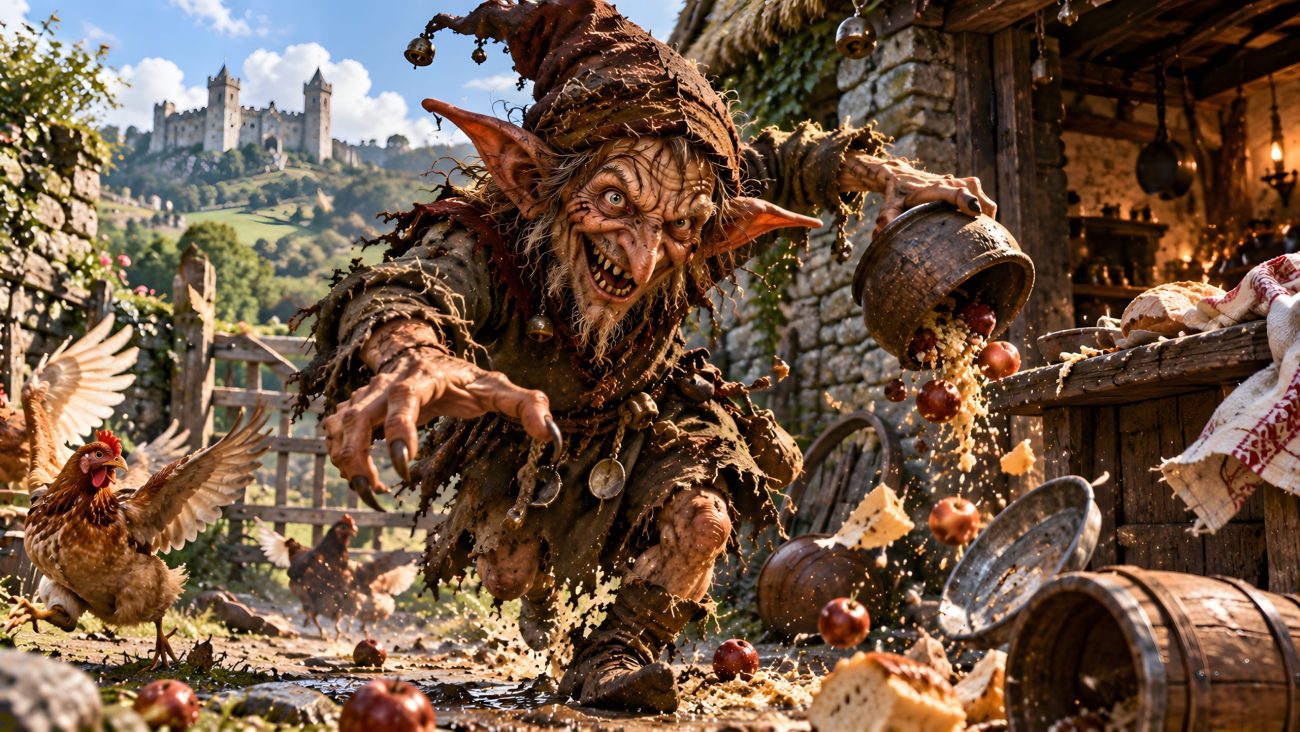
A hobgoblin is a supernatural household spirit in English folklore, traditionally appearing as a small, hairy man. Like the closely related brownies, hobgoblins are often found in human dwellings, where they perform domestic chores while the family sleeps. Their tasks may include dusting, ironing, threshing corn, and other small household jobs. In return, they generally require little more than an offering of food.

Although hobgoblins were once regarded as helpful spirits, their reputation increasingly became associated with mischief following the spread of Christianity. Unlike the generally peaceful brownies, hobgoblins enjoy practical jokes and may play tricks on the people they serve. They can also be frightening or dangerous when angered. Some possess the ability to change shape, appearing as different animals or even as smoke. Offering them clothing can cause them to leave a household forever, although stories differ on whether they take offence at the gift or consider themselves too proud to continue working in new clothes.

One of the most famous figures associated with hobgoblins is Robin Goodfellow, a mischievous spirit identified by William Shakespeare as a hobgoblin in A Midsummer Night’s Dream. Another example is Billy Blind, a clever hobgoblin or brownie who appears in several traditional ballads, where he helps people in difficult situations by providing useful information and advice.

Other local traditions describe hobgoblins whose activities range from harmless pranks to more troublesome interference. Blue Burches, associated with a shoemaker’s household in Somerset, usually appeared as an old man wearing loose blue breeches but could transform into a white horse, a black pig, or a wisp of blue smoke. Although the family tolerated his antics, clergymen eventually banished him. Robin Roundcap, a hearth spirit said to haunt Spaldington Hall in Yorkshire, helped with threshing corn and other domestic work but sometimes mixed wheat and chaff together, overturned milk pails, and extinguished fires. According to the legend, three clergymen confined him in a well through their prayers, giving the well the name Robin Roundcap’s Well.


Sources

“Hobgoblin.” Wikipedia: The Free Encyclopedia. Wikimedia Foundation. Accessed October 17, 2026. https://en.wikipedia.org/wiki/Hobgoblin
Brag

Tradition: English Mythology
Alternative Names: Picktree Brag
Category: Goblin, Horse


The Myth

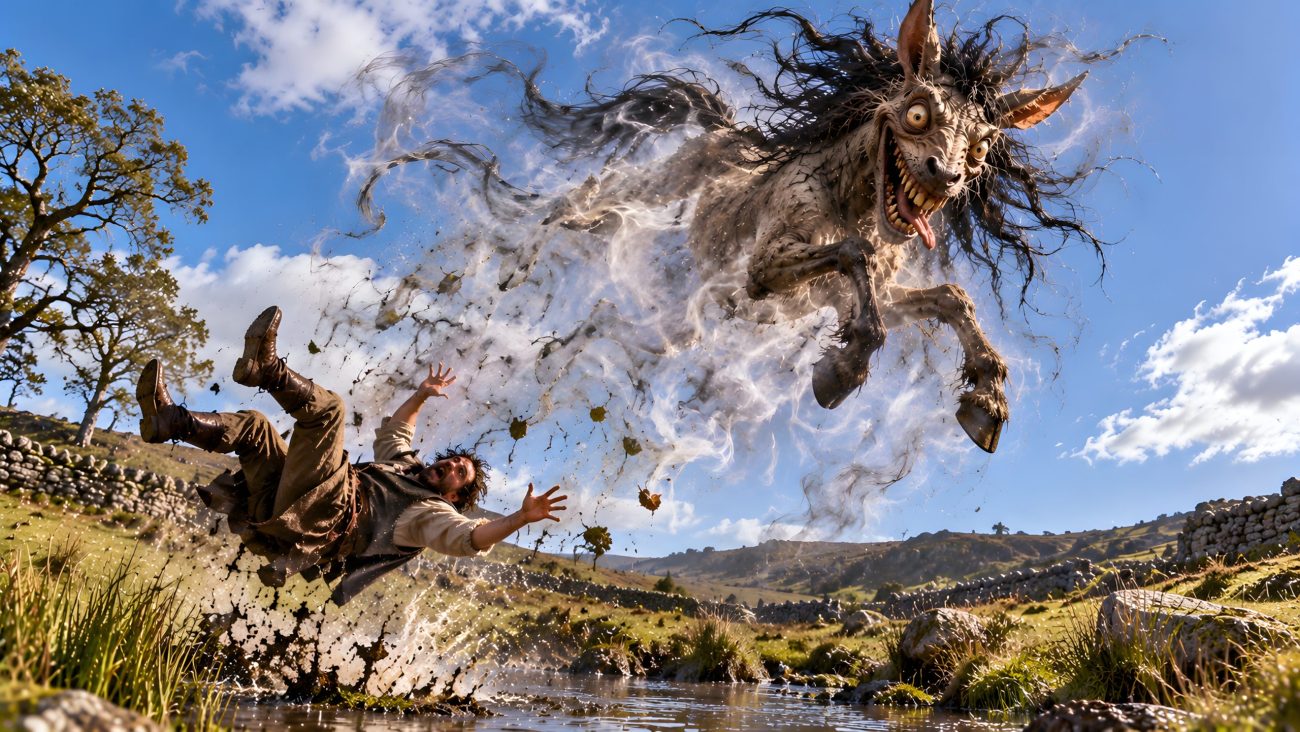
The Brag is a mischievous shapeshifting goblin from the folklore of Northumbria, particularly Northumberland and County Durham in northern England. It is best known for assuming the form of a horse or donkey, using its appearance to trick unsuspecting people into climbing onto its back. Once a person is riding it, the Brag suddenly bucks, throwing its victim into a pond or bush before fleeing with laughter.

The Brag’s shapeshifting abilities allow it to appear in stranger forms as well. One famous example is the Picktree Brag, which was said to take the shape of a calf wearing a white handkerchief around its neck, a naked headless man, and even four men holding a white sheet. These bizarre transformations make the creature difficult to identify and add to its reputation as an unpredictable supernatural prankster.

Not every Brag reveals itself through a visible form. A Brag associated with Humbleknowe was never seen, but was known for making hideous noises during the night. Whether appearing as an animal, a frightening apparition, or an unseen presence, the Brag delights in confusing and startling people rather than confronting them directly.


Sources

“Brag (folklore).” Wikipedia: The Free Encyclopedia. Wikimedia Foundation. Accessed October 17, 2026. https://en.wikipedia.org/wiki/Brag_(folklore)


Boggart

Tradition: English Mythology
Alternative Names: Boggard, Baggard, Bogle, Buggerd, Boggert
Category: Goblin


The Myth

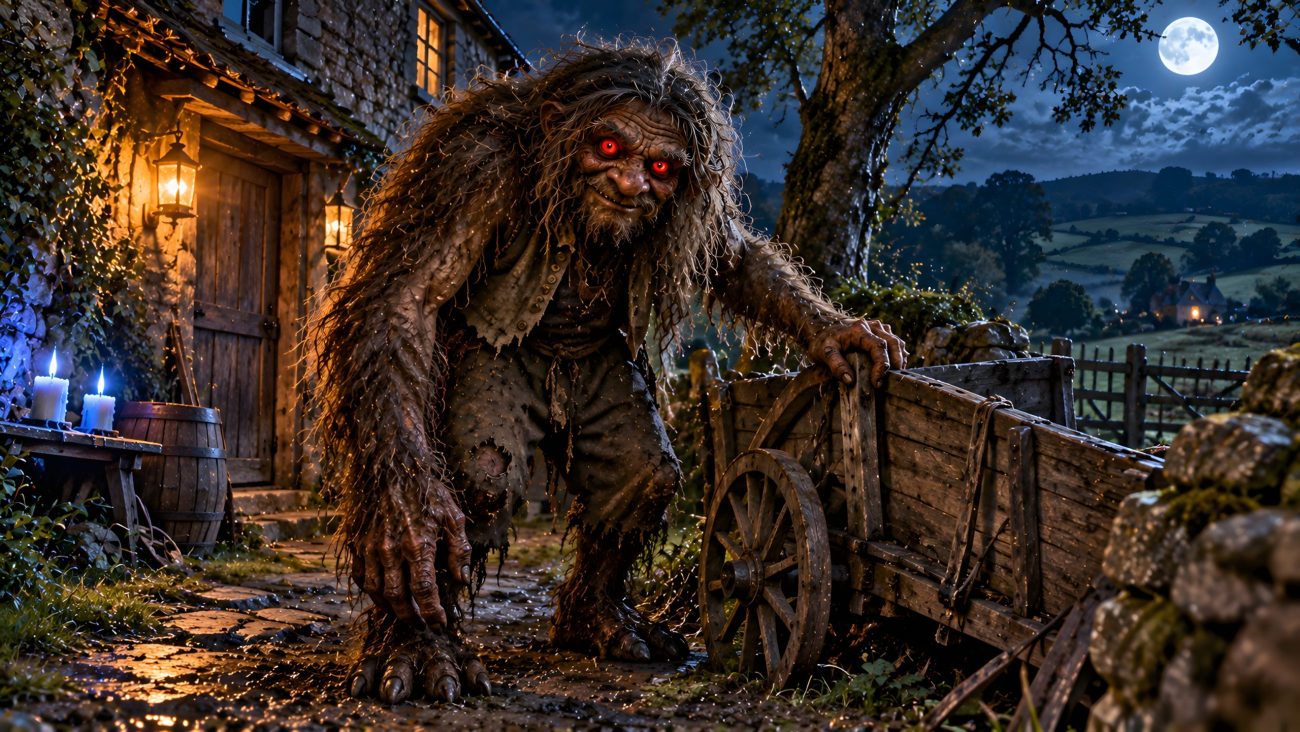
A boggart is a solitary supernatural being whose appearance varies greatly from place to place. Many are described as squat, hairy, ugly humanoids with uncouth or bestial features, sometimes possessing enormous arms and great physical strength. Others take entirely animal-like forms. The Boggart of Longar Hede in Yorkshire was said to be the size of a calf, covered in long shaggy hair, with enormous saucer-like eyes and a long chain trailing behind it that sounded like baying hounds. The boggart of Hackensall Hall in Lancashire appeared as a huge horse, while another Lancashire boggart called Nut-Nan was said to flit through hazel bushes with a shrill scream. Some could change their form into animals or more frightening creatures, while the Lancashire boggarts were said to have a master called Owd Hob, who appeared as a horned, cloven-hoofed, tailed creature resembling a satyr or devil.

Boggarts could inhabit houses, farms, roads, hills, caves, fields, and other isolated places, becoming spirits closely associated with the places where they lived. Household boggarts were particularly troublesome, disturbing families at night by making noises, banging doors, frightening horses, overturning carts, pulling away bedclothes, or crawling into people’s beds and pressing clammy hands against their faces. One Lancashire tradition warned that a household boggart should never be given a name, because naming it made the creature impossible to reason with and caused it to become uncontrollable and destructive. At Grizlehurst, an old couple claimed that their local boggart had been buried beneath an ash tree together with a cockerel pierced by a stake, yet it continued to cause disturbances. A farmer’s wife later heard doors banging and terrible laughter at night, then saw three blue-burning candles and a creature with red glowing eyes leaping outside the house. The following morning, cloven hoofprints were found around the building.

Boggarts could also be encountered in the countryside, where they sometimes behaved more like troublesome land spirits. In the tale of the Farmer and the Boggart, a squat, hairy, foul-smelling boggart inhabits a farmer’s land and agrees to divide each harvest with him. The boggart first chooses everything growing beneath the ground, so the farmer plants barley and leaves the creature with nothing but roots and stubble. The next year the boggart chooses everything above ground, so the farmer plants potatoes and again defeats him. Enraged by being tricked, the boggart eventually abandons the land. Another version has the two agreeing to harvest a wheat field from opposite sides, but the farmer secretly plants iron rods throughout the boggart’s portion. The creature’s scythe is repeatedly blunted against them, allowing the farmer to harvest almost the entire crop.


Sources

“Boggart.” Wikipedia: The Free Encyclopedia. Wikimedia Foundation. Accessed October 5, 2026. https://en.wikipedia.org/wiki/Boggart