Tradition: English Mythology
Alternative Names: Hob, Hobgoblin
Category: Goblin
The Myth
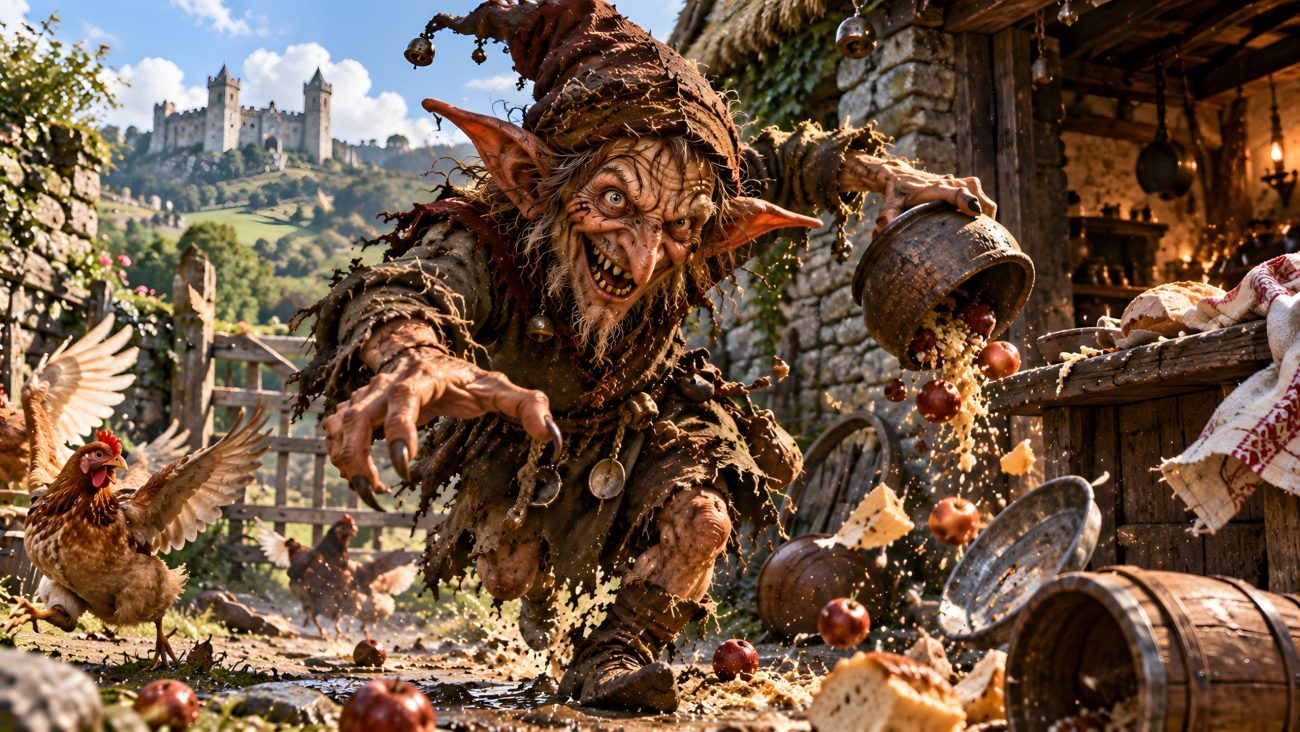
A hobgoblin is a supernatural household spirit in English folklore, traditionally appearing as a small, hairy man. Like the closely related brownies, hobgoblins are often found in human dwellings, where they perform domestic chores while the family sleeps. Their tasks may include dusting, ironing, threshing corn, and other small household jobs. In return, they generally require little more than an offering of food.
Although hobgoblins were once regarded as helpful spirits, their reputation increasingly became associated with mischief following the spread of Christianity. Unlike the generally peaceful brownies, hobgoblins enjoy practical jokes and may play tricks on the people they serve. They can also be frightening or dangerous when angered. Some possess the ability to change shape, appearing as different animals or even as smoke. Offering them clothing can cause them to leave a household forever, although stories differ on whether they take offence at the gift or consider themselves too proud to continue working in new clothes.
One of the most famous figures associated with hobgoblins is Robin Goodfellow, a mischievous spirit identified by William Shakespeare as a hobgoblin in A Midsummer Night’s Dream. Another example is Billy Blind, a clever hobgoblin or brownie who appears in several traditional ballads, where he helps people in difficult situations by providing useful information and advice.
Other local traditions describe hobgoblins whose activities range from harmless pranks to more troublesome interference. Blue Burches, associated with a shoemaker’s household in Somerset, usually appeared as an old man wearing loose blue breeches but could transform into a white horse, a black pig, or a wisp of blue smoke. Although the family tolerated his antics, clergymen eventually banished him. Robin Roundcap, a hearth spirit said to haunt Spaldington Hall in Yorkshire, helped with threshing corn and other domestic work but sometimes mixed wheat and chaff together, overturned milk pails, and extinguished fires. According to the legend, three clergymen confined him in a well through their prayers, giving the well the name Robin Roundcap’s Well.
Sources
“Hobgoblin.” Wikipedia: The Free Encyclopedia. Wikimedia Foundation. Accessed October 17, 2026. https://en.wikipedia.org/wiki/Hobgoblin