Ran Yi Fish

Tradition / Region: Chinese mythology
Category: Fish, Mountain dweller


The Myth

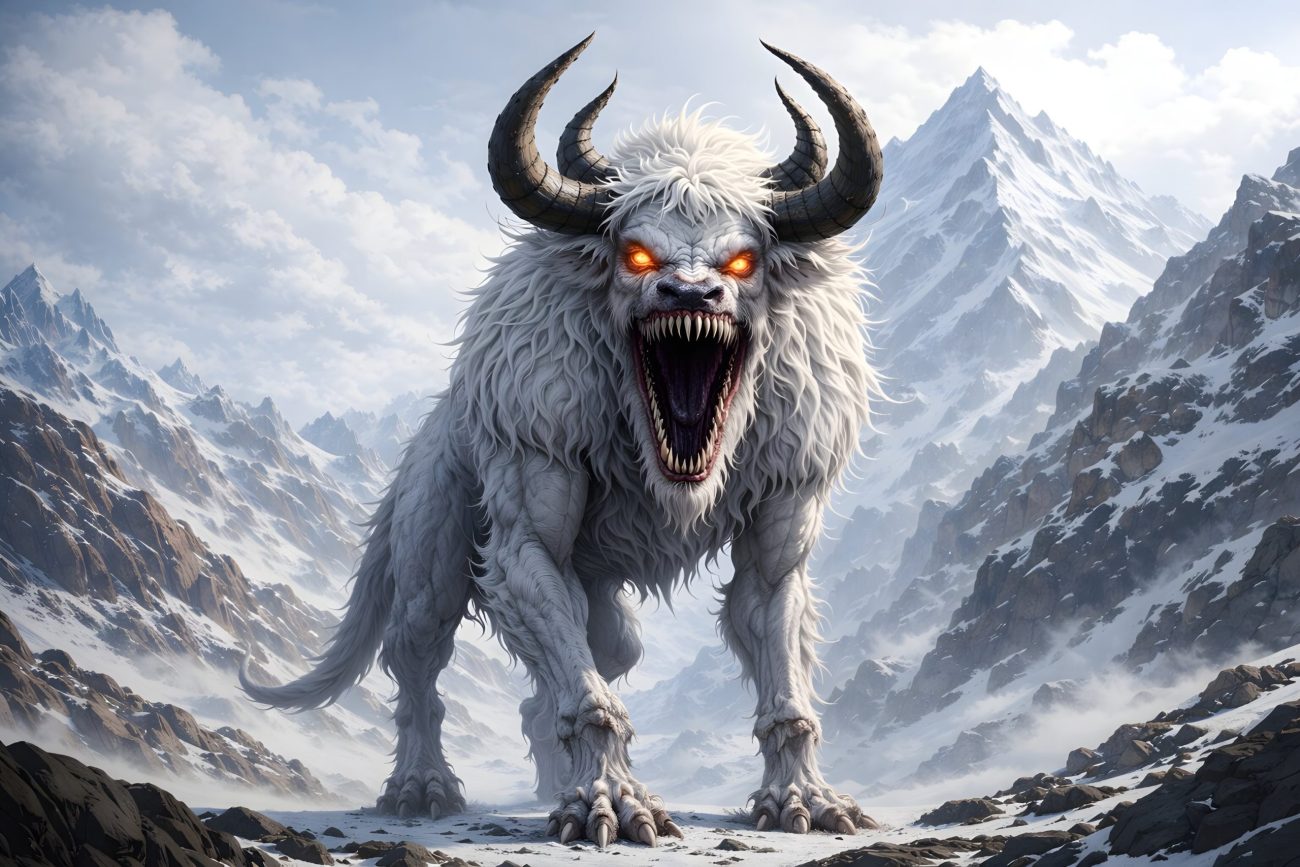
The Ran Yi fish lives in the Wan River, which flows from Yingdi Mountain. This mountain is unlike any other: its slopes are thick with lacquer trees, metal ores and jade lie at its base, and all the birds and beasts that dwell there are said to be entirely white. From this place the Wan River rises and runs northward into Lingyang Marsh, and within its waters the Ran Yi fish can be found.

The Ran Yi fish has a fish’s body, but its head is that of a snake, and from its sides grow six legs. Its eyes resemble the ears of a horse, giving it a strange and unsettling appearance. Though it moves through water like a fish, its form marks it as something unnatural and powerful.

People believe that eating the Ran Yi fish brings protection. Those who consume it are said to be free from nightmares, untouched by disturbing dreams, and shielded from evil influences. Because of this, the Ran Yi fish is regarded not as a threat, but as a creature of warding and spiritual defense.

It remains hidden in the waters of the Wan River, tied to the strange mountain where white creatures roam and precious substances lie buried, a guardian presence within an uncanny landscape.


Gallery


Sources

Wikipedia contributors. (n.d.). 冷遺魚. In Wikipedia, The Free Encyclopedia, from https://zh.wikipedia.org/wiki/%E5%86%89%E9%81%97%E9%B1%BC


Interpretive Lenses

Religious Readings
  • Christian Ascetic Deep Dive
Philosophical Readings
  • Nietzschean Deep Dive
Psychological Readings
  • Jungian Deep Dive
Esoteric Deep Dive
  • Hermetic Deep Dive
Political / Social Readings
  • Marxist Deep Dive
Other
  • How to Invite The Ran Yi Fish

Omoshiroi zo

Tradition / Region: Japanese Mythology
Alternate Names: Omoshiroi zo
Category: Mountain dweller


The Myth

This strange incident is said to have happened in the youth of an old man named Kikuchi Yanosuke.

One night, under a faint, pale moon, Yanosuke and several companions were crossing Sakaiki Pass, a mountain path leading toward the coast. Yanosuke was known as a skilled flute player, and as they traveled, he played his flute while walking.

As they passed through a place called Ōyachi, they entered a deep valley. White birch trees grew thickly there, and below the path ran a marshy ravine filled with reeds and tall grasses.

While they were crossing this valley, a high, piercing voice suddenly rose from the depths below. From the darkness of the ravine, something unseen cried out:

Omoshiroi zo—!
(“This is interesting!”)

At the sound of the voice, everyone turned pale with fear. Without seeing any figure or source, the group fled in terror, abandoning the path and running from the valley.

Later in his life, Yanosuke experienced another unsettling event deep in the mountains, when he heard the scream of a woman echoing through the forest. It was later discovered that, at the very same time, his sister had been killed by her own son.

The voice calling “Omoshiroi zo” was never explained, and no form was ever seen. It remains remembered as one of the many eerie, disembodied presences said to dwell in the mountains and valleys of the region.


Gallery


Sources

TYZ-Yokai Blog contributors. (n.d.). 面白いぞ (Omoshiroi zo). In TYZ-Yokai Blog, from https://tyz-yokai.blog.jp/archives/1074589312.html


Interpretive Lenses

Religious Readings
  • Christian Ascetic Deep Dive
Philosophical Readings
  • Nietzschean Deep Dive
Psychological Readings
  • Jungian Deep Dive
Esoteric Deep Dive
  • Hermetic Deep Dive
Political / Social Readings
  • Marxist Deep Dive
Other
  • How to Invite The Omoshiroi zo

Aghach Kishi

Tradition / Region: Azerbaijani mythology
Alternate Names: Mesha Adam
Category: Monkey, Forest dweller, Mountain dweller, Ghost


The Myth

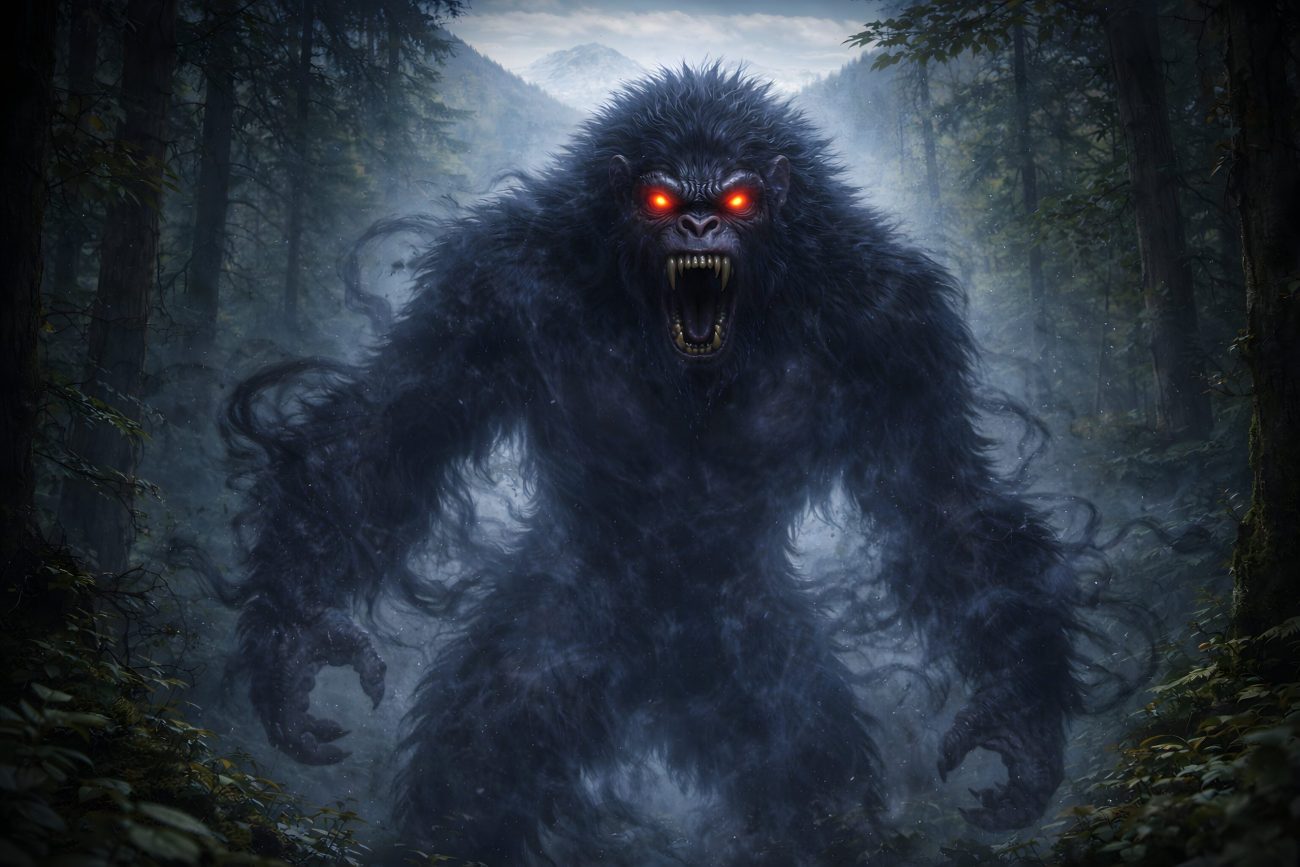
In the mountainous forests there lives Aghach Kishi, the Woodman. He is a wild, ghostlike being, his body covered in hair, moving through the trees with a will of his own. Some say he resembles a man, others a beast, but he belongs fully to the forest.

Aghach Kishi wanders near villages and gardens, where he sometimes appears without warning. He has a strong, unpleasant smell, and he is known to take clothing left behind by humans. In older times, people would leave garments for him on purpose, hoping to avoid angering him.

Though he does not always attack, encounters with Aghach Kishi are uneasy and unsettling. He is a reminder that the forests are not empty, and that something older and untamed still walks among the trees.


Sources

JAMnews.net. (2017). The magical creatures of Azerbaijani mythology. Retrieved from https://jam-news.net/azerbaijani-demons/


Jarjacha

Tradition / Region: Andean Folklore (Southern Peru; Ayacucho, Junín)
Alternate Names:
Category: Llama / Shapeshifter / Mountain dweller


The Myth

In the mountain regions of southern Peru, especially around Ayacucho, people speak of a nocturnal creature known as the Jarjacha. It is said to appear after nightfall, wandering the hills and remote paths near villages. Its presence is announced by a piercing call—“Jar-jar-jar” or “Qar-qar-qar”—a sound that echoes through the mountains and strikes fear into those who hear it.

According to tradition, the cry of the Jarjacha signals that a grave transgression has occurred within the community, most often incest. The creature is believed to be the transformed result of such an act, condemned to roam the night and reveal the hidden wrongdoing through its voice. When the call is heard, villagers know that someone nearby carries a secret that has violated the deepest social and moral boundaries.

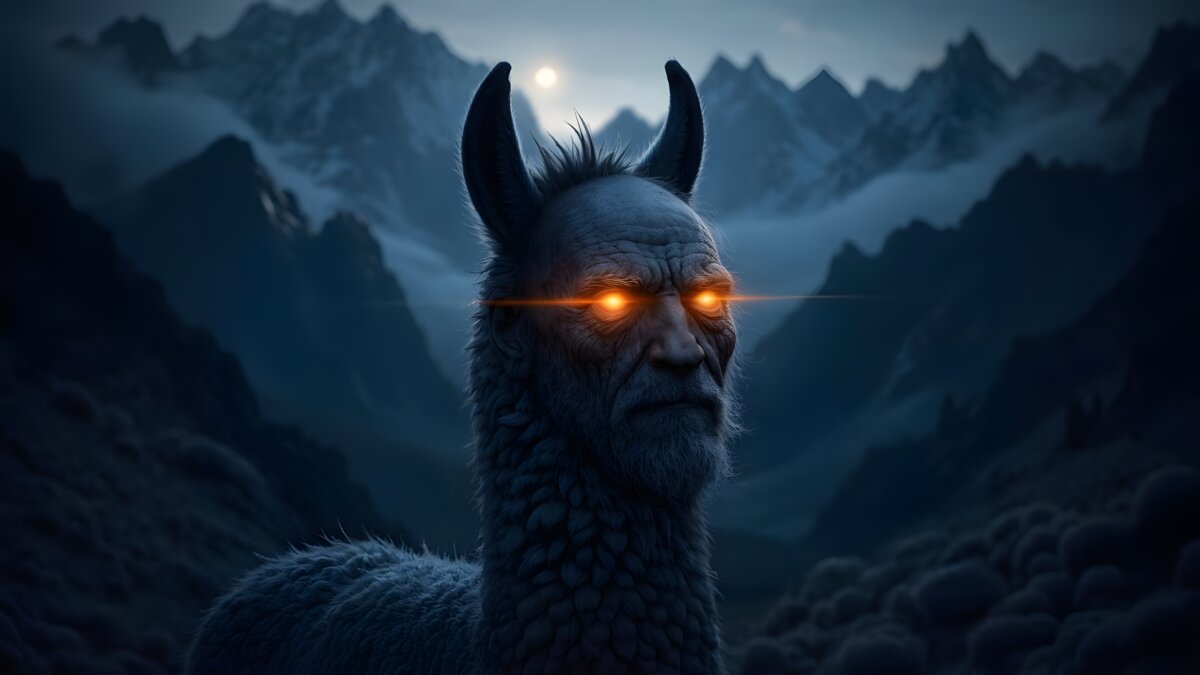
Descriptions of the Jarjacha vary by region. Most accounts connect it to llamas or alpacas. Some say it appears as a llama with a human head; others describe it as a two-legged creature resembling a llama or alpaca, sometimes with two or even three heads. In certain stories, its glowing eyes shine unnaturally in the darkness, making it unmistakable even from a distance.

The Jarjacha is not bound to a single form. Some tales claim it can briefly disguise itself as a dog or even as a human, allowing it to move unnoticed among people before returning to its true shape at night. Though rarely said to attack directly, its appearance brings fear, shame, and unrest to the community.

When dawn comes, the Jarjacha disappears, retreating into the mountains until night falls again. Its cries linger in memory, a reminder that hidden acts cannot remain concealed forever, and that the night itself will give them voice.


Interpretive Lenses

Religious Readings
  • Christian Ascetic Deep Dive
Philosophical Readings
  • Nietzschean Deep Dive
Psychological Readings
Esoteric Deep Dive
  • Hermetic Deep Dive
Political / Social Readings
  • Marxist Deep Dive
Other

Shiro (Shirodawashi)

Tradition / Region: Japanese Mythology
Alternate Names: Shirodashi, Shirodawashi (White Scrubber)
Category: Yōkai / Mountain Dweller / Cave Dweller


The Myth

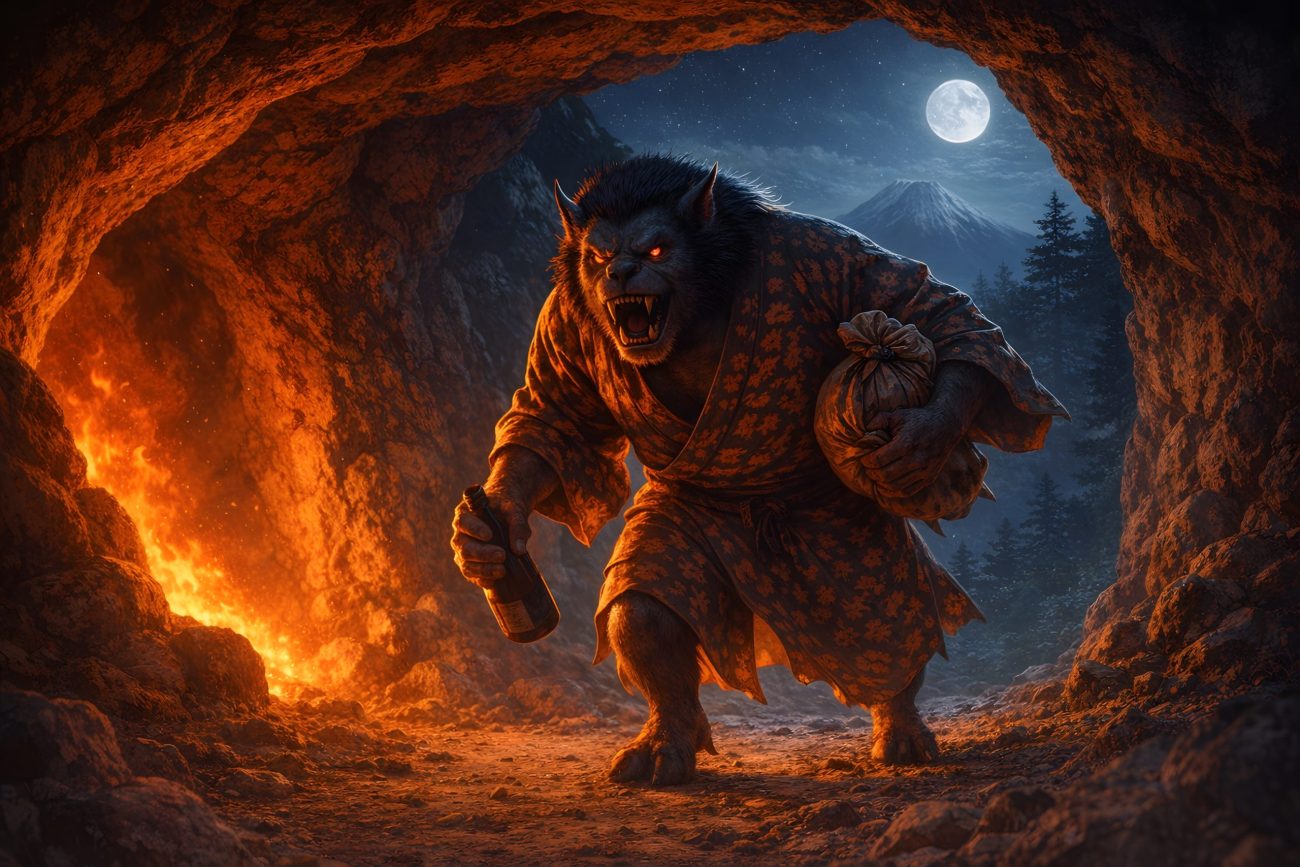
Shiro, also called Shirodawashi, was a yōkai known for his beast-like face, hooves, and a kimono patterned with scrubbing brushes. He lived in a cave near a remote mountain settlement and first appeared as a friendly and helpful figure.

A pair of monsters, Mōryō and his wife Ochiyobon, fled from Ushū to the mountains beyond Hakone and settled in a ruined house. Shiro assisted them in establishing their new home, but his friendliness soon revealed another nature. He was a heavy drinker and a troublemaker who repeatedly visited their house, demanding food, drink, and money.

Shiro became infatuated with Ochiyobon and schemed to take her for himself. One day, he borrowed a padded robe from Mōryō and never returned it. When Ochiyobon came to demand its return, Shiro claimed he had pawned it and left to retrieve it. Instead, he went to Mōryō’s shack armed with a blade and declared that Ochiyobon was now his wife. Intimidated and afraid, Mōryō surrendered, giving Shiro all his possessions, including clothing, bedding, and cosmetics.

When Ochiyobon learned what had happened, she was devastated. Shiro responded brutally, declaring that since she was now his wife, she must submit. Other monsters gathered, and even Momojii, the master of the cave dwellings, appeared. Momojii attempted to restore Ochiyobon to her husband, but Mōryō, fearing public shame, refused reconciliation and announced plans to remarry.

Abandoned, Ochiyobon grew close to Momojii, who treated her with kindness. Enraged, Shiro attacked Momojii with an oak log, but Momojii overpowered him with a massive axe and drove him away. To settle the conflict, Momojii arranged for Shiro to marry a beautiful female ghost.

Despite her beauty, the ghost suffered under Shiro’s relentless desire. Unable to endure him, she abandoned her lingering grudge against the living and wished to return to the underworld. When demons arrived to claim her, Shiro fought them fiercely. During the chaos, the ghost passed on peacefully, leaving the demons with no soul to seize. They attempted to drag Shiro to hell instead, but along the way a mysterious boy appeared and gave Shiro demon-slaying sake. The boy revealed himself to be the tanuki Kakubei, who slew the demons.

Grateful, Kakubei asked Shiro to help abduct the daughter of a fox whose marriage proposal had been rejected. Shiro eagerly agreed and joined the tanuki in attacking the wedding procession, successfully capturing the bride’s palanquin. However, he soon encountered Mikoshi Nyūdō, who defeated him and took him prisoner. Impressed by Shiro’s boldness, Mikoshi Nyūdō eventually released him, predicting he might serve a greater purpose someday.

Later, tanuki thieves stole the White Fox Jewel and entrusted it to Shiro. When monsters and foxes came to retrieve it, they heard a woman’s voice from within Shiro’s cave. Ochiyobon emerged, holding a bloodstained knife and the jewel. Having been disgraced and betrayed, she took revenge by killing Shiro and returning the treasure to its rightful owners.

Thus ended Shirodawashi, remembered as a violent, cunning, and lust-driven yōkai whose ambition and cruelty ultimately led to his downfall.


Interpretive Lenses

Religious Readings
Philosophical Readings
  • Nietzschean Deep Dive
Psychological Readings
  • Jungian Deep Dive
Esoteric Deep Dive
  • Hermetic Deep Dive
Political / Social Readings
  • Marxist Deep Dive
Other
  • How to Invite The Spirit

Zarazarazattara

Tradition / Region: Japanese Folklore (Haibara County, Shizuoka Prefecture)
Alternate Names:
Category: Yōkai / Mountain Dweller


The Myth

In Haibara County, it is told that a man once spent the night alone in a mountain hut, sitting by the hearth to keep warm. As the fire burned low, the hut lay silent except for the crackle of embers.

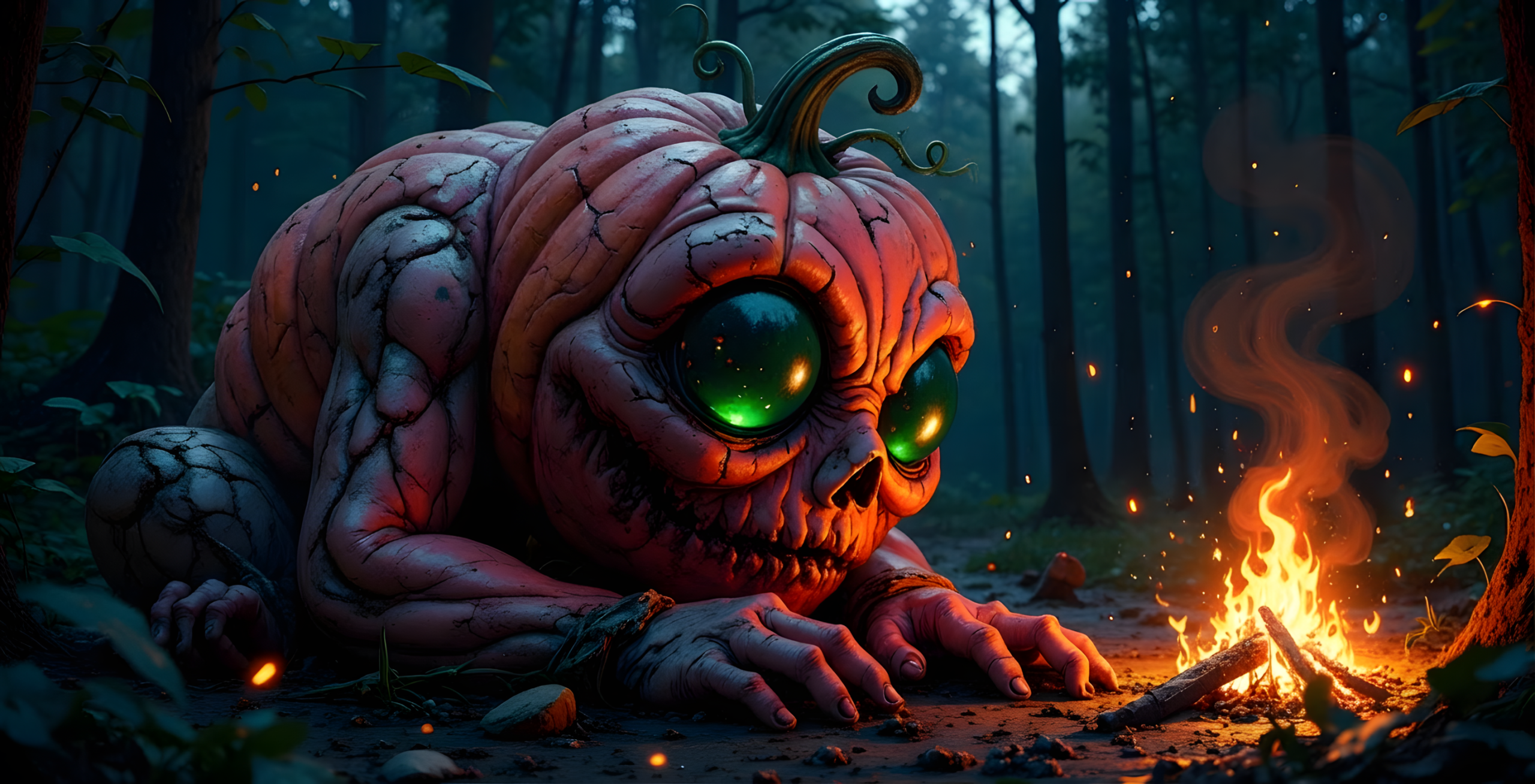
At one point, the man lifted the straw mat that covered the entrance. Suddenly, a round object—shaped much like a pumpkin—rolled inside the hut and came to rest beside the hearth. Startled, the man stared at it, thinking how unsettling the thing looked.

Before he could act, the round object spoke, saying, “It’s nothing. I am Zarazarazattara.”

The man felt an even deeper unease and thought to himself that he wished he had left the hut earlier. Immediately, the creature replied, “Never mind. I’ll be right there.” Realizing that the being responded to his very thoughts, the man became terrified, knowing that even thinking in silence was no protection.

Trying to act without revealing his thoughts, the man decided to tend the fire. He picked up a piece of firewood and snapped it to add fuel to the hearth. By chance, a fragment of the broken wood flew off and struck the creature where its face seemed to be.

At this, Zarazarazattara cried out, “I never thought of that,” and fled the hut at once, disappearing back into the night.

Afterward, the man was left alone by the fire, shaken but unharmed, and the strange yōkai was never seen there again.


Interpretive Lenses

Religious Readings
Philosophical Readings
  • Nietzschean Deep Dive
Psychological Readings
  • Jungian Deep Dive
Esoteric Deep Dive
  • Hermetic Deep Dive
Political / Social Readings
  • Marxist Deep Dive
Other

Shanjing

Tradition / Region: Chinese Folklore (Hebei Province; Anguo / Ankoku region)
Alternate Names: Mountain Spirit; One-Legged Mountain Spirit; Xiao
Category: Mountain Dweller / Demon / Spirit


The Myth

In the mountains of what is now Anguo City in Hebei Province, there was said to exist a being known as the Shanjing, the Mountain Spirit. Ancient Chinese texts describe it as a small humanoid creature, usually between one and four feet tall depending on the source, with only a single leg. Its most striking feature was its foot: the heel faced backward, an unmistakable sign that it was not a natural being.

The Mountain Spirit was said to dwell in mountainous regions and remain hidden during the day, emerging only at night. It was known to steal salt from humans, slipping into storage huts or mountain shelters under cover of darkness. Its diet consisted primarily of crabs and frogs gathered from the mountains and streams. Some accounts describe it carrying crabs in its hands as it approached human dwellings.

When encountered at night, the Mountain Spirit could attack people. However, it was believed that if a person called out the word “Ba,” the creature would lose its ability to harm them. At the same time, the Mountain Spirit was dangerous to provoke. Those who struck or injured it were said to suffer illness afterward, or find their houses consumed by fire.

Classical texts give varying descriptions of its appearance. Some portray it as human-shaped, others as resembling a small child. Several sources note that its body was hairy, its face dark or blackened, and that it laughed when it saw humans. In Daoist writings such as the Baopuzi, it is described as a nocturnal attacker and listed among spirits that could invade human homes.

The Mountain Spirit appears frequently in Chinese poetry and literature, where it is mentioned alongside other supernatural beings such as fox spirits and animal demons. These references describe it as a presence bound to mountains, night, and wild places, a being that moved between the human world and the unseen realm.

Through later transmission into Japan, the Mountain Spirit was depicted in illustrated demon compendiums, notably in Toriyama Sekien’s Konjaku Gazu Zoku Hyakki. There it appears gazing at mountain huts while holding crabs, preserving the older Chinese description of a salt-stealing, crab-eating, one-legged mountain being that emerges after dark and vanishes again before dawn.


Interpretive Lenses

Religious Readings
Philosophical Readings
  • Nietzschean Deep Dive
Psychological Readings
  • Jungian Deep Dive
Esoteric Deep Dive
  • Hermetic Deep Dive
Political / Social Readings
  • Marxist Deep Dive
Other

Azuki Arai

Tradition / Region: Japanese Mythology (mountain regions throughout Japan)
Alternate Names: Azukitogi, Azuki Togi
Category: Yōkai / Mountain Dweller / River Dweller


The Myth

Deep in the mountains of Japan, near forest streams and quiet rivers, there is said to live a yōkai known as Azuki Arai, the Bean Washer. It dwells far from villages, choosing remote riverbanks where the sound of flowing water masks its presence. Travelers rarely see it, but many have heard it.

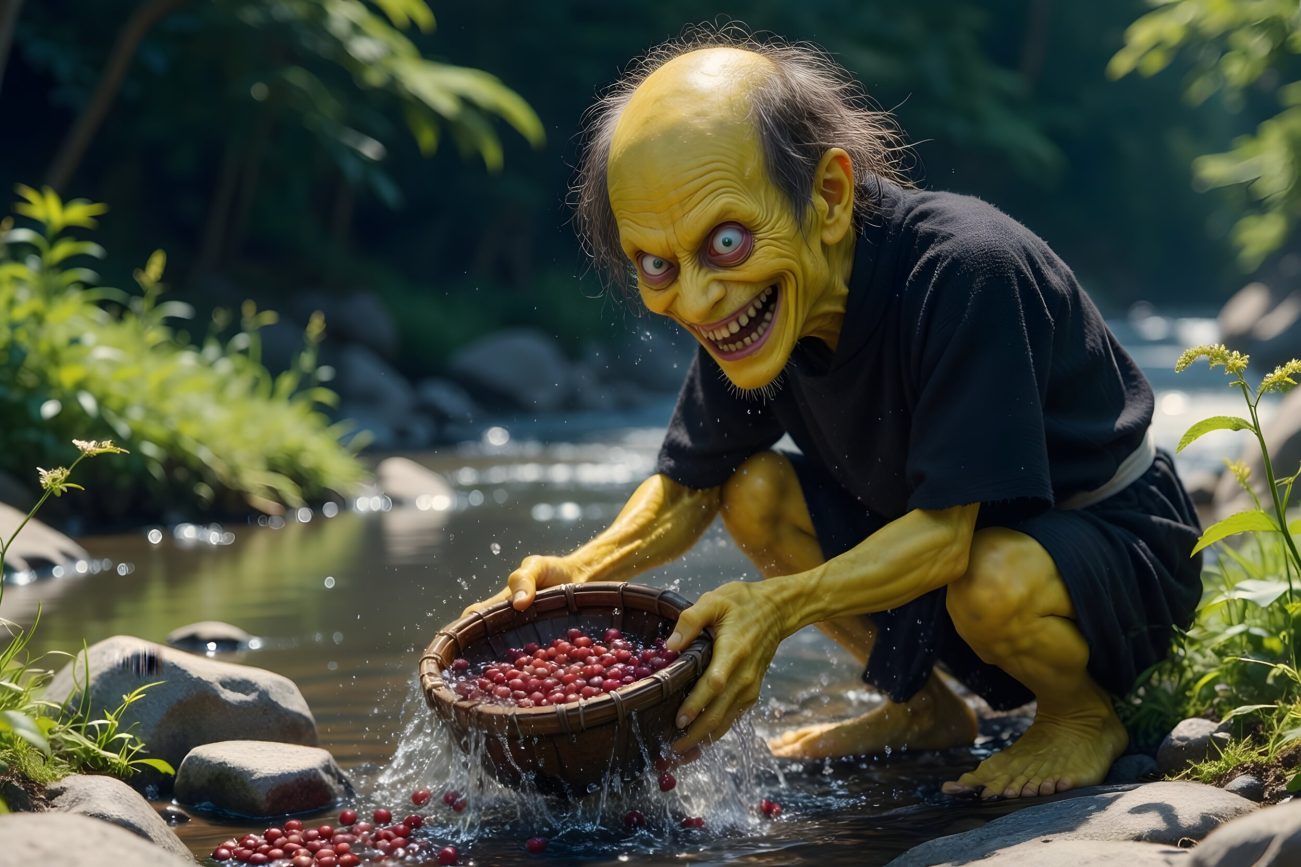
Azuki Arai spends its time crouched beside the water, washing red azuki beans in a basket. As it works, it sings a strange song, its voice mingling with the sound of beans being rinsed:

“Azuki araou ka?
Hito totte kuou ka?”

“Shall I wash my beans,
or shall I catch a human to eat?”

Between the lines of the song comes the sound shoki shoki, the rhythmic noise of beans being washed. The voice carries through the valley, echoing along the stream.

Those who hear the song are often startled or unsettled. It is said that people drawn too close to the sound lose their footing and slip into the water. The splash frightens Azuki Arai, and it immediately flees into the forest, vanishing without a trace.

Azuki Arai is known to be extremely shy and avoids being seen. It mimics the sounds of nature—rustling leaves, flowing water, birds, and insects—to conceal itself. Because of this, most encounters are only auditory, and sightings are rare. Those who do catch a glimpse describe a small, squat figure resembling a monk or peasant, with a large head, wide eyes, and an unsettling grin, seated by the river as it washes beans.

Despite its eerie song, Azuki Arai is not considered truly dangerous. It does not pursue humans, and it disappears at the slightest disturbance. In some regions, seeing it is considered a sign of good fortune, as few are ever able to do so.

Thus, when the sound of beans being washed rises from a mountain stream, people say Azuki Arai is near—quietly working by the water, singing its strange song, and slipping away unseen the moment it is discovered.


Interpretive Lenses

Religious Readings
  • Christian Ascetic Deep Dive
Philosophical Readings
  • Nietzschean Deep Dive
Psychological Readings
  • Jungian Deep Dive
Esoteric Deep Dive
Political / Social Readings
  • Marxist Deep Dive
Other
  • How to Invite The Spirit

Moku Musume

Tradition / Region: Japanese Mythology (Gunma–Nagano, Usui Pass)
Alternate Names: Shumoku Musume
Category: Yōkai / Mountain Dweller / Shark


The Myth

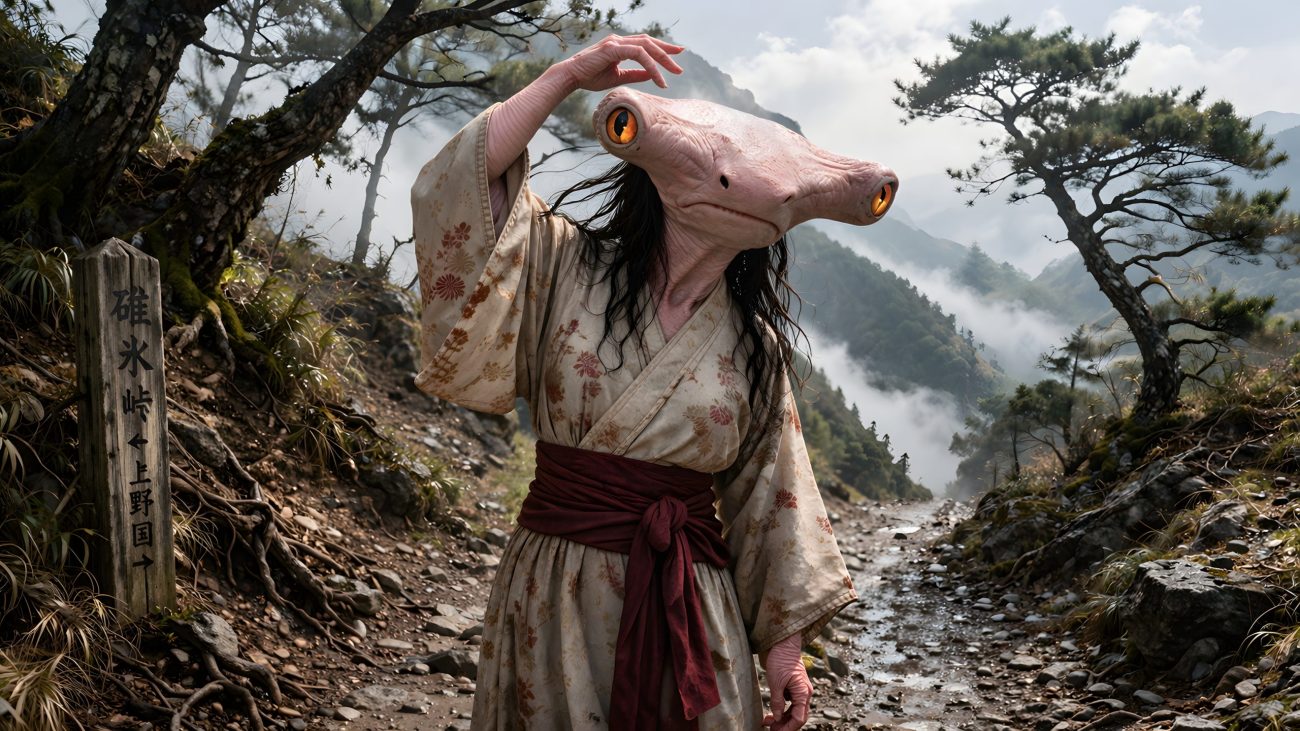
Moku Musume, also known as Shumoku Musume, is a yōkai known from monster paintings and traditional karuta cards. Her appearance is immediately recognizable and unlike that of any ordinary being. Her head is shaped like a shumoku, a T-shaped Buddhist mallet used to strike bells in temples. On each end of this T-shaped head are eyes, giving her vision to both sides, and her face resembles that of a hammerhead shark.

She is depicted as a female figure whose body is otherwise human, with the strange hammer-shaped head defining her supernatural nature. Because of this form, she is sometimes associated visually with Buddhist ritual objects, though her exact behavior is not described in surviving sources.

One karuta card explicitly names her as the “Shumoku Musume of Usui Pass,” suggesting that she was believed to appear at Usui Pass, the mountainous route connecting present-day Gunma and Nagano Prefectures. Travelers passing through the pass would have regarded the area as dangerous and uncanny, and the presence of Moku Musume was tied to this liminal mountain road.

Beyond her appearance and place-name association, little is recorded of her actions. She endures primarily as a visual yōkai, preserved through paintings and cards, her strange hammer-shaped head marking her as a being that belongs neither fully to the human world nor to the ordinary realm of spirits.


Interpretive Lenses

Religious Readings
  • Christian Ascetic Deep Dive
Philosophical Readings
  • Nietzschean Deep Dive
Psychological Readings
  • Jungian Deep Dive
Esoteric Deep Dive
  • Hermetic Deep Dive
Political / Social Readings
  • Marxist Deep Dive
Other
  • How to Invite The Spirit

Zhu Yan

Tradition / Region: Ancient China
Alternate Names:
Category: Omen beast / monstrous ape


The Myth

In the ancient text Classic of Mountains and Seas, it is said that in the Western Mountains there exists a strange beast called Zhu Yan. Its form is like that of a powerful ape, but its head is white and its feet are red. It possesses immense strength and an unsettling presence.

Zhu Yan does not wander without consequence. When it appears in the world, its coming is taken as a sign of catastrophe. The sighting of this beast foretells the outbreak of great war, bringing violence and upheaval wherever its presence is known. Thus, Zhu Yan is remembered not for deeds it performs, but for the disaster that follows in its wake.


Interpretive Lenses

Religious Readings
Philosophical Readings
Psychological Readings
Esoteric Deep Dive
Political / Social Readings
Other