Jiuchong

Tradition: Chinese Mythology
Alternative Names: Wine Worm, Alcohol Worm
Category: Insect


The Myth

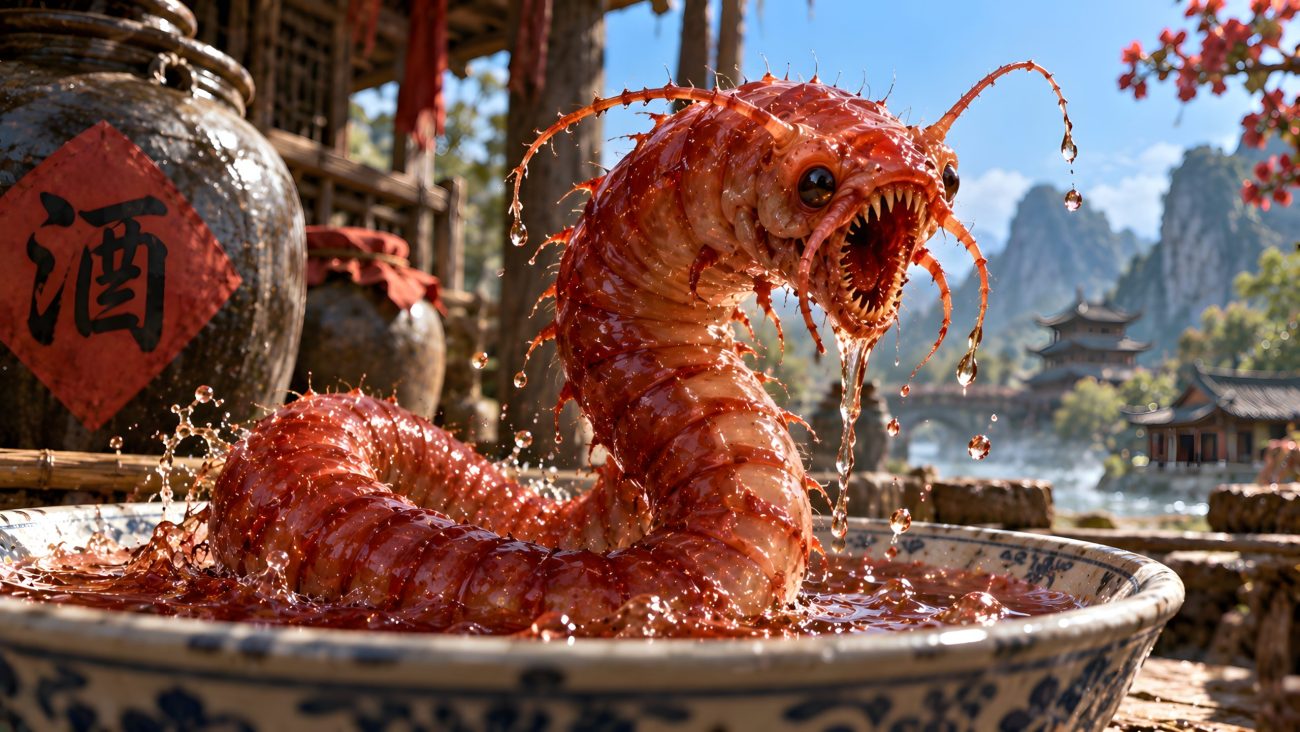
The Jiuchong is a small, red, worm-like creature that lives inside a human body and creates an insatiable desire for alcohol. It is described as a fleshy creature approximately three inches long, with a mouth and eyes, wriggling like a fish in water. Its presence allows its host to consume enormous quantities of wine without becoming drunk, while leaving them with a constant need to drink.

The creature appears in Strange Tales from a Chinese Studio (Liaozhai Zhiyi), in the story of Liu, a wealthy man from Changshan who was exceptionally fond of drinking. Whenever he drank alone, he could finish an entire wine jar. He was so devoted to alcohol that he planted half of his three hundred mu of farmland with millet used for brewing. Although he drank heavily, his wealth meant that this habit did not initially cause him financial difficulties.

A foreign Buddhist monk eventually recognized that Liu’s unusual drinking ability was caused by a wine worm living inside him. The monk offered to remove it without medicine. Liu was made to lie face down in the midday sun, with his hands and feet tied, while a vessel of fine wine was placed just beyond his reach. As thirst and the smell of wine became unbearable, Liu suddenly felt an intense itching in his throat and vomited the creature into the wine. The red worm wriggled in the vessel, and Liu was finally freed from its influence.

The monk refused payment in gold but asked to keep the wine worm. He explained that it was the essence of wine and possessed a remarkable ability: when placed in a jar of water and stirred around, it could transform the water into excellent wine. Liu tested this claim and found it to be true. Yet after the worm was removed, he developed an intense aversion to alcohol. His body gradually grew thinner, his wealth dwindled, and eventually his household became too poor to provide sufficient food.

The story ends with a reflection on Liu’s strange reversal of fortune. When he drank an enormous amount of wine, his wealth remained intact; after he stopped drinking, poverty overtook him. The tale leaves open whether the wine worm had truly been a disease or whether it had been the source of Liu’s former prosperity. The Jiuchong is therefore both a parasitic creature that controls a person’s appetite and a supernatural source of wine, whose removal changes its host’s life in unexpected ways.


Sources

“酒虫.” 维基百科,自由的百科全书. Wikimedia Foundation. Accessed October 18, 2026. https://zh.wikipedia.org/wiki/%E9%85%92%E8%99%AB
Gooseberry Wife

Tradition: English Mythology
Alternative Names: Gooseberry-Wife
Category: Insect


The Myth

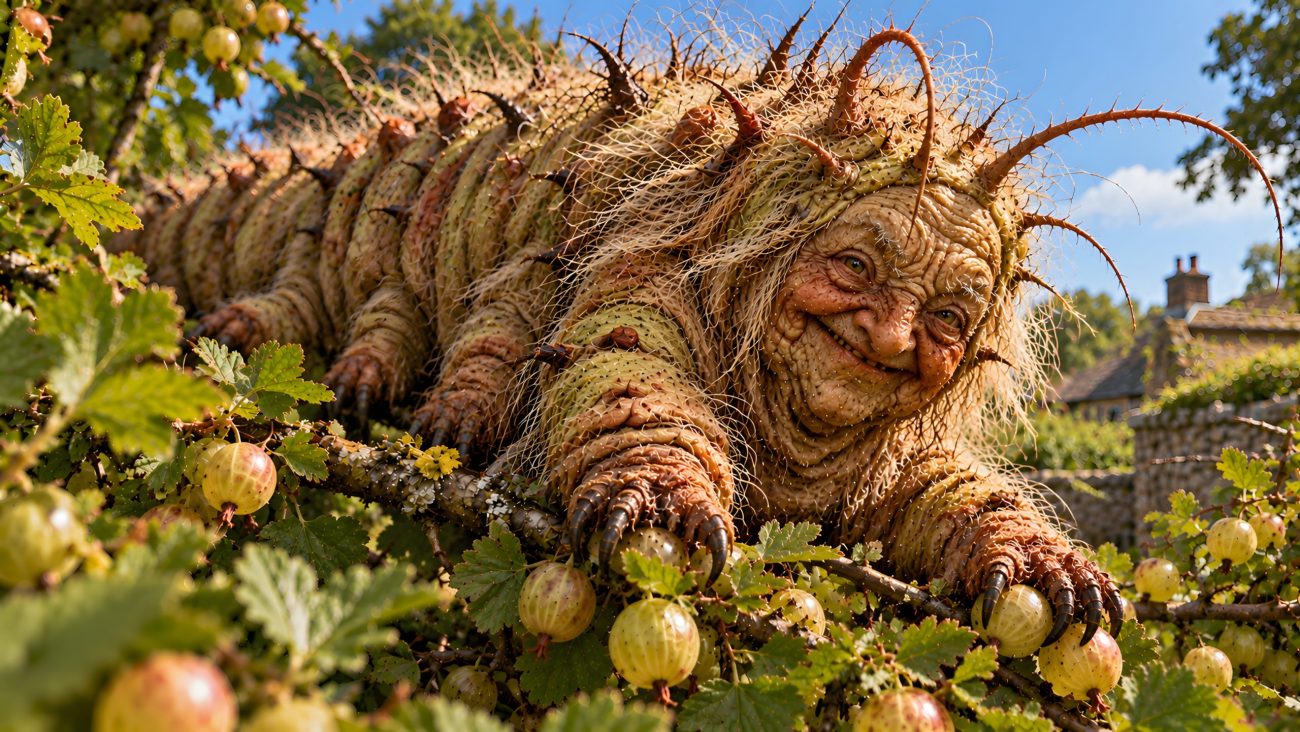
The Gooseberry Wife is a monstrous, hairy caterpillar believed to guard gooseberry bushes on the Isle of Wight. She is described as an enormous caterpillar covered in thick hair, making her an intimidating presence among the branches and leaves of the garden. Despite her unusual appearance, she belongs to the familiar world of plants and insects, where she serves as a frightening figure in local nursery folklore.

The Gooseberry Wife was used to frighten children away from gooseberry bushes. Adults warned that anyone who went into the garden would be caught by the creature, using the threat of the hairy caterpillar to discourage children from approaching the bushes. The warning was expressed in the rhyme: “If ye goes out in the garden, the gooseberry-wife ‘ll be sure to ketch ye.”

The Gooseberry Wife was considered one of the most obvious nursery bogies of the countryside. Her existence was apparently not expected to convince adults, but the image of an enormous, hairy caterpillar guarding the gooseberry bushes provided a memorable threat for children. Like other nursery bogies, she turned an ordinary part of the countryside into a place of imagined danger, using a creature associated with the garden to keep children away from places where they were not wanted.


Sources

“Kryzhovnichnaja Zhenushka.” New Bestiary (Bestiary.us). https://www.bestiary.us/kryzhovnichnaja-zhenushka/en


Mamarro

Tradition: Basque Mythology, Spanish Mythology
Alternative Names: Galtzagorri, Mamorro, Mamurru, Mamarrao, Mamor, Mamur, Maimur, Prakagorriak, Ximelgorriak
Category: Insect


The Myth

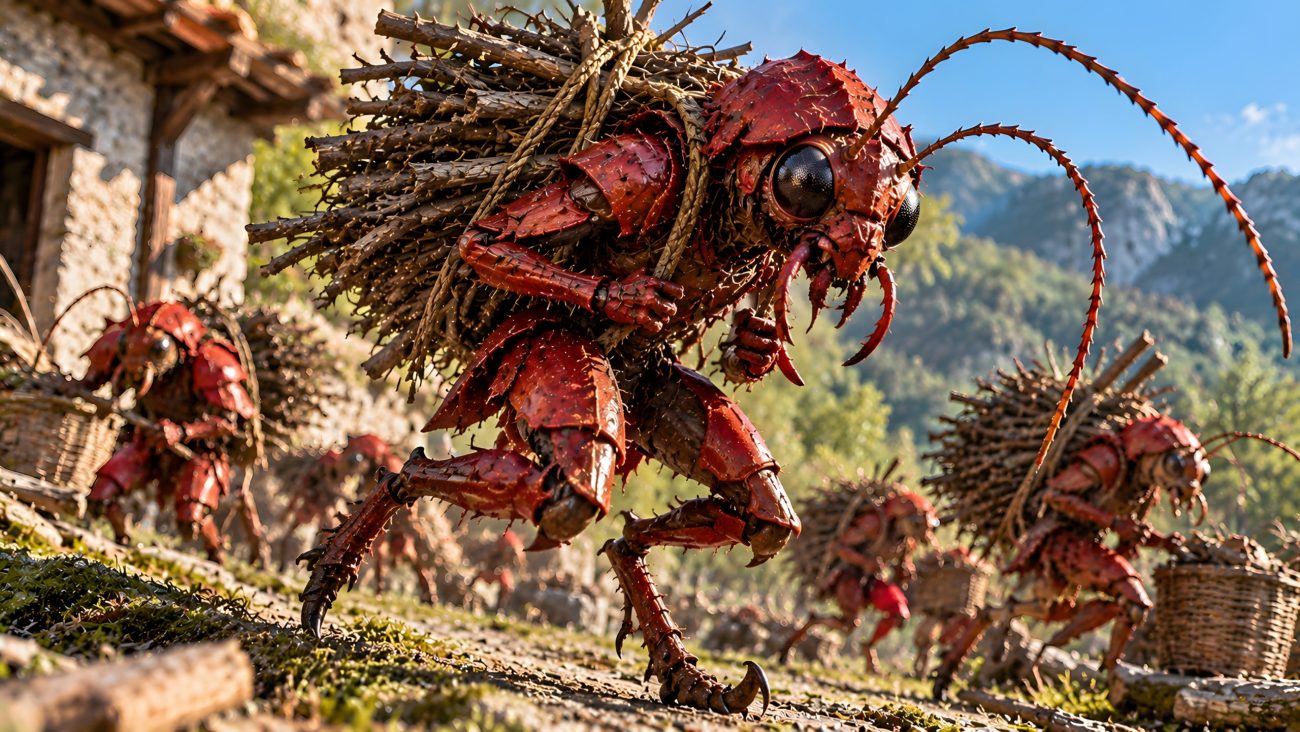
Mamarroak are tiny supernatural beings that can resemble insects or miniature humans. They are often depicted wearing distinctive red trousers, which is why they are also known as Galtzagorri, or “red trousers.” Although their precise appearance can vary, these little spirits are known for their extraordinary ability to perform tasks at incredible speed, accomplishing even seemingly impossible work when given instructions.

In Basque folklore, Mamarroak are generally benevolent spirits that help people with their daily chores and protect the households in which they live. However, they must always have something to do. When their owners fail to give them work, they can become troublesome or dangerous. People who possessed these spirits were sometimes said to have supernatural abilities, and stories credit Mamarroak with helping their masters perform remarkable feats.

Mamarroak were traditionally kept in small containers, sometimes made from needle cases, which could hold as many as four spirits. When someone opened a container, the creatures would emerge and fly around the owner’s head, repeatedly demanding, “What shall we do?” or “Work! Work!” Once given an order, they would immediately set about completing it. Their eagerness to work could be useful, but their owners had to choose their instructions carefully.

According to one tale from Kortezubi, a man who owned Mamarroak gave them several tasks, each of which they completed successfully. When they returned and asked what they should do next, he ordered them to carry water in a sieve. Unable to accomplish this impossible task, the spirits abandoned him. The story illustrates that even these extraordinarily capable beings had limits, and that an owner could escape their persistent demands by giving them work they could not perform.

Other legends describe people using Mamarroak to accomplish feats beyond ordinary human ability. A priest from Aizpuru supposedly travelled to Madrid and attended a bullfight with the help of the spirits. In Zarautz, a shepherd secretly placed their container on the yoke of his oxen during a competition, allowing his animals to pull a heavy stone farther than their rivals. The priest Juanis of Bargota was also credited with numerous extraordinary deeds, including building his house and performing acts of apparent magic with the spirits’ assistance.

Keeping Mamarroak could also become a burden. Some owners were said to retain their spirits throughout their lives, only to find themselves unable to die peacefully until they had disposed of them by destroying, selling, or giving them away. In one story from Bedia, a priest discovered a small bag of Mamarroak beside a dying woman. He threw the bag into the fire, where the spirits disappeared with loud neighing sounds. Only then was the woman able to die.

Mamarroak are therefore powerful but demanding household helpers. Their tiny size contrasts with the remarkable strength and speed they provide, while their constant need for employment makes them both useful companions and potentially troublesome possessions. In Basque tradition, they represent supernatural assistance that can bring extraordinary success, provided their owner knows how to control their tireless desire to work.


Sources

“Mamarro.” Viquipèdia, l’enciclopèdia lliure. Wikimedia Foundation. Accessed October 18, 2026. https://ca.wikipedia.org/wiki/Mamarro


Pyrausta

Tradition: Greek mythology, Italian Mythology, Roman Mythology
Alternative Names: Pyrallis, Pyrigonos
Category: Insect, Dragon


The Myth

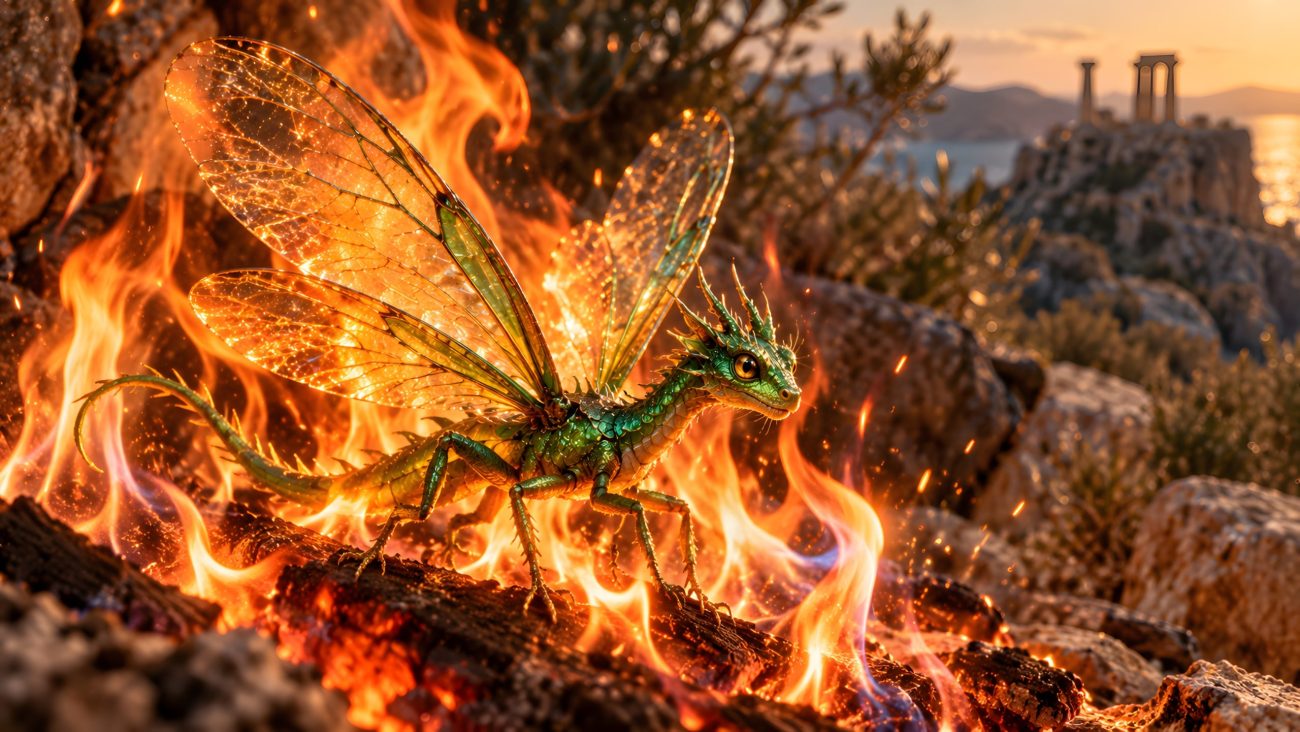
Pyrausta is a tiny, four-legged winged creature said to live within fire. It possesses the delicate, filmy wings of an insect while displaying features associated with a miniature dragon, giving it a strange nature somewhere between the two. Its body is covered in scales and it may possess horns and crests, yet even the largest males are small enough to fit within the palm of a human hand.

The creature is associated with Cyprus and was described in ancient accounts as living directly within flames, much like the legendary salamander. Fire is essential to its existence: while it remains among the flames it survives, but if it ventures too far from the fire it dies. Its entire existence is therefore bound to the heat in which it dwells.

Pyrausta is known by several names. The Greeks called it pyrallis, while pyrigonos was another Greek name for the creature. The name Pyrausta has traditionally been associated with its fiery nature.

Its appearance combines the characteristics of an insect and a tiny dragon. Although dragon-like in its scales, horns, and crests, its diminutive size and wings give it the unmistakable character of an insect. Its coloration can vary enormously, ranging across many possible colors and patterns. Some may be solid-colored, spotted, striped, faded, brilliantly vivid, glowing, flashing, or metallic, while others may have rough, smooth, or slick-scaled surfaces. Some forms can possess subdued coloration suitable for camouflage, while others are conspicuously bright.

Ancient accounts of the Pyrausta’s existence are associated particularly with Pliny the Elder’s Natural History. Later interpretations have suggested that the creature may have been inspired by a real fire-associated insect, with Melanophila acuminata proposed as a possible identification. The Pyrausta nevertheless belongs to the world of legendary creatures, where its extraordinary relationship with fire transformed a small insect into a supernatural being.


Sources

“Pyrausta.” Wikipedia: The Free Encyclopedia. Wikimedia Foundation. Accessed October 3, 2026. https://en.wikipedia.org/wiki/Pyrausta

“Pyrausta.” Warriors of Myth Wiki. Fandom. Accessed October 3, 2026. https://warriorsofmyth.fandom.com/wiki/Pyrausta


Hingeloom

Tradition / Region: Estonian Mythology
Alternative names: Soul Animal
Category: Spirit, Insect


The Myth

The Hingeloom is a person’s spirit appearing in the form of a small animal or an insect. Rather than existing only as an invisible soul, it could take the shape of a tiny living creature, representing the person’s spirit in the physical world.


Sources

Wikipedia contributors. (n.d.). Estonian mythology. In Wikipedia. Retrieved June 29, 2026, from https://en.wikipedia.org/wiki/Estonian_mythology


Hingeliblikas

Tradition / Region: Estonian Mythology
Alternative names: Soul Moth
Category: Insect, Spirit


The Myth

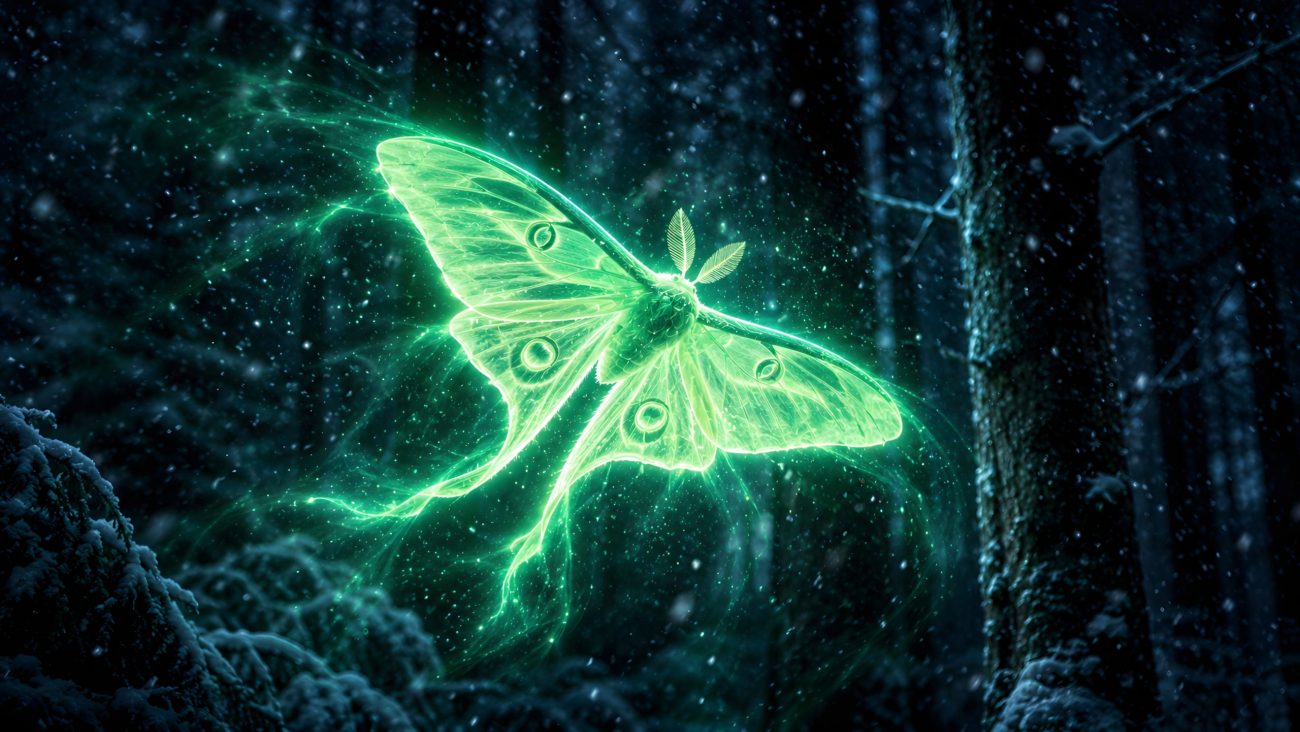
The Hingeliblikas is a person’s spirit appearing in the form of a moth. Rather than existing only as an invisible soul, it could take the shape of a moth, representing the person’s spirit in the physical world.


Sources

Wikipedia contributors. (n.d.). Estonian mythology. In Wikipedia. Retrieved June 29, 2026, from https://en.wikipedia.org/wiki/Estonian_mythology


Eintykára

Tradition / Region: Paraguay Mythology
Alternative names: Golden Honey Bee
Category: Insect


The Myth

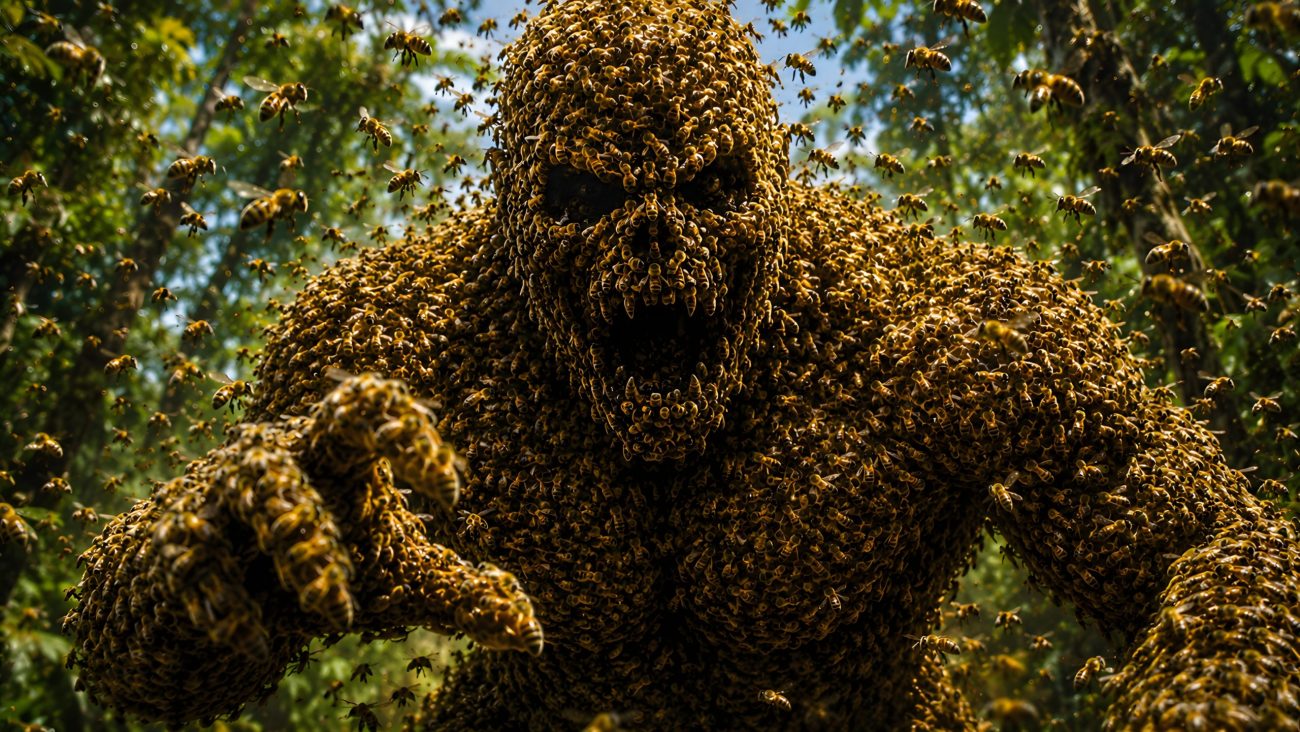
The Eintykára are stingless bees renowned for producing golden honey with unusual properties. Their hives are marked by long tubular entrances, and the bees possess a remarkable power: by gathering together in great numbers, they can take the form of a human being.

Long ago, an elderly unmarried woman passed the same Eintykára hive every day. Fascinated by its shape, she often joked and fantasized aloud, wishing that the hive were a handsome man who could become her husband. Over time, she began speaking to the hive affectionately and even referred to it as her husband.

One night, a stranger appeared before her. He was extraordinarily handsome, with milky-white skin and hair the color of golden honey. He revealed that he was Eintykára, the very hive she had spoken to for so long, and that he had come to take her as his wife and provide for her people.

The two married and had children. Eintykára proved to be unusually wise and tireless, becoming admired throughout the village. He seemed never to eat. Instead, he would disappear into the forest, transform into a swarm of bees, gather nectar, and then return to human form. From his labors came beeswax and golden honey, which he generously shared with everyone. According to tradition, some fair-skinned members of the Chamacoco people are descendants of Eintykára and his children.

Another Eintykára once joined a different Chamacoco settlement and lived among the people. However, the village was attacked by enemies who set the houses ablaze. As the bee-man attempted to escape by transforming into a swarm, too many of his bees were consumed by the flames. Unable to survive the loss, he perished alongside the people he had chosen as his own.

Thus, the Eintykára are remembered not merely as magical bees, but as shapeshifting beings capable of becoming human, bringing prosperity and honey to those they love, and even founding entire bloodlines among the Chamacoco people.


Sources

A Book of Creatures. (2015, July 10). Eintykára. Retrieved June 13, 2026, from https://abookofcreatures.com/2015/07/10/eintykara/


Golden Bee

Tradition / Region: Croatian Mythology
Alternative names: Mother of Lightning
Category: Insect


The Myth

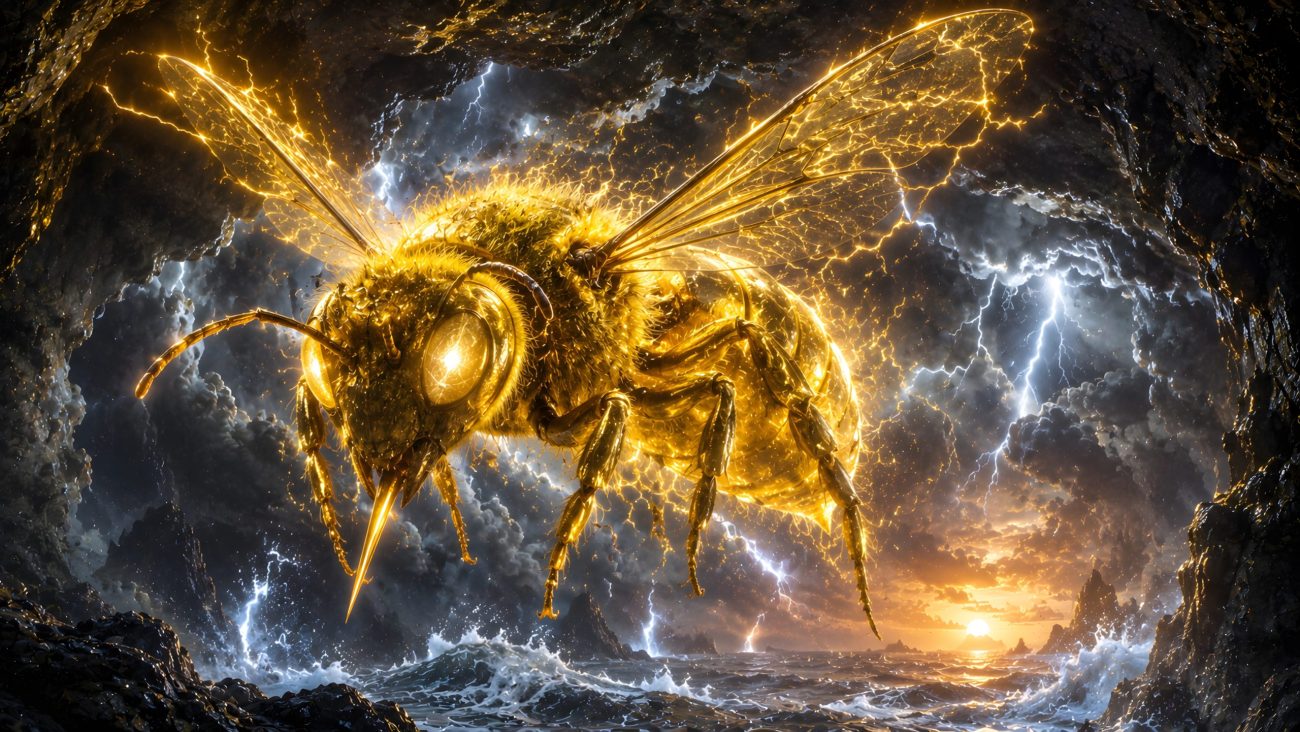
The Golden Bee was a supernatural storm-being that lived inside a cavern of clouds above the Unknown Sea. She controlled thunder and lightning, filling the sky with flashing fire and roaring storms whenever she moved. Her cavern was the third and most dangerous of the great cloud caverns.

The Golden Bee appeared during the journey of Plunk’s wife as she crossed the sea searching for the magical Bass with the golden fin. To reach the Unknown Sea, she first passed the cavern of the Mother of All Snakes, who stirred the sea and raised the waves, and then the cavern of the Mother of All Birds, who created storms by beating her enormous wings. Beyond them waited the Golden Bee.

Inside the third cavern, thunder rolled endlessly and lightning burst through the clouds as the Golden Bee flew before the entrance. Terrified but determined, the woman ripped off her loose white sleeve and threw it over the Bee, trapping her. The moment the Golden Bee was captured, the thunder stopped and the lightning vanished.

While trapped, the Golden Bee pleaded to be released and offered the woman a reward. Looking across the sea, the woman saw the silver boat of the Dawn-Maiden gliding over crimson waters with her lost child seated beside her holding a golden apple. The Golden Bee promised to reveal how the woman could reach her child and live happily with him again if she would set her free.

The woman refused because she still needed to continue through the cavern toward the Unknown Sea to save her husband. Keeping the Golden Bee trapped, she safely passed through the storm cavern and continued her journey across the dark waters.


Sources

Brlić-Mažuranić, I. (1924). Croatian tales of long ago (F. S. Copeland, Trans.). New York: Frederick A. Stokes Company.


Apshait

Tradition / Region: Egypt Mythology
Alternative names: Apshait Beetle
Category: Insect


The Myth

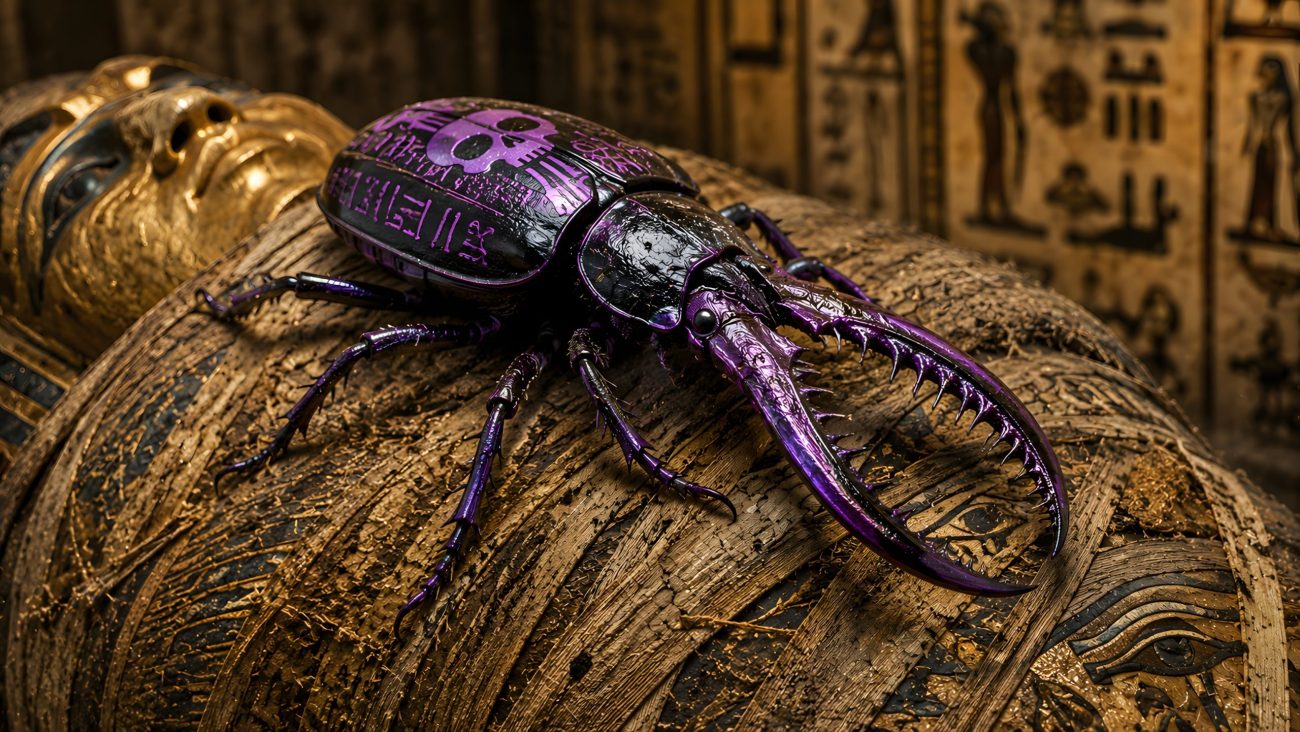
The Apshait was a monstrous flesh-eating beetle from ancient Egyptian mythology and funerary tradition. It appears in the Book of the Dead, particularly in Chapter 36, where it is described as a corpse-devouring creature feared by the dead.

The creature was believed to gnaw upon bodies and consume corpses, making it a symbol of decay and destruction within the tomb. Egyptian funerary spells were designed to protect the deceased from beings like the Apshait during the journey through the afterlife.

In protective rituals, the soul of the dead threatens the Apshait with weapons such as knives and spears, magically driving the monster away before it can damage the body.

Some scholars believe the myth may have originated from real carrion beetles found inside damaged or poorly preserved mummies, where insects fed upon the wrappings and flesh of the dead.

Later Egyptian texts sometimes confused the Apshait with the tortoise, another creature occasionally associated with darkness and enemies of the sun god Ra.


Sources

A Book of Creatures. (2017, May 22). Apshait. Retrieved May 15, 2026, from https://abookofcreatures.com/2017/05/22/apshait/

Wikipedia contributors. (n.d.). Apshait. In Wikipedia. Retrieved May 15, 2026, from https://en.wikipedia.org/wiki/Apshait


Mbe the Cockroach

Tradition / Region: Cameroon Mythology
Alternative names: Mbe
Category: Insect


The Myth

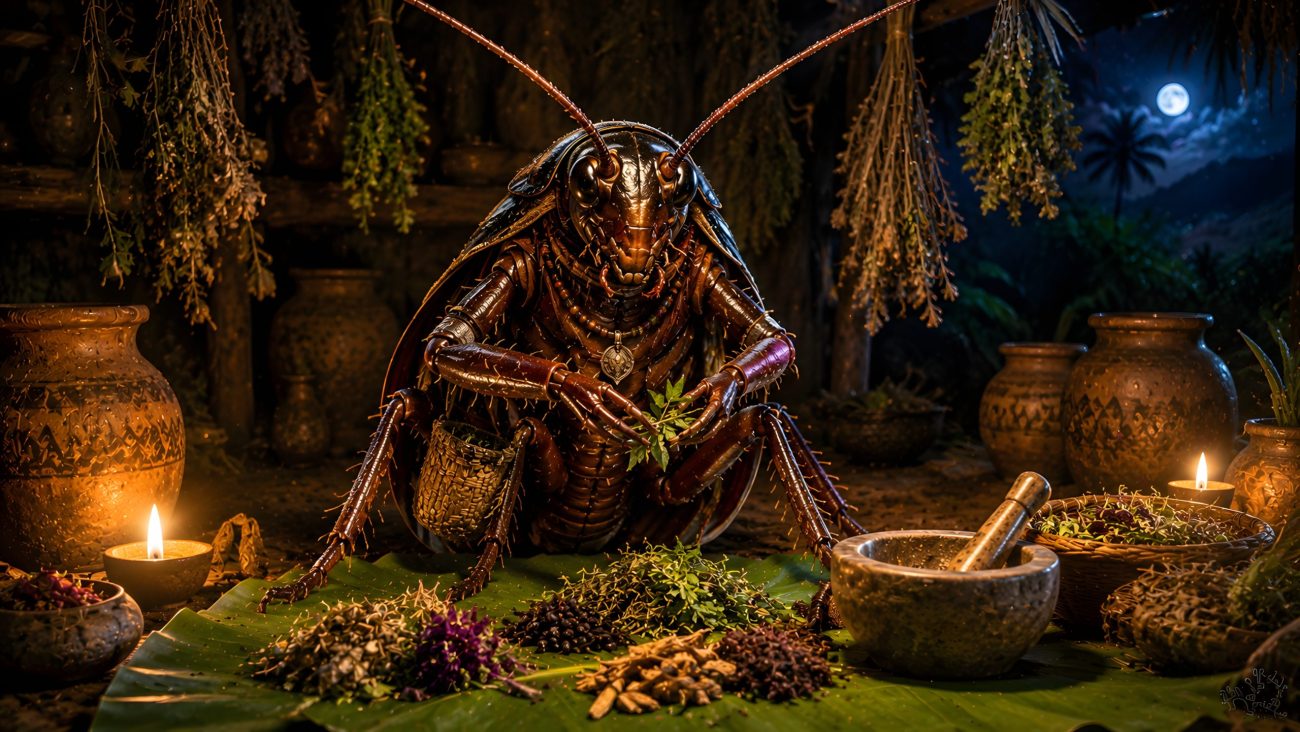
Mbe the Cockroach is portrayed in Beba folklore as a small but highly respected healer associated with medicine, herbal knowledge, and dangerous intelligence. Though physically tiny and vulnerable, Cockroach possesses powerful medical skills feared and admired throughout the land. She carries bags of herbs, healing oils, and secret remedies, functioning almost like a wandering spirit-doctor among animals.

Despite her reputation, Mbe is also deeply mistrusted because of her ancient hostility with Hen. In the tale, Hawk and Hen are inseparable friends whose families live together peacefully until Hawk’s oldest child becomes gravely ill with painful scabies and fever. After every local remedy fails, Hawk travels to seek the help of Cockroach, believing her healing powers can save his child.

Cockroach arrives at Hawk’s compound carrying medicinal herbs and special oils, including python oil used to soothe wounds and induce sleep. Calm and professional, she carefully divides the herbs into piles and instructs Hawk exactly how to prepare the treatments. She promises the child should recover within a week.

But Hen immediately becomes hostile.

Seeing Cockroach inside the home, Hen begins screaming accusations, claiming the healer intends to poison the child rather than cure him. The old hatred between Hen and Cockroach overwhelms reason. Cockroach attempts to ignore the insults and continue her work, but Hen’s rage only grows stronger.

Finally, in a sudden burst of violence, Hen attacks.

She scatters the sacred medicines across the compound, destroying the remedies, then lunges forward and swallows Cockroach whole in a single gulp.

With the healer dead and the medicines ruined, Hawk’s child dies soon afterward.

Hawk becomes consumed with grief and fury. He swears eternal revenge against Hen and her descendants. From that day onward, according to the myth, hawks began hunting chickens and their chicks forever.

In this story, Mbe the Cockroach represents fragile wisdom and vulnerable healing knowledge destroyed by jealousy, mistrust, and uncontrolled anger. Though small and physically weak, Cockroach possesses life-saving powers that larger animals lack. Her death marks the collapse of friendship, medicine, and social harmony, transforming the natural relationship between hawks and chickens into permanent blood-feud.


Sources

Makuchi. (2008). The sacred door and other stories: Cameroon folktales of the Beba. Athens, OH: Ohio University Press.