Re’em

Tradition: Israeli Mythology
Alternative names: Reëm, Re’em (רְאֵם), Rəʾēm
Category: Cow


The Myth

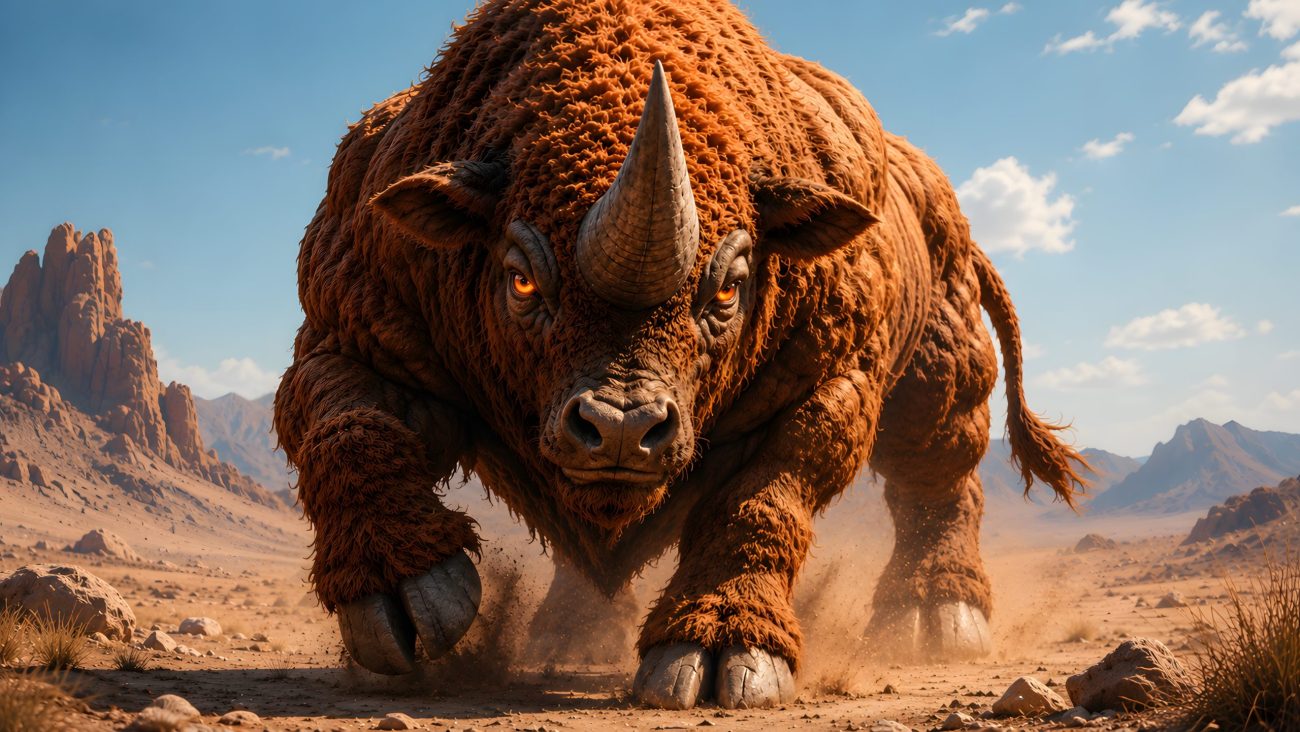
The re’em is an animal mentioned nine times in the Hebrew Bible. Its exact identity has been debated for centuries, and different traditions and translations have understood it in several different ways.

The creature has been translated as a “unicorn” in the Latin Vulgate and the King James Version. Other translations have rendered the name as “oryx,” “wild ox,” “wild bull,” “buffalo,” or “rhinoceros.” In Modern Hebrew, the word has been associated with the oryx.

One of the best-known descriptions appears in the Book of Job, where God challenges Job by asking whether the re’em can be made to serve mankind:
“Will the unicorn be willing to serve thee, or abide by thy crib? Canst thou bind the unicorn with his band in the furrow?”

The passage emphasizes the creature’s great strength and its independence from human control. Job is asked whether he can trust the re’em’s strength or make it perform agricultural labor and bring in his harvest.

Because of these descriptions, the re’em has often been imagined as a powerful wild bovine rather than an ordinary domesticated ox. Some modern interpretations identify it with the aurochs, the enormous wild ancestor of domestic cattle. Others have associated it with the oryx or other large horned animals.

The famous image of the re’em as a unicorn therefore comes largely from later translation traditions rather than from a detailed biblical description of a one-horned monster. The original Hebrew term itself does not definitively establish what animal was intended.


Sources

“Re’em.” Wikipedia: The Free Encyclopedia. Wikimedia Foundation. Accessed August 29, 2026. https://en.wikipedia.org/wiki/Re%27em

Quinotaur

Tradition: Frankish mythology, French Mythology
Alternative names: Quinotaurus
Category: Cow, Fish


The Myth

The Quinotaur was a mythical sea creature mentioned in the 7th-century Chronicle of Fredegar. It was described as a beast of Neptune resembling a bull with five horns, combining a taurine form with a connection to the sea.

According to the legend, the creature attacked the wife of the Frankish king Chlodio and fathered Meroveus. Through Meroveus, the Quinotaur was therefore said to have sired the line of Merovingian kings.

The creature was associated with both Neptune and the Minotaur because of its two defining characteristics: it was a bull-like creature connected with the sea. The surviving account does not make clear whether the Quinotaur was originally a genuine Frankish mythological being or whether some of its characteristics were shaped or elaborated by the Christian authors who recorded the story.

The name Quinotaurus is Latin, and its precise original meaning is uncertain. The surviving sources do not establish whether it translated an earlier Frankish name for the creature or was itself a later scholarly or clerical creation.

The story has also been compared with other ancient myths involving bulls, water, fertility, and divine ancestry. In Greek mythology, for example, Zeus took the form of a bull when he carried Europa across the sea to Crete, while the Minotaur was born from the union of Pasiphaë and a divine white bull associated with Poseidon.

The Quinotaur is therefore preserved primarily as a legendary ancestor of the Merovingian dynasty, rather than as a creature with a large independent body of mythology.


Sources

“Quinotaur.” Wikipedia: The Free Encyclopedia. Wikimedia Foundation. Accessed August 29, 2026. https://en.wikipedia.org/wiki/Quinotaur


Qiongqi

Tradition: Chinese mythology
Alternative names: Thoroughly-Odd, Qiongqi (窮奇)
Category: Cow


The Myth

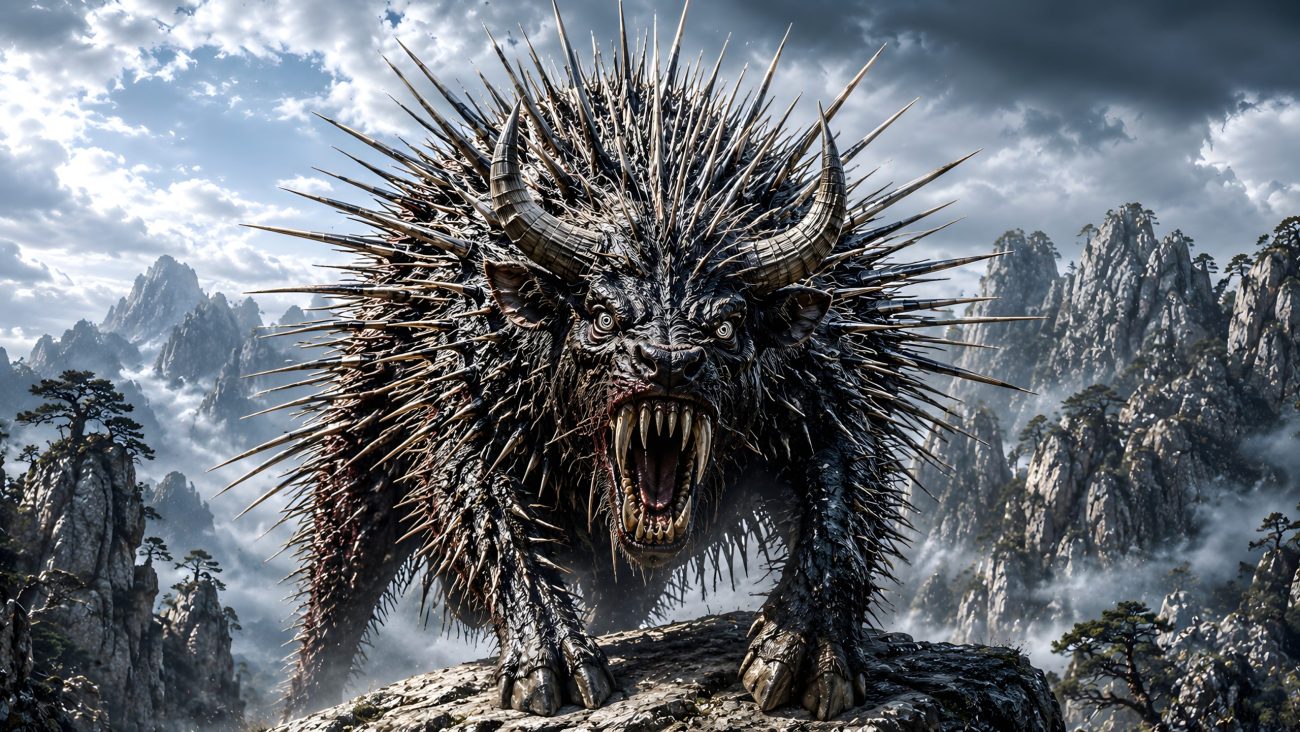
Two hundred and sixty li west of the previous region stands Mount Gui. A strange beast is said to dwell on its heights, resembling an ox covered with the sharp needles of a porcupine. It is called Qiongqi and makes a sound like a howling dog.

Qiongqi is a man-eater. According to one tradition, it devours people who wear their long hair loose, a style associated with demons and shamans. Its victims are eaten beginning with the head, although another version says that it begins with the feet.

Qiongqi was later given a more human and historical identity. In the Zuo Zhuan, it was described as another incompetent son of a thearch, Lesser-Brilliance, in the same passage that also mentions Hundun. Like Hundun, Qiongqi later became a fierce deity during the Han period.

The Huainanzi gives another account of its origin, stating that Qiongqi was born from the wind of the Northern Desert. He was also one of twelve divine beings invoked during the official Grand Exorcism performed at the end of the lunar year in the imperial palace.

Despite his terrifying nature, Qiongqi had a beneficial aspect in this ritual: he consumed insect-poison.

Qiongqi appears again in another chapter of the Guideway to the Mountains and Seas, where he is described differently, this time as a tiger with wings.

A later work, the Guideway to Gods and Anomalies, gives Qiongqi an even more sinister character. There he is portrayed as a perverse creature that devours people who are loyal and trustworthy, while offering freshly killed meat to the wicked and rebellious.

Another version of the same tradition describes Qiongqi as having a human body and the head of a dog, again making a sound like a dog. Because of this form, the poet Guo Pu referred to him as a “divine dog.”


Sources

Strassberg, Richard E., ed. and trans. A Chinese Bestiary: Strange Creatures from the Guideways Through Mountains and Seas. Berkeley: University of California Press, 2002.


Plaagbeest

Tradition: Dutch Mythology
Alternative names: Pleachbist, Blaffert, Pestdier
Category: Cow


The Myth

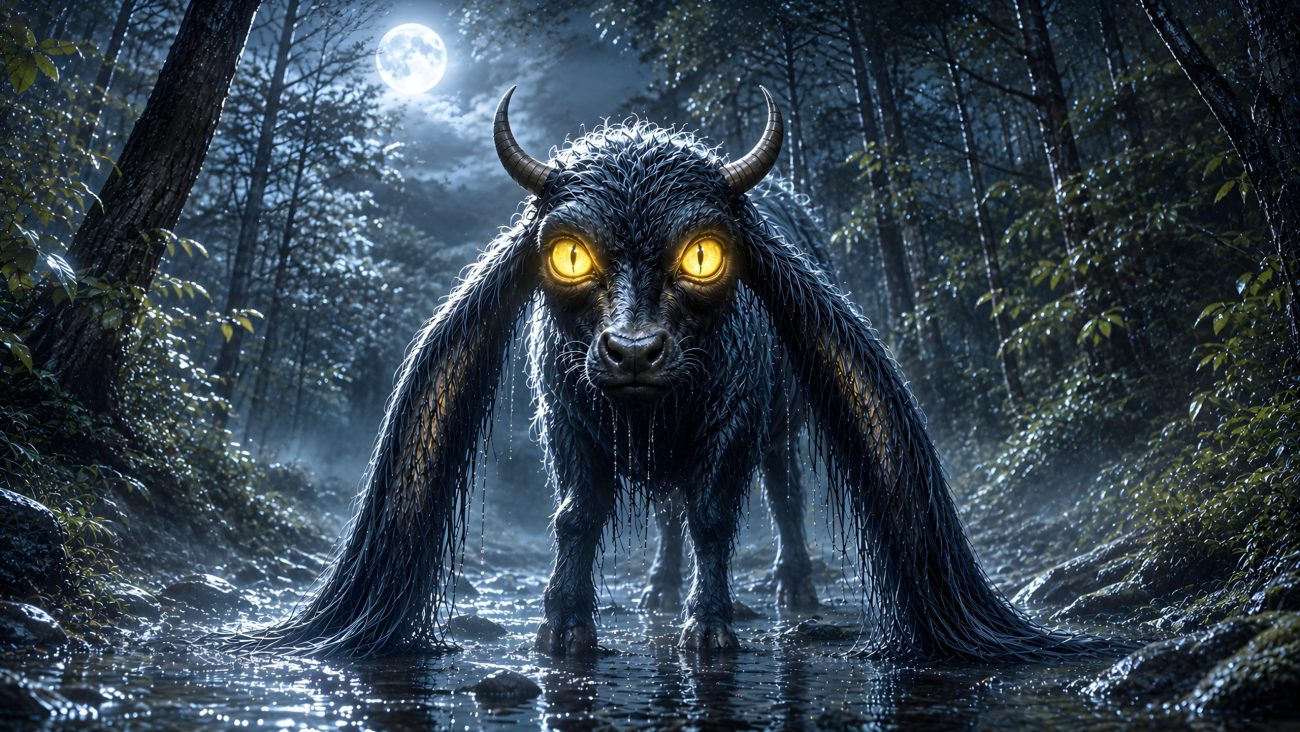
The Plaagbeest is a supernatural creature said to appear in the darkness and follow people or allow itself to be carried by them. As it remains with its victim, it can become extraordinarily heavy, making it increasingly difficult to carry.

It is commonly described as either a black calf with large eyes and long ears, or as a black, shaggy dog with sparkling eyes and a long tail.

The Plaagbeest is often found hiding in barns, particularly high up on the beams. It has a peculiar habit of clapping its ears together, producing a barking-like sound. Because of this, it is also known as the Blaffert.

Although the creature frightens people terribly, its presence is considered more dangerous because it can bring the plague and other diseases to both humans and animals.

There is, however, a simple way to appease it. Offering the Plaagbeest a piece of rye bread is said to make it leave the person alone.


Sources

“Van aardmannetje tot zwarte juffer: Een lijst van Nederlandse en Vlaamse elfen en geesten.” Abe de Verteller. Accessed August 29, 2026. https://abedeverteller.nl/van-aardmannetje-tot-zwarte-juffer-een-lijst-van-nederlandse-en-vlaamse-elfen-en-geesten/


Poli the Cursed

Tradition: Liechtenstein Mythology
Alternative names: Poli
Category: Ghost, Cow


The Myth

Poli could have lived a good life as a herdsman on Gritsch, but one particular cow made his work miserable. The animal repeatedly escaped, forcing him to spend hours searching for it.

Poli frequently cursed the cow and began thinking of a way to get rid of it. Eventually, he devised a plan. He felled a fir tree, stripped off its bark, and placed the wet, slippery pieces of bark across a dangerous location.

He then drove the cow over the slippery surface. The animal lost its footing, fell from the mountain, and died beneath a rock.

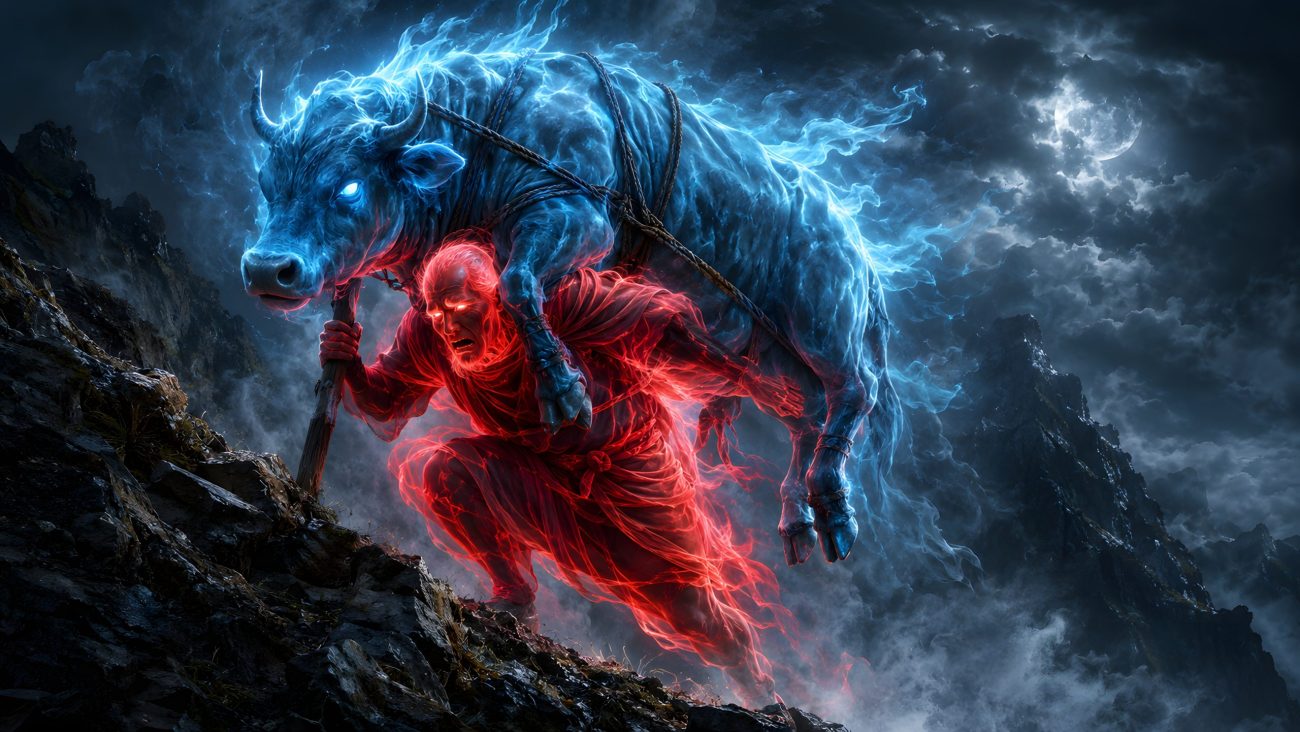
After his death, the unfaithful herdsman was condemned to wander as a ghost for his crime. He was forced to carry the cow up the mountain as many times as there were hairs on his head.

Whenever he finally reached the summit, he let out a loud cry of joy that could be heard far across the mountains. His cry was believed to be a sign that snowfall would soon come to the Gritsch Alpine pasture.

Another herdsman is said to haunt the path from the Wang Alp to the Rappenstein for the same crime. He had caused many cows to fall into the ravine and was likewise condemned to wander after death. His cries could always be heard whenever a storm was approaching.


Sources

“Van aardmannetje tot zwarte juffer: Een lijst van Nederlandse en Vlaamse elfen en geesten.” Abe de Verteller. Accessed August 29, 2026. https://abedeverteller.nl/van-aardmannetje-tot-zwarte-juffer-een-lijst-van-nederlandse-en-vlaamse-elfen-en-geesten/


Pfronten-Öscher Hund

Tradition: German Mythology
Alternative names: Öscher Hund, Öscher Pudel
Category: Dog, Cow


The Myth

Long ago, people in Pfronten-Ösch frequently saw a huge phantom dog wandering through the area at night. It became known as the Öscher Hund or Öscher Pudel.

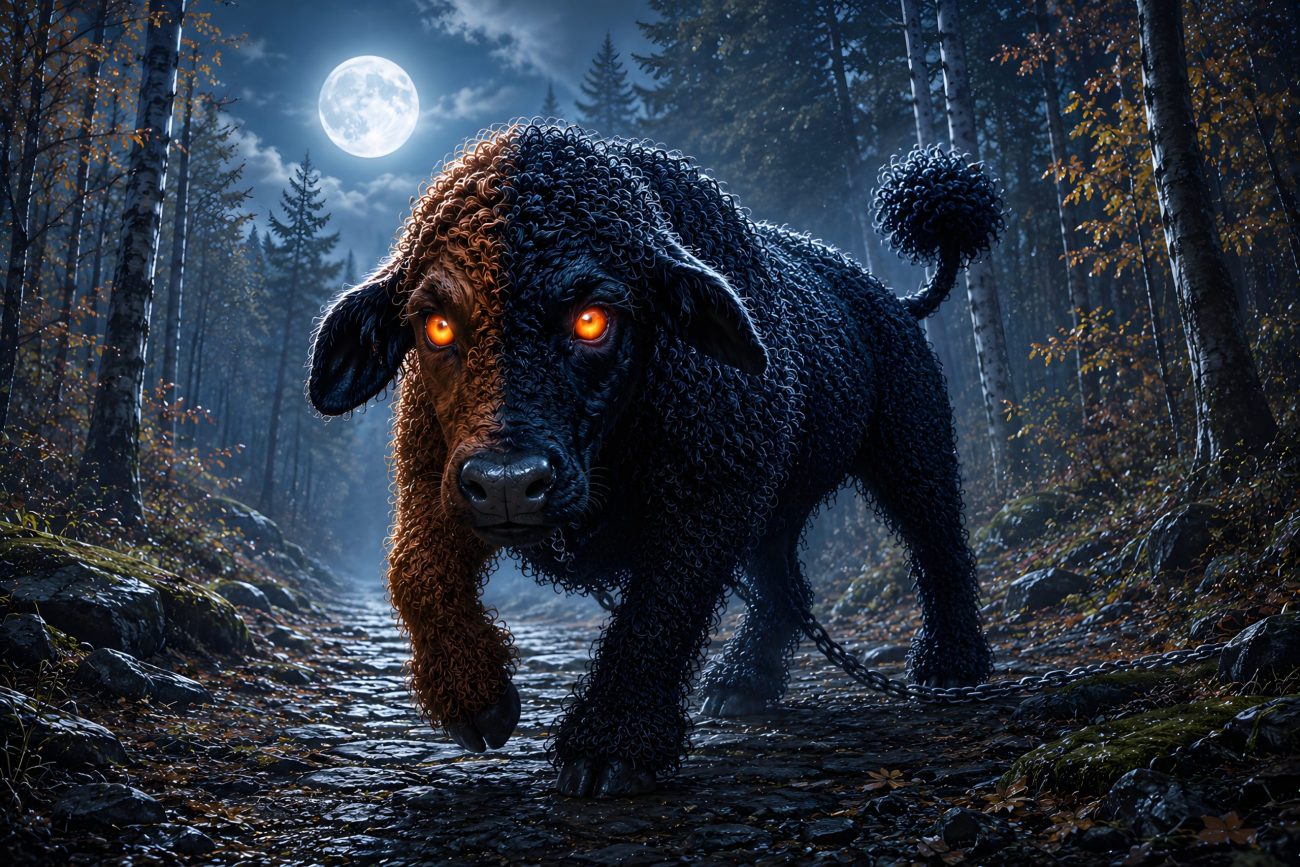
The apparition usually appeared shortly after midnight. It was enormous, about the size of a calf, and its strange appearance made it even more frightening: it was described as being half calf and half dog.

A night watchman who encountered the creature more often than most once found himself being followed by it. The apparition approached him accompanied by the terrifying rattling of chains. Eventually it came so close that he was able to see it clearly.

The creature was divided in color, being half fox-colored and half black. Its eyes were enormous and fiery, said to be as large as the full moon, making it a horrifying sight.

When the night watchman reached the Bärenwirt, however, the Pudel suddenly disappeared. Instead, he heard a terrible crashing noise, as though all the houses of Ösch were collapsing at once.

The Öscher Hund could also be seen by people who did not normally believe in ghosts. Yet it was not visible to everyone. According to the legend, only people born under a particular sign were capable of seeing the apparition.

One Christmas Eve, for example, the creature approached two travelers walking along the road and accompanied them for a considerable distance. One of the men could see the phantom clearly, while his companion could see nothing at all.


Sources

“Der Pfronten-Öscher Hund.” In Hulda Eggart, ed., Allgäuer Sagen, selected from K. A. Reiser’s Sagen, Gebräuche und Sprichwörter des Allgäus, no. 194, pp. 198–199. Kempten and Munich, 1914. Reproduced by SAGEN.at. Accessed August 29, 2026. https://www.sagen.at/texte/sagen/deutschland/bayern/allgaeu/hund.html


Ochsenkopf

Tradition: German Mythology
Alternative names: Ochsenkopf
Category: Cow


The Myth

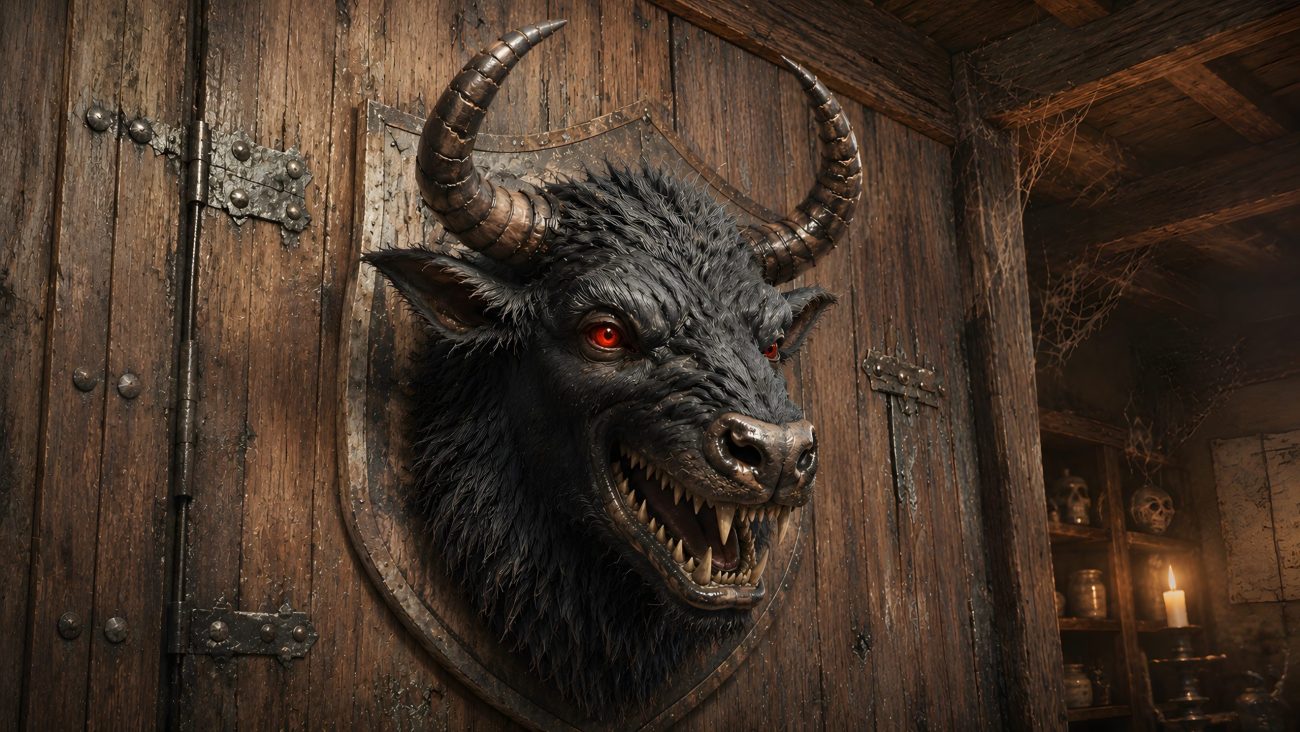
At the Brümmerhof, a historic farmstead dating from 1644 and now located on the grounds of the Agricultural Museum in Hösseringen, an ox head hangs in the gable.

According to the local legend, the ox head has an important protective function. If it were ever removed or disappeared, the farm’s livestock would begin to die one after another.

The deaths would occur in a particular order. The largest animals would die first, beginning with the horses. The deaths would then progress through the livestock until finally reaching the smallest animals, with the chickens dying last.

The legend therefore presents the ox head as a supernatural guardian of the farm’s animals. Its continued presence ensures their survival, while its disappearance would herald the destruction of the entire livestock.


Sources

Bengen, Etta, comp. “Der Ochsenkopf.” SAGEN.at – Traditionelle Sagen aus Deutschland, Niedersachsen. Source: Will-Erich Peukert, Niedersächsische Sagen I (Göttingen, 1964), p. 4. Accessed August 29, 2026. https://www.sagen.at/texte/sagen/deutschland/niedersachsen/bengen/ochsenkopf.html


Ophiotaurus

Tradition: Greek mythology
Alternative names: Ophiotaurus
Category: Cow


The Myth

The Ophiotaurus was a strange creature with the front half of a bull and the rear half of a serpent. Its name comes from the Greek words for “snake” and “bull.”

The creature was connected to a prophecy during the Titanomachy, the great conflict between the gods and the Titans. The prophecy declared that whoever burned the Ophiotaurus’s entrails in a fire would gain the power to defeat the gods.

According to Ovid’s account in the Fasti, the Ophiotaurus was born from Mother Earth. The three Fates had foretold its dangerous power, and Styx therefore imprisoned it within a dark forest surrounded by three walls.

Briareus, one of the hundred-handed Hecatoncheires, eventually killed the creature with an adamantine axe. He intended to burn its entrails so that the prophecy would grant victory over the gods.

Before he could do so, however, Zeus intervened. He sent birds to seize the entrails and prevent Briareus from completing the ritual. A kite carried them away, and as a reward for its service, Zeus placed it among the stars.


Sources

“Ophiotaurus.” Wikipedia: The Free Encyclopedia. Wikimedia Foundation. Accessed August 29, 2026. https://en.wikipedia.org/wiki/Ophiotaurus


Onça-Boi

Tradition: Brazilian Mythology
Alternative names: Onça-Boi
Category: Cat, Cow


The Myth

The Onça-Boi is a creature of Amazonian folklore whose existence is said to have been reported by fishermen, hunters, and bushmen travelling through the forests.

The creature resembles a jaguar, but possesses the physical characteristics of cattle: hooves and horns.

Unlike ordinary jaguars, which generally hunt alone, Onças-Bois are said to always hunt in pairs. The two creatures work together to corner their prey, which is primarily made up of hunters who encounter them in the wilderness.

When pursued by a pair of Onças-Bois, a hunter’s best immediate chance of survival is to climb a tree. However, the creatures are patient hunters. They take turns watching their trapped victim, waiting beneath the tree until exhaustion, hunger, or sleep causes the hunter to fall.

According to the legend, there is only one reliable way to survive an encounter with a hungry pair: kill one of the Onças-Bois.

Once one of the creatures is killed, the surviving Onça-Boi immediately flees, abandoning the hunt.


Sources

“Onça-Boi.” Mythus Wiki. Fandom. Accessed August 29, 2026. https://mythus.fandom.com/wiki/On%C3%A7a-Boi


Old Bull

Tradition: American Mythology
Alternative names: Old Bull
Category: Cow


The Myth

When Stone Boy was returning home, he had been trying to understand why so many buffalo had gathered near the home he shared with his uncles. He approached several groups of young buffalo, but each group fled as soon as it saw him. Stone Boy continued from one group to another, scattering them until he eventually became tired of their cowardice and began making his way home.

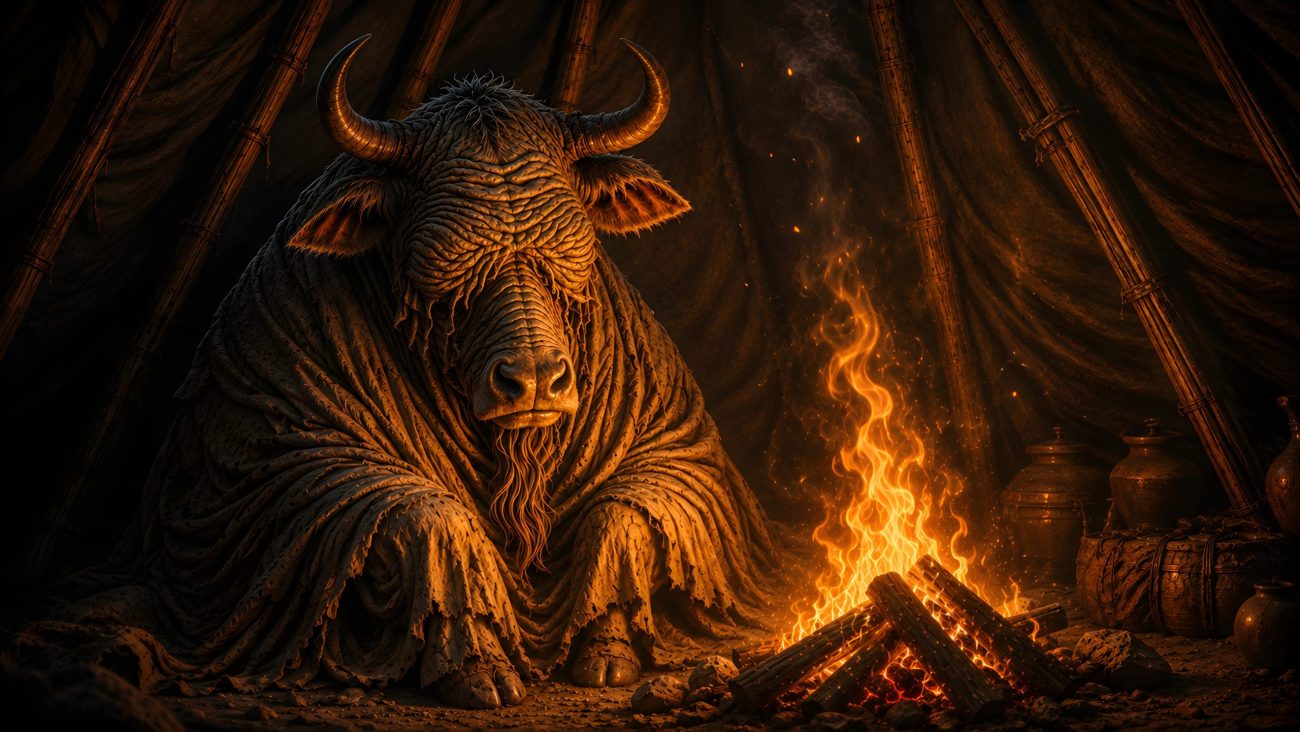
When he was about half a mile from home, he encountered an old, shaggy buffalo standing beside a large boulder. The old bull repeatedly rubbed one horn against the stone and then the other, apparently trying to sharpen them.

Stone Boy approached and discovered that the bull was extremely old and nearly blind. His horns were so blunt that he could have rubbed them against the boulder for an entire year without making them sharp enough to hurt anyone.

When Stone Boy asked what he was doing, the old bull explained that he was sharpening his horns for the coming war.

The bull revealed that the chief’s twins had been killed by Stone Boy, who had supposedly driven them over a cut bank deliberately. In response, the chief had ordered all of his buffalo to gather together. Once they had assembled, they intended to kill Stone Boy, his mother, and his uncles.

Stone Boy thanked the old bull for revealing the plan and offered to save him the trouble of continuing to sharpen his useless horns. He pointed out that the bull was too old to participate in such a war and might fall into a hole, stumble, and be trampled by the other buffalo.

The old bull, being nearly blind and unaware of what Stone Boy was doing, stood still, apparently believing that Stone Boy was helping him.

Stone Boy drew an arrow, pulled his bowstring back, and told the old bull that he would spare him the suffering of dying in the coming battle.

He then released the arrow.

The arrow struck the bull behind the foreleg with such force that it passed completely through his body and continued on until it embedded itself in a tree roughly two hundred feet away.


Sources

McLaughlin, Marie L. Myths and Legends of the Sioux. Bismarck, N.D.: Bismarck Tribune Co., 1916. Internet Archive