Bhim

Tradition / Region: Maltese mythology
Alternate Names:
Category: Cow


The Myth

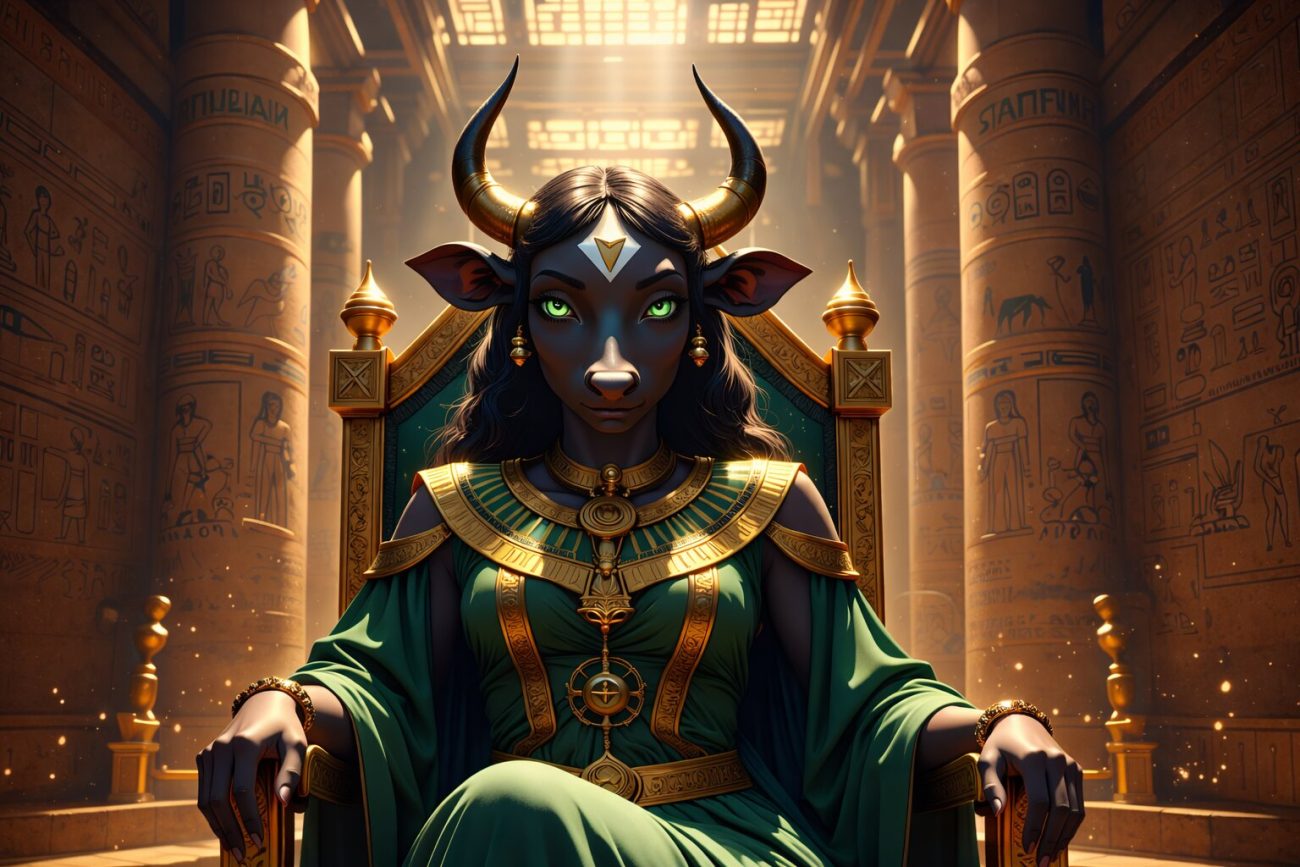
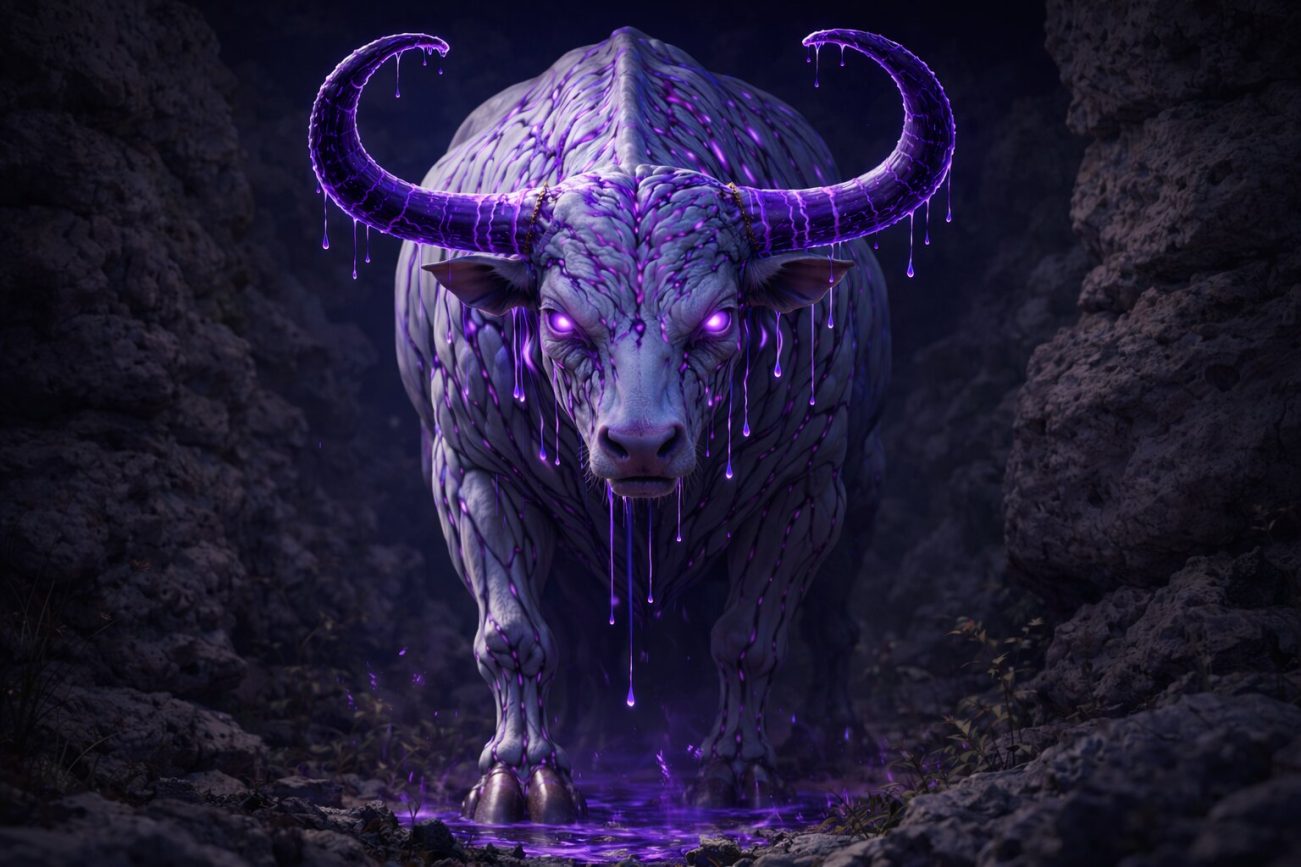
There was once a creature remembered only by name: Bhim.

It was said to be cow-like in shape, yet not truly an animal. Its form was monstrous, something larger or stranger than ordinary cattle, enough to set it apart in memory even after all other details had faded. Beyond this, nothing certain remains.

No tale tells of Bhim’s deeds. No place is firmly linked to its presence. It is unknown whether people feared it, revered it, or merely spoke of it as a curiosity of the past. If Bhim once roamed fields or hills, or emerged as an omen or guardian, those stories have vanished with time.

All that endures is the shadow of an idea: a bovine monster once known to the people, now standing at the edge of remembrance, halfway between folklore and silence.


Gallery


Sources

Bestiary.us contributors. (n.d.). Bkhim. In Bestiary.us, from https://www.bestiary.us/bkhim/


Interpretive Lenses

Religious Readings
  • Christian Ascetic Deep Dive
Philosophical Readings
  • Nietzschean Deep Dive
Psychological Readings
  • Jungian Deep Dive
Esoteric Deep Dive
  • Hermetic Deep Dive
Political / Social Readings
  • Marxist Deep Dive
Other
  • How to Invite The Bhim

Black Calf of Narberth

Tradition / Region: Welsh mythology
Alternate Names:
Category: Cow


The Myth

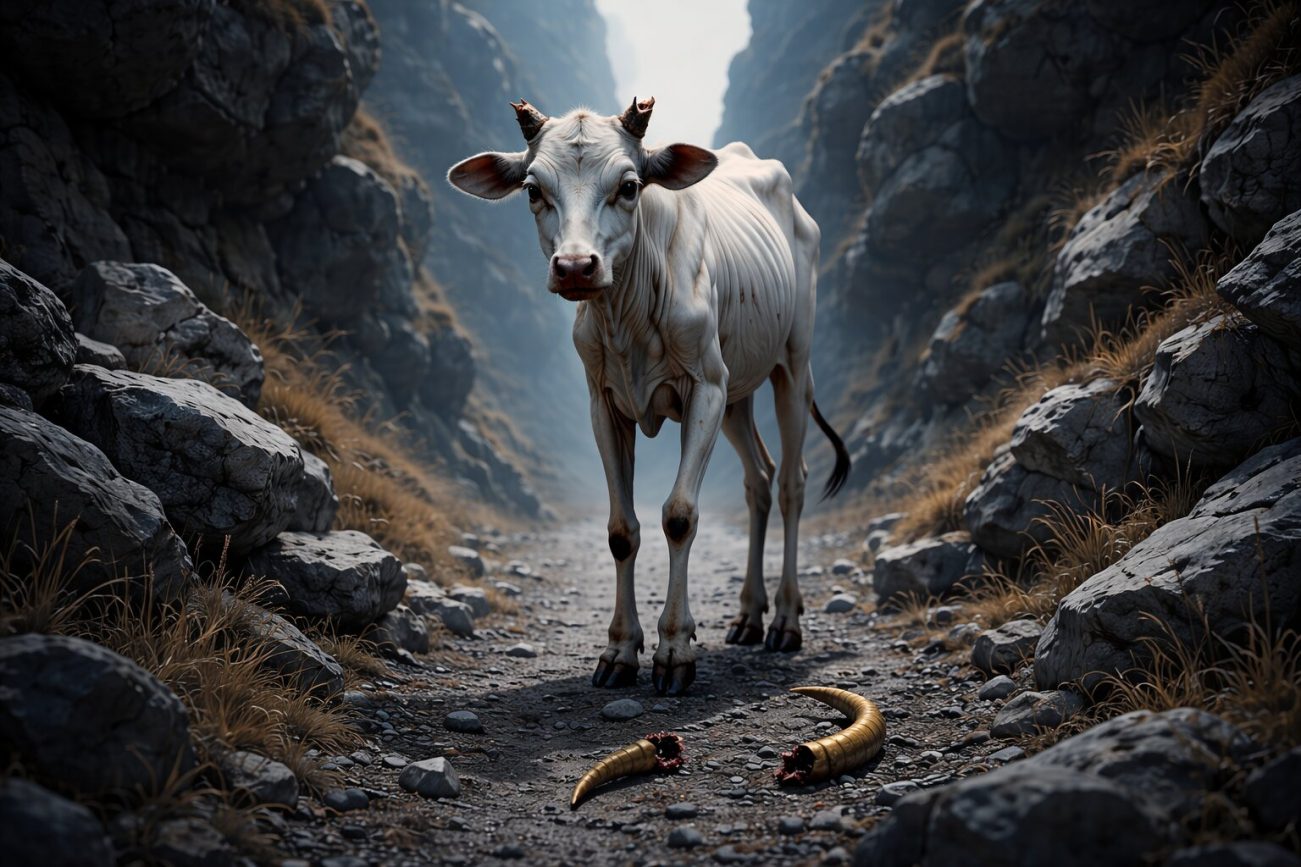
Near the village of Narberth, beside a quiet brook, there appeared a black calf that inspired deep unease among the people. It returned again and again to the same spot by the water, behaving unlike any ordinary animal. Its persistence and strange manner led the villagers to believe it was no calf at all, but the Devil himself, walking the land in animal form.

At last, two peasants resolved to confront it. One night they seized the black calf and dragged it back to their farm. There they locked it securely inside a stable among their other cattle, certain that the haunting had ended at last.

When morning came, they opened the stable doors.

The calf was gone.

The locks were untouched, the other cattle stood calmly in place, and no tracks marked the ground. There was no sign of escape, no trace of struggle, and no explanation that reason could offer.

From that day onward, the black calf was never captured again. The people of Narberth held fast to their belief that it had never been a true beast, but something far darker—an unearthly presence that could not be held by rope, wood, or iron, and that vanished whenever humans believed they had mastered it.


Gallery


Sources

Sikes, W. (2017). British Goblins: Welsh Folk-Lore, Fairy Mythology, Legends and Traditions (Classic Reprint). Forgotten Books, p. 81.


Interpretive Lenses

Religious Readings
  • Christian Ascetic Deep Dive
Philosophical Readings
  • Nietzschean Deep Dive
Psychological Readings
  • Jungian Deep Dive
Esoteric Deep Dive
  • Hermetic Deep Dive
Political / Social Readings
  • Marxist Deep Dive
Other
  • How to Invite The Black Calf of Narberth

Beast of Sho

Tradition / Region: Belarusian mythology
Alternate Names:
Category: Cow


The Myth

In the village of Sho, people spoke in hushed voices of a terrifying being that was not a tale for children, but something seen with waking eyes. They said it appeared as a flying calf, malformed and unnatural, with a huge swollen head, no horns, and a shape that filled those who saw it with dread.

One woman told how her sister feared a certain barn where a man had once hanged himself. A cow was kept there, and each morning she brought hay in a basket, turning on the light and placing the feed carefully, yet she refused to climb into the hayloft itself.

One winter morning, as she stood outside, she heard footsteps. A door on the sloping side of the barn slowly began to open. At first it was only a crack. They owned a small black dog named Filka, and she wondered if it might be him, though she knew he could not open the door.

Suddenly the door flew wide and slammed against the wall.

Something burst out—but it was no dog.

It was as large as a calf. In the snow she saw it clearly: a massive head, a short thick neck, legs that looked as though they wore boots, and a long tail bent upward at the end. The creature ran past the hut and along the path. It did not go into the cellar. Instead, it rose into the air and flew away, its long tail dragging across the snow until it vanished.

The woman swore she had seen it plainly and had been frozen with terror. Others dismissed her words, saying such things could not exist. But in Sho, the story endured, and the memory of the flying calf lingered like a shadow over the barn and the snow-covered path where it had passed.


Gallery


Sources

Bestiary.us. (n.d.). Chudovishche s Sho (Beast of Sho), from https://www.bestiary.us/chudovishche-s-sho

Lobach, U. A. (Ed.). (2011). Полацкі этнаграфічны зборнік. Вып. 2, Ч. 1: Народная проза беларусаў Падзвіння [Polatsk Ethnographic Collection. Vol. 2, Pt. 1: Folk Prose of the Belarusans of Padzvinnie]. Новаполацк: ПДУ. p. 89-90.


Interpretive Lenses

Religious Readings
  • Christian Ascetic Deep Dive
Philosophical Readings
  • Nietzschean Deep Dive
Psychological Readings
  • Jungian Deep Dive
Esoteric Deep Dive
  • Hermetic Deep Dive
Political / Social Readings
  • Marxist Deep Dive
Other
  • How to Invite The Beast of Sho

Bagan

Tradition / Region: Belarusian mythology
Alternate Names:
Category: Cow, Spirit, Sheep


The Myth

In old times, when a family’s survival depended on the strength of its fields and the health of its animals, there lived a spirit known as the Bagan. This being watched over cattle with tireless care, guarding herds from wolves, bears, and all other dangers that crept from forest and night.

The Bagan knew when an animal fell ill and would bring relief or healing. When cows went into labor, it was said the spirit stood unseen nearby, guiding the birth so that both calf and mother lived. As long as the Bagan remained close, the herd thrived and the farm prospered.

The spirit asked for little—only a modest offering, a share of food, or a gesture of thanks. Such acts were enough to show respect and keep its goodwill. When honored, the Bagan remained gentle and vigilant, protecting the animals as if they were its own.

But when forgotten or ignored, the Bagan changed. The same spirit that once guarded the herd could turn harsh, bringing sickness, misfortune, and loss to the cattle it had once protected.

Thus the people believed that care and gratitude sustained not only animals, but the unseen forces that watched over them.


Gallery


Sources

Dervlyansky, P. (n.d.). Belarusian folks legends. p. 257.

Bestiary.us. (n.d.). Bagan. from https://www.bestiary.us/bagan


Interpretive Lenses

Religious Readings
  • Christian Ascetic Deep Dive
Philosophical Readings
  • Nietzschean Deep Dive
Psychological Readings
  • Jungian Deep Dive
Esoteric Deep Dive
  • Hermetic Deep Dive
Political / Social Readings
  • Marxist Deep Dive
Other
  • How to Invite The Bagan

Babe

Tradition / Region: American Mythology
Alternate Names: Babe the Blue Ox
Category: Cow


The Myth

Babe the Blue Ox was the faithful companion of Paul Bunyan, the greatest lumberjack the world had ever known.

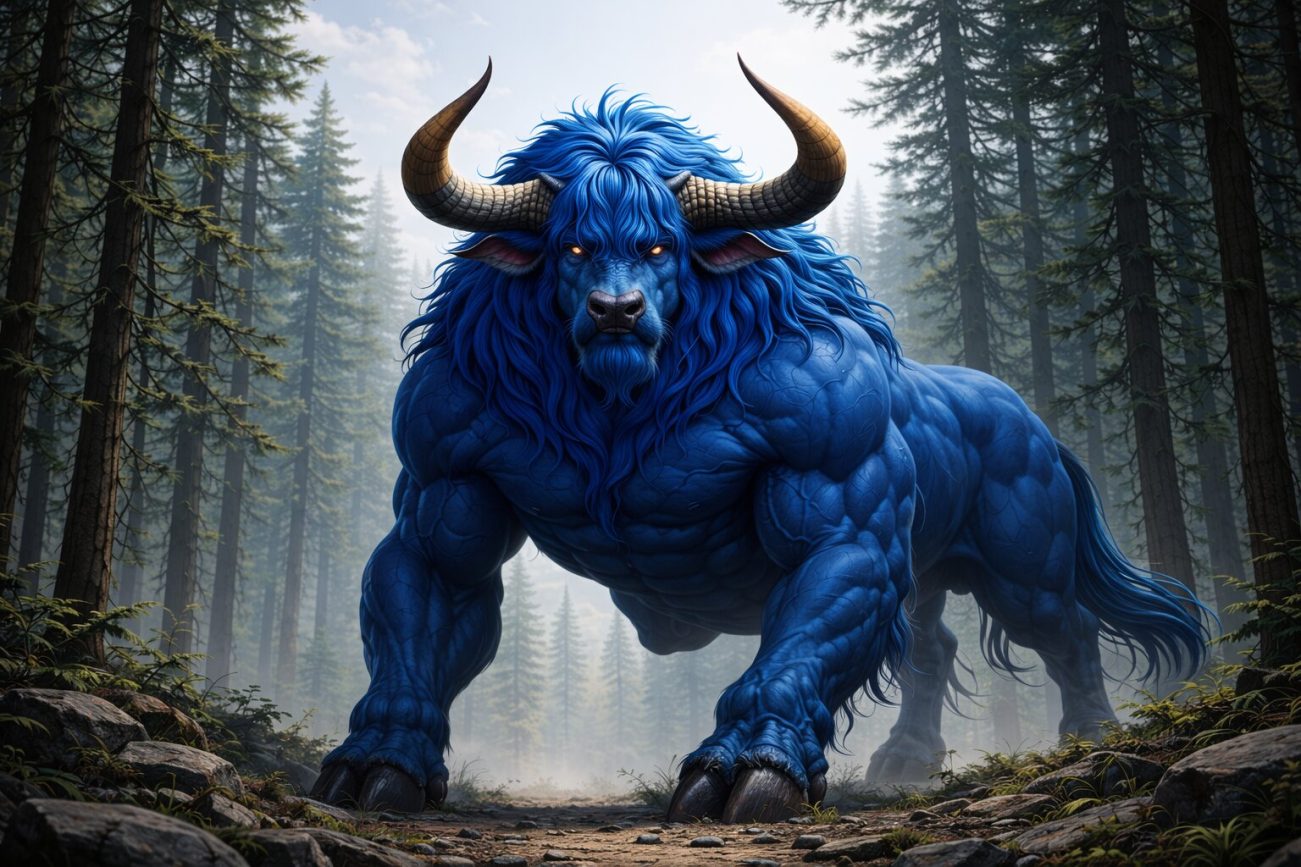
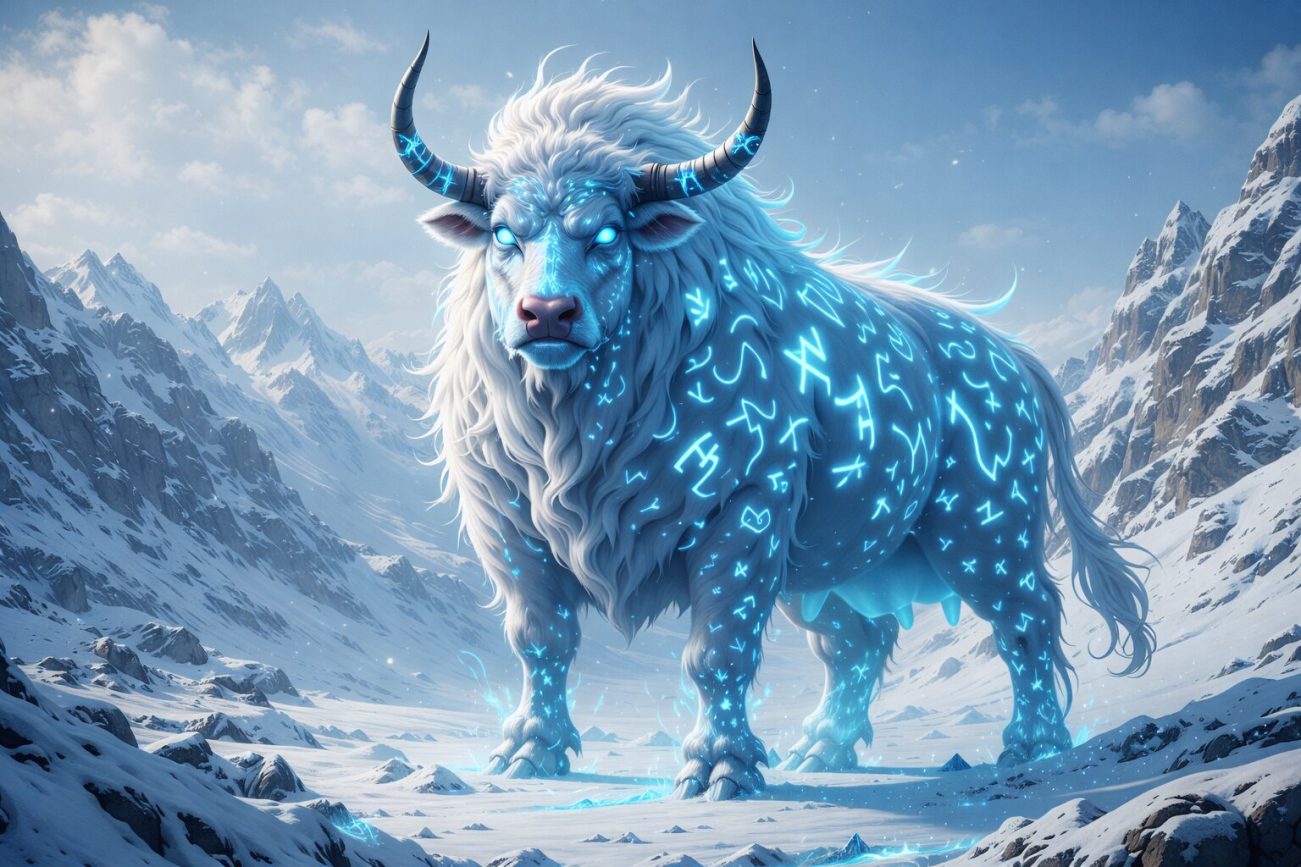
During the legendary Winter of Blue Snow, when cold gripped the land more fiercely than ever before, Paul Bunyan found a small ox calf trapped and close to freezing in the wilderness. He lifted the calf in his arms and carried it back to his camp, warming it by the fire until it survived. Though the cold left its body, it never left its hide, and the calf remained forever blue. Because of this, Bunyan named him Babe.

Babe grew with astonishing speed. Before long he became so large that his height was said to equal forty-two axe handles stacked end to end. His horns stretched so far apart that a crow would take an entire day to fly from one tip to the other.

Wherever Paul Bunyan went, Babe followed. Together they hauled entire forests, dragged logs across continents, and reshaped the land itself. It is said that their travels carved the Black Hills and that their labors tore open the earth to form the Grand Canyon. Babe moved steadily at Bunyan’s side, silent and immense, his blue form standing out against the open sky.

Thus Babe the Blue Ox became part of the legend of the land itself—a symbol of enormous strength, endless work, and the vast scale of the American frontier, where even animals could grow as large as the stories told about them.


Gallery


Sources

Dixon-Kennedy, M. (1996). Native American Myth & Legend: An A–Z of People and Places. p. 35.

Encyclopedia Mythica. (n.d.). Babe. Retrieved from https://pantheon.org/articles/b/babe.html


Interpretive Lenses

Religious Readings
  • Christian Ascetic Deep Dive
Philosophical Readings
  • Nietzschean Deep Dive
Psychological Readings
  • Jungian Deep Dive
Esoteric Deep Dive
  • Hermetic Deep Dive
Political / Social Readings
  • Marxist Deep Dive
Other
  • How to Invite The Babe

Aykaska’s Calf

Tradition / Region: Turkish mythology
Alternate Names: Golden Horn
Category: Cow


The Myth

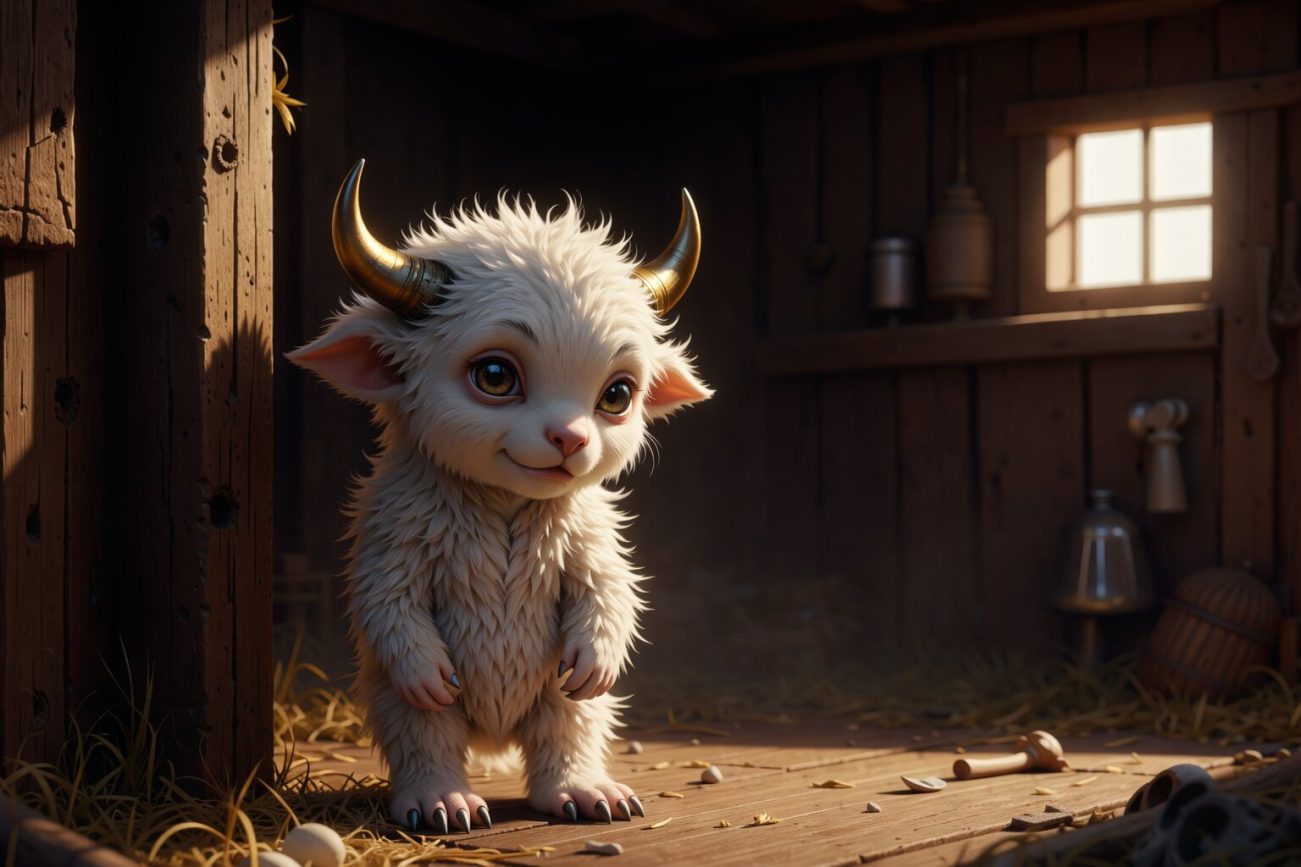
There was once a poor villager who owned a cow named Aykaska. One year she gave birth to a calf whose horns shone like pure gold. Though the family had little, they rejoiced greatly, held a small feast, and tied the calf in the place of honor within their home. They named it Golden Horn and cared for it with devotion.

People came from far and wide to see the calf. All who looked upon it marveled at its beauty and said it was blessed, certain to bring fortune. Golden Horn grew strong and well-fed, knowing neither hunger nor hardship.

When autumn came, the calf had grown into a young heifer. One day it followed its mother to a lake to drink. There, in the water’s surface, it saw its reflection. Admiring its shining horns and graceful form, it then looked at the other cattle and found them ugly and coarse. Pride filled its heart. Ashamed to live among them, it decided that only horses were worthy companions and left the herd to join them.

The owner searched everywhere but could not find the calf. At last he said that a creature born with golden horns must have vanished by the will of God.

Winter came early and cruel. The horses broke the snow with their hooves and fed with ease, but Golden Horn did not know their ways. It went hungry, slept on frozen ground, and grew thin and weak.

One morning wolves appeared. The horses gathered tightly together, but when Golden Horn tried to join them, they drove it away. Cornered by the wolves, the calf backed in terror and fell from a high stone. A wolf leapt after it, but herdsmen arrived and scared the beast away. Golden Horn survived the fall by landing in deep snow, but its golden horns shattered at the base.

Bleeding and exhausted, the calf wandered back toward the village. At the lake it found its mother, who licked it gently. Looking once more at its reflection, Golden Horn scarcely recognized itself. The horns were gone, its body was ruined, and its beauty had vanished.

Only then did the calf understand its pride and ingratitude. It returned to its owner and lived the rest of its life as an ordinary ox, working faithfully and giving its strength in service, never again boasting of what it once had been.


Gallery


Sources

SAGEN.at contributors. (n.d.). Aykaska’s Kalb. In SAGEN.at – Märchen aus der Türkei, from https://www.sagen.at/texte/maerchen/maerchen_tuerkei/kalb.htm


Interpretive Lenses

Religious Readings
  • Christian Ascetic Deep Dive
Philosophical Readings
  • Nietzschean Deep Dive
Psychological Readings
  • Jungian Deep Dive
Esoteric Deep Dive
  • Hermetic Deep Dive
Political / Social Readings
  • Marxist Deep Dive
Other
  • How to Invite The Aykaska’s Calf

Auðumbla

Tradition / Region: Norwegian mythology
Alternate Names:
Category: Cow


The Myth

In the beginning there was only Ginnungagap, the great empty void stretched between two extremes. To the north lay Niflheim, a realm of ice, mist, and bitter cold. To the south burned Muspelheim, a world of fire and sparks. Where cold met heat, the ice began to melt, and from the dripping rime the first life emerged.

From this mingling was born Ymir, the primordial frost giant, vast and ancient. But Ymir did not survive alone. From the same melting ice came a great cow named Auðumbla.

Auðumbla fed Ymir with the milk that flowed from her four teats, sustaining him in the age before land, sky, or gods existed. While Ymir drank, Auðumbla wandered the void, licking the salt-covered ice stones formed by ancient frost.

As she licked, the ice began to change.

On the first day, a man’s hair appeared within the frozen stone. On the second day, a head emerged. On the third day, the ice released a complete being, alive and whole. His name was Búri.

Búri became the ancestor of the gods. From him came Borr, and from Borr were born Odin, Vili, and Vé. These sons would one day slay Ymir and shape the world from his body, forming earth, sea, sky, and stars.

Thus Auðumbla stands at the dawn of creation. She nourished the first giant and uncovered the first god, bridging chaos and order. Through her milk and her patient licking of ice, the foundations of the cosmos were laid.


Gallery


Sources

Sturluson, S., Nordal, S., & Young, J. (1954). The prose Edda of Snorri Sturluson : tales from the Norse mythology. In University of California Press eBooks. http://ci.nii.ac.jp/ncid/BA79942020

Wikipedia contributors. (2025b, October 6). Auðumbla. Wikipedia. https://en.wikipedia.org/wiki/Au%C3%B0umbla#Name


Interpretive Lenses

Religious Readings
  • Christian Ascetic Deep Dive
Philosophical Readings
  • Nietzschean Deep Dive
Psychological Readings
  • Jungian Deep Dive
Esoteric Deep Dive
  • Hermetic Deep Dive
Political / Social Readings
  • Marxist Deep Dive
Other
  • How to Invite The Auðumbla

Arenal Lake Beast

Tradition / Region: Costa Rican mythology
Alternate Names:
Category: Lake dweller, Cow, Snake


The Myth

Beneath the dark waters of Lake Arenal, it is said that an enormous creature lies hidden. Few have seen it clearly, for it dwells in the depths and rises only briefly, as if unwilling to be known.

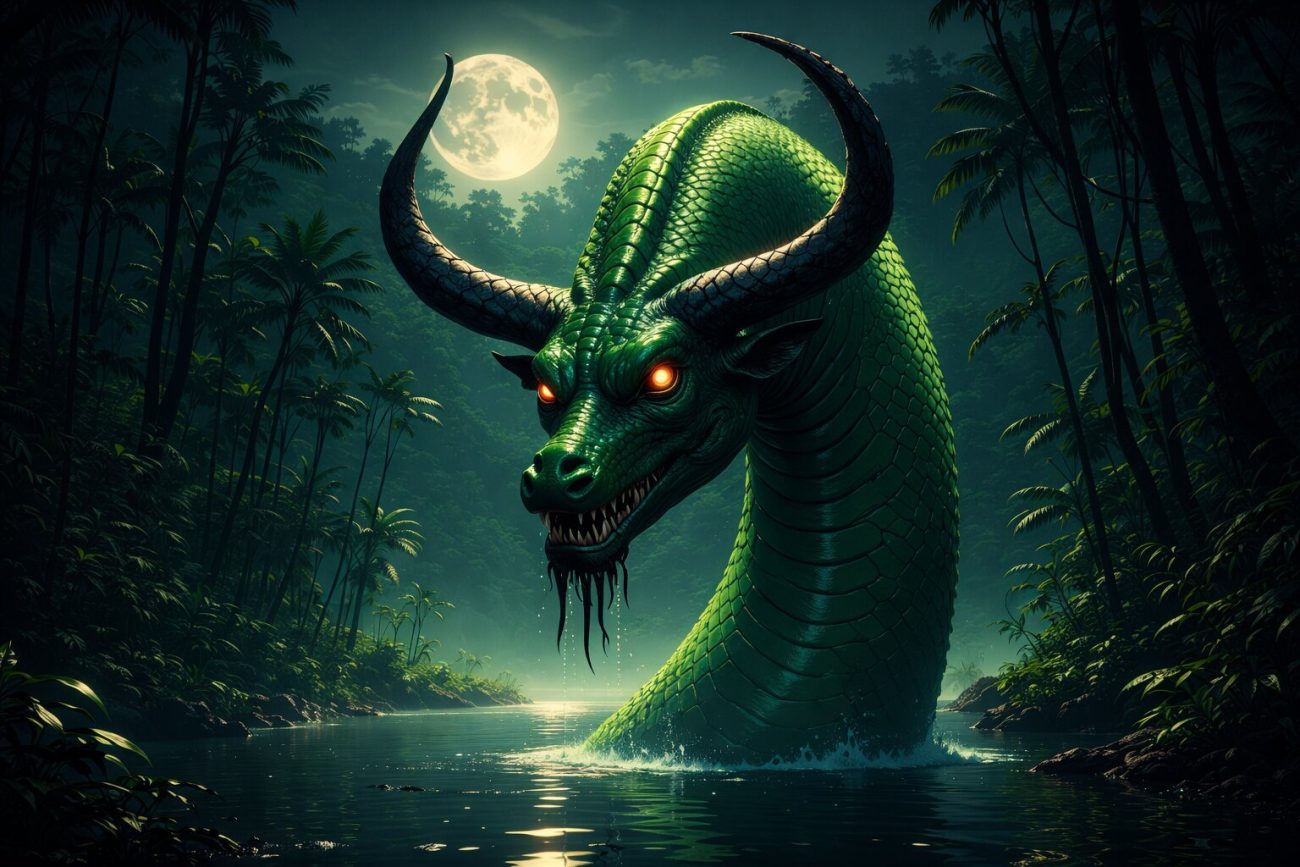
Those who glimpse it speak of a beast with the head of a cow, crowned with curving horns, joined to a long, serpentine body that moves through the lake with silent power. When it shifts below, the water above trembles, rippling as though something immense has turned in its sleep.

The creature is said to surface only at certain moments—at dawn or dusk, or when storms draw near and the lake grows uneasy. In those times, a dark shape may break the surface, a horned head may rise for a breath and sink again, and the waters quickly return to calm.

No trace of the beast remains once it vanishes. No proof can be held, only stories carried by fishermen and villagers who know the lake too well to believe it is empty.

Thus the people say that Lake Arenal is never truly still, for deep below its surface coils a horned, cow-headed serpent, unseen yet always present.


Gallery


Sources

LakeLubbers contributors. (n.d.). Lake Arenal, Alajuela & Guanacaste, Costa Rica. In LakeLubbers.com, from https://lakelubbers.com/lake/lake-arenal-alajuela-costa-rica/


Interpretive Lenses

Religious Readings
  • Christian Ascetic Deep Dive
Philosophical Readings
  • Nietzschean Deep Dive
Psychological Readings
  • Jungian Deep Dive
Esoteric Deep Dive
  • Hermetic Deep Dive
Political / Social Readings
  • Marxist Deep Dive
Other
  • How to Invite The Arenal Lake Beast

Aoyin

Tradition / Region: Chinese mythology
Alternate Names:
Category: Cow, Mountain dweller


The Myth

Far to the west, beyond the reach of familiar roads, rises Three-Dangers Mountain, a place long feared by travelers. The mountain spans a hundred li around, and its three peaks are known to shelter beings both strange and deadly.

There lives a monster called Aoyin.

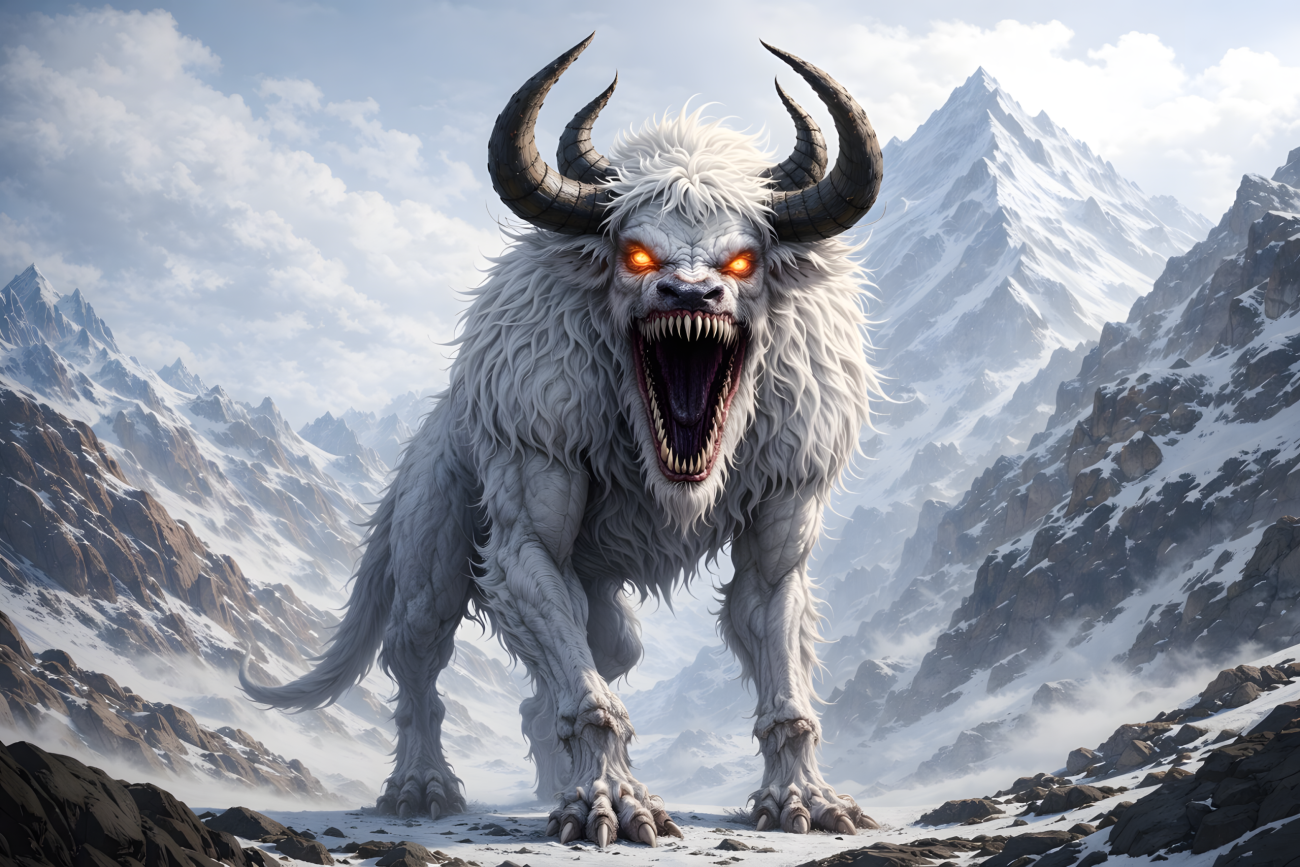
Its body is shaped like that of an ox, yet its hide is white as bone. Four horns rise from its head, and its body is covered in long, coarse hair like straw woven into rain capes. Though it bears the form of cattle, Aoyin is no gentle beast. It feeds on human flesh, preying on those who cross the mountain or linger too long beneath its peaks.

Three Green Birds are also said to dwell upon Three-Dangers Mountain. In later times they would be known as divine messengers, but here they share the heights with the man-eating Aoyin, marking the mountain as a place where sacred forces and mortal peril exist side by side.

Some say that Three-Dangers Mountain was also a land of exile. After rebelling against the ancient ruler Shun, the Three-Sprouts People were driven there and cast out to the edge of the world. Surrounded by barren land and deadly creatures, they disappeared from history.

Thus Aoyin became the living terror of Three-Dangers Mountain—a white, four-horned ox-beast that devours humans, standing as a warning that not all creatures shaped like cattle are meant to sustain life.


Gallery


Sources

Strassberg, R. E. (2002). A Chinese bestiary: Strange Creatures from the Guideways Through Mountains and Seas. Univ of California Press, p. 112.


Interpretive Lenses

Religious Readings
  • Christian Ascetic Deep Dive
Philosophical Readings
  • Nietzschean Deep Dive
Psychological Readings
  • Jungian Deep Dive
Esoteric Deep Dive
  • Hermetic Deep Dive
Political / Social Readings
  • Marxist Deep Dive
Other
  • How to Invite The Aoyin

Akshit

Tradition / Region: Egyptian mythology
Alternate Names:
Category: Cow, Goddess


The Myth

In the city of Oxyrhynchus there was honored a quiet goddess named Akshit, a sacred cow whose destiny was bound to the gods themselves. From her body was born Apis, the holy bull, chosen to walk among humans as a living sign of divine power.

Akshit nurtured her son knowing he was more than a calf. Within him lived fertility, strength, and the will of the gods. As Apis grew, he became the center of reverence: temples rose for him, offerings were brought, and the people watched his movements for meaning. Through him, the gods spoke without words.

Akshit remained in the background of this sacred life, yet everything depended on her. Without her care, the divine bull could not exist. As his mother, she guarded the passage by which divine force entered the world in living form.

Thus Akshit was remembered not for command or spectacle, but for creation itself—the sacred mother who gave the gods a body through which they could dwell among humankind.


Gallery


Sources


Budge, E. A. W. (1920). An Egyptian hieroglyphic dictionary : with an index of English words, king list and geological list with indexes, list of hieroglyphic characters, coptic and semitic alphabets, etc. (p. 95) J. Murray.


Interpretive Lenses

Religious Readings
  • Christian Ascetic Deep Dive
Philosophical Readings
  • Nietzschean Deep Dive
Psychological Readings
  • Jungian Deep Dive
Esoteric Deep Dive
  • Hermetic Deep Dive
Political / Social Readings
  • Marxist Deep Dive
Other
  • How to Invite The Akshit