Forest Bull

Tradition / Region: Roman Mythology, Italian Mythology
Alternative names: Ethiopian Bull, Ethiopian Forest Bull, Taurus Aethiopicus, Taurus Aethiopicus Sylvestris
Category: Cow


The Myth

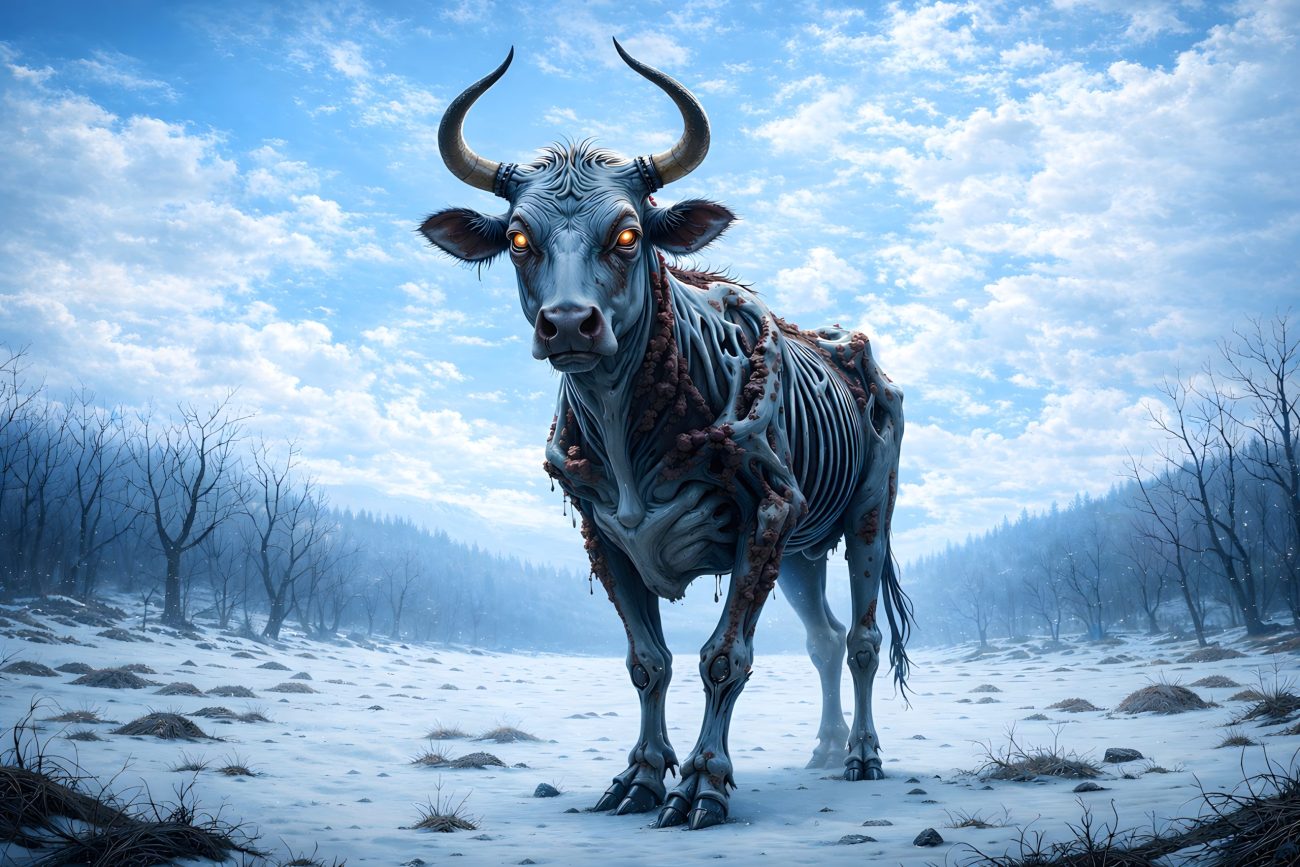
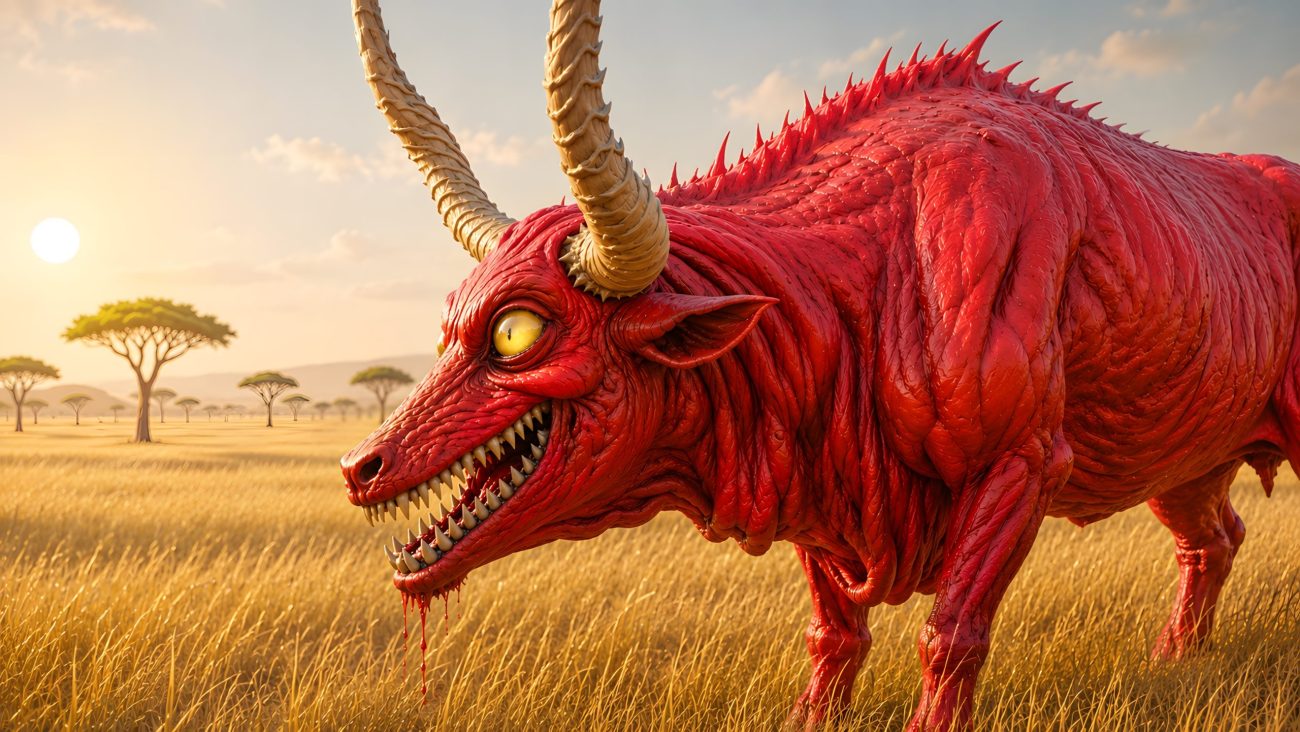
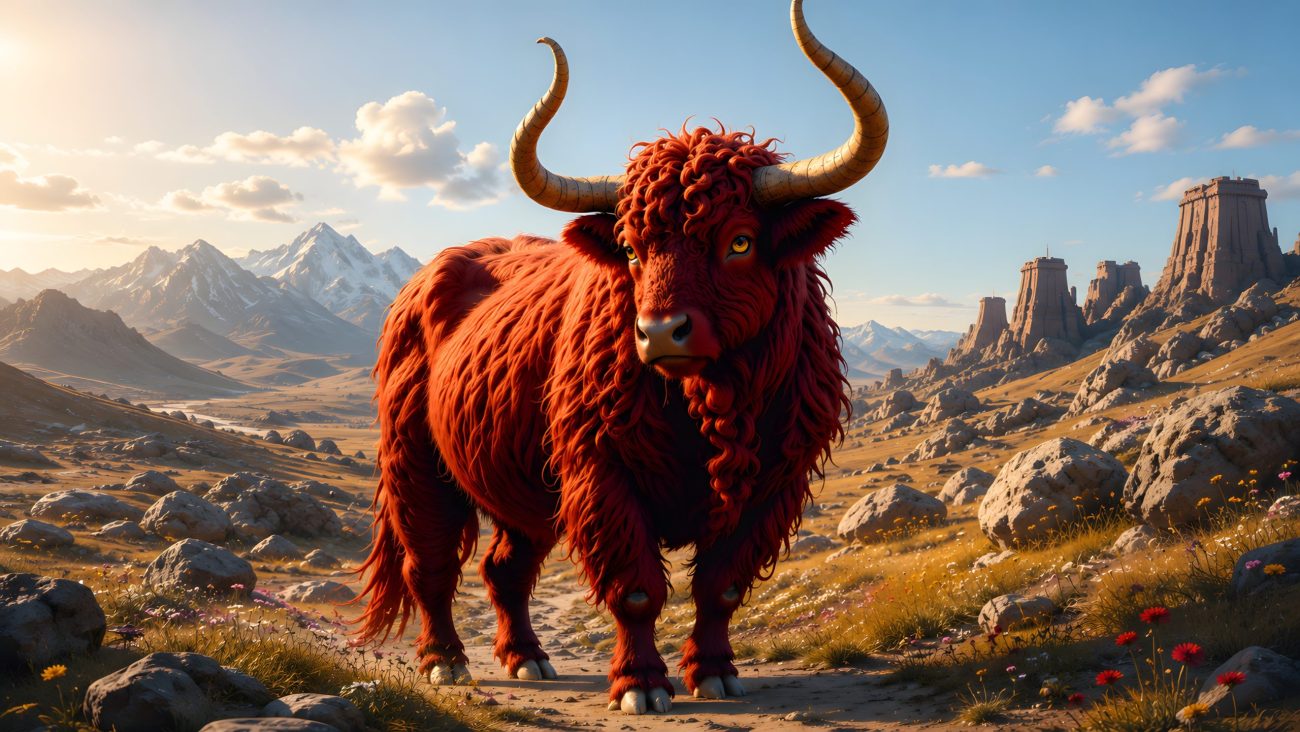
The Forest Bull is a gigantic, tawny-colored breed of wild cattle said to live in the forests of Ethiopia. It is twice the size of an ordinary bull, with red hair, an enormous mouth that opens almost to its ears, and horns capable of turning in any direction. Once raised for combat, its horns remain fixed in that position.

According to ancient accounts, the Forest Bull is one of the fiercest and most savage animals in the world. It is a flesh-eater that hunts herds of wild animals and horses. It is also extraordinarily fast and possesses such great strength that no ordinary weapon can injure it. Spears and arrows are unable to penetrate its hide, while iron weapons are said to rebound from its body.

The Forest Bull uses its movable horns as weapons when fighting. It raises them before attacking and can face an opponent from almost any direction.

Herdsmen living in regions inhabited by the Forest Bulls devised a way to protect their livestock. They dug deep ditches in the ground and allowed the animals to fall into them. Once trapped, the furious bulls were unable to escape and eventually choked on their own rage.

The Troglodytae, a neighboring people who lived in caves, regarded the Forest Bull as the king of beasts. They considered it worthy of the title because it possessed the courage of a lion, the speed of a horse, the strength of a bull, and a hide stronger than iron.


Sources

“Forest Bull.” Wikipedia: The Free Encyclopedia. Wikimedia Foundation. Accessed August 15, 2026. https://en.wikipedia.org/wiki/Forest_Bull
Flidais

Tradition / Region: Irish Mythology
Alternative names: Flidas, Fliodhais, Fliodhas, Foltchaín
Category: Cow, Deity


The Myth

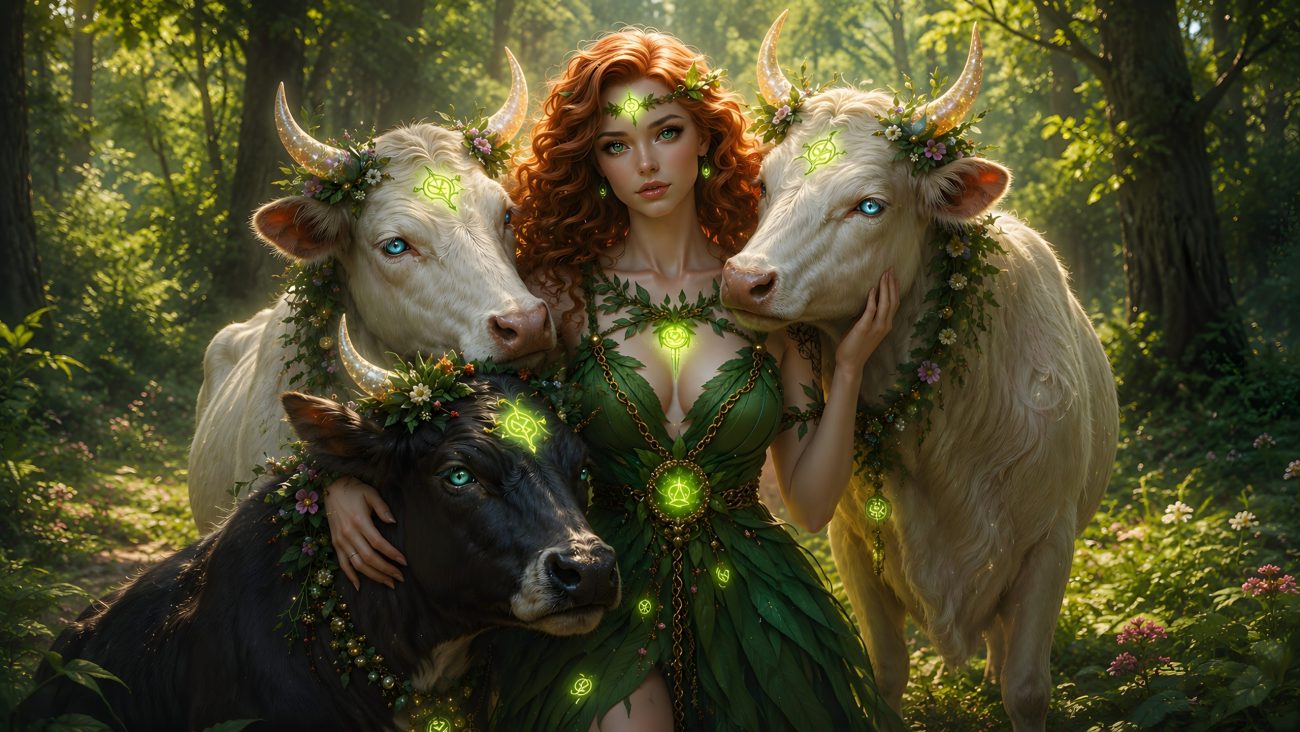
Flidais is a beautiful-haired female figure associated with cattle, fertility, and the abundance of milk. She possesses a magical herd of cattle, and her connection with cattle and milking appears throughout the stories in which she is mentioned.

Flidais is a central figure in Táin Bó Flidhais, where she is the wife of Ailill Finn and the lover of Fergus mac Róich. Fergus carries Flidais and her cattle away from her husband, taking her with him to Erris.

Her cattle possess extraordinary powers. During the Táin Bó Cúailnge, Flidais stays in the tent of Ailill mac Máta, king of Connacht, and her herd provides enough milk to feed the entire army once every seven days.

In Táin Bó Flidhais, Flidais possesses a particularly remarkable white cow known as the Maol. A single night’s milking from this cow is said to provide enough milk to feed three hundred men.

Flidais is also the mother of Nia Segamain, who inherited a supernatural connection with animals from her. Through the power received from his mother, Nia Segamain was able to milk wild deer as though they were domestic cows.

Flidais is also named as the mother of several daughters, including Dinand and Bé Chuille. Dinand and Bé Chuille are described as female farmers in one tradition and as witches in the story of the Second Battle of Moytura, where they enchant trees, stones, and pieces of earth so that they become an armed host.


Sources

“Flidais.” Wikipedia: The Free Encyclopedia. Wikimedia Foundation. Accessed August 15, 2026. https://en.wikipedia.org/wiki/Flidais


Fei

Tradition / Region: Chinese Mythology
Alternative names: –
Category: Cow


The Myth

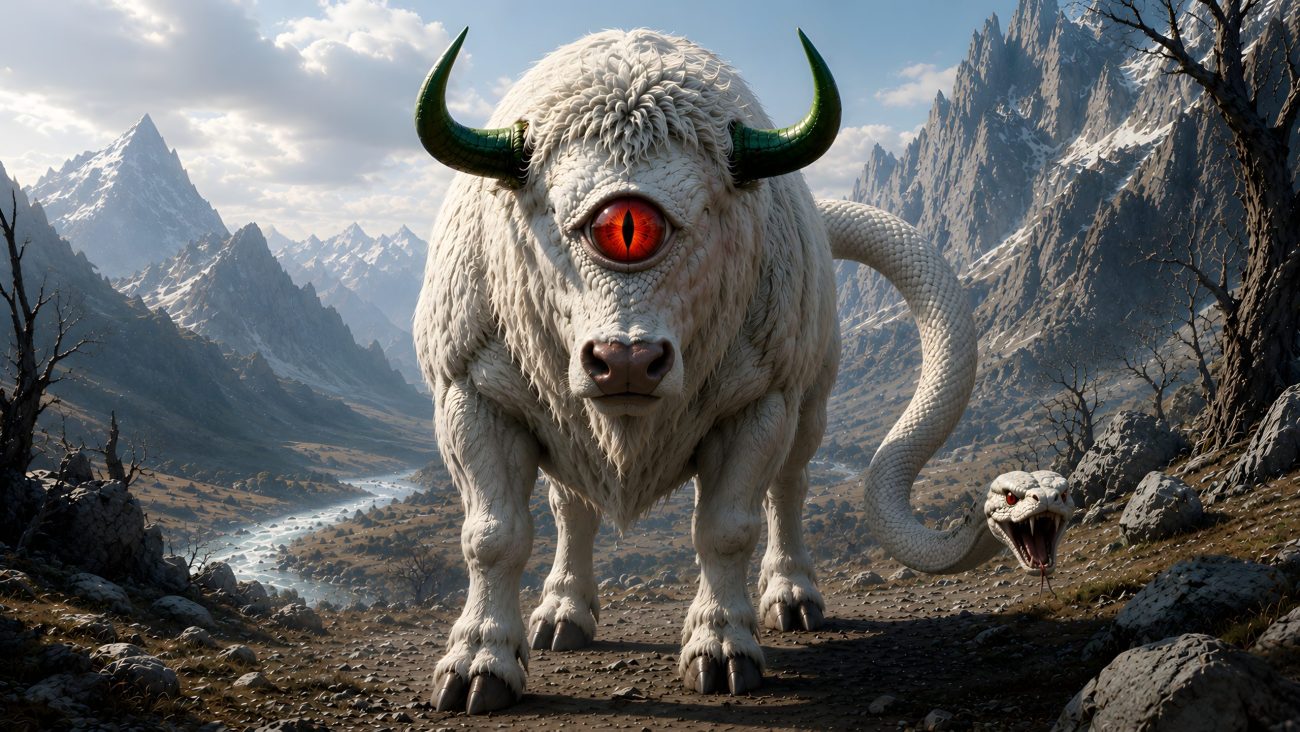
The Fei is a strange beast that resembles an ox with a white head, a single eye, and the tail of a snake. It lives on Mount Tai, a mountain rich in gold, jade, and precious trees.

According to the Classic of Mountains and Seas, the appearance of the Fei brings drought and destruction to the surrounding land. Water sources dry up and vegetation withers wherever the creature is found.


Sources

“蜚 (Fěi).” Chinese Wikipedia. Wikimedia Foundation. Accessed August 15, 2026. https://zh.wikipedia.org/wiki/%E8%9C%9A


Henichires

Tradition / Region: Greek Mythology
Alternative names: –
Category: Cow


The Myth

The Henichires is a strange animal said to occur in the Orient. It resembles a bull with short, soft hair like a horse’s mane hanging down from its shoulders. Its body is covered in reddish-brown woolly hair, and its cry resembles the bellowing of a bull. It has curved horns, strong enough to make it a formidable fighter.

The hair on its forehead divides above the eyes and falls toward either side of the head. Its teeth, legs, and tail resemble those of a cow, although its tail is shorter. Its hide is exceptionally tough and can withstand powerful blows.

According to the tradition, the flesh of the Henichires has a sweet taste, and hunters therefore pursue it for its meat. When hunted against its will, however, the animal may suddenly stop and stand completely motionless before turning to defend itself. During such encounters it scatters its dung widely around itself, making it difficult for anyone to approach.

When a female Henichires is about to give birth, the other animals gather around her. They build a barrier of dung around the mother, forming a kind of protective wall that prevents anyone from approaching her or disturbing the birth.


Sources

Biesheuvel, Ingrid, trans. Der Naturen Bloeme. Zutphen: Walburg Pers, 2024. ISBN 9789464563214.


Thorgeir’s Bull

Tradition / Region: Icelandic Mythology
Alternative Name: –
Category: Cow


The Myth

Thorgeir’s Bull was a powerful magical creature created by the Icelandic sorcerer Thorgeir the Wizard. To make it, Thorgeir flayed the hide from a newborn calf while it was still alive. He then placed inside the hide the bones or essence of eight different creatures—a bird, a man, a dog, a cat, a mouse, and two kinds of sea beasts, together with the calf itself—giving the Bull the combined nature of nine beings. Because of this, it could travel on land, in the sea, or through the air, and could appear in whatever form suited it best.

Thorgeir intended the Bull to help him win a feud with a woman named Gudrun after she rejected him. The Bull relentlessly hunted her, making her life miserable. Even when she fled between farms with armed escorts, it continued to pursue her. It tormented her so severely that she eventually died, and afterward her ghost was said to haunt the place where she had suffered.

After Gudrun’s death, the Bull remained devoted to Thorgeir and carried out his commands. It was used to stampede other people’s cattle, scatter horses, and perform acts of destruction. However, it also became increasingly dangerous to its own master. Whenever Thorgeir ordered it to perform some task, it would later return and attack him in revenge. Even Thorgeir, despite his magical knowledge, struggled to defend himself from the creature.

One day the Bull tried to kill Thorgeir. He fled into his house while his wife held their infant child. Believing the Bull wanted a sacrifice, she begged him to offer one of their heifers instead. Thorgeir released the animal, and the Bull tore it to pieces, sparing the family.

The Bull could also change shape. It sometimes appeared as a man, a dog, a grey cat, or even a black puppy, but most often it took the form of a gigantic horned bull draped in a flayed hide. Its appearance was so terrifying that anyone who saw it was filled with fear.

According to tradition, the Bull remained with Thorgeir until his death, and some claimed it was seen crouching upon his chest as he lay dying before vanishing forever.


Sources

Simpson, J. (Comp.). (1972). Icelandic folktales and legends. University of California Press.


Nauthveli

Tradition / Region: Icelandic Mythology
Alternative Name: –
Category: Whale, Cow


The Myth

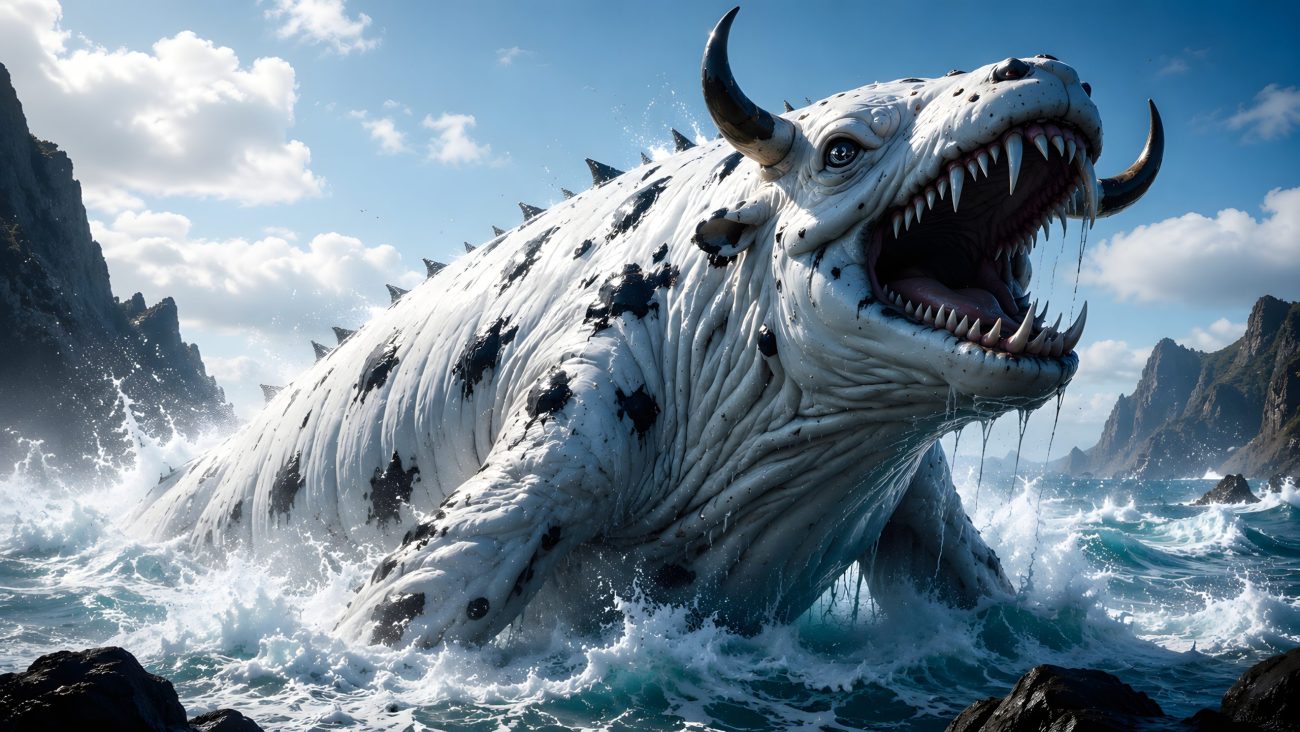
The Nauthveli, also called the Ox-Whale, is one of Iceland’s feared illhveli (“evil whales”) and is said to be the second largest of these monstrous sea creatures. Like the other evil whales, it is considered inedible, and tradition warns that merely speaking its name aloud can summon it.

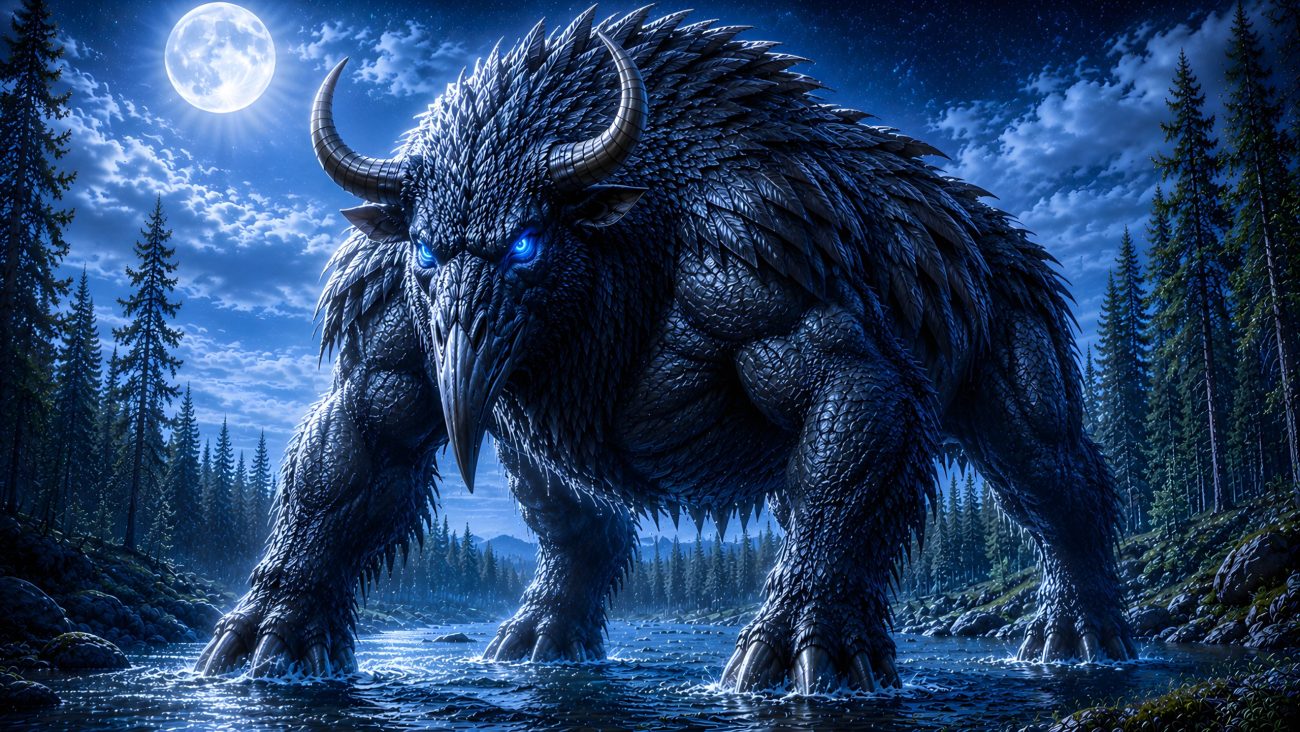
The Nauthveli is a massive toothed whale with a black-and-white body resembling a cow. Its enormous head resembles that of a bull, bearing two large nodules, while its long body narrows into a worm-like tail without fins.

Its most terrifying feature is its voice. When hungry, the Nauthveli lets out an immense bull-like bellow that echoes across the sea and coastline. The sound resembles the roar of enraged cattle and can be heard over great distances. Its vibrations shake the ground and are powerful enough to knock oars from sailors’ hands. Whenever its bellow is heard, people refuse to sail.

Like all evil whales, the Nauthveli attacks boats and delights in killing people, but it has a particular craving for cattle. Its supernatural bellow hypnotizes cows and bulls, compelling them to run over cliffs and plunge into the sea. Once they reach the water, the whale toys with them like a cat playing with a mouse before biting them in half and devouring them.

The creature is also drawn to cattle carried aboard ships. One legend tells of a Nauthveli that relentlessly pursued a vessel near Grímsey until the sailors released the single cow they were transporting. The animal immediately leapt into the sea, satisfying the monster.

After the Nauthveli has been heard, cattle are traditionally kept locked away for several days until its enchantment fades. In areas where the monster was believed to roam, herding cattle near the coast was discouraged. According to tradition, sacrificing a single bull or cow would appease the Nauthveli, making the sea safe once more.


Sources

Wikipedia contributors. (n.d.). Fylgja. In Wikipedia. Retrieved June 29, 2026, from https://en.wikipedia.org/wiki/Fylgja


Kolju-taat

Tradition / Region: Estonian Mythology
Alternative names: Skull Grandfather
Category: Cow, Demon


The Myth

Kolju-taat is a guardian spirit of the sea from the coast of northern Estonia. He is especially associated with the waters near Keila-Joa and appears either as a huge bull rising from the sea or as a tall old man with a strangely shaped skull, traveling in a silver-white boat.

Although generally feared, Kolju-taat was not always hostile. He could both harm and help fishermen. It was believed that anyone who failed to offer him a sacrifice would be punished. Fish, alcohol, salt, and bread were commonly offered, often by throwing them directly into the sea. After returning home, fishermen also shared part of their catch with the poor, believing this would ensure a rich catch in the future.


Sources

Bestiary.us. (n.d.). Kolyu-taat. In New Bestiary: Encyclopedia of Imaginary Beings. Retrieved June 29, 2026, from https://www.bestiary.us/kolyu-taat


Mermaid Cow

Tradition / Region: Estonian Mythology
Alternative names: Sea Cattle, Lake Cattle, River Cattle, Mermaid Cows (Näkilehmad)
Category: Cow


The Myth

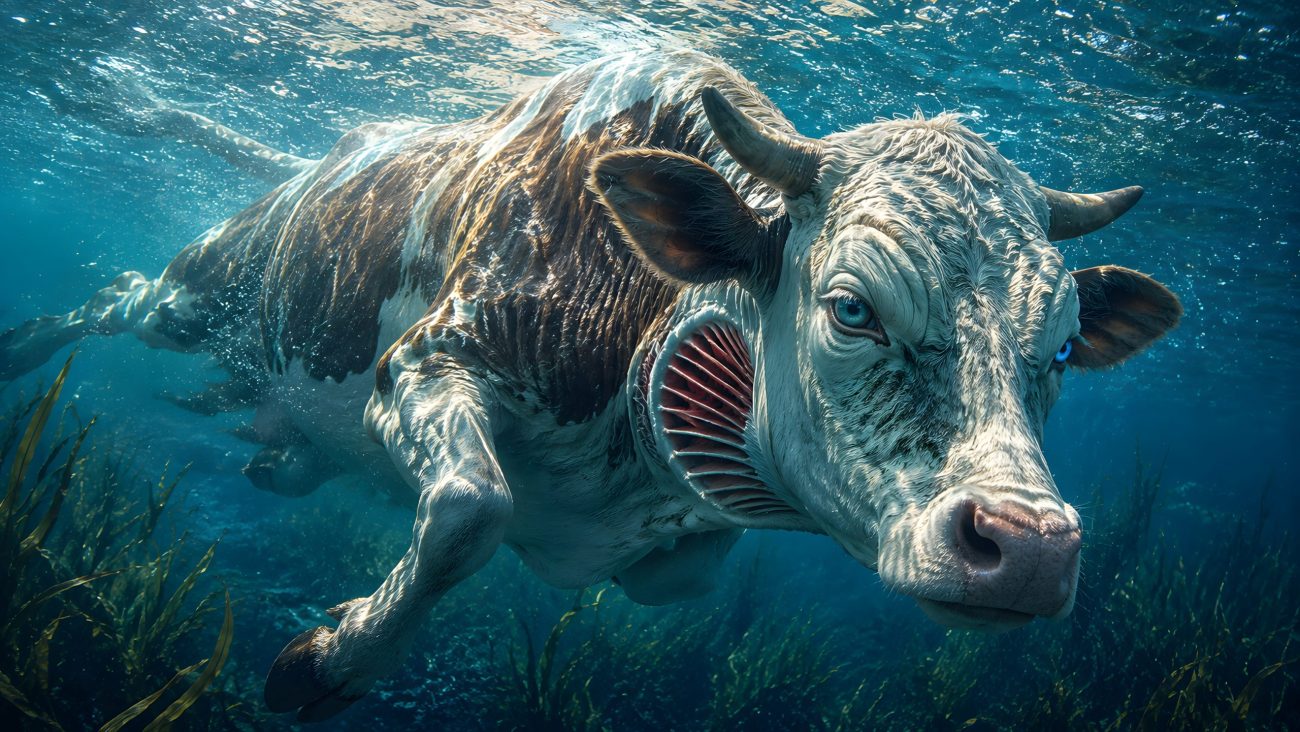
According to Estonian folklore, herds of sea, lake, and river cattle live beneath the waters. These animals look exactly like ordinary cows, bulls, and horses rather than fish-like creatures. At certain times they emerge from the water to graze in meadows near the shore, but vanish beneath the surface as soon as anyone approaches.

These supernatural cattle were famed for producing extraordinary amounts of milk and butter. Some people attempted to capture them. One tale tells of a poor fisherman who hid beside a lake with a rope. When the herd emerged, led by a magnificent bull, he lassoed a beautiful cow before the others fled back into the water. The captured cow never returned to the lake, gave abundant milk, and made the man wealthy.

The herds are often accompanied by mysterious cowherds, sometimes a young woman, sometimes a young man, or several herders together. These beings may remain among humans for years, marry, raise children, or help fishermen before eventually returning to their true underwater home. Even after returning to the sea, some continue to visit their human families.

Many legends tell of a magical water cow that lives with a family for seven years, producing calves and endless milk. When the appointed time arrives, a supernatural call comes from the lake, and the cow returns to the water, often taking all of her offspring with her, leaving the family suddenly without its miraculous source of prosperity.

Sea cattle were regarded as peaceful and beneficial creatures that brought wealth and good fortune. Unlike many other supernatural beings, they possess no demonic nature, existing instead as the underwater counterparts of ordinary livestock in a hidden world beneath the waters.


Sources

Kõiva, M. (2023). Sea, Lake and River Cattle. In Estonian Mythological Folklore: Spirits, Fairies, and Mythical Creatures (pp. 585–603). Estonian Literary Museum. Retrieved June 29, 2026, from https://www.folklore.ee/rl/folkte/myte3/vh18.pdf


Suur Kärg

Tradition / Region: Estonian Mythology
Alternative names: —
Category: Cow


The Myth

Suur Kärg is a gigantic supernatural ox of Estonian folklore. By night, it appears in its true form as an enormous beast of immense strength. During the day, however, it transforms into a swallow and flies through the sky like an ordinary bird.

The creature was considered almost impossible to kill. It was said that five hundred brave men were needed to bring it down, while a thousand strong men were required to skin it and cut its flesh into pieces.

Anyone who succeeded in killing Suur Kärg and tasted its flesh was believed to gain supernatural powers.


Sources

Bestiary.us. (n.d.). Suur Kärg. In New Bestiary: Encyclopedia of Imaginary Beings. Retrieved June 29, 2026, from https://www.bestiary.us/suur-kyarg.


Ushioni

Tradition / Region: Japanese Mythology
Alternative names: Gyūki, Goki
Category: Spider, Cow


The Myth

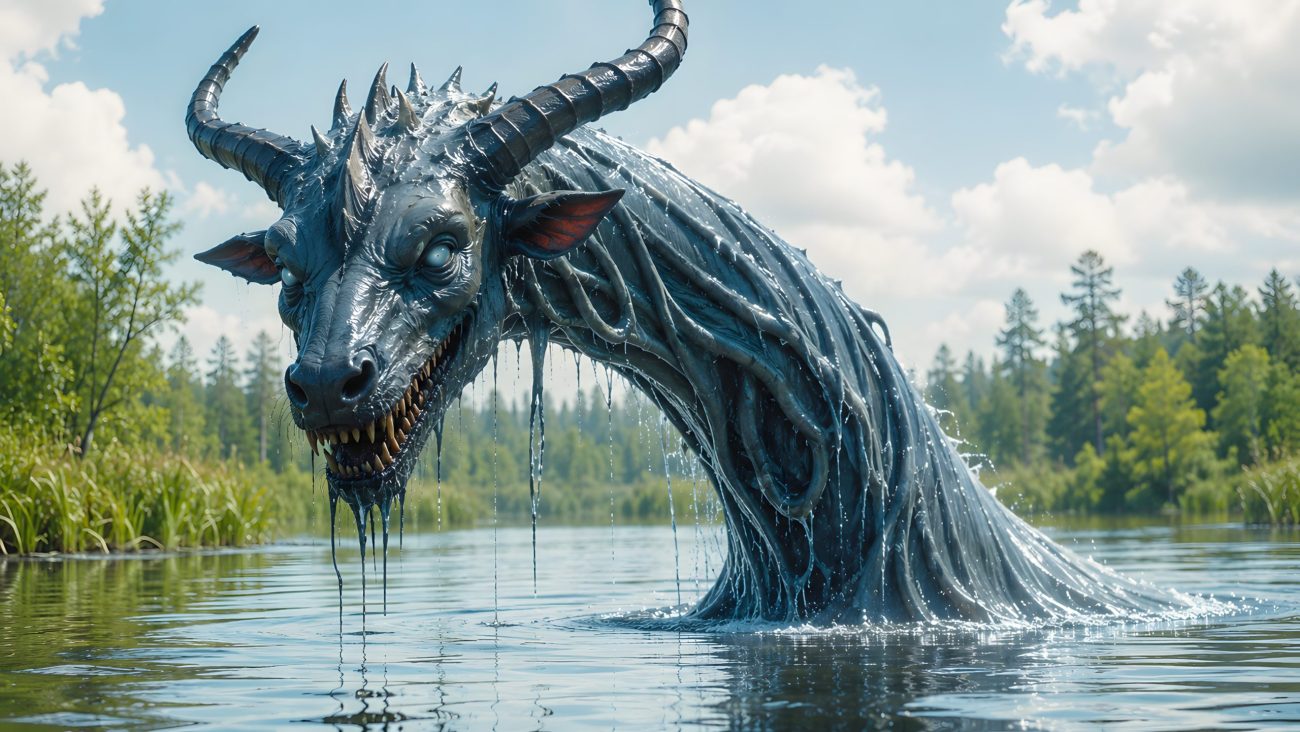
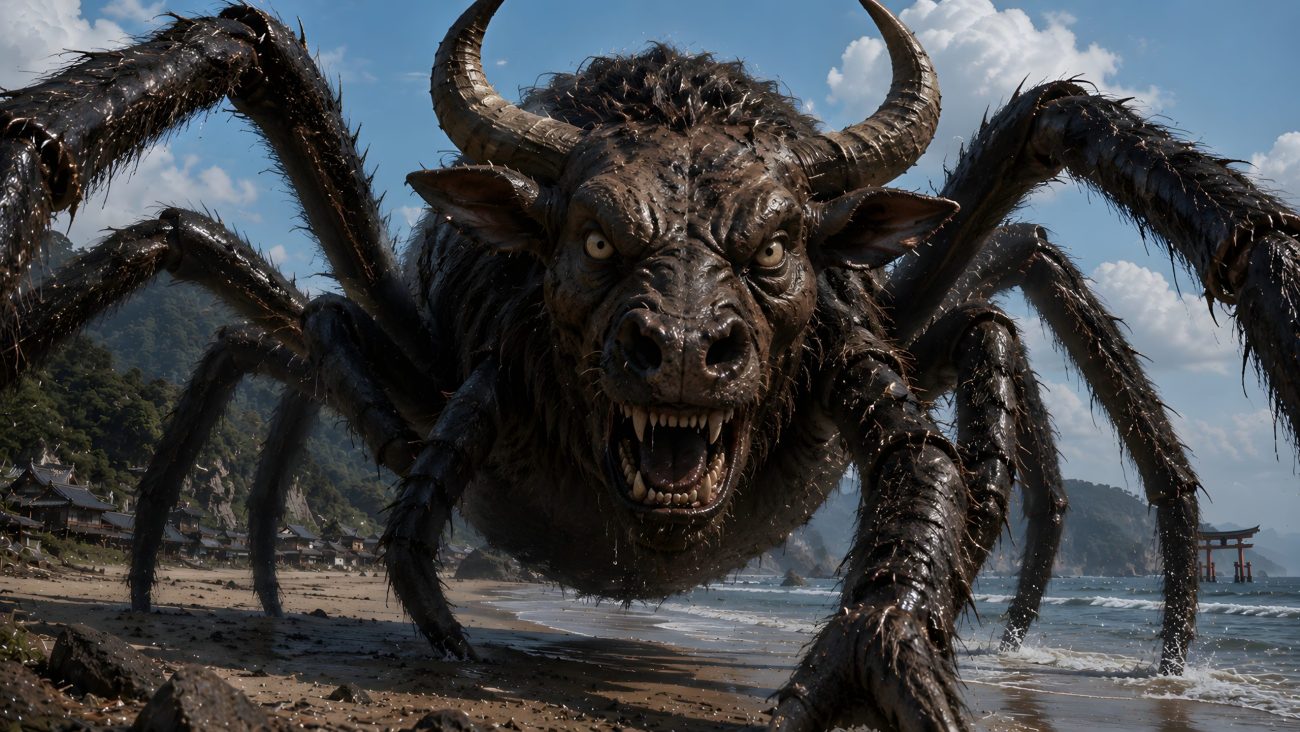
The Ushioni is a terrifying yōkai that usually appears as a monstrous ox-like creature, although its appearance varies greatly between regions. Some traditions describe it as a giant ox, while others portray it with the face of an oni and the body of a huge spider, or as a two-legged beast with wing-like membranes. It is a violent predator feared for attacking both humans and animals.

The Ushioni is most commonly associated with dangerous places near water, including deep pools, rivers, waterfalls, marshes, and the seashore. Numerous locations throughout Japan bear names such as Ushioni Pool or Ushioni Waterfall, reflecting the belief that these monsters once haunted them.

Along the coasts of western Japan, the Ushioni often works together with other sea yōkai such as the Nure-onna and Iso-onna. It may first appear as a beautiful woman carrying a baby and ask a traveler to hold the child. As soon as the victim accepts, the infant becomes impossibly heavy, making escape impossible before the Ushioni reveals itself and attacks.

In the mountains of the Kumano region, the Ushioni was believed to kill without even touching its victims. It simply stared relentlessly at anyone it encountered until they gradually weakened, collapsed, and died. This mysterious affliction was known as having one’s shadow swallowed. People believed the only protection was to recite the strange charm: “Stones flow, leaves sink, cows neigh, and horses roar.”

Another tradition from Izumo says that during long periods of rain, a mysterious white light could cling to a person’s body. This phenomenon was called meeting a Ushioni and was believed to disappear only when exposed to fire.

One famous legend tells of an Ushioni that terrorized the region around Negoro-ji Temple in Kagawa Prefecture, killing people and livestock until it was finally slain by the master archer Yamada Kurōdo Takakiyo. The temple is said to preserve the monster’s horns as proof of its existence.

Across Japan, the Ushioni is remembered as one of the country’s most feared monsters—a savage ox demon that haunts lonely waters, deceives travelers, and brings death to anyone unfortunate enough to meet its gaze.


Sources

TYZ. (n.d.). Ushi Oni [牛鬼]. In 新版TYZ 妖怪図鑑. Retrieved June 28, 2026, from https://tyz-yokai.blog.jp/archives/1010653546.html