Obouibi

Tradition / Region: Papua New Guinea Mythology
Alternate Names: Obóubi, Obóubi-spirits
Category: Spirit, Dwarf


The Myth

The Obouibi are mysterious beings who belong to the water. They live in the sea and travel far up the rivers, moving freely between saltwater and freshwater. Though they are spirits, they appear largely human in form. Both male and female Obouibi exist, and they resemble ordinary people, except that the females wear skirts made of grass. At times, an Obouibi may be seen swimming like a frog, its short limbs and stout body cutting through the water.

The language spoken by the Obouibi is said to be the same as that of humans, but their voices are feared. Those afflicted with sores or sickness are believed to be under their influence. They are masters of crocodiles and other water animals, and when a crocodile kills someone unexpectedly, people say it is the work of the Obouibi. At night, a strange wailing may be heard from the water—this is said to be their cry.

Some Obouibi live near villages such as Kimusu. They kill and eat dugong, leaving behind piles of bones. Some of these bones are left in the water, some are taken fresh, and others are arranged in circles, much like the way humans arrange the skulls of enemies they have captured. If a canoe is lost at sea, the people believe the occupants have been taken by the Obouibi and will never return. Sometimes, however, a person may escape. It is said that one man passed an Obouibi and was carried alive to their dwelling beneath the sea, where he remained for several days.

There is a story of a handsome Puruma boy who was visited at night by a beautiful Obouibi girl while he slept in his canoe. He married her and kept her hidden from the people. She bore him a child, and for a time lived among humans. But one day, when the husband was absent, she overheard people speaking badly of her. That night, she took her child and returned to the water, vanishing back into her own world.

It is also said that male Obouibi sometimes rise from the sea and take human women with them, carrying them away into the depths.

The Obouibi are known to give medicines and knowledge to certain people through dreams. These gifts are used in harpooning and gardening. Along with other related beings, they are closely associated with dugong hunting. Harpooners appeal to them for success and guidance, and in earlier times offerings of dugong bones were made to gain their favor.

Thus, the Obouibi remain beings of both danger and knowledge—powerful water spirits who can kill, heal, abduct, or instruct, and whose presence is felt wherever rivers meet the sea.


Gallery


Sources

Landtman, G. (1970). The Kiwai Papuans of British New Guinea: A nature-born instance of Rousseau’s ideal community.


Interpretive Lenses

Religious Readings
  • Christian Ascetic Deep Dive
Philosophical Readings
  • Nietzschean Deep Dive
Psychological Readings
  • Jungian Deep Dive
Esoteric Deep Dive
  • Hermetic Deep Dive
Political / Social Readings
  • Marxist Deep Dive
Other
  • How to Invite The Obouibi

Pairio

Tradition / Region: Papua New Guinea Mythology
Alternate Names:
Category: Fish, Catfish


The Myth

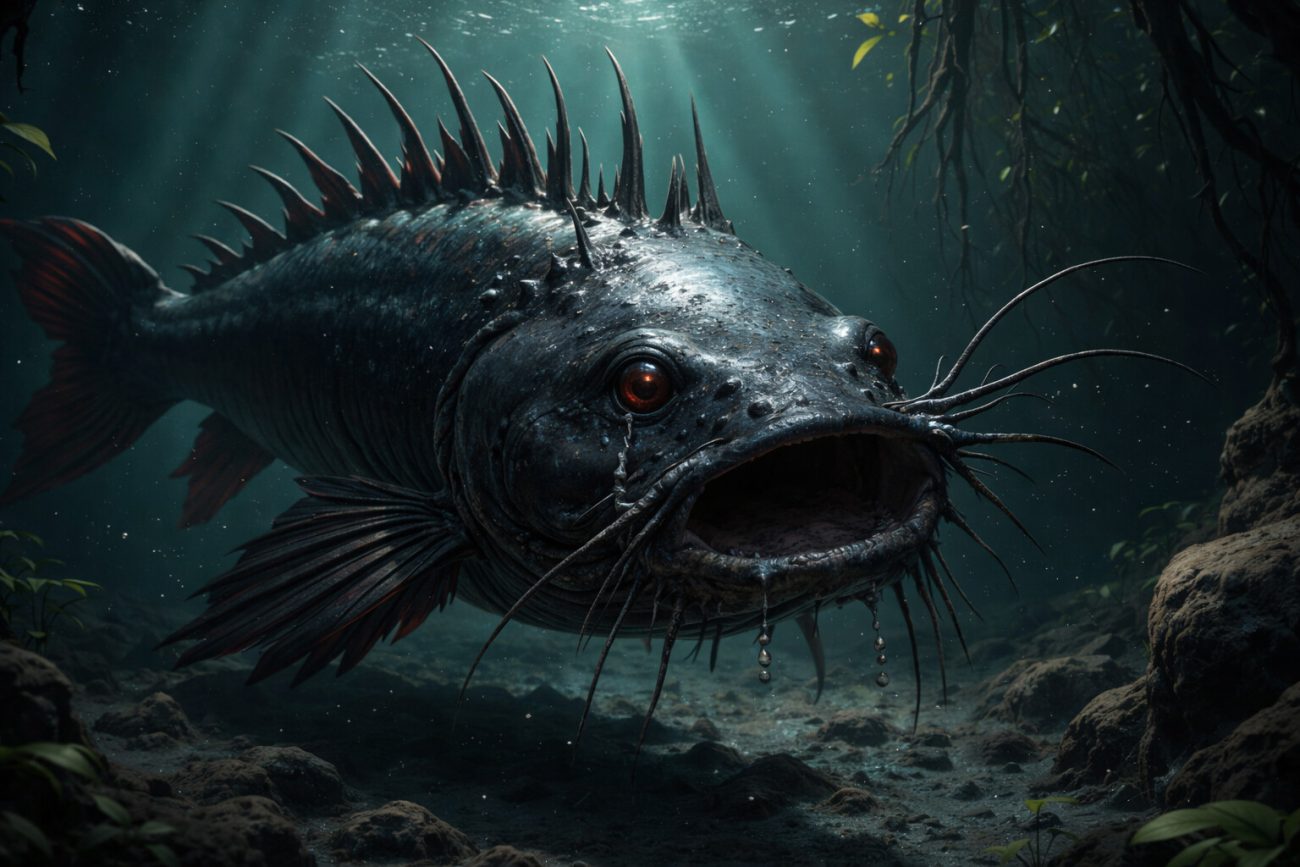
On the reef of Kubani-kikava there lives a cat-fish called Pairio, feared by all who travel those waters. No canoe dares to pass close to her home, for Pairio destroys vessels by thrusting up her back, which is lined with sharp spines. At times a single spine is seen breaking the surface of the sea ahead of a canoe, a warning that forces the crew to turn away at once. At other times she swims behind a vessel, one spine aimed like a weapon, and the paddlers must flee with all their strength to escape destruction.

Pairio was not always a fish. In the beginning she was a malignant female being, akin to other dangerous spirits of the land. One day she was pursued by a great cloud of butterflies. They swarmed over her and settled upon her body until she was completely covered, their wings beating and clinging so tightly that she could not free herself.

To escape them, Pairio fled into the sea. The butterflies followed and were soaked by the water. Their wings hardened, their bodies changed, and spines rose along their backs. In that moment they were transformed into stone-fish and cat-fish, bright and richly colored, just as the butterflies had been.

Pairio herself remained in the reef, now fully a creature of the sea, armed with spines and power. From that time on, the waters of Kubani-kikava became dangerous to all who ventured too near, and the presence of strange, spined fish in the reef was remembered as the legacy of butterflies that once chased a spirit into the ocean.


Gallery


Sources

Landtman, G. (1970). The Kiwai Papuans of British New Guinea: A nature-born instance of Rousseau’s ideal community.


Interpretive Lenses

Religious Readings
  • Christian Ascetic Deep Dive
Philosophical Readings
  • Nietzschean Deep Dive
Psychological Readings
  • Jungian Deep Dive
Esoteric Deep Dive
  • Hermetic Deep Dive
Political / Social Readings
  • Marxist Deep Dive
Other
  • How to Invite The Pairio

Abumi-guchi

Tradition / Region: Japanese Mythology
Alternate Names: Abumiguchi
Category: Object, Yokai


The Myth

On old battlefields where grass grows over rusted iron and forgotten bones, an Abumi-guchi is said to wait.

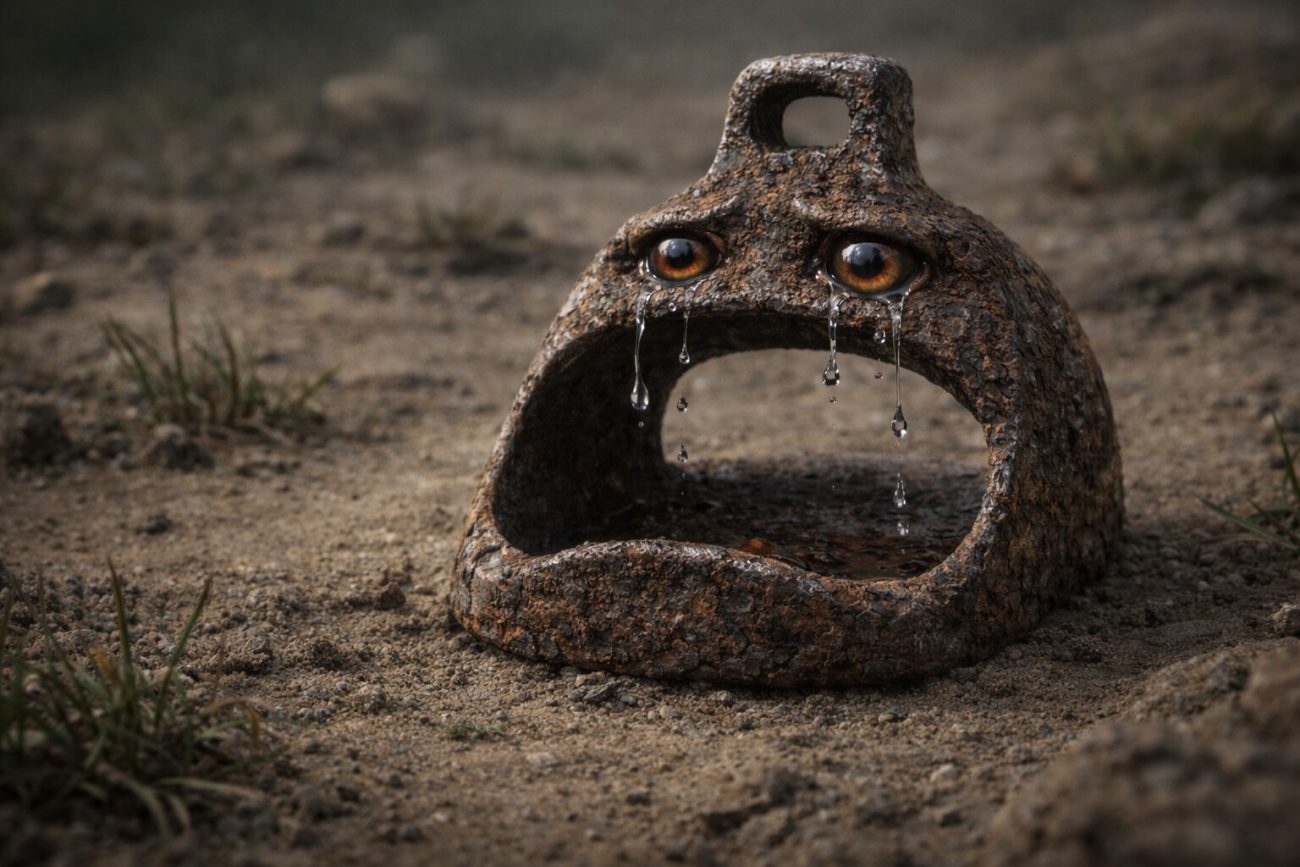
Long ago, it was nothing more than a stirrup—one of a matched pair belonging to a warrior who rode into battle and never returned. When the fighting ended, the dead were buried or burned, the living went home, and the stirrup was left behind in the dirt, still shaped to bear a foot that would never again step into it.

As years passed, the abandoned object awakened.

The iron frame sprouted coarse fur, and where the foot once rested, a mouth formed—wide, soft, and wordless. Thus the Abumi-guchi was born, a tsukumogami shaped not by malice, but by longing.

Unlike many yōkai, the Abumi-guchi does not roam. It does not hunt, trick, or frighten travelers. It remains where it fell, half-buried in grass or mud, facing the direction from which its master once rode. It waits patiently, endlessly, believing that the warrior will return to claim it.

Those who encounter an Abumi-guchi describe it as gentle and sorrowful. It does not attack. It does not speak. If approached, it merely watches with its hollow mouth, as though expecting a familiar presence. Some say it shifts slightly when footsteps approach, mistaking strangers for its long-dead owner.

The Abumi-guchi is said to endure until it finally decays completely, or until time itself erases the memory of the battle. Until then, it remains a symbol of loyalty without reward—an object bound to a purpose that can never again be fulfilled.

In Japanese folklore, the Abumi-guchi stands as a quiet reminder that even tools can grieve, and that devotion, when left behind, may linger far longer than the lives that once gave it meaning.


Gallery


Sources

Yokai.com contributors. (n.d.). Abumi-guchi. In Yokai.com — The Japanese Mythology Database, from https://yokai.com/abumiguchi/

Wikipedia contributors. (n.d.). Abumi-guchi. In Wikipedia, The Free Encyclopedia, from https://en.wikipedia.org/wiki/Abumi-guchi


Interpretive Lenses

Religious Readings
  • Christian Ascetic Deep Dive
Philosophical Readings
  • Nietzschean Deep Dive
Psychological Readings
  • Jungian Deep Dive
Esoteric Deep Dive
  • Hermetic Deep Dive
Political / Social Readings
  • Marxist Deep Dive
Other
  • How to Invite The Abumi-guchi

Azuki Hakari

Tradition / Region: Japanese Mythology
Alternate Names: Azukihakari, Bean Counter
Category: Yōkai, Household Dweller, Red beans


The Myth

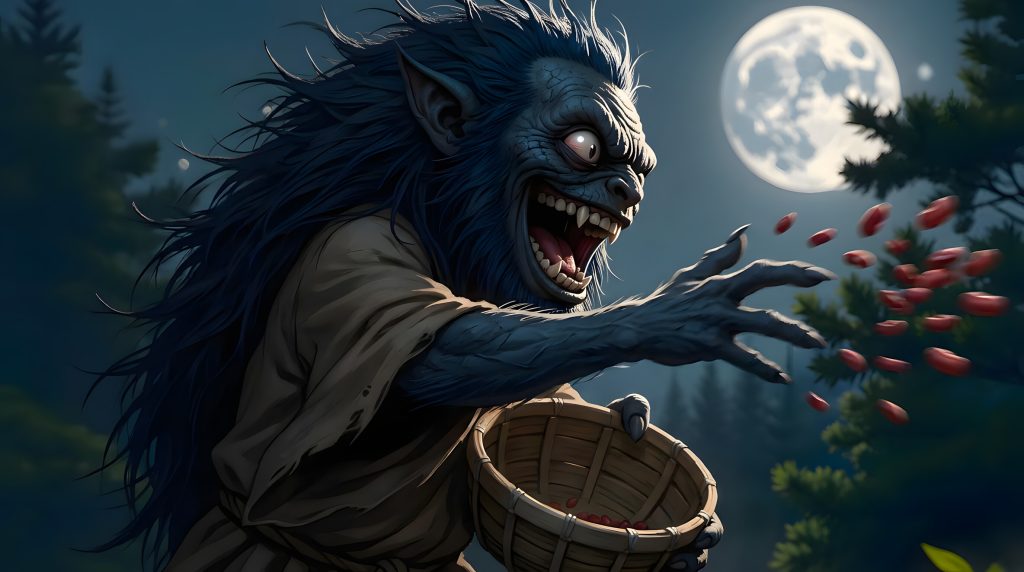
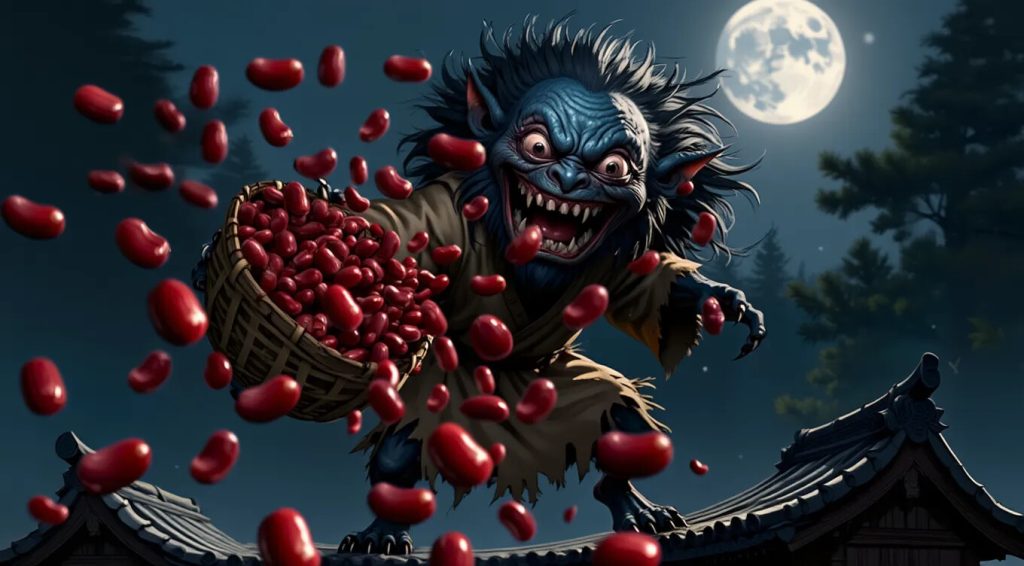
In the quiet hours after midnight, when houses settle and the world grows still, the Azuki Hakari makes itself known—not by sight, but by sound.

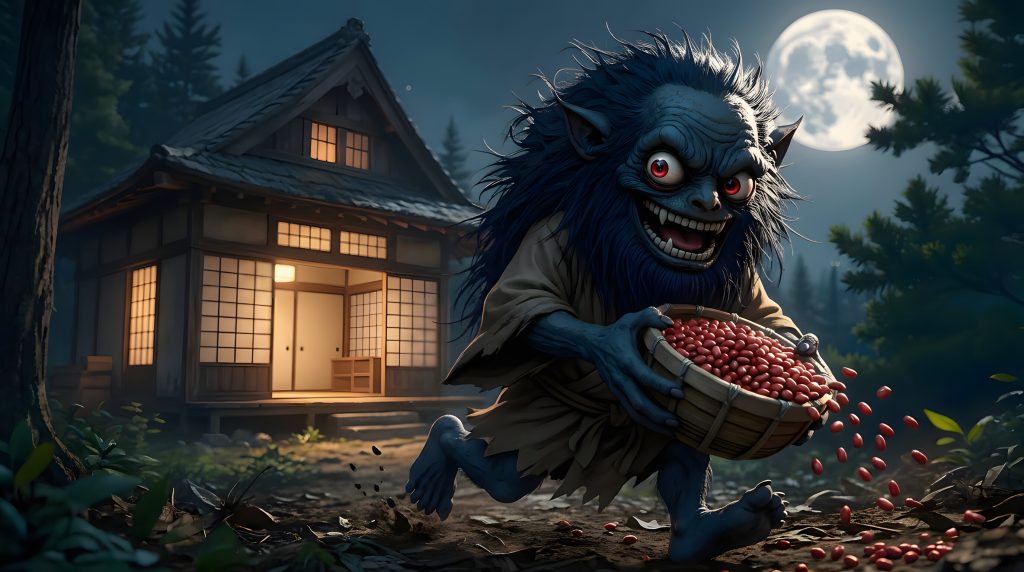
It is said to dwell in rural homes, temples, and old buildings, hiding in attics, ceilings, or garden shadows. No one has ever seen an Azuki Hakari. Its presence is announced only through a sequence of noises that unfold with deliberate precision, as though following a ritual known only to the spirit itself.

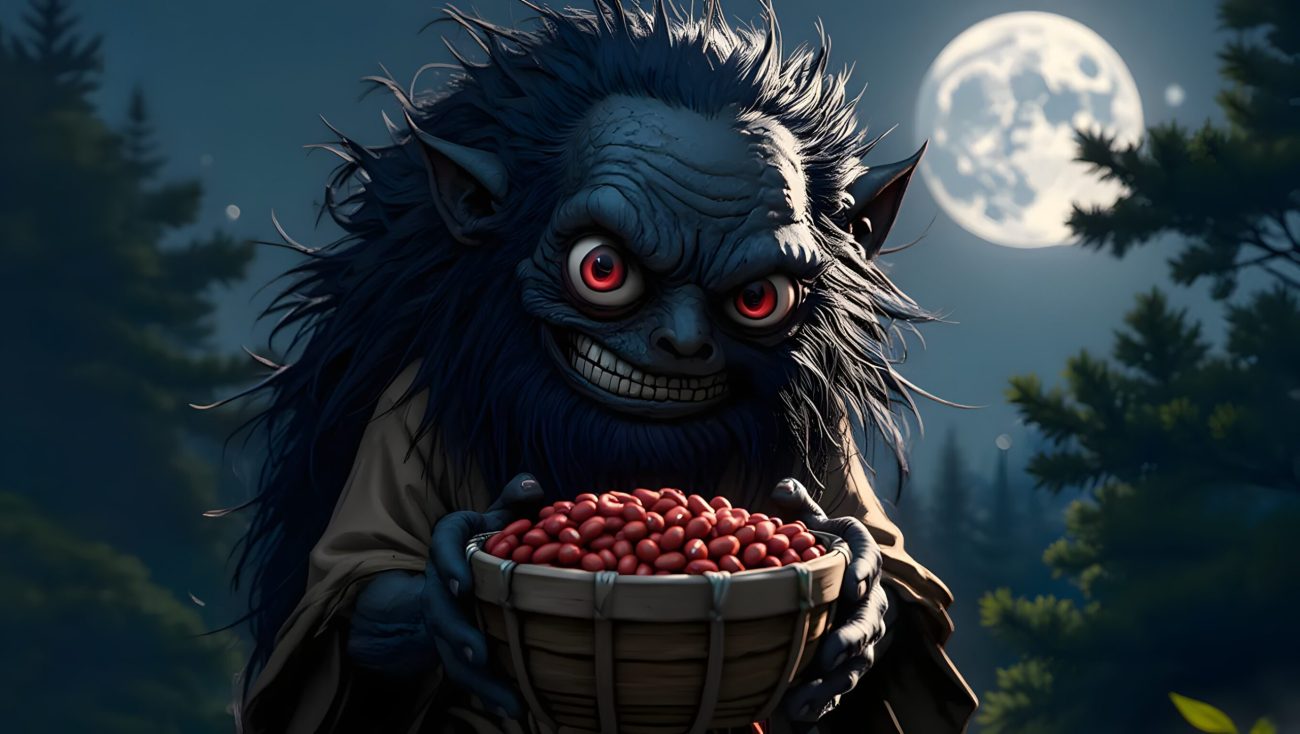
An encounter often begins with heavy footsteps above the room, pacing slowly in the narrow space between ceiling and roof. The steps are deliberate, neither hurried nor random, as if someone were measuring the house from above. Soon after, another sound joins the steps: the dry, rhythmic scattering of azuki beans, striking against windows or sliding doors. The sound repeats steadily, like counting—bean after bean—growing louder with time.

As the night deepens, the noises change. The dry patter of beans becomes the sound of splashing water, as though something unseen were washing or pouring liquid nearby. Finally, the rhythm resolves into the unmistakable clack of geta—wooden sandals—walking just outside the room, circling the house.

Those who dare to open the door or window in response are met with sudden silence. The footsteps vanish. The beans are gone. No water remains. There are no tracks, no marks, no sign that anything was ever there.

In older accounts, it is said that the Azuki Hakari may sometimes cause dust or scraps of paper to fall from the ceiling, but it never harms the residents. It does not steal, attack, or speak. Its purpose is unknown. It simply performs its nocturnal counting and departs.

Because the Azuki Hakari is never seen, its true nature remains uncertain. Some believe it is related to other azuki spirits, while others insist it is something separate—an invisible presence made entirely of sound. In many stories, encounters once attributed to river-dwelling azuki yōkai are now believed to have taken place within homes, pointing instead to the silent work of the bean counter.

Thus the Azuki Hakari endures in folklore as a reminder that not all spirits announce themselves with form or violence. Some are known only by rhythm and repetition, by footsteps in the dark and beans that were never there—proof that even an empty house is never truly empty.


Gallery


Sources

Wikipedia contributors. (n.d.). Azukihakari. In Wikipedia, The Free Encyclopedia, from https://en.wikipedia.org/wiki/Azukihakari

Yokai.com contributors. (n.d.). Azukihakari. In Yokai.com — The Japanese Mythology Database, from https://yokai.com/azukihakari/


Interpretive Lenses

Religious Readings
  • Christian Ascetic Deep Dive
Philosophical Readings
  • Nietzschean Deep Dive
Psychological Readings
  • Jungian Deep Dive
Esoteric Deep Dive
  • Hermetic Deep Dive
Political / Social Readings
  • Marxist Deep Dive
Other
  • How to Invite The Azuki Hakari

Skogkatt

Tradition / Region: Norwegian mythology
Alternate Names: Forest Cat, Mountain Cat
Category: Cat


The Myth

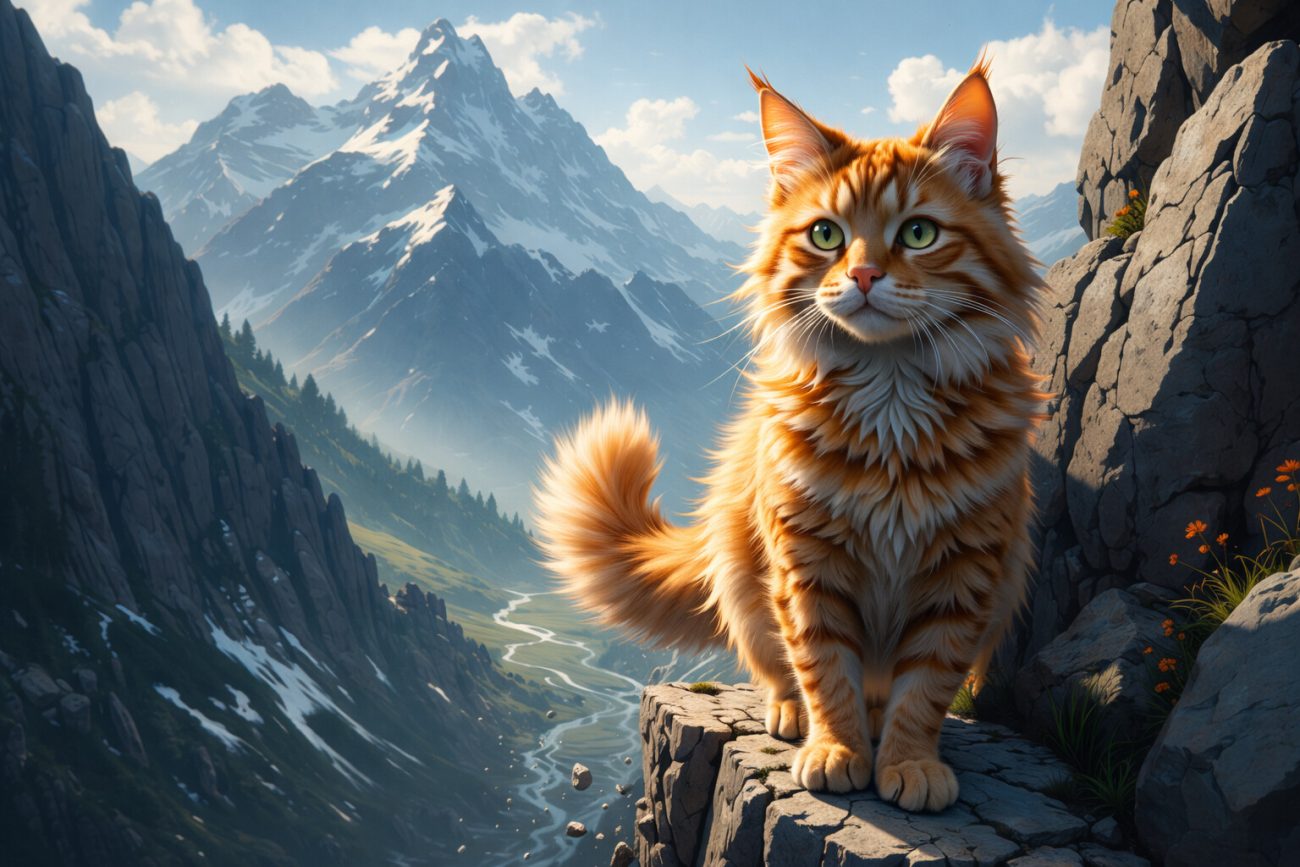
In the old Norse lands, where mountains rose sharply from forest and stone, people believed that not every path was meant for human feet. Some heights belonged to other beings—watchers who moved where men could not follow. Among them was the Skogkatt, a forest cat spoken of not as an animal, but as a fairy creature shaped by the land itself.

The Skogkatt was said to dwell in the mountains, not in villages or hearth-lit halls. Forests marked its boundary, cliffs its true home. Where rock faces rose sheer and unforgiving, the Skogkatt climbed without hesitation. Places that halted hunters, travelers, and even other animals offered it no resistance. Its movement defied expectation, as though the mountain itself allowed its passage.

This ability was not admired for grace, but respected for its meaning. In Norse belief, skill without purpose was rare. To climb where others could not was not merely strength—it was permission. The Skogkatt did not struggle against the mountain; it belonged to it. It left no tracks, no broken stone, no trail to follow. Where it went, humans were reminded of their limits.

Unlike house cats, the Skogkatt was never tame. It was not kept, trained, or claimed. To encounter one was not ownership, but coincidence—a brief crossing between human movement and something older. It did not linger, and it did not respond to being seen. Its presence was not an invitation, but a warning.

The mountains themselves shaped the creature’s meaning. In Norse thought, high places were realms of endurance, silence, and judgment. Storms gathered there without warning. Paths vanished beneath snow and stone. That the Skogkatt moved freely among these dangers marked it as a being unafraid of isolation, thriving where dependence failed.

Later generations would wonder whether the Skogkatt lived on in flesh rather than story, embodied in the great forest cats of Norway—powerful climbers with thick coats and unshakable balance. But folklore does not concern itself with proof. What mattered was not whether the Skogkatt endured, but what it taught.

Through the Skogkatt, people learned that the land does not yield itself equally to all. Some beings walk where others must stop. To follow blindly is to fall. Wisdom lies in knowing when a path is not meant for you.

And so the Skogkatt remains where it has always been—high above the treeline, moving along stone faces untouched by human hands. A quiet presence in the mountains, reminding those below that not every height is meant to be conquered, and not every creature is meant to come down.


Gallery


Sources

Wikipedia contributors. (n.d.). Norwegian Forest Cat. In Wikipedia, The Free Encyclopedia, from https://en.wikipedia.org/wiki/Norwegian_Forest_Cat


Interpretive Lenses

Religious Readings
  • Christian Ascetic Deep Dive
Philosophical Readings
  • Nietzschean Deep Dive
Psychological Readings
  • Jungian Deep Dive
Esoteric Deep Dive
  • Hermetic Deep Dive
Political / Social Readings
  • Marxist Deep Dive
Other
  • How to Invite The Skogkatt

Taoulupo’os Bat

Tradition / Region: Tongan Mythology and Samoan mythology
Alternate Names:
Category: Bat


The Myth

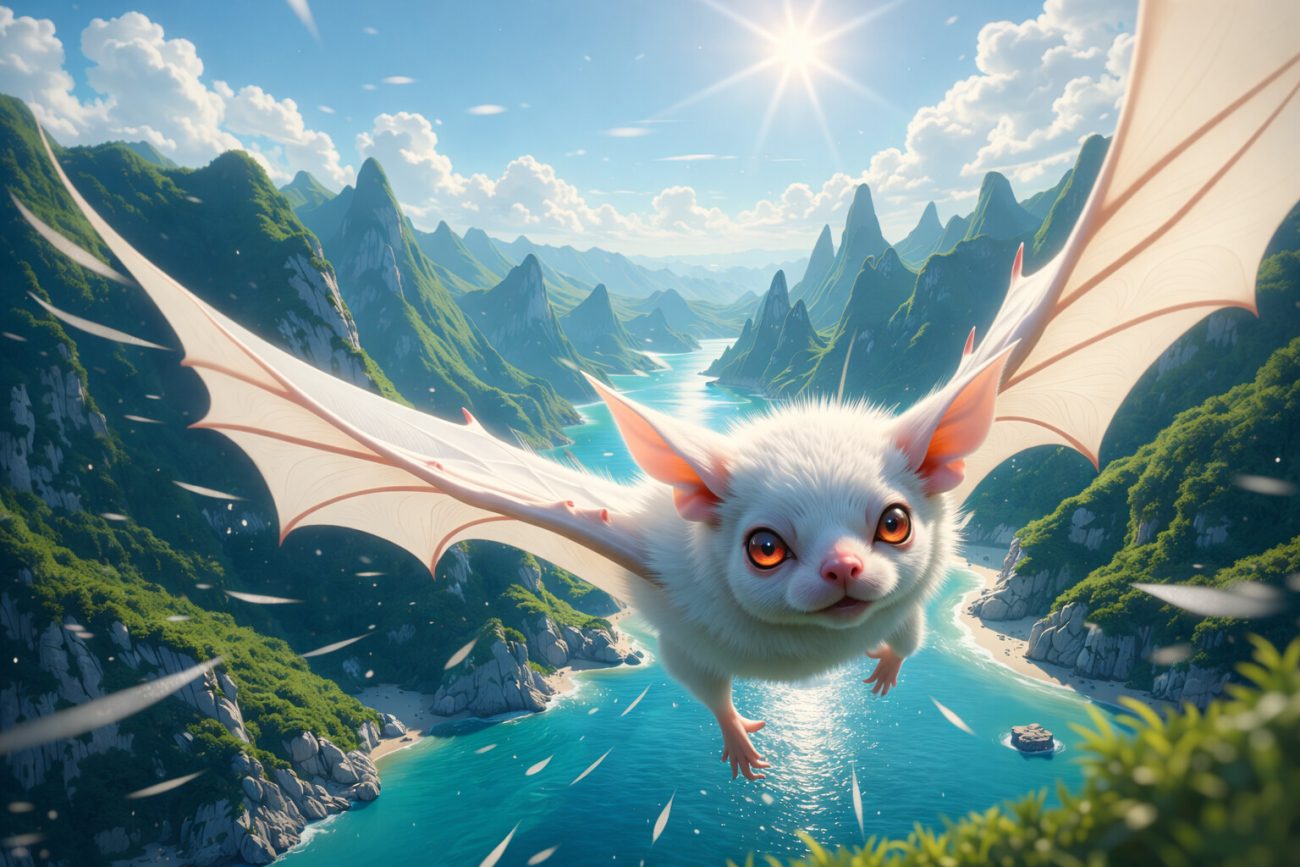
In the lands of Tonga and Samoa, there is a tale told of Leutogi, whose life was once placed in grave danger through jealousy and human judgment. When she was condemned to die by fire, her brother Taoulupo’o called upon the spirits of the dead for aid. Hearing his plea, they sent forth a white bat, a creature unlike any other.

As the flames rose around Leutogi, the white bat descended and extinguished the fire, saving her from death. Through this act, the spirits made clear that her fate was not to end there. Leutogi was then cast away to a barren island, alone and cut off from human aid. Yet she was not abandoned. Each day, white bats came to her, bringing her food and watching over her, ensuring her survival.

In time, Leutogi gave birth to a son. He was named Fa’asega, and he was given the title Tonumaipe‘a, meaning “the decision from the bat,” for it was the bat’s intervention that had preserved his mother’s life and made his birth possible.

Thus the white bat became known as a sign of ancestral protection and spiritual authority, acting when human judgment failed. Through Taoulupo’o’s invocation and the bat’s actions, the spirits showed that the unseen world watches closely, and that life and death are not governed by humans alone, but by forces older and wiser than any living voice.


Gallery


Sources

A Book of Creatures contributors. (2015). Alicanto. In ABookOfCreatures.com, from https://abookofcreatures.com/2015/06/24/alicanto/


Interpretive Lenses

Religious Readings
  • Christian Ascetic Deep Dive
Philosophical Readings
  • Nietzschean Deep Dive
Psychological Readings
  • Jungian Deep Dive
Esoteric Deep Dive
  • Hermetic Deep Dive
Political / Social Readings
  • Marxist Deep Dive
Other
  • How to Invite The Taoulupo’os Bat

Emobali

Tradition / Region: Papua New Guinea Mythology
Alternate Names:
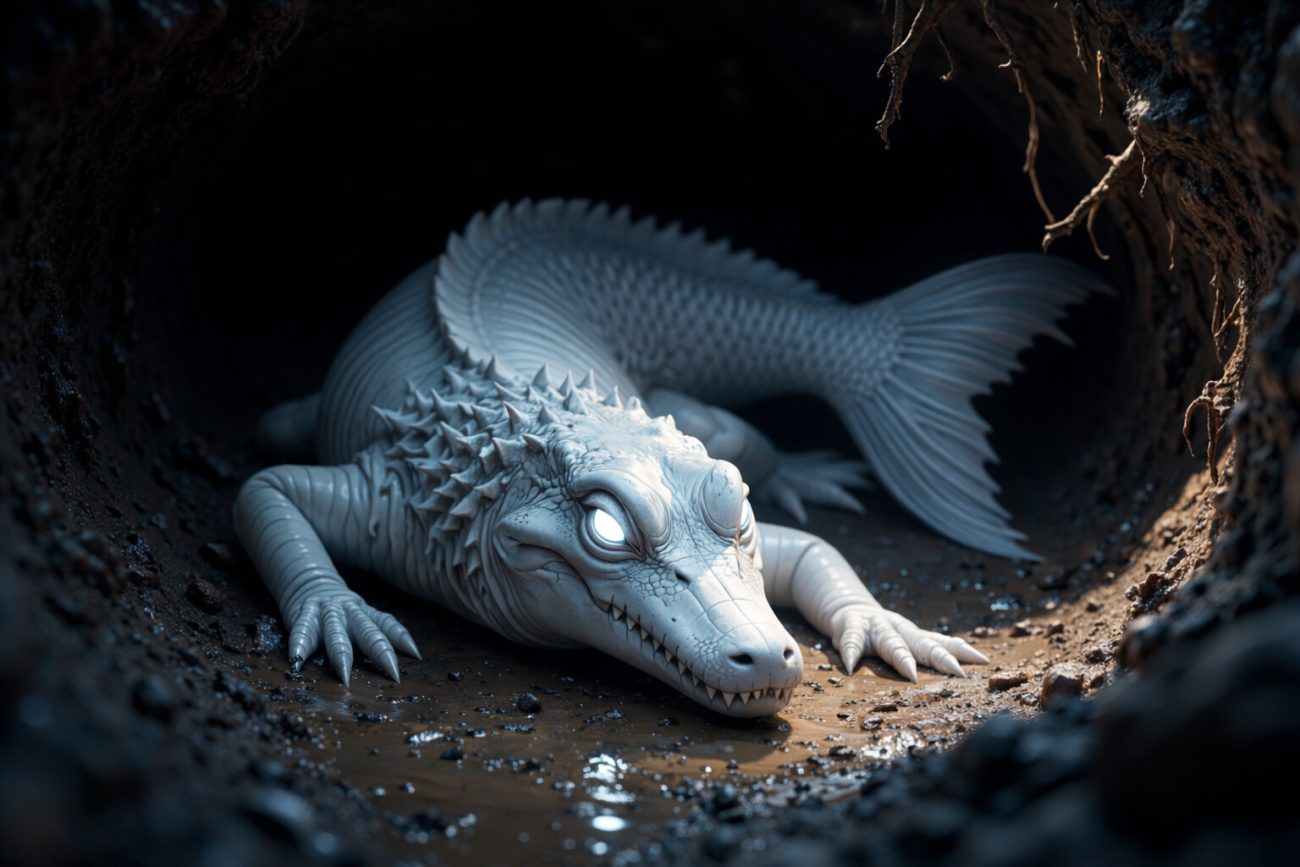
Category: Crocodile, Fish, Shapeshifter


The Myth

Emobali was once a Djibu boy. One day, while hunting, he shot a woman without knowing who she was. When he discovered that he had killed his own mother, grief and terror seized him. Unable to live with what he had done, Emobali went to the Binatui River at Mude and threw himself into the water.

At the place where he entered the river, a deep hollow was formed close to the bank. This deep spot is said to exist because of Emobali’s leap, and it remains as a sign of his death.

Afterward, Emobali became a spirit of the river. In the water, he appears in the form of a crocodile or a fish, moving silently beneath the surface. Yet Emobali does not only haunt the river. He also comes to people in dreams. When Djibu people sleep naked, Emobali may appear to them and instruct them, teaching medicines and giving knowledge useful for hunting and gardening.

In these dreams, he does not appear as an animal, but in his human form, as the boy he once was.

Thus Emobali lives on as a crocodile–fish spirit of the river, born from an act of tragic ignorance, dwelling in water and dreams alike, feared and respected as both a reminder of guilt and a giver of hidden knowledge.


Gallery


Sources

Landtman, G. (1970). The Kiwai Papuans of British New Guinea; a nature-born instance of Rousseau’s ideal community. New York: Johnson Reprint Corp., p. 302.


Interpretive Lenses

Religious Readings
  • Christian Ascetic Deep Dive
Philosophical Readings
  • Nietzschean Deep Dive
Psychological Readings
  • Jungian Deep Dive
Esoteric Deep Dive
  • Hermetic Deep Dive
Political / Social Readings
  • Marxist Deep Dive
Other
  • How to Invite The Emobali

Kutys

Tradition / Region: Russian Mythology, Udmurt Mythology, Besermyan Mythology
Alternate Names: Vu Kutys (“Water Kutys”), Kutesi (Besermyan)
Category: Swamp Dweller, Spirit, Disease


The Myth

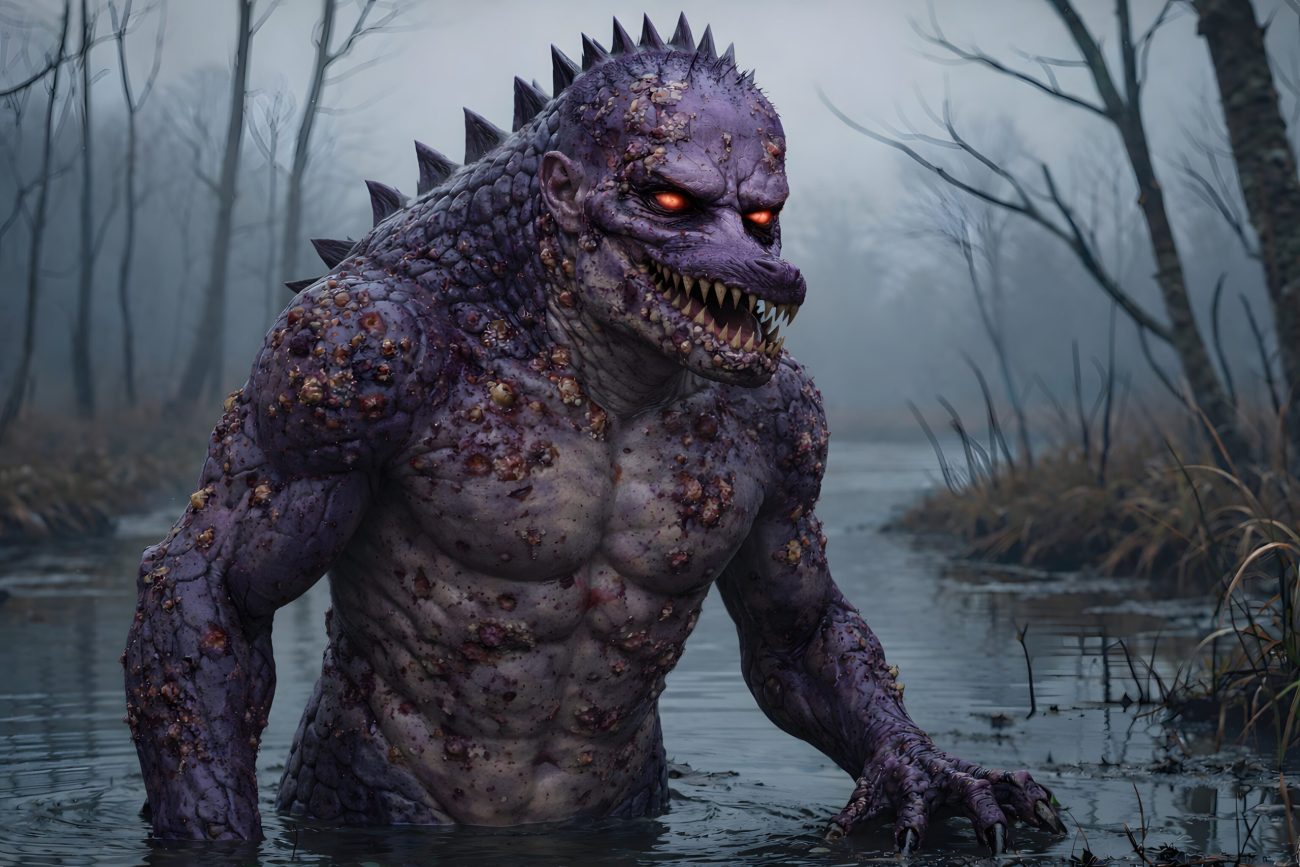
Kutys is a spirit that dwells near water, feared by people and animals alike. His name means “the one who seizes,” and when he acts, it is said that he truly grabs hold of his victims.

Kutys lives at springs, at the sources of rivers and streams, and in ravines where water once flowed. Even when a ravine dries in summer, Kutys may still remain there, unseen. Wherever he lives, sickness and terror follow. When he becomes angry, he punishes people and livestock first with sudden, unexplainable fear, and then with illness. Boils, scabs, erysipelas, abscesses, and wasting pains appear without warning. Sometimes Kutys inspires fear by wild, inhuman cries, and sometimes by appearing in dreadful forms, neither fully man nor beast.

Near the village of Omutnitsy, far from the town of Glazov, there is a spring where Kutys is said to live even now. Above the spring lies a marshy ravine covered with tangled growth. Kutys guards a hidden treasure there. On hot summer days, people or horses who approach the upper part of the ravine may be seized. Breath becomes difficult, strength drains away, the stomach tightens inward, fever and trembling begin, and soon the whole body falls into sickness. This suffering can last for days and may end in death unless Kutys is appeased with sacrifice.

Once, men building a bridge over the stream called Yazinets slept beside their work. At midnight they were awakened by a terrible roar. At the head of the stream they saw a gigantic figure advancing toward them, something neither clearly human nor animal. In panic, they fled to the village, leaving their clothes and belongings behind.

To protect themselves, people make offerings to Kutys. Small loaves of bread, egg-filled pies, pancakes, grains of barley tied in cloth, copper coins, or even a live chicken with bound legs are given at springs and streams. Some throw grain mixed with salt, bits of cloth, or small dolls into the water or onto the ground where Kutys dwells. This act of offering is meant to calm him and release those he has seized.

Kutys is closely bound to water itself. Those who curse into water, spit, blow their nose, or behave disrespectfully near springs risk being taken by him. Among the Besermyans, Kutys is believed to be the spirit of those who died unnatural deaths, or of infants who died without being named. Such spirits linger near their burial places and seize anyone who steps upon them.

Thus Kutys remains a presence of sudden fear and sudden illness, a reminder that water is not only life-giving but dangerous, and that unseen hands may still reach up from springs and ravines to seize the careless.


Gallery


Sources

Bestiary.us contributors. (n.d.). Kutys. In Bestiary.us — Mythical Creatures of the World, from https://www.bestiary.us/kutys#


Interpretive Lenses

Religious Readings
  • Christian Ascetic Deep Dive
Philosophical Readings
  • Nietzschean Deep Dive
Psychological Readings
  • Jungian Deep Dive
Esoteric Deep Dive
  • Hermetic Deep Dive
Political / Social Readings
  • Marxist Deep Dive
Other
  • How to Invite The Kutys

Alp-Luachra

Tradition / Region: Irish Mythology
Alternate Names:
Category: Lizard, Newt, Hunger


The Myth

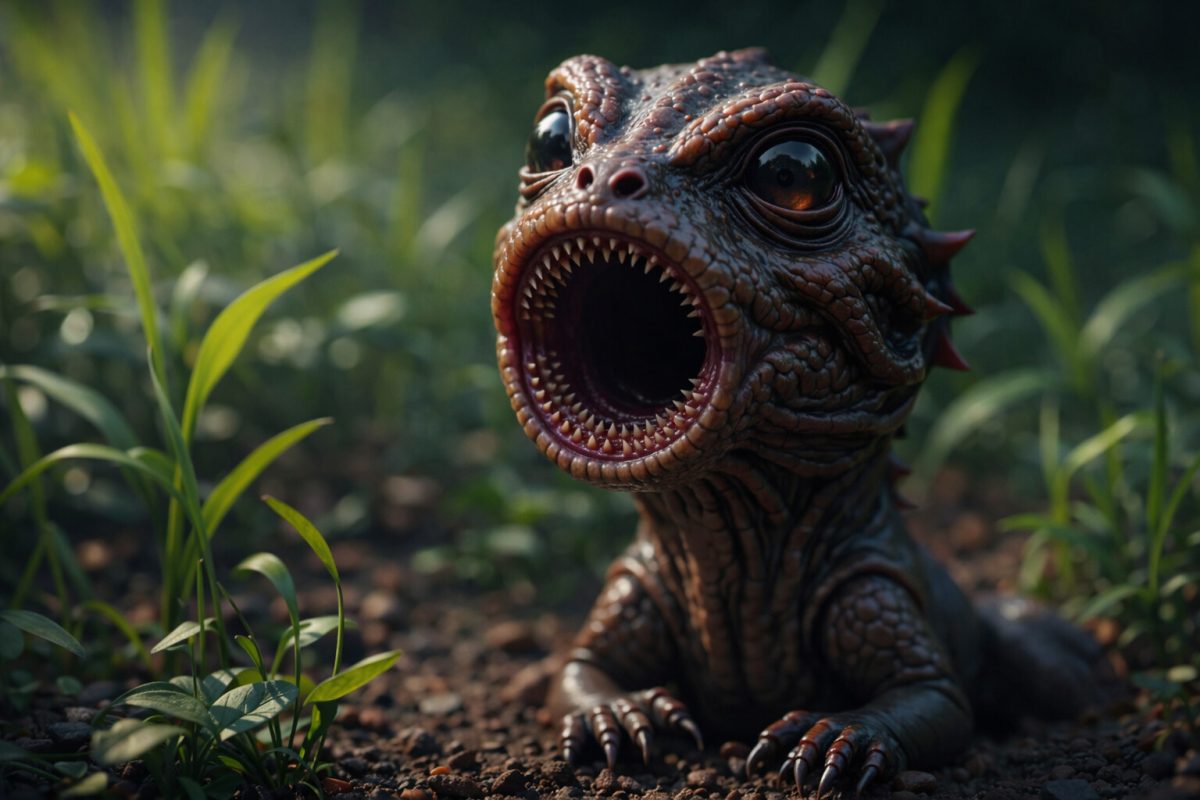
The Alp-Luachra is a dark fairy said to dwell throughout Ireland, feared for its quiet and dreadful way of feeding upon humans. Small and newt-like in form, it resembles a smooth, slippery creature of the grass and water, yet it is far from harmless. It waits for the careless sleeper who lies upon the earth beneath the open sky.

When a person sleeps outdoors with mouth unguarded, the Alp-Luachra slips silently inside. It passes down the throat and settles in the stomach, unseen and unfelt. There it does not eat flesh, but lives upon the essence of food itself, draining the strength and nourishment meant for the host. As time passes, the creature grows and multiplies within the body, while the victim feels constant hunger no matter how much is eaten.

Because of the fairy’s enchantment, the afflicted person does not know the true cause of their suffering. Months or even years may pass as the body weakens and wastes away. If nothing is done, the victim eventually dies of starvation, though food was always close at hand.

Those who know the old ways say the Alp-Luachra can be driven out by cunning rather than force. Strong-smelling or savory foods tempt it toward the mouth, while heavily salted meat brings unbearable thirst. When the victim lies near running water and opens their mouth, the creatures crawl out one by one, seeking the stream. Sometimes many emerge, and at last a larger one, said to be their mother.

Once expelled, the Alp-Luachra loses its power over the host. It is said that the creature itself still holds strange virtue, and that licking it can cure burns. But none who have suffered its presence ever forget the lesson it brings.

Thus the Alp-Luachra remains a warning in Irish lore: that unseen dangers dwell close to the body, that hunger may come from within, and that the earth itself is not always a safe bed for the unwary.


Gallery


Sources

A Book of Creatures contributors. (2015). Alp-luachra. In ABookOfCreatures.com, from https://abookofcreatures.com/2015/03/17/alp-luachra/


Interpretive Lenses

Religious Readings
  • Christian Ascetic Deep Dive
Philosophical Readings
  • Nietzschean Deep Dive
Psychological Readings
  • Jungian Deep Dive
Esoteric Deep Dive
  • Hermetic Deep Dive
Political / Social Readings
  • Marxist Deep Dive
Other
  • How to Invite The Alp-Luachra

Umibake

Tradition / Region: Japanese Mythology
Alternate Names:
Category: Yōkai, Sea Serpent, Snake


The Myth

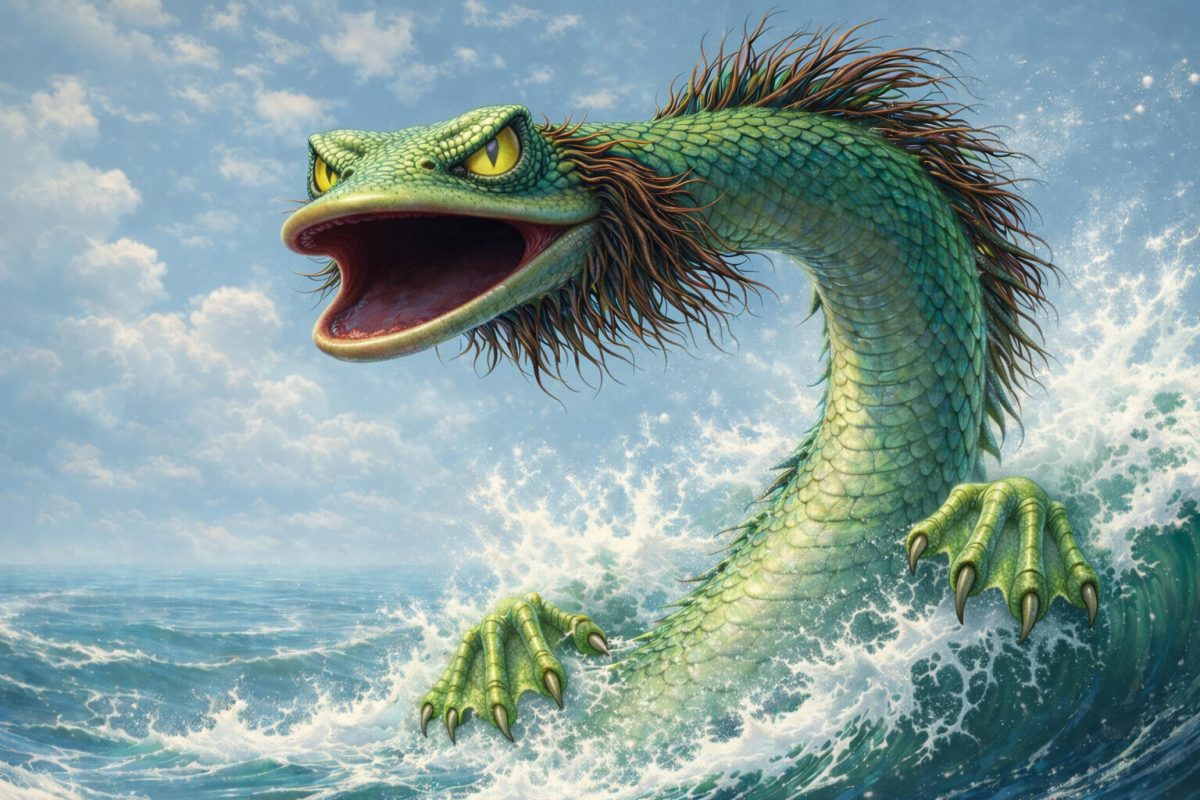
Umibake is a yōkai known only from monster picture scrolls drawn after the Edo period. It appears among collections of strange beings painted together, without a written tale to explain its origin or deeds.

The Umibake emerges upon the surface of the water. Its body is long and slender like that of a serpent, stretching across the waves as it rises. Though its form is aquatic and elongated, its face and the shape of its hands resemble those of a familiar kind of yōkai often seen in monster scrolls, giving it an oddly human presence despite its inhuman body.

No story tells what Umibake does when it appears, nor why it comes forth from the water. It is simply seen there, floating or rising, a quiet and unsettling shape upon the surface of the sea.

Like many yōkai preserved only in pictures, Umibake remains a vision without explanation—its meaning carried only in its form, suspended between water and imagination.


Gallery


Sources

Tyz-Yokai Blog contributors. (n.d.). 海化け (Umibake). In TYZ-Yokai Blog, from https://tyz-yokai.blog.jp/archives/1036418400.html


Interpretive Lenses

Religious Readings
  • Christian Ascetic Deep Dive
Philosophical Readings
  • Nietzschean Deep Dive
Psychological Readings
  • Jungian Deep Dive
Esoteric Deep Dive
  • Hermetic Deep Dive
Political / Social Readings
  • Marxist Deep Dive
Other
  • How to Invite The Umibake