Yūrei

Tradition: Japanese Mythology
Alternative Names: 幽霊, ゆうれい, Obake, Shiryō, Bōrei
Category: Ghost


The Myth

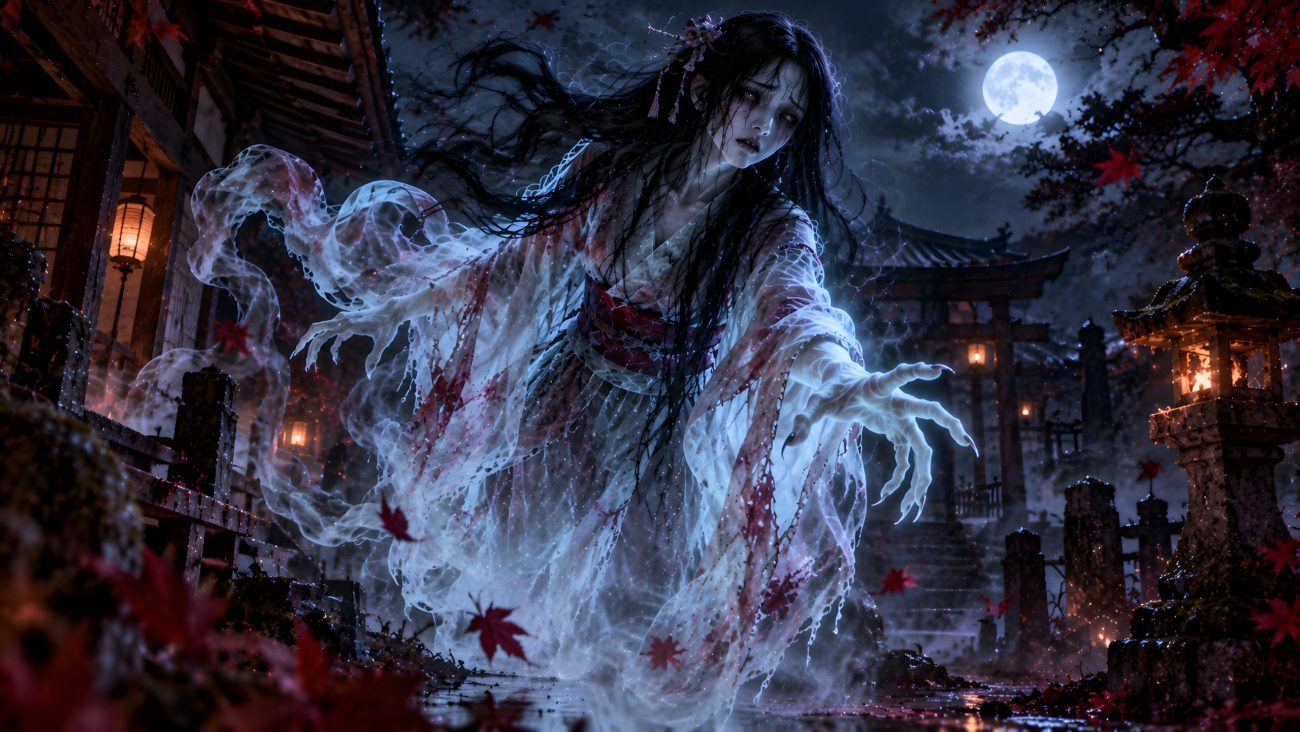
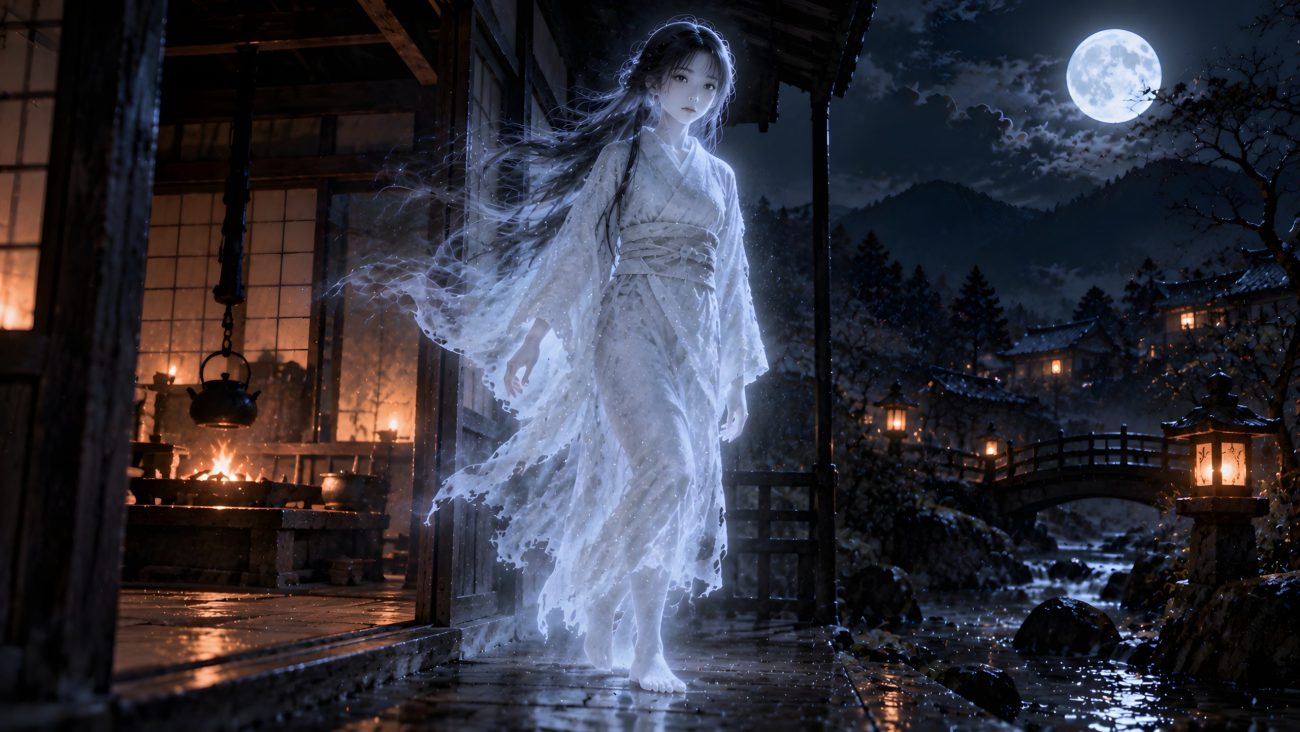
Yūrei are the spirits of the dead who remain trapped between the world of the living and the afterlife. Their appearance often reflects the circumstances of their deaths. They are commonly depicted as translucent, faintly visible figures dressed in white burial kimonos or the uniforms of fallen warriors. Some bear bloody wounds that reveal how they died, while their long, disheveled hair often hangs across their faces. Their hands dangle limply from their wrists, and their lower bodies frequently fade away, leaving them seemingly without feet.

Unlike spirits that wander freely, Yūrei usually haunt a particular place or person. They may linger where they died or were buried, or pursue someone connected to their deaths, such as a murderer. Others remain close to their living families, unable to accept their own deaths and bringing misfortune and unhappiness to those they once loved. Some can invoke powerful curses, making their presence dangerous to anyone who encounters them.

Yūrei remain in the world of the living because something prevents them from moving on. Some died suddenly or violently, while others carried deep resentment or hatred into death. Spirits who do not receive proper funeral rites and prayers may also become trapped between the physical world and the afterlife. Their unfinished business varies: some need their killers brought to justice, others require their bodies to be found, and some simply wish to deliver a final message to a loved one.

A Yūrei can finally rest when the purpose that binds it to the world has been fulfilled, or when a priest successfully exorcises it. In Japanese tradition, the dead are normally honored through funeral ceremonies, prayers, and rituals that help reunite their souls with their ancestors. During the summer festival of Obon, ancestral spirits are believed to return to visit their families. Yūrei, however, are restless souls who have not completed this journey, remaining behind until they can find peace.


Sources

“Yūrei.” Wikipedia: The Free Encyclopedia. Wikimedia Foundation. Accessed October 15, 2026. https://en.wikipedia.org/wiki/Y%C5%ABrei
Water Ghost

Tradition: Taiwanese Mythology, Chinese Mythology
Alternative Names: Chúi-kúi, Shuí-guǐ, 水鬼, Water Spirit
Category: Ghost


The Myth

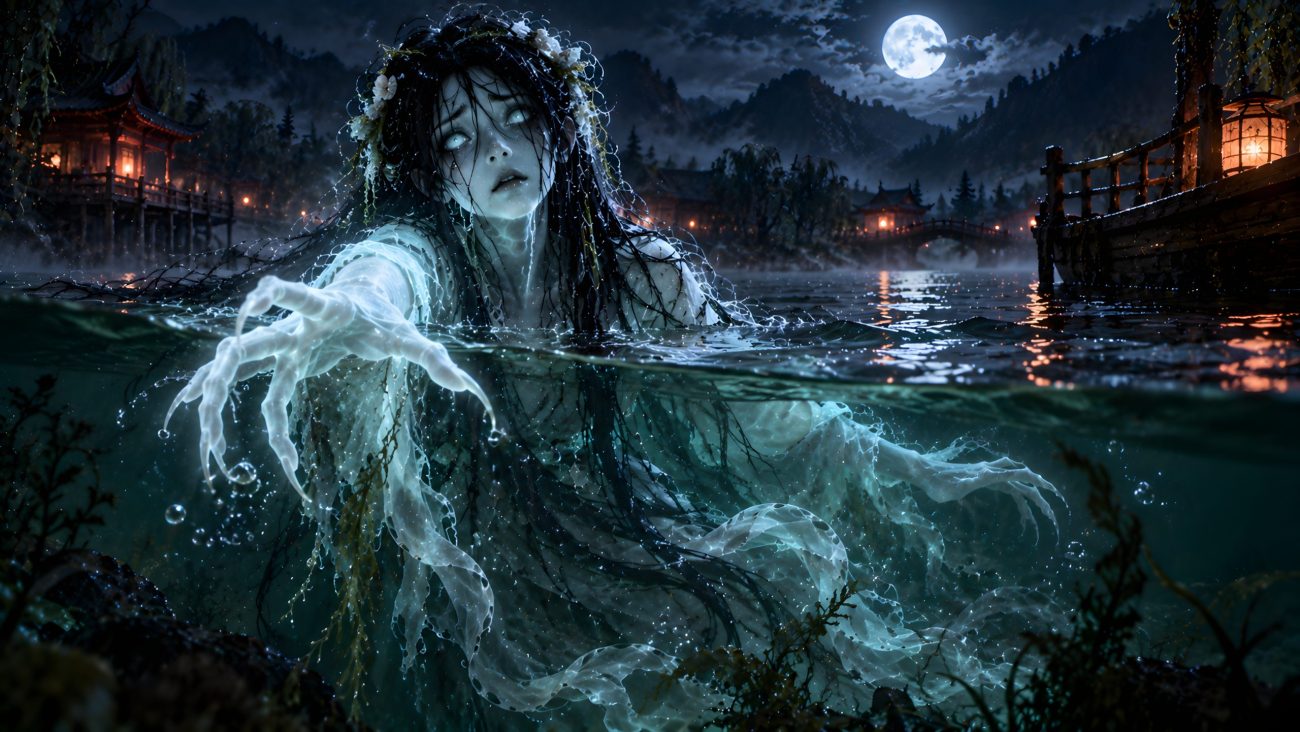
Water Ghosts are vengeful spirits that haunt rivers and other bodies of water, waiting for unsuspecting people who approach the shore or attempt to cross a river. They are the souls of people who drowned, including those who deliberately took their own lives in the water. Because they died unnatural deaths, they are believed to remain trapped in the water, filled with resentment and unable to reincarnate. They can seize the living and drag them beneath the surface, drowning their victims in the depths.

A Water Ghost seeks to escape its restless existence by catching a substitute. It drags a living person underwater and drowns them, forcing the victim’s soul to take its place. The original spirit can then move on, while the newly drowned person becomes a Water Ghost and waits for another victim. This cycle of death and replacement continues indefinitely, making rivers and waterways dangerous places in which to encounter these spirits.

Some legends describe Water Ghosts haunting people who survive floods or rescue drowning victims and bring them home. Their presence may bring further misfortune, including disease, madness, and additional drownings. In Taiwan, people have developed rituals to appease these spirits and prevent them from causing harm. Ceremonies are held to deliver the souls of those who died in floods, while shrines and protective structures are built near waterways to restrain or honor the spirits. Some drowned individuals are even worshipped as water deities known as Water-Flowing Lords, whose supernatural power is believed capable of bringing both good fortune and disaster.


Sources

“疫鬼 (Yìguǐ).” Chinese Wikipedia. Wikimedia Foundation. Accessed October 15, 2026. https://zh.wikipedia.org/wiki/%E7%96%AB%E9%AC%BC


Plague Demon

Tradition: Chinese Mythology
Alternative Names: Plague Ghost, Pestilence Demon
Category: Ghost


The Myth

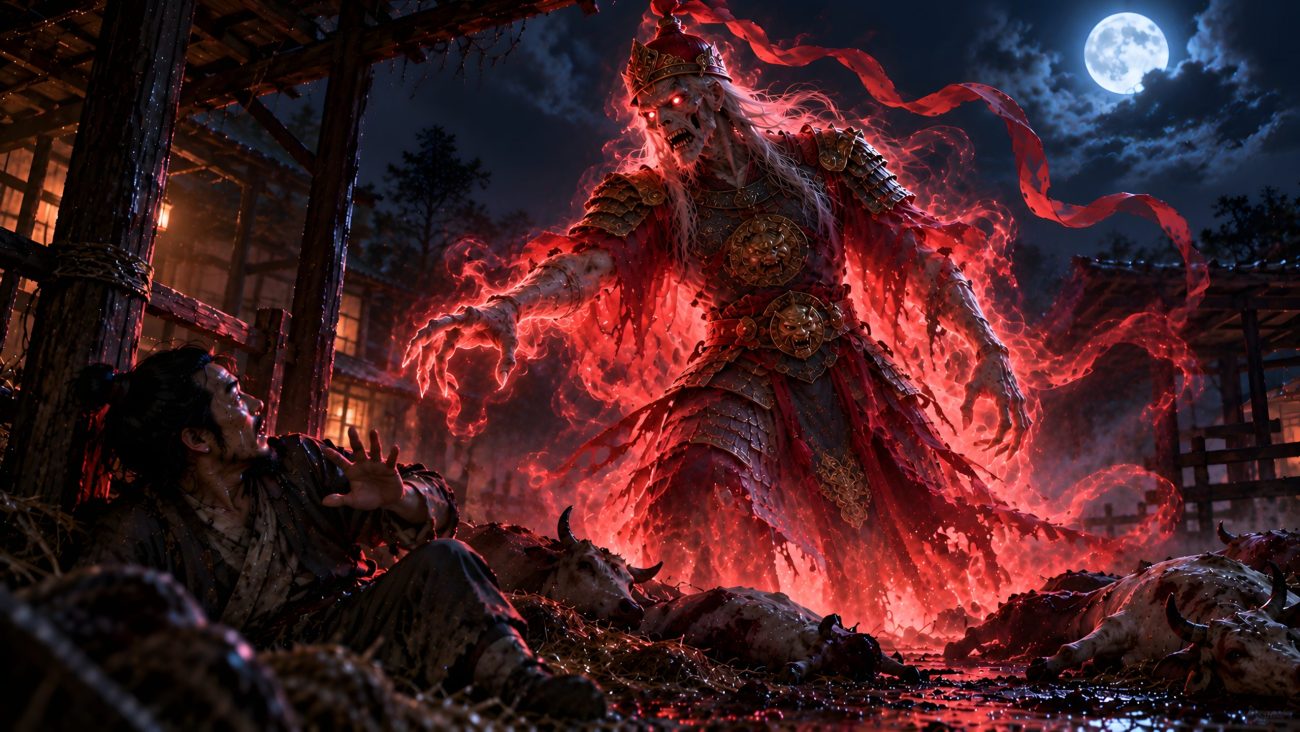
The Plague Demon is a terrifying supernatural creature in Chinese mythology that spreads deadly diseases wherever it appears. It can take many forms, including those of humans and animals, making its true appearance difficult to recognize. Its arrival brings sickness and death, and entire communities may suffer from the plague associated with its presence.

One account describes a cowherd who heard someone knocking at the door of his cattle pen during the night. When he got up to investigate, he saw hundreds of powerful men wearing colorful armor and red helmets rushing into the enclosure. The mysterious figures soon disappeared, and by daybreak all fifty cattle inside the pen were dead. The event was attributed to a Plague Demon, whose supernatural presence had brought sudden destruction to the herd.

Other traditional accounts describe plague ghosts as spirits that cling to walls and cannot pass through open air. These beings embody the devastating power of disease, appearing as mysterious forces capable of bringing death to humans and animals alike. Their arrival is feared because the sickness they spread can strike without warning and leave destruction in its wake.


Sources

“水鬼 (Shuǐguǐ).” Chinese Wikipedia. Wikimedia Foundation. Accessed October 15, 2026. https://zh.wikipedia.org/wiki/%E6%B0%B4%E9%AC%BC


Nengdai Gui

Tradition: Chinese Mythology
Alternative Names: 能戴鬼
Category: Ghost


The Myth

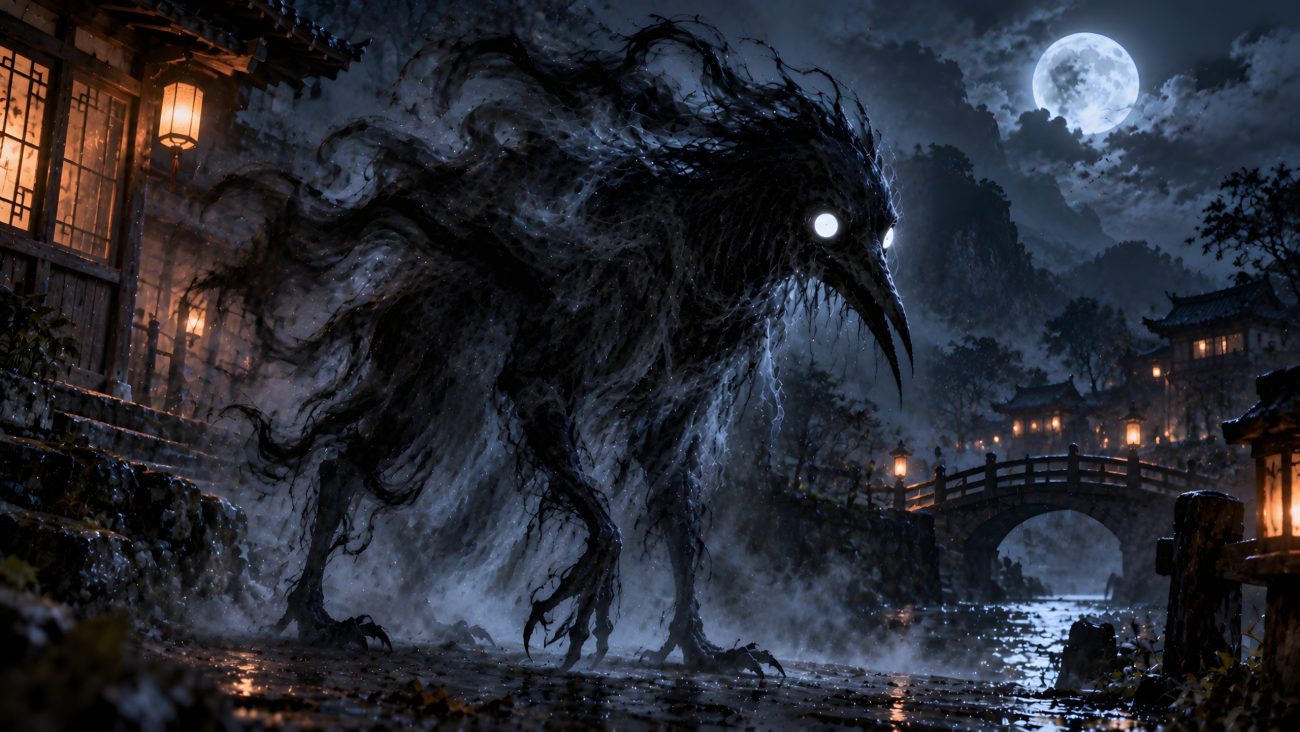
Nengdai Gui is a strange supernatural creature from Chinese mythology, described as entirely black except for its two snow-white eyes. Its body is as insubstantial as smoke or mist, yet soft and pliable like cotton wool. It has a long, pointed mouth resembling a bird’s beak, giving it an unsettling and unusual appearance.

Despite its frightening looks, Nengdai Gui is not necessarily hostile toward humans. It can live peacefully alongside people and may even be tamed like a dog. Once domesticated, it obeys its owner and can be directed to carry out tasks, serving its master much like a trained animal.

The name Nengdai Gui is also used to describe someone or something exceptionally ugly. The creature’s bizarre combination of a black, mist-like body, glaring white eyes, and sharp beak-like mouth has made it an image of grotesque appearance in Chinese supernatural tradition.


Sources

“能戴鬼 (Néngdàiguǐ).” Chinese Wikipedia. Wikimedia Foundation. Accessed October 15, 2026. https://zh.wikipedia.org/wiki/%E8%83%BD%E6%88%B4%E9%AC%BC


Onryō

Tradition: Japanese Mythology
Alternative Names: 怨霊, おんりょう, Grudge Spirit, Vengeful Ghost
Category: Ghost


The Myth

Onryō are among the most feared spirits in Japanese mythology. They are the ghosts of people who died consumed by powerful emotions such as jealousy, rage, hatred, or grief. Unable to pass on because of their overwhelming passions, they transform into wrathful spirits that seek vengeance upon the living. Many were victims of war, betrayal, murder, catastrophe, or suicide, and their ghostly forms may bear the wounds and injuries they suffered before death.

An Onryō seeks to punish those it blames for its suffering, but its vengeance often extends far beyond the original offender. Rather than simply killing its targets, it may subject them to prolonged torment, destroy their relationships, and cause their loved ones to die. Its curse can spread from person to person and affect entire places, creating a cycle of death and destruction. Unlike other ghosts, which may disappear after being appeased or exorcised, an Onryō’s curse can continue to haunt a location long after its spirit has been laid to rest. Its wrath is relentless and does not distinguish between the guilty and the innocent.

Not every Onryō is driven by hatred alone. Sometimes an intense love becomes corrupted by jealousy, causing a spirit to torment a former lover and destroy their new relationships, marriages, and families. The ghost of Oiwa, the central figure of Yotsuya Kaidan, is one of the most famous examples. Brutally disfigured and murdered through her husband’s treachery, she returns as a vengeful ghost whose curse is said to threaten those who retell her story. Actors, producers, and other performers have traditionally visited her grave in Tokyo before adapting the tale, praying for her soul and asking for her blessing. Through such legends, the Onryō embodies the terrifying idea that powerful resentment can survive death and continue to bring suffering to the living.


Sources

“Onryō.” Wikipedia: The Free Encyclopedia. Wikimedia Foundation. Accessed October 15, 2026. https://en.wikipedia.org/wiki/Onry%C5%8D


Okiku

Tradition: Japanese Mythology
Alternative Names: お菊, おきく, Banchō Sarayashiki, The Dish Manor at Banchō
Category: Ghost


The Myth

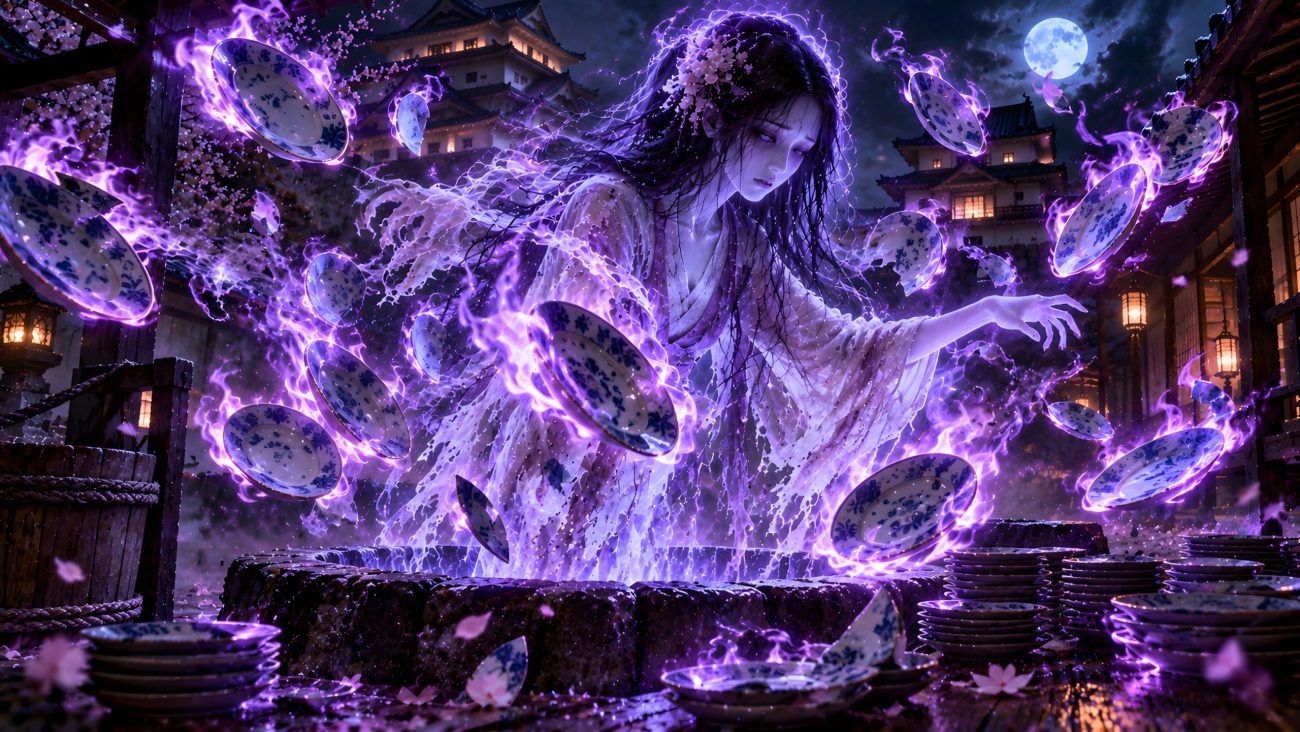
Okiku was a beautiful servant girl who worked as a dishwashing maid at Himeji Castle. She became the object of desire of Aoyama, one of her master’s samurai retainers, who repeatedly tried to seduce her. Okiku continually rejected him, angering the samurai. Determined to force her into becoming his lover, Aoyama devised a cruel trick involving a set of ten precious dishes belonging to the castle.

Aoyama secretly hid one of the dishes and accused Okiku of losing it. Terrified because the loss of such a valuable object could be punished by death, she counted the dishes again and again, but could find only nine. Aoyama offered to protect her from punishment if she agreed to become his mistress. When she refused once more, he ordered her beaten, tied her up, and suspended her over the castle well. He repeatedly plunged her into the water and tortured her, demanding that she submit to him. When she continued to refuse, he struck her with his sword and threw her body into the well.

After her death, Okiku returned as a vengeful ghost. Night after night, she rose from the well and entered the castle grounds, searching for the missing dish. She counted the plates aloud: “One, two, three, four, five, six, seven, eight, nine.” After reaching nine, she let out a bloodcurdling scream that echoed throughout the castle. Her haunting tormented Aoyama and robbed him of sleep. Those who heard her counting became gravely ill, while those who heard her count all the way to nine were said to die soon afterward.

Eventually, the lord of the castle summoned a priest to put an end to the haunting. The priest waited in the garden, chanting prayers until Okiku emerged from the well and began counting once more. When she reached nine, the priest shouted, “Ten!” Before she could scream, Okiku appeared relieved, believing that the missing dish had finally been found. From that night onward, her ghost no longer haunted the castle.


Sources

“Okiku.” Yokai.com: The Database of Japanese Folklore. https://yokai.com/okiku/


Lau

Tradition: Indian Mythology
Alternative Names: Chauga, Čauga, Lao, Yau
Category: Ghost


The Myth

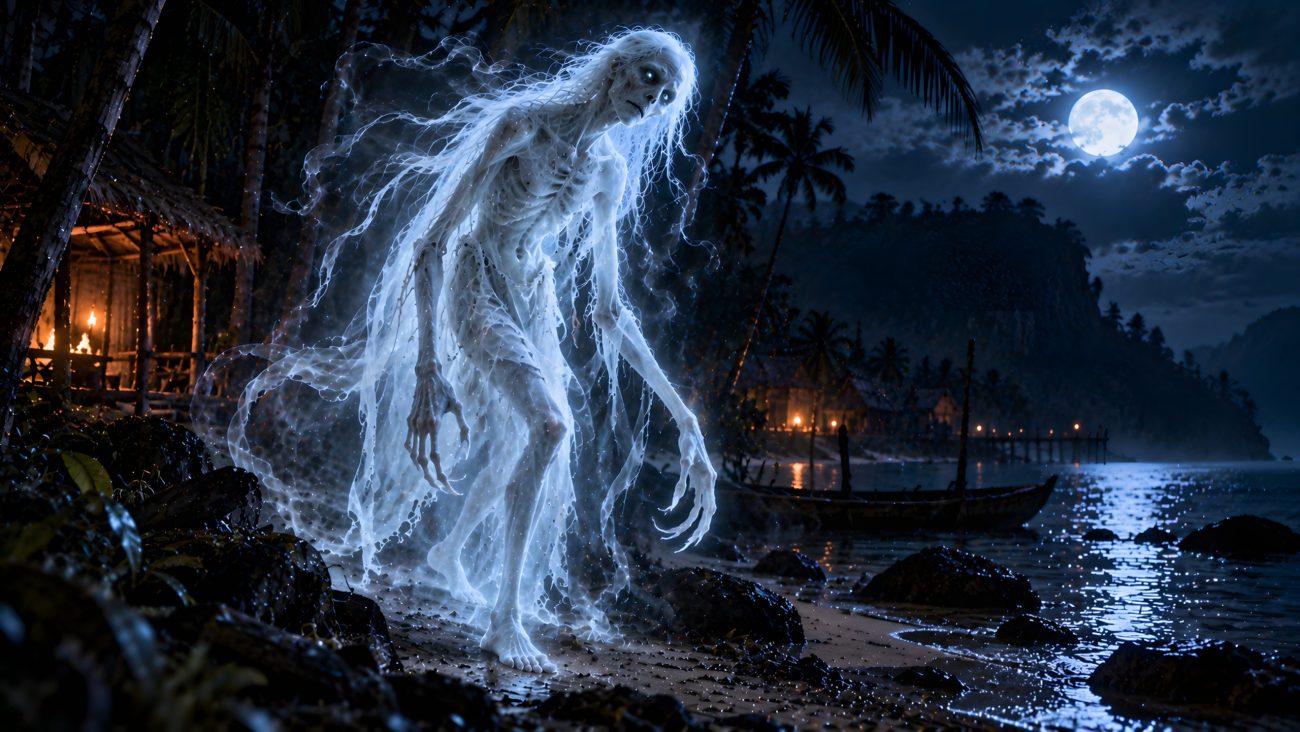
Lau are the spirits of the dead in the mythology of the Indigenous peoples of the Andaman Islands. They are commonly described as invisible spirits or as pale, white figures with a terrifying appearance. Their presence belongs to the unseen world of the dead, where departed souls continue to exist beyond the sight of the living.

The name Lau is also known as Chauga among the peoples of South Andaman. These spirits represent the dead as supernatural beings whose appearance and presence can inspire fear. They may remain unseen, or manifest as pale figures whose strange appearance distinguishes them from ordinary living people.

The terms Lau and Chauga were also used by Andamanese people to describe mainland Indians, Europeans, and many other foreigners, whose appearance differed from their own. In this way, the name associated with the spirits of the dead was also connected to the unfamiliar appearance of outsiders.


Sources

“Lau.” New Bestiary (Bestiary.us). https://www.bestiary.us/lau


Oitekebori

Tradition: Japanese Mythology
Alternative Names: 置行堀, おいてけぼり
Category: Ghost


The Myth

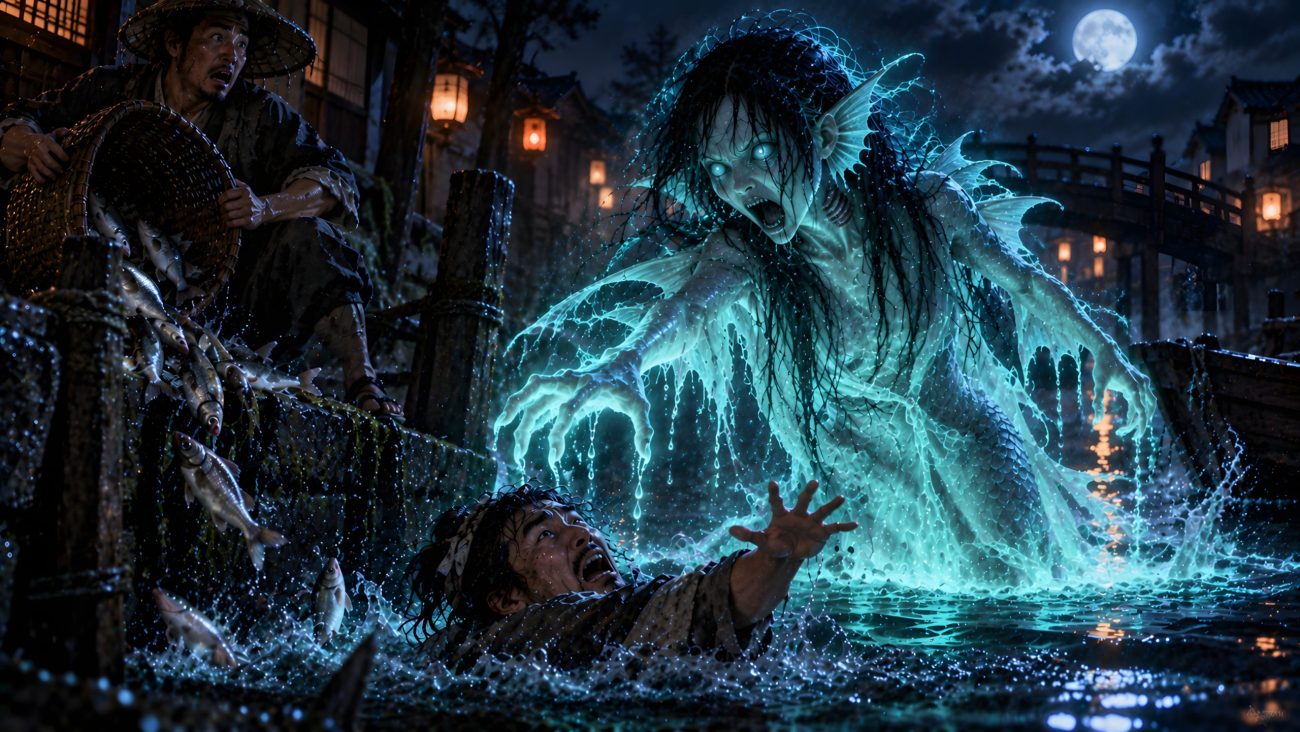
Oitekebori is a mysterious apparition said to haunt the canals of Honjo, in present-day Sumida, Tokyo. It is described as a human-like ghost that lurks near waterways and terrorizes fishermen who venture too close to its home. Its name comes from the eerie command “Oiteke,” meaning “Leave it behind!” or “Drop it and get out of here!”

Long ago, the canals of Honjo were filled with fish, and fishermen made their living catching them. One evening, two fishermen were fishing in a canal and found themselves catching far more fish than usual. Delighted by their enormous haul, they continued until their baskets were full. As they prepared to leave and carry their catch home, a terrible, disembodied voice rose from the water and shouted, “Oiteke!”

Terrified, the fishermen fled. In some versions, they abandoned their baskets and later discovered that the fish had vanished. In another telling, one fisherman escaped with his basket while the other was seized by a ghostly hand that rose from the canal and dragged him underwater, never to be seen again. The identity of Oitekebori remains uncertain in the legends: some stories blame a hungry kappa stealing fish, while others attribute the haunting to a mischievous tanuki, a yūrei, a kawauso, a mujina, or a supernatural soft-shelled turtle.


Sources

“Oitekebori.” Yokai.com: The Database of Japanese Folklore. https://yokai.com/oitekebori/


Gaohuang Gui

Tradition: Chinese Mythology
Alternative Names: 膏肓鬼, Ghost of the Gaohuang
Category: Ghost


The Myth

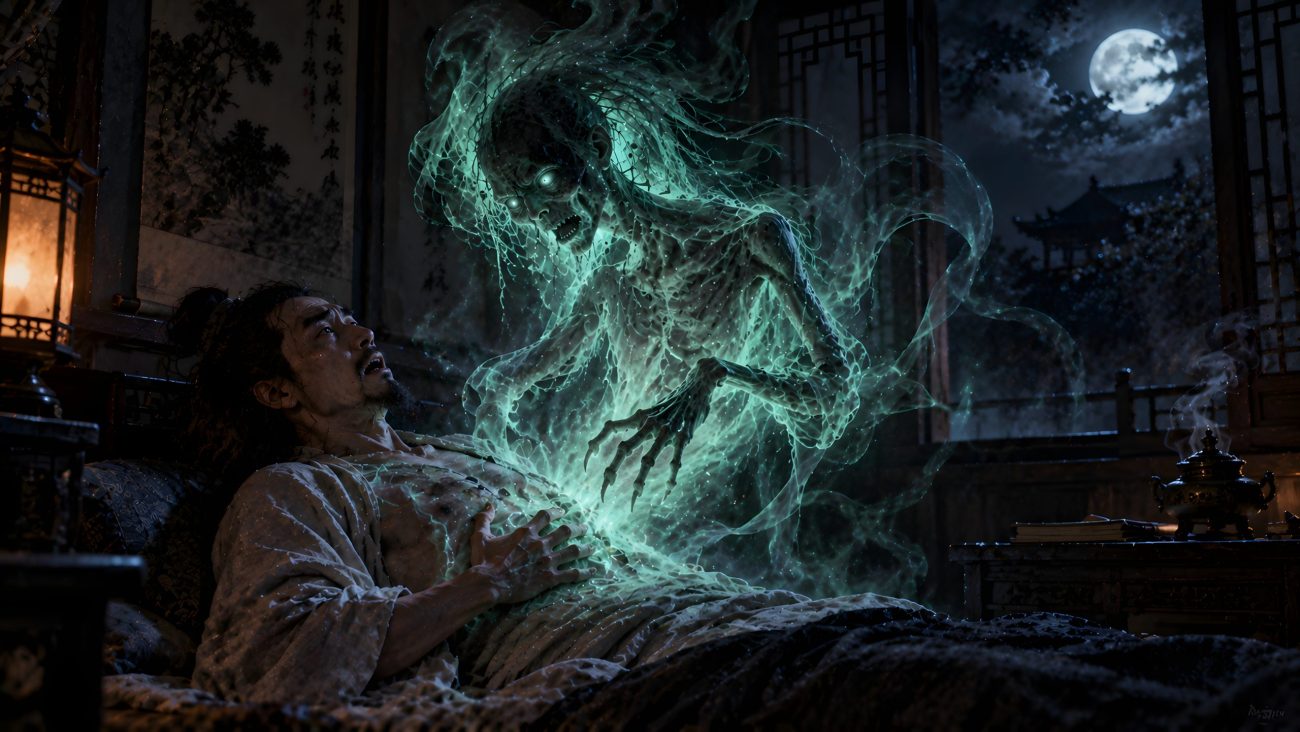
Gaohuang Gui is a sinister ghost from Chinese mythology associated with the gaohuang, the region of the body traditionally understood as lying around the diaphragm. It is described as a terrifying spirit that can hide deep within a person’s body, beyond the reach of ordinary treatment.

The legend originates in the story of Duke Jing of Jin, who dreamed of a fierce ghost hiding in his gaohuang. After this encounter, the image of the spirit developed into that of a supernatural creature that dwells in this part of the body and makes an illness increasingly severe. Once Gaohuang Gui has taken refuge there, the afflicted person becomes difficult to cure, as the spirit is hidden in a place that ordinary medicine cannot easily reach.

Gaohuang Gui embodies the terrifying idea of an illness that has become deeply rooted within the body. Unlike ghosts that attack openly, this spirit hides inside its victim, silently worsening the sickness from within.


Sources

“膏肓鬼 (Gāohuāngguǐ).” Chinese Wikipedia. Wikimedia Foundation. Accessed October 15, 2026. https://zh.wikipedia.org/wiki/%E8%86%8F%E8%82%93%E9%AC%BC


Buruburu

Tradition: Japanese Mythology
Alternative Names: 震々, ぶるぶる, Zozogami
Category: Ghost


The Myth

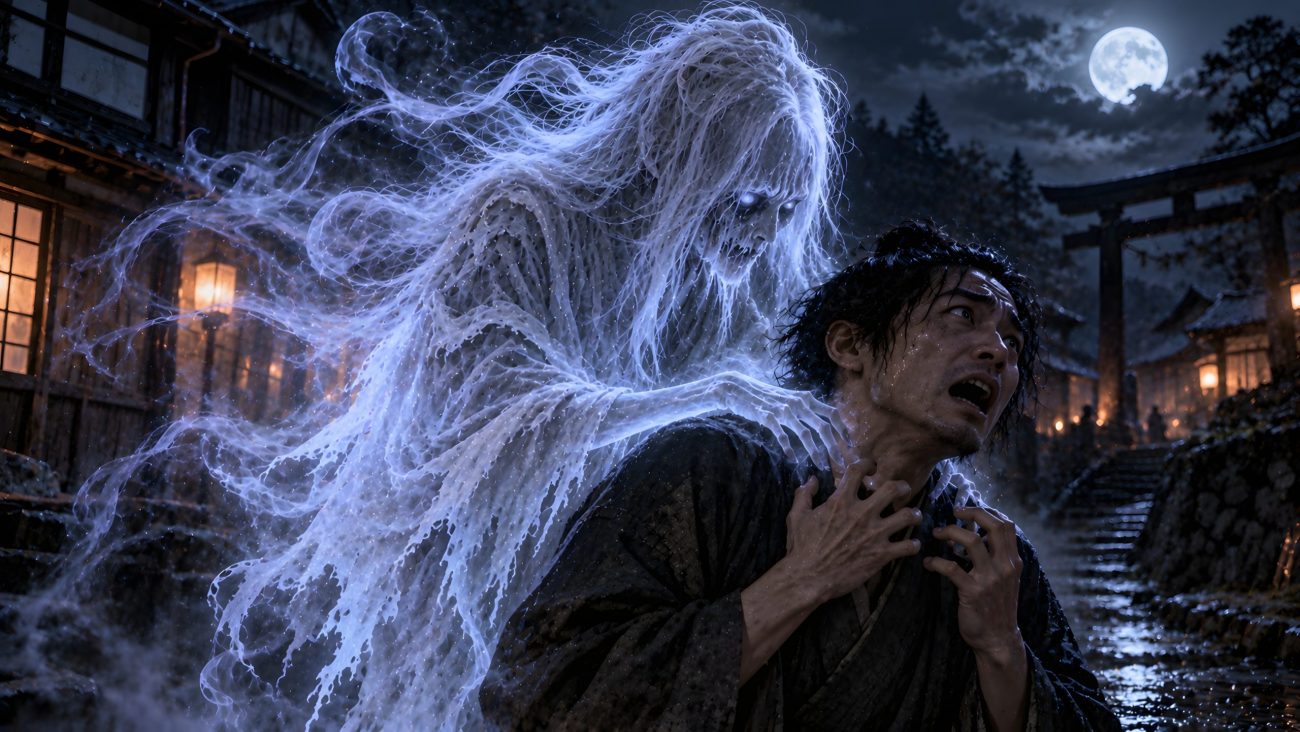
Buruburu is a mysterious yokai known as the spirit of cowardice. It follows people through inhabited areas, causing them to shudder with fear. Although it may not appear as a clearly visible creature, its presence is felt through sudden chills, trembling bodies, and the sensation of fear running down the spine.

Buruburu is born when a person commits an act of cowardice, such as fleeing from battle. The spirit then attaches itself to other people, possessing them by clinging to the collars of their shirts and touching the backs of their necks. Its supernatural touch makes their hair stand on end and sends shivers throughout their bodies.

The name Buruburu imitates the sound of trembling, while its alternate name, Zozogami, is also associated with the sensation of shivering with fear. The spirit embodies the physical feeling of terror itself, haunting people through the sudden, uncontrollable shudders that reveal its presence.


Sources

“Buruburu.” Yokai.com: The Database of Japanese Folklore. https://yokai.com/buruburu/