Mājas gars

Tradition / Region: Latvia
Alternate Names: House spirit, house god, lord of the house
Category: House dweller, Frog, Insect, Beetle, Snake


The Myth

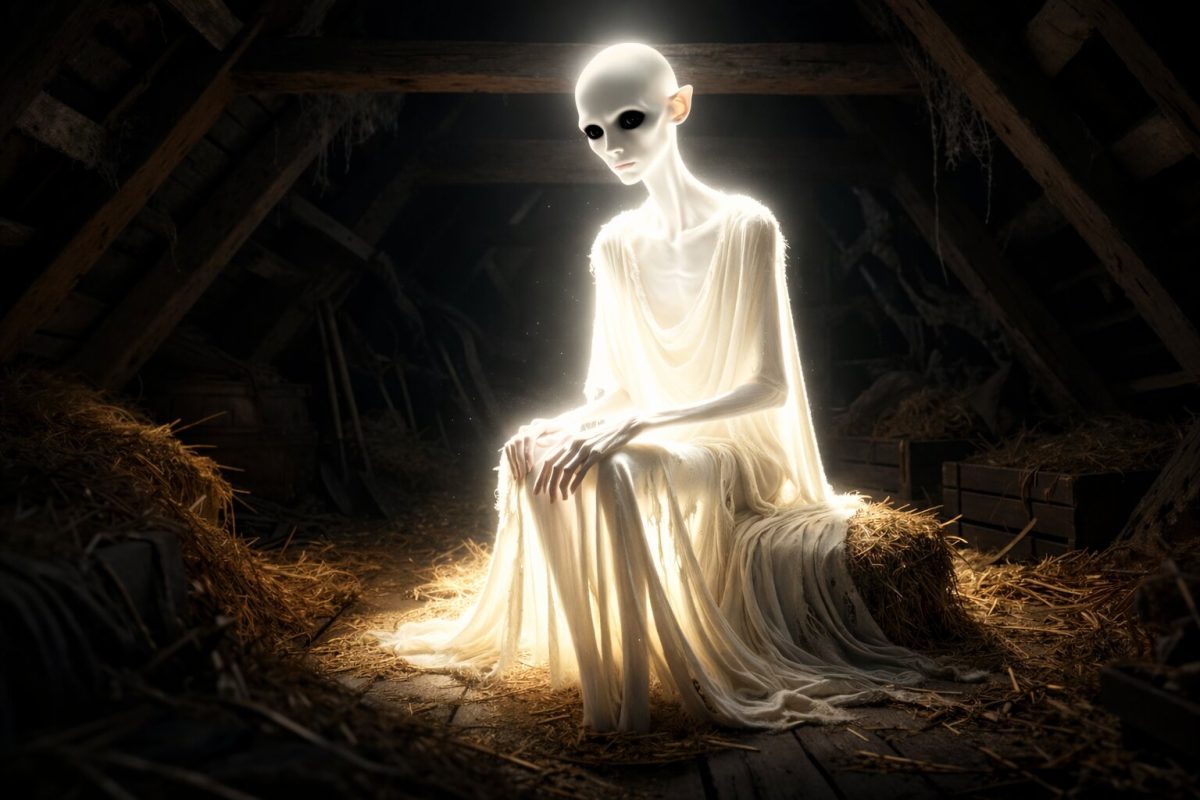
Mājas gars is a household spirit in Latvian mythology that protects the inhabitants of a home from evil and brings prosperity and good fortune. It is regarded as one of the lower deities (dieviņi) and is sometimes called Mājas kungs, the Lord of the House. The spirit is associated with the hearth and may dwell behind the stove, beneath the floor, or elsewhere in the farmstead, and it could still be honored in some places as late as 1935.

Mājas gars watches over the household and everything within it, ensuring the protection of the home and the well-being of the family. The spirit may appear to people in different forms, sometimes as a man or woman dressed in white, and at other times as an animal connected to the home, such as a toad, a snake, or a beetle. It is understood as a presence guarding the house, living near the hearth or elsewhere on the farmstead, and acting as the household’s protective spirit, bringing good fortune and keeping away harmful forces.

Gallery


Sources

Wikipedia contributors. (n.d.). Mājas gars. In Wikipedia, from https://lv.wikipedia.org/wiki/M%C4%81jas_gars


Interpretive Lenses

Religious Readings
  • Christian Ascetic Deep Dive
Philosophical Readings
  • Nietzschean Deep Dive
Psychological Readings
  • Jungian Deep Dive
Esoteric Deep Dive
  • Hermetic Deep Dive
Political / Social Readings
  • Marxist Deep Dive
Other
  • How to Invite The Kuygorozh

Dip

Tradition / Region: Catalan Mythology, Spanish Mythology
Alternate Names:
Category: Dog, Vampire


The Myth

In the traditions of Catalonia there was said to be a dreadful creature known as Dip.

Dip was imagined as a black hellhound, a servant of the Devil who prowled the night in search of blood. He was not a perfect beast, for he was said to limp, lame in one leg, a mark that set him apart from ordinary dogs and revealed his infernal nature.

He was believed to haunt the lands around the village of Pratdip. When night fell, people spoke of glowing eyes watching from the darkness. The creature was said to attack cattle, sucking their blood, and to prey upon unlucky travelers. Some tales warned that drunken men returning from taverns were especially at risk, for the hellhound favored those wandering alone through the night.

Images of these terrible dogs appeared in religious artworks centuries ago, showing that the legend was already old by the early modern period. Over time the story became closely tied to the village itself, and people said its very name came from the presence of these creatures.

Though the fear of Dip faded and the sightings ceased, the memory of the blood-drinking hound remained. He was remembered as a shadow of the night, a limping black dog whose glowing eyes warned of danger and whose hunger for blood made him one of the most feared beasts of Catalan lore.


Gallery


Sources

Wikipedia contributors. (n.d.). Dip (Catalan myth). In Wikipedia, from https://en.wikipedia.org/wiki/Dip_(Catalan_myth)


Interpretive Lenses

Religious Readings
  • Christian Ascetic Deep Dive
Philosophical Readings
  • Nietzschean Deep Dive
Psychological Readings
  • Jungian Deep Dive
Esoteric Deep Dive
  • Hermetic Deep Dive
Political / Social Readings
  • Marxist Deep Dive
Other
  • How to Invite The Kuygorozh

Tienuurshond

Tradition / Region: Dutch Mythology, Belgian Mythology
Alternate Names: Twaalfuurshond, Negenuurshond, Tienurenhond
Category: Dog, Ghost


The Myth

In parts of Utrecht and the region around Antwerp, people once spoke of a spectral animal known as the Tienuurshond.

He was said to appear on lonely roads during winter evenings. At exactly the same hour each night — most often at ten o’clock — a large black dog would come into view ahead of a traveler. Around its body hung chains that rattled as it moved, their sound echoing through the cold darkness.

The creature did not usually attack. Instead, it walked in front of the traveler, leading the way along the road as though guiding them through the night. It remained just out of reach, always ahead, never allowing itself to be caught.

Because it appeared at a fixed hour, people gave it its name: the Ten-O’Clock Dog. In some places, where it was believed to appear at other times, it was known as the Nine-O’Clock Dog or the Twelve-O’Clock Dog instead.

Thus the Tienuurshond was remembered as a chained black hound of the winter roads, a ghostly figure that emerged at the appointed hour and walked before the lonely traveler until it vanished again into the night.


Gallery


Sources

Abe de Verteller. (n.d.). Van aardmannetje tot zwarte juffer: Een lijst van Nederlandse en Vlaamse elfen en geesten. From https://abedeverteller.nl/van-aardmannetje-tot-zwarte-juffer-een-lijst-van-nederlandse-en-vlaamse-elfen-en-geesten/


Interpretive Lenses

Religious Readings
  • Christian Ascetic Deep Dive
Philosophical Readings
  • Nietzschean Deep Dive
Psychological Readings
  • Jungian Deep Dive
Esoteric Deep Dive
  • Hermetic Deep Dive
Political / Social Readings
  • Marxist Deep Dive
Other
  • How to Invite The Kuygorozh

Shan

Tradition / Region: Chinese Mythology
Alternate Names: Shan Zi
Category: Dog

The Myth

In ancient Chinese legend there is mention of a strange creature known as Shan.

It was described as a dog with the face of a human. When it encountered people, it was said to smile, an unsettling expression that marked it as something unnatural. The creature moved with great speed, running like the wind itself.

Its appearance was not considered fortunate. Wherever Shan was seen, it was believed that strong winds or destructive storms would soon follow. Because of this, its presence was taken as a sign that a wind disaster was near.

Thus Shan was remembered as a swift, human-faced dog of ill omen, whose smile foretold the coming of violent winds.


Gallery


Sources

Wikipedia contributors. (n.d.). 山𤟤. In Wikipedia, from https://zh.wikipedia.org/wiki/%E5%B1%B1%F0%A4%9F%A4


Interpretive Lenses

Religious Readings
  • Christian Ascetic Deep Dive
Philosophical Readings
  • Nietzschean Deep Dive
Psychological Readings
  • Jungian Deep Dive
Esoteric Deep Dive
  • Hermetic Deep Dive
Political / Social Readings
  • Marxist Deep Dive
Other
  • How to Invite The Kuygorozh

Wild Dogs

Tradition / Region: Chinese Mythology
Alternate Names: —
Category: Dog

The Myth

In strange tales recorded in old Chinese stories, there is mention of terrifying creatures known as the Wild Dogs.

They were not ordinary animals but monstrous beings said to roam battlefields and places of death. Their bodies were beast-like, while their heads resembled those of humans. They fed not on flesh alone but on the brains of the dead, tearing open skulls to suck out what lay within.

One story tells of a man named Li Hualong who fled into the mountains during a time of rebellion and war. Dead bodies lay everywhere across the land. When he saw soldiers approaching, he feared he would be captured and killed. To escape notice, he lay down among the corpses and pretended to be dead.

While he lay there, a creature approached. It had a human-like head and moved among the bodies, gnawing at their skulls and feeding on their brains. When it came near him, Li Hualong seized a stone and struck it in the mouth. The monster fled, leaving a trail of blood behind as it escaped into the wild.

Afterward, in the place where the creature had bled, two of its teeth were found. They were long, curved, and sharp, proof that the thing had not been a dream but one of the dreadful Wild Dogs that haunted the aftermath of war.

Thus these creatures were remembered as horrors of desolate places — dog-like monsters that followed death itself, feeding upon the fallen where no one dared remain.


Gallery


Sources

Wikipedia contributors. (n.d.). 野狗子. In Wikipedia, from https://zh.wikipedia.org/wiki/%E9%87%8E%E7%8B%97%E5%AD%90


Interpretive Lenses

Religious Readings
  • Christian Ascetic Deep Dive
Philosophical Readings
  • Nietzschean Deep Dive
Psychological Readings
  • Jungian Deep Dive
Esoteric Deep Dive
  • Hermetic Deep Dive
Political / Social Readings
  • Marxist Deep Dive
Other
  • How to Invite The Kuygorozh

Huodou

Tradition / Region: Chinese Mythology
Alternate Names: Disaster-Fighting Beast, Scourge beast
Category: Dog


The Myth

In ancient Chinese lore there is mention of a strange and dangerous animal known as the Huodou.

It was said to live in a distant southern land near the dark mountains. In that country, people were believed to withstand fire and even eat burning charcoal. Among them lived a creature that also fed on fire. This beast was described as black in color and shaped somewhat like a dog.

The creature’s nature was considered deeply ominous. Though it could consume flames, it was also said to breathe fire itself, spreading destruction wherever it went. Because of this, it was taken as a sign of disaster.

A later tale tells of a young man named Wu Kan, who lived alone until he discovered a mysterious white snail. When he brought it home, the snail transformed into a beautiful woman who became his wife and helped him with his household.

The local magistrate grew jealous and sought to cause them trouble. He demanded that Wu Kan bring him strange and dangerous things. Each time, the wife managed to provide what was asked. At last, the magistrate demanded a Scourge Beast.

The woman obtained a creature shaped like a dog and gave it to her husband to deliver. The beast consumed fire, but what it expelled afterward was also fire. Soon after it was brought to the magistrate’s house, flames spread from it and the building burned completely to ashes.

After this, Wu Kan and his wife disappeared, and nothing more was known of them.

Thus the Scourge Beast was remembered as a black, dog-like creature tied to fire and destruction — a being that could swallow flames yet also bring ruin wherever it appeared.


Gallery


Sources

Wikipedia contributors. (n.d.). 禍斗. In Wikipedia, from https://zh.wikipedia.org/wiki/%E7%A6%8D%E6%96%97


Interpretive Lenses

Religious Readings
  • Christian Ascetic Deep Dive
Philosophical Readings
  • Nietzschean Deep Dive
Psychological Readings
  • Jungian Deep Dive
Esoteric Deep Dive
  • Hermetic Deep Dive
Political / Social Readings
  • Marxist Deep Dive
Other
  • How to Invite The Kuygorozh

Corrilário

Tradition / Region: Portuguese Mythology
Alternate Names: Coralário (plural: Coralários)
Category: Dog, Ghost


The Myth

In Portuguese tradition, the Corrilário is said to be the spirit of a restless dead person, appearing in the form of a dog.

These beings are believed to be the souls of those whose lives ended wrongly or whose fate remained unfinished. Some say they were people who died violently, who left promises unfulfilled, or who failed to complete the rites expected of them in life. Others say that a werewolf who dies before the time appointed for his curse must continue on after death as one of these wandering spirits.

As a Corrilário, the soul does not find rest. Instead it is bound to wander the roads and paths of the world. Unlike werewolves, which are said to follow only straight roads, the Corrilário moves along both straight ways and hidden shortcuts, passing through fields, tracks, and lonely routes where few people walk.

Because they are spirits tied to unfinished fate, they are thought to remain in this form only for as long as they would have lived had death not come early. Until that time has passed, they continue their wandering, like messengers moving between places, never settling.

Thus the Corrilário was remembered as a ghostly dog of the roads — not a beast of malice, but the shape taken by the unquiet dead, walking the paths of the living until their destined time was finally spent.


Gallery


Sources

The Narrator. (2020). Corrilários. In portuguesecreaturesandlegendsgalore.wordpress.com, from https://portuguesecreaturesandlegendsgalore.wordpress.com/2020/01/17/corrilarios/


Interpretive Lenses

Religious Readings
  • Christian Ascetic Deep Dive
Philosophical Readings
  • Nietzschean Deep Dive
Psychological Readings
  • Jungian Deep Dive
Esoteric Deep Dive
  • Hermetic Deep Dive
Political / Social Readings
  • Marxist Deep Dive
Other
  • How to Invite The Kuygorozh

Inugami

Tradition / Region: Japanese Mythology
Alternate Names: In’gami, Irigami
Category: Dog


The Myth

Inugami are powerful dog spirits said to serve human masters. They are known throughout western Japan, especially in Kyūshū and Shikoku, and are most often connected with wealthy or influential families.

To ordinary eyes, an inugami may appear as nothing more than a common dog. Its true form, however, is far more unsettling. It is said to exist as the mummified head of a dog, preserved and hidden within a secret shrine in the house of its owner. From this hidden vessel, the spirit carries out the will of the family it serves.

Inugami are loyal and obedient, performing tasks much like a living dog. They may bring prosperity, protect the household, or carry out secret commands. Families said to possess such spirits, known as inugami-mochi, treated them almost as members of the household. The spirits were believed to pass down through generations, so that each family member would have their own inugami.

Yet these spirits were not without danger. If mistreated or angered, an inugami could turn on its master with violent fury. They were also known for their power of possession. An inugami might enter a person’s body, settling inside and bringing suffering. Those possessed were said to feel strange pains, intense jealousy, or uncontrollable hunger, and some would bark like a dog. Removing such a spirit required another sorcerer and could take great effort and expense.

The creation of an inugami was believed to involve a dark and terrible ritual. A dog would be driven into extreme desperation through hunger and suffering, and at the height of that torment its head would be severed. The spirit born from that fury would become a powerful and vengeful entity. The head was then preserved and enshrined so that the spirit could be bound and commanded.

Because of the fear surrounding these practices, families suspected of keeping inugami were often shunned by others. Even the accusation of using such spirits could force a household into isolation.

Thus the inugami were remembered as loyal yet dangerous dog spirits — protectors, servants, and sources of both fortune and ruin, bound to families by dark rites and hidden shrines.


Gallery


Sources

Foster, M. D. (n.d.). Inugami. In yokai.com, from https://yokai.com/inugami/


Interpretive Lenses

Religious Readings
  • Christian Ascetic Deep Dive
Philosophical Readings
  • Nietzschean Deep Dive
Psychological Readings
  • Jungian Deep Dive
Esoteric Deep Dive
  • Hermetic Deep Dive
Political / Social Readings
  • Marxist Deep Dive

Getulian Dog

Tradition / Region: English Mythology
Alternate Names: Canis getulus, Canis lucernarius, Mimic Dog
Category: Dog


The Myth

In early accounts of strange animals recorded by scholars and writers, there are descriptions of a mysterious creature known as the Getulian Dog.

It was said to be a four-legged beast of unusual appearance. Some described it as red and black, or white and black, with a broad, frog-like head and large protruding ears. Others gave it a sharper, darker face, with long legs, shaggy hair, and a short, curved body. Though dog-shaped, it seemed unlike any known breed.

What made the creature most remarkable was not its appearance but its behavior. The Getulian Dog was believed to possess an uncanny intelligence and the ability to imitate human actions. It could copy gestures and movements, and some stories claimed it could even serve people, performing tasks much like a servant.

In certain accounts, the animal was said to be capable of appearing in performances or plays, behaving in ways so human-like that observers were astonished. Because of this strange ability, it was sometimes called the Mimic Dog.

Whether the creature truly existed or belonged to the realm of marvels, it lived on in the writings of naturalists and storytellers alike, remembered as a curious and almost human dog whose nature blurred the line between beast and person.


Gallery


Sources

Cryptid Archives contributors. (n.d.). Mimick dog. In cryptidarchives.fandom.com, from https://cryptidarchives.fandom.com/wiki/Mimick_dog


Interpretive Lenses

Religious Readings
  • Christian Ascetic Deep Dive
Philosophical Readings
  • Nietzschean Deep Dive
Psychological Readings
  • Jungian Deep Dive
Esoteric Deep Dive
  • Hermetic Deep Dive
Political / Social Readings
  • Marxist Deep Dive

Ahuizotl

Tradition / Region: Aztec Mythology
Alternate Names: Water Dog
Category: Dog


The Myth

The Ahuizotl was a feared creature of the lakes and waters in the lands of the Aztecs.

It was said to live in deep pools, caverns, and the shores of great lakes. The creature was about the size of a small dog, with dark, smooth fur that shone like wet stone. Its ears were small and pointed, and its body sleek and slippery. Most terrifying of all, it possessed hands like those of a monkey, not only on its forelimbs but also at the end of its long tail.

The Ahuizotl was believed to serve the rain gods, especially Tlaloc and Chalchiuhtlicue. Some said it guarded the waters and the fish within them. Others believed it was sent by the gods to gather souls they favored, taking them from the world of the living and bringing them to the paradise of Tlaloc.

People feared going near certain waters because of it. The creature was said to hide below the surface, waiting for someone to approach. When a victim came too close, it would seize them with the hand at the end of its tail and drag them beneath the water.

Some tales say the creature ate only certain parts of its victims — the eyes, nails, and teeth — leaving the rest behind. Because of this, the dead were believed to belong to the gods, and only priests were permitted to handle their bodies.

The Ahuizotl was also said to lure its prey. It could cry like a human baby, drawing compassionate people toward the water’s edge. At other times it caused fish and frogs to leap to the surface, tempting fishermen closer until they were within reach.

Thus the Ahuizotl was remembered as a servant of the rain gods and a terror of the lakes — a dark, dog-shaped water spirit whose unseen hand could reach from the depths and pull the living into the world of the gods.


Gallery


Sources

Wikipedia contributors. (n.d.). Ahuizotl (mythology). In Wikipedia, from https://en.wikipedia.org/wiki/Ahuizotl_(mythology)


Interpretive Lenses

Religious Readings
  • Christian Ascetic Deep Dive
Philosophical Readings
  • Nietzschean Deep Dive
Psychological Readings
  • Jungian Deep Dive
Esoteric Deep Dive
  • Hermetic Deep Dive
Political / Social Readings
  • Marxist Deep Dive