Moku Musume

Tradition / Region: Japanese Mythology (Gunma–Nagano, Usui Pass)
Alternate Names: Shumoku Musume
Category: Yōkai / Mountain Dweller / Shark


The Myth

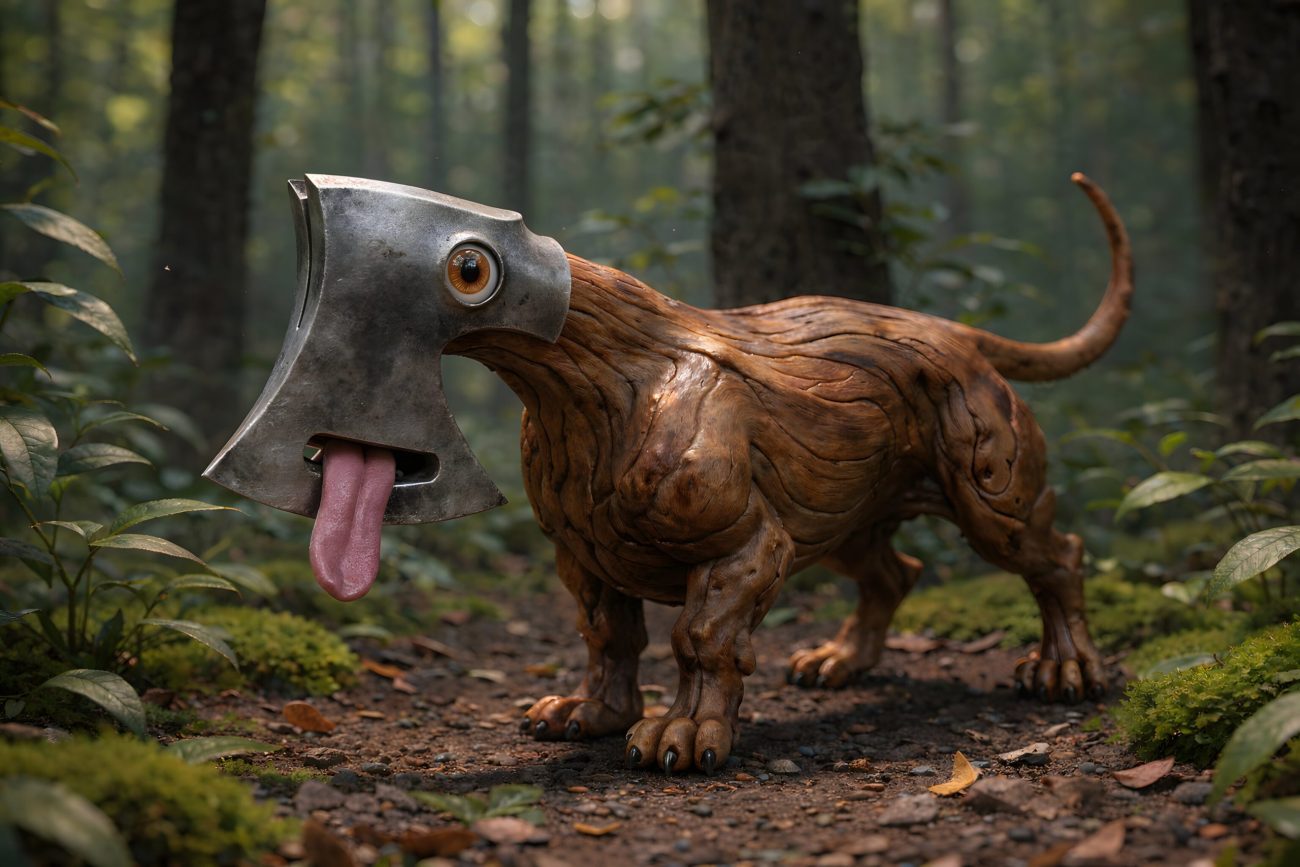
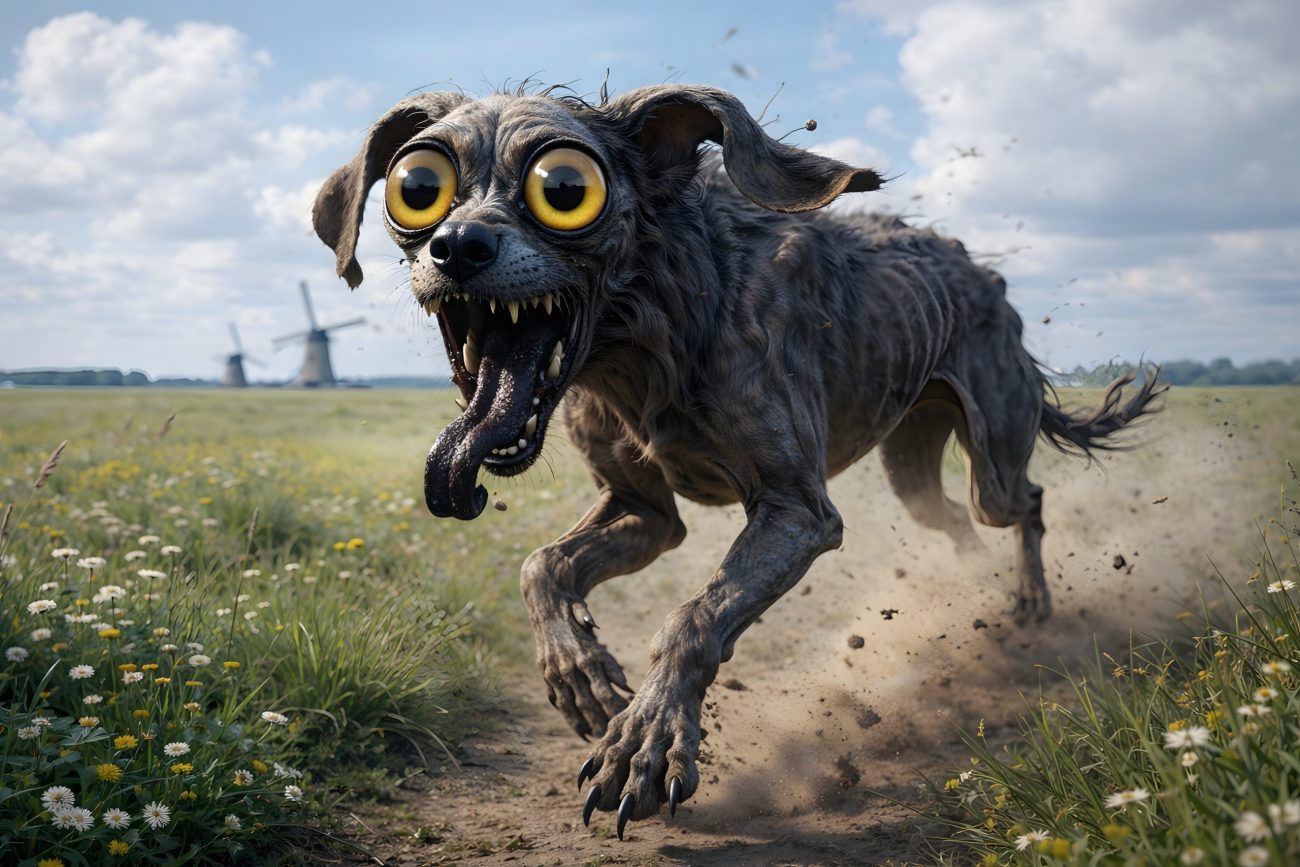
Moku Musume, also known as Shumoku Musume, is a yōkai known from monster paintings and traditional karuta cards. Her appearance is immediately recognizable and unlike that of any ordinary being. Her head is shaped like a shumoku, a T-shaped Buddhist mallet used to strike bells in temples. On each end of this T-shaped head are eyes, giving her vision to both sides, and her face resembles that of a hammerhead shark.

She is depicted as a female figure whose body is otherwise human, with the strange hammer-shaped head defining her supernatural nature. Because of this form, she is sometimes associated visually with Buddhist ritual objects, though her exact behavior is not described in surviving sources.

One karuta card explicitly names her as the “Shumoku Musume of Usui Pass,” suggesting that she was believed to appear at Usui Pass, the mountainous route connecting present-day Gunma and Nagano Prefectures. Travelers passing through the pass would have regarded the area as dangerous and uncanny, and the presence of Moku Musume was tied to this liminal mountain road.

Beyond her appearance and place-name association, little is recorded of her actions. She endures primarily as a visual yōkai, preserved through paintings and cards, her strange hammer-shaped head marking her as a being that belongs neither fully to the human world nor to the ordinary realm of spirits.


Interpretive Lenses

Religious Readings
  • Christian Ascetic Deep Dive
Philosophical Readings
  • Nietzschean Deep Dive
Psychological Readings
  • Jungian Deep Dive
Esoteric Deep Dive
  • Hermetic Deep Dive
Political / Social Readings
  • Marxist Deep Dive
Other
  • How to Invite The Spirit

Waterveulen

Tradition / Region: Dutch Mythology
Alternate Names:
Category: Horse


The Myth

Along the shores of the Zuiderzee near Volendam, it was said that a creature called the Waterveulen would sometimes rise from the sea. It appeared as a young horse, its body slick with seawater, its hooves shining as if made of wet stone. At dusk or in the quiet of evening, it would walk along the shoreline, watching the land from the edge of the waves.

The Waterveulen was said to take an interest in a young maiden known for her beauty. From the sea, it brought her gifts: small fish and offerings gathered from the water. The girl accepted these gifts, and over time she grew accustomed to the creature’s presence, meeting it again and again at the shore.

One day, the maiden mounted the Waterveulen. At once, it turned and ran into the sea, carrying her with it beneath the waves. The people watching from the shore saw the two disappear into the water and were never seen again.

From that time on, the Waterveulen was remembered as a being that emerged from the sea to lure humans away, leaving only the sound of the waves behind.


Abe de Verteller contributors. (n.d.). Van aardmannetje tot zwarte juffer: Een lijst van Nederlandse en Vlaamse elfen en geesten. In Abe de Verteller, from https://abedeverteller.nl/van-aardmannetje-tot-zwarte-juffer-een-lijst-van-nederlandse-en-vlaamse-elfen-en-geesten/


Yema

Tradition / Region: Japanese (Shimane Prefecture, Hinuki Village)
Alternate Names: Nouma (Wild Horse)
Category: Yōkai / Horse


The Myth

In the hills of Hinuki Village, where pig iron was smelted in roaring tatara furnaces, the people told of a creature called Yema, also known as the Nouma. It was not a true horse, but a one-eyed monster that roamed the forests at night, drawn to places where humans labored over fire and metal.

One night, a furnace worker slept beside the tatara after a long day of work. As the flames dimmed and the forest grew quiet, a woman suddenly appeared and threw herself over him. Startled awake, the man felt her weight and sensed that she was not an ordinary human.

From the darkness beyond the furnace came the sound of a wild neigh. The Yema emerged, its single eye glowing like hot coal, its presence heavy with menace. It approached the tatara, sniffing the air and circling the sleeping man, drawn by human activity in the night.

When the Yema saw the woman covering the worker, it recoiled. Snorting in fear, the monster turned and fled into the forest, disappearing among the trees and shadows.

Afterward, the villagers understood that the woman was Kanayago-san, the deity of ironmaking. She had appeared to protect the worker, driving away the Yema. From then on, it was said that the Wild Horse haunted the hills near furnaces, but that divine protection could turn it aside, even in the darkest hours of the night.


Interpretive Lenses

Religious Readings
  • Christian Ascetic Deep Dive
Philosophical Readings
  • Nietzschean Deep Dive
Psychological Readings
  • Jungian Deep Dive
Esoteric Deep Dive
  • Hermetic Deep Dive
Political / Social Readings
  • Marxist Deep Dive
Other
  • How to Invite The Spirit

Brunswick Lion

Tradition / Region: German mythology
Alternative names: –
Category: Lion


The Myth

The Brunswick Lion is not merely a statue or heraldic emblem, but a moral creature shaped by medieval imagination. In the Heinrichssage, the lion emerges as an independent symbolic actor whose meaning extends far beyond the human figures around it. It embodies ideal loyalty, righteous strength, and natural justice—virtues medieval society believed could exist in animals in purer form than in people.

The lion first appears as a combatant against a dragon, a creature universally understood in medieval Europe as a manifestation of chaos, destructive violence, and spiritual corruption. By confronting the dragon, the lion positions itself as a defender of cosmic order. Unlike the dragon’s blind destruction, the lion’s violence is purposeful. It fights not from hunger or rage, but from an instinct aligned with justice, establishing it as a moral warrior.

After the dragon’s defeat, the lion’s role shifts from warrior to companion. Crucially, it is not subdued or enslaved; it chooses companionship. In medieval thought, such voluntary loyalty was the highest form of fidelity. The Brunswick Lion thus represents free allegiance—the idea that true authority is recognized rather than imposed. The lion follows not out of fear, but from recognition of shared virtue.

The legend’s defining moment comes after the death of its companion. The lion refuses food and withers away upon the grave, choosing death over a life without the bond it has sworn. This act transforms the lion into a symbol of absolute constancy. Its death is not weakness but proof of unwavering devotion, a loyalty that transcends reward, command, or survival. Medieval audiences would have read this as a moral judgment: true virtue is measured by sacrifice, not power.

Erected as a statue in the heart of Brunswick, the lion assumes an apotropaic role. Like guardian lions across Eurasia, it protects not through violence but through symbolic authority. Its stillness signifies permanence; its posture, vigilance. It stands as a reminder that strength must be restrained by virtue and power justified by loyalty.

Ultimately, the Brunswick Lion represents an ideal moral order in which courage serves fidelity and strength answers to devotion. It is remembered not as a slayer, but as a guardian; not as a conqueror, but as a witness—holding humanity to a standard it could rarely meet.


Beast of the North

Tradition / Region: French mythology
Alternative Name: –
Category: Lion


The Myth

In the forests of Creuse, during the late autumn of 1982, a disturbing presence emerged from the woodland shadows. Livestock across the region—bulls, cows, and sheep—were found brutally killed and mutilated in ways that defied ordinary explanation. The precision of the wounds, the sheer force involved, and the absence of clear tracks convinced many villagers that this was no wolf, dog, or known predator.

A single explanation began to circulate with growing certainty: a lion.

Witnesses spoke of an immense, powerful creature moving silently through the forest, watching from the trees before striking under cover of darkness. One man reportedly came face-to-face with the beast during a hunt, yet could not identify it clearly—only its overwhelming presence, its unnatural size, and its unblinking, golden gaze. These details fed the belief that something foreign, regal, and terrifying had crossed into rural France.

The idea of a lion roaming the French countryside struck at something deeper than fear of an animal. It became a symbol of nature’s refusal to remain contained, of wild forces intruding upon human order. Fields and forests once seen as familiar were reimagined as domains of an unseen sovereign predator, demanding caution and respect.

Though the attacks eventually stopped and no definitive proof was ever found, the creature was never captured, named, or explained away. The Beast of the North remained unresolved—half incident, half legend. In local memory, it endures as a reminder that even in modern times, the wilderness can still give birth to myths, and that the spirit of the lion—silent, powerful, and untamed—can appear where no one expects it, testing the boundary between the known and the unknown.


Sources

Wikipedia contributors. (n.d.). Bête de Noth. In Wikipedia, from https://fr.wikipedia.org/wiki/B%C3%AAte_de_Noth


Báihǔ

Tradition / Region: Chinese mythology
Alternative names: –
Category: Tiger, Deity


The Myth

Báihǔ, the White Tiger, is the celestial guardian of the western sky and one of the Four Symbols that structure the cosmos in ancient Chinese thought. More than a constellation, Báihǔ is a living spirit of heaven, born from early star worship and later integrated into Daoist cosmology. In classical texts it is known by many sacred titles—Jianbing, Dijun, Shengjiang, Shenjiang, and Buguijiang—each emphasizing its role as commander, judge, and enforcer of cosmic order.

The White Tiger governs the west, the element of metal, and the season of autumn, embodying discipline, justice, and controlled violence. Its form is mapped across seven constellations—Kui, Lou, Wei, Mao, Bi, Zi, and Shen—which together were understood as a celestial army. These stars did not merely mark time; they represented moral law, hierarchy, and readiness to act when order was threatened.

Báihǔ is revered as a god of war and punishment, overseeing weapons, soldiers, and righteous conflict. It protects those who act with virtue and courage, while striking down evildoers who disrupt harmony. Though fierce and terrifying, the White Tiger is not a force of chaos. It is both shield and blade: capable of averting disasters, granting prosperity, blessing marriages, and guarding the just—yet merciless toward corruption and moral decay.

Its worship flourished during the Han dynasty, when shrines were raised in places such as Weiyang, and specific festival days were dedicated to honoring its power. Long before imperial China, tribes such as the Qiang and Rong venerated the White Tiger, and later peoples—including the Yi, Bai, Buyi, and Tujia—claimed descent from it. In these traditions, Báihǔ descends to earth as a celestial king, fathering seven sons and seven daughters, anchoring human lineages to the heavens.

To behold Báihǔ in the western sky was never a neutral act. It was both reassurance and warning. Its presence affirmed that justice was being watched, that virtue had cosmic backing, and that imbalance would be corrected. Striped across the heavens and mirrored in human conduct, the White Tiger stands as an eternal reminder that order is maintained not only through mercy, but through the disciplined force that defends it.


Sources

Wikipedia contributors. (n.d.). 白虎. In Wikipedia, from https://zh.wikipedia.org/wiki/%E7%99%BD%E8%99%8E


Begho Bhoot

Tradition / Region: Bengali Mythology
Alternative Name: –
Category: Tiger, Ghost


The Myth

In the mangrove forests of the Sundarbans, where land and water blur and survival depends on entering dangerous terrain, the Begho Bhoot is believed to arise from those who died by the claws of tigers. The name comes from bāgh (tiger) and bhoot (ghost), marking it as the spirit of a person claimed by the forest’s most feared predator.

The Begho Bhoot is said to haunt jungle paths, riverbanks, and tidal inlets—places where honey gatherers, fishermen, and woodcutters must pass to earn their living. These spirits do not wander into villages or homes. They remain bound to the routes of labor, appearing where people still risk their lives to survive.

Accounts describe Begho Bhoots as frightening travelers, sometimes by imitating the roar of a tiger, other times by whispering or misleading those who are already lost. In doing so, the spirit draws people deeper into danger, reenacting the circumstances of its own death. The ghost does not seek revenge, but repeats the moment of terror endlessly.

The Begho Bhoot is closely tied to Dakshin Rai, the lord of the Sundarbans, who rules over beasts and spirits alike and often appears as a tiger himself. Under his authority, death by tiger is not random—it is an expression of the forest’s law. Those taken by tigers are believed to pass into his domain, becoming part of the forest rather than leaving it.

Within Bengali belief, the Begho Bhoot represents collective loss and shared fear. It is the memory of people who entered the forest out of necessity and never returned. The ghost exists not as a curse upon the living, but as a warning embedded in the landscape itself.

When the forest grows silent and a roar echoes where no tiger is seen, it is said that the Begho Bhoot is near—an echo of lives lost, reminding all who walk the Sundarbans that survival there is never guaranteed, only permitted for a time.


Sources

Wikipedia contributors. (n.d.). Ghosts in Bengali culture. In Wikipedia, from https://en.wikipedia.org/wiki/Ghosts_in_Bengali_culture


Babr

Tradition / Region: Russian mythology
Alternative Name: –
Category: Tiger


The Myth

In Siberian tradition, the Babr is not a creature born from wilderness alone, but from language, memory, and mistake. The name babr originally referred to a tiger—once a real and feared predator of the Siberian forests. In the 17th century, when Irkutsk adopted its coat of arms, the Babr was depicted as this powerful taiga hunter, carrying a sable in its jaws, a symbol of the fur trade that shaped the city’s wealth and survival.

As time passed and tigers vanished from the region, the word babr itself became obscure. Later officials, unfamiliar with the old term, misread it as bobr—“beaver.” Rather than correcting the word or the image, they attempted to reconcile both. From this confusion emerged a creature unlike any known animal: a tiger-bodied beast with a flat beaver’s tail and webbed paws, yet still gripping the sable between its teeth.

Thus the Babr transformed from a real predator into a hybrid symbol. It no longer represented only the raw power of nature, but also the distortions introduced by distance, bureaucracy, and the loss of living memory. Its strange form captured the overlap of wilderness and civilization, commerce and myth, accuracy and error.

Despite its improbable appearance, the Babr endured. It remained the emblem of Irkutsk, appearing on coats of arms, monuments, and civic imagery. Over time, the creature itself became meaningful—not as a mistake to be erased, but as a unique symbol of identity shaped by history’s layers.

In Russian cultural memory, the Babr stands as a reminder that myths do not always arise from ancient gods or terrifying beasts. Sometimes they are born from forgotten words, vanished animals, and human attempts to make sense of what remains. The Babr is the guardian of a city’s past—confused in form, yet powerful in meaning—carrying within its body the story of Siberia itself.


Sources

Bestiary contributors. (n.d.). Бабр (Babr). In Bestiary, from https://www.bestiary.us/babr


Apedemak

Tradition / Region: Kingdom of Kush, Sudan Mythology, Egyptian Mythology
Name: –
Category: Deity, Lion


The Myth

In the lands of Kush, along the life-giving Nile, Apedemak was known as the lion-headed god of war and royal power. He appeared with the body of a man and the head of a lion, radiating strength, authority, and ferocity. In some representations his form was even more fearsome, combining lion, man, and serpent, emphasizing his supernatural nature and his command over chaos and battle.

Apedemak was the divine force behind conquest and kingship. When armies marched and rulers sought to expand their dominion, he was believed to stand behind them, guiding their victories and striking fear into their enemies. He embodied courage, discipline, and the unyielding force of war. To oppose him was to face destruction, for he represented war not as disorder, but as divine judgment.

Yet Apedemak was not solely a god of bloodshed. He was also a giver of life and abundance. In temple reliefs he is shown holding stalks of grain, blessing the land with fertility and ensuring prosperity for those under his protection. Through him, war and life were bound together: victory brought order, and order allowed the land and people to flourish.

His worship was centered at great temple complexes such as Naqa and Musawwarat es-Sufra. These sanctuaries served as places where kings received divine legitimacy. By honoring Apedemak, rulers affirmed that their power flowed not merely from human strength, but from a god who embodied both might and rightful authority.

To the people of Kush, Apedemak was more than a warrior god. He was the living symbol of sovereignty itself—the roar of the lion behind the throne, the unseen hand guiding the fate of kingdoms, and the divine presence that bound war, rule, and fertility into a single, commanding force.


Sources

Wikipedia contributors. (n.d.). Apedemak. In Wikipedia, from https://en.wikipedia.org/wiki/Apedemak


Liiva-Annus

Tradition / Region: Estonian mythology
Alternative name: –
Category: Spirit


The Myth

Liiva-Annus is one of the most widespread names used by Estonians to refer to Death itself, understood not merely as an abstract end, but as an active, personified spirit. Because death was feared as something that could be summoned by name, people avoided calling it directly and instead used substitute names and nicknames. Among these were Mulla-Madis, Kalmu-Kaarel, Haua-Kusta, Toone-Toomas, Death-Peeter, as well as descriptive titles such as the scytheman, boneman, blackman, and coldfoot. Liiva-Annus is one of the most enduring of these euphemisms.

In folk imagination, Liiva-Annus appears as an old man who comes to claim human lives by force. He is said to beat people to death using tools associated with earth and burial—such as a scythe, shovel, pickaxe, or similar implements—linking him closely to the grave, soil, and the labor of digging. His presence is sudden, unavoidable, and final.

The figure of Liiva-Annus belongs to a broader, internationally known image of Death found throughout Christian Europe: the aged reaper who harvests human lives. In Estonian tradition, however, his many names emphasize both fear and familiarity—Death is ever-present, but must be spoken of carefully, indirectly, and with respect.