Kunne Klaas

Tradition / Region: Dutch Mythology
Alternative names: Grijze Veulen, Steggeveulen
Category: Horse


The Myth

Kunne Klaas is a ghostly horse from the folklore of Twente in the Dutch province of Overijssel.

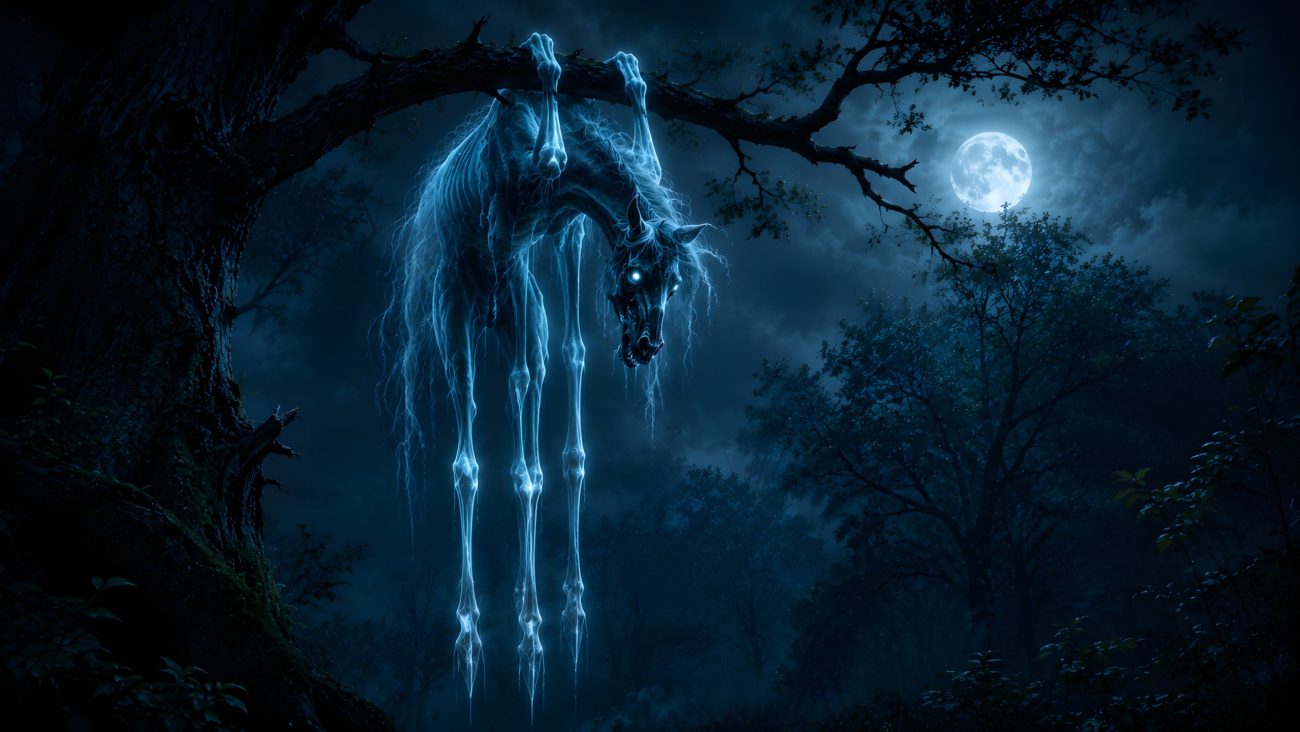
The phantom horse is said to come charging toward unsuspecting travelers before suddenly vanishing without a trace. In some traditions, it emerges from the water, while in others it flies out of the trees before rushing at its victims.


Sources

Abe van der Veen. (2014, July 8). Van aardmannetje tot zwarte juffer: Een lijst van Nederlandse en Vlaamse elfen en geesten. Abe de Verteller. Retrieved June 29, 2026, from https://abedeverteller.nl/van-aardmannetje-tot-zwarte-juffer-een-lijst-van-nederlandse-en-vlaamse-elfen-en-geesten/.
IJzeren Veulen

Tradition / Region: Dutch Mythology
Alternative names: Iron Foal
Category: Horse


The Myth

The IJzeren Veulen (“Iron Foal”) is a ghostly horse said to haunt the area near Cabauw in the Dutch province of Utrecht.

According to tradition, it galloped between two bridges every night between midnight and one o’clock. As it ran, it made an enormous clattering noise, as though its body were filled with iron or all of its joints were made from iron hinges.

One night, three boys decided to wait for the creature with clubs. When the Iron Foal appeared, it charged them with such tremendous force that it struck the boy standing in the middle, killing him instantly.

A white friar was later said to have banished the haunting spirit. As it disappeared, however, the Iron Foal cried out, “In a hundred years, I will return!”


Sources

Abe van der Veen. (2014, July 8). Van aardmannetje tot zwarte juffer: Een lijst van Nederlandse en Vlaamse elfen en geesten. Abe de Verteller. Retrieved June 29, 2026, from https://abedeverteller.nl/van-aardmannetje-tot-zwarte-juffer-een-lijst-van-nederlandse-en-vlaamse-elfen-en-geesten/


Hommelstommel

Tradition / Region: Dutch Mythology
Alternative names: Hompelstompel
Category: Horse


The Myth

Hommelstommel, also known as Hompelstompel, is a devilish apparition from the Oldambt region of Groningen.

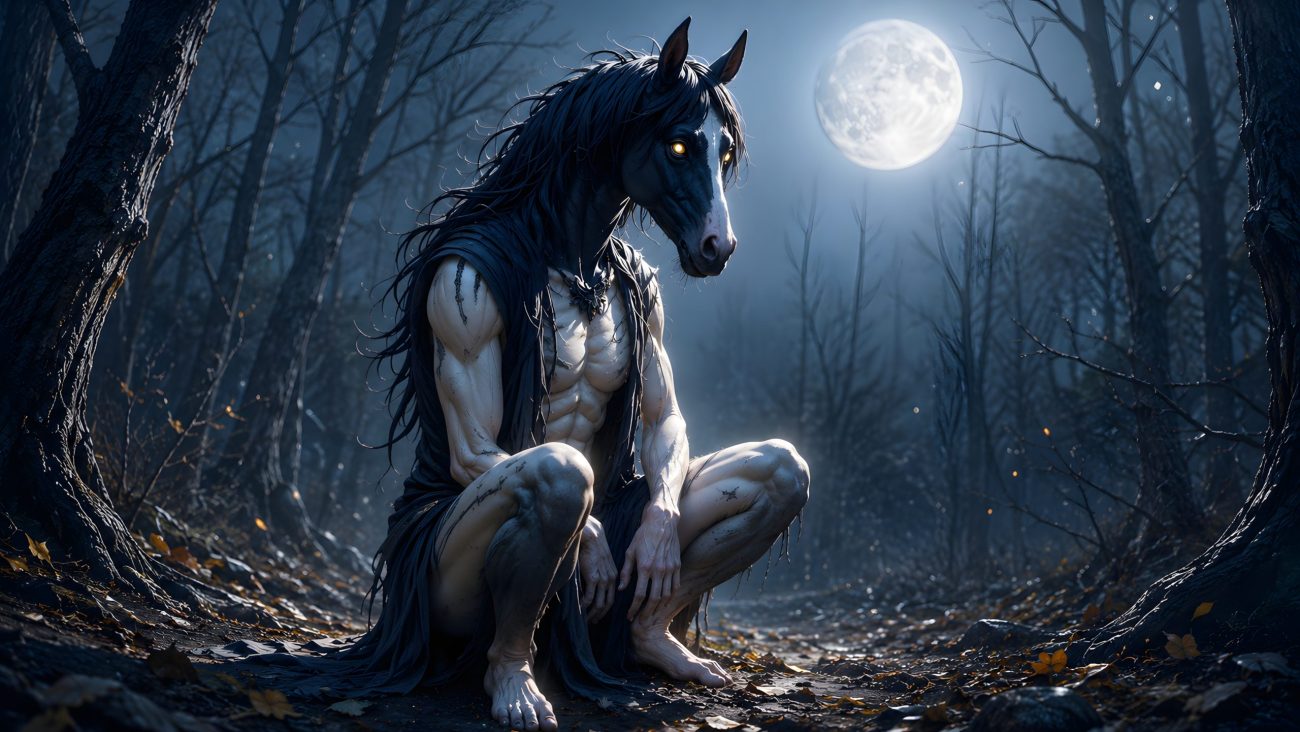
It was said to appear with the upper body of a horse and the lower body of a human. In this monstrous form, or sometimes as a headless horse, it pursued lonely travelers wandering the roads at night.


Sources

Abe van der Veen. (2014, July 8). Van aardmannetje tot zwarte juffer: Een lijst van Nederlandse en Vlaamse elfen en geesten. Abe de Verteller. Retrieved June 29, 2026, from https://abedeverteller.nl/van-aardmannetje-tot-zwarte-juffer-een-lijst-van-nederlandse-en-vlaamse-elfen-en-geesten/


Glujende Peerd

Tradition / Region: Dutch Mythology
Alternative names: Het Gloeiende Paard
Category: Horse


The Myth

The Glujende Peerd, or “Glowing Horse,” is a supernatural horse from the folklore of Gelderland.

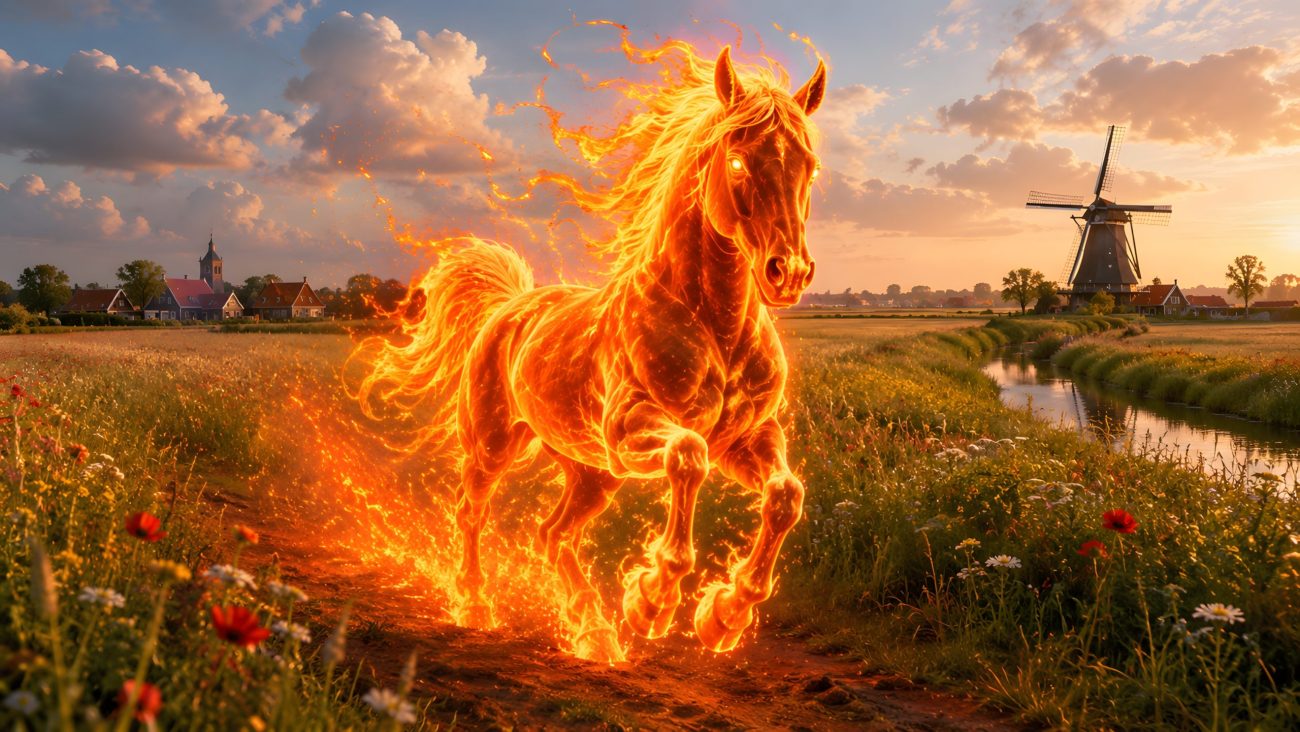
It is described as a burning horse that appears at haunted places. Wherever its hooves touch the ground, the grass is scorched and left burned in its wake.


Sources

Abe van der Veen. (2014, July 8). Van aardmannetje tot zwarte juffer: Een lijst van Nederlandse en Vlaamse elfen en geesten. Abe de Verteller. Retrieved June 29, 2026, from https://abedeverteller.nl/van-aardmannetje-tot-zwarte-juffer-een-lijst-van-nederlandse-en-vlaamse-elfen-en-geesten/


Capirussa

Tradition / Region: Dutch Mythology
Alternative names: Capirissa, Tapirussa
Category: Horse


The Myth

Capirussa is a legendary creature from the Dutch town of Brielle in South Holland. According to a chronicle written by the priest Taerling in 1600, the inhabitants of Brielle witnessed a strange monster emerging from the mouth of the River Meuse.

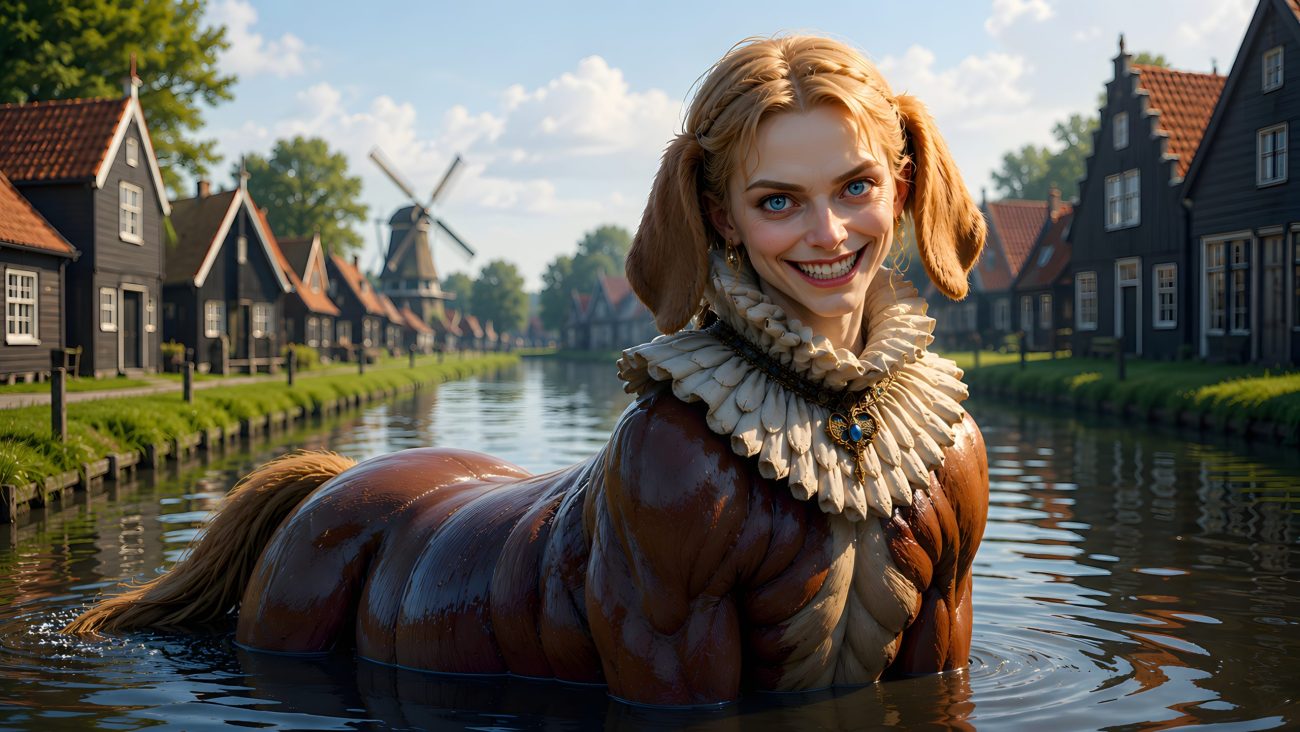
The creature was described as having the head of a woman, the ears and tail of a hunting dog, and the feet of a horse. At the time, it was said that such a being had previously only been seen in the Indies.

The marvelous creature became closely associated with Brielle and appeared as a supporter of the town’s coat of arms until 1816. It was later replaced in the heraldry by a centaur.

One tradition suggests that the name Capirussa may be a Latinized form of an older native water spirit known as the Roeschaart or Osschaart.


Sources

Abe van der Veen. (2014, July 8). Van aardmannetje tot zwarte juffer: Een lijst van Nederlandse en Vlaamse elfen en geesten. Abe de Verteller. Retrieved June 29, 2026, from https://abedeverteller.nl/van-aardmannetje-tot-zwarte-juffer-een-lijst-van-nederlandse-en-vlaamse-elfen-en-geesten/


Waterveulen

Tradition / Region: Dutch Mythology
Alternate Names:
Category: Horse


The Myth

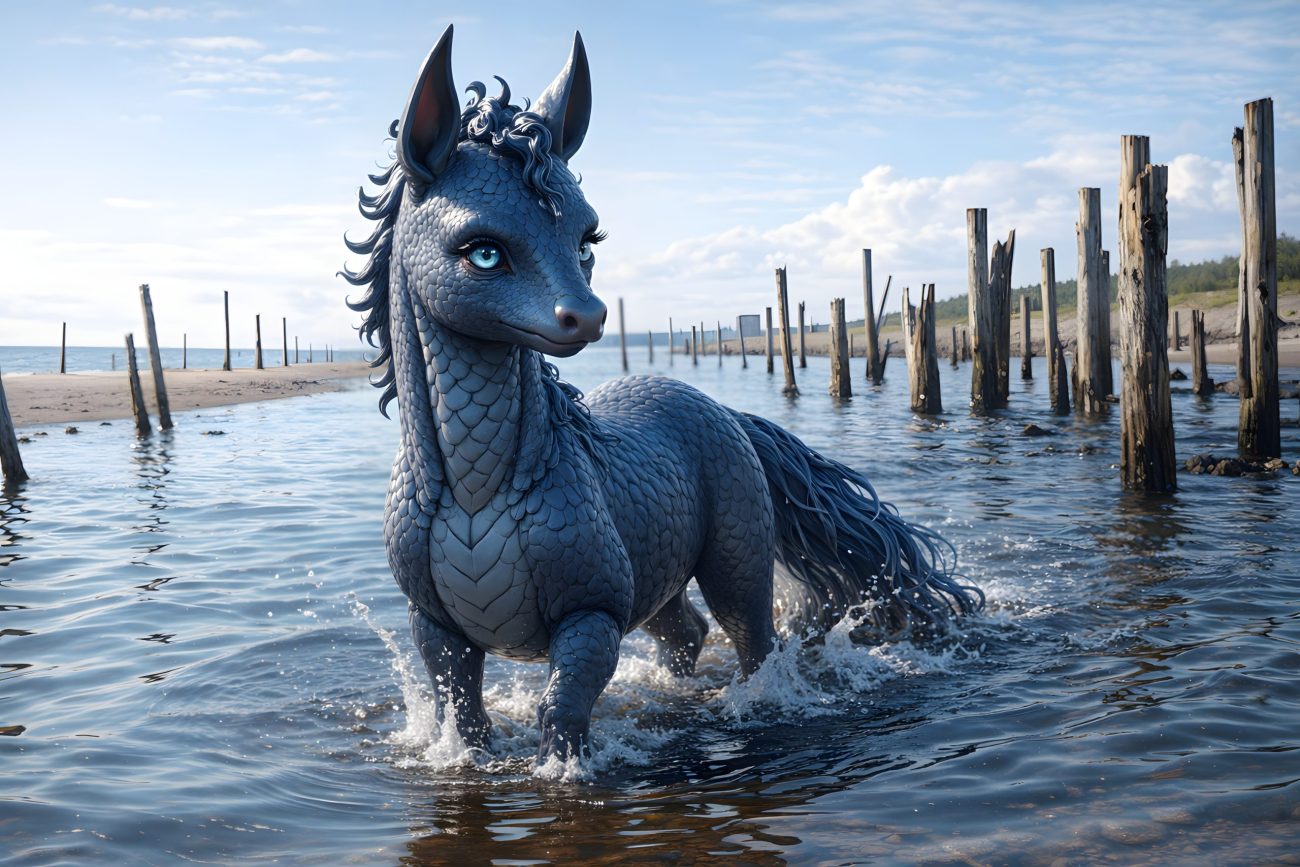
Along the shores of the Zuiderzee near Volendam, it was said that a creature called the Waterveulen would sometimes rise from the sea. It appeared as a young horse, its body slick with seawater, its hooves shining as if made of wet stone. At dusk or in the quiet of evening, it would walk along the shoreline, watching the land from the edge of the waves.

The Waterveulen was said to take an interest in a young maiden known for her beauty. From the sea, it brought her gifts: small fish and offerings gathered from the water. The girl accepted these gifts, and over time she grew accustomed to the creature’s presence, meeting it again and again at the shore.

One day, the maiden mounted the Waterveulen. At once, it turned and ran into the sea, carrying her with it beneath the waves. The people watching from the shore saw the two disappear into the water and were never seen again.

From that time on, the Waterveulen was remembered as a being that emerged from the sea to lure humans away, leaving only the sound of the waves behind.


Sources

Abe de Verteller contributors. (n.d.). Van aardmannetje tot zwarte juffer: Een lijst van Nederlandse en Vlaamse elfen en geesten. In Abe de Verteller, from https://abedeverteller.nl/van-aardmannetje-tot-zwarte-juffer-een-lijst-van-nederlandse-en-vlaamse-elfen-en-geesten/