Shiro (Shirodawashi)

Tradition / Region: Japanese Mythology
Alternate Names: Shirodashi, Shirodawashi (White Scrubber)
Category: Yōkai / Mountain Dweller / Cave Dweller


The Myth

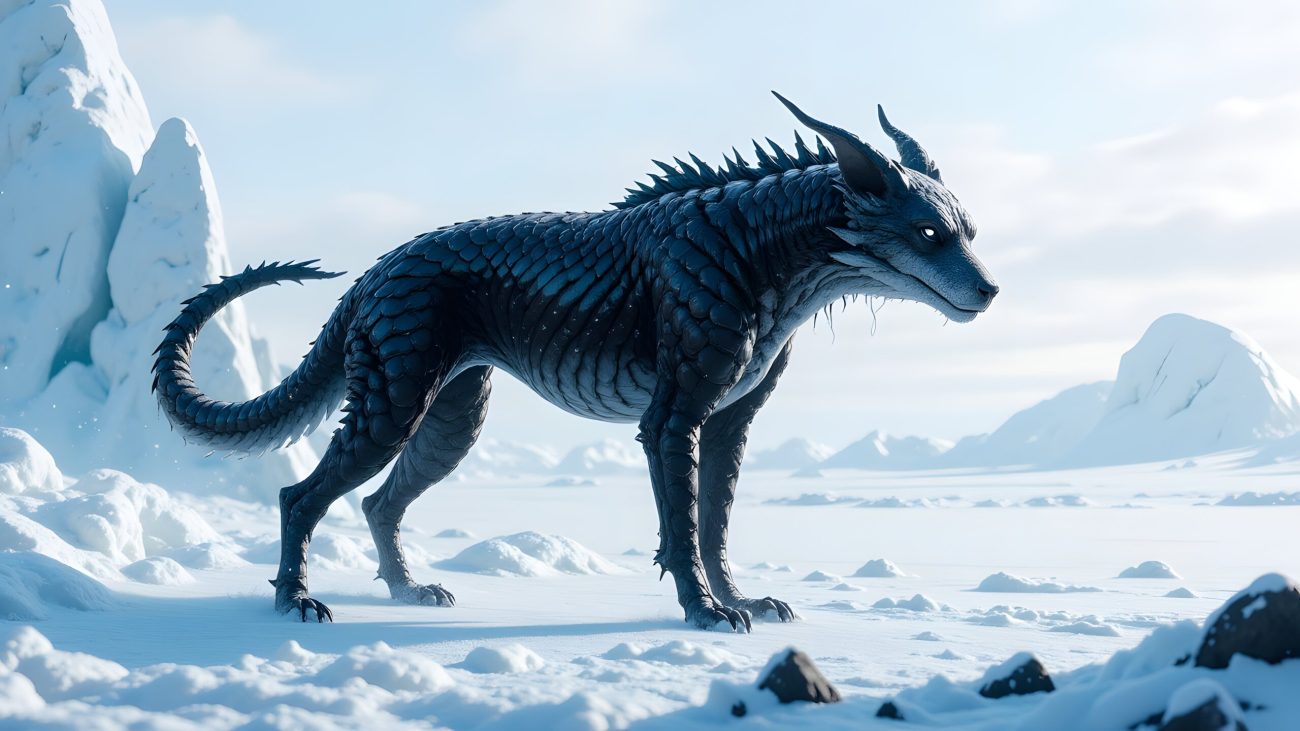
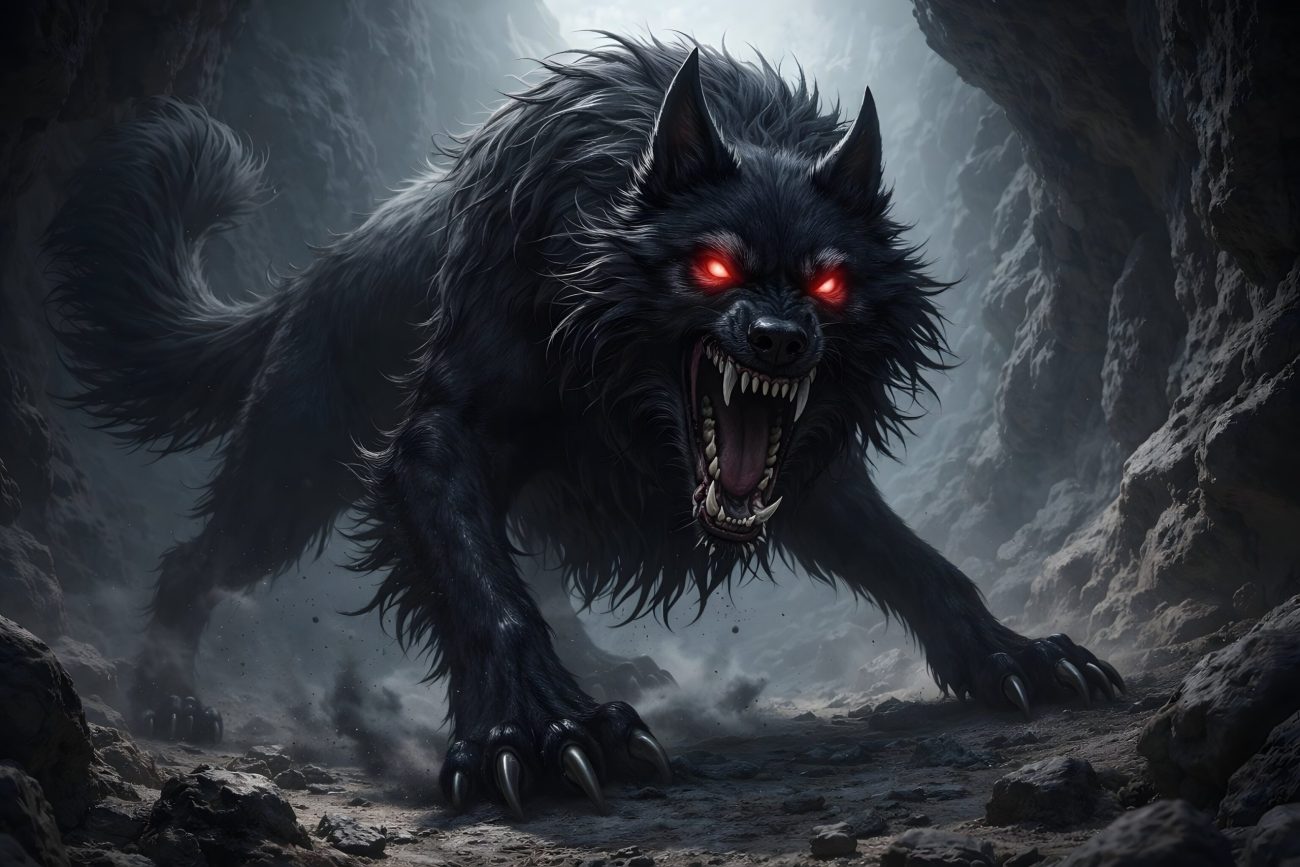
Shiro, also called Shirodawashi, was a yōkai known for his beast-like face, hooves, and a kimono patterned with scrubbing brushes. He lived in a cave near a remote mountain settlement and first appeared as a friendly and helpful figure.

A pair of monsters, Mōryō and his wife Ochiyobon, fled from Ushū to the mountains beyond Hakone and settled in a ruined house. Shiro assisted them in establishing their new home, but his friendliness soon revealed another nature. He was a heavy drinker and a troublemaker who repeatedly visited their house, demanding food, drink, and money.

Shiro became infatuated with Ochiyobon and schemed to take her for himself. One day, he borrowed a padded robe from Mōryō and never returned it. When Ochiyobon came to demand its return, Shiro claimed he had pawned it and left to retrieve it. Instead, he went to Mōryō’s shack armed with a blade and declared that Ochiyobon was now his wife. Intimidated and afraid, Mōryō surrendered, giving Shiro all his possessions, including clothing, bedding, and cosmetics.

When Ochiyobon learned what had happened, she was devastated. Shiro responded brutally, declaring that since she was now his wife, she must submit. Other monsters gathered, and even Momojii, the master of the cave dwellings, appeared. Momojii attempted to restore Ochiyobon to her husband, but Mōryō, fearing public shame, refused reconciliation and announced plans to remarry.

Abandoned, Ochiyobon grew close to Momojii, who treated her with kindness. Enraged, Shiro attacked Momojii with an oak log, but Momojii overpowered him with a massive axe and drove him away. To settle the conflict, Momojii arranged for Shiro to marry a beautiful female ghost.

Despite her beauty, the ghost suffered under Shiro’s relentless desire. Unable to endure him, she abandoned her lingering grudge against the living and wished to return to the underworld. When demons arrived to claim her, Shiro fought them fiercely. During the chaos, the ghost passed on peacefully, leaving the demons with no soul to seize. They attempted to drag Shiro to hell instead, but along the way a mysterious boy appeared and gave Shiro demon-slaying sake. The boy revealed himself to be the tanuki Kakubei, who slew the demons.

Grateful, Kakubei asked Shiro to help abduct the daughter of a fox whose marriage proposal had been rejected. Shiro eagerly agreed and joined the tanuki in attacking the wedding procession, successfully capturing the bride’s palanquin. However, he soon encountered Mikoshi Nyūdō, who defeated him and took him prisoner. Impressed by Shiro’s boldness, Mikoshi Nyūdō eventually released him, predicting he might serve a greater purpose someday.

Later, tanuki thieves stole the White Fox Jewel and entrusted it to Shiro. When monsters and foxes came to retrieve it, they heard a woman’s voice from within Shiro’s cave. Ochiyobon emerged, holding a bloodstained knife and the jewel. Having been disgraced and betrayed, she took revenge by killing Shiro and returning the treasure to its rightful owners.

Thus ended Shirodawashi, remembered as a violent, cunning, and lust-driven yōkai whose ambition and cruelty ultimately led to his downfall.


Interpretive Lenses

Religious Readings
Philosophical Readings
  • Nietzschean Deep Dive
Psychological Readings
  • Jungian Deep Dive
Esoteric Deep Dive
  • Hermetic Deep Dive
Political / Social Readings
  • Marxist Deep Dive
Other
  • How to Invite The Spirit

Zarazarazattara — How To Invite This Spirit

Tradition / Region: Japanese folklore (Haibara County, Shizuoka Prefecture)
Alternate Names:
Category: Yōkai


The Kind of Person This Spirit Draws Near To

A person who believes their inner world is unobservable.

Someone who relies heavily on silent thought as a place of safety. They may be careful with words, polite in action, and restrained in expression — but internally restless, calculating, or anxious. They assume that what is unspoken remains protected.

This spirit draws near where thinking is used as hiding.


How This Person Thinks

Mental habits

  • Constant inner commentary
  • Silent rehearsal of fears and contingencies
  • Strong distinction between “what I think” and “what I show”

How they approach ideas

  • Ideas are tested privately before being expressed
  • Thinking is treated as a shield

How they relate to uncertainty

  • Uncertainty triggers internal narration
  • Thoughts multiply under pressure

What they obsess over / ignore

  • Obsess over being found out
  • Ignore how much inner tension leaks outward

How This Person Deals With Problems

  • Thinks rather than acts
  • Delays outward movement
  • Attempts to resolve situations internally

Response to obstacles

  • Mental strategizing
  • Silent planning
  • Avoidance of visible reaction

They trust thought more than behavior.


How This Person Responds to Stress

Stress behavior

  • Intensified internal monologue
  • Racing thoughts
  • Mental catastrophizing

Collapse or sharpening

  • Stress overwhelms cognition rather than clarifying it

What they cling to

  • The belief that silence equals safety
  • The idea that concealment prevents consequence

Emotional Landscape

When Calm

  • Alert
  • Contained
  • Slightly guarded

When Angry

  • Anger stays internal
  • Expressed as rumination

When Afraid

  • Fear spirals inward
  • Thoughts become louder, not actions

When Joyful

  • Joy is restrained
  • Quickly monitored and moderated

Relationship to Time

  • Immediate
  • Moment-to-moment vigilance
  • Little long-term grounding

Time feels like waiting for exposure.


Relationship to Pleasure and Comfort

  • Comfort comes from control
  • Pleasure is moderated
  • Relaxation feels unsafe

The mind never fully rests.


Living Space

  • Small
  • Enclosed
  • Minimal exposure

The space mirrors a desire to contain.


Relationship Patterns

  • Reserved
  • Polite
  • Guarded

Others see calm; inside is noise.


How This Person Works

  • Thoughtful
  • Careful
  • Over-prepared

Action follows thinking too slowly.


What Makes the Spirit Stay

  • Silent fear
  • Heavy inner narration
  • Treating thought as concealment
  • Belief that privacy exists without action

Zarazarazattara remains where thinking replaces presence.


What Makes the Spirit Leave

  • Unexpected physical action
  • Embodied interruption
  • Noise, movement, or chance
  • Acting without thinking first

When the body acts before the mind, the spirit loses access.


The Cost of Keeping This Spirit Close

  • Loss of inner privacy
  • Heightened anxiety
  • Feeling watched even when alone

What is lost is mental refuge.
What remains is exposure without witness.


Final Human–Spirit Portrait

“A life lived entirely inside the head, until even thought itself begins to answer back.”

Zarazarazattara

Tradition / Region: Japanese Folklore (Haibara County, Shizuoka Prefecture)
Alternate Names:
Category: Yōkai / Mountain Dweller


The Myth

In Haibara County, it is told that a man once spent the night alone in a mountain hut, sitting by the hearth to keep warm. As the fire burned low, the hut lay silent except for the crackle of embers.

At one point, the man lifted the straw mat that covered the entrance. Suddenly, a round object—shaped much like a pumpkin—rolled inside the hut and came to rest beside the hearth. Startled, the man stared at it, thinking how unsettling the thing looked.

Before he could act, the round object spoke, saying, “It’s nothing. I am Zarazarazattara.”

The man felt an even deeper unease and thought to himself that he wished he had left the hut earlier. Immediately, the creature replied, “Never mind. I’ll be right there.” Realizing that the being responded to his very thoughts, the man became terrified, knowing that even thinking in silence was no protection.

Trying to act without revealing his thoughts, the man decided to tend the fire. He picked up a piece of firewood and snapped it to add fuel to the hearth. By chance, a fragment of the broken wood flew off and struck the creature where its face seemed to be.

At this, Zarazarazattara cried out, “I never thought of that,” and fled the hut at once, disappearing back into the night.

Afterward, the man was left alone by the fire, shaken but unharmed, and the strange yōkai was never seen there again.


Interpretive Lenses

Religious Readings
Philosophical Readings
  • Nietzschean Deep Dive
Psychological Readings
  • Jungian Deep Dive
Esoteric Deep Dive
  • Hermetic Deep Dive
Political / Social Readings
  • Marxist Deep Dive
Other

Oshoné — How To Invite This Spirit

Tradition / Region: Japanese folklore (Yatsuka-chō, Matsue City, Shimane Prefecture)
Alternate Names: Osshine (variant pronunciation)
Category: Yōkai / Waterside Spirit


The Kind of Person This Spirit Draws Near To

A person who remains awake in conditions meant for sleep.

Someone who endures cold, solitude, repetition, and fatigue without breaking — but also without grounding themselves. They linger too long at the edge of consciousness. Not reckless, not careless, but overexposed to liminality.

This is a person whose awareness has thinned, not vanished.


How This Person Thinks

Mental habits

  • Hypnotic focus
  • Repetitive attention
  • Long stretches without interruption

How they approach ideas

  • Ideas drift in rather than being pursued
  • Boundaries between imagination and perception soften

How they relate to uncertainty

  • Uncertainty feels atmospheric, not threatening
  • The strange is tolerated rather than challenged

What they obsess over / ignore

  • Obsess over staying awake, staying present
  • Ignore bodily limits and perceptual fatigue

How This Person Deals With Problems

  • They persist rather than stop
  • Adjust conditions instead of withdrawing
  • Use small rituals (sounds, motions) to remain alert

Response to obstacles

  • Endurance
  • Minor improvisation
  • Refusal to fully disengage

They do not retreat —
they hover.


How This Person Responds to Stress

Stress behavior

  • Narrowed attention
  • Visual distortions
  • Dissociation without panic

Collapse or sharpening

  • Stress blurs perception rather than sharpening it

What they cling to

  • Routine actions
  • Familiar sounds
  • Small sources of warmth or light

Emotional Landscape

When Calm

  • Detached
  • Quiet
  • Slightly unreal

When Angry

  • Anger is muted or absent
  • Replaced by confusion

When Afraid

  • Fear arrives late
  • Often after recognition

When Joyful

  • Joy is faint and distant
  • Quickly absorbed back into numbness

Relationship to Time

  • Suspended
  • Neither night nor morning
  • Time stretches without markers

Time feels like open water in fog.


Relationship to Pleasure and Comfort

  • Comfort is minimal
  • Warmth is functional, not restorative
  • Pleasure is postponed

The body is kept going, not cared for.


Living Space

  • Exposed
  • Transitional
  • Boats, huts, shorelines

The space lacks enclosure.


Relationship Patterns

  • Solitary
  • Minimal interaction
  • Human presence is rare and distant

They are alone, but not fully with themselves.


How This Person Works

  • Methodical
  • Repetitive
  • Enduring

Work becomes trance-like.


What Makes the Spirit Stay

  • Prolonged wakefulness
  • Cold and solitude
  • Passive acceptance of strangeness
  • Letting perception drift without correction

Oshoné remains where attention floats free of grounding.


What Makes the Spirit Leave

  • Sudden noise
  • Sharp interruption
  • Fire, heat, or decisive action
  • Reassertion of bodily presence

When awareness snaps back into the body, Oshoné scatters.


The Cost of Keeping This Spirit Close

  • Distorted perception
  • Confusion between inner and outer
  • Lingering unease after the moment passes

What is lost is clarity.
What remains is the memory of something half-seen.


Final Human–Spirit Portrait

“A life lived too long in the cold quiet, where the world begins to people itself with shapes that vanish the moment you fully wake.”

Shanjing — How To Invite This Spirit

Tradition / Region: Chinese folklore (Hebei Province; Anguo / Ankoku region)
Alternate Names: Mountain Spirit; One-Legged Mountain Spirit; Xiao
Category: Mountain Dweller / Nocturnal Spirit


The Kind of Person This Spirit Draws Near To

A person who treats wild places as extensions of their household.

Someone who assumes access where there is only proximity. They build, store, travel, or take resources in places that are not fully theirs, and they do so without hostility — but also without reverence.

They do not feel malicious.
They feel entitled by presence.


How This Person Thinks

Mental habits

  • Practical, task-focused thinking
  • Little symbolic awareness
  • Treats environments as neutral backdrops

How they approach ideas

  • Values usefulness over meaning
  • Sees customs and warnings as superstition
  • Prefers shortcuts

How they relate to uncertainty

  • Uncertainty is ignored rather than engaged
  • Night is treated like day

What they obsess over / ignore

  • Obsess over supplies, preparation, efficiency
  • Ignore ritual boundaries and local taboos

How This Person Deals With Problems

  • Solves problems directly
  • Uses force or improvisation
  • Rarely pauses to ask whether they should

Response to obstacles

  • Push through
  • Take what is needed
  • Fix later

They assume resistance is logistical, not spiritual.


How This Person Responds to Stress

Stress behavior

  • Increased activity
  • Night work
  • Cutting corners

Collapse or sharpening

  • Stress sharpens efficiency but erodes awareness

What they cling to

  • Supplies
  • Stored resources
  • Control over environment

Emotional Landscape

When Calm

  • Alert
  • Functional
  • Slightly dismissive of fear

When Angry

  • Irritated at inconvenience
  • Likely to strike or chase

When Afraid

  • Fear turns into aggression or ridicule

When Joyful

  • Satisfaction comes from preparedness and surplus

Relationship to Time

  • Nocturnally careless
  • Treats night as available
  • Ignores rhythm of rest

Time is something to use, not respect.


Relationship to Pleasure and Comfort

  • Comfort comes from stored goods
  • Pleasure tied to security and supply
  • Little interest in ritualized rest

Salt matters more than silence.


Living Space

  • Temporary shelters
  • Storage huts
  • Places that blend human use with wild terrain

The space is occupied, not consecrated.


Relationship Patterns

  • Transactional
  • Minimal ceremony
  • Trust based on function

Relationships are practical, not reverent.


How This Person Works

  • Industrious
  • Prepared
  • Comfortable working alone

Work continues even when conditions suggest stopping.


What Makes the Spirit Stay

  • Night activity in wild or liminal places
  • Unacknowledged taking (especially essentials like salt)
  • Striking first when startled
  • Treating the mountain as inert

Shanjing stays where use replaces permission.


What Makes the Spirit Leave

  • Naming it
  • Acknowledging presence
  • Respecting night boundaries
  • Withdrawing rather than striking

When recognition replaces reaction, it loses power.


The Cost of Keeping This Spirit Close

  • Sudden illness
  • Domestic disaster (fire, spoilage)
  • The sense that home is no longer safe

What is lost is containment.
The wild enters the house.


Final Human–Spirit Portrait

“A life lived efficiently in places that were never meant to be efficient — until the mountain begins to answer back.”

Oshoné

Tradition / Region: Japanese Folklore (Yatsuka-chō, Matsue City, Shimane Prefecture)
Alternate Names: Osshine (variant pronunciation)
Category: Yōkai / Water Spirit


The Myth

On a bitterly cold day in Yatsuka-chō, a fisherman waited alone in his boat at sea, watching his nets and enduring the freezing wind. As the cold deepened, he began striking a bell-like instrument to keep himself awake. Suddenly, he noticed what appeared to be a large mountain directly in front of him, looming where open water should have been.

Believing the mountain to be some illusion or object washed into the sea, the fisherman rowed toward his shore shack and pulled on the anchor rope to steady himself. Finding nothing amiss, he returned to his work. Though uneasy, he closed his eyes and continued fishing.

After some time, he opened his eyes and saw three children gathered around a bonfire burning on bamboo. The children had no hands and no feet, yet they moved about the fire as if untroubled. Realizing what he was seeing, the fisherman thought of an old tale he had heard and understood that these beings were Oshoné, a strange yōkai known from local stories.

Acting quickly, the fisherman threw shushumi leaves into the fire. As the leaves crackled and snapped loudly, Oshoné was startled. In confusion and fear, the creature scattered, fleeing with a lantern and vanishing into the pine trees of the nearby mountain.

After that night, the fisherman never saw Oshoné again, but the story remained along the waters of Yatsuka-chō, told as a strange encounter with a yōkai that appeared by the sea, took the form of limbless children, and vanished when frightened by sudden noise and flame.


Interpretive Lenses

Religious Readings
Philosophical Readings
  • Nietzschean Deep Dive
Psychological Readings
  • Jungian Deep Dive
Esoteric Deep Dive
  • Hermetic Deep Dive
Political / Social Readings
  • Marxist Deep Dive
Other

Shanjing

Tradition / Region: Chinese Folklore (Hebei Province; Anguo / Ankoku region)
Alternate Names: Mountain Spirit; One-Legged Mountain Spirit; Xiao
Category: Mountain Dweller / Demon / Spirit


The Myth

In the mountains of what is now Anguo City in Hebei Province, there was said to exist a being known as the Shanjing, the Mountain Spirit. Ancient Chinese texts describe it as a small humanoid creature, usually between one and four feet tall depending on the source, with only a single leg. Its most striking feature was its foot: the heel faced backward, an unmistakable sign that it was not a natural being.

The Mountain Spirit was said to dwell in mountainous regions and remain hidden during the day, emerging only at night. It was known to steal salt from humans, slipping into storage huts or mountain shelters under cover of darkness. Its diet consisted primarily of crabs and frogs gathered from the mountains and streams. Some accounts describe it carrying crabs in its hands as it approached human dwellings.

When encountered at night, the Mountain Spirit could attack people. However, it was believed that if a person called out the word “Ba,” the creature would lose its ability to harm them. At the same time, the Mountain Spirit was dangerous to provoke. Those who struck or injured it were said to suffer illness afterward, or find their houses consumed by fire.

Classical texts give varying descriptions of its appearance. Some portray it as human-shaped, others as resembling a small child. Several sources note that its body was hairy, its face dark or blackened, and that it laughed when it saw humans. In Daoist writings such as the Baopuzi, it is described as a nocturnal attacker and listed among spirits that could invade human homes.

The Mountain Spirit appears frequently in Chinese poetry and literature, where it is mentioned alongside other supernatural beings such as fox spirits and animal demons. These references describe it as a presence bound to mountains, night, and wild places, a being that moved between the human world and the unseen realm.

Through later transmission into Japan, the Mountain Spirit was depicted in illustrated demon compendiums, notably in Toriyama Sekien’s Konjaku Gazu Zoku Hyakki. There it appears gazing at mountain huts while holding crabs, preserving the older Chinese description of a salt-stealing, crab-eating, one-legged mountain being that emerges after dark and vanishes again before dawn.


Interpretive Lenses

Religious Readings
Philosophical Readings
  • Nietzschean Deep Dive
Psychological Readings
  • Jungian Deep Dive
Esoteric Deep Dive
  • Hermetic Deep Dive
Political / Social Readings
  • Marxist Deep Dive
Other

Ivarasambe

Tradition / Region: Ainu Folklore (Hokkaidō and surrounding regions)
Alternate Names:
Category: Demon / Mountain Dweller / Dog / Fox


The Myth

In Ainu folklore, there is a demon known as Ivarasambe, whose name means “the one who descends on the grass growing on the mountain slopes.” It was said to appear in the highlands and grassy mountain areas, where it moved silently through the vegetation beyond the sight of hunters and travelers.

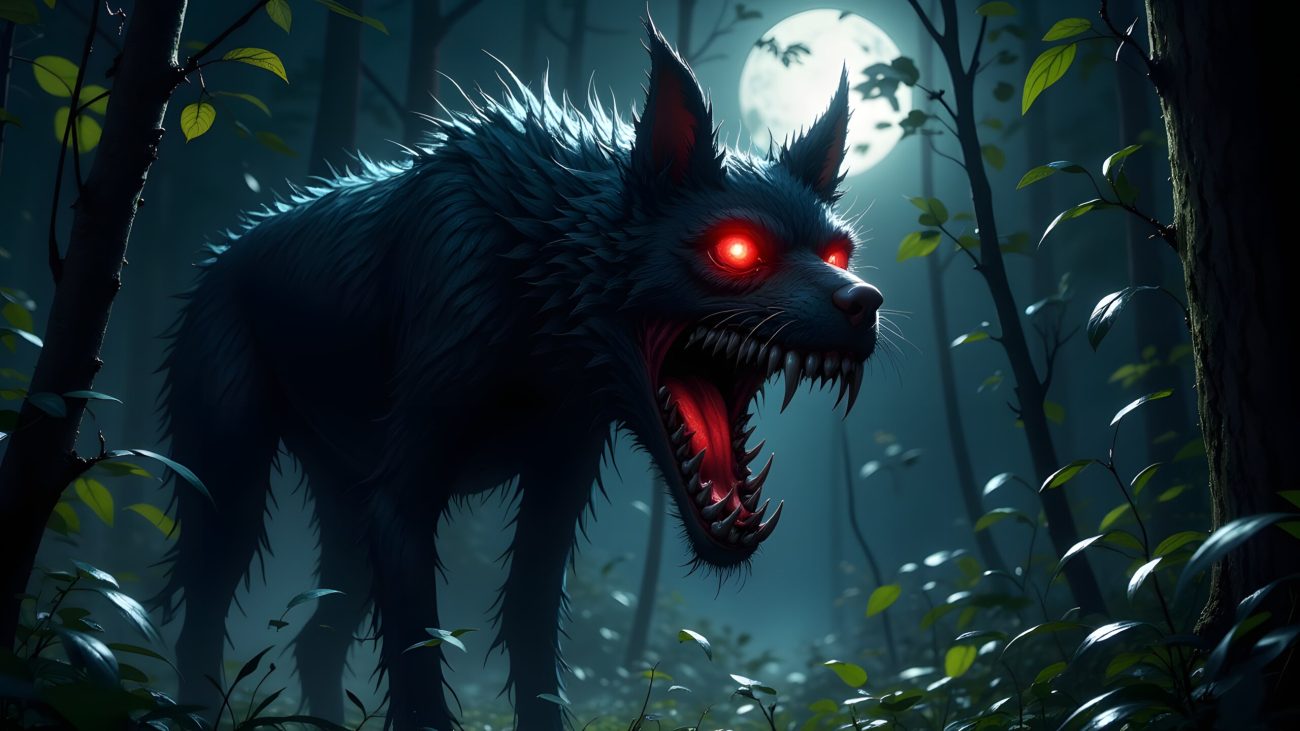
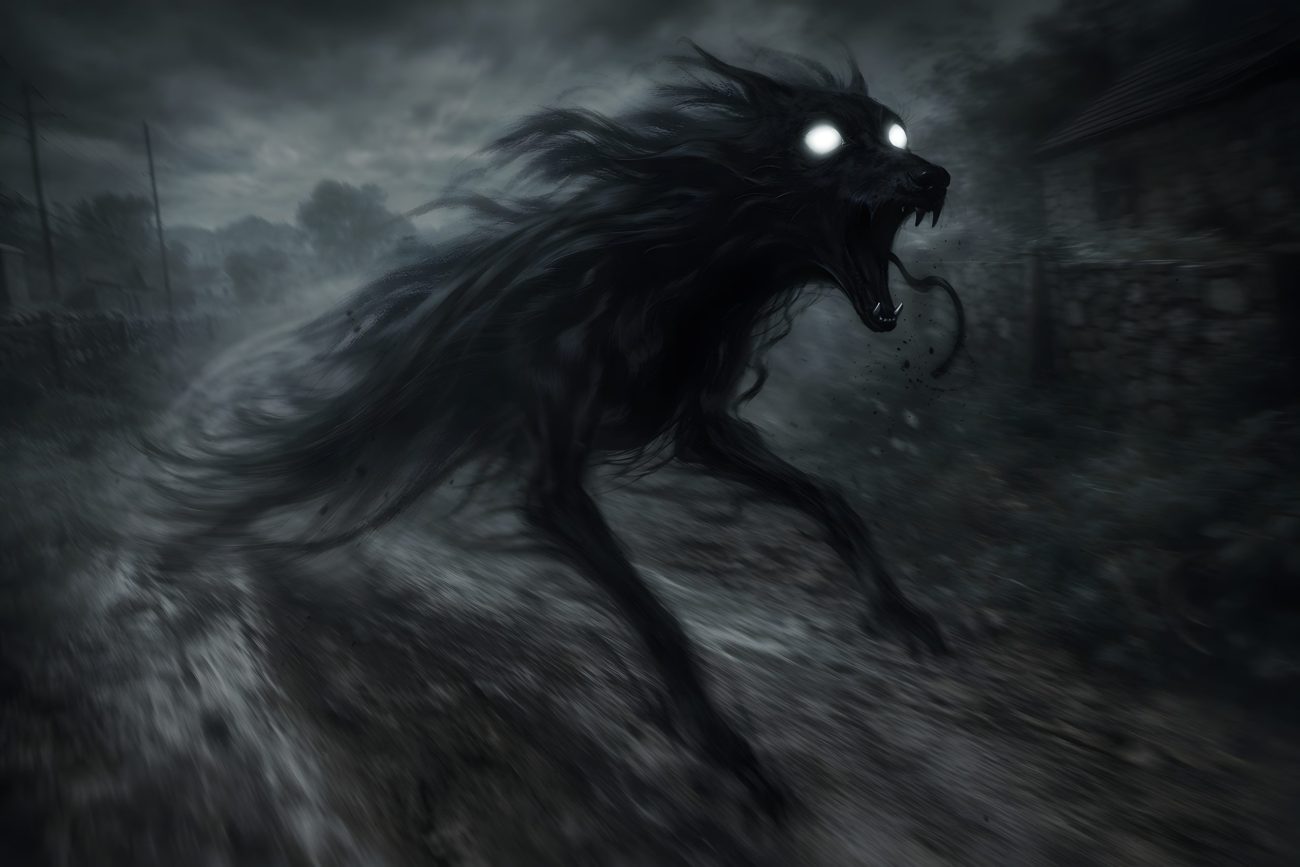
Ivarasambe took the form of a small animal, about the size of a fox or a dog. Its body was entirely black, its ears long and upright, and from its mouth protruded two long lower fangs. These fangs marked it unmistakably as a demon rather than a natural creature.

The demon was believed to descend suddenly from the mountain slopes, emerging from the grass without warning. Its appearance inspired fear, not through pursuit or speech, but through its sudden presence and unnatural form. To encounter Ivarasambe was to cross into a space where the boundaries between the natural world and the realm of spirits had grown thin.

Stories of Ivarasambe were passed down as warnings about the dangers hidden in the mountains, where spirits and demons might move unseen among the grass, revealing themselves only for an instant before vanishing again into the wild.


Interpretive Lenses

Religious Readings
  • Christian Ascetic Deep Dive
Philosophical Readings
  • Nietzschean Deep Dive
Psychological Readings
  • Jungian Deep Dive
Esoteric Deep Dive
  • Hermetic Deep Dive
Political / Social Readings
  • Marxist Deep Dive
Other
  • How to Invite The Spirit

Azuki Arai

Tradition / Region: Japanese Mythology
Alternate Names: Azukitogi, Azuki Togi
Category: Yōkai, Mountain Dweller, River Dweller


The Myth

Deep in the mountains of Japan, near forest streams and quiet rivers, there is said to live a yōkai known as Azuki Arai, the Bean Washer. It dwells far from villages, choosing remote riverbanks where the sound of flowing water masks its presence. Travelers rarely see it, but many have heard it.

Azuki Arai spends its time crouched beside the water, washing red azuki beans in a basket. As it works, it sings a strange song, its voice mingling with the sound of beans being rinsed:

“Azuki araou ka?
Hito totte kuou ka?”

“Shall I wash my beans,
or shall I catch a human to eat?”

Between the lines of the song comes the sound shoki shoki, the rhythmic noise of beans being washed. The voice carries through the valley, echoing along the stream.

Those who hear the song are often startled or unsettled. It is said that people drawn too close to the sound lose their footing and slip into the water. The splash frightens Azuki Arai, and it immediately flees into the forest, vanishing without a trace.

Azuki Arai is known to be extremely shy and avoids being seen. It mimics the sounds of nature—rustling leaves, flowing water, birds, and insects—to conceal itself. Because of this, most encounters are only auditory, and sightings are rare. Those who do catch a glimpse describe a small, squat figure resembling a monk or peasant, with a large head, wide eyes, and an unsettling grin, seated by the river as it washes beans.

Despite its eerie song, Azuki Arai is not considered truly dangerous. It does not pursue humans, and it disappears at the slightest disturbance. In some regions, seeing it is considered a sign of good fortune, as few are ever able to do so.

Thus, when the sound of beans being washed rises from a mountain stream, people say Azuki Arai is near—quietly working by the water, singing its strange song, and slipping away unseen the moment it is discovered.


Unicorn

Tradition / Region: Greek Mythology
Alternate Names: Monokeros
Category: Horse


The Myth

In ancient Greek accounts, the unicorn was spoken of as a rare and formidable creature dwelling in distant forests and mountains beyond the familiar world. It resembled a powerful horse or goat-like beast, marked by a single long horn rising from the center of its forehead. Swift, strong, and fiercely independent, it could not be overtaken by hunters nor subdued by force.

The unicorn was said to possess extraordinary strength. When pursued, it could leap from great heights, landing upon its horn without injury, and vanish into rough terrain where no human could follow. Its body was lean and fast, its senses sharp, and its temperament untamable. No net or trap could hold it, and weapons were useless against its speed.

Only one method was said to succeed in capturing a unicorn. If a maiden of pure character was left alone in the forest, the creature would approach her without fear. Trusting her presence, it would rest its head in her lap, allowing hunters to seize it. Without such purity, the unicorn would never come near, fleeing at the first hint of deceit or threat.

The unicorn’s horn was believed to hold powerful properties. It could cleanse poisoned water, neutralize venom, and protect against corruption. Because of this, kings and physicians prized the horn above all treasures, though few ever possessed one. Its power was tied to the creature itself, and the horn was never obtained without consequence.

Though later traditions layered the unicorn with symbolism, in the older Greek imagination it remained a wild and dangerous being. It was neither gentle nor benevolent, but bound to strict conditions of approach. To encounter the unicorn was to face a creature that tested restraint, intention, and respect, existing beyond human command and beyond the reach of ordinary ambition.