Sundel Bolong

Tradition / Region: Indonesian Mythology
Alternate Names: Prostitute Ghost
Category: Ghost


The Myth

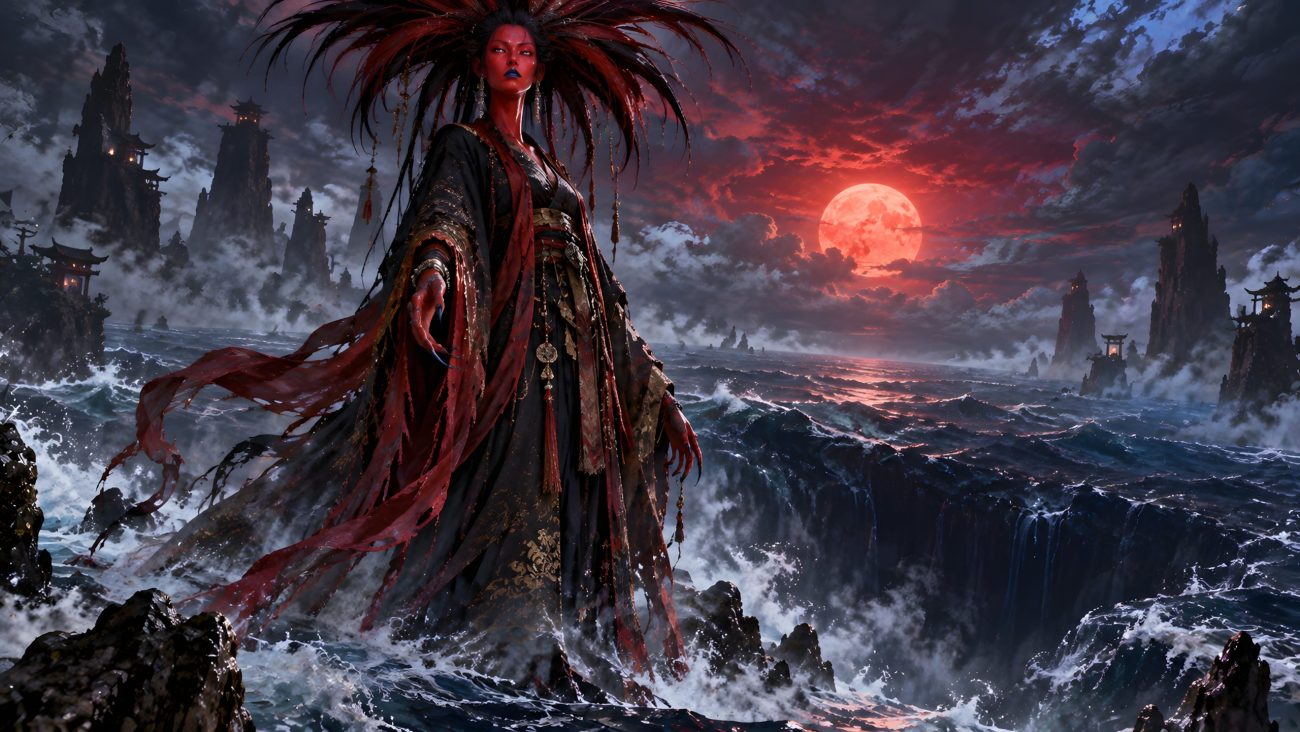
The Sundel Bolong is a female ghost from Indonesian folklore, especially associated with Javanese mythology. She is usually described as a beautiful woman with long black hair and a flowing white dress. Hidden beneath her hair is a large hole in her back, which is the creature’s most horrifying feature.

According to the legend, the Sundel Bolong is the spirit of a woman who died while pregnant outside of marriage or who died during childbirth. In some versions of the story, the child is said to have emerged through her back, leaving behind the gaping hole that defines her appearance.

The Sundel Bolong wanders at night searching for revenge or for a replacement for her lost child. Her victims are often men and children. Some stories claim that men who reject or insult her are attacked or mutilated, while newborn children may be abducted by the spirit.

Although she appears beautiful from the front, her true form is concealed by her long hair. In many tales, unsuspecting travelers are lured closer before discovering the terrible wound hidden on her back. The myth became one of the most feared ghost stories in Indonesian folklore and is commonly associated with death, grief, vengeance, and the dangers surrounding childbirth and social shame.


Sources

Wikipedia contributors. (n.d.). Sundel bolong. In Wikipedia, from https://en.wikipedia.org/wiki/Sundel_bolong


Medusa

Tradition / Region: Greek Mythology
Alternate Names: Gorgo, The Gorgon
Category: Snake


The Myth

Medusa was one of the three Gorgons of Greek mythology alongside her sisters Stheno and Euryale. The Gorgons were usually described as daughters of the sea deities Phorcys and Ceto. Of the three sisters, Medusa alone was mortal.

She is most famously described as a terrifying woman with venomous snakes for hair whose gaze could turn any living being into stone. Ancient traditions often portrayed the Gorgons as monstrous winged creatures living far from the world of ordinary humans, in remote western lands associated by some writers with Libya.

The most famous myth involving Medusa centers on the Greek hero Perseus. King Polydectes ordered Perseus to bring back the head of Medusa, believing the task impossible. To aid him, the gods gave Perseus several magical items. Athena provided a polished shield, Hermes gave him winged sandals, Hephaestus supplied a sword, and Hades lent him the helm of invisibility.

Because looking directly at Medusa meant instant petrification, Perseus approached her while watching only her reflection in Athena’s shield. He found Medusa asleep and decapitated her with a single strike.

According to the myth, Medusa was pregnant by Poseidon at the moment of her death. From her severed body sprang Pegasus, the winged horse, and Chrysaor, a giant warrior associated with a golden sword.

Even after her death, Medusa’s head retained its petrifying power. Perseus used it as a weapon during several later adventures. On his journey home, he encountered the Titan Atlas and transformed him into stone with the Gorgon’s head, creating the Atlas Mountains according to later traditions. Perseus also rescued the princess Andromeda from a sea monster and eventually returned to the island of Seriphos, where he turned King Polydectes and his followers to stone for mistreating his mother.

In the end, Perseus presented the head of Medusa to Athena, who placed it upon her shield, the Aegis. The image of Medusa’s head later became a powerful protective symbol in Greek and Roman culture. Known as the Gorgoneion, it appeared on shields, armor, temples, and mosaics to ward off evil.

Different ancient traditions described Medusa differently. Early Greek art often portrayed her as a horrifying monster with tusks, bulging eyes, wings, and snakes. Later Greek and Roman writers increasingly depicted her as both beautiful and terrifying. In the Roman poet Ovid’s version of the myth, Medusa had once been a beautiful maiden before Athena transformed her hair into snakes after Poseidon violated her within Athena’s temple.

Over time, Medusa became one of the most recognizable figures in Greek mythology, remembered both as a deadly monster whose gaze turned mortals into stone and as a tragic figure whose severed head continued to wield terrible power even after death.


Sources

Wikipedia contributors. (n.d.). Medusa. In Wikipedia, from https://en.wikipedia.org/wiki/Medusa


Cyclops

Tradition / Region: Greek Mythology, Italian Mythology
Alternate Names:
Category: Giant


The Myth

The Cyclopes are giant one-eyed beings from Greek mythology, later adopted into Roman mythology. Ancient traditions describe several different kinds of Cyclopes, ranging from divine blacksmiths to savage man-eating giants.

In Hesiod’s Theogony, the first Cyclopes were three powerful brothers named Brontes, Steropes, and Arges. They were the sons of Uranus, the sky, and Gaia, the earth. Each possessed a single eye in the center of the forehead and enormous strength. Their names were associated with thunder and lightning, reflecting their connection to storms and divine weapons.

Their father Uranus feared his monstrous children and imprisoned them deep within Tartarus. Later, after Zeus rebelled against the Titans, he freed the Cyclopes from their prison. In gratitude, the Cyclopes forged the thunderbolt of Zeus, the trident of Poseidon, and the helm of invisibility used by Hades. With these weapons, the Olympian gods defeated the Titans and established their rule over the cosmos.

Later myths describe the Cyclopes as master smiths working beside Hephaestus, the god of fire and metalworking. Ancient poets placed their forge beneath volcanic mountains such as Mount Etna in Sicily and the Aeolian Islands. There the Cyclopes forged divine weapons and armor amid smoke, fire, and the roar of the earth. The sound of thunder and volcanic eruptions was sometimes imagined as the labor of the Cyclopes beneath the mountains.

Another famous tradition appears in Homer’s Odyssey. These Cyclopes were no longer divine craftsmen but wild and uncivilized giants who lived apart from society. They dwelled in caves, kept flocks of sheep, and ignored laws, agriculture, and hospitality. The most famous among them was Polyphemus, the giant son of Poseidon.

During his journey home from the Trojan War, Odysseus and his companions entered the cave of Polyphemus searching for food and shelter. The Cyclops returned, sealed the entrance with a massive stone, and began devouring the trapped sailors. Odysseus devised a plan to escape. After offering the giant strong wine, he told Polyphemus that his name was “Nobody.” Once the Cyclops fell asleep, Odysseus and his men sharpened a wooden stake and drove it into his single eye, blinding him.

When the other Cyclopes heard Polyphemus screaming and asked who had harmed him, he answered that “Nobody” was attacking him, causing them to leave without helping. The next morning, Odysseus and his surviving men escaped by hiding beneath the bellies of the giant’s sheep as they left the cave to graze. As Odysseus sailed away, he revealed his true name in pride, provoking the enraged Polyphemus to call upon Poseidon to curse the hero’s voyage home.

A third tradition claimed that Cyclopes built the massive stone walls of ancient cities such as Mycenae, Tiryns, and Argos. The stones were so enormous that later Greeks believed only giants with supernatural strength could have moved them. These fortifications became known as Cyclopean walls.

Over time, the Cyclopes became some of the most famous monsters of Greek mythology. Different stories portrayed them as divine craftsmen, primordial giants, savage shepherds, or legendary builders, but nearly all traditions remembered them as enormous one-eyed beings connected with overwhelming strength, thunder, fire, and destruction.


Sources

Wikipedia contributors. (n.d.). Cyclopes. In Wikipedia, from https://en.wikipedia.org/wiki/Cyclopes


Goatmen

Tradition / Region: Kazakhstan Mythology
Alternate Names: None Recorded
Category: Sheep


The Myth

In Kazakh folklore, Goatmen are wild goats with human heads that once roamed the wilderness and attacked hunters. They were feared for their strength and were said to kill people with powerful blows from their shoulders. Because of this danger, many hunters became too frightened to enter the mountains or hunt game.

One story tells of a poor hunter and his teenage son who decided to hunt despite the danger. After gathering a large amount of game, the father ordered his son to collect brushwood for a fire. Both wore clothing made from sheepskin. The old hunter cut fat from the animals they had killed and secretly smeared it inside their coats, instructing his son to do the same.

The Goatmen watched them from nearby and became curious. Wanting to imitate the hunters, they asked for fat and covered themselves with it as well. The old hunter then held fire against the inside of his sheepskin coat, which did not burn. Believing this was safe, the Goatmen moved close to the flames. Their grease-soaked wool quickly caught fire, and as they tried to extinguish the flames by rubbing against one another, the fire spread even more fiercely.

According to the tale, the Goatmen were burned to death, and the old hunter freed the land from the dangerous creatures.


Sources

Bestiary contributors. (n.d.). Козлолюди (Kozloljudi). In Bestiary, from https://www.bestiary.us/kozloljudi


Mystan Kempir

Tradition / Region: Kazakhstan Mythology, Kyrgyzstan Mythology, Uzbekistan Mythology, and Tatar Mythology
Alternate Names: None Recorded
Category: Witch, Demon


The Myth

Mystan Kempir is a demonic old woman from Central Asian folklore. She is feared as a witch who steals and replaces children, poisons food, and places curses upon people. Some legends also describe her keeping captives in the underworld, where she devours them alive.

Although she appears as an elderly woman, Mystan Kempir is said to possess unnatural speed and strength, capable of outrunning or even catching a galloping horse. She is known more for deception than direct violence, often defeating people through tricks, manipulation, and cunning rather than force.

Stories describe Mystan Kempir disguising herself as an ordinary old woman in order to enter homes unnoticed. Once welcomed inside, she brings misfortune, danger, or death. In heroic tales, even powerful batyrs can struggle against her schemes and magical tricks.


Sources

Bestiary contributors. (n.d.). Мыстан кемпір (Mystan Kempir). In Bestiary, from https://www.bestiary.us/mystan-kemp%D1%96r


Maidyn Massalyk Ulesi

Tradition / Region: Kazakhstan Mythology
Alternate Names: Maidyn massalyk ulesi
Category: Spirit, Dwarf


The Myth

Maidyn Massalyk Ulesi is a spirit from Kazakh folklore associated with a mystical forest. The being is described as a patron spirit connected with happiness, fate, and guidance.

According to one belief, an unmarried woman who has not found love by the age of forty-five may travel alone into the steppe carrying kumiss and dried curd cakes. The first stranger she meets and shares food with is believed either to become her husband or reveal the man destined to become the father of her future children. Some women wandered for months without meeting anyone, while others eventually encountered a red-faced man who shared food and drink with them before disappearing. Later, the woman would meet a man with the same name and appearance and eventually form a family with him.

Another tradition says that people searching for lost horses, camels, or sheep may enter a fog-covered forest crossed by rivers of milk and ask Maidyn Massalyk Ulesi for help in recovering the missing animals. Berries and kumiss are offered to the spirit during this search. According to the legend, if the spirit accepts the offering, the lost animals will eventually be recovered, although the person who made the offering may later experience some form of loss themselves.


Sources

Bestiary contributors. (n.d.). Майдын массалык улеси (Majdyn Massalyk Ylesi). In Bestiary, from https://www.bestiary.us/majdyn-massalyk-ylesi


Druk

Tradition / Region: Bhutan Mythology
Alternate Names: Duk, Dug
Category: Dragon


The Myth

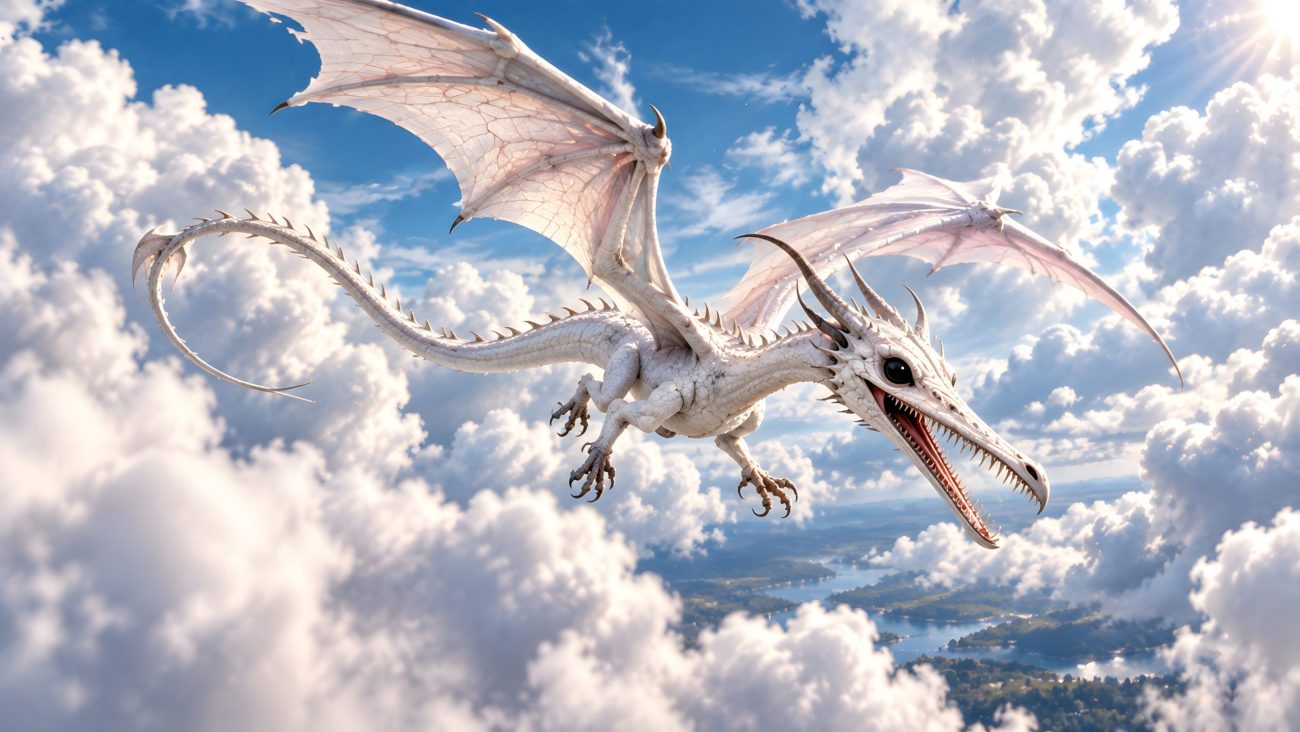
The Druk is the thunder dragon of Tibetan and Bhutanese mythology and the national symbol of Bhutan. It is associated with thunder, storms, and the sound of dragons roaring in the sky. The Druk is traditionally depicted as a dragon connected to clouds and lightning, and on the flag of Bhutan it is shown holding jewels that symbolize wealth.

According to tradition, the symbol of the Druk originated with the Drukpa Lineage in Tibet. When Tsangpa Gyare, the founder of the lineage, began building Ralung Monastery, a violent storm appeared. The thunder was interpreted as the roar of a dragon and seen as an auspicious omen. Because of this event, the monastery was named Drug-Ralung, meaning “Thunder Dragon.” The followers of the monastery became known as Drugpa, or “People of the Thunder Dragon.”

As the Drukpa Lineage spread into Bhutan, the thunder dragon became closely associated with the country itself. Bhutan came to be known as Druk Yul, meaning “Land of the Thunder Dragon,” while its rulers became known as Druk Gyalpo, or “Thunder Dragon Kings.” The Druk eventually became the central national symbol of Bhutan and remains closely tied to Bhutanese identity, religion, and kingship.


Sources

Wikipedia contributors. (n.d.). Druk. In Wikipedia, from https://en.wikipedia.org/wiki/Druk


Krinmo

Tradition / Region: Bhutan Mythology
Alternate Names: None Recorded
Category: Demon


The Myth

The Krinmo are female demons from Bhutanese folklore. In the folktale Saved by Acho Lala, they are portrayed as man-eating beings who trick humans, capture them, and cook them in boiling cauldrons. The story also describes a krinmo disguising herself as a beautiful girl in order to deceive her victim.

In the tale, a young girl is left alone after her mother flees from a land filled with demons. Soon after, the daughter of a krinmo approaches the girl disguised as a beautiful human and gains her trust. The next day the krinmo returns carrying a sack and tricks the girl into reaching down from an orange tree, allowing the demon to grab her and carry her away.

During the journey, the girl convinces the krinmo to rest. While the demon sleeps, the girl secretly fills the sack with stones and escapes. The krinmo later empties the sack into a boiling cauldron, expecting meat, only to discover stones instead.

The following day the krinmo captures the girl again and brings her to the demon family’s home to be eaten. The girl persuades the mother krinmo to spare her until she grows larger. While left alone with the krinmo daughter, she tricks her into exchanging clothes and taking her place on a swing suspended above a boiling cauldron. The girl cuts the rope, causing the krinmo to fall into the boiling water.

That evening the krinmo family unknowingly eats their own daughter. When they later discover the deception, they chase the escaping girl up a cypress tree. As a krinmo climbs after her, the girl calls to Acho Lala, the moon, for help. Acho Lala lowers an iron chain, allowing the girl to escape to the moon. One krinmo attempts to follow her using a woollen rope, but the rope snaps and the demon falls to her death. The story says the curve on human feet was caused when the krinmo’s claws tore flesh from the girl’s feet as she escaped.


Sources

Penjore, D. (2011). Dangphu Dingphu: A Collection of Bhutanese Folktales.


Krinpo

Tradition / Region: Bhutan Mythology
Alternate Names: None Recorded
Category: Demon


The Myth

The Krinpo are man-eating demons from Bhutanese folklore. In the folktale Saved by Acho Lala, they are portrayed as dangerous beings who hunt humans and devour them as food. The story describes them living together as a family and preparing human victims in boiling cauldrons.

In the tale, a young girl is abandoned by her mother, who flees from a land filled with krinpo demons. The girl is later captured and brought to the home of the demons, where the krinpo family intends to eat her. She manages to delay her death by convincing them she is too small to cook.

While the other demons are away, the girl tricks one of the demon children into taking her place above a boiling cauldron. The demon falls into the pot and dies. That evening, the krinpo family unknowingly eats their own child while believing they are eating the captured girl.

The girl escapes while the demons are distracted and flees into a cypress tree as the krinpo pursue her. She calls upon Acho Lala, the moon, for help. Acho Lala lowers an iron chain from the sky, allowing her to climb safely to the moon while the demons fail to follow her.


Sources

Penjore, D. (2011). Dangphu Dingphu: A Collection of Bhutanese Folktales.


Monmo Tashi Khyidren

Tradition / Region: Bhutan Mythology, Buddhist Tradition
Alternate Names: Tashi Kyidren, Tashi Chidren, Tashi Khyé’u Dren, Mönmo Tashi Chidren
Category: Tiger, Hero


The Myth

Monmo Tashi Khyidren was a legendary Bhutanese princess and one of the five principal consorts of Guru Padmasambhava, also known as Guru Rinpoche. She was the daughter of Sendha Gyalpo, the ruler of Bumthang, and became one of the most revered female figures in Bhutanese Buddhist tradition. She is especially associated with tigers, transformation, and spiritual devotion, and is remembered as the only Bhutanese woman among Guru Rinpoche’s principal consorts.

According to the tradition, Tashi Khyidren first encountered Yeshe Tsogyal while the great yogini was meditating in Bhutan. Deeply moved by her wisdom and spiritual power, the young princess became her disciple and devoted herself completely to Buddhist practice. Through her training under Yeshe Tsogyal and Guru Rinpoche, she became known for her spiritual accomplishments and dedication to spreading Vajrayana Buddhism throughout Bhutan.

The most famous legend surrounding Monmo Tashi Khyidren concerns the subjugation of powerful demonic forces troubling the land. Guru Rinpoche had come to Bhutan after being invited by her father, King Sendha Gyalpo, who was suffering from illness caused by an evil deity known as Shelging Karpo. To defeat these harmful spirits and establish Buddhist teachings, Guru Rinpoche assumed one of his wrathful manifestations, Guru Dorje Drolo. At the same time, Yeshe Tsogyal transformed into the fierce goddess Ekajati, while Monmo Tashi Khyidren transformed herself into a flying tigress.

Mounted upon the back of the tigress, Guru Dorje Drolo and Yeshe Tsogyal flew through the mountains from Sengye Dzong to the sacred cliffs of Paro Taktsang, the famous Tiger’s Nest monastery. There they meditated in hidden caves and subdued the dangerous spirits haunting the region. Because Monmo Tashi Khyidren became the tigress that carried Guru Rinpoche through the sky, she became forever associated with tigers in Bhutanese religious tradition.

Many Bhutanese legends claim her spiritual presence still remains near sacred monasteries connected to her life. At Sangchen Ogyen Tsuklag Monastery in Trongsa, founded by Monmo Tashi Khyidren herself, tigers are occasionally said to roam the mountains nearby. Some believe these sightings are signs that her blessings continue to protect the area, or even that she still exists spiritually in the form of a tigress watching over the land.

Monmo Tashi Khyidren is remembered not only as a mystical figure, but as a symbol of devotion, spiritual strength, and the important role women played in the spread of Buddhism across Bhutan and the Himalayas.


Sources

Khedrup Foundation contributors. (n.d.). Monmo Tashi Khyidren Initiative. In Khedrup Foundation, from https://khedrupfoundation.org/monmo-tashi-khyidren-initiative/

Rigpa Wiki contributors. (n.d.). Tashi Khyidren. In Rigpa Wiki, from https://www.rigpawiki.org/index.php?title=Tashi_Khyidren

Samye Institute contributors. (n.d.). Tashi Kyidren. In Samye Institute, from https://www.samyeinstitute.org/wiki/tashi-kyidren/