Kivihaldjad

Tradition / Region: Estonian Mythology
Alternative names: Stone Fairies, Stone Spirits, Stone Guardians
Category: Fairy


The Myth

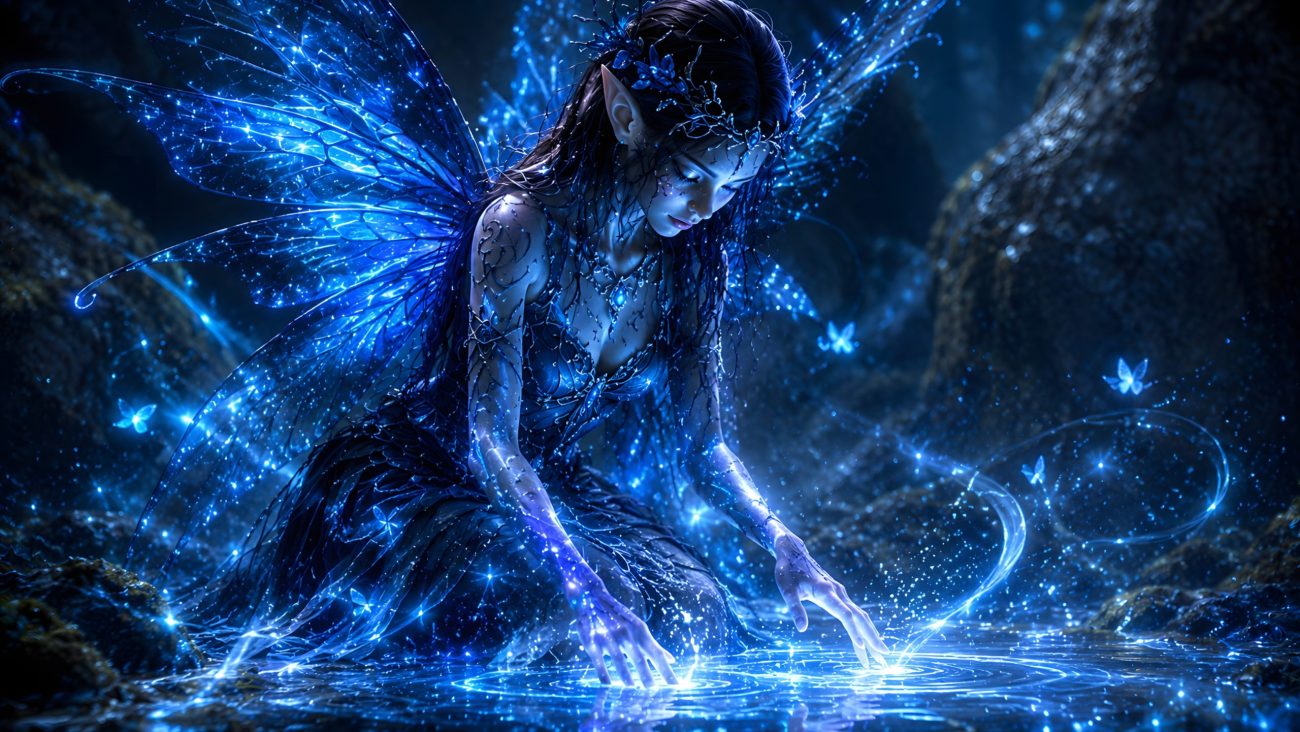
The Kivihaldjad are fairy-like spirits believed to dwell within sacred stones, especially ancient sacrificial stones used in traditional Estonian folk religion. These quiet guardians were thought to watch over the holy places where people left offerings and sought blessings.

Many sacrificial stones contained small natural hollows that collected rainwater. This water was regarded as sacred because it belonged to the Kivihaldjad. People believed it possessed healing powers and used it to treat illnesses, wash wounds, and bring good fortune.

The Kivihaldjad were closely connected to these stones and their sacred waters. Out of respect, people left offerings at the stones and avoided damaging or disturbing them, believing that honoring the spirits would bring health and protection, while disrespecting the sacred places could invite misfortune.


Sources

Wikipedia contributors. (n.d.). Kivihaldjad. In Vikipeedia. Retrieved June 29, 2026, from https://et.wikipedia.org/wiki/Kivihaldjad


Ehaema

Tradition / Region: Estonian Mythology
Alternative names: Mother Twilight, Twilight Mother
Category: Spirit, Fairy


The Myth

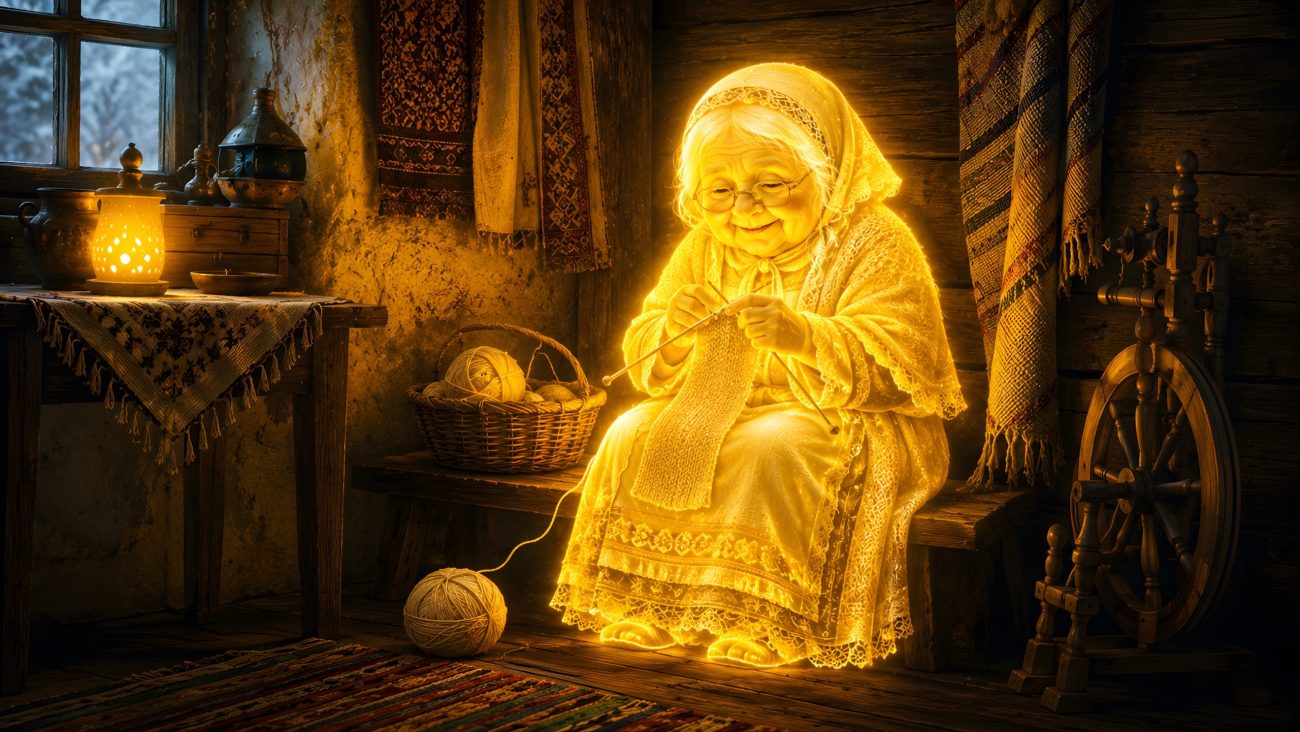
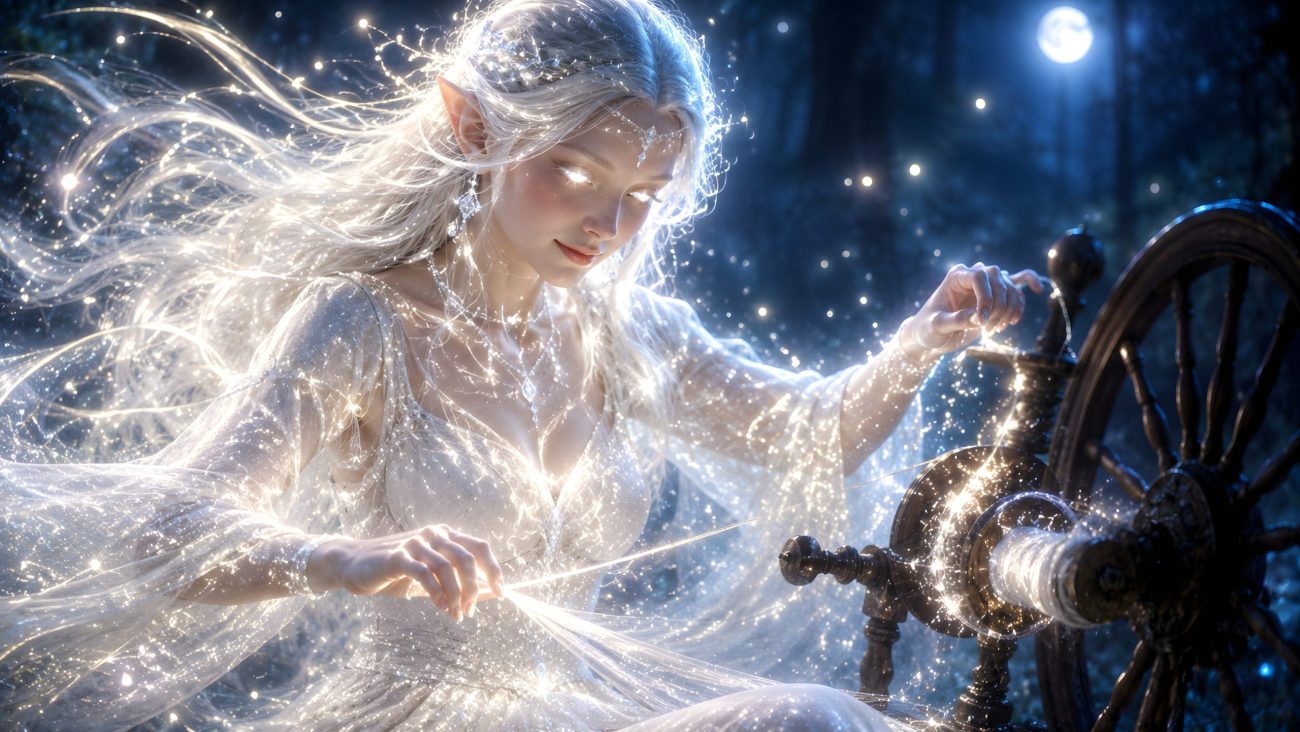
Ehaema, or Mother Twilight, is a mysterious spirit associated with evening twilight and the coming of night. She appears as a female elf or supernatural woman who visits homes after sunset, especially where spinning has been left unfinished.

Her most famous trait is spinning. If thread, flax, or a spinning wheel is left prepared overnight, Ehaema may enter the house and begin spinning through the night. People claimed to hear the spinning wheel turning on its own while everyone slept. Because of this, families carefully removed thread from the wheel before going to bed to prevent attracting her.

Although feared, Ehaema was not always hostile. Some traditions believed that anyone who managed to catch or witness her while she spun would gain exceptional skill and strength in spinning. She was therefore both a warning against laziness and a mysterious helper connected to household work.

In other traditions, Ehaema belonged to a group of nocturnal beings that included the Midnight Mother and the Midnight People. These spirits were believed to wander during the dangerous hours of twilight and midnight, making children cry, causing illness, or disturbing sleepers. Like many Estonian household spirits, Ehaema gradually became associated with ghosts and elves that silently visited homes during the night.

She remains one of Estonia’s most distinctive domestic spirits—a twilight woman who emerges with the fading light, quietly spinning abandoned flax while the household sleeps.


Sources

Valk, Ü. (2004). Night Wailer and Night Mother in Estonian and Finno-Ugric Folk Tradition. Sator, 5. Retrieved June 29, 2026, from https://www.folklore.ee/rl/pubte/ee/sator/sator5/night.pdf


Kratt

Tradition / Region: Estonian Mythology, Finnish Mythology
Alternative names: Pisuhänd, Puuk, Tulihänd, Vedaja
Category: Spirit, Object


The Myth

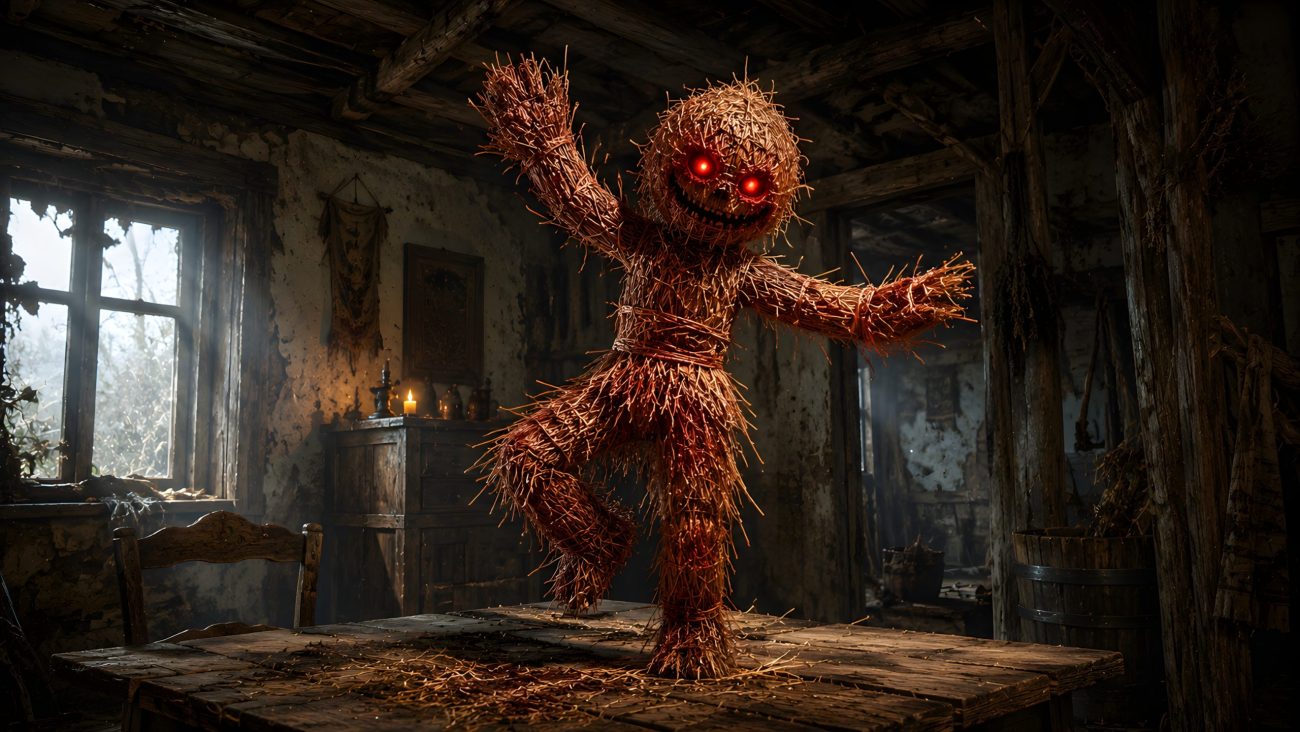
The Kratt is one of Estonia’s most famous magical beings—a supernatural servant created by humans to steal wealth and carry out endless work. It was usually built from hay, old tools, sticks, household objects, or other scraps, then brought to life after its creator made a pact with the Devil by giving three drops of blood.

Once animated, the Kratt obeyed every command of its master. Its favorite task was stealing grain, livestock, butter, money, and valuables from neighboring farms and secretly delivering them to its owner. It could travel through the night sky, often appearing as a blazing streak of fire as it flew between farms carrying stolen treasure.

The Kratt could never be left without work. If it had nothing to do, it became dangerous and could turn against its own master. To destroy an unwanted Kratt, people assigned it an impossible task—such as weaving a rope from sand or building a ladder out of bread. Unable to complete the impossible command, the hay-built creature would labor endlessly until it finally burst into flames and burned itself to ashes.

People also believed that blazing fireballs or bright meteors crossing the night sky were Kratts attempting to complete impossible tasks before burning away.

A closely related belief existed in Finland. There, Kratti or Aarni was the supernatural guardian of buried treasure. Hidden riches were protected by a spirit that revealed their location only to those who made the proper offerings. On Midsummer Night, mysterious flames known as Aarni Fire were said to burn above hidden treasure pits, marking where great wealth lay beneath the earth. Those who approached correctly could claim the treasure, while the greedy or disrespectful would see it disappear again.

Whether as a tireless servant stealing wealth for its master or as the guardian of hidden riches beneath the earth, the Kratt became one of the most enduring magical beings of Estonian and Finnish folklore.


Sources

Wikipedia contributors. (n.d.). Kratt. In Wikipedia. Retrieved June 29, 2026, from https://en.wikipedia.org/wiki/Kratt


Majahaldjas

Tradition / Region: Estonian Mythology
Alternative names: House Spirit, Home Spirit, Farm Spirit, Building Spirit, House Guardian, House Ghost, Viruskundra (regional form)
Category: House Dweller


The Myth

Majahaldjas is the protective spirit that dwells within every home. It may live inside houses, barns, mills, threshing houses, churches, and other buildings, quietly watching over the people who live there. The spirit cares for the household, protects its inhabitants, and helps maintain peace and prosperity.

It rarely reveals itself. When it does appear, it usually takes the form of an elderly man or woman, often believed to be a former resident of the house who continues to guard it after death. It is also said to appear around the time of a household member’s death, while many people claimed to see it only in dreams.

The Majahaldjas is kind only to good people. Because it knows every corner of the home, it can warn the family of danger, offer advice during difficult times, and quietly help with household affairs. However, it cannot tolerate constant quarrels, insults, or a household filled with anger. If driven away by fighting or mistreatment, it abandons the home, taking its protection with it and leaving the family vulnerable to misfortune.

Families traditionally sought to keep the spirit content by making small offerings. Food was left on shelves or near the hearth, while drops of beer or homemade ale were poured into the corners of the house as gifts for the unseen guardian. These offerings were believed to restore harmony if the spirit had become offended.

In southern Estonia, especially in Võru and Setomaa, the house spirit is known as Viruskundra. It was believed to live beneath the stove, sometimes above it or on the sleeping platform. Although rarely seen, its voice was often heard, and children were warned to respect it. At Christmas, food was left for Viruskundra, and when a child’s baby tooth fell out, it was thrown onto the stove with the words: “Viruskundra, take this bone tooth and give me an iron tooth.” The spirit was also believed to reveal treasures hidden beneath the house to families it favored.


Sources

Wikipedia contributors. (n.d.). Majahaldjad. In Vikipeedia. Retrieved June 29, 2026, from https://et.wikipedia.org/wiki/Majahaldjad

Pakasetaat

Tradition / Region: Estonian Mythology
Alternative names: Frost Father / Old Man Frost
Category: Spirit


The Myth

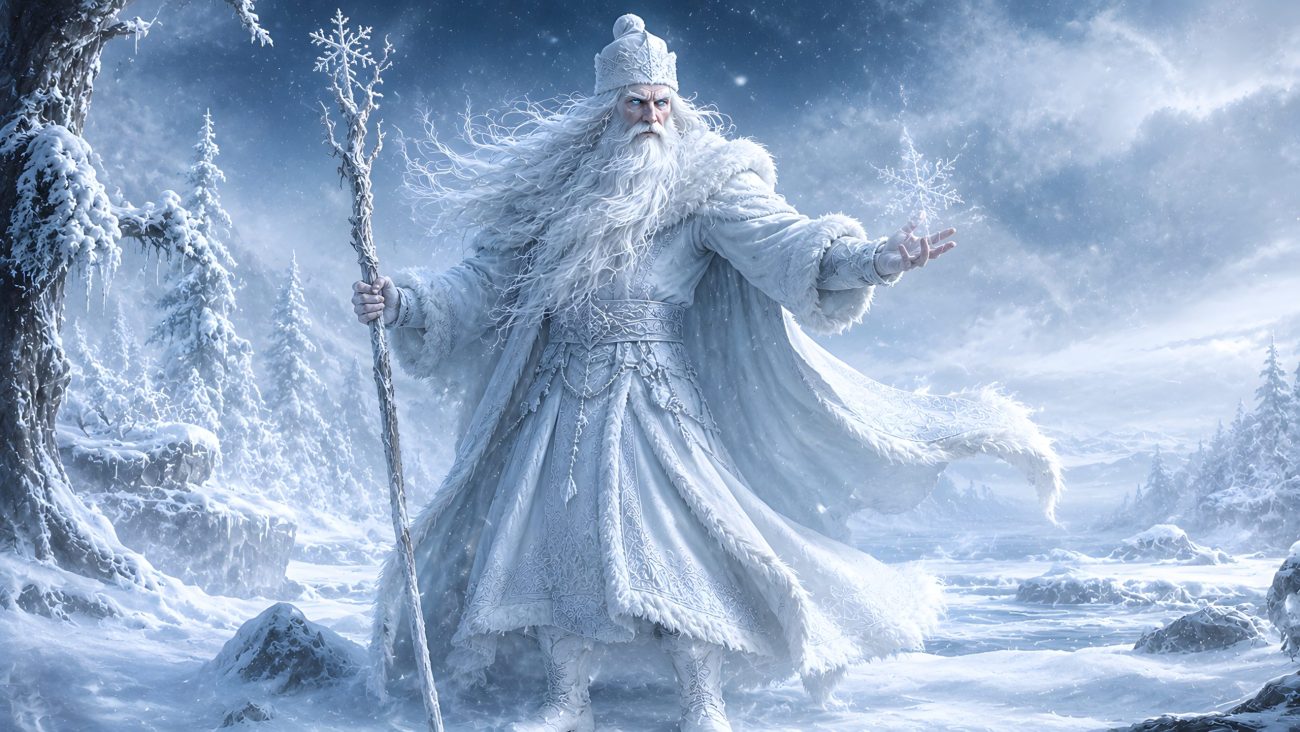
Pakasetaat is the ancient spirit of frost and winter, an old supernatural being who rules over cold, snow, and ice. He is described as an elderly man dressed entirely in white, with long white hair, a flowing white beard, a white hat, a white cloak, white stockings, and white shoes. His appearance is as pale as the frozen world he commands.

He has three sons who each govern a different stage of the cold season. The youngest is Härm, who brings the first light frosts and covers grass and grain with sparkling white crystals during the night. The middle son is Kahu, who arrives in autumn and seals ponds and rivers with ice. The eldest, Külm, rules the heart of winter, traveling both day and night while bringing the fiercest cold.

During summer, Pakasetaat and his sons retreat to the frozen northern lands, where ice continually cracks and trees split from the cold.

When Pakasetaat himself walks across the land, his frozen beard hangs with icicles. Snow crunches beneath his feet, fence posts split apart before him, and birds fall dead behind his passing. His freezing breath attacks both people and animals without mercy, forcing everyone who can to seek shelter indoors.

Although feared for his destructive power, Pakasetaat is not always cruel. Sometimes he compensates those harmed by the frost by giving them two magical bags: one that produces warmth and another that brings cold.

The Frost Father does not always reveal his true appearance. At times he disguises himself as a small tit bird, wandering unnoticed while spreading frost across the countryside.

Eventually Pakasetaat tires of his work and returns to the distant frozen land of Turjamaa to rest. With his departure, the grip of winter loosens, the bitter cold fades, and people can once again breathe freely.


Sources

Wikipedia contributors. (n.d.). Pakane (mütoloogia). In Vikipeedia. Retrieved June 29, 2026, from https://et.wikipedia.org/wiki/Pakane_(m%C3%BCtoloogia)


Charybdis

Tradition / Region: Greek Mythology
Alternative names: Kharybdis
Category: Sea Dweller


The Myth

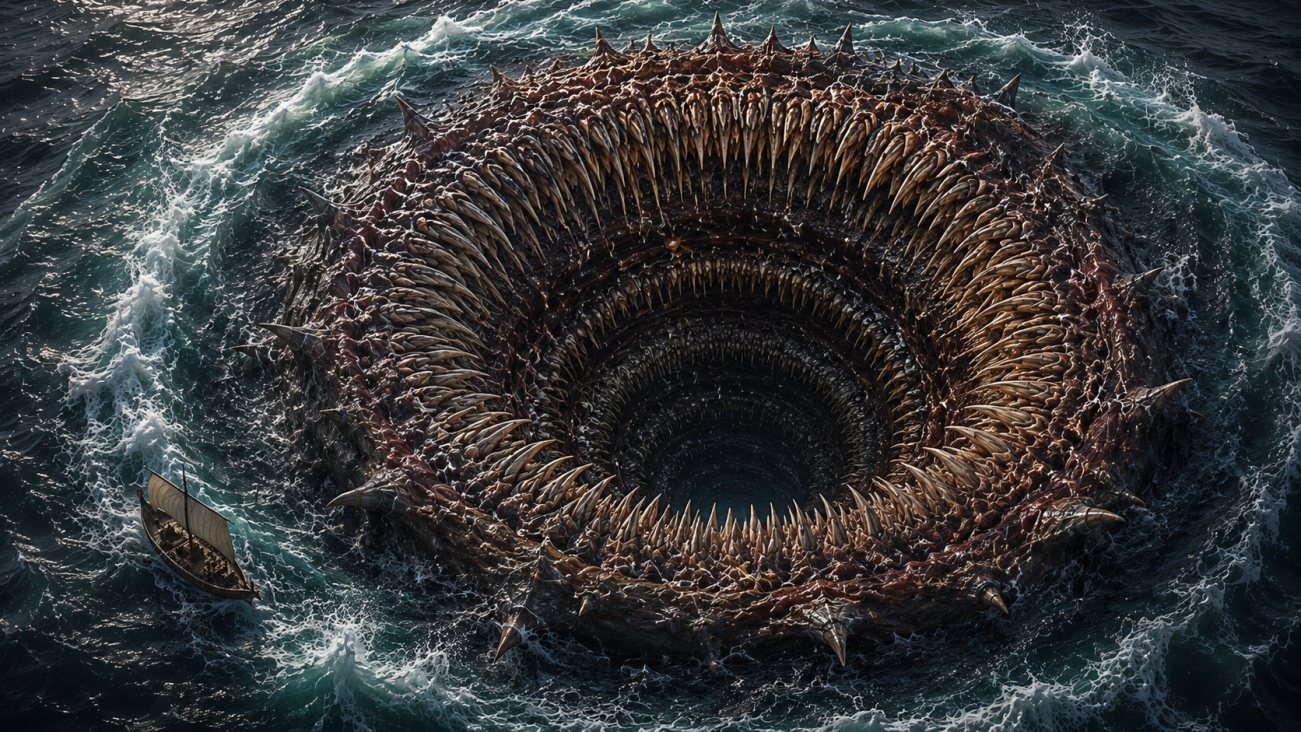
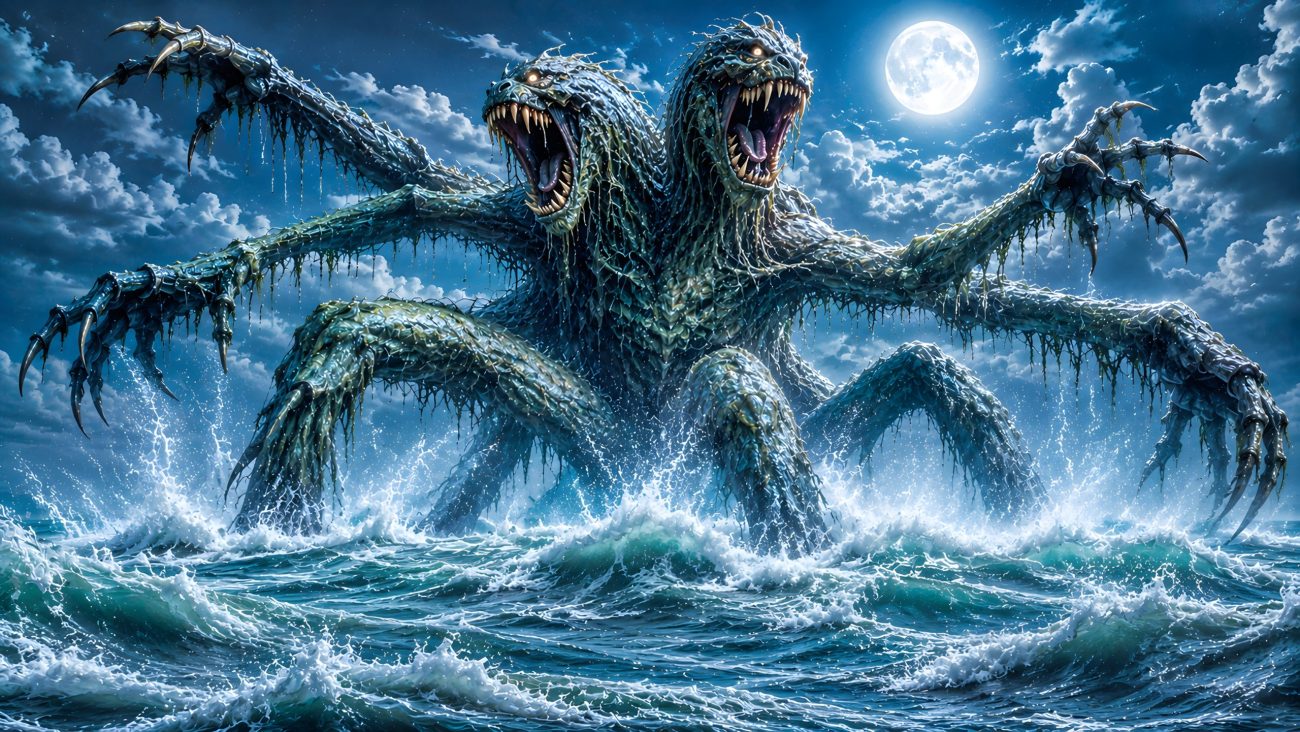
Charybdis is one of the most feared monsters of Greek mythology, dwelling beneath the waters of the narrow strait between Sicily and Italy. Rather than roaming the sea like an ordinary beast, she exists as a colossal living whirlpool whose enormous mouth opens beneath the waves. Three times every day she drinks in the sea itself, swallowing vast quantities of water along with anything caught within it. Ships, sailors, and sea creatures are dragged into her gaping maw before the waters are violently expelled again, creating terrifying whirlpools capable of destroying entire fleets.

Several traditions explain her origin. Some describe Charybdis as a primordial daughter of the sea and the earth, born from the ancient powers of the ocean. A later and more famous legend tells that she was once a woman, the daughter of Poseidon and Gaia. During a conflict involving Heracles, she stole the hero’s sacred cattle out of greed and gluttony. Zeus punished her for her insatiable appetite by striking her with a thunderbolt and hurling her into the sea. There she was transformed into a monstrous being cursed with endless hunger, forever swallowing and vomiting the waters of the ocean.

Charybdis is most famous for her role in Homer’s Odyssey. When Odysseus journeyed home after the Trojan War, the sorceress Circe warned him that he would have to pass through a narrow channel guarded by two horrors. On one side waited the six-headed monster Scylla, who snatched sailors directly from the decks of passing ships. On the other lurked Charybdis, whose whirlpool was so powerful that not even Poseidon himself could save a ship caught when she swallowed the sea. Circe advised Odysseus to sail closer to Scylla, for losing a few companions was better than having his entire crew consumed by Charybdis.

Odysseus followed her advice and escaped complete destruction, though Scylla seized six of his men. Later, however, after Zeus destroyed his ship for the crimes of his companions, Odysseus alone drifted helplessly back toward Charybdis on pieces of the wreck. Just as the monster began swallowing the sea once more, he leapt upward and clung to the branches of a wild fig tree that grew from the cliff above her whirlpool. Hanging there for hours, he waited until Charybdis spat the sea and the shattered timbers back onto the surface. Only then did he release his grip, fall onto the floating wreckage, and paddle away before the monster could swallow the sea again.

Ancient Greek writers described the sound of Charybdis as a deafening roar that echoed across the strait as the sea disappeared into her mouth. When she drew in the water, the seabed itself could briefly be seen before the ocean rushed back with tremendous force. Sailors considered the passage between Charybdis and Scylla one of the most dangerous places in the world, and the expression “between Scylla and Charybdis” became a proverb for being trapped between two equally deadly dangers.

Unlike many monsters of Greek mythology, Charybdis is not remembered for fighting heroes with claws or weapons. She is the sea itself turned into a ravenous creature—an endless mouth beneath the waves whose hunger never ceases, swallowing everything unfortunate enough to pass within her reach.


Sources

Atsma, A. J. (n.d.). Kharybdis (Charybdis) – Greek whirlpool monster. In Theoi Greek Mythology. Retrieved June 29, 2026, from https://www.theoi.com/Pontios/Kharybdis.html


Jūras Ķēmi

Tradition / Region: Latvian Mythology
Alternative names: Sea Monsters, Monsters of the Northern Sea
Category: Sea Dweller


The Myth

The Jūras Ķēmi are monstrous beings said to dwell in the storm-filled northern seas. They appear during violent winds, thick fog, and freezing darkness, surrounding ships and leading sailors astray.

When the hero Lāčplēsis sailed across the White Sea in search of Laimdota, his ship was driven far from its course by terrible storms. The crew believed that evil powers had surrounded them, for sea monsters tormented the ship day and night, preventing them from finding their way through the endless mist.

The monsters are never fully described, making them even more mysterious. They are portrayed as supernatural horrors that haunt the sea itself, appearing alongside blizzards, hail, darkness, and unnatural weather. Only when the radiant Northern Maiden (Ziemeļmeita) appeared to guide the lost sailors did the ship finally escape their reach.

The Jūras Ķēmi remain shadowy creatures of the unknown ocean—malevolent beings that embody the dangers of the northern sea, attacking lost ships and luring travelers ever deeper into its deadly waters.


Sources

Pumpurs, A. (1888). Lāčplēsis. J. Dēliņa grāmatu spiestuve.


Enkirigumo

Tradition / Region: Japanese Mythology
Alternative names: Relationship-Severing Spider
Category: Spider


The Myth

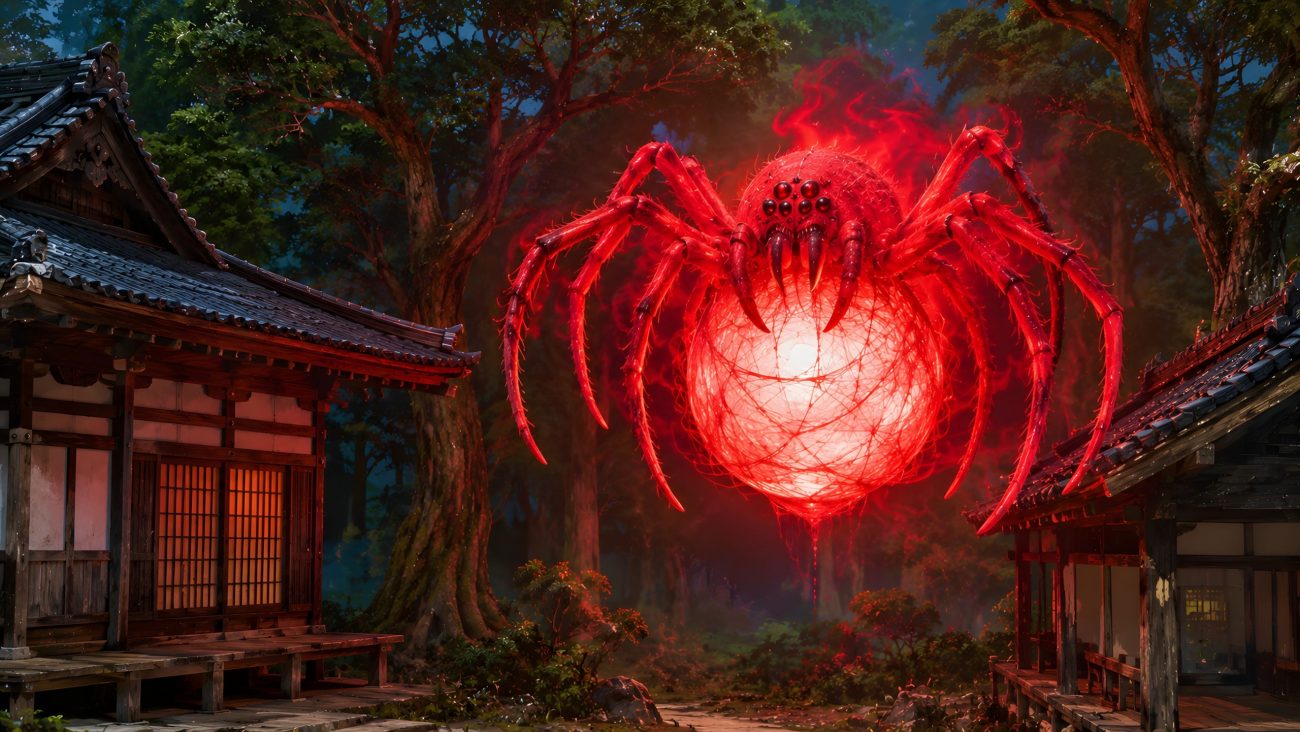
The Enkirigumo is a giant spider yōkai associated with the forests at the foot of Mount Katsuragi in Nara Prefecture. It was believed to descend from the ancient giant spider of Katsuragi and lived for generations within a woodland known as Spider Forest.

At night, the Enkirigumo did not always appear in its true form. Instead, it transformed into a glowing orb the size of a lantern, drifting silently through the trees as it searched the forest.

During the Meiji period, the forest was cut down to provide timber for the reconstruction of Honganji Temple, destroying the spider’s home. Homeless, the Enkirigumo began wandering into the nearby village every night, floating through the darkness around houses that still had large trees.

The villagers became terrified of the mysterious glowing apparition and stopped leaving their homes after sunset. Young couples could no longer meet secretly beneath the cover of night, and romances quietly came to an end.

Because its nightly appearances unintentionally separated lovers and prevented relationships from forming, the creature became known as the Enkirigumo—the Spider That Severs Relationships.


Sources

TYZ. (n.d.). Enkirigumo [縁切蜘蛛]. In 新版TYZ 妖怪図鑑. Retrieved June 28, 2026, from https://tyz-yokai.blog.jp/archives/1010654031.html


Ushioni

Tradition / Region: Japanese Mythology
Alternative names: Gyūki, Goki
Category: Spider, Cow


The Myth

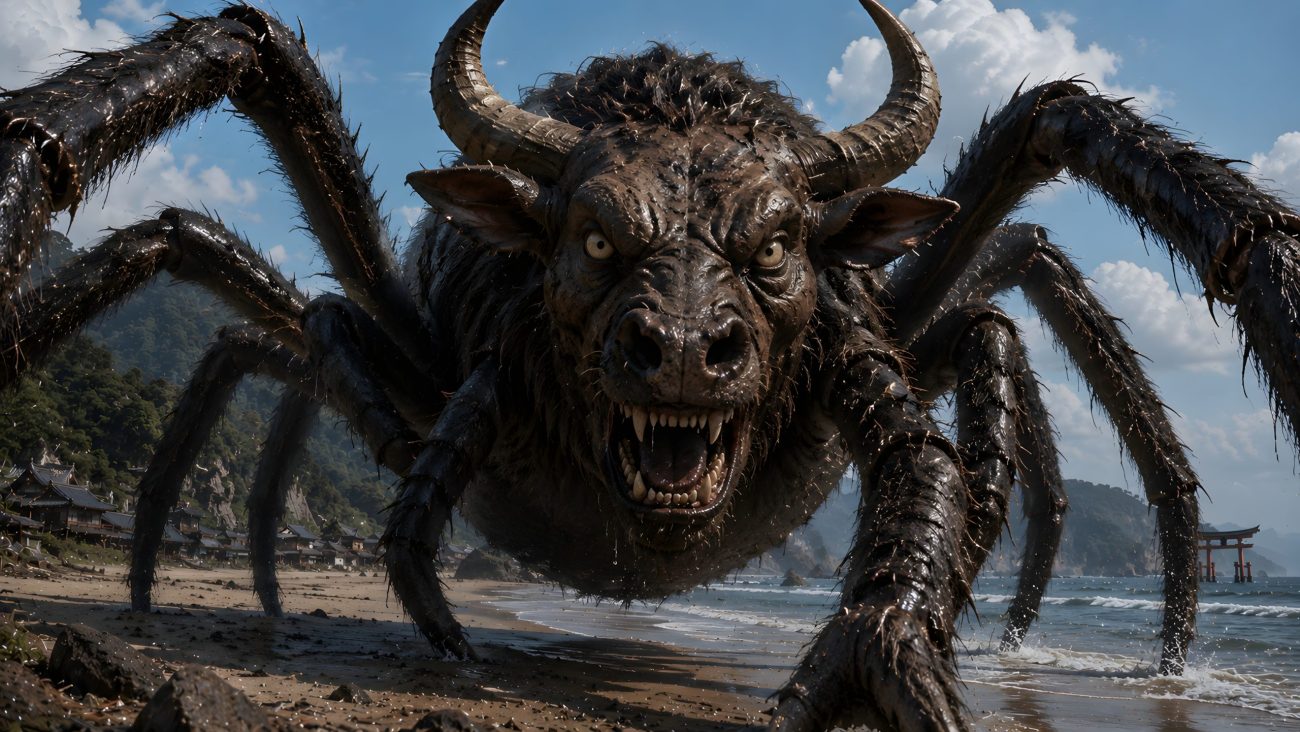
The Ushioni is a terrifying yōkai that usually appears as a monstrous ox-like creature, although its appearance varies greatly between regions. Some traditions describe it as a giant ox, while others portray it with the face of an oni and the body of a huge spider, or as a two-legged beast with wing-like membranes. It is a violent predator feared for attacking both humans and animals.

The Ushioni is most commonly associated with dangerous places near water, including deep pools, rivers, waterfalls, marshes, and the seashore. Numerous locations throughout Japan bear names such as Ushioni Pool or Ushioni Waterfall, reflecting the belief that these monsters once haunted them.

Along the coasts of western Japan, the Ushioni often works together with other sea yōkai such as the Nure-onna and Iso-onna. It may first appear as a beautiful woman carrying a baby and ask a traveler to hold the child. As soon as the victim accepts, the infant becomes impossibly heavy, making escape impossible before the Ushioni reveals itself and attacks.

In the mountains of the Kumano region, the Ushioni was believed to kill without even touching its victims. It simply stared relentlessly at anyone it encountered until they gradually weakened, collapsed, and died. This mysterious affliction was known as having one’s shadow swallowed. People believed the only protection was to recite the strange charm: “Stones flow, leaves sink, cows neigh, and horses roar.”

Another tradition from Izumo says that during long periods of rain, a mysterious white light could cling to a person’s body. This phenomenon was called meeting a Ushioni and was believed to disappear only when exposed to fire.

One famous legend tells of an Ushioni that terrorized the region around Negoro-ji Temple in Kagawa Prefecture, killing people and livestock until it was finally slain by the master archer Yamada Kurōdo Takakiyo. The temple is said to preserve the monster’s horns as proof of its existence.

Across Japan, the Ushioni is remembered as one of the country’s most feared monsters—a savage ox demon that haunts lonely waters, deceives travelers, and brings death to anyone unfortunate enough to meet its gaze.


Sources

TYZ. (n.d.). Ushi Oni [牛鬼]. In 新版TYZ 妖怪図鑑. Retrieved June 28, 2026, from https://tyz-yokai.blog.jp/archives/1010653546.html


Spider Demons

Tradition / Region: Chinese Mythology
Alternative names: Seven Spider Demons, Spider Maidens, Pansi Cave Demons
Category: Spider


The Myth

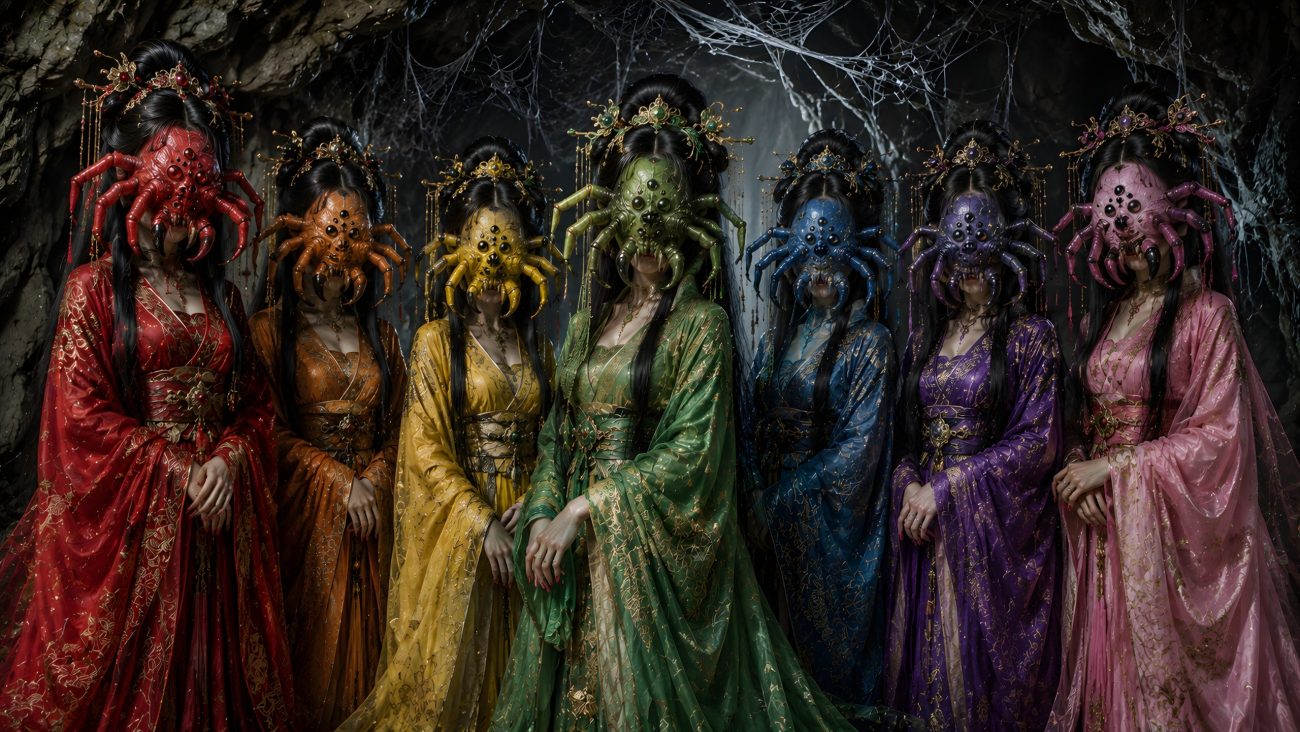
The Spider Demons are seven powerful spider spirits from Journey to the West. Their true forms are enormous spiders said to be as large as buckets, but they usually appear as extraordinarily beautiful young women to deceive travelers.

The seven sisters lived in Pansi Cave beneath Pansi Ridge. Their greatest weapon was the silk they produced from their navels. The strands were incredibly thick and strong, allowing them to instantly weave vast webs capable of trapping even powerful supernatural beings.

During Tang Sanzang’s pilgrimage, the monk stopped nearby to beg for food and encountered the seven beautiful women. They invited him inside, but the meal they prepared was made from human flesh. Realizing they were demons, Tang Sanzang tried to flee, but the sisters bound him with ropes and planned to steam and eat him after finishing their bath in the nearby Cleansing Spring.

Sun Wukong discovered their plot after questioning the local earth god. Finding the demons bathing, he transformed into an eagle and stole their clothing to delay them while rescuing Tang Sanzang. Zhu Bajie later attempted to kill the bathing demons, but they escaped by shooting silk from their navels and trapping him inside enormous webs.

The seven sisters fled to the Hundred-Eyed Demon Lord, their senior brother, who sheltered them at the Yellow Flower Temple. Together they fought Sun Wukong, again covering the battlefield with vast sheets of spider silk. Wukong eventually learned that they were spider spirits and armed his monkey followers with double-pronged forks to cut through the webs. Once the silk was destroyed, the Spider Demons were forced to reveal their true forms as gigantic spiders. Sun Wukong killed all seven before defeating the Hundred-Eyed Demon Lord.

Although famed for their beauty, the Spider Demons were not powerful martial fighters. Their greatest strengths were shapeshifting, deception, and their supernatural spider silk, which could instantly entangle enemies and cover entire buildings in enormous webs.


Sources

Wikipedia contributors. (n.d.). 蜘蛛精. In 維基百科,自由的百科全書. Retrieved June 28, 2026, from https://zh.wikipedia.org/wiki/%E8%9C%98%E8%9B%9B%E7%B2%BE