Tradition: Austrian Mythology
Alternative Names: Norgg, Norgge, Nörgg, Nörggele
Category: House dweller
The Myth
Norggens are supernatural household helpers in Tyrolean folklore. They are generally helpful spirits, but their temperament can change dramatically when they are in a bad mood. Normally, they assist with domestic and agricultural work, yet when angered or mischievous, they become hot-tempered and capricious, causing trouble for the people they live among.
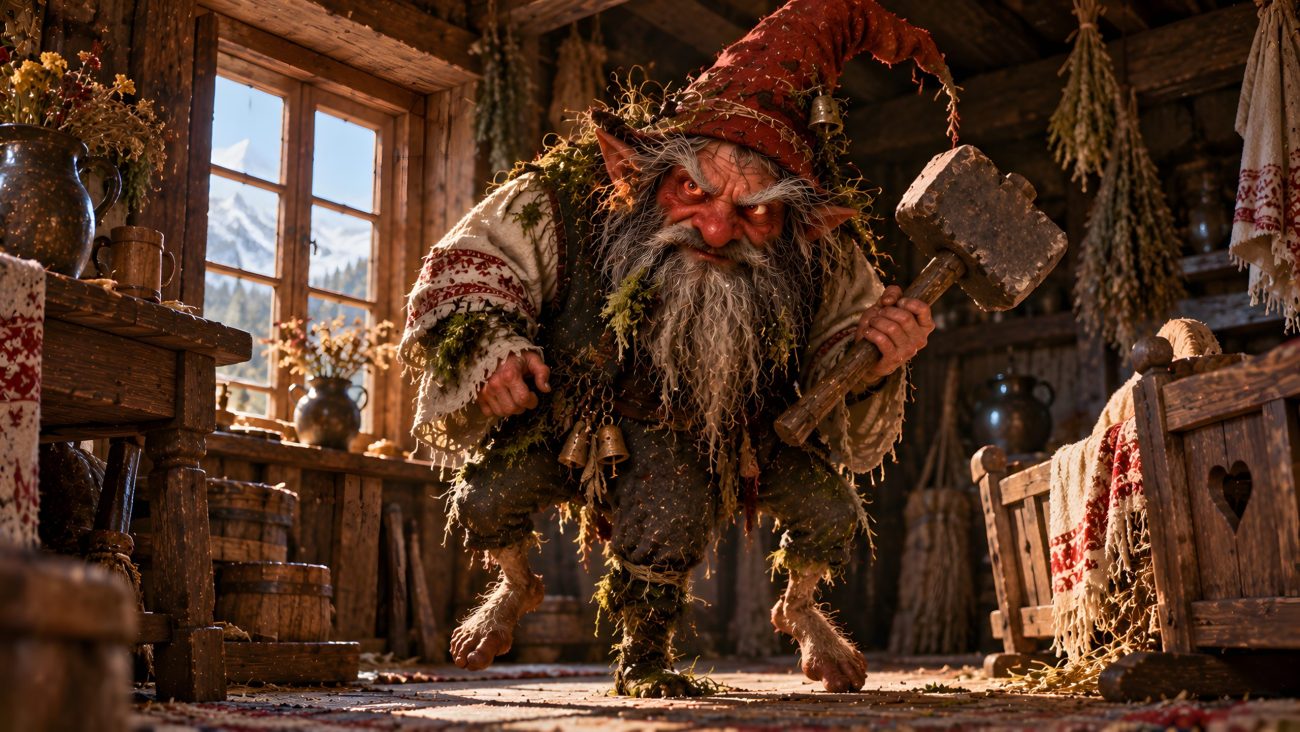
When a Norggen becomes troublesome, it may appear at night with a red face, three constantly trembling legs, two bare feet, bloodshot eyes, long beards, and bushy eyebrows. It can be found decorating clothing with strands of moss, wearing pointed hats, and carrying a large hammer. Norggens most often appear at night between the first quarter of the moon and the full moon, and they frequently dwell in forests, mountain caves, or even people’s homes.
One legend tells of a poor woman who asked a Norggen for shelter. He allowed her to stay in his house until January and rewarded her kindness generously. The baby never fell out of its cradle, the cow stopped kicking the milk pail, the potatoes did not rot, and the hens began laying eggs long before the first thaw. This story demonstrates the Norggen’s ability to bring good fortune and protect a household when treated kindly.
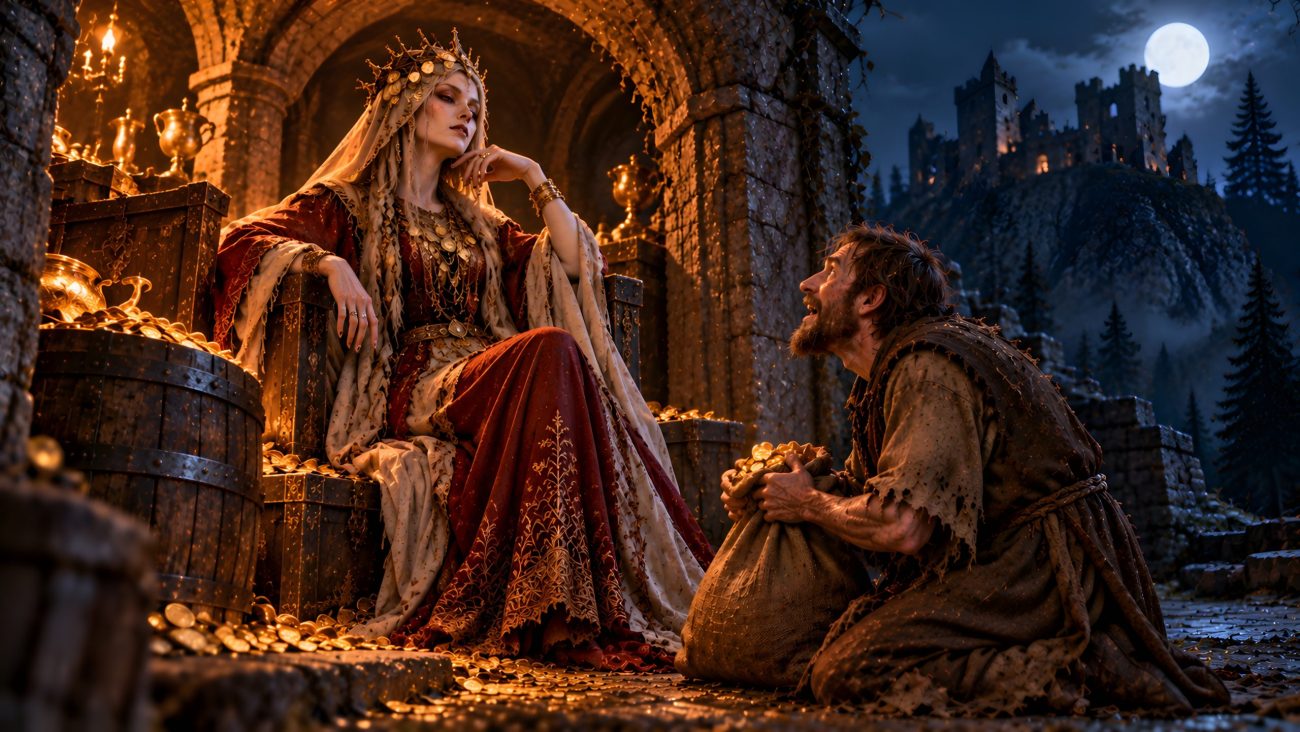
Another tale concerns a wealthy merchant who trespassed on a Norggen’s property. The spirit warned him that his wife would belong to him if she failed to guess his name three times in three months. The merchant returned home and told his wife everything. When the time came, they visited the forest to discover the spirit’s name. After several failed guesses, the merchant’s wife followed a path in the snow to a tiny house, where she saw a Norggen humming to himself. She heard him reveal that his name was Pursintziegel.
The next morning, the merchant’s wife guessed the name correctly. The Norggen turned green with rage, cursed, and vanished. He was never seen in those parts again. This legend portrays the Norggens as powerful and potentially dangerous spirits who can be outwitted through cleverness, but who do not tolerate trespassing or disrespect.
Sources
“Norggeny.” New Bestiary (Bestiary.us). https://www.bestiary.us/norggeny