Tsuchigumo

Tradition / Region: Japanese Mythology
Alternative names: Yamagumo, Ōgumo, Yatsukahagi
Category: Spider


The Myth

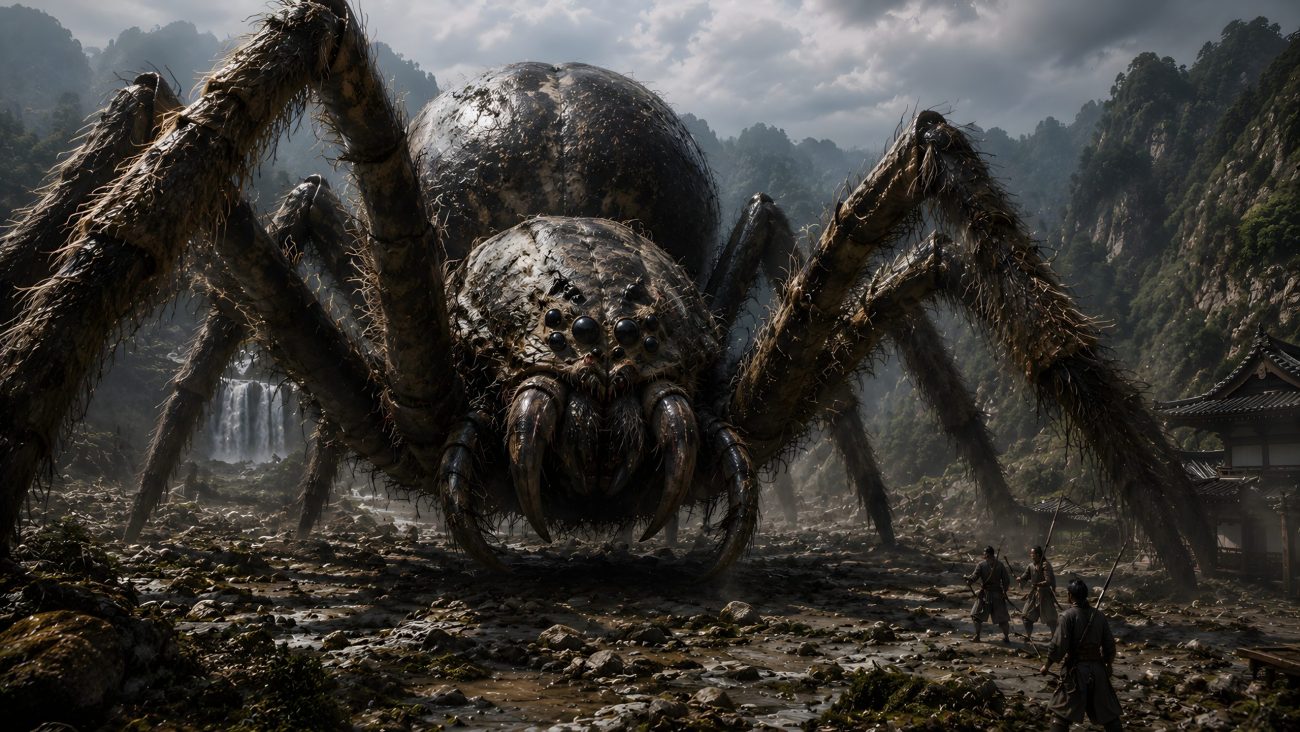
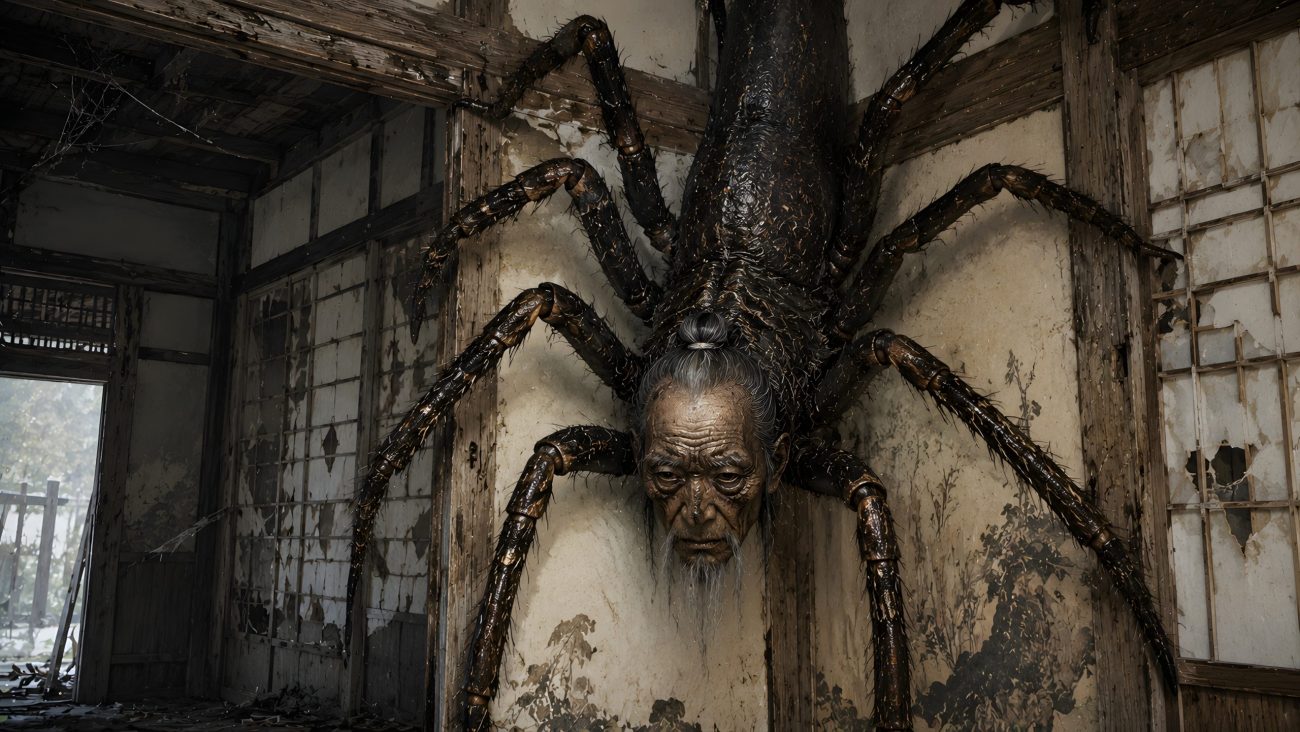
The Tsuchigumo is a colossal spider yōkai that dwells in mountains, caves, abandoned mansions, and underground lairs. It is a master of illusion, capable of taking human form, disguising itself as monks, women, or other beings to lure victims into its webs before revealing its monstrous true form.

Although later folklore depicts it as a supernatural spider, the name originally referred to rebellious clans that resisted the early Yamato court. During the medieval period these figures gradually transformed into the giant spider monsters of Japanese legend.

The most famous legend tells of the warrior Minamoto no Yorimitsu, who was suffering from a mysterious illness when a towering monk entered his room at night and attempted to bind him with ropes. Yorimitsu slashed the stranger with his sword, causing the figure to flee while leaving behind a trail of blood. Following the trail with his retainers, he discovered a gigantic spider hidden inside a cave and killed it. His sword thereafter became known as Spider-Cutter.

Another famous version tells how Yorimitsu and his companion entered a ruined mansion after following a floating human skull. There they were attacked by strange monsters before a beautiful woman appeared to deceive them. When Yorimitsu wounded her, she fled, leaving a trail of white blood that led into a mountain cave. Inside they found the Tsuchigumo in its true form—a gigantic spider said to be nearly sixty meters long. After a fierce battle they slew the monster, and when its swollen body was cut open, nearly two thousand human skulls spilled from its abdomen, along with countless smaller spiders.

The Tsuchigumo became one of Japan’s most famous spider yōkai, remembered as a monstrous cave-dwelling predator whose greatest weapon was deception, using illusions and shapeshifting before trapping its victims in its immense webs.


Sources

Wikipedia contributors. (n.d.). Tsuchigumo. In Wikipedia. Retrieved June 28, 2026, from https://en.wikipedia.org/wiki/Tsuchigumo
Spider Son

Tradition / Region: Japanese Mythology
Alternative names: Spider Son
Category: Spider


The Myth

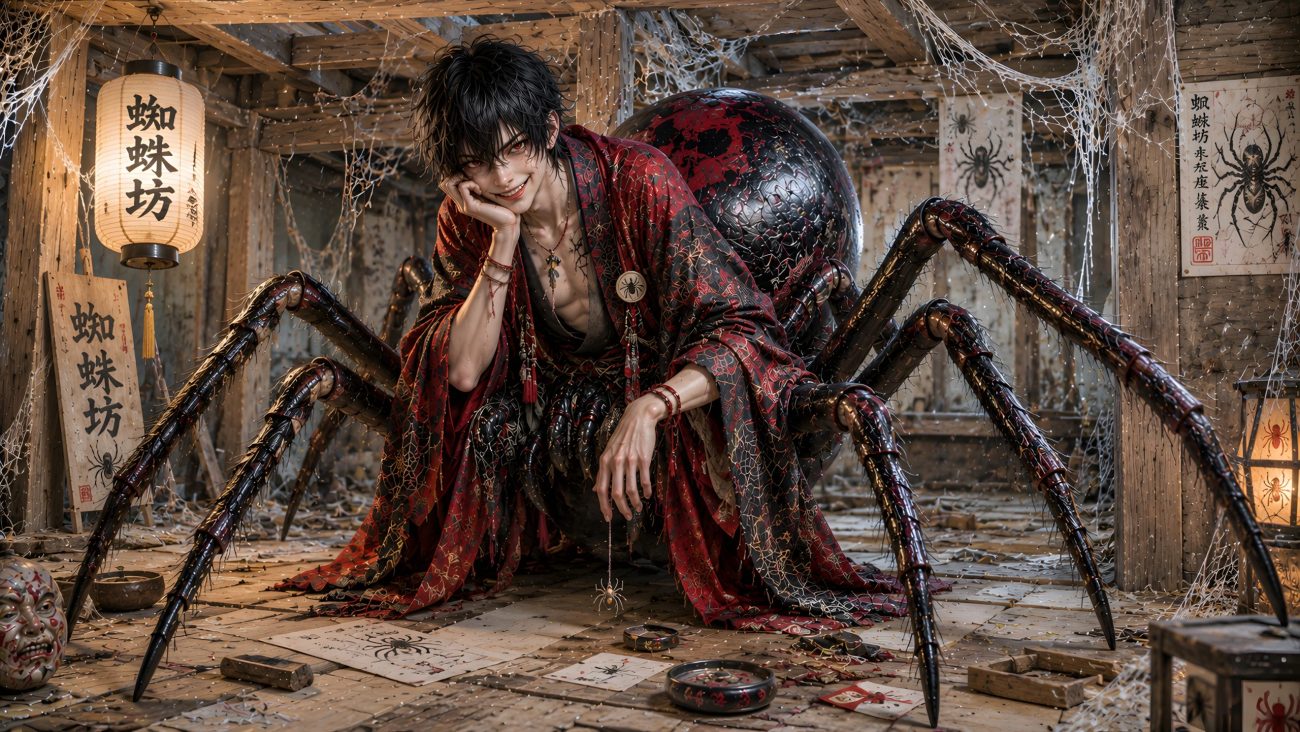
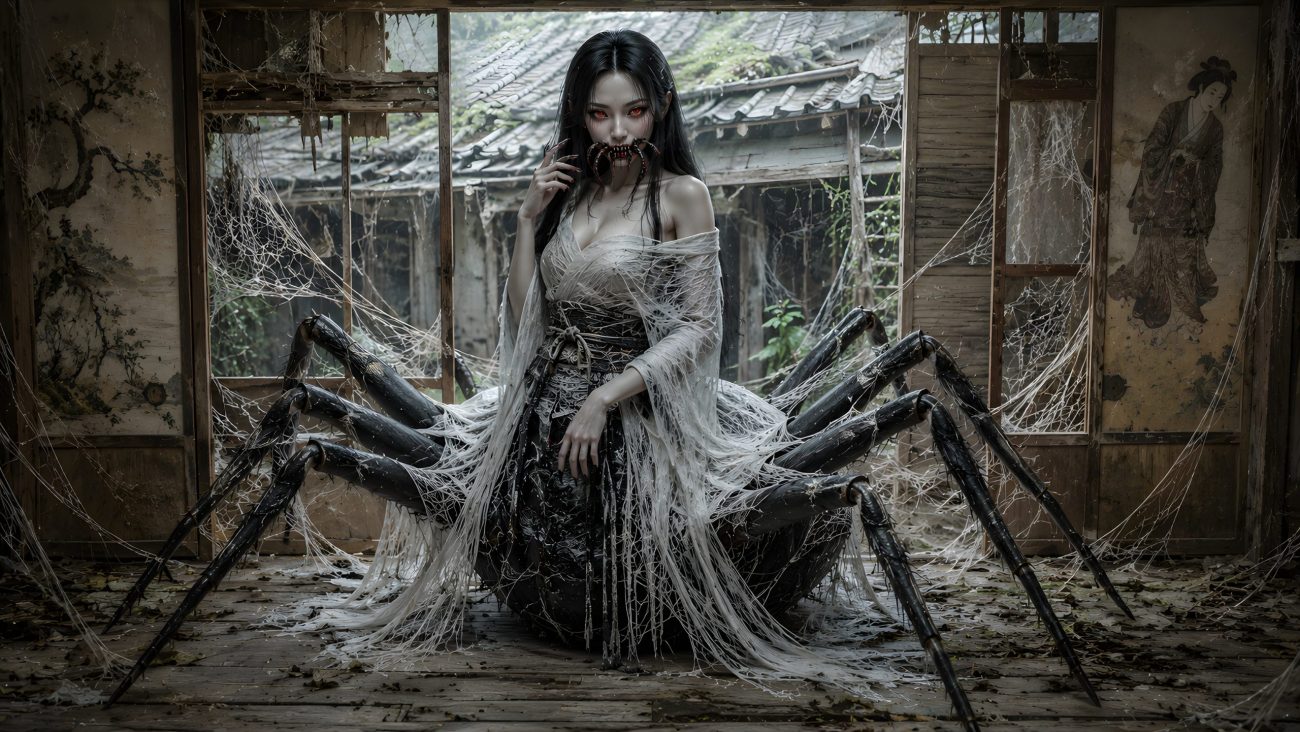
The Spider Son was a half-human, half-spider child born from the union of a mountain spider spirit and a human woman. Although monstrous in appearance, he became famous for his wisdom, craftsmanship, and supernatural knowledge.

The story tells of a poor widower and his thirteen-year-old daughter, who survived by gathering wild greens in the mountains. One spring she met a handsome young man who offered to buy everything she collected each day. After many meetings, he revealed his true identity, transforming into a gigantic spider. Before disappearing into the mountains, he told her she was carrying his child and asked her to raise it with care.

In time she gave birth to a son who was human from the waist up but possessed the body of a spider below. Rather than abandoning him, the family lovingly accepted him and raised him as their own.

Ashamed of his appearance, the Spider Son asked his grandfather to cut a hole in the floor so he could remain hidden beneath the house while only his upper body emerged. From there he spent his days carving wooden toys, statues of gods and Buddhas, and other beautiful works. The children of the village loved his creations, and grateful families rewarded the poor household with rice and money.

As he grew older, the Spider Son became known for his extraordinary wisdom. When the daughter of a wealthy man fell gravely ill, he declared that she could be cured simply by drinking water from a hidden spring at the foot of a nearby mountain. Although few believed him, the spring was found exactly where he described, and the girl recovered immediately after drinking its water.

From then on, people traveled from far away seeking the Spider Son’s advice and predictions, which rarely proved false. His fame spread throughout the region, bringing prosperity to the once-impoverished family, while the mysterious child of a mountain spider came to be remembered as a miraculous being rather than a monster.


Sources

TYZ. (n.d.). Spider Son [蜘蛛の子]. In 新版TYZ 妖怪図鑑. Retrieved June 28, 2026, from https://tyz-yokai.blog.jp/archives/1074146146.html


Ashidakagumo-Henge

Tradition / Region: Japanese Mythology
Alternative names: Ashidakagumo-Henge
Category: Spider


The Myth

The Ashidakagumo-Henge is an aged giant spider that gains the power to transform into a human. Unlike the seductive Jorōgumo, it often appears as an eerie elderly woman whose unnatural presence brings fear and madness.

One tale tells of a man from a mountain village who went out for an evening walk beneath the moon. High in the fork of a great chestnut tree he saw an old woman with tangled hair, blackened teeth, and a disturbing smile staring directly at him. Terrified, he hurried home.

After returning, he fell into an uneasy sleep. The old woman repeatedly appeared in his dreams until, bathed in moonlight, she stood outside his house exactly as she had appeared in the tree. Grabbing his sword, the man prepared himself as the woman slowly opened the sliding door and stepped inside.

As soon as she entered, he struck her across the body with a single powerful slash. The monster staggered from the blow, but before he could strike again the man lost consciousness.

When he awoke, neighbors had gathered after hearing his scream. The mysterious old woman had vanished. Inside the house there was no trace of her except for the severed legs of an enormous spider lying on the floor.

The story concludes that even ordinary spiders, after living long enough, can acquire supernatural power and transform into terrifying human-like beings.


Sources

TYZ. (n.d.). Ashidakagumo-Henge [足高蜘蛛変化]. In 新版TYZ 妖怪図鑑. Retrieved June 28, 2026, from https://tyz-yokai.blog.jp/archives/1010654434.html


Jorōgumo

Tradition / Region: Japanese Mythology
Alternative names: Jorōgumo, Jorō Kumo
Category: Spider


The Myth

The Jorōgumo is a supernatural spider that can transform into a beautiful woman to deceive and ensnare humans. It is one of Japan’s most famous spider yōkai and is often associated with lonely houses, forests, waterfalls, and secluded places. Some traditions identify the guardian of Jōren Falls on Mount Amagi as a Jorōgumo.

In its true form, the Jorōgumo is an enormous spider capable of spinning vast webs. It can disguise itself as an elegant young woman, or sometimes an older woman, using beauty, charm, and conversation to lure unsuspecting victims into its trap.

One famous tale tells of a wealthy samurai named Sonroku, who spent his summer afternoons resting at a secluded villa. One day an elderly woman appeared and claimed that her beautiful daughter had fallen deeply in love with him after hearing one of his poems. She led him to a magnificent mansion where the daughter, a stunning young noblewoman dressed in colorful silk, begged him to stay with her forever.

Although captivated by her beauty, Sonroku refused because he was already married. As the mysterious woman desperately clung to him, the entire mansion suddenly vanished. He found himself back on the veranda where he had fallen asleep only moments earlier.

Looking around, Sonroku noticed a small female spider walking nearby while countless spiders covered the eaves with webs. He then remembered chasing away a spider with his pipe a few days before, just as the old woman in the vision had claimed her mother had been driven away with a pipe. Realizing the entire encounter had been the work of the spider spirit, he ordered every web removed, and the strange visitations never returned.

The Jorōgumo is remembered as a dangerous shapeshifter that uses beauty, illusion, and desire rather than brute force, patiently weaving both webs and deception to capture its victims.


Sources

TYZ. (n.d.). Jorōgumo [絡新婦]. In 新版TYZ 妖怪図鑑. Retrieved June 28, 2026, from https://tyz-yokai.blog.jp/archives/1010654252.html


Rhox

Tradition / Region: Greek Mythology, Roman Mythology, Italian Mythology
Alternative names: Rhogalida / Grape-Spider
Category: Spider


The Myth

The Rhox was a terrifying venomous creature described in ancient Greek and Roman writings. It was usually identified as a spider or phalangion, though its exact nature remains uncertain. Ancient authors associated it with Libya, while similar creatures were also known around the Mediterranean, especially on the island of Crete.

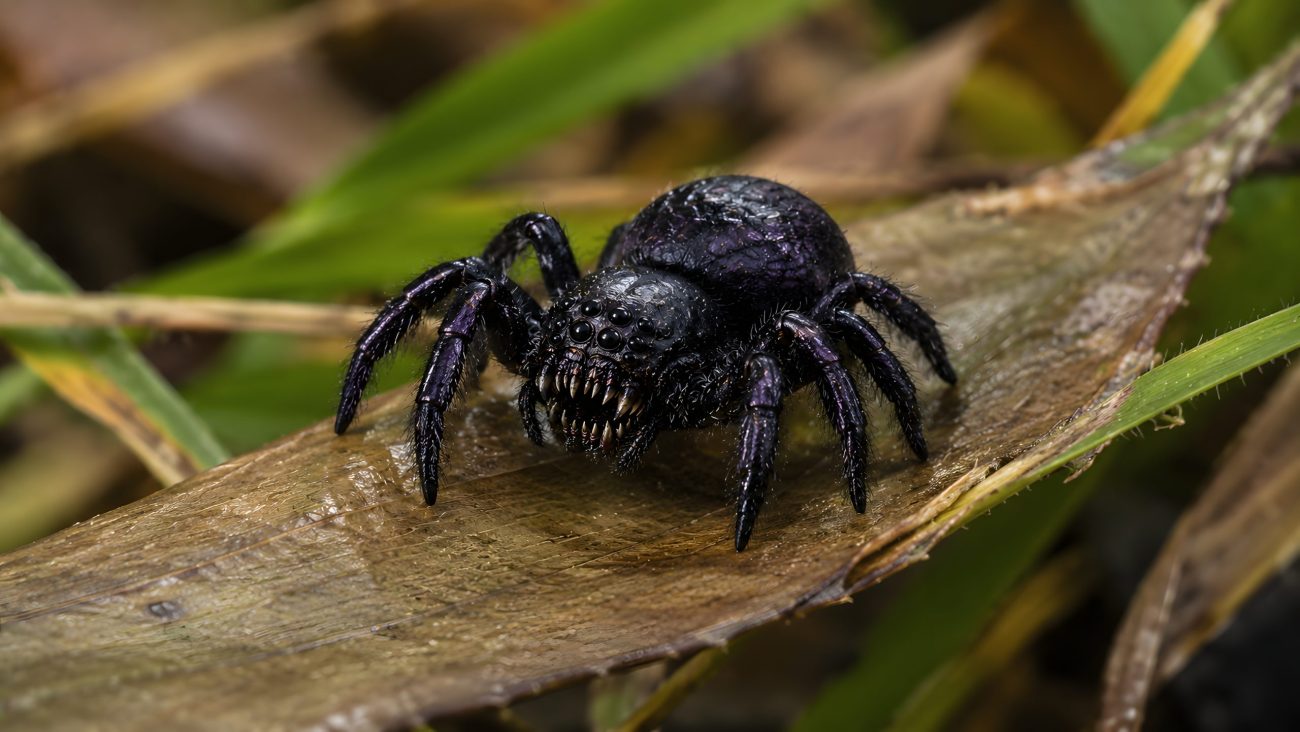
The creature was dark smoky-black or pitch black in color. It possessed a strange mouth lined with teeth in the middle of its body and had short, stubby legs that moved one after another. Although ancient writers called it a spider, these unusual features have led some to believe it may have resembled a centipede or another venomous arthropod instead.

The Rhox was feared for its extraordinarily deadly venom. Ancient physicians claimed that its bite could kill almost immediately, and one of its most unusual symptoms was the appearance of thread-like strands resembling spider webs in the victim’s urine.

Because of its appearance and the lethal effects of its poison, some modern scholars believe the Rhox may have been inspired by the Mediterranean black widow, whose venom was well known throughout antiquity.

Whether it was a true spider or another poisonous creature, the Rhox remained one of the most feared venomous beasts recorded by the natural historians of the ancient Mediterranean.


Sources

A Book of Creatures. (2020, July 6). Rhox. Retrieved June 28, 2026, from https://abookofcreatures.com/2020/07/06/rhox/


Pająk Pół Kilo

Tradition / Region: Polish Mythology
Alternative names: Half-Kilo Spider
Category: Spider


The Myth

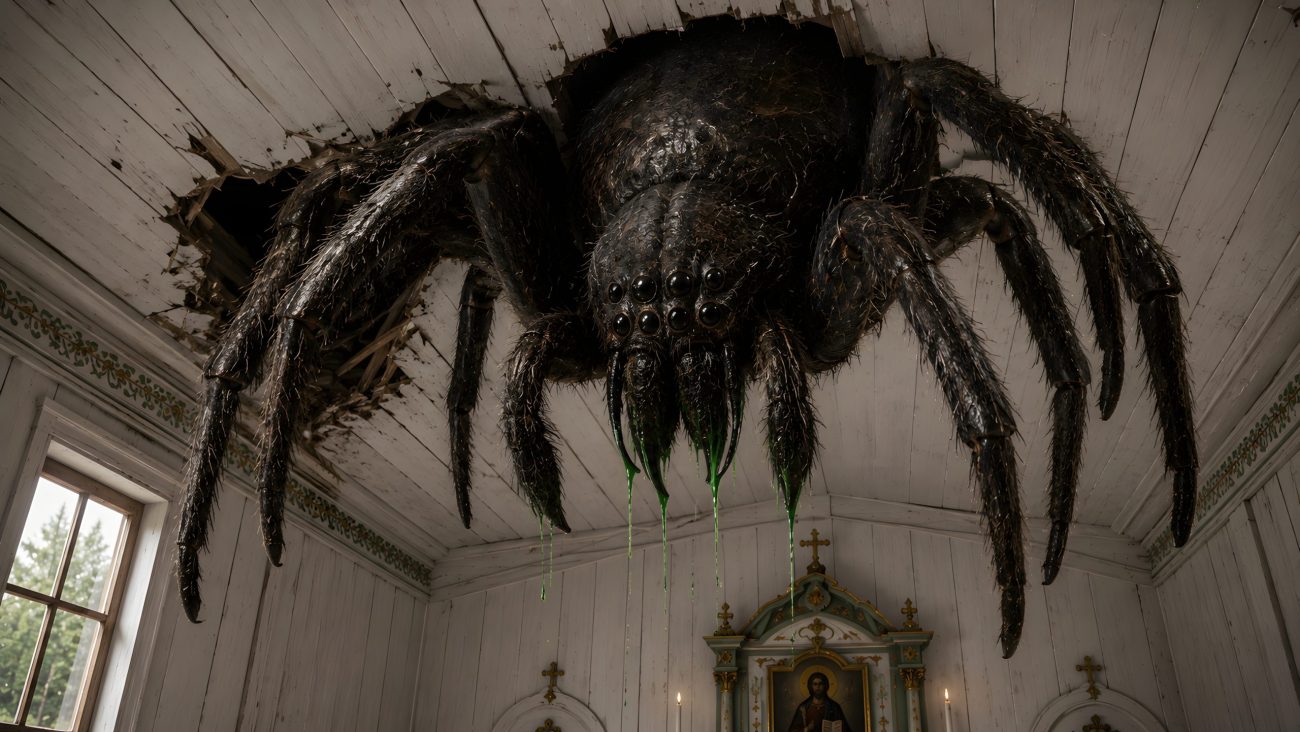
The Pająk Pół Kilo, or “Half-Kilo Spider,” is a legendary giant spider said to have lived inside a church near the Polish village of Janików. Hidden high above the priests’ dining hall, the monstrous spider remained unnoticed for years as venom dripped continuously from its fangs into the food prepared below.

One after another, the priests who ate the poisoned meals became ill and died. As new priests arrived, they too mysteriously perished, until the growing number of unexplained deaths convinced the church that something unnatural was taking place.

An investigator priest, often described as an exorcist, was sent to uncover the cause. After carefully searching the church, he discovered the enormous spider concealed above the dining hall. Rather than approaching it, he hurled a single stone, killing the creature instantly.

When the dead spider was brought down, everyone was astonished by its immense size. It was so heavy that four men were needed to carry it outside. The creature reportedly weighed half a kilogram, giving rise to its famous name: Pająk Pół Kilo.

According to the legend, the giant spider was displayed publicly for many years as proof of the extraordinary event. During the Second World War, however, it was reportedly taken away by the Germans and disappeared, leaving only the story behind.

Today, the legend of the Pająk Pół Kilo remains associated with the village of Janików near Przysucha, where it is remembered as one of Poland’s most unusual tales of a monstrous spider.


Sources

Oral tradition recorded from the author’s grandmother


Cabra Cabriola

Tradition / Region: Portuguese Mythology
Alternative names: Cabra-cabriola
Category: Sheep


The Myth

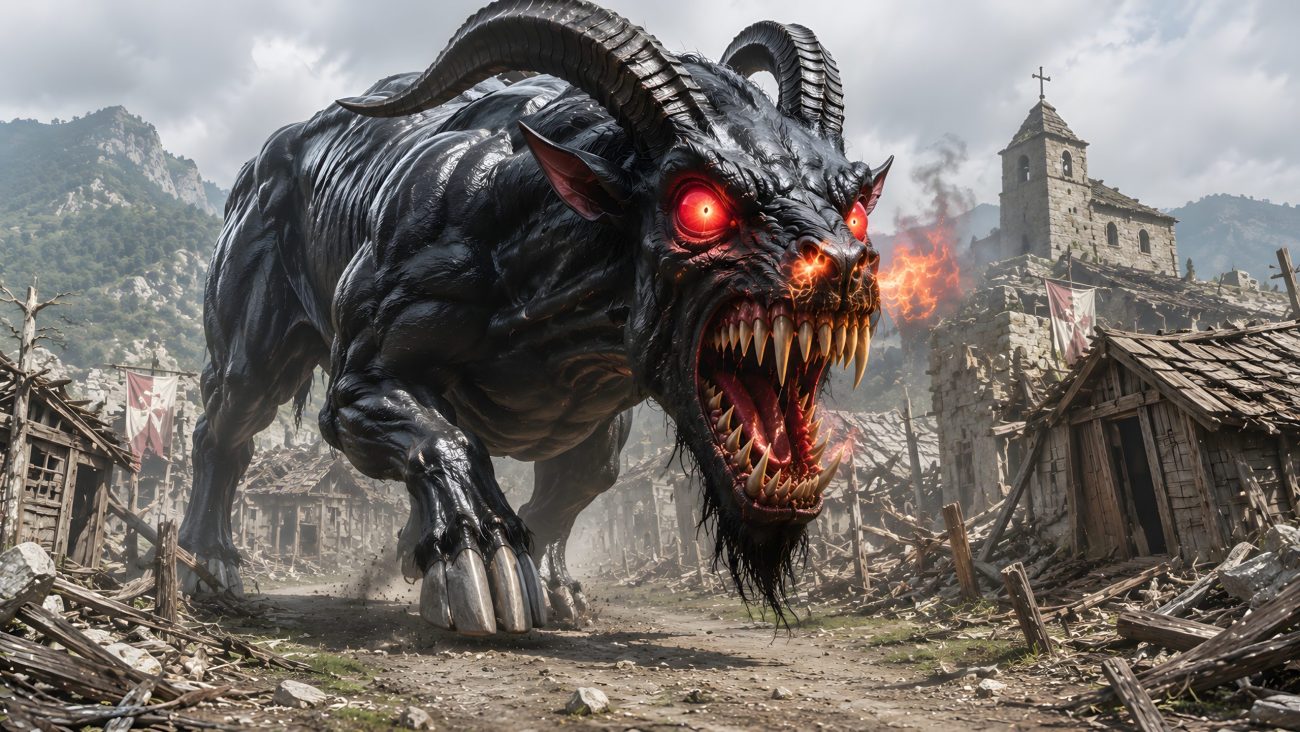
The Cabra Cabriola is one of Portugal’s most infamous bogeymen—a monstrous, man-eating goat used for centuries to frighten children into obedience. It is described as a terrifying goat-like creature with enormous jaws, razor-sharp teeth, and fire blazing from its eyes, mouth, and nostrils. Its name, meaning “Leaping Goat,” comes from its incredible ability to bound and leap with supernatural speed.

According to legend, the Cabra Cabriola wanders at night searching for disobedient children to devour. As it approaches, it announces itself with a chilling rhyme proclaiming that it eats children two at a time and will soon feast upon anyone who disobeys their parents.

One of the best-known stories tells of a poor mother who must leave her children alone while she goes to work. Before leaving, she warns them never to open the door unless they recognize her voice. Soon afterward, the Cabra Cabriola arrives and tries to trick the children into letting it inside, but they recognize its deep, monstrous voice and refuse.

Determined to succeed, the beast secretly listens as the mother returns home and memorizes the sound of her gentle voice. It then visits a blacksmith, who magically reforges its tongue so it can perfectly imitate her speech. Returning to the house, it softly calls to the children, pretending to be their mother carrying firewood, milk, and provisions. Believing the deception, the children unlock the door, whereupon the Cabra Cabriola enters and devours them.

Another Portuguese tale, set in the Algarve, tells of the monster breaking into a widow’s home while her children hide beneath a bed. Too frightened to confront it herself, the widow seeks help from larger animals such as a fox and a wolf, but both flee in terror. Finally, a tiny ant volunteers to help in exchange for a meal of honey and oil. Crawling onto the beast, the ant delivers a painful sting to its belly, causing the mighty Cabra Cabriola to flee the house screaming in agony. The story teaches that intelligence and courage can overcome even the most terrifying monster.

Throughout Portugal, the Cabra Cabriola became one of the country’s most enduring nursery monsters, combining the image of the medieval devil’s goat with the role of the child-snatching bogeyman. It remains a classic cautionary figure, warning children against disobedience, opening the door to strangers, and ignoring their parents’ instructions.


Sources

Wikipedia contributors. (n.d.). Cabra cabriola. In Wikipedia. Retrieved June 28, 2026, from https://en.wikipedia.org/wiki/Cabra_cabriola


Eisenriet Goat

Tradition / Region: Swiss Mythology
Alternative names: Eisenriet-Geiss, Isariadgoass, Riatligoass
Category: Sheep


The Myth

The Eisenriet Goat is a terrifying demonic creature said to haunt the marshes of the Eisenriet near the Swiss villages of Montlingen and Oberriet. According to local legend, it punishes the arrogant, the blasphemous, and those who travel the marshes at night.

The tale tells of a chimney sweep from a neighboring village whose soul was said to be as black as his soot-covered clothes. Whenever he became drunk, he cursed God and mocked religion. One evening, after drinking heavily at an inn, the other patrons warned him not to cross the dangerous marsh after dark. The chimney sweep laughed at them, boasting that he feared nothing—not even if the Devil himself appeared before him.

As he stumbled along the causeway through the Eisenriet, a beautiful snow-white goat suddenly appeared and blocked his path. Thinking it nothing more than an animal, he angrily swung his soot-covered chimney brush at it until it disappeared into the darkness.

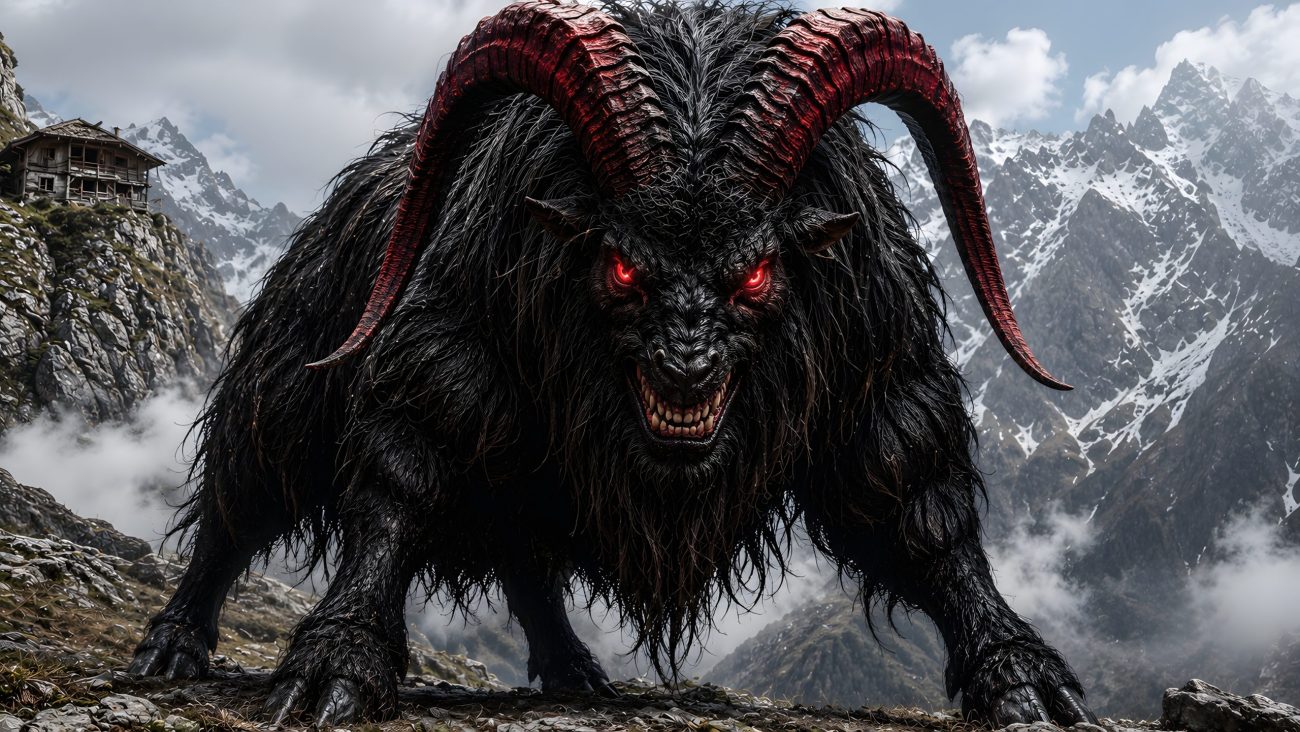
Moments later, however, a massive old billy goat emerged. Its grim expression, enormous horns, and frightening appearance chilled even the fearless chimney sweep. Suddenly realizing he might be facing the Devil himself, he cried out in terror.

The monstrous goat began pawing violently at the ground before charging with tremendous force. It gored the chimney sweep upon its horns while his screams echoed across the countryside, loud enough for the people of Montlingen to hear.

Villagers rushed to the scene but arrived too late. They found only a few black scraps of clothing and the chimney sweep’s ladder. Of the man himself, there was no trace.

The legend survives to this day as a warning to children. As night falls, mothers in Montlingen are said to call them home with the words:

“Come home quickly, or the Eisenriet Goat will get you.”


Sources

SAGEN.at. (n.d.). Die Geiß von Eisenriet. In SAGEN.at – Traditionelle Sagen. Retrieved June 28, 2026, from https://www.sagen.at/texte/sagen/schweiz/st_gallen/Eisenriet_Geiss.html


Diano

Tradition / Region: Spanish Mythology
Alternative names: Diañu Burlón (“Mocking Devil”), Diablo Burlón (“Mocking Devil”)
Category: Sheep


The Myth

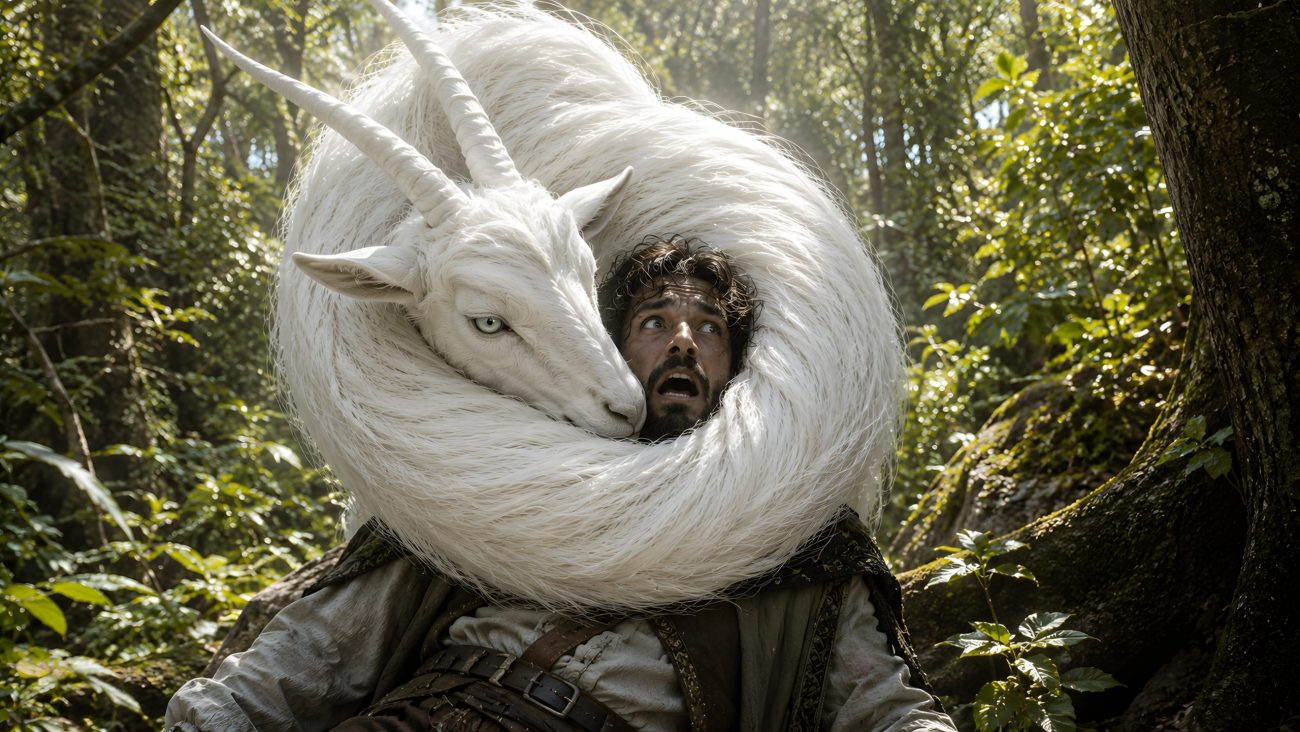
Diano is a deceptive demon from the folklore of northern Spain, most commonly appearing in the form of a beautiful goat. Rather than attacking people outright, it tricks exhausted travelers into mounting its back before revealing its true supernatural nature.

According to the Asturian legend El Diañu Burlón and the closely related Navarrese tale El Diablo Burlón, a weary traveler resting in a forest encounters an unusually handsome goat. The animal calmly kneels as if inviting the traveler to ride it. Believing he has found an easy way to continue his journey, the traveler climbs onto its back.

The moment he does, the goat suddenly begins to grow to an enormous size and bolts into the forest at terrifying speed. Racing through mountains and woodland with impossible swiftness, it carries its helpless rider ever deeper into the wilderness. The traveler, unable to escape and convinced he is about to die, desperately calls upon God and the saints for protection. At the sound of these prayers, the demonic goat instantly vanishes, throwing the rider safely to the ground before disappearing without a trace.

The legend presents Diano as a supernatural deceiver who preys upon the exhausted and unwary rather than killing through brute force. His goal is to terrify, mislead, and lure people away from safety into the unknown depths of the forest.

Diano’s appearance as a goat reflects medieval Christian symbolism. In the Gospel’s description of the Last Judgment, Christ separates the righteous sheep from the sinful goats, who are cast into eternal punishment. This imagery helped establish the goat as one of the Devil’s most recognizable forms throughout medieval Europe. In northern Spanish folklore, Diano embodies this symbolism, appearing as an attractive yet treacherous animal whose invitation leads only to fear, deception, and peril.


Sources

Bestiary.us. (n.d.). Diano. In New Bestiary: Encyclopedia of Imaginary Beings. Retrieved June 28, 2026, from https://www.bestiary.us/diano


Sigbin

Tradition / Region: Philippine Mythology
Alternative names: Sigben, Sigbinan’s Sigbin
Category: Sheep


The Myth

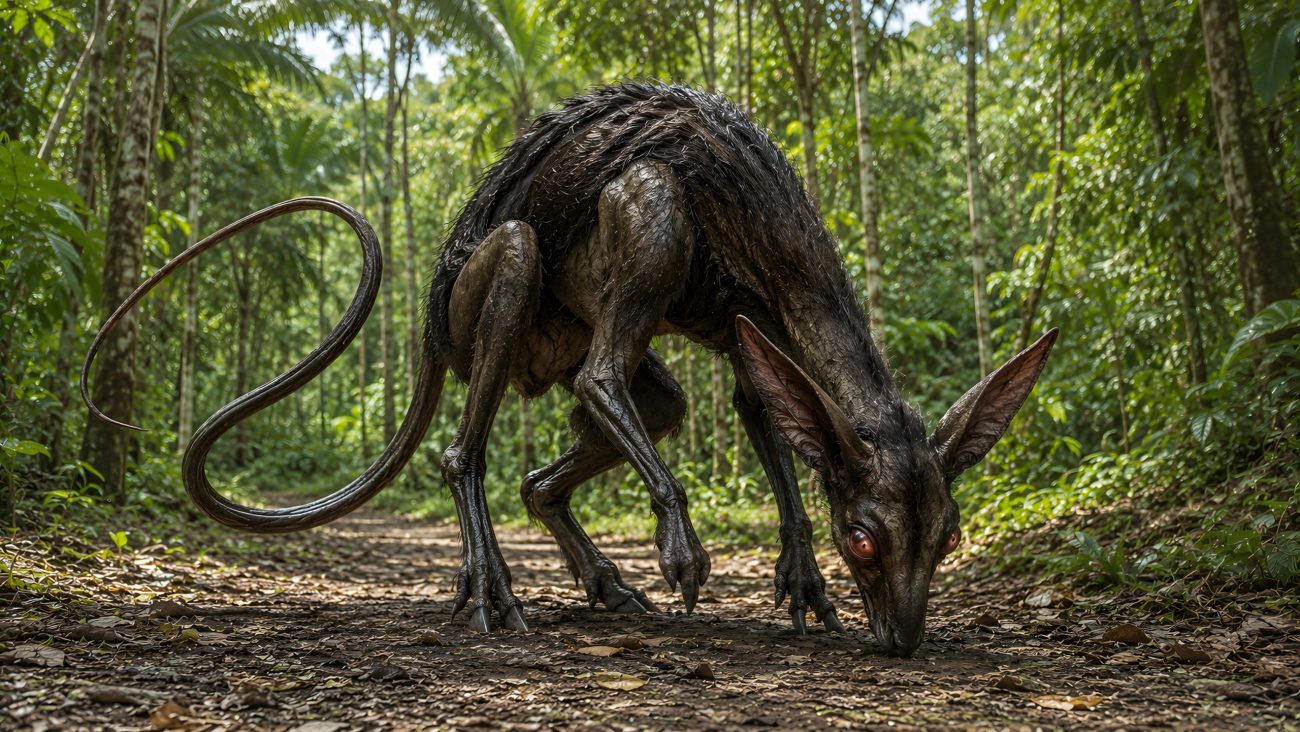
The Sigbin is one of the most feared supernatural creatures in Philippine folklore. It is described as a bizarre, goat-like demon with no horns, enormous bat-like ears, and a long whip-like tail. Rather than walking normally, the Sigbin moves backwards, with its head hanging between its hind legs. Folklore claims that this unnatural posture allows it to become invisible to ordinary humans.

The creature is believed to emerge primarily during Holy Week, especially on Easter, when the boundary between the human and supernatural worlds is thought to weaken. During these nights, the Sigbin leaves its hiding place to hunt, targeting children and unsuspecting travelers. According to legend, it tears out the hearts of its victims, using them to create powerful magical amulets. It is also said to feed on human blood, which it mysteriously draws from a person’s shadow rather than directly from the body.

Unlike many mythical beasts that roam freely, the Sigbin is often portrayed as a creature that can be owned and controlled. Certain families, known as sigbinan, are believed to inherit the ability to command Sigbins through secret magical knowledge. These demons are said to live hidden inside large clay jars during the day and are released only at night. They are also commonly associated with aswang witches, who supposedly keep Sigbins as supernatural servants, guardians, or hunting companions.

Although the Sigbin is deeply rooted in Philippine folklore, some researchers have suggested that its strange appearance may have originated from descriptions of unfamiliar animals, particularly kangaroos, whose upright posture, powerful hind legs, and long tails resemble aspects of the legendary creature. Over time, these observations blended with local supernatural beliefs, transforming the mysterious animal into one of the Philippines’ most enduring demonic legends.

Today, the Sigbin remains one of the best-known creatures in Philippine folklore, remembered as a terrifying nocturnal predator, a servant of witches, and a symbol of hidden supernatural dangers lurking beyond the edge of human sight.


Sources

Bestiary.us. (n.d.). Sigbin. In New Bestiary: Encyclopedia of Imaginary Beings. Retrieved June 28, 2026, from https://www.bestiary.us/sigbin