Bai Ze

Tradition / Region: Chinese Mythology
Alternative names: Hakutaku (Japanese), Bai Ze (Chinese)
Category: Sheep


The Myth

Bai Ze (Hakutaku) is one of the most revered divine beasts in Chinese mythology. Unlike most legendary creatures, Bai Ze is not feared as a monster but honored as a symbol of wisdom, protection, and supernatural knowledge. It is said to appear only during the reign of a wise and virtuous ruler, making its appearance an omen of peace and good governance.

According to legend, the Yellow Emperor (Huangdi) encountered Bai Ze while traveling through the eastern mountains. The creature spoke in human language and revealed that it possessed complete knowledge of the supernatural world. Bai Ze explained that the universe contained 11,520 different kinds of spirits, demons, monsters, ghosts, and magical beings, each born from condensed spiritual energy or wandering souls.

The emperor ordered scribes to record everything Bai Ze taught him, creating the famous Bai Ze Tu (Illustrated Guide of Bai Ze). Although the original work has been lost, ancient Chinese texts frequently mention it as an encyclopedia of supernatural creatures and methods for identifying and dealing with them. Stories even tell of scholars successfully recognizing dangerous spirits because they had consulted the Bai Ze Tu.

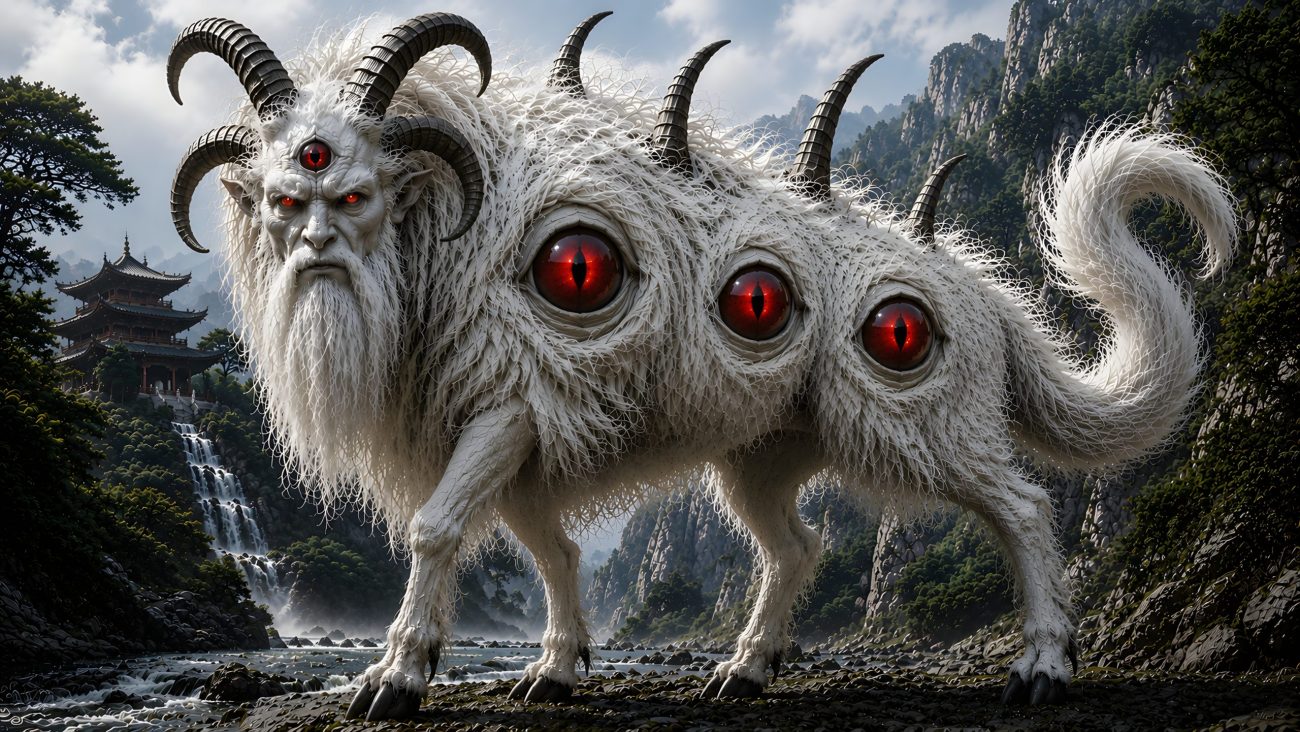
In Chinese tradition, Bai Ze is usually depicted as a lion-like or guardian-beast resembling an imperial protector. In Japan, however, its appearance evolved into something much stranger: a white beast with a human face, horns, and nine eyes—three on its face and three on each side of its body. This distinctive form became popular during the Edo period and was sometimes confused with the baku, another supernatural beast associated with dreams.

Because Bai Ze was believed to possess perfect knowledge of evil spirits and diseases, images of the creature became powerful protective talismans. During epidemics and outbreaks of illness, people displayed paintings and statues of Hakutaku to ward off disease, repel malevolent spirits, and invite good fortune. As a result, Bai Ze became not only a legendary creature but also one of East Asia’s most important symbols of divine protection and supernatural wisdom.


Sources

Bestiary.us. (n.d.). Giristis. In New Bestiary: Encyclopedia of Imaginary Beings. Retrieved June 28, 2026, from https://www.bestiary.us/giristis
Meloi Khryseoi

Tradition / Region: Greek Mythology
Alternative names: Golden Sheep
Category: Sheep


The Myth

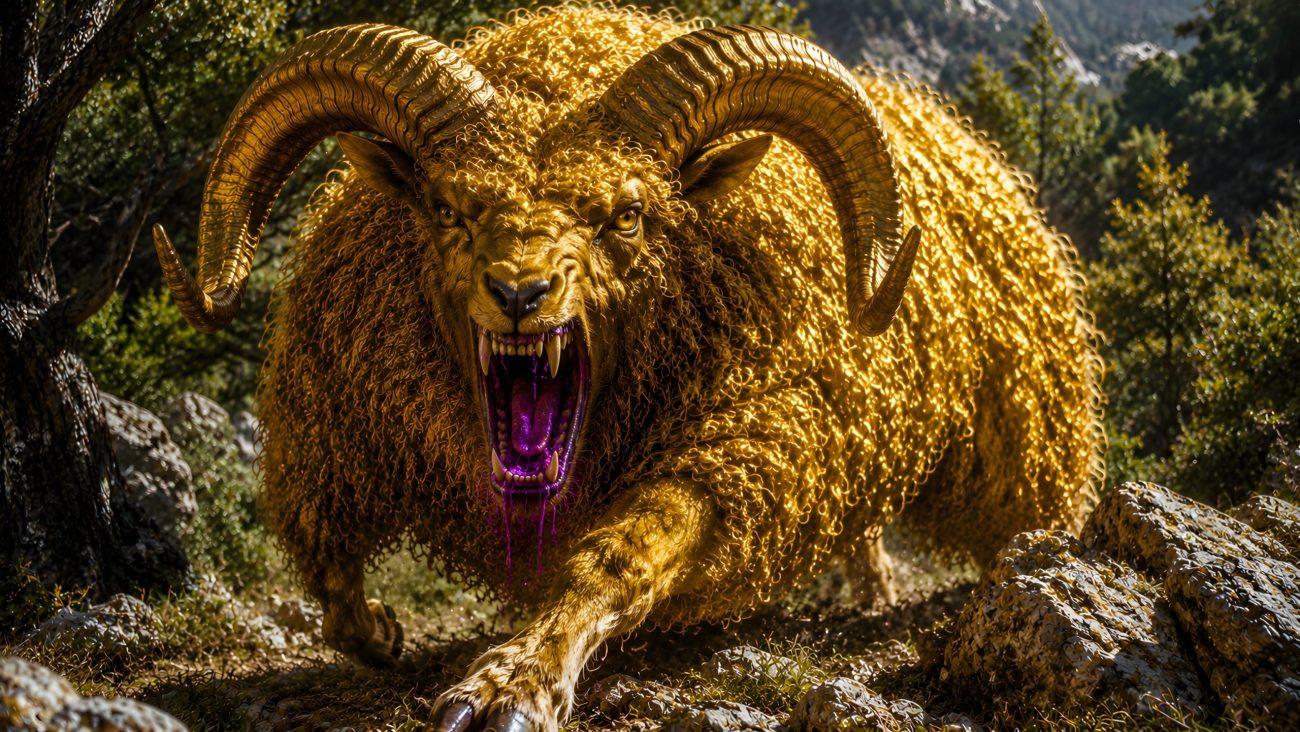
The Golden Sheep (Meloi Khryseoi) were a flock of magical sheep whose fleeces shone with pure gold. Despite their beautiful appearance, they were among the most dangerous creatures in Greek mythology. During the heat of the day they became violently aggressive, charging with rock-hard heads, sharp horns, and even poisonous bites capable of killing humans.

The sheep appear in the story of Psyche, who was ordered by Aphrodite to collect a tuft of their priceless golden wool as one of her impossible labors. Rather than confronting the beasts directly, Psyche was advised by a prophetic river reed to wait until evening, when the flock had calmed. Instead of shearing them, she gathered the golden wool that had become caught on nearby branches and bushes, allowing her to complete the task without facing the murderous animals.

The Golden Sheep are largely a literary creation of the Roman author Apuleius, who combined elements of two famous Greek myths: the Golden Fleece of the ram sought by Jason and the Golden Apples of the Hesperides. This wordplay was possible because the Greek word mēlon could mean either “sheep” or “apple”, allowing the “Golden Sheep” to function as a clever fusion of both legendary treasures.

Although they appear only briefly in mythology, the Meloi Khryseoi represent a recurring Greek theme: great beauty and immense wealth guarded by deadly supernatural danger, where wisdom and patience succeed where force would fail.


Sources

Atsma, A. J. (n.d.). Meloi Khryseoi (Golden Sheep) – Poisonous flock of Greek mythology. In Theoi Greek Mythology. Retrieved June 28, 2026, from https://www.theoi.com/Ther/MeloiKhryseoi.html


Giristis

Tradition / Region: Lithuanian Mythology
Alternative names: Pusinas, Mežu Dejvs (“Forest God”), Mežu Vihrs (“Forest Man”)
Category: Wolf, Sheep


The Myth

Giristis is a fearsome forest monster and werewolf-like being from Lithuanian mythology. Regarded as both a forest deity and a monstrous spirit of the wilderness, he rules over the deep pine forests and is dreaded by all who venture into them.

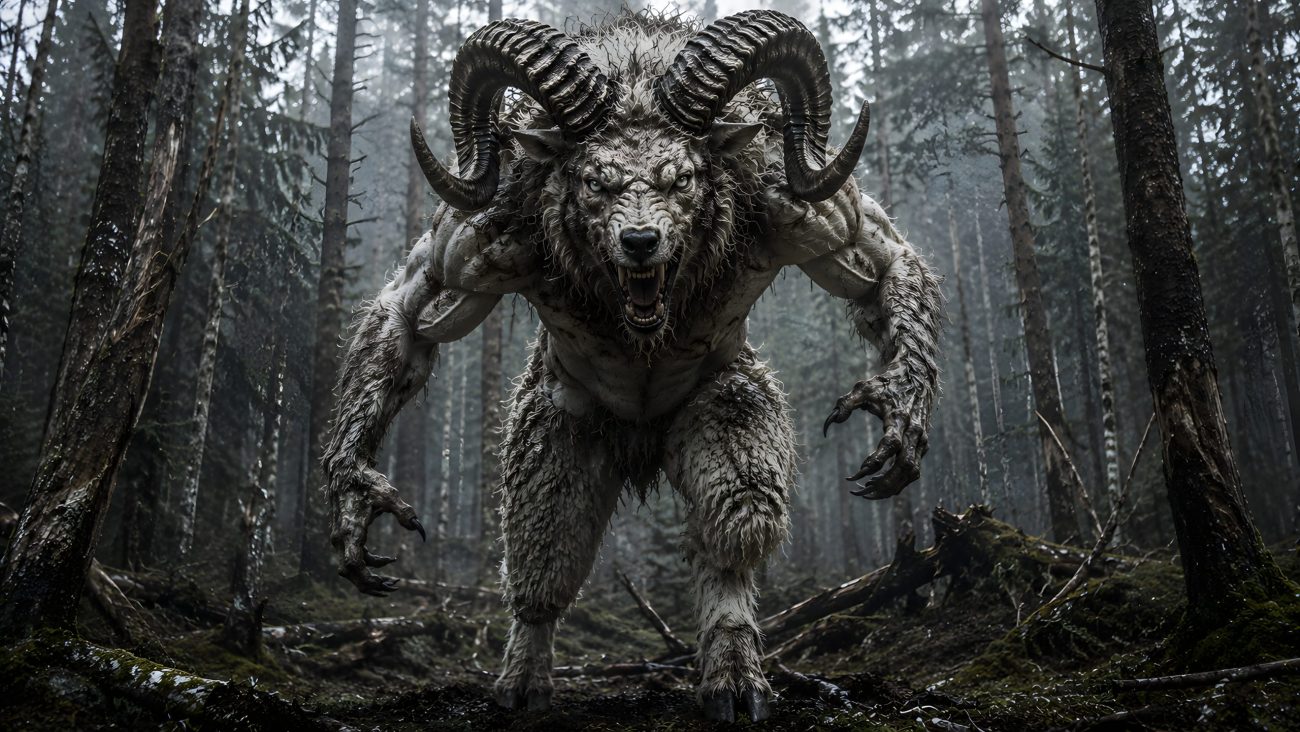
Giristis is described as a shaggy, gigantic creature with horns upon his head, possessing immense strength, savage cruelty, and an overwhelming lust for human women. His gaze alone is said to be deadly—those who meet his terrifying eyes may die instantly from fear.

The monster is especially notorious for abducting young women. According to legend, Giristis would emerge from the forest during the celebrations of Ivan Kupala Night, rushing into dancing crowds to seize beautiful maidens before carrying them back into the depths of the woods, where they were never seen again.

In Lithuanian folklore, Giristis is also known by the names Pusinas, Mežu Dejvs (“Forest God”), and Mežu Vihrs (“Forest Man”). Among Lithuanian Ruthenians, a closely related being called Turosik is described as having goat-like legs ending in golden hooves, further linking these forest spirits to ancient horned wilderness deities.

Because of his horned appearance, lustful nature, and association with forests, Giristis has often been compared to the satyrs of Greek mythology. Like them, he embodies the untamed and dangerous forces of the wilderness, preying upon those who stray too far from civilization.


Sources

Bestiary.us. (n.d.). Giristis. In New Bestiary: Encyclopedia of Imaginary Beings. Retrieved June 28, 2026, from https://www.bestiary.us/giristis

Aegipan

Tradition / Region: Greek Mythology
Alternative names: Aigipan, Goat-Pan, Aegocerus
Category: Sheep, Deity, Fish


The Myth

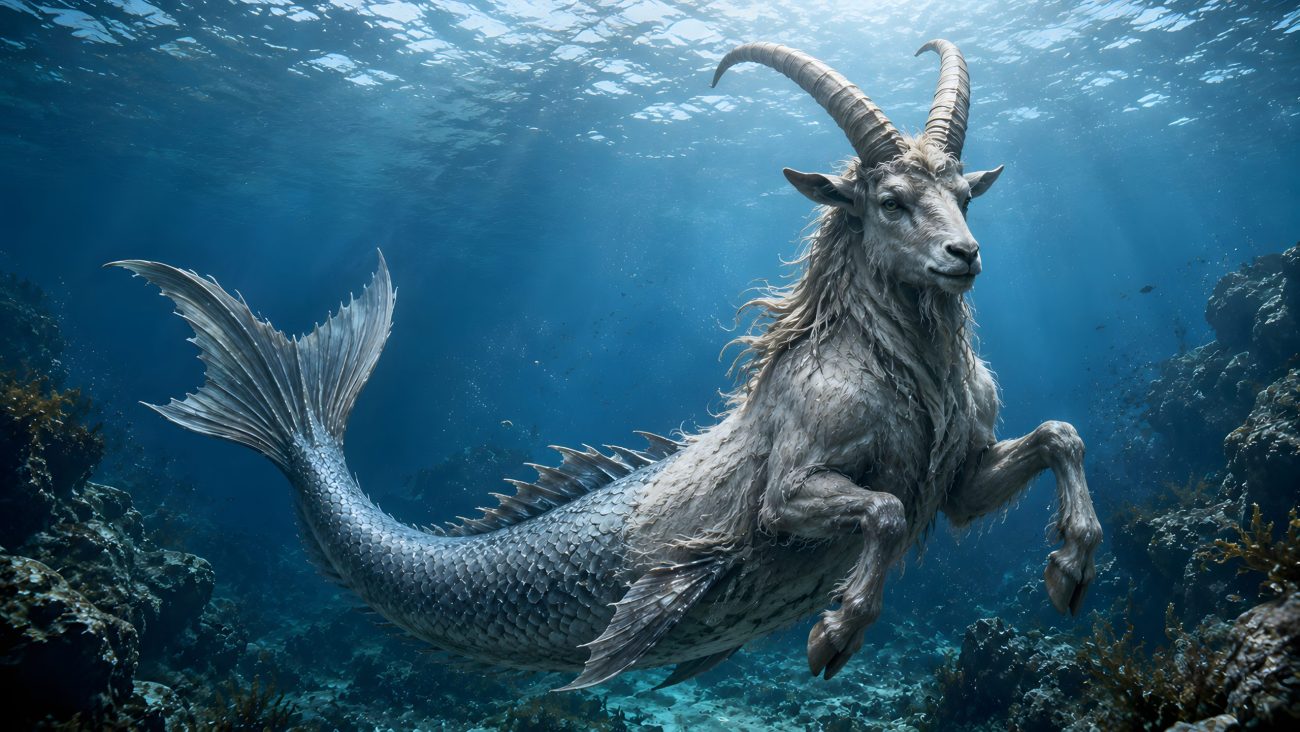
Aegipan (Greek: Aigipan, meaning “Goat-Pan” or “All-Goat”) is a goat-legged rustic deity closely associated with Pan, though ancient traditions disagree on whether he was Pan himself, Pan’s father, or an entirely separate god. He is best known as the divine Sea Goat, whose image became the constellation Capricorn.

Most depictions portray Aegipan with the upper body of a horned, bearded goat-man and the tail of a fish, allowing him to move freely across both mountains and seas. In some traditions he possessed the terrifying ability to inspire panic among armies, giving rise to the word “panic” itself.

His greatest role came during the war between Zeus and the monstrous Typhon. After Typhon defeated Zeus by cutting the sinews from his hands and feet and hiding them in the Corycian Cave, where they were guarded by the dragon-woman Delphyne, Aegipan joined Hermes on a daring rescue mission. Together they secretly recovered Zeus’s stolen sinews and restored them to his body, enabling the king of the gods to continue the battle and ultimately defeat Typhon.

Another tradition tells that Aegipan helped destroy Typhon through cunning rather than strength. He lured the monster from its hiding place with the promise of a feast of fish, bringing Typhon into the open where Zeus struck him down with thunderbolts.

During Typhon’s assault on the gods in Egypt, many Olympians transformed themselves into animals to escape. Aegipan leapt into a river, changing his lower half into the tail of a fish while retaining his goat-like upper body. Zeus admired both his cleverness and his loyalty, placing his image among the stars as the constellation Capricorn, forever commemorating the Sea Goat in the heavens.

Ancient authors also give conflicting accounts of Aegipan’s parentage. Some describe him as the son of Zeus and the she-goat Aega (or Boetis), while others make him the son of Hermes, or even the father of Pan himself. Regardless of his origins, Aegipan consistently appears as a loyal ally of Zeus and one of the heroic figures responsible for preserving the rule of the Olympian gods.


Sources

Atsma, A. J. (n.d.). Aigipan (Aegipan) – Greek goat-fish sea god. In Theoi Greek Mythology. Retrieved June 28, 2026, from https://www.theoi.com/Georgikos/Aigipan.html.

Wikipedia contributors. (n.d.). Aegipan. In Wikipedia. Retrieved June 28, 2026, from https://en.wikipedia.org/wiki/Aegipan


Giant Goat

Tradition / Region: Czech Mythology
Alternative names: None recorded
Category: Sheep


The Myth

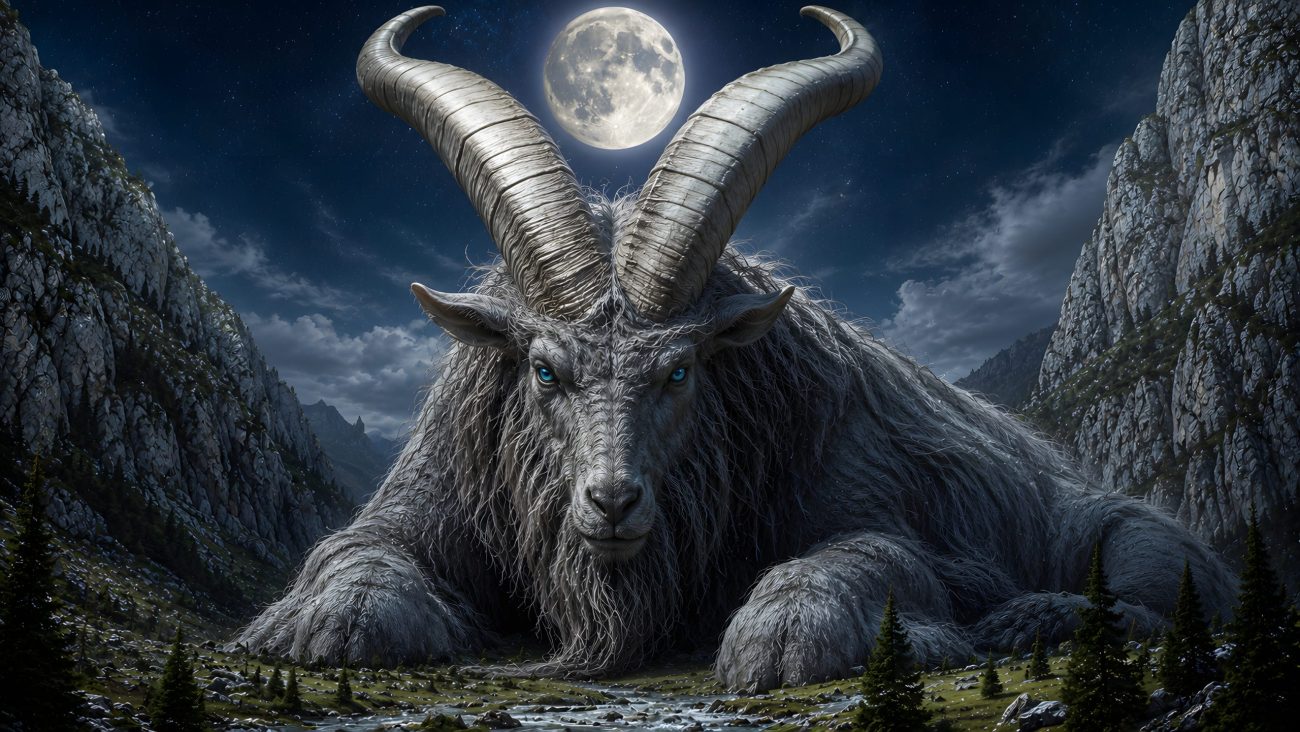
According to an old legend from the Bohemian Forest, there once lived an enormous primordial goat of unimaginable size upon Mount Hohen Bogen. She was so colossal that the forests beneath her appeared no taller than grass, while her mighty horns stretched almost to the moon.

One day, the giant goat fell asleep beside a hollow mountain road. As she slept, a cart passed by without realizing the immense creature lying there. One of its wheels rolled across her udder, tearing open one of her teats.

Immediately, an unstoppable torrent of milk burst forth. The goat’s milk poured down the mountainside like a raging river, flooding the valleys below. The deluge became so immense that villages were overwhelmed, and countless unfortunate people drowned beneath the endless flood of goat’s milk.

The tale survives as one of the Bohemian Forest’s oldest mythical stories, portraying a gigantic primordial animal whose sheer size transformed an ordinary accident into a catastrophic natural disaster.


Sources

SAGEN.at. (n.d.). Geißmilch. In SAGEN.at – Traditionelle Sagen. Retrieved June 28, 2026, from https://www.sagen.at/texte/sagen/tschechien/watzlik/geissmilch.html


Taotie

Tradition / Region: Chinese Mythology
Alternative names: Taotie (饕餮)
Category: Sheep


The Myth

The Taotie is one of the most infamous monsters of Chinese mythology, representing insatiable greed and gluttony. Its name itself reflects this nature: “Tao” means to covet wealth, while “Tie” means to crave food. It is a creature whose hunger can never be satisfied.

Ancient sources describe the Taotie in several different forms. The most common depiction gives it the body of a sheep with the face of a human, eyes beneath its armpits, tiger-like fangs, human-like claws, and the cry of a crying infant. Other traditions describe it as little more than a gigantic devouring head with no body at all, emphasizing its endless appetite.

The Taotie is counted among China’s legendary Four Evils, alongside Hundun, Qiongqi, and Taowu. According to the Zuo Zhuan, it originated from the wicked and greedy son of the Jinyun clan, whose insatiable desire for wealth and excess caused him to become the monstrous Taotie. Afterward, Emperor Shun banished it to the western lands, where it ironically became a guardian against other monsters.

Other ancient texts describe it as a savage creature covered in thick hair that hoards riches without ever using them. It steals from others, bullies the weak, attacks solitary travelers, yet fears large crowds. Its overwhelming greed defines every aspect of its existence.

During the Ming Dynasty, the Taotie also became associated with the Nine Sons of the Dragon, while scholars linked it with the fearsome beast described in the Classic of Mountains and Seas, strengthening its image as a man-eating monster.

One of the Taotie’s greatest legacies is artistic rather than literary. The fearsome animal faces decorating ancient Shang and Zhou bronze ritual vessels became known as Taotie masks. Although this name was applied centuries later and it remains uncertain whether the original craftsmen intended to depict the Taotie, the monstrous face became one of the most recognizable symbols of ancient Chinese art.

Throughout Chinese tradition, the Taotie serves as the ultimate embodiment of uncontrolled greed—a creature that endlessly consumes wealth, food, and even human beings, yet can never satisfy its eternal hunger.


Sources

TYZ. (n.d.). Taotie [饕餮]. In 新版TYZ 妖怪図鑑. Retrieved June 27, 2026, from https://tyz-yokai.blog.jp/archives/1018146956.html


Mayup Mamman

Tradition / Region: Argentine Mythology
Alternative names: Mother of the River
Category: Nymph


The Myth

Mayup Mamman, whose name means “Mother of the River,” is a benevolent yet powerful river spirit in Argentine Andean folklore. She is said to dwell within Mishky Mayu (“Sweet River”), where she serves as the guardian of its waters and all the fish that live within them.

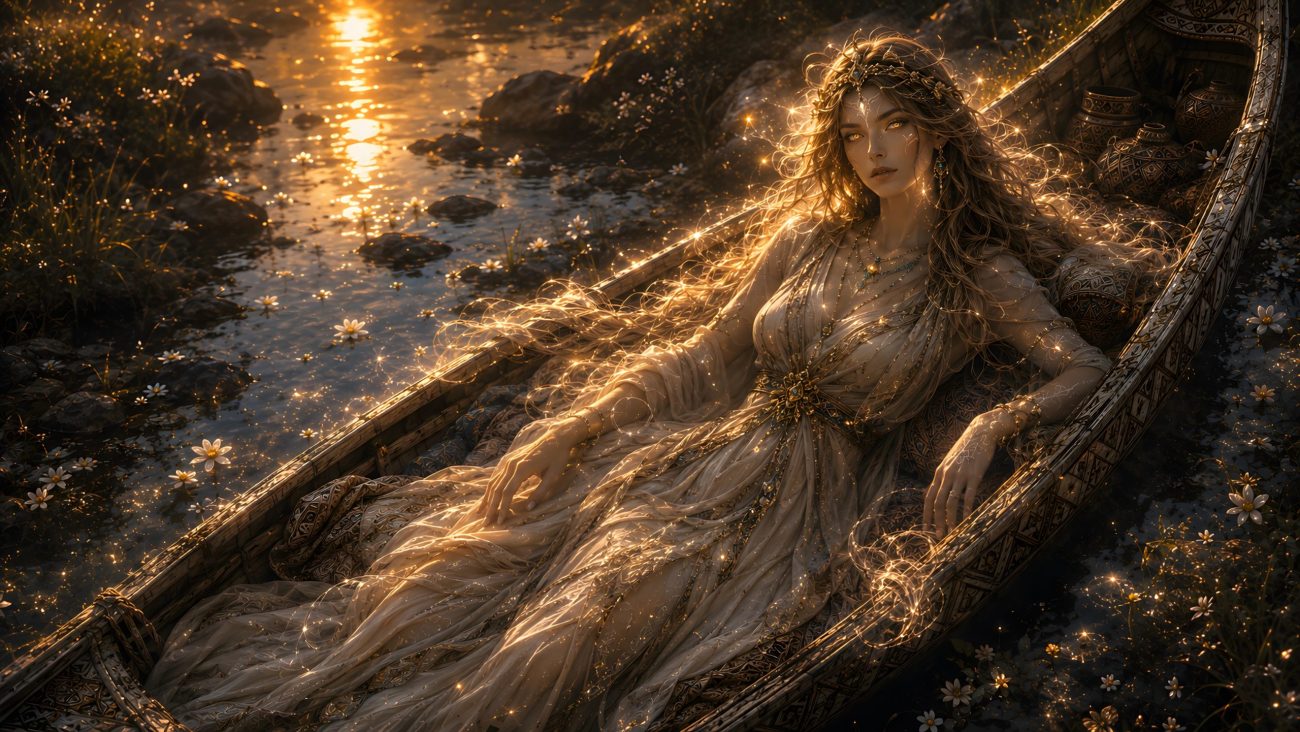
She appears as a beautiful fair-haired woman who silently glides across the river in a canoe. Rather than harming people without reason, Mayup Mamman watches over the natural balance of the river, ensuring that its resources are not abused.

When fishermen take only what they need, she leaves them in peace. However, if they become greedy and overfish the river, she punishes them. She is said to curse those who exploit the river, causing their canoes to overturn and sink beneath the water as retribution for their disrespect toward nature.

Mayup Mamman represents the belief that rivers are living, sacred places protected by supernatural guardians who reward respect but punish greed, emphasizing humanity’s responsibility to preserve the natural world.


Sources

Wikipedia contributors. (n.d.). Legendary creatures of the Argentine Northwest region. In Wikipedia. Retrieved June 27, 2026, from https://en.wikipedia.org/wiki/Legendary_creatures_of_the_Argentine_Northwest_region


Orco

Tradition / Region: Austrian Mythology
Alternative names: Orco
Category: Ghost


The Myth

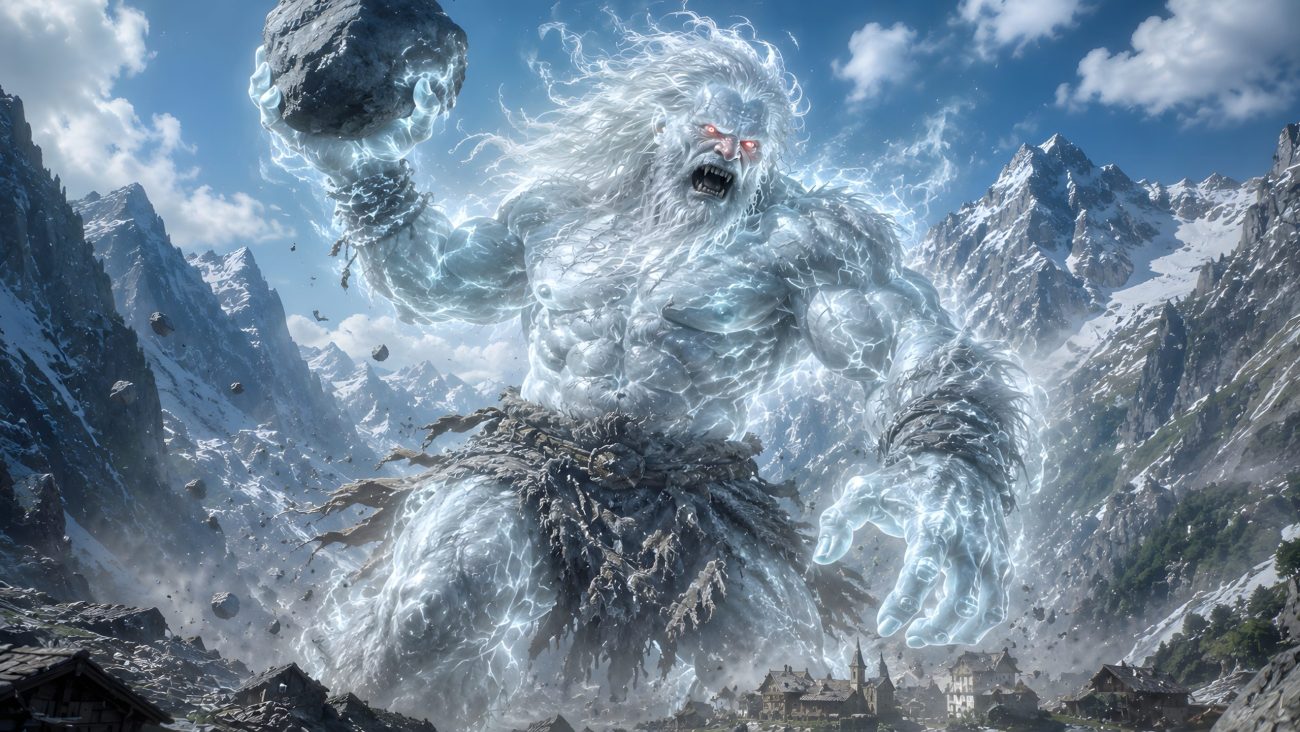
The Orco is a gigantic and ancient mountain ghost feared throughout the Dolomite Alps, especially in the mountains between Enneberg Abbey and Buchenstein. Said to dwell in deep caves, chasms, and rocky cliffs, the Orco is a malicious supernatural being that never grows old and exists only to spread fear, destruction, and misfortune among humankind.

The Orco is a powerful shapeshifter, appearing in many terrifying forms. It most commonly manifests as a gigantic black dog with blazing eyes, a wild horse whose hooves burn with fire, a raging bull, or even as a massive rolling boulder that chases terrified travelers across the mountains. On the rare occasions it takes human form, it appears as an enormous giant with a cruel expression, either naked beneath a coat of thick bear-like hair or dressed like one of the legendary mountain giants.

Many Tyrolean legends recount encounters with the Orco. One skeptical innkeeper who mocked stories about the creature was confronted by a monstrous black dog that circled his wagon until he finally made the sign of the cross, causing it to vanish instantly. Another tale tells of a fiery horse that attempted to scatter a family’s cattle before disappearing the moment it approached a roadside crucifix.

The Orco often pursued lonely travelers for miles. One young man was chased home by a gigantic black dog whose tongue dripped blue flames and whose breath smelled of burning sulfur. Although he escaped unharmed, the terror and exhaustion permanently damaged his health, leading to his death only months later.

In another legend, two young men returning home at night were stalked first by a wild bull and then by an enormous rolling sphere that crashed over rocks in pursuit of them. They escaped only by throwing themselves at the foot of a large crucifix. Unable to cross the holy ground, the Orco appeared in human form beyond the fence, striking it with such supernatural force that the marks of its blows remained visible for years.

The Orco could also imitate human voices to lure victims. A shepherd boy once answered what he believed were distant woodcutters calling through the forest, only to realize too late that he had mimicked the Orco itself. The monster seized him and carried him across mountains and deep ravines before abandoning him bruised and unconscious many miles away. From that day onward, locals warned never to imitate mysterious voices heard in lonely forests, for doing so could summon the Orco with lightning speed.

Throughout Tyrolean folklore, the Orco embodies the dangers of the wild mountains—an ancient, shape-shifting force of terror that preys upon travelers, but whose power is consistently overcome by Christian symbols such as the sign of the cross and roadside crucifixes.


Sources

von Günther, A. (1874). Tales and legends of the Tyrol. Chapman and Hall.


Ghost Mother

Tradition / Region: Chinese Mythology
Alternative names: Ghost Goddess, Tiger-Dragon Foot, Python-Eyed Ghost Mother, Dragon-Browed Ghost Mother
Category: Ghost, Deity, Tiger


The Myth

The Ghost Mother is a powerful supernatural being in Chinese mythology, appearing as both a ghost and a divine figure. She is most famously described in the Shuyi Ji (Records of Strange Things), where she dwells on Xiaoyu Mountain in the South China Sea.

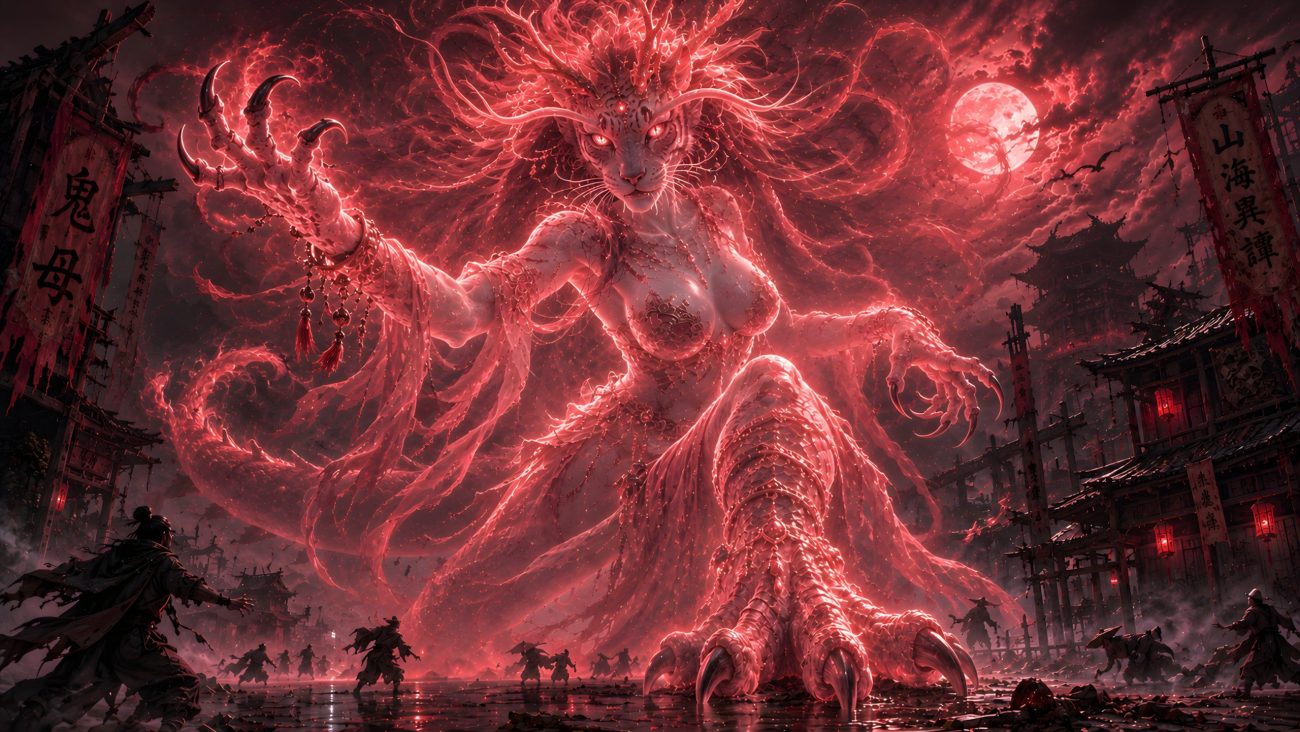
Her appearance is bizarre and monstrous. She is said to possess the head of a tiger, the feet of a dragon, the round eyes of a python, and long dragon-like eyebrows that join together. She possesses extraordinary creative power, being capable of giving birth not only to ghosts but also to heaven and earth themselves. Whenever she gives birth, she produces ten ghosts at once, only to devour them again by nightfall.

The Ghost Mother also appears in Strange Tales from a Chinese Studio, where she serves as the foster mother of Yingning, a fox spirit, raising her despite not being her biological parent.

In the sequel to Journey to the West, the Ghost Mother appears in another form. After Princess Iron Fan attained enlightenment, the Bull Demon King became the Ghost King and resurrected Princess Jade Face as the Rakshasa Ghost Mother. Together they later had a son named Prince Li Zi, also known as Black Boy.

Across these traditions, the Ghost Mother is portrayed as a mysterious maternal figure whose terrifying appearance contrasts with her immense supernatural power, embodying both the creation and destruction of spirits.


Sources

Wikipedia contributors. (n.d.). 鬼母. In 維基百科,自由的百科全書. Retrieved June 27, 2026, from https://zh.wikipedia.org/wiki/%E9%AC%BC%E6%AF%8D


Yang Wulang Ghost

Tradition / Region: Chinese Mythology
Alternative names: Yang Wulang (楊五郎鬼)
Category: Ghost


The Myth

The Yang Wulang Ghost is a terrifying ghost recorded in Volume 4 of the Yijian Zhi, a Song Dynasty collection of strange tales. Unlike most ghosts, it possesses a massive physical body rather than appearing as a transparent spirit.

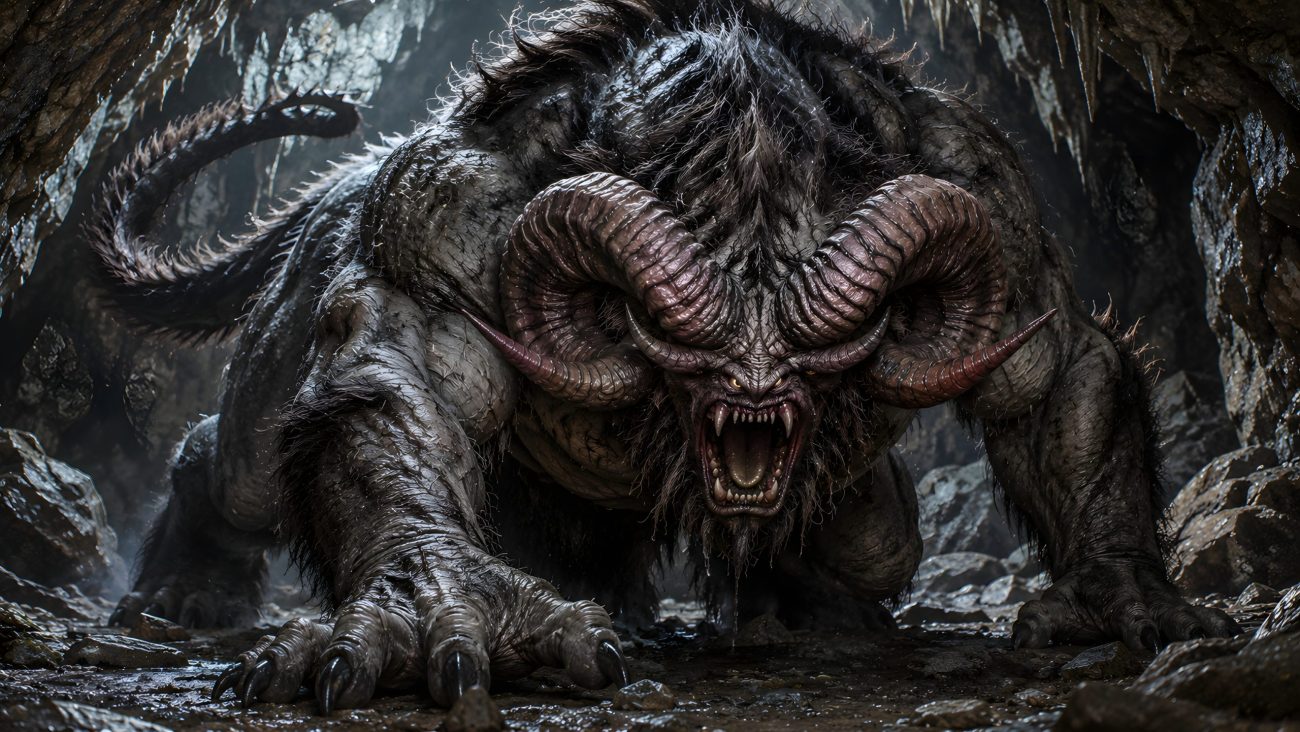
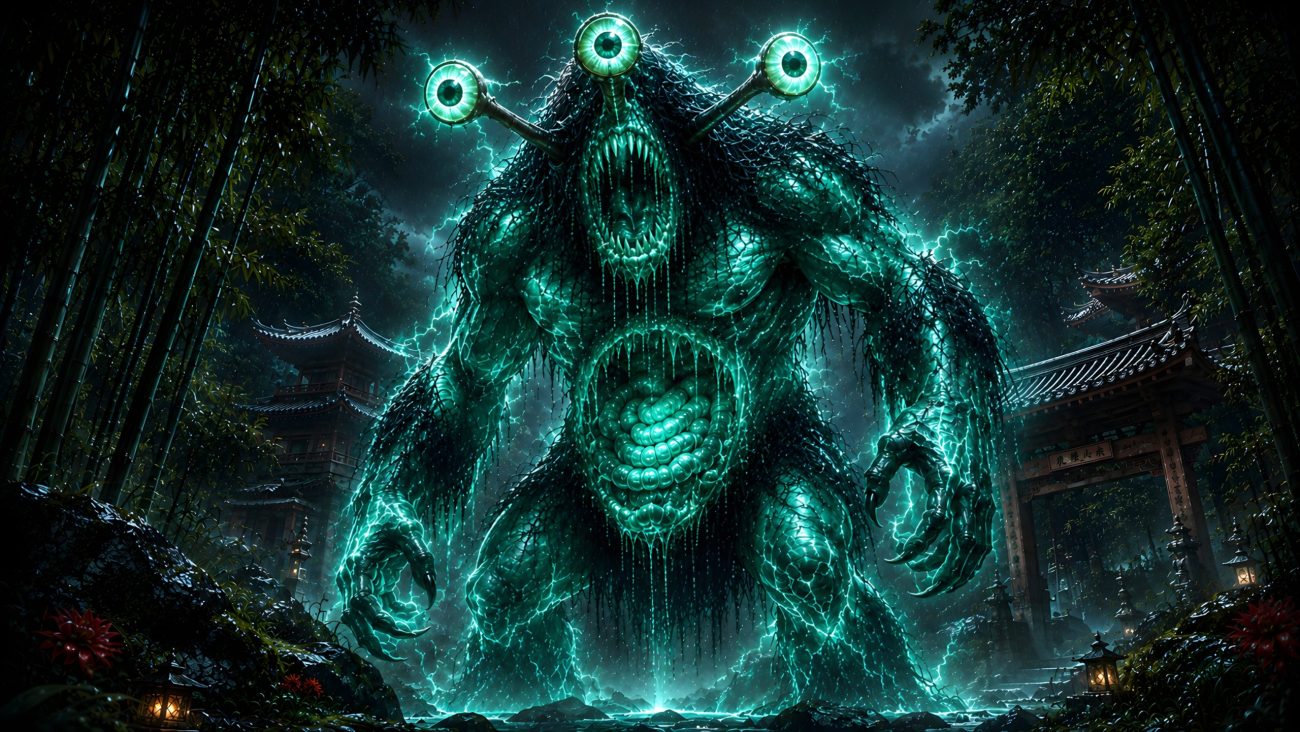
The creature is described as standing nearly ten feet (about three meters) tall, with arms as thick as a man’s thighs. Although enormous and immensely powerful, it is surprisingly agile, capable of making swift leaps and moving with unnatural speed. Its entire body is covered in coarse black hair, and its grotesque face bears three protruding eyes.

According to the legend, villagers eventually managed to capture the monster. When they stabbed it with knives, no blood flowed despite cutting deeply into its body. Its abdomen was opened, revealing ordinary-looking intestines and internal organs, yet the creature remained an unnatural being rather than a living man.

To destroy it permanently, the villagers placed the ghost into boiling oil. As its flesh cooked, its body gradually dissolved into black liquid, which flowed away until nothing remained, finally ending the creature’s existence.

Later writers have suggested that the famous literary image of the powerful monk Lu Zhishen from Water Margin may have been partially inspired by the legendary monk Yang Wulang, from whom this monstrous ghost also takes its name.


Sources

Wikipedia contributors. (n.d.). 楊五郎. In 維基百科,自由的百科全書. Retrieved June 27, 2026, from https://zh.wikipedia.org/wiki/%E6%A5%8A%E4%BA%94%E9%83%8E