Kakehashi

Tradition / Region: Japanese Mythology
Alternative names: Kakehashi (掛橋)
Category: Ghost


The Myth

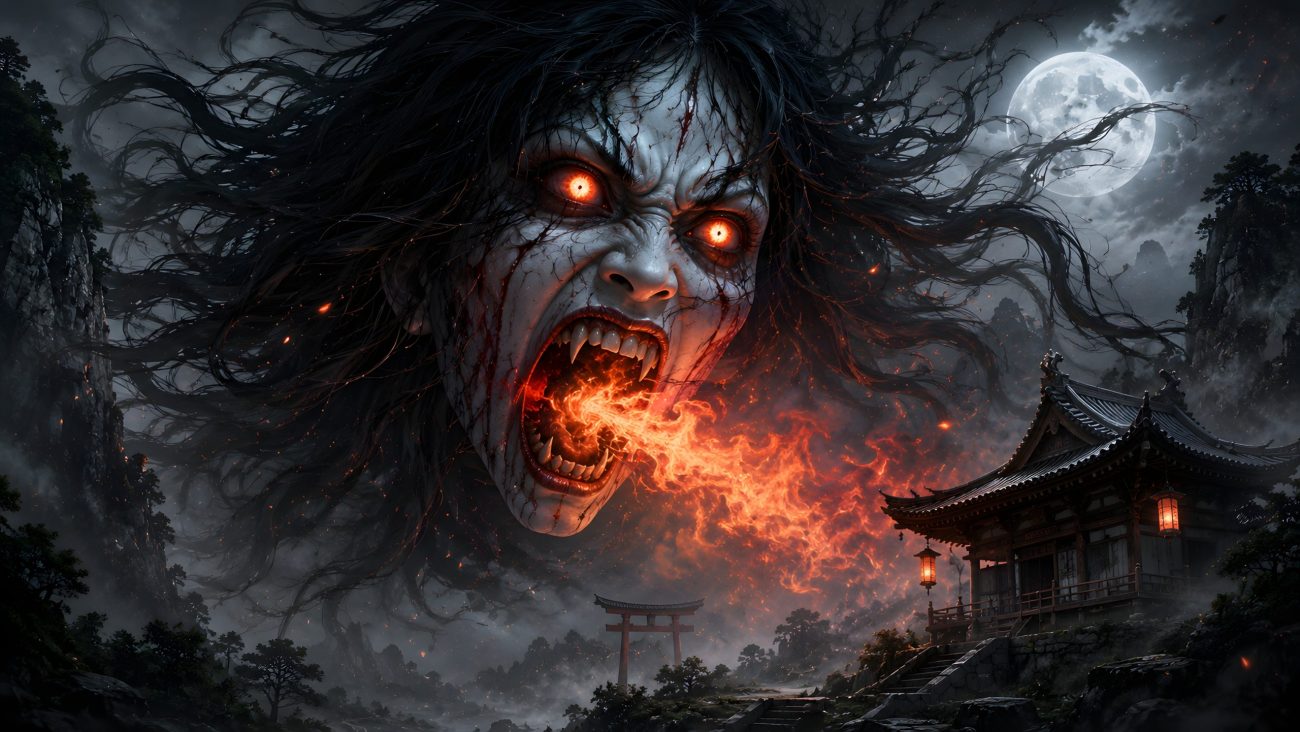
Kakehashi is a tragic woman whose jealousy, betrayal, and violent death transformed her into a fearsome onryō, a vengeful spirit. After being beheaded, her severed head became a supernatural apparition with blazing eyes and flames pouring from its mouth, relentlessly haunting the man who had deceived and murdered her.

According to the Edo-period illustrated novel Baika Hyōretsu (“Plum Blossom Ice Split”), Kakehashi was the wife of the samurai Karakoto Uraemon. While he was away, the villain Mino Bunta manipulated her into believing her husband had betrayed her. Falling under his influence, she abandoned Uraemon and cruelly murdered his pregnant concubine, Mo no Hana, along with her unborn child.

After fleeing with Mino Bunta, the pair lost everything and survived by robbing travelers, with Kakehashi disguised as a terrifying Snow Woman. Soon afterward she was struck by a horrific supernatural curse. Haunted by nightmares of goldfish devouring her body, she developed grotesque sores, rotting flesh, unbearable thirst, and an unknown disease. During her delirium she unknowingly confessed her crimes while speaking with the voice of Mo no Hana’s vengeful spirit.

Eventually Kakehashi found Mino Bunta living in luxury with other women. When she confronted him, he admitted that he had never loved her—his entire relationship had been a scheme to steal the wealth of her family. Realizing she had betrayed her husband and murdered an innocent woman for nothing, she was overwhelmed with rage and regret.

Mino Bunta mocked her, tortured her, and finally beheaded her. At the moment of her death, darkness engulfed the mountain as her severed head flew into the sky, its eyes burning and flames erupting from its mouth. From that day onward, her ghost relentlessly pursued Mino Bunta, driving him toward madness and misfortune until he was finally killed.

The story ultimately portrays Kakehashi as both victim and villain. Although responsible for terrible crimes, she herself became the victim of deception, and after death joined forces with the spirit of Mo no Hana to ensure that Mino Bunta ultimately suffered the consequences of his own evil.


Sources

TYZ. (n.d.). Kakehashi [掛橋]. In 新版TYZ 妖怪図鑑. Retrieved June 27, 2026, from https://tyz-yokai.blog.jp/archives/1037179730.html
Clíodhna

Tradition / Region: Irish mythology
Alternative names: Clídna, Clionadh, Clíodna, Clíona, Cleena
Category: Deity, Ghost


The Myth

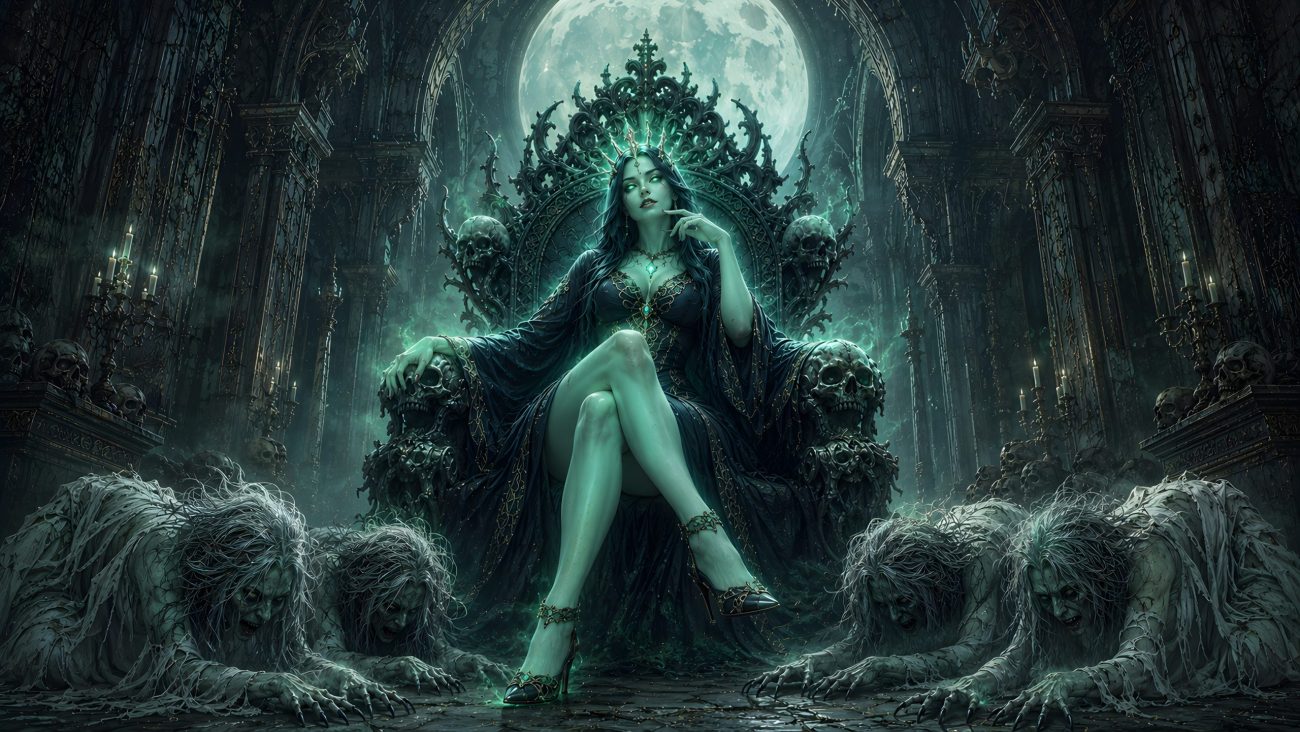
Clíodhna is one of the greatest fairy queens of Irish mythology and the legendary Queen of the Banshees. Counted among the Tuatha Dé Danann, she is celebrated as a goddess of love, beauty, and the Otherworld, while also serving as the powerful ruler of the sídhe (fairies) of South Munster. Her hidden palace lies beneath the rocky hill of Carrigcleena in County Cork, where Irish tradition says she continues to reign over her fairy court.

Among Clíodhna’s greatest wonders are her three brilliantly colored magical birds. Feeding upon apples from a sacred tree in the Otherworld, their sweet songs possess extraordinary healing powers, curing sickness, soothing sorrow, and lulling listeners into a deep enchanted sleep. Their music was said to be unlike anything heard in the mortal world.

One of her oldest legends tells of her love for the mortal prince Ciabhan, whom she met in the Otherworldly kingdom ruled by Manannán mac Lir. The two fled together to Ireland, hoping to live among humans. As Ciabhan went ashore to hunt, Clíodhna remained sleeping in their boat. The servants of Manannán pursued the lovers and enchanted Clíodhna into a magical sleep with supernatural music. A gigantic wave then swept her out to sea before she could escape. Ever afterward that wave became known as Tonn Chlíodhna (“Clíodhna’s Wave”), one of Ireland’s most famous mythological landmarks. Whether she drowned or simply returned to the Otherworld varies between traditions.

In another medieval tale, The Voyage of Teigue, Son of Cian, Clíodhna appears as a noble lady dwelling on the mysterious island of Inis Derglocha. There she aids the hero by giving him three magical birds to guide and comfort his companions with their music, along with an emerald cup capable of turning water into wine. She warns him never to lose the cup, for doing so would bring about his death. Thanks to her gifts, Teigue rescues his captured people and safely returns to Ireland.

Many later Irish legends portray Clíodhna not only as a fairy queen but also as a passionate and deeply emotional supernatural being. One famous story tells of the prince Caiov O’Keeffe and the two daughters of the last great druid, Clíodhna and Aoivil. Both sisters fell in love with the young prince, but his heart belonged to Aoivil. Consumed by jealousy, Clíodhna secretly cursed her own sister, imprisoned her within a hidden cave, and eventually transformed her into a beautiful white cat doomed to guard vast treasures of gold and silver. Though Clíodhna later regretted her actions, she had lost the magical wand needed to undo the spell. According to legend, the enchantment will only be broken by someone who loves Aoivil more than the riches she guards.

Clíodhna also appears in romantic tales involving the Fitzgerald family. In one legend she abducts the handsome chieftain Fitz-Gerald, carrying him away to her fairy palace beneath Carrigcleena because she desired him for herself. His beloved Ellen O’Brien journeyed to the fairy queen’s dwelling and pleaded so movingly for his release that Clíodhna, touched by her devotion, returned him to the mortal world, allowing the lovers to marry.

Another tradition links Clíodhna to the famous Blarney Stone. Before appearing in court, Cormac MacCarthy, lord of Blarney Castle, sought the fairy queen’s help. Clíodhna instructed him to kiss the first stone he encountered that morning. After following her advice, he spoke with such irresistible charm and eloquence that he won his legal dispute. The stone was later built into the walls of Blarney Castle, where it became renowned for granting the legendary “gift of the gab” to those who kiss it.

For centuries Clíodhna was regarded as the supernatural protector of many noble families of Munster, especially the MacCarthys, O’Keeffes, O’Donovans, and FitzGeralds, who believed she watched over their fortunes and occasionally intervened in their affairs. Local folklore describes fairy gatherings at Carrigcleena, where, under the light of the moon, Clíodhna leads her fairy court in magnificent dances among the ancient rocks before disappearing once more into her hidden palace beneath the earth.

Thus Clíodhna is remembered not merely as a fairy queen, but as one of Ireland’s most beloved mythological figures—a goddess of beauty and love, a healer through the songs of her magical birds, a passionate lover, a patron of kings and noble families, and the eternal sovereign of the fairies of Munster.


Sources

Wikipedia contributors. (n.d.). Clíodhna. In Wikipedia. Retrieved June 27, 2026, from https://en.wikipedia.org/wiki/Cl%C3%ADodhna


Hantu Raya

Tradition / Region: Malaysian Mythology
Alternative names: Great Ghost
Category: Ghost


The Myth

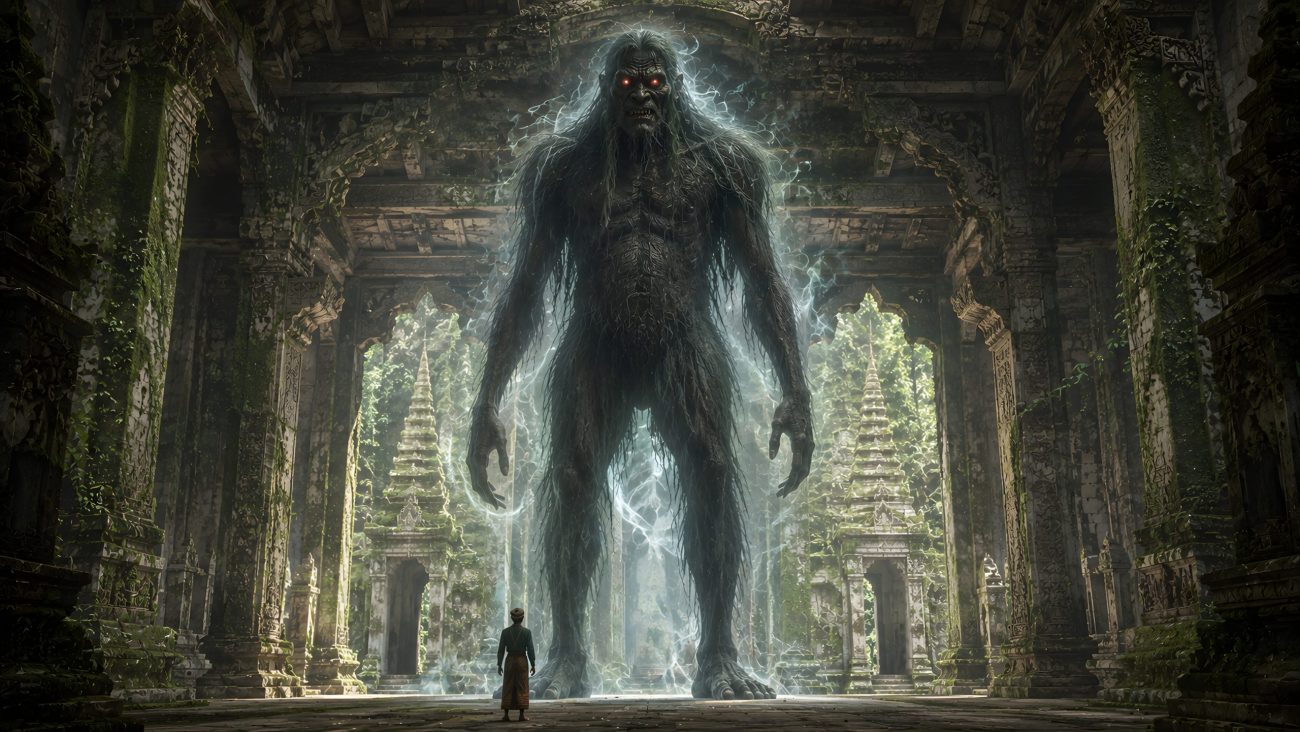
The Hantu Raya is a powerful familiar spirit that serves practitioners of black magic. It usually appears as a towering humanoid with a black, hairy body, rough gray skin, glowing red eyes, long sharp teeth, and a face largely free of hair. One of its most feared abilities is assuming the exact appearance of its master, allowing it to act as a perfect supernatural double.

According to Malay folklore, the Hantu Raya grants extraordinary strength and assistance to the person who controls it. It can perform heavy labor such as farming and clearing fields with superhuman speed, allowing its master to remain elsewhere while the work is completed. Because it can perfectly imitate its owner’s appearance, it can also provide an alibi, remaining at home while the real owner secretly travels, commits crimes, or engages in illicit affairs without arousing suspicion.

The spirit must be carefully maintained through regular offerings known as ancak, consisting of yellow glutinous rice, roasted chicken, eggs, rice flakes, and other foods prepared specifically for spirits. Failure to provide these offerings on time is believed to anger the Hantu Raya, causing it to turn against its master and bring misfortune.

The Hantu Raya has also been blamed for mysterious deaths during childbirth, particularly in times before modern medicine. Such tragedies were sometimes attributed to the invisible influence of the spirit rather than natural causes.

Unlike an ordinary ghost, the Hantu Raya is not simply a wandering spirit but a supernatural servant bound to its master through dark magic. Its immense power makes it one of the most dangerous and coveted spirit familiars in Malay folklore, capable of bringing prosperity and protection when controlled, but ruin if neglected or released.


Sources

Wikipedia contributors. (n.d.). Hantu Raya. In Wikipedia. Retrieved June 27, 2026, from https://en.wikipedia.org/wiki/Hantu_Raya


Hantu Tinggi

Tradition / Region: Malaysian Mythology
Alternative names: Tall Ghost, Bajang Tinggi, Tinggi Puaka, Bapak Hantu, Bapak Jin
Category: Ghost, Giant


The Myth

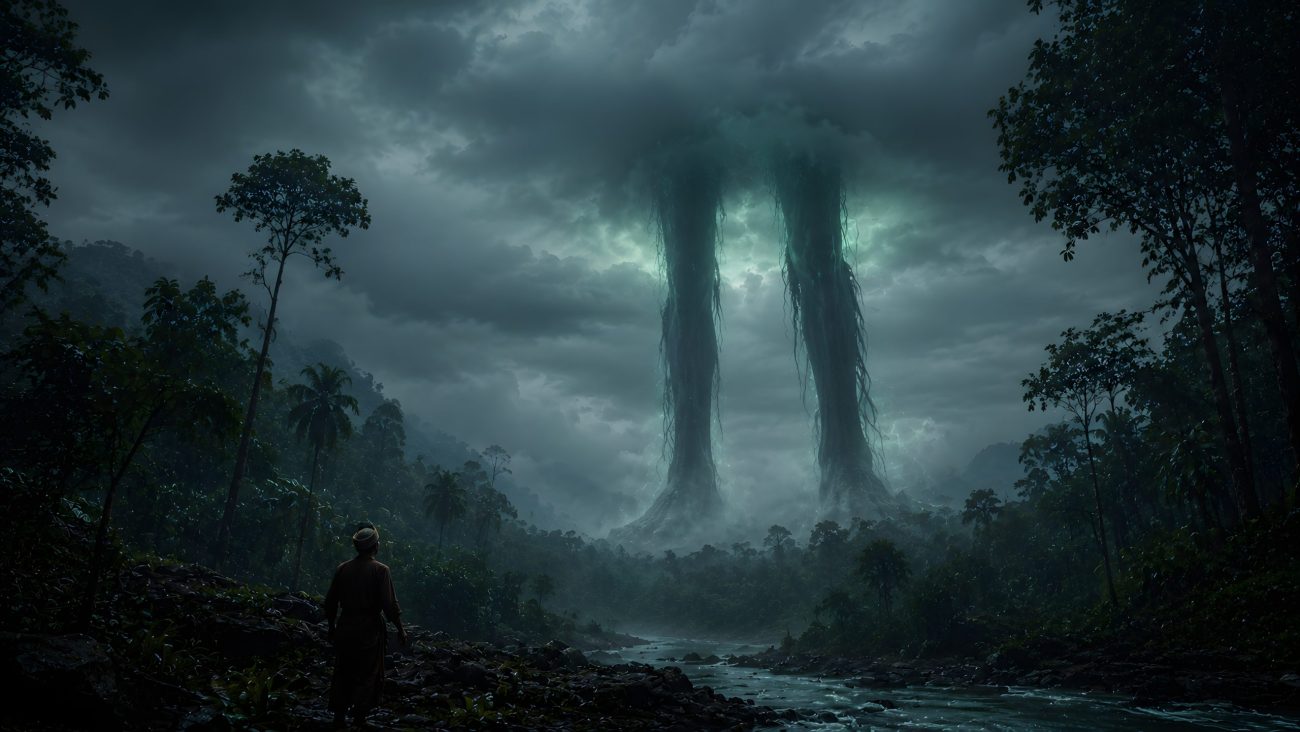
The Hantu Tinggi is a colossal supernatural being whose enormous body towers so high that its upper half disappears into the clouds. Resembling the fearsome Hantu Raya or the Indonesian Genderuwo, it is said to be thousands of times larger than any ordinary spirit. A single strand of hair from its leg is believed to be as thick as a muscular man’s arm.

According to Malaysian folklore, the Hantu Tinggi dwells in remote forests, mountains, and isolated wilderness. It is considered an immensely ancient being, existing since before the arrival of humanity and, in some traditions, even before the creation of Iblis. Because of its unimaginable size, a person may unknowingly walk between its legs or beneath its towering form without immediately realizing what they have encountered.

Looking directly at the Hantu Tinggi is said to bring terrible consequences. Those who meet its gaze may be struck blind, while others suffer broken necks, damaged spines, or become hopelessly lost after being drawn into the Ghaib Realm, the hidden supernatural world inhabited by spirits. For this reason, parents traditionally warned children to avoid lonely forests, hills, and mountains, especially after dark.

Protection against the Hantu Tinggi is believed to come through the recitation of verses from the Qur’an and sincere prayers. Those thought to have been cursed by the giant spirit often seek help from a bomoh, pawang, dukun, imam, or other Islamic spiritual healer to remove its influence.

Although often confused with the Hantu Galah, a bamboo-like forest spirit, the Hantu Tinggi is regarded as a completely different entity. Rather than resembling a living bamboo, it is an unimaginably massive giant whose presence alone inspires awe and terror.

Thus the Hantu Tinggi is remembered as one of Malaysia’s largest and most mysterious supernatural beings—a towering primordial spirit whose head vanishes into the heavens and whose mere gaze can bring ruin to those unfortunate enough to encounter it.


Sources

Wikipedia contributors. (n.d.). Hantu Tinggi. In Wikipedia. Retrieved June 27, 2026, from https://en.wikipedia.org/wiki/Hantu_Tinggi


Flying Dutchman

Tradition / Region: Dutch Mythology
Alternative names: De Vliegende Hollander
Category: Ghost, Object


The Myth

The Flying Dutchman is a legendary ghost ship condemned to sail the seas for all eternity, never able to enter port or find rest. Surrounded by an eerie supernatural glow, it appears during violent storms or in heavy mist, serving as one of the most feared omens in maritime folklore. Sailors believed that seeing the phantom vessel foretold disaster, shipwreck, or death.

According to the most famous version of the legend, the ship was commanded by the Dutch captain Hendrick van der Decken, who attempted to round the Cape of Good Hope during a fierce storm. When urged to seek shelter, the stubborn captain swore that he would round the cape even if it took until the Day of Judgment. For his blasphemous oath and defiance of Heaven, he and his crew were cursed to wander the oceans forever.

Other traditions claim the crew had committed terrible crimes such as piracy, murder, or even participating in the early slave trade, and that their eternal voyage was divine punishment for these sins.

The ghost ship is said to appear suddenly out of storms with blood-red or ghostly white light illuminating its sails. It moves without regard for wind or current and may vanish as quickly as it appears. Some witnesses claimed it could pass directly through other ships without collision.

One of its most infamous traits is attempting to deliver letters addressed to people who died long ago. Sailors warned that accepting these messages would bring terrible misfortune or death.

Numerous sightings have been reported since the eighteenth century. Perhaps the most famous occurred in 1881, when the future King George V and several crew members aboard HMS Bacchante reported seeing a glowing phantom ship. Later that same day, one of the sailors who witnessed the apparition fell to his death, reinforcing the Flying Dutchman’s reputation as a harbinger of doom.

The Flying Dutchman remains one of the world’s most enduring ghost-ship legends, symbolizing eternal punishment, doomed ambition, and the unforgiving power of the sea.


Sources

Wikipedia contributors. (n.d.). Flying Dutchman. In Wikipedia. Retrieved June 27, 2026, from https://en.wikipedia.org/wiki/Flying_Dutchman


Shoe-Eating Ghost

Tradition / Region: Chinese Mythology
Alternative names: Shoe-Eating Yāoguài, Shoe-Eating Ghost (食鞋鬼)
Category: Ghost


The Myth

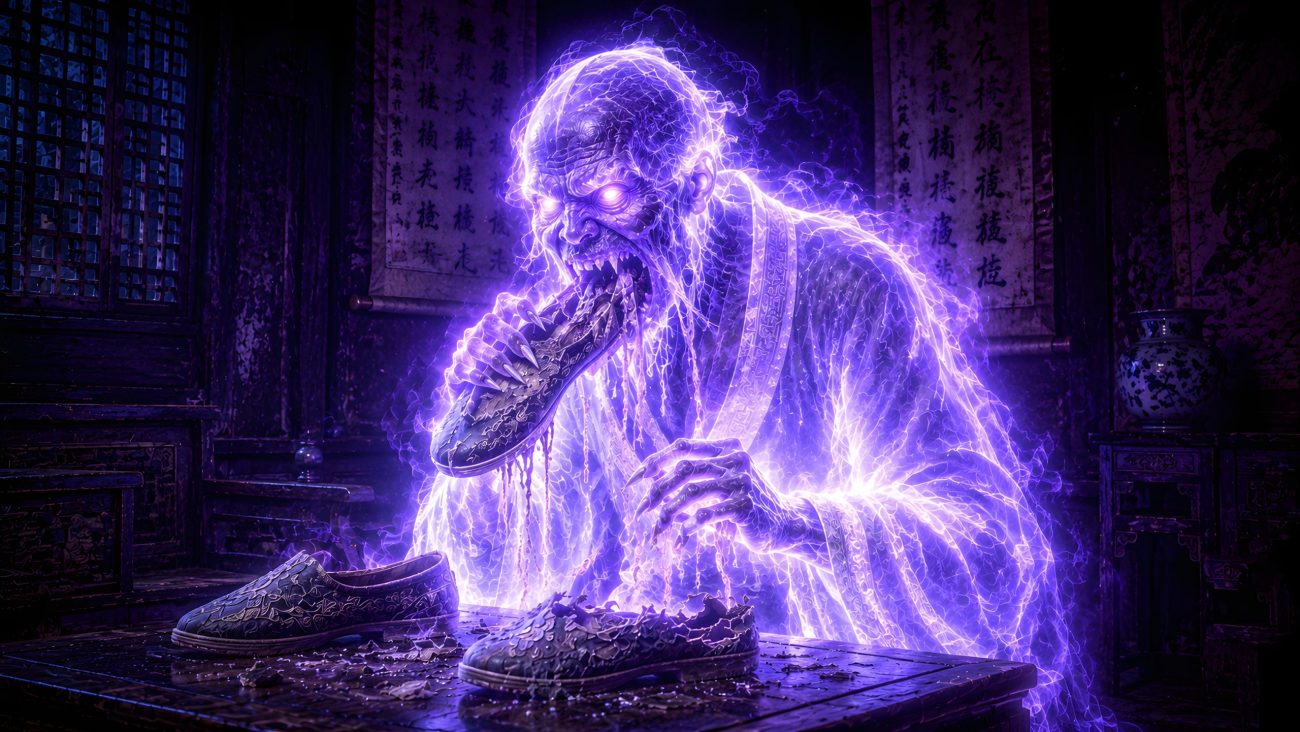
The Shoe-Eating Ghost is a strange black humanoid spirit with deep-set eyes, an enormous nose, a tiger-like mouth, and black claws. It often hides inside latrines or behind holes in their walls, where it quietly waits for unsuspecting visitors. Although frightening in appearance, it is capable of speaking with humans and is not always malicious.

According to Chinese legend, the creature has an unusual appetite—it devours shoes as though they were flesh. When someone enters a latrine alone, the ghost reaches out with its long arm and politely asks for a shoe. If refused, it simply snatches the footwear itself. It then tears into the shoe with its teeth, chewing it so violently that blood appears to flow from it, as though it were consuming living meat, until nothing remains.

The best-known account appears in both the Taiping Guangji and Gui Dong. A county clerk suffering from illness entered a privy without a servant because his jealous wife refused to let anyone accompany him. There he encountered the strange black creature, which calmly demanded one of his shoes before devouring it. When the clerk returned with his wife to witness the event, the ghost appeared again and consumed his remaining shoe.

In one version of the story, the ghost later returned the shoes completely unharmed and warned the clerk that his allotted lifespan would end in one hundred days. The prophecy proved true, and after returning home, he died exactly as foretold. In another version, the encounter itself filled the man with such overwhelming terror that he became gravely ill and eventually died.

Some traditions therefore portray the Shoe-Eating Ghost as a supernatural messenger rather than a purely malevolent being. Though infamous for devouring footwear, it may also repay kindness or reveal the fate awaiting those it encounters.

Thus the Shoe-Eating Ghost is remembered as one of China’s strangest yāoguài—a mysterious spirit lurking in lonely latrines, feasting upon shoes as though they were flesh while quietly foretelling the destinies of the living.


Sources

Wikipedia contributors. (n.d.). 食鞋妖怪. In 維基百科,自由的百科全書. Retrieved June 27, 2026, from https://zh.wikipedia.org/wiki/%E9%A3%9F%E9%9E%8B%E5%A6%96%E6%80%AA


Water Mang Ghost

Tradition / Region: Chinese Mythology
Alternative names: Shuǐmǎng Guǐ (水莽鬼)
Category: Ghost


The Myth

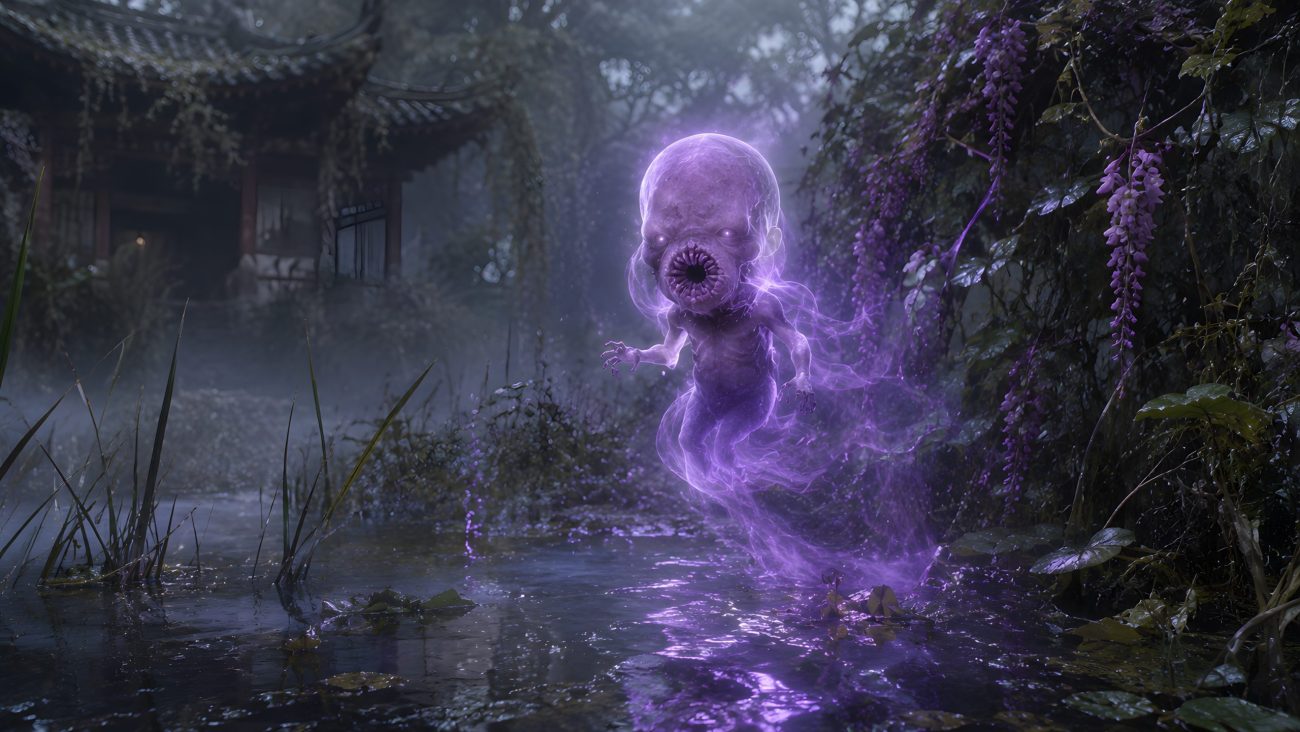
The Water Mang Ghost is the spirit of a person who died after accidentally eating the deadly Water Mang Grass, a poisonous vine resembling kudzu with purple flowers similar to those of a hyacinth bean. It appears as the ghost of its former human self, forever trapped between life and death, unable to pass on to the next world.

According to Chinese folklore, anyone who unknowingly consumes the Water Mang Grass dies almost instantly and becomes a Water Mang Ghost. Unlike ordinary spirits, these ghosts are denied reincarnation. To escape their fate, they must find another victim to die from the same poisonous plant and take their place in the cycle of suffering.

Because of this belief, the region around the Taohua River in Hunan Province was said to be haunted by unusually large numbers of Water Mang Ghosts. They were believed to lure or deceive travelers into eating the deadly vine, hoping to finally free themselves from their endless imprisonment.

The most famous account appears in Strange Tales from a Chinese Studio (Liaozhai Zhiyi), where the legend describes both the poisonous plant itself and the tragic fate awaiting those who die from it. The tale portrays the Water Mang Ghost not as a creature driven by malice alone, but as a desperate soul seeking release from a curse that can end only when another suffers the same death.

Thus the Water Mang Ghost is remembered as one of China’s most tragic supernatural beings—a victim transformed into a ghost by poisonous vegetation, condemned to wander the world until another unknowingly takes its place.


Sources

Wikipedia contributors. (n.d.). 水莽鬼. In 維基百科,自由的百科全書. Retrieved June 27, 2026, from https://zh.wikipedia.org/wiki/%E6%B0%B4%E8%8E%BD%E9%AC%BC


Chess Ghost

Tradition / Region: Chinese Mythology
Alternative names: Qi Gui (棋鬼), Chi Gui (痴鬼, “Obsessed Ghost”)
Category: Ghost


The Myth

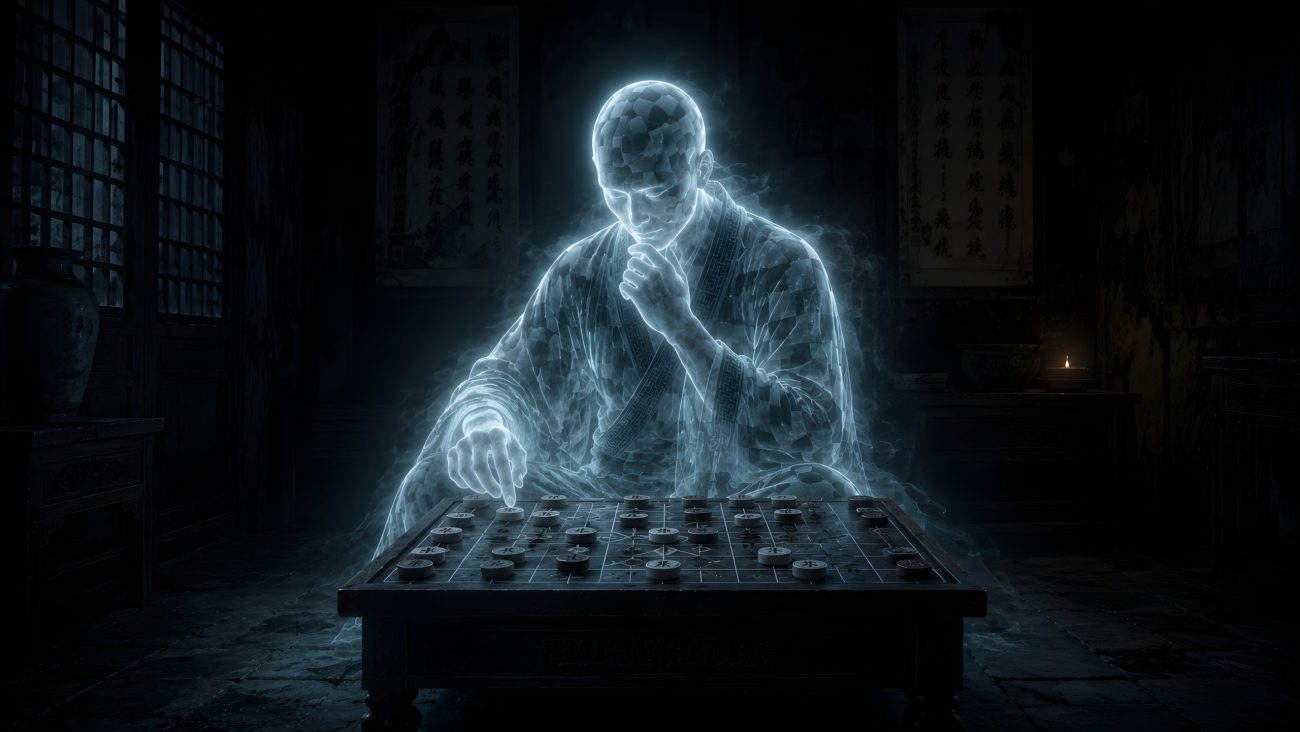
The Chess Ghost appears as the restless spirit of a person so utterly consumed by the game of Go (Weiqi) that even death could not break the obsession. It resembles an ordinary human ghost, forever seeking opponents and wandering wherever games of strategy are played. Though incorporeal, its mind remains entirely fixed upon the board, unable to think of anything except the next move.

According to Chinese legend, the Chess Ghost was once a man whose overwhelming passion for the game caused him to squander his wealth and neglect his family until his life fell into ruin. After death, he was condemned to the realm of the Hungry Ghosts as punishment for allowing obsession to consume his existence.

Even in the afterlife, however, he could not abandon his addiction. Rather than seeking redemption or preparing for reincarnation, he spent his time searching endlessly for games of Go. When the moment finally came for his soul to be reborn, he ignored the opportunity because he was too absorbed in a match. Having missed his chance, he remained trapped as a wandering ghost.

The most famous account appears in Strange Tales from a Chinese Studio (Liaozhai Zhiyi), where the Chess Ghost continues to haunt the living, driven not by hatred or revenge but by an irresistible desire to play. Other classical works similarly portray the spirit as caring little about its earthly life and focusing instead on its endless existence after death, forever captivated by the game that destroyed it.

Thus the Chess Ghost is remembered as a supernatural warning against obsession—a spirit whose love of strategy became so consuming that it sacrificed wealth, family, salvation, and even the possibility of rebirth, remaining forever bound to an unfinished game.


Sources

Wikipedia contributors. (n.d.). 棋鬼. In 維基百科,自由的百科全書. Retrieved June 27, 2026, from https://zh.wikipedia.org/wiki/%E6%A3%8B%E9%AC%BC


Pipa Ghost

Tradition / Region: Chinese Mythology
Alternative names: Pipa Spirit
Category: Ghost, Object


The Myth

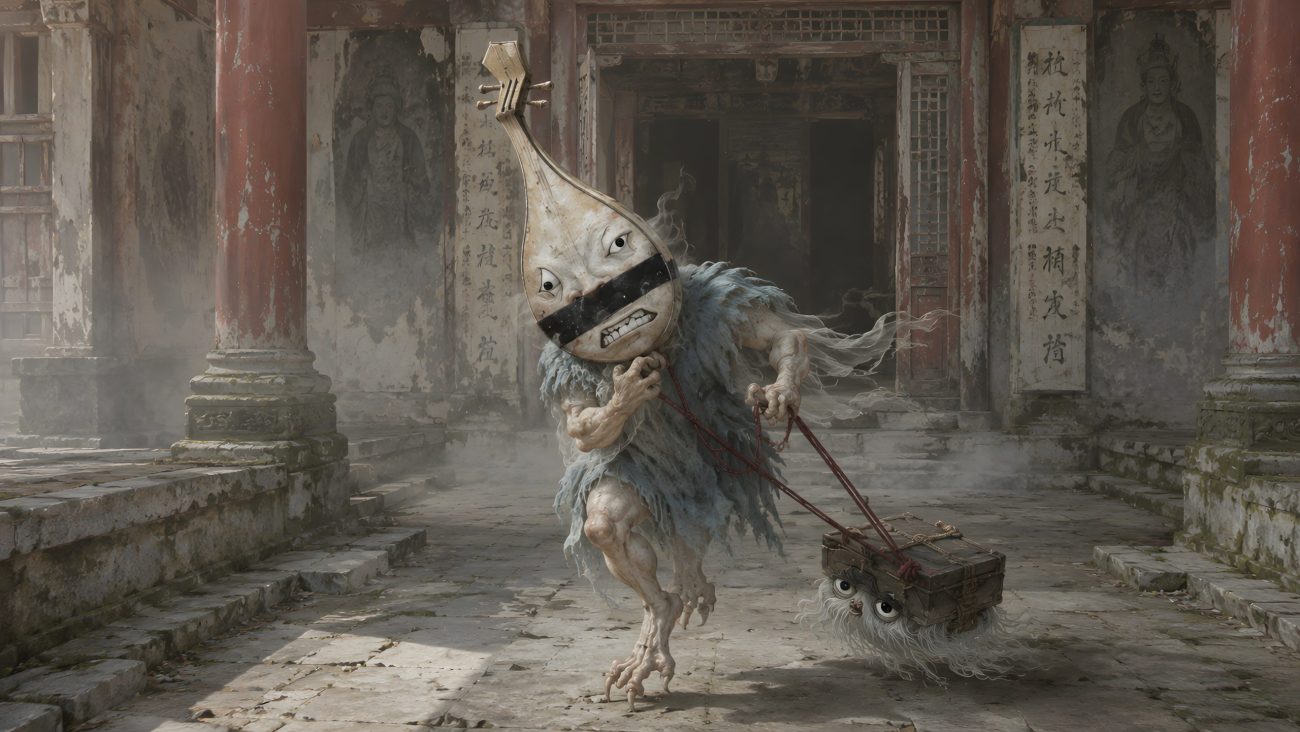
The Pipa Ghost is an invisible malevolent spirit said to inhabit a pipa, the traditional Chinese lute, from which it takes its name. Though normally unseen, it can speak and possesses supernatural intelligence. Once released, it is capable of entering human beings, causing mysterious illnesses and spreading misfortune throughout entire communities.

According to ancient Chinese legend, the Pipa Ghost is a soul that has taken residence within a pipa. By night it leaves its hiding place to hunt, feeding upon the internal organs of both humans and animals. Those it attacks soon waste away and die, while villages plagued by its presence suffer sickness, livestock deaths, and widespread calamity.

Some traditions claim the spirit remains sealed inside household vessels or beneath tightly covered pots. If a pot is broken or its lid left carelessly open, the Pipa Ghost escapes and begins haunting the household. Anyone suspected of being possessed by the spirit is believed to endanger the entire village.

Among the Dai people of Yunnan, the fear of the Pipa Ghost became deeply rooted in local belief. Families accused of harboring one of these spirits were often completely ostracized. Those believed to be possessed could be expelled from the village, their homes burned, and, in extreme cases, attacked or even killed by frightened neighbors. It was also believed that someone carrying the Pipa Ghost could marry only another person similarly afflicted, lest the spirit spread into another family.

To rid a community of the demon, shamans performed exorcisms and special ceremonies intended to capture or destroy the spirit. During times of plague, entire villages gathered to conduct rituals in which the Pipa Ghost was symbolically hunted down and burned, believing this would end the epidemic and restore harmony.

Thus the Pipa Ghost is remembered as one of China’s most feared possessing spirits—a hidden demon that spreads disease, devours life from within, and turns fear itself into a force capable of destroying entire communities.


Sources

Wikipedia contributors. (n.d.). 琵琶鬼. In 維基百科,自由的百科全書. Retrieved June 27, 2026, from https://zh.wikipedia.org/wiki/%E7%90%B5%E7%90%B6%E9%AC%BC


Noderabō

Tradition / Region: Japanese Mythology
Alternative names: Noderabo
Category: Ghost


The Myth

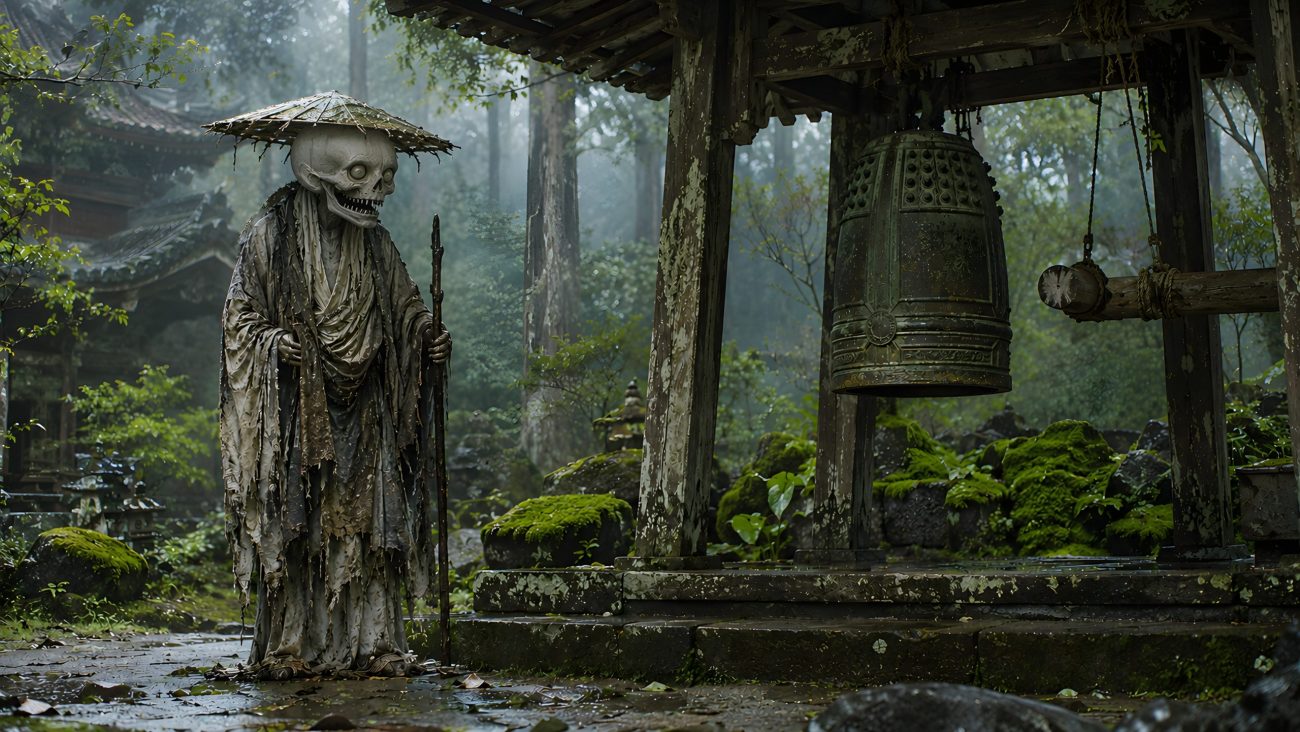
The Noderabō appears as a silent monk dressed in worn, tattered robes and a weathered kasa hat. It is most often depicted standing alone beside an old temple bell in an abandoned, crumbling temple. Though outwardly resembling an ordinary Buddhist monk, it is an eerie and unnatural figure whose true face and intentions remain unknown.

The Noderabō is one of the more mysterious yōkai depicted by Toriyama Sekien in the Gazu Hyakki Yagyō. Sekien provided no explanation for the creature, leaving later generations to speculate about its nature.

According to later folklore, the Noderabō haunts deserted temples that have fallen into ruin. As evening falls, the lonely sound of a temple bell echoes through the mountains despite no living monk remaining to ring it. The ghostly monk is said to wander the abandoned grounds in silence, appearing only briefly before disappearing once more into the darkness.

Some traditions claim the Noderabō is the restless spirit of a head priest whose temple fell into decay after the villagers ceased making offerings. Unable to abandon the place he once served, he continues to watch over the empty temple and ring its bell forever.

Other interpretations suggest the Noderabō represents corrupt monks who abandoned Buddhist discipline through greed and worldly desires, eventually becoming yōkai after death. In this reading, the silent monk serves as a warning against spiritual corruption and attachment.

Another tradition connects the Noderabō with mysterious bells heard echoing from mountains where no temple exists. Children who heard these unexplained chimes were told that the Noderabō was ringing its lonely bell deep within the wilderness, although others believed the sounds were merely echoes carried by the mountains.

Because Sekien never explained the creature, its true origin remains uncertain. Whether it is the ghost of a forgotten priest, the embodiment of an abandoned temple, or simply an eerie guardian of sacred ruins, the Noderabō remains one of Japan’s most enigmatic yōkai—a solitary monk forever standing beside the bell of a temple that time has long since forgotten.


Sources

Wikipedia contributors. (n.d.). Noderabō. In Wikipedia. Retrieved June 21, 2026, from https://en.wikipedia.org/wiki/Noderab%C5%8D