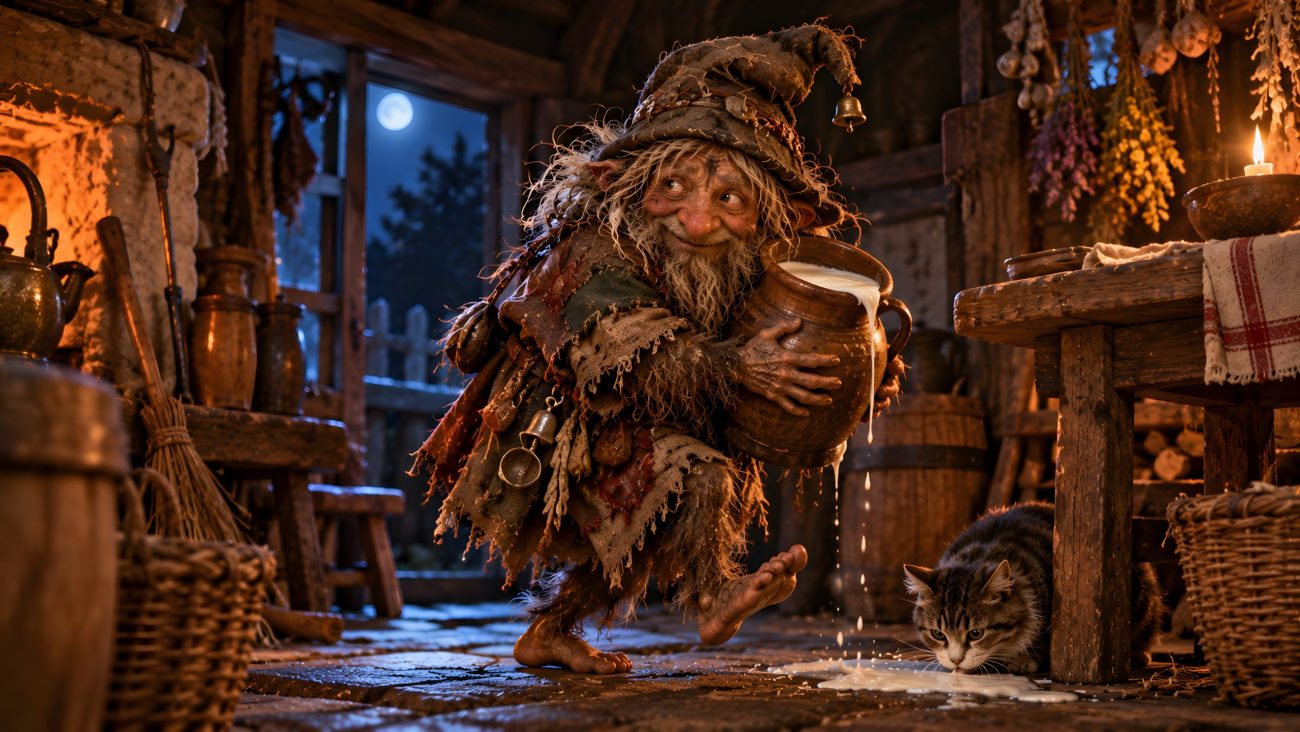
Tradition: English Mythology
Alternative Names: Hobgoblin, Hob-thrush, Hob-thrust, Hob-dross
Category: House dweller
The Myth
A hob is a small supernatural being in English folklore, often described in Yorkshire as a hairy, wizened little man. Hobs can live inside houses or outdoors, including in farmyards, caves, and other secluded places. They are generally helpful but mischievous spirits, known for assisting people with their work. They may help farmers in the fields, shopkeepers in their stores, and households with difficult tasks. However, their assistance depends on how they are treated, and an offended hob can become a troublesome presence.
Hobs are particularly associated with nighttime and are not necessarily tied to one location. They come and go as they please, helping people who respect them but retaliating against those who insult them. A farmer who speaks badly of the spirit on his land might find dishes broken and livestock let loose. Despite their helpful nature, hobs can be difficult to get rid of, and some are said to follow people even when they move away.
One famous hob lived in a cave known as Hobhole near Runswick Bay in Yorkshire. People believed that this spirit could cure children suffering from kink-cough, or whooping cough. Parents brought their sick children to the cave and called upon the hob to take the illness away. This tradition portrays the hob not merely as a household helper but also as a spirit capable of healing.
Clothing plays an important role in stories about hobs. Giving a hob new clothes, such as a shirt, cap, or hood, usually causes it to leave permanently. The gesture may be intended as a reward, but the spirit takes offence and withdraws its services. Traditional rhymes mark the moment when the hob departs, warning that it will no longer help. This motif reflects the delicate relationship between humans and these supernatural workers: their assistance cannot simply be bought or controlled.
A story from Farndale in the North York Moors tells of a farmer so troubled by his hob that he decided to move to another farm. He loaded his furniture and equipment onto a cart and set off. When a neighbour asked whether he was moving, a voice called out from inside a churn on the cart: “Aye, lad, we’re flittin!” The farmer realised that the hob had followed him and would remain with him wherever he went, so he turned around and returned to his original farm.
Although many hobs can be dismissed by offering them clothing, the most persistent may be impossible to escape. They embody the uncertain nature of supernatural household assistance: a hob can be a valuable worker and even a healer, but offending it may turn a helpful spirit into a lasting nuisance.
Sources
“Hob (Folklore).” Wikipedia: The Free Encyclopedia. Wikimedia Foundation. Accessed October 24, 2026. https://en.wikipedia.org/wiki/Hob_(folklore)