Gypnissen

Tradition: Belgian Mythology
Alternative Names: Gypnissen
Category: House dweller


The Myth

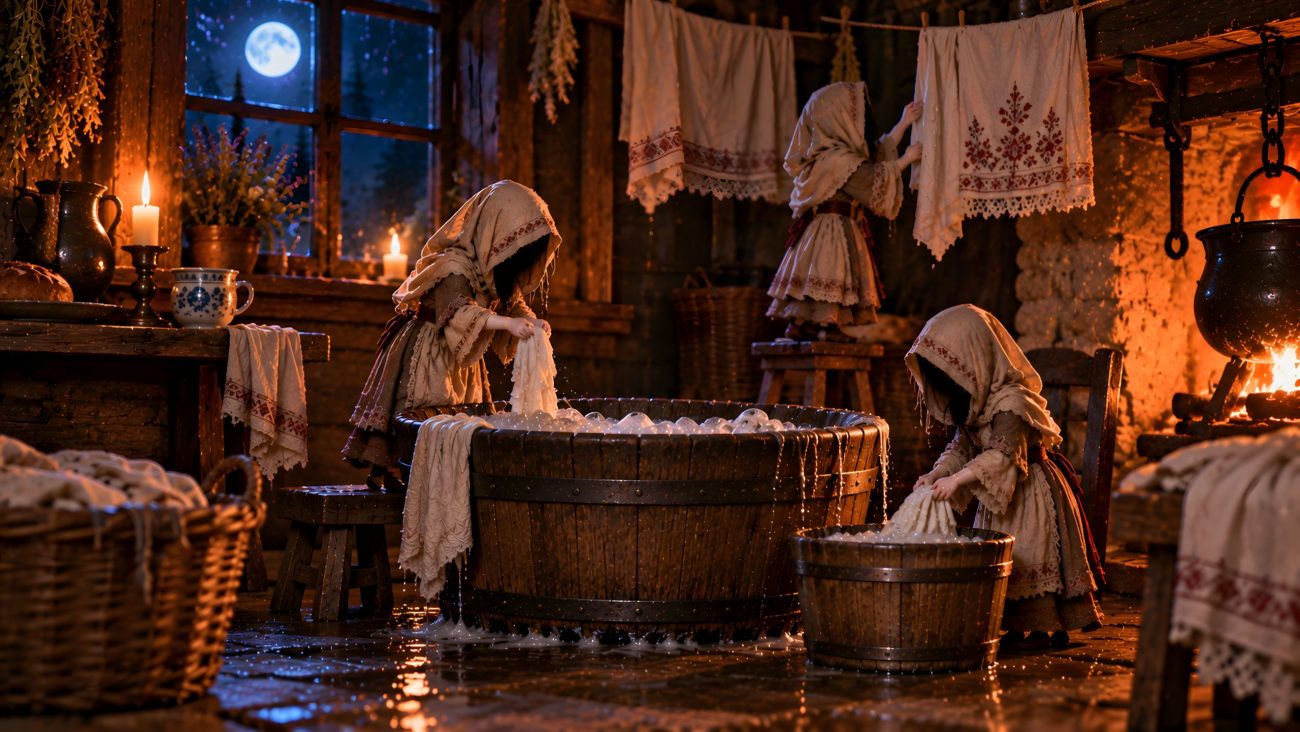
The Gypnissen are a kind of small, wondrous female beings said to have lived in a mysterious castle at Het Beggelken, in the Kluise district of Oordegem. According to local tradition, the castle could be built in a single night and disappear again by morning. The old people of the village told stories of the Gypnissen who inhabited this extraordinary place, describing them as supernatural women who helped local households without harming anyone.

The Gypnissen were especially known for washing clothes. When a household had laundry to be done, the inhabitants would prepare the washing in the evening and leave it ready for the little women. They would also provide a small pot of coffee and a sandwich as refreshments. By the following morning, all the clothes had been washed, while the coffee and sandwich had disappeared. The Gypnissen performed their work quietly and efficiently, asking for nothing more than this simple offering.

Unlike more threatening supernatural beings, the Gypnissen were considered harmless and helpful. Their mysterious labour allowed ordinary household chores to be completed overnight, while the food and drink left for them established a reciprocal relationship between humans and the supernatural world.

The account preserves local testimony supporting the belief in these beings. An elderly woman reportedly assured the storyteller that her own mother had associated with the Gypnissen. Older inhabitants of Oordegem were said to swear that the stories were true. A former schoolmate also described a similar tradition from the nearby parish of Kluizen, where the beings were known by another name that the storyteller could no longer remember. These accounts suggest that stories of small female spirits who secretly helped with domestic work circulated in several local communities.


Sources

De Cock, Alfons. Vlaamsche sagen uit den volksmond. Amsterdam: Maatschappij voor Goede en Goedkoope Lectuur, 1921. https://www.dbnl.org/tekst/cock001vlaa01_01/cock001vlaa01_01_0004.php#subnav-meer-btn
Mare

Tradition: Belgian Mythology
Alternative Names: De Mare
Category: House dweller


The Myth

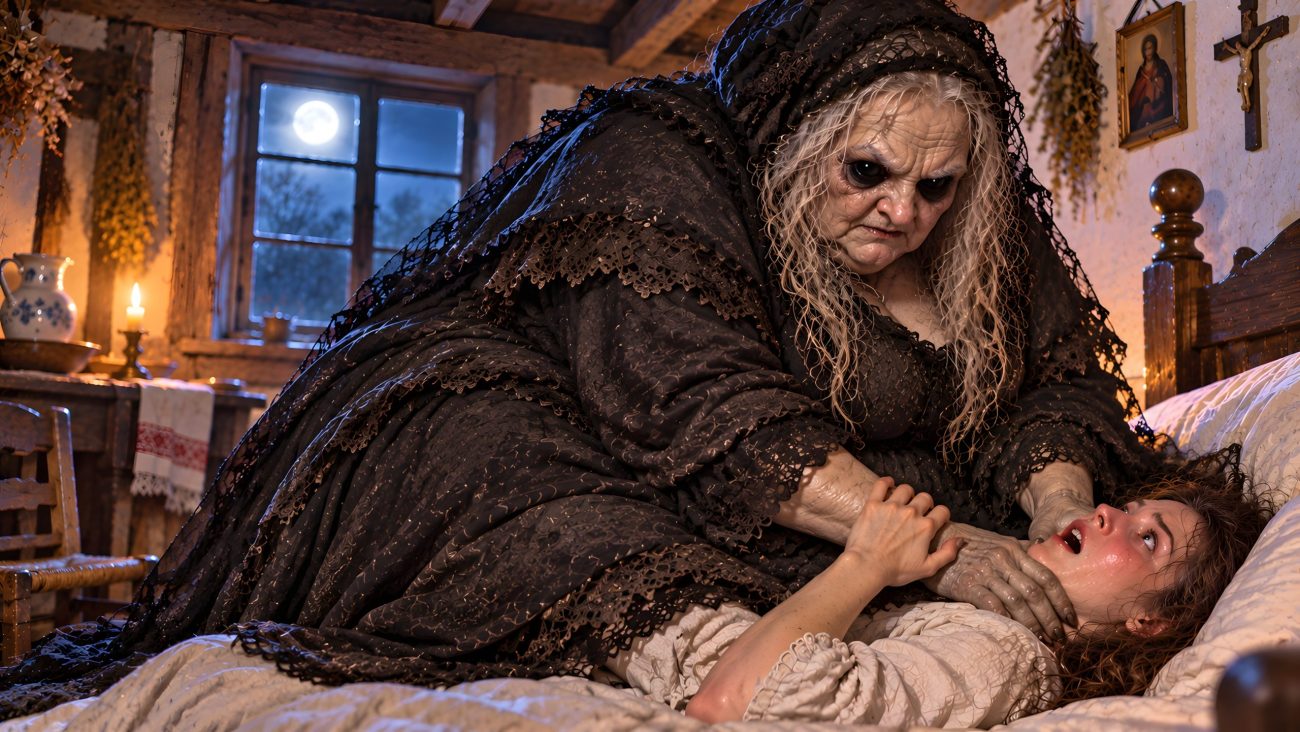
The Mare is a terrifying supernatural being that appears as an old, heavy woman dressed entirely in black. In a legend from Beveren-Waas, she attacks a woman who has returned to bed after rising early to prepare everything for her husband before he leaves for work. The Mare’s appearance is sudden and frightening, transforming an ordinary morning into a supernatural ordeal.

The woman had expected someone from the village, who customarily came to call her husband when it was time to leave for work. That morning, however, nobody appeared. After briefly going outside to look and listen, she returned indoors, locked the door, and lay down again. She had been resting for barely five minutes when she thought she heard the key turning in the front door and someone entering the room.

An old, stout woman dressed completely in black approached the bed and threw herself onto the woman. The supernatural attacker felt extraordinarily heavy, as though she weighed a hundred kilograms, pressing down on her victim. When the frightened woman tried to scream, she felt her throat being squeezed shut and could scarcely breathe, as if she were about to suffocate.

At the moment when the woman seemed close to suffocation, the Mare suddenly vanished. The victim was immediately able to breathe freely again. The account offers no explanation for the Mare’s origins or motives, but its attack resembles the frightening experience of being crushed and strangled while lying in bed. In this Flemish tradition, the Mare is remembered as a menacing nocturnal or early-morning presence capable of overwhelming a person with supernatural weight and leaving them struggling for breath.


Sources

De Cock, Alfons. Vlaamsche sagen uit den volksmond. Amsterdam: Maatschappij voor Goede en Goedkoope Lectuur, 1921. https://www.dbnl.org/tekst/cock001vlaa01_01/cock001vlaa01_01_0004.php#subnav-meer-btn


Flerus

Tradition: Belgian Mythology
Alternative Names: –
Category: House dweller


The Myth

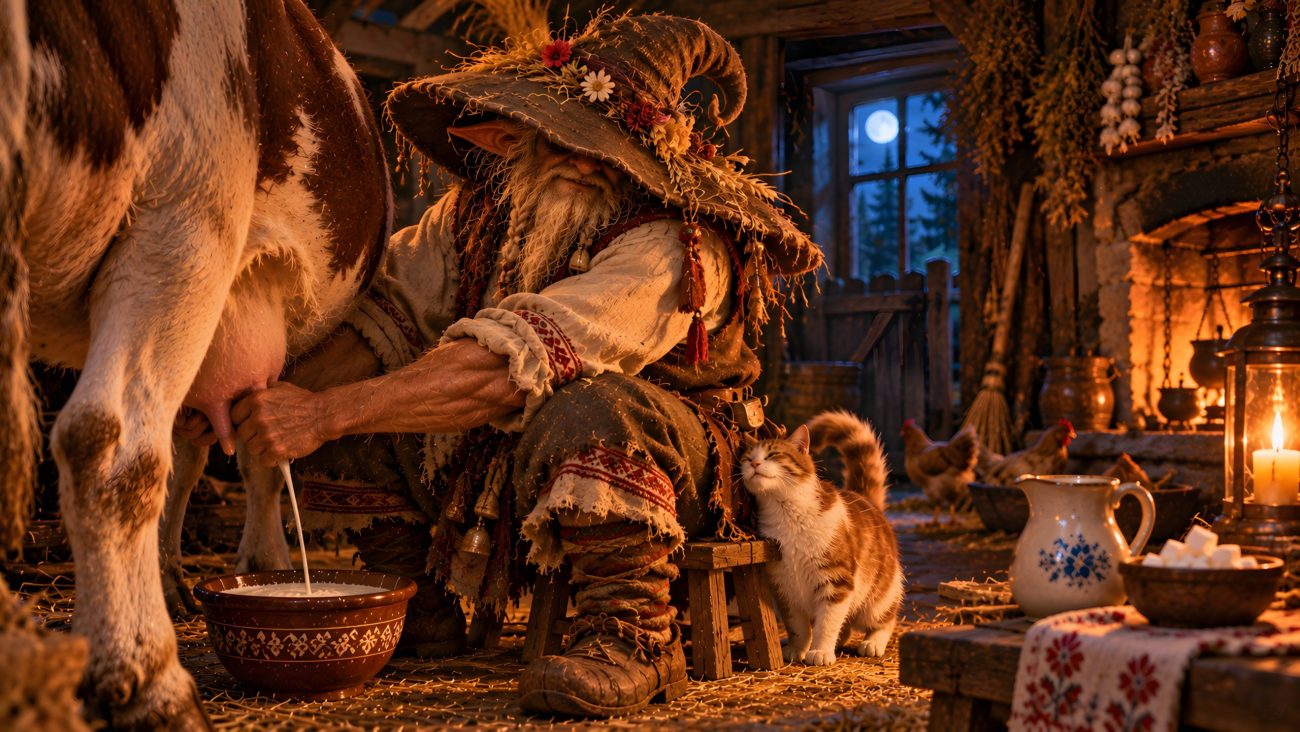
Fleurus is a benevolent household spirit in Flemish folklore that can take the form of a person or a domestic animal. He performs heavy household work and helps families with difficult tasks. When a maid cannot manage the cleaning, Fleurus may come to her aid; if a horse is sick, he can appear as a strong, vigorous horse, allowing himself to be harnessed and working in its place. He expects little in return, usually accepting a small amount of fresh milk and sugar as a reward.

Fleurus is generally helpful, but he can also be mischievous. One story tells of a farmer whose business was prosperous and whose household was well cared for by the spirit. When a horse fell ill, Fleurus appeared in the form of a strong horse and willingly performed the work. He never shied away from labour and also helped when a maid was unable to cope with her cleaning duties. In return, he was usually given fresh milk with a little sugar.

One day, however, a pair of young newlyweds decided to play a trick on Fleurus. When he appeared to help with the work, they offered him milk mixed with garlic instead of sugar. Fleurus merely sipped the drink and disappeared, saying:

“Milk and garlic!
Fleurus runs away,
And with him goes the luck.”

After that, nobody heard or saw Fleurus at the farm again. The place became known as Fleurushoff, preserving the memory of the household spirit whose help and good fortune had been lost through the couple’s trick.


Sources

“Flerus.” Encyclopedia Mythica. https://pantheon.org/articles/f/flerus.html