Muhkalb

Tradition: German Mythology
Alternative names: Moo Calf
Category: Cow


The Myth

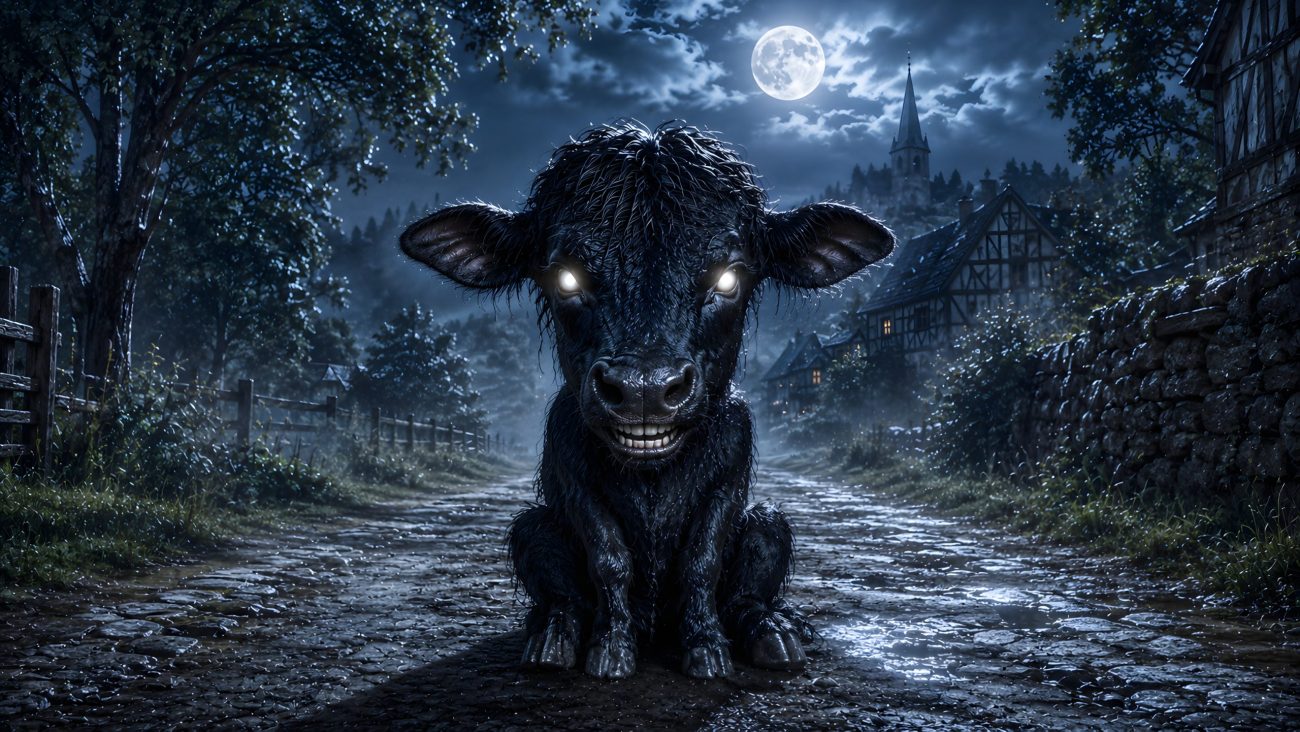
The Muhkalb is a legendary creature found in folklore from Rheinhessen, the Rheingau, and other parts of southwestern Germany. It is usually described as an enormous calf with the head of a fully grown cow and glowing eyes. In some traditions, it appears as a hybrid of a bull and a maiden.

The Muhkalb appears only at night and terrifies people with its terrible bellowing. It is said to leap onto the backs of its victims and, in some accounts, trample them to death.

The legends surrounding the creature vary considerably between different locations. In Jugenheim, the Muhkalb was said to be the transformed spirit of an unfaithful nun who had drowned herself and her child in a well. As punishment, she was condemned to wander as a cow-calf, warning lovers against committing similar acts.

In Lorch, the Muhkalb was said to inhabit the dark gateway of the Hilchenhaus. It particularly tormented adulterers, usurious wine merchants, and brawlers. According to one local legend, around 1550 it even saved the town from bankruptcy by driving away officials of the Elector of Mainz who had come to collect war debts.

In Heilbronn, a butcher during the Thirty Years’ War was accused of selling dog meat as veal. He denied the accusation and swore that, if it were true, he would be reborn as a calf. He soon died of the plague, and thereafter was said to haunt the city at night in the form of the Muhkalb.

In Saarbrücken, the creature was described as a calf that appeared in the streets during the evening and grew to an unnatural size before shrinking again. It could also change its appearance, taking the forms of a dog, cow, donkey, or horse. Some accounts described it simply as a headless calf.


Sources

“Muhkalb.” Wikipedia: Die freie Enzyklopädie (German Wikipedia). Wikimedia Foundation. Accessed August 29, 2026. https://de.wikipedia.org/wiki/Muhkalb
Monster of Lake Tota

Tradition: Muisca mythology, Colombian Mythology
Alternative names: Devil Whale
Category: Whale, Cow


The Myth

Lake Tota, near Sogamoso in present-day Boyacá, Colombia, was considered sacred by the ancient Muisca people. According to their traditions, the lake was inhabited by a terrifying monster.

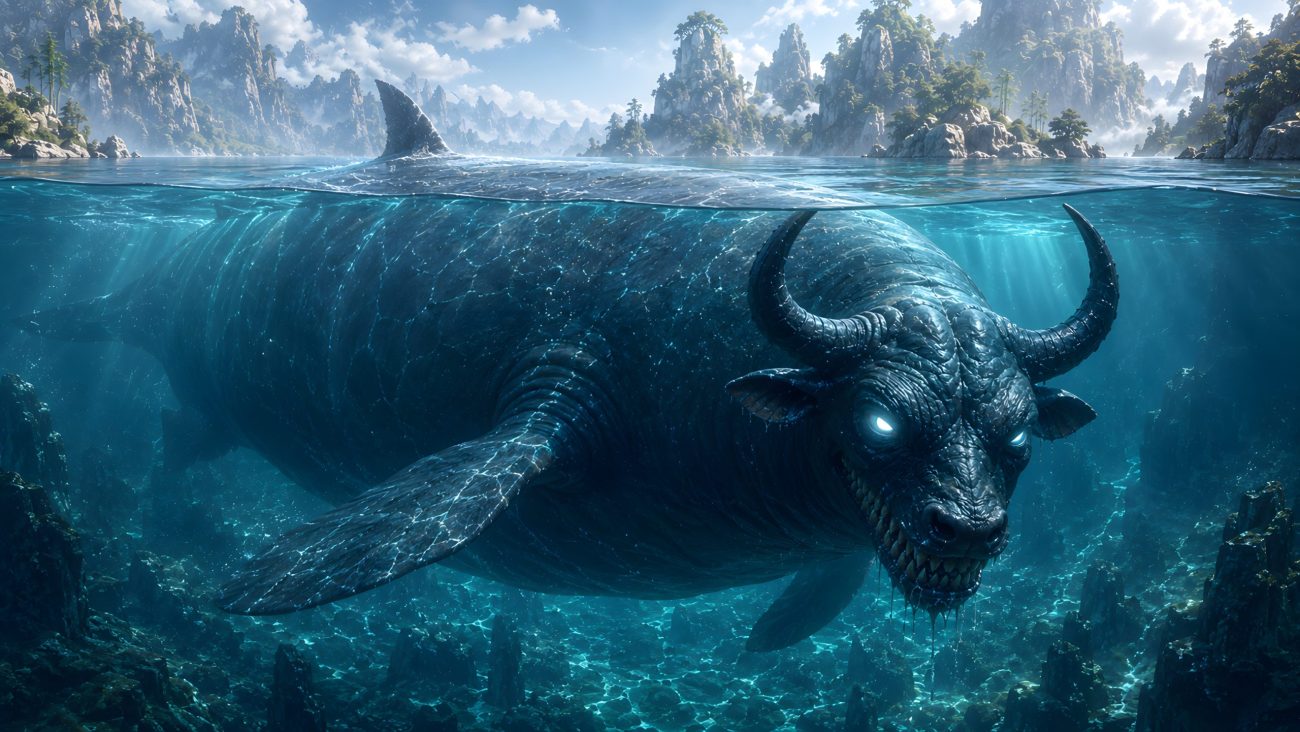
The creature was described as a huge black fish, said to be larger than a whale. It possessed the head of a bull, giving it a particularly strange and frightening appearance. Because of its enormous size and terrifying nature, the creature was also known as the “Devil Whale.”

The monster was believed to dwell within Lake Tota, a vast natural lake that was an important sacred place to the Muisca.


Sources

“Five Mystical Colombian Lakes.” Colombia.co. Accessed August 29, 2026. https://colombia.co/en/colombia-country/geography-and-environment/five-mystical-colombian-lakes


Mnevis

Tradition: Egyptian mythology
Alternative names: Mer-wer, Nem-wer
Category: Deity, Cow


The Myth

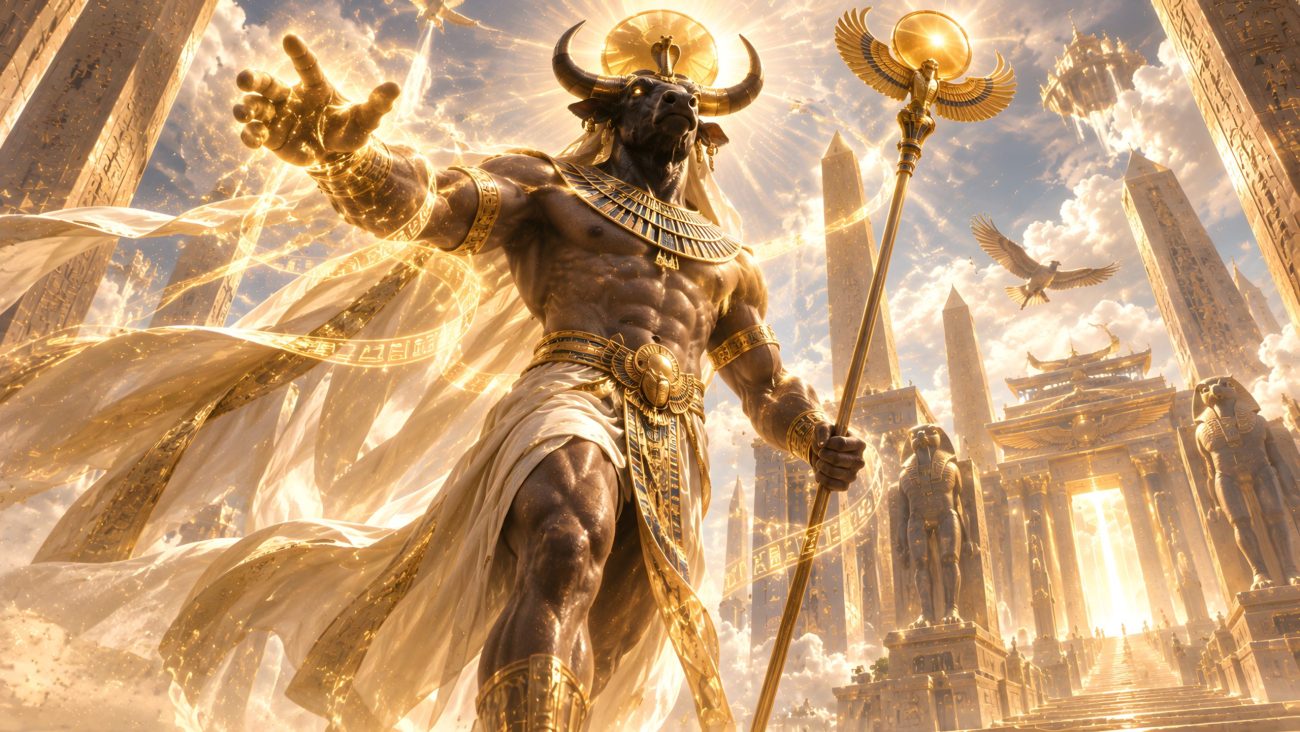
Mnevis was a sacred bull god whose main centre of worship was at Heliopolis. Originally regarded as a separate deity, he was later associated with Atum-Ra and considered the physical manifestation of the god, as well as the ba of Ra.

Mnevis was usually represented as a black bull wearing a solar disk and uraeus. Like the Apis bull, his movements were believed to be guided by divine will, allowing him to function as an oracle. His priesthood even claimed that Mnevis was the father of the more famous Apis bull.

The Mnevis bull was associated with two sacred cows representing Hathor and Iusaaset. When a Mnevis bull died, it was embalmed and buried with great honours in a dedicated necropolis near the temple at Heliopolis. Another burial ground was reserved for the Mothers of Mnevis, who were considered manifestations of the cow-goddess Hesat.

Only one Mnevis bull was believed to exist at a time. After his death, a replacement was sought, usually a completely black bull.

The cult of Mnevis was one of the few religious cults tolerated during the reign of Akhenaten and the Amarna period, likely because of its strong connection with solar worship. Akhenaten even ordered a necropolis for Mnevis bulls to be constructed at Akhetaten, although the site has not been discovered.


Sources

“Mnevis.” Wikipedia: The Free Encyclopedia. Wikimedia Foundation. Accessed August 29, 2026. https://en.wikipedia.org/wiki/Mnevis


Mōnen

Tradition: Japanese mythology
Alternative names: —
Category: Cow


The Myth

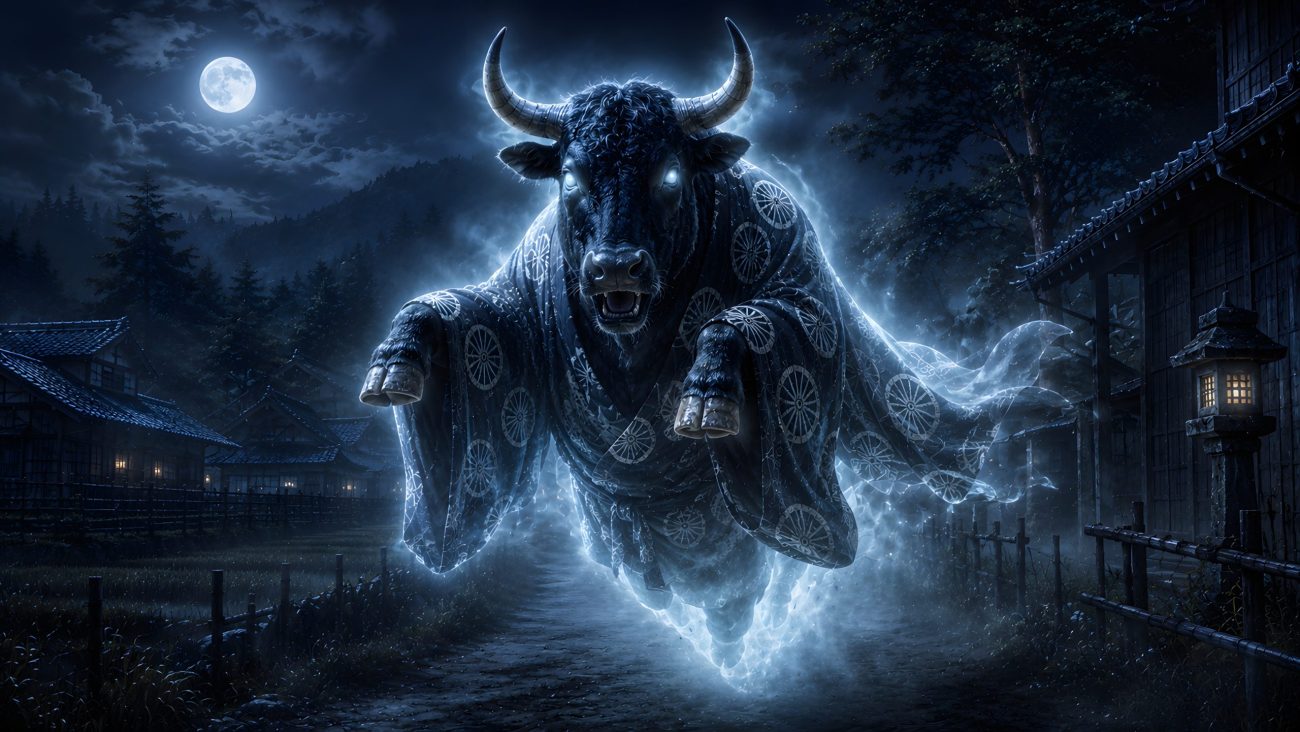
Mōnen is a yokai depicted in Kikuya Kinji’s Shinshin Obake Nobanashi (New Ghost Tales), published in 1886.

It appears as a cow that has transformed into a ghost. The creature wears a kimono decorated with a wheel pattern and holds its hooves out in front of its body in the manner of a traditional Japanese ghost.

The name Mōnen is a wordplay on mōnen, meaning “delusion,” and mō, the sound associated with a cow’s moo.


Sources

Takahashi, Toshihiro. “もうねん (Mōnen).” 新版TYZ 妖怪図鑑 (New TYZ Yokai Encyclopedia). April 5, 2021. Accessed August 29, 2026. https://tyz-yokai.blog.jp/archives/1078437875.html


Momerota

Tradition: Catalan Mythology, Spanish Mythology
Alternative names: Momeroteta (her daughter)
Category: Cow


The Myth

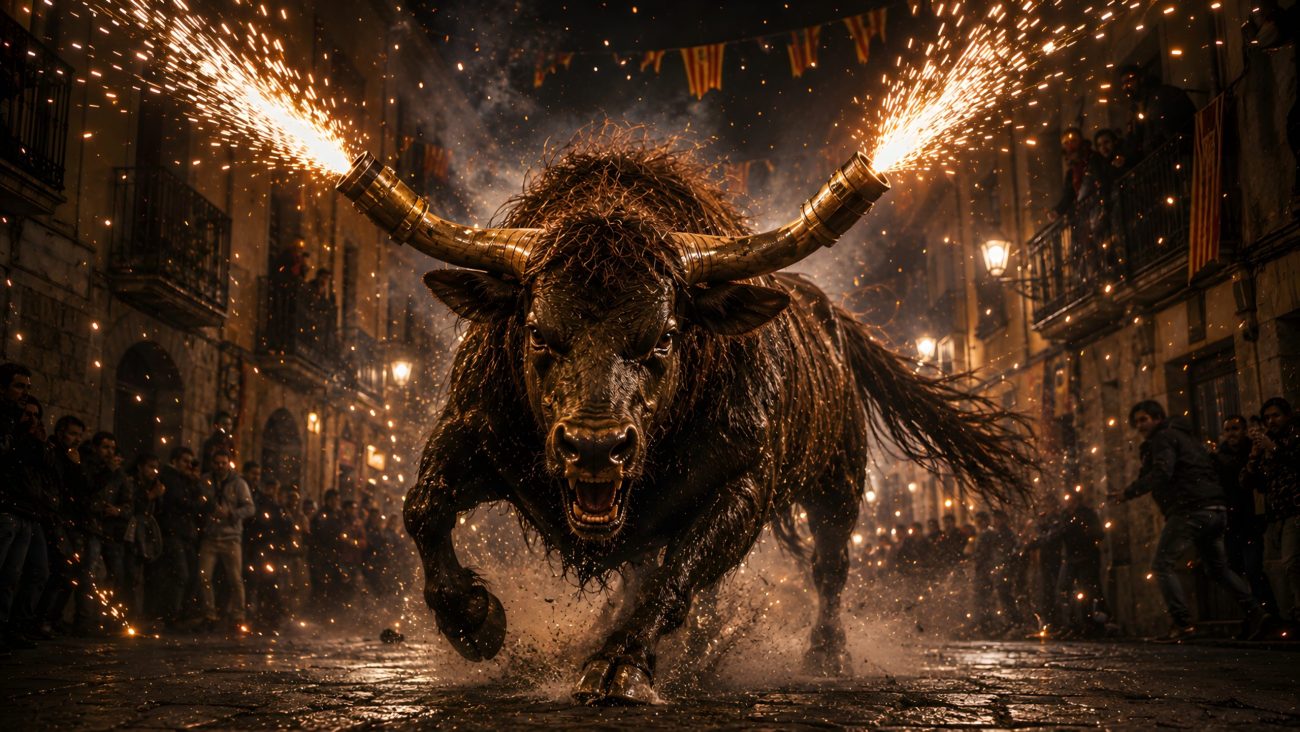
The Momerota is a female beast from the Catalan popular bestiary of Mataró. She has the head of an ox or bull and the body of a mule.

During festive celebrations in Mataró, the Momerota may chase people through the town. She can also be slain, at which point blood appears to drip from her body, although this “blood” is actually wine.

The Momerota is particularly associated with fire and spectacle. She launches sparks of “fire” from her horns, using pyrotechnic devices, often directing them toward the authorities watching the festivities from a balcony.

The Momerota may sometimes be accompanied by her young daughter, Momeroteta. The daughter is smaller than her mother and is distinguished by her protruding tongue. Like the Momerota, she can also launch sparks from her horns during the celebrations.


Sources

“Momerota.” Creatures of Myth Wiki. Fandom. Accessed August 29, 2026. https://creatures-of-myth.fandom.com/wiki/Momerota


Min

Tradition: Chinese mythology
Alternative names: Min
Category: Cow


The Myth

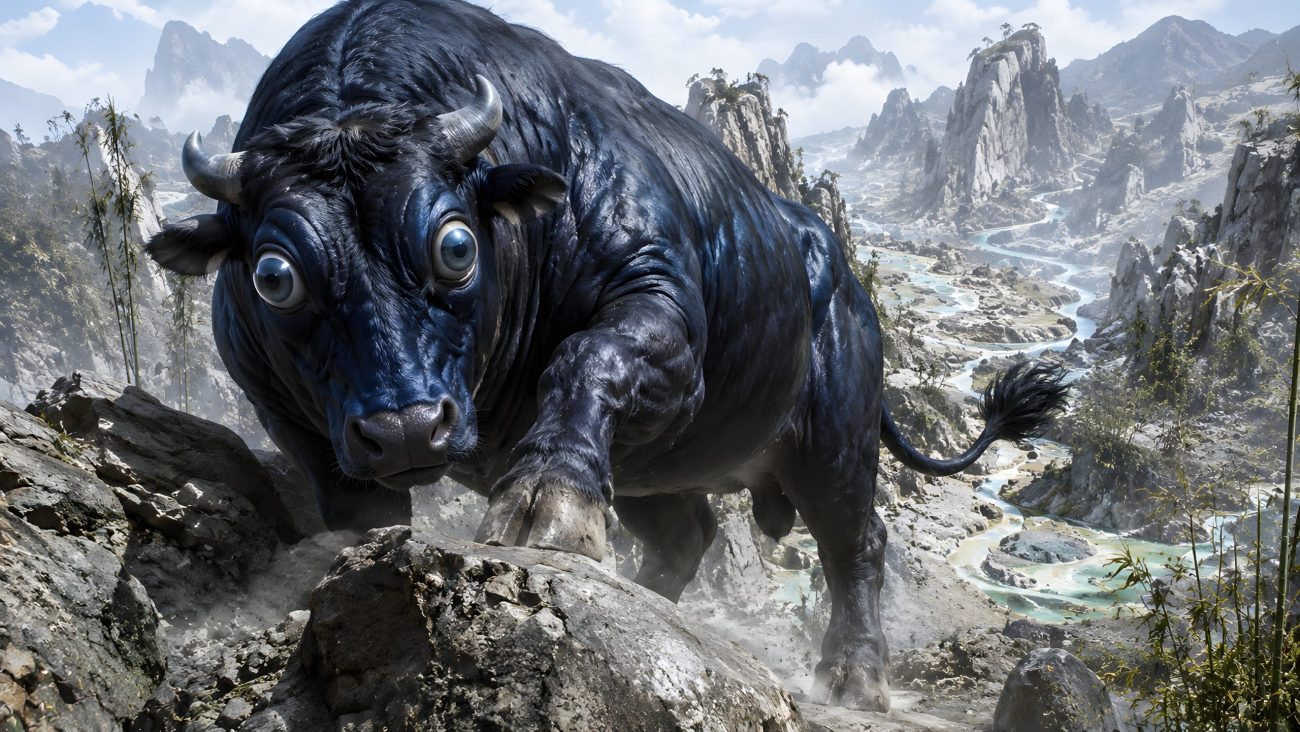
One hundred and eighty li west of the previous region stands Yellow Mountain. The mountain has no plants or trees, although common bamboo and arrow-bamboo grow there. The Gazing River originates from the mountain and flows westward into the Red River, and the river contains much jade.

A strange beast lives on Yellow Mountain called the Min. Its form resembles an ox, but its body is blue-black and it has large eyes.

That is all that is recorded about the Min in the passage: its unusual appearance and its location on Yellow Mountain. No further powers, behavior, or role in mythology are given.


Sources

Strassberg, Richard E., ed. and trans. A Chinese Bestiary: Strange Creatures from the Guideways Through Mountains and Seas. Berkeley: University of California Press, 2002.


Mi-ni-wa-tu

Tradition: Teton Mythology, American Mythology
Alternative names: Mi-ni-wa-tu (“sea monster”)
Category: Cow


The Myth

The Mi-ni-wa-tu, meaning “sea monster,” is a creature from the folklore of the Tetons. It is said to inhabit the Missouri River.

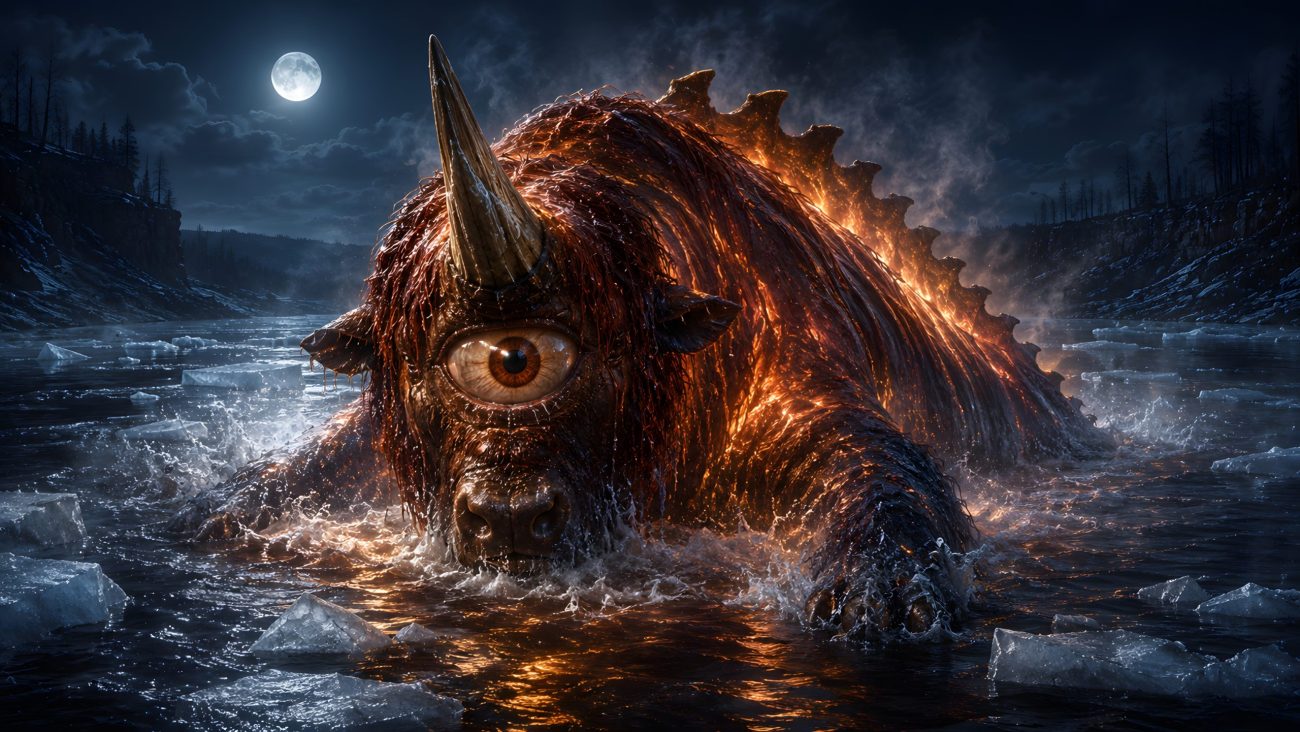
The Mi-ni-wa-tu is an amphibious creature with the body of a buffalo, covered in red hair. It has a single horn projecting from its forehead and a single eye. Its back is notched like a saw or gear.

At night, the creature can be safely seen swimming powerfully upstream. As it moves through the river, it churns the water and glows like fire. In spring, the Mi-ni-wa-tu is said to break up the ice covering the river.

Encountering one during the day is dangerous. Those who see the creature in daylight suffer confusion and loss of sight. Madness then sets in, followed by a day of convulsions, after which the unfortunate victim dies.


Sources

Countess Sica. “Mi-ni-wa-tu.” A Book of Creatures. July 29, 2015. Accessed August 29, 2026. https://abookofcreatures.com/2015/07/29/mi-ni-wa-tu/


Mehet-Weret

Tradition: Egyptian mythology
Alternative names: Mehturt
Category: Deity, Cow


The Myth

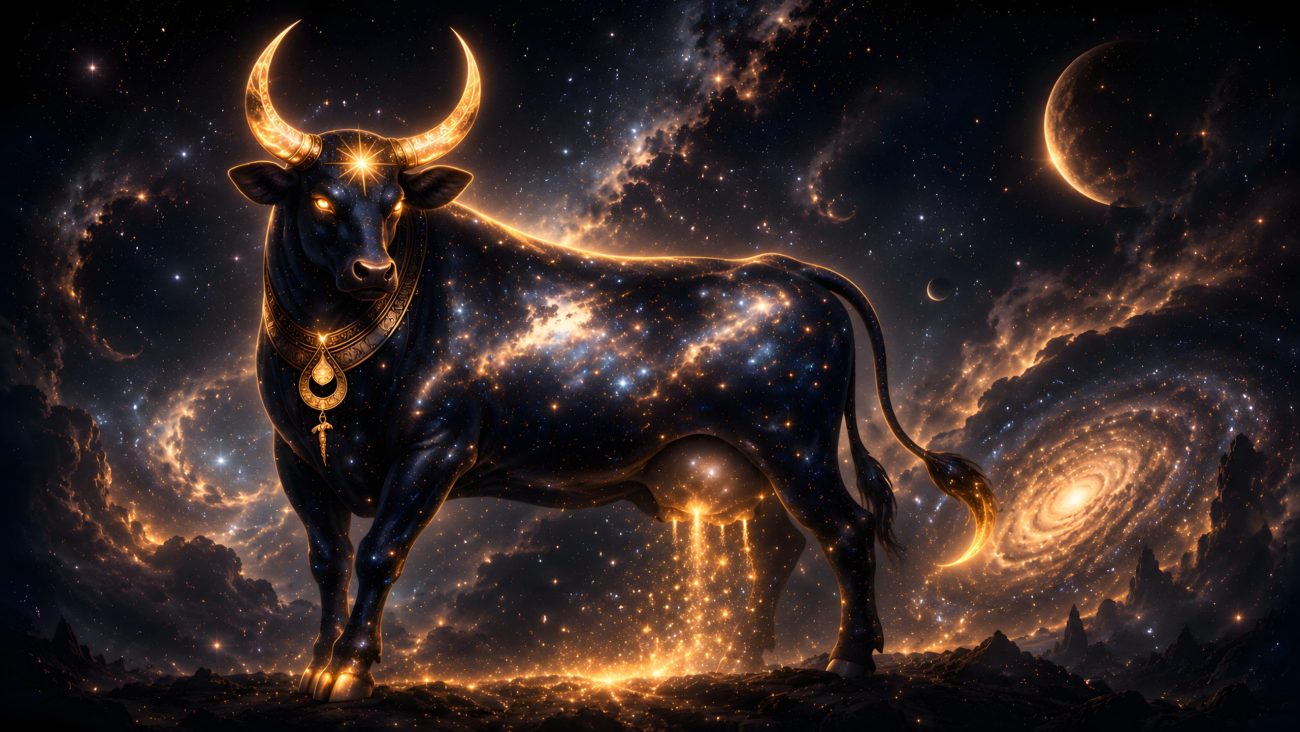
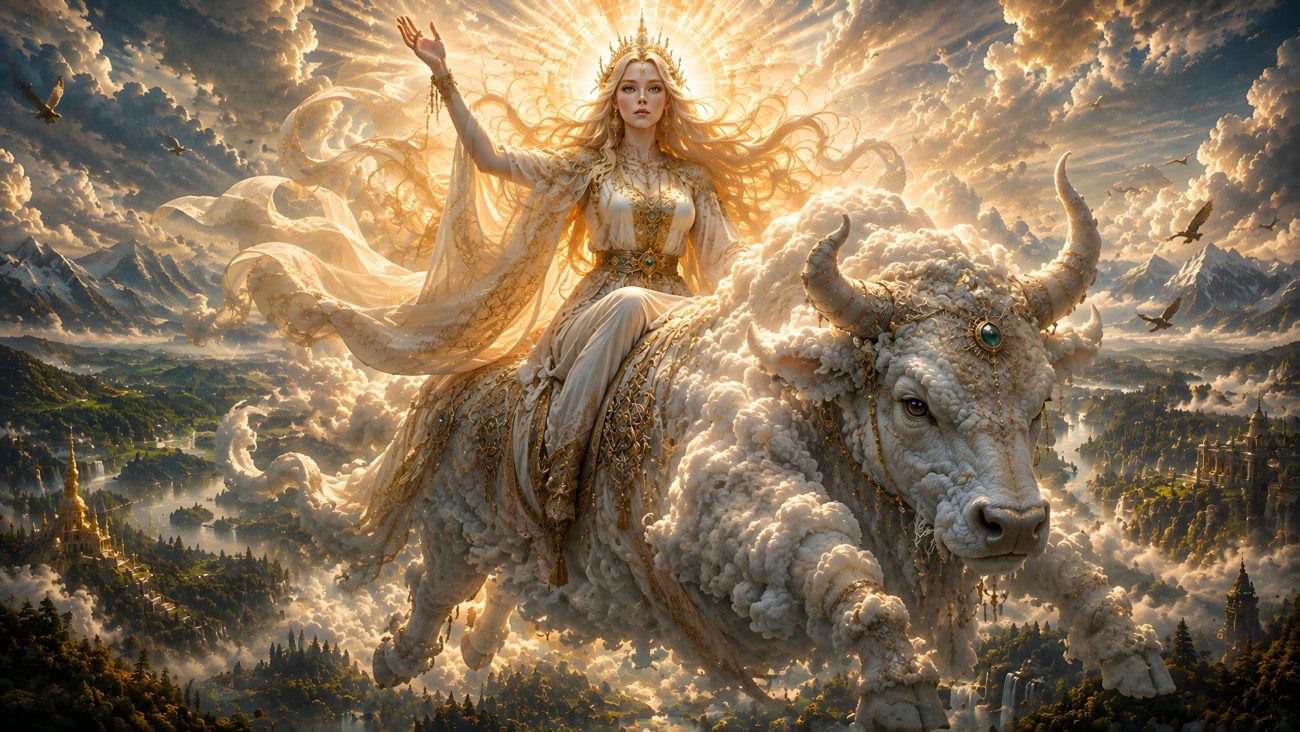
Mehet-Weret is an ancient Egyptian goddess of the sky whose name means “Great Flood.” She is known as the Celestial Cow, and in Egyptian creation mythology she is responsible for giving birth to the sun at the beginning of time.

Mehet-Weret is also associated with water, creation, and rebirth. She was believed to raise the sun into the sky each day, bringing light to the world and helping crops grow. She was also connected with the annual flooding of the Nile, whose waters fertilized the land.

As the mother of the sun god Ra, Mehet-Weret gives birth to the sun every day. The sun is therefore continually brought forth from her, allowing the world to escape darkness. She is depicted as protecting Ra and keeping him close to her.

Mehet-Weret was also connected with the night sky. Some traditions associated her with the Milky Way, imagined as a celestial river of stars whose waters corresponded to the life-giving flood of the Nile.

Her connection with rebirth continued into Egyptian beliefs about the afterlife. In the Book of the Dead, particularly Spell 17, she is credited with the birth of Ra and with protecting him through his nightly journey into the darkness of the underworld before bringing him back the following day. Because of this cycle, she was associated with the death and rebirth of both the sun and the deceased.

Mehet-Weret could also appear in funerary imagery. On the sarcophagus of Khonsu, she is depicted as part of the protective imagery surrounding the deceased, signifying his rebirth into the afterlife.


Sources

“Mehet-Weret.” Wikipedia: The Free Encyclopedia. Wikimedia Foundation. Accessed August 29, 2026. https://en.wikipedia.org/wiki/Mehet-Weret


Māra

Tradition: Latvian Mythology
Alternative names: Māre, Mārīte, Mārša, Māršava
Category: Deity, Cow


The Myth

Māra is described as the highest-ranking goddess in Latvian mythology and an ancient Dawn-goddess, previously called Austra.

She is the patroness of feminine duties, including children and cattle, as well as economic activities such as bread-making, money, and markets. She is associated with the land itself, which is called Māras zeme, or “Māra’s land.”

Māra is also called the Mother of Cows (Govu māte). In this role, she is associated with the protection and care of cattle.

Māra is described as the alternate side of Dievs. At death, Māra takes a person’s body, while Dievs takes their soul.

A festival called Māras was held in her honor on August 15.


Sources

“Māra.” Wikipedia: The Free Encyclopedia. Wikimedia Foundation. Accessed August 29, 2026. https://en.wikipedia.org/wiki/M%C4%81ra


Mahishasura

Tradition: Indian Mythology
Alternative names: Mahiṣāsura (महिषासुर)
Category: Cow


The Myth

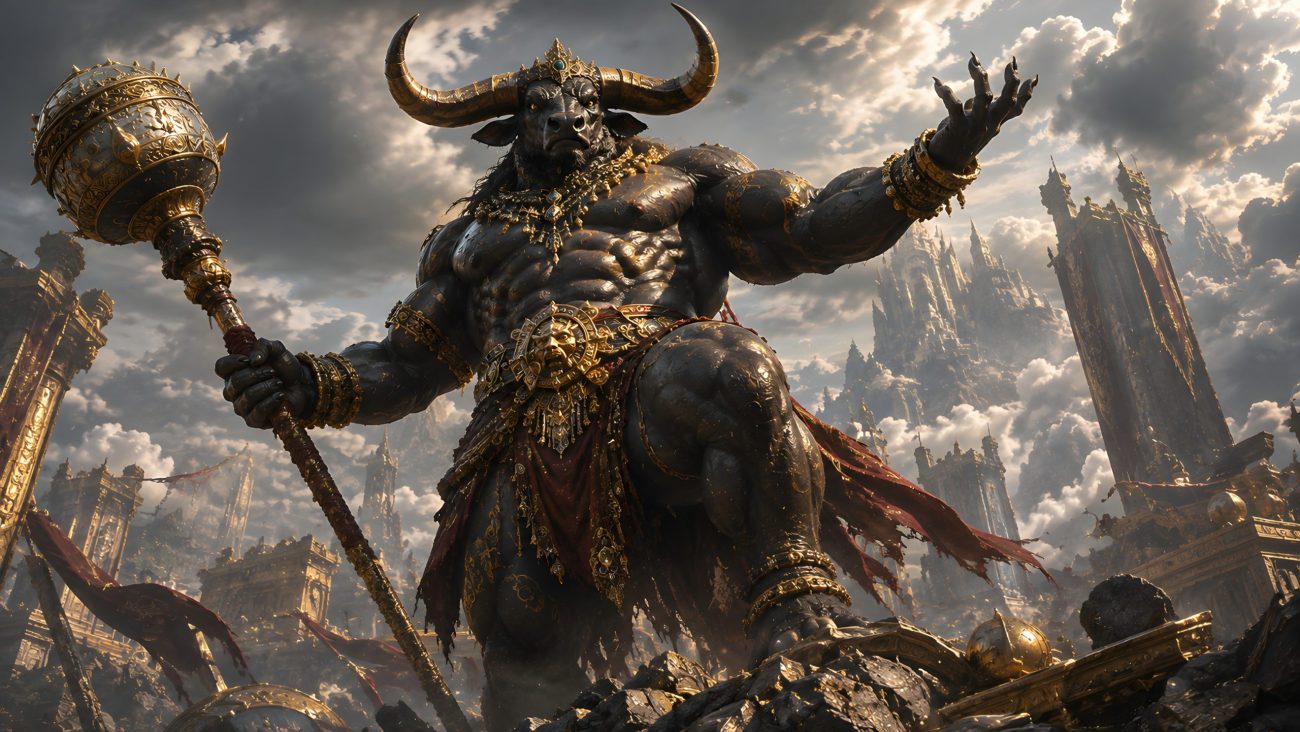
Mahishasura is a powerful asura associated with the form of a buffalo. He possesses the ability to change his physical form, using his shapeshifting nature to deceive and pursue his ambitions.

Mahishasura wages war against the devas and defeats them, driving them from their position of power. Unable to overcome him, the gods combine their divine energies, from which the goddess Durga emerges.

Durga confronts Mahishasura in battle while riding a lion. The demon repeatedly changes his form during the fight, but ultimately he is overcome by the goddess. Durga kills him with her trident, earning the name Mahishasuramardini, meaning “Slayer of Mahishasura.”

The defeat of Mahishasura becomes a central myth of Navaratri, culminating in Vijayadashami, which celebrates the destruction of the buffalo demon.

Mahishasura’s story is particularly important in Shaktism, where his defeat represents the triumph of the goddess’s divine power over the forces opposing the gods and cosmic order.


Sources

“Mahishasura.” Wikipedia: The Free Encyclopedia. Wikimedia Foundation. Accessed August 29, 2026. https://en.wikipedia.org/wiki/Mahishasura?utm_source=chatgpt.com