Ladon

Tradition: Greek mythology
Alternative Names: Ladon, Dragon of the Hesperides
Category: Dragon


The Myth

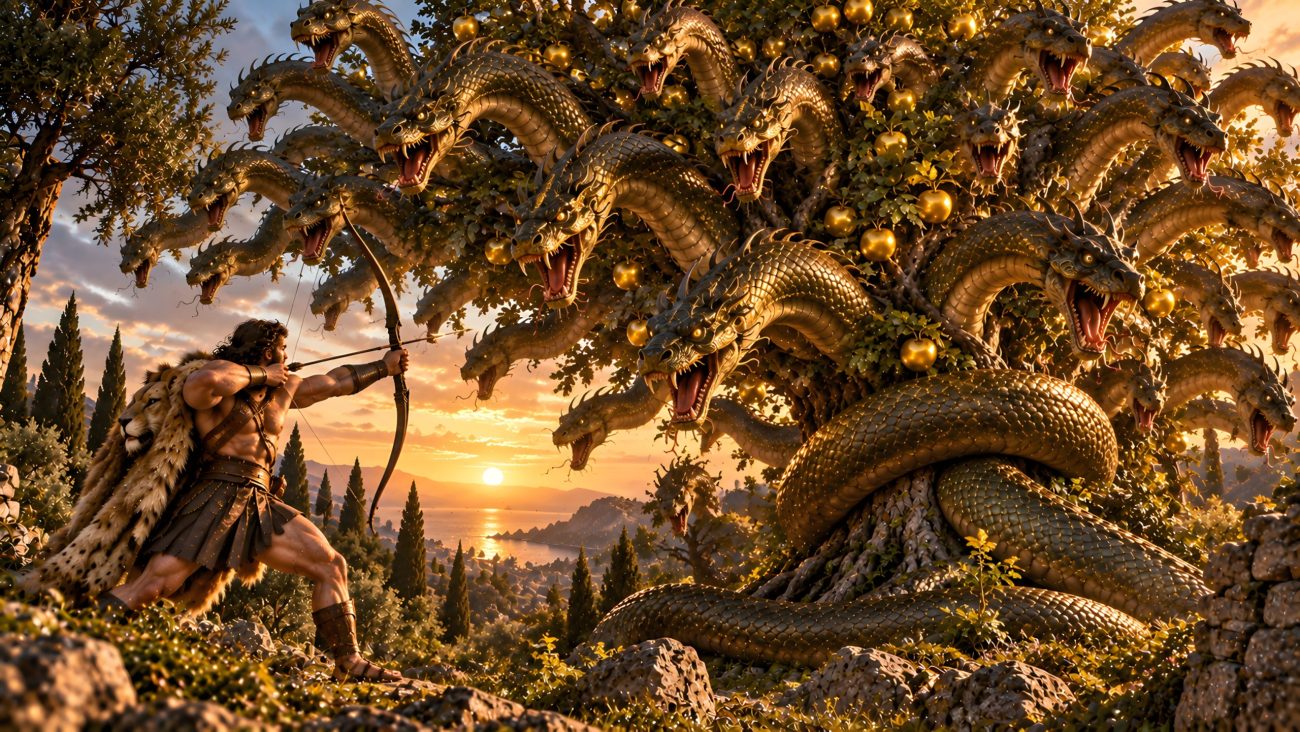
Ladon was a great serpent-like dragon that coiled around the sacred tree in the Garden of the Hesperides, guarding its golden apples. In some traditions he was said to possess a hundred heads, each capable of speaking with a different voice.

Ladon was one of the final offspring of Phorcys and Ceto according to Hesiod, while other traditions made him the child of Typhon and Echidna, Typhon alone, or even said that he sprang from the earth. He was also described in one tradition as the brother of the Nemean Lion.

During the eleventh labour of Heracles, the hero was commanded to obtain the golden apples. He came to the Garden of the Hesperides and killed Ladon with his bow and arrows before taking the precious apples.

The dragon’s death was not the end of the tale. The following day, Jason and the Argonauts passed through the region on their return from Colchis. They heard the lament of Aegle, one of the Hesperides, and saw Ladon’s body still twitching after his death.

There was also another telling in which Ladon was never killed. Instead, Heracles persuaded the Titan Atlas to retrieve the golden apples for him while Heracles took Atlas’s place and held up the heavens.

Ladon was later associated with the constellation Draco. According to the tradition attributed to Hyginus, Zeus placed the slain dragon among the stars, where it remained as the celestial image of the guardian of the golden apples.


Sources

“Ladon (mythology).” Wikipedia: The Free Encyclopedia. Wikimedia Foundation. Accessed October 2, 2026. https://en.wikipedia.org/wiki/Ladon_(mythology)
La Guita Xica

Tradition: Catalan folklore, Spanish Mythology
Alternative Names: Guita Boja, La Guita Xica, Mulaguita, La Mulassa, Mula Fera, Mula Guita
Category: Dragon, Horse


The Myth

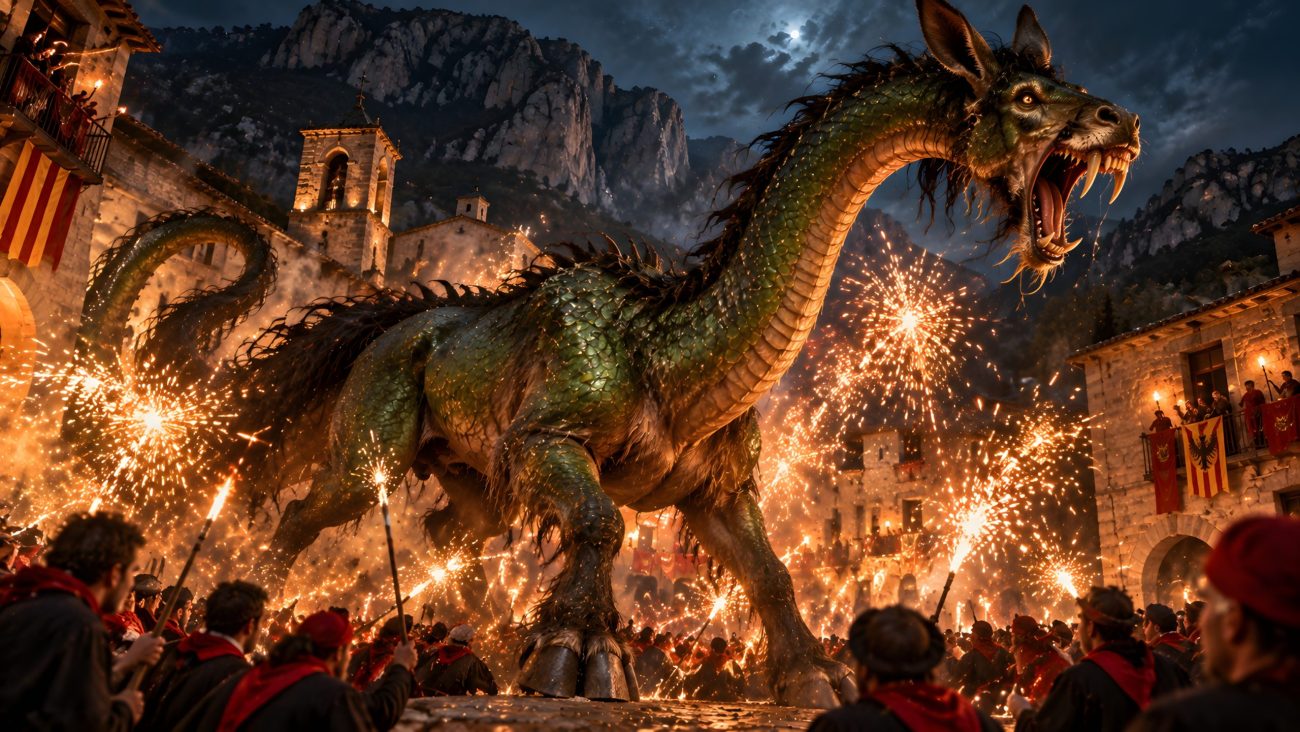
La Guita Xica is a strange dragon with the body of a mule and the features of a dragon. She has a green, horse-like body, a very long neck, and sharp fangs. Her long neck gives her an uncanny resemblance to a great serpent rising above the crowd.

Originally, La Guita Xica was regarded as a threatening demonic creature. Her nature was connected to the mule, an animal deeply familiar in the Catalan mountains but also notorious for its stubborn and unruly temperament. This wildness became part of the creature herself, making her a dangerous and unpredictable presence.

Over time, however, La Guita Xica changed from a frightening monster into a protective spirit. She became associated with the people of Catalonia and with the Eucharistic celebrations of the Patum de Berga.

During the festivals, enormous representations of La Guita Xica are brought into the town squares. The great dragon-mule moves among the celebrations and spits fireworks, transforming the once-feared creature into a spectacular guardian of the festivities.

Her many names preserve the changing image of the creature: Mulassa, Mulaguita, Guita Boja, Mula Fera, Mula Guita, and finally La Guita Xica. What began as a monstrous mule-dragon became a beloved protective figure within Catalan tradition.


Sources

“La Guita Xica.” Wikipedia: The Free Encyclopedia. Wikimedia Foundation. Accessed October 2, 2026. https://en.wikipedia.org/wiki/La_Guita_Xica


Laidly Worm of Spindleston Heugh

Tradition: English Mythology
Alternative Names: The Laidly Worm of Bamborough, Laidly Worm
Category: Dragon


The Myth

The Laidly Worm is a monstrous dragon into which Princess Margaret of Bamburgh is transformed. The creature is a fearsome worm, dwelling among the rocks and caves of Spindleston Heugh, where it becomes a terror to the surrounding land.

In the Kingdom of Northumbria, the kind king of Bamburgh loses his wife and later takes a beautiful but cruel witch as his queen. The new queen becomes jealous of the king’s daughter, Princess Margaret, whose beauty she resents. With the king’s son, Childe Wynd, away across the sea, the witch sees her opportunity to rid herself of the princess.

She casts a terrible enchantment upon Margaret, transforming her into the Laidly Worm. The curse declares that she shall remain a dragon until Childe Wynd, the king’s own son, comes to the Heugh and kisses her three times. Until then, she is doomed to remain in her monstrous form.

The dragon becomes a fearsome presence around Spindleston Heugh and must be appeased with food. In Joseph Jacobs’ telling, seven cows are set aside for the creature each day. News of the terrible worm eventually reaches Childe Wynd, who returns despite the efforts of his stepmother to prevent him from reaching his sister.

When Childe Wynd finally comes before the Laidly Worm, he does not attack the monster. Instead, he kisses the dragon three times. The enchantment is broken, and the monstrous worm is restored to Princess Margaret in her human form.

The wicked queen is punished for her sorcery, being transformed into a toad, while Childe Wynd becomes king. The tale thus ends with the princess restored, the enchantment broken, and the witch who caused it stripped of her human form.

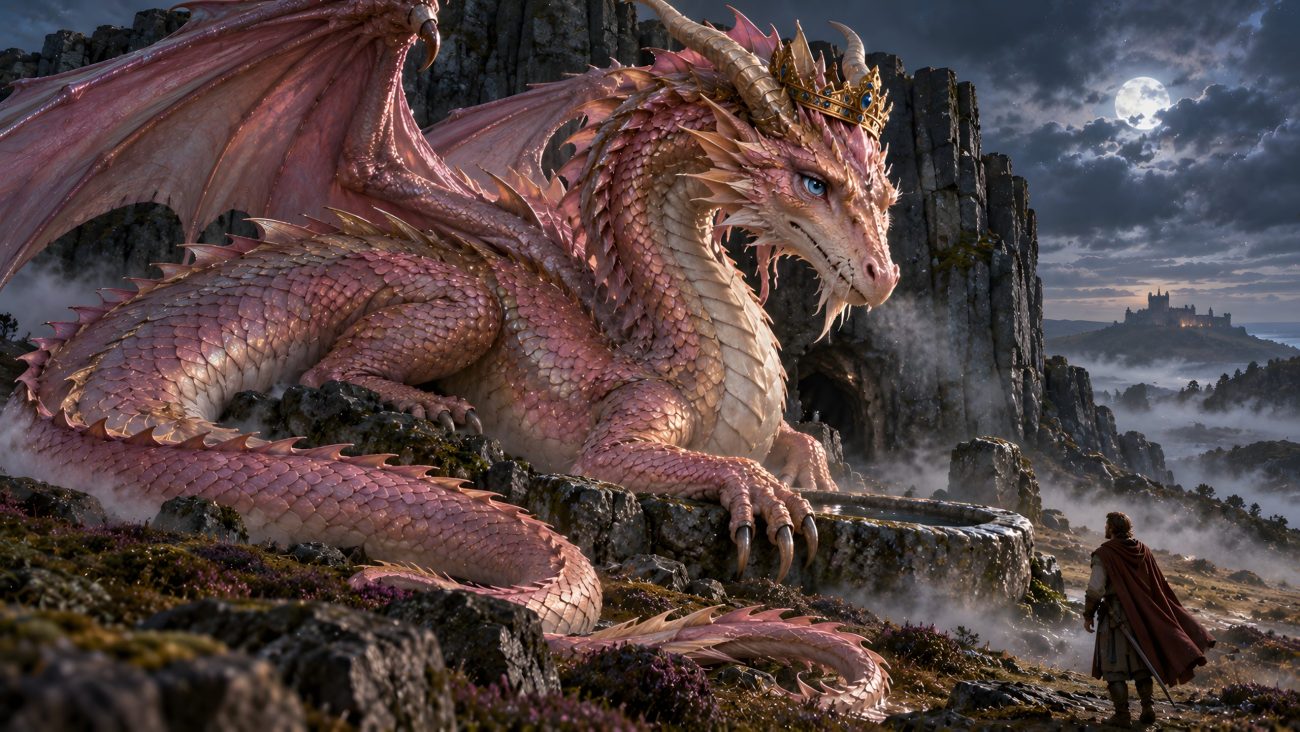
Spindleston Heugh itself became bound to the legend. The great stone column known as the Spindlestone, or Bridle Rock, is said to be the place where Childe Wynd threw his horse’s bridle before confronting the worm. The surrounding landscape was traditionally associated with the dragon’s dwelling, including a cave and a stone trough where the Laidly Worm was said to have lived and fed.


Sources

“The Laidly Worm of Spindleston Heugh.” Wikipedia: The Free Encyclopedia. Wikimedia Foundation. Accessed October 2, 2026. https://en.wikipedia.org/wiki/The_Laidly_Worm_of_Spindleston_Heugh


Kulshedra

Tradition: Albanian mythology
Alternative Names: Kuçedra, Kulshedër, Kulshedra
Category: Dragon


The Myth

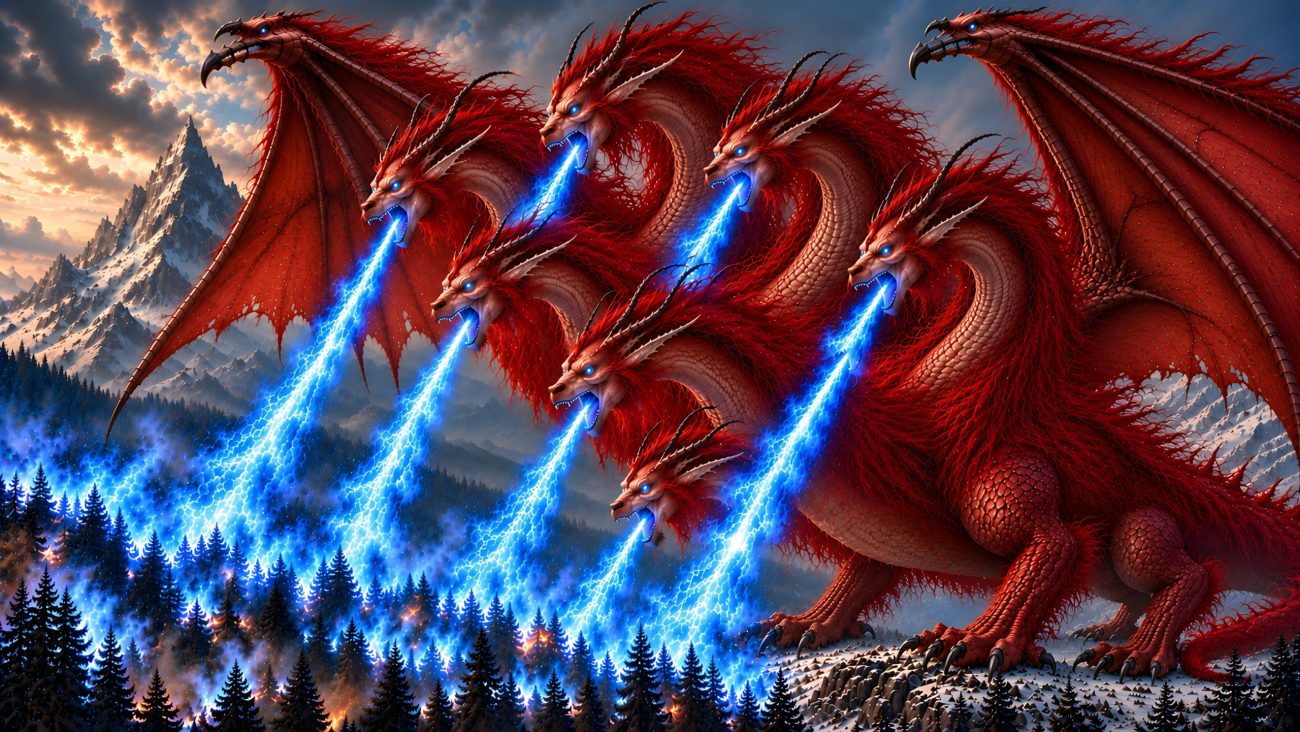
The Kulshedra is a gigantic female dragon, usually imagined as a monstrous multi-headed serpent covered in woolly red hair. She has a long tail, seven to twelve heads, and enormous pendulous breasts that hang down to the ground. She can spit fire, and her milk and urine are poisonous. She may also appear in the form of a woman, or as a female lizard, turtle, frog, or salamander.

The Kulshedra is a creature of water, storms, fire, and the earth beneath the world. She brings drought, torrents, tempests, floods, water shortages, earthquakes, and other disasters upon humanity. When her anger becomes dangerous, people may offer her human sacrifices in an attempt to persuade her to hold back the destruction.

In the southern traditions, the Kulshedra is so enormous that she surrounds the entire world. Should she ever manage to bring her mouth around to her own tail, the world itself would be destroyed. In northern traditions she can seize or possess the sun and moon, and people try to frighten her away by firing weapons into the sky, making great noise with metal objects, or ringing church bells.

The Kulshedra is opposed by the Drangue, a divine, winged hero who protects mankind. Their battles shake the natural world: thunder and violent storms erupt as the two enemies clash, while earthquakes, cyclones, and other catastrophes may accompany their struggles. Other celestial heroes can also fight her, including the Daughter of the Moon and the Sun, who uses her powers of light to protect those she loves, and Zjermi, the Fire, who is born with the sun marked upon his forehead.

The Kulshedra does not always reveal herself as a monster. She can disguise herself as an ordinary woman, hiding her true nature until the moment comes to strike. Her presence can even bring prosperity to the village where she dwells. She draws food and other nourishment toward herself with her breath, causing her own village to flourish while neighbouring villages become poor. Her children, the Shlligë, are themselves storm-bringing creatures.

The Kulshedra begins its existence as a Bolla, a demonic serpent with aquatic and chthonic qualities. The Bolla keeps its eyes closed throughout the year, opening them on Saint George’s Day, when it gazes upon the world and devours any human it sees. If it survives for the required number of years without being discovered by a human, it undergoes further transformations, passing through forms known as the Bollar and Errshaja before eventually becoming a Kulshedra.

Brave villagers sometimes seek out these serpents and kill them while they are sleeping, before they can grow into the far more dangerous Kulshedra.

In Albanian folklore, the struggle between the Kulshedra and the Drangue is the great battle between darkness and light, destruction and protection. When the dragon rises, storms and disasters threaten the world; when the celestial hero defeats her, the danger is driven back and the world is restored.


Sources

“Kulshedra.” Wikipedia: The Free Encyclopedia. Wikimedia Foundation. Accessed October 2, 2026. https://en.wikipedia.org/wiki/Kulshedra


Kuzuryū

Tradition: Japanese mythology
Alternative Names: Nine-Headed Dragon, Kuzuryū Gongen, Kuzuryū Ōkami,
Category: Dragon


The Myth

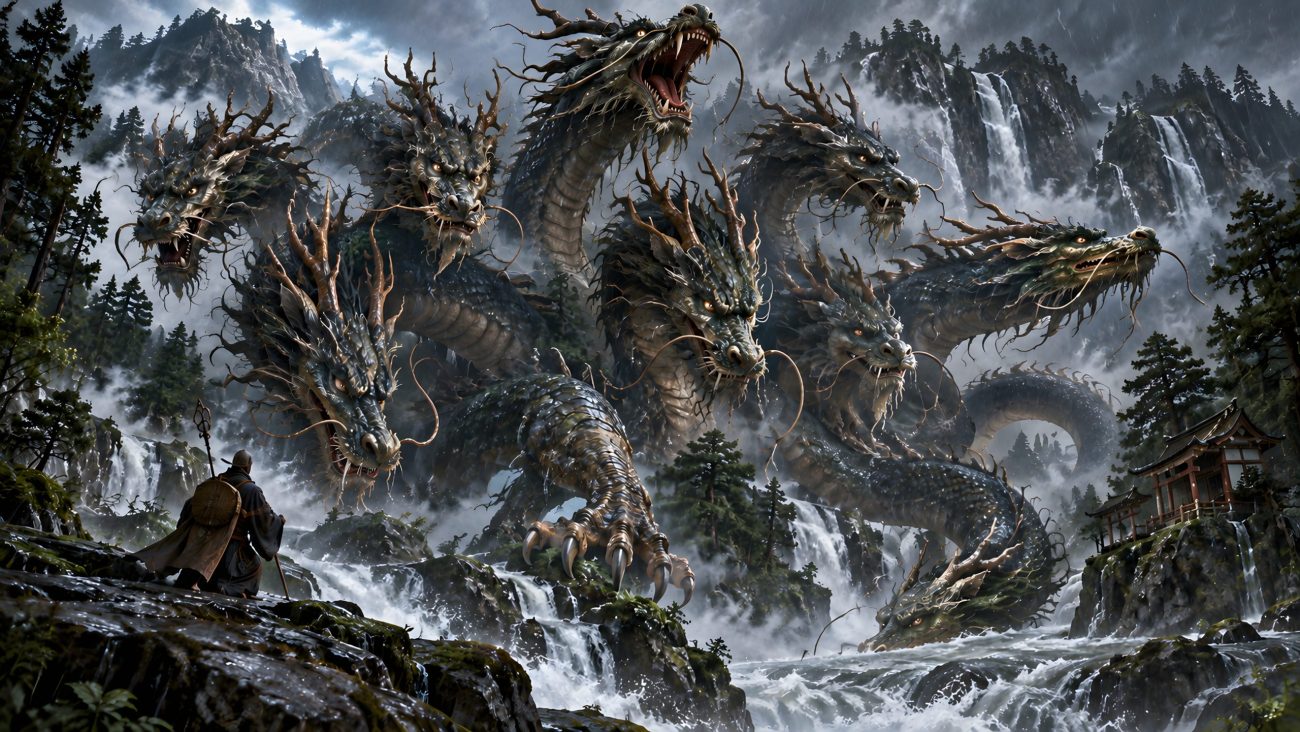
The Nine-Headed Dragon, or Kuzuryū, is a great dragon with nine heads and a single tail. It is especially associated with water, mountains, rain, and sacred places throughout Japan.

At Mount Togakushi in Shinshu, a great dragon with nine heads and one tail was said to dwell when a scholar-ascetic arrived there in search of a place where Buddhism could flourish. The dragon, also described as an oni, had become a harmful presence in the mountain. Through the power and merit of the Lotus Sutra, the ascetic overcame its harmful influence and caused the dragon to repent.

Kuzuryū then vowed to protect Mount Togakushi and urged the ascetic to establish a great temple there. Afterward, the dragon concealed itself by sealing the treasure cave with a huge rock. The cave was the place where the vajra thrown from Mount Iizuna had landed. This act was said to give Mount Togakushi its name, while the ascetic established Kenkōji Temple, later associated with Togakushi Shrine, where Kuzuryū Gongen was enshrined.

Kuzuryū became especially revered as a water god. People prayed to it for rain, and a particular ritual involved taking water from Taneike Pond to Togakushi Shrine and having prayers for rain performed over it. The water was then carried back without allowing it to touch the ground and sprinkled over the rice fields, after which rain was expected to fall.

Kuzuryū was also believed to have a fondness for pears. Offerings of pears were traditionally made to the dragon to relieve toothaches. People suffering from tooth pain could write their names and the location of the pain on pears, pray toward Mount Togakushi from a distance, and then set the pears afloat in a river.

Another legend connects the Nine-Headed Dragon directly with the creation of Mount Togakushi. When Amaterasu Ōmikami hid inside the Heavenly Rock Cave, Tajikarao no Mikoto attempted to open it. He pulled with such force that the rock was thrown down into the lower world, where it became Mount Togakushi. The Nine-Headed Dragon God appeared in response to the sound of the falling rock, and the Kuzuryū of Togakushi was regarded as a temporary manifestation of this Dragon God.

Nine-headed dragons appear in other Japanese legends as well. At Lake Ashi in Hakone, a poisonous dragon once rampaged through the waters until the monk Manmaki subdued it, after which the dragon became a god and was enshrined as Kuzuryū Daimyōjin. In Fukui, a nine-headed dragon is said to have swum along the Kuzuryū River as though carrying the floating statue of Hakusan Gongen. On Mount Onikiri in Chiba, another nine-headed dragon was defeated by Yamato Takeru and subsequently enshrined at Jinnoji Temple.

In Tadami, Fukushima, the name of the Kuguryū district is connected to another legend in which a nine-headed dragon rose from a swamp and ascended into heaven. Across these traditions, the Nine-Headed Dragon appears as a powerful supernatural being of water and mountains, sometimes dangerous and destructive, but capable of repentance and becoming a divine protector.


Sources

Takahashi, Toshihiro. “九頭竜 [くずりゅう] (Kuzuryū).” 新版TYZ 妖怪図鑑 (New TYZ Yokai Encyclopedia). October 21, 2024. https://tyz-yokai.blog.jp/archives/1082950617.html


Kurikara Ryūō

Tradition: Japanese mythology
Alternative Names: Kurikara Ryūō, Kurikara Dairyu, Kurikara Dragon King, Kurikara Fudō Myōō, Kurikara Myōō, Karaka
Category: Dragon


The Myth

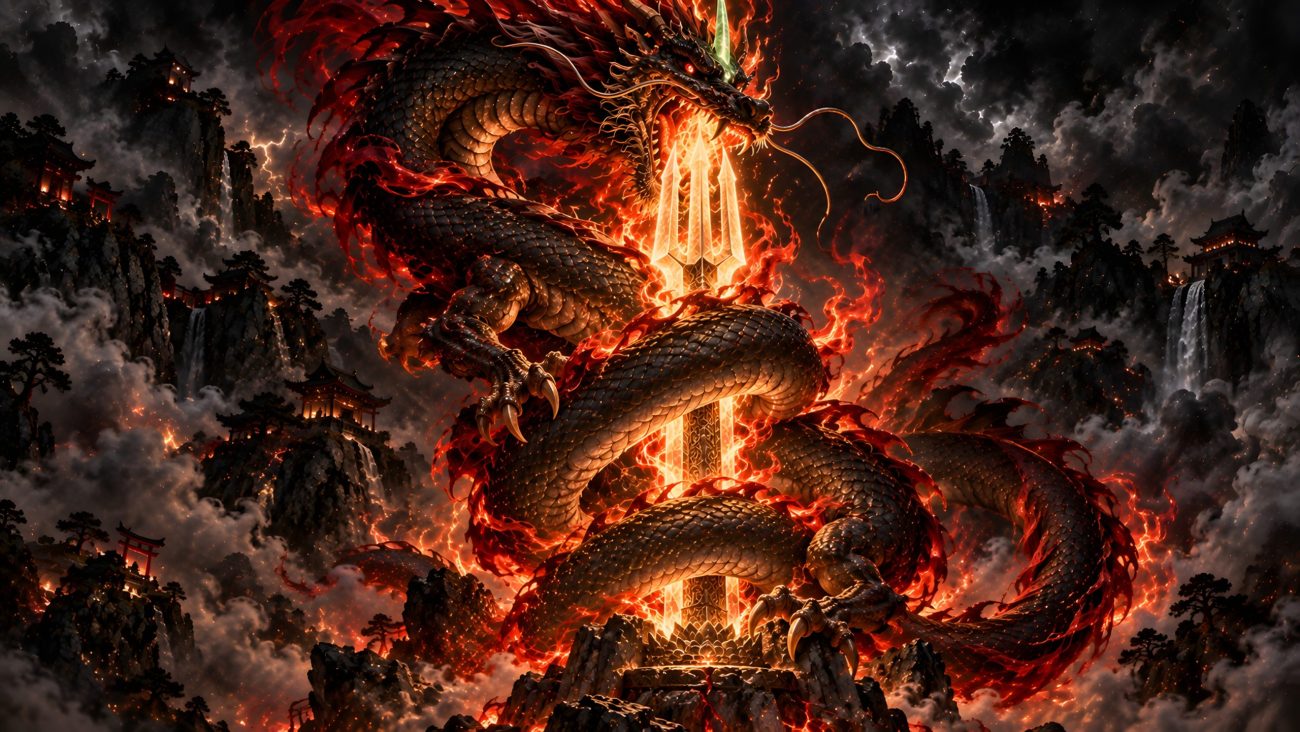
Kurikara Ryūō appears as a gigantic black dragon wrapped in flames, coiling around an upright sacred sword, usually a three-pronged sword, and attempting to swallow it from the tip. In other depictions his body is golden, with a jade horn growing from his forehead, while flames of samadhi surround his coiling body. His four legs are associated with four other Myōō: Gosanze Myōō, Gundari Myōō, Enmaten Myōō, and Kongōyasha Myōō.

Kurikara Ryūō is regarded as a manifestation of Fudō Myōō. His most famous legend tells of Fudō Myōō’s battle against heretics in Maheshura’s City, in the highest realm of the Form Realm. Fudō transformed himself into a sword of wisdom fire, while Chitatsu, leader of ninety-five kinds of heretics, likewise transformed into a sword of wisdom fire.

Fudō’s sword of wisdom fire then transformed into the enormous Kurikara Dragon. The dragon coiled itself around the heretics’ swords and attempted to swallow them. When it opened its mouth and breathed, the sound was so tremendous that it was compared to twenty billion thunderclaps roaring at once. The heretics heard the terrifying sound and abandoned their evil attachments.

The Kurikara Great Dragon was said to be 100,000 yojanas tall. His sacred dharani possessed immense magical power: those who recited it were believed to be able to remove misfortune and subdue demons. Praying to Kurikara Ryūō or chanting his name was likewise believed to dispel fear and evil obstacles and secure a peaceful afterlife.

Kurikara Ryūō was also believed to possess the power to drive away illness and disease and to summon clouds and control rainfall. His image was therefore used in prayers for protection from sickness and for rain.

Another legend tells of a demon king who once lived in the place that later became Kurikara Village and tormented its people. The monk Zenmui enshrined Kurikara Fudō there, and the deity subdued the demon king. The village and the mountain pass subsequently came to be known as Kurikara.

The legend further tells that Kurikara Fudō appeared from Kurikara Fudō Pond, where many miraculous events were said to have occurred. The deity thus became both the dragon coiled around the sword of wisdom and the divine protector who subdued demons, overcame evil, drove away disease, and brought protection to those who called upon him.


Sources

Takahashi, Toshihiro. “俱利伽羅龍王 [くりからりゅうおう] (Kurikara Ryūō).” 新版TYZ 妖怪図鑑 (New TYZ Yokai Encyclopedia). February 1, 2024. https://tyz-yokai.blog.jp/archives/1083042301.html


Lagar

Tradition: Japanese mythology
Alternative Names: Lagaru, Lagarto, Lakarta
Category: Dragon, Crocodile


The Myth

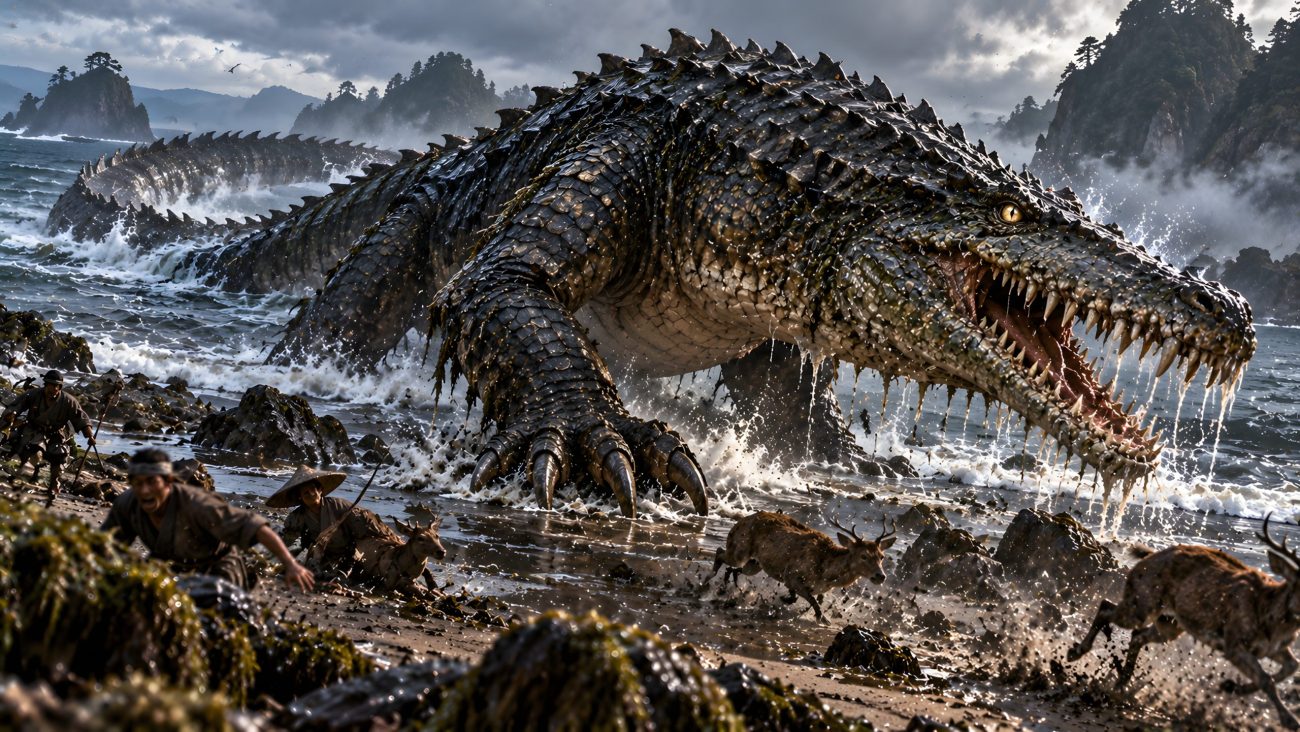
Lagar was a gigantic reptilian sea monster, described as having a crocodile-like body, four legs, a long slender tail, and a body completely covered in extraordinarily hard scales. Its claws were sharp and its teeth were like saws. The scales were said to be so hard that spears, swords, arrows, and even poisoned arrows could not penetrate them. Its belly, however, contained a soft and vulnerable spot.

Lagar could reach around twenty feet in length. It lived in the sea, where it hunted fish, but when it came ashore it attacked and devoured animals and people. Despite its terrifying strength, it was slow-moving, allowing fish to escape it and people to attempt to flee. It did not eat small fish, instead swimming behind them so that they would not become prey to other creatures.

The monster was said to lay eggs, each roughly the size of a goose egg. When Lagar came ashore, it spat saliva onto the ground. Anyone who stepped in the saliva could slip and fall, leaving them helpless before the beast, which would immediately attack and devour them. It was also said to pursue anyone who tried to flee from it, although the strange creature would itself run away if a person chased after it.

Lagar had several natural enemies. One kind of fish was said to attack the soft underside of its body and stab it to death. A smaller creature could cover itself in mud, leap directly into Lagar’s mouth, and devour its internal organs from within. The monster was also unable to approach places where a plant called Zatsuburaran had been planted.

A terrifying tale from the seas of Ezo tells of another creature believed to be the same monster. This beast was around ten feet long, with sharp claws, saw-like teeth, a crocodile-like body, and scales resembling those of a shark. Even poisoned arrows could not pierce its body. It was powerful enough to kill and devour enormous fish and would sometimes come ashore to eat animals.

Because the creature moved slowly, people attempted to capture it, though many were killed in the process. Eventually they discovered the vulnerable spot beneath its belly. By firing poisoned arrows into this soft place, they managed to kill three of the monsters. After those three were slain, no similar creature was said to appear again.

There was an even more frightening account of Lagar. It was said to imitate the sound of a human crying, luring people toward it from a distance. Once they came close, it would bite and devour them. Its saliva could make people slip and fall, while its eyes, dull and lifeless beneath the water, were said to shine brightly when it came ashore.

Lagar was also said to stop eating entirely during winter and, strangely, to possess no tongue inside its mouth.


Sources

Takahashi, Toshihiro. “ラガル (Lagar).” 新版TYZ 妖怪図鑑 (New TYZ Yokai Encyclopedia). April 14, 2018. https://tyz-yokai.blog.jp/archives/1070581868.html


Dragon of Gelre

Tradition: Dutch Mythology
Alternative Names: De Draak van Gelre, Gelderse Draak
Category: Dragon


The Myth

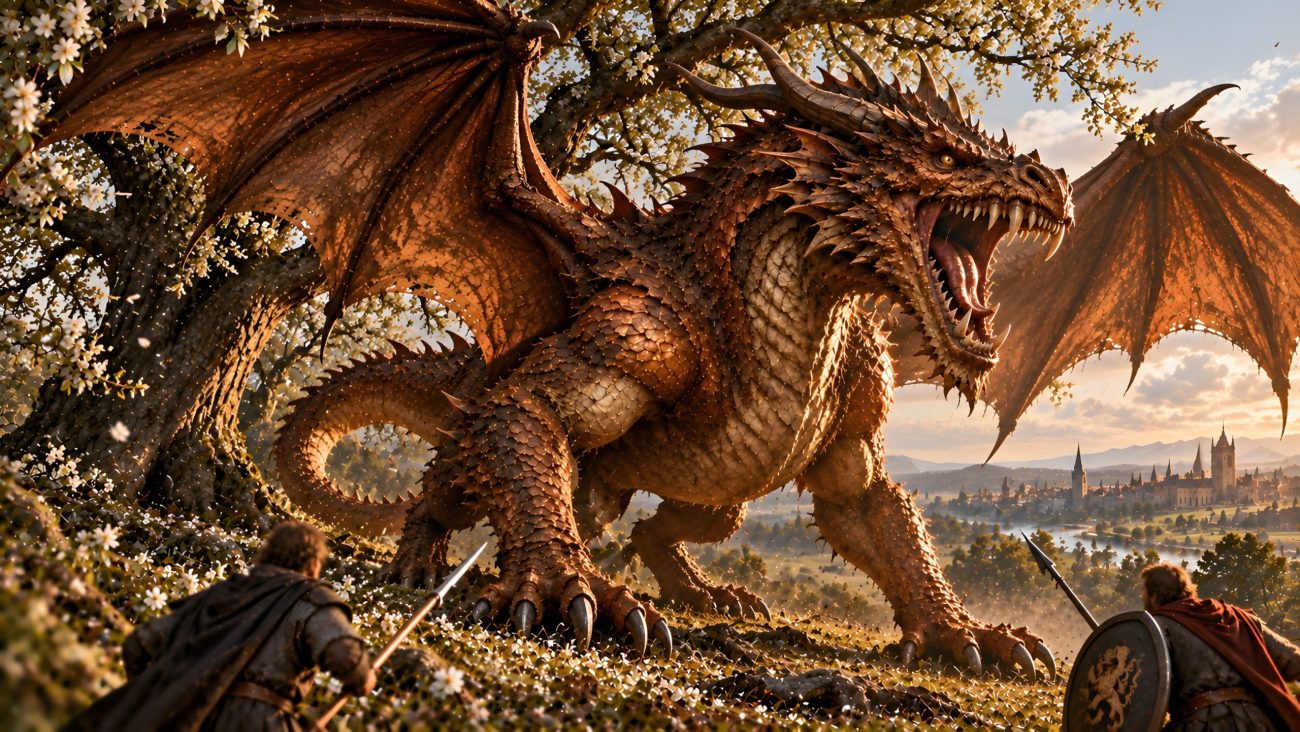
A fearsome dragon lived beneath an ancient medlar tree. It terrorized the surrounding countryside, seizing both people and animals and tearing them apart. The dragon’s terrible cry was always the same: “Gelre, Gelre!”

Lupold and Wichard, sons of Otto, lord of Pont, heard of the beast and set out to destroy it. Beneath the old medlar tree they found the dragon and confronted it. After a fierce struggle, the brothers succeeded in killing the monster.

Where the dragon had been slain, the brothers founded a castle and named it Gelre, after the strange cry that had come from the dragon’s mouth.

Lupold later died without children, and his younger brother Wichard succeeded him. Wichard was married to a daughter of Zutphen, sometimes named Margaretha, daughter of Herman of Hameland. From that time onward he bore three medlar flowers in his coat of arms, preserving the memory of the dragon that had been defeated beneath the ancient medlar tree.


Sources

“De draak van Gelre.” Mijn Gelderland. Accessed September 30, 2026. https://mijngelderland.nl/inhoud/verhalen/de-draak-van-gelre


Dragon of Wasmes

Tradition: Belgian Mythology
Alternative Names: Gilles van Chin’s Dragon
Category: Dragon


The Myth

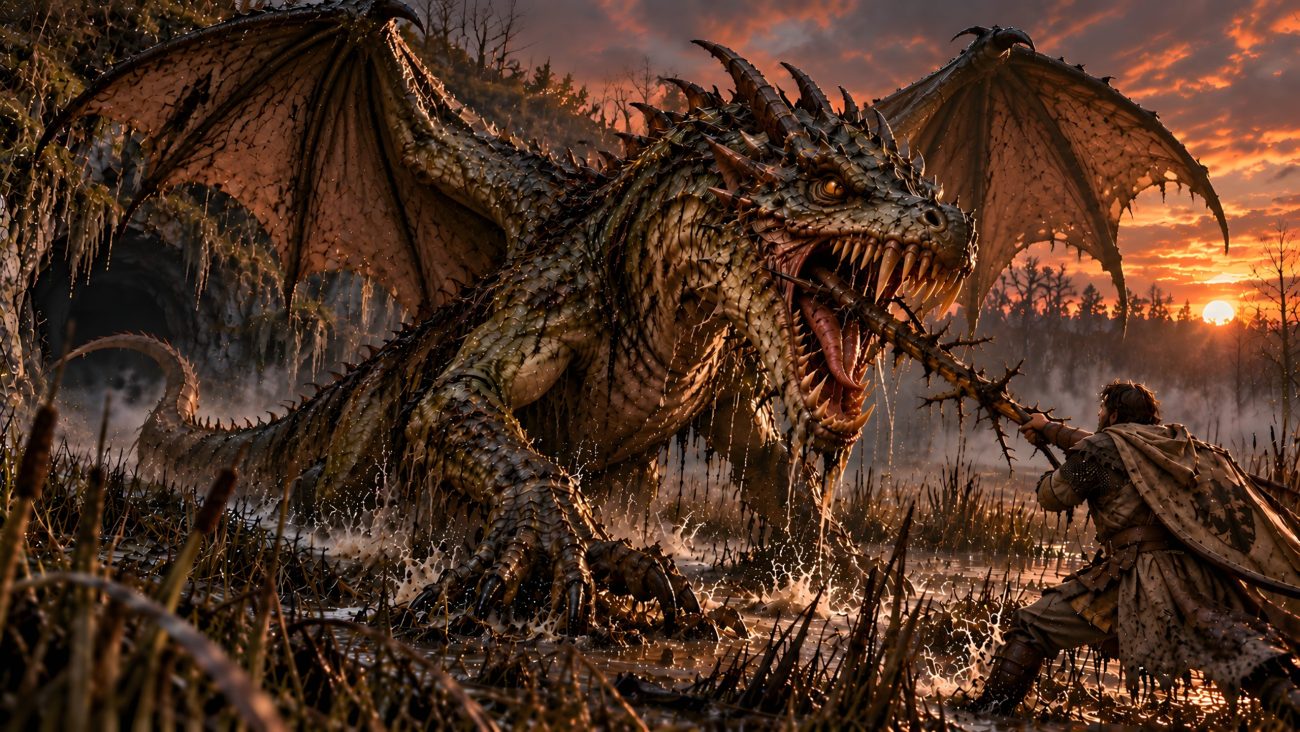
A fearsome dragon lived in the dangerous marshes of Wasmes, where it made its lair in a cave. The beast had captured a young girl and carried her into its den, holding her prisoner there.

In 1133, Gilles van Chin came to Wasmes and confronted the dragon. The battle lasted for hours, continuing until evening. In one telling of the tale, the imprisoned girl managed to help Gilles by giving him a thorny branch. He used it against the dragon, and the branch became lodged in the creature’s mouth.

At last Gilles struck the dragon through the heart and killed it. He then cut off its head and carried the monstrous trophy to Count Baldwin. The rescued girl was brought back to the village in triumph, freed from the creature that had held her captive in the marshes.


Sources

“Gilles van Chin.” Wikipedia, de vrije encyclopedie (Dutch Wikipedia). Wikimedia Foundation. Accessed September 30, 2026. https://nl.wikipedia.org/wiki/Gilles_van_Chin


Bokkenrijder

Tradition: Belgian Mythology, Dutch Mythology
Alternative Names: –
Category: Sheep


The Myth

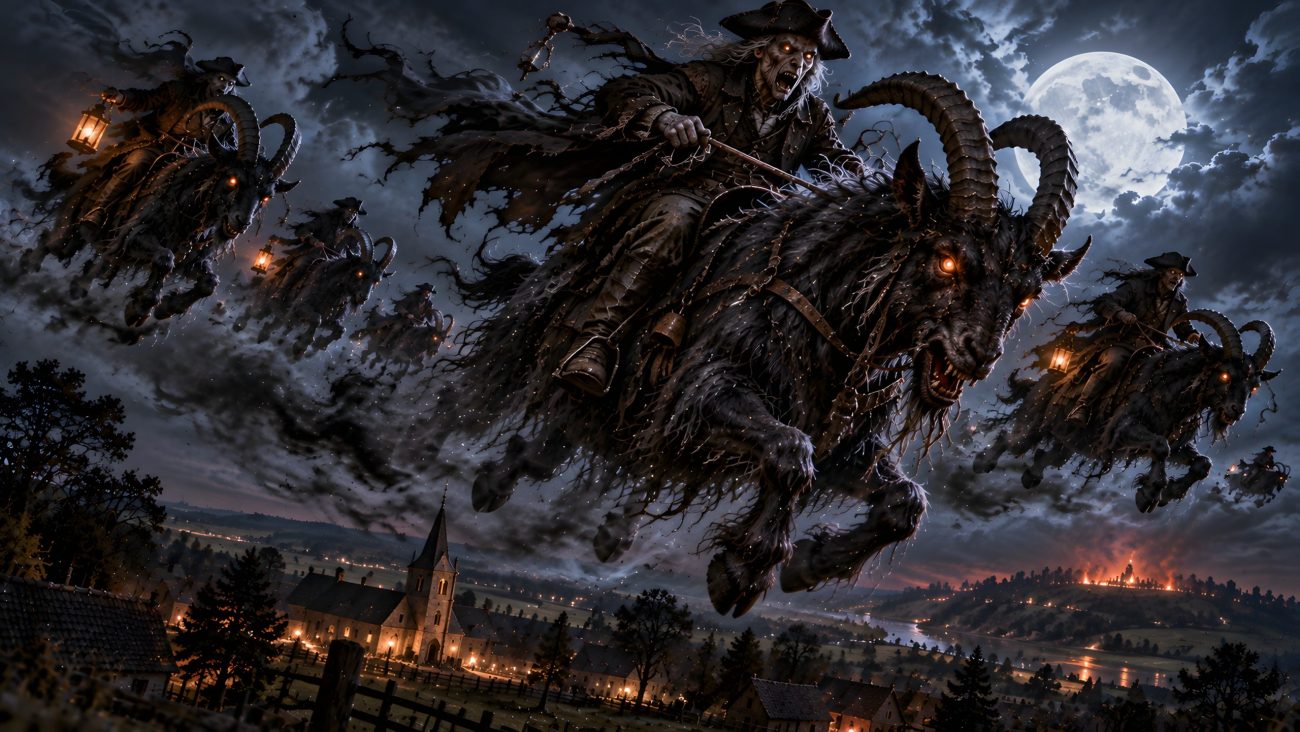
The Bokkenrijders were spirits who rode through the night sky upon goats. Mounted on their supernatural steeds, they could fly through the air by reciting a magical formula:

“Over huis, over tuin, over staak en dat tot Keulen in de wijnkelder!”

Once a year, the Bokkenrijders were said to ride to the Mookerheide, where they gathered to honor their master, the Devil.

The fear surrounding these spectral riders later became entangled with a very real band of robbers who operated throughout Limburg during the eighteenth century and called themselves Bokkenrijders as well. They appear to have exploited the existing fear of the supernatural riders. After being tortured, members of these gangs confessed to the most horrifying deeds, including having made a pact with the Devil and being able to fly through the air on the backs of goats.

More than 180 of these accused Bokkenrijders were eventually sentenced to death. Thus the name came to describe both the legendary spirits who supposedly crossed the night sky on goats and the eighteenth-century criminals who were accused of being their human counterparts.


Sources

“Aardmannetje tot zwarte juffer: een lijst van Nederlandse en Vlaamse elfen en geesten.” Abe de Verteller. Accessed September 30, 2026. https://abedeverteller.nl/van-aardmannetje-tot-zwarte-juffer-een-lijst-van-nederlandse-en-vlaamse-elfen-en-geesten/