Starkhans

Tradition: Luxembourg Mythology
Alternative Names: –
Category: Giant


The Myth

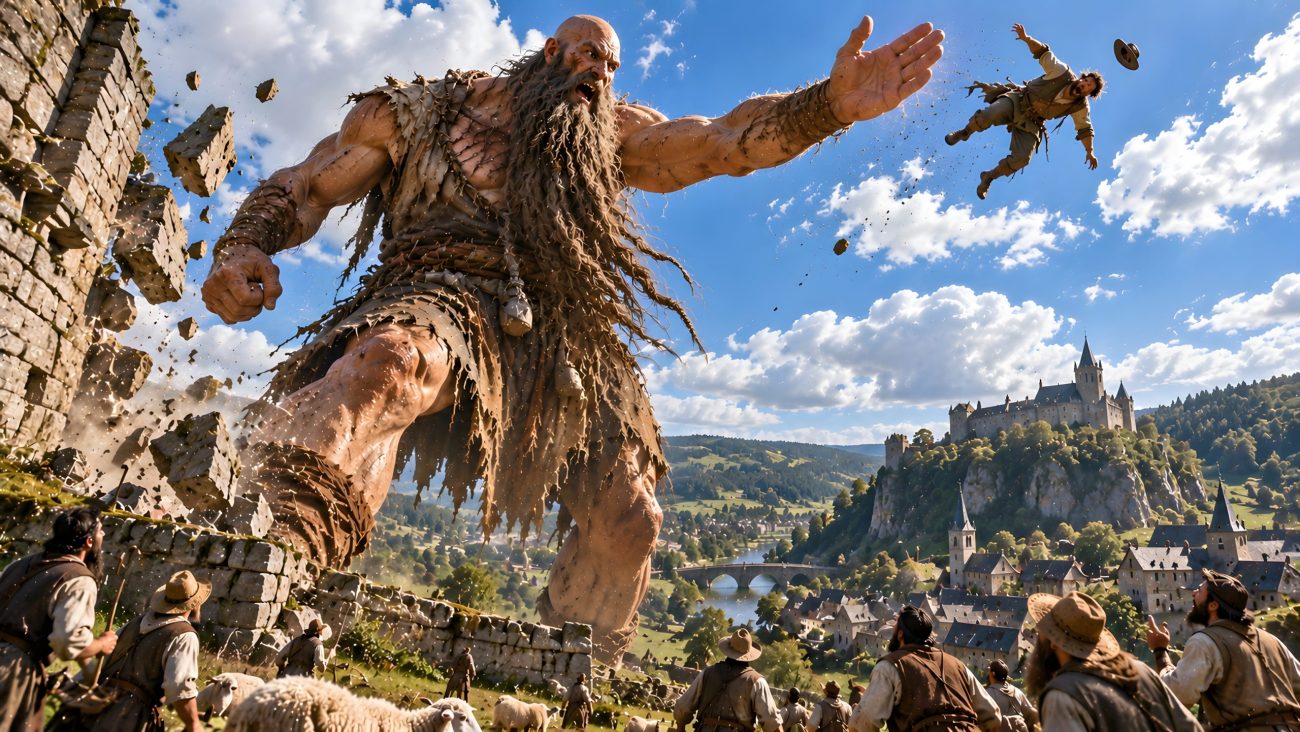
Starkhans was a giant-like figure whose enormous strength was said to represent the giants of old. His extraordinary power was already apparent in childhood. He continued drinking at his mother’s breast until the age of seven, and this was said to have made him so strong that, scarcely grown beyond his mother’s care, he could uproot young oak trees as thick as a man’s arm merely for amusement.

One of the most famous tales of his strength tells of a mischievous shepherd who boasted that he could outdo Starkhans in a contest. They agreed that each would throw a stone against a wall with such force that it would remain stuck to it.

Starkhans picked up a boundary stone and hurled it against the wall with tremendous force. Instead of sticking, the stone shattered into pieces like sand, and the wall itself shook from the impact.

The clever shepherd had no intention of competing honestly. He picked up a piece of cheese instead, threw it against the wall, and watched as it stuck firmly to the surface. Starkhans believed that he had been defeated.

Overcome with furious rage at losing the contest, Starkhans struck the unfortunate shepherd such a tremendous slap across the face that the poor man was hurled all the way up to the clouds. He did not fall back to earth for seven days.

When he finally came down, he landed in a meadow where his fellow shepherds were working in the hay. They were astonished to see their companion suddenly fall from the sky, alive after his extraordinary journey.


Sources

La Fontaine, Edmond de. Luxemburger Sagen und Legenden. Luxemburg: Jos. Beffort, 1882.

Roesschaert

Tradition: Belgian Mythology
Alternative Names: Roessaart, Roesjhoart, Roesschaert
Category: Ghost, Witch, Dog


The Myth

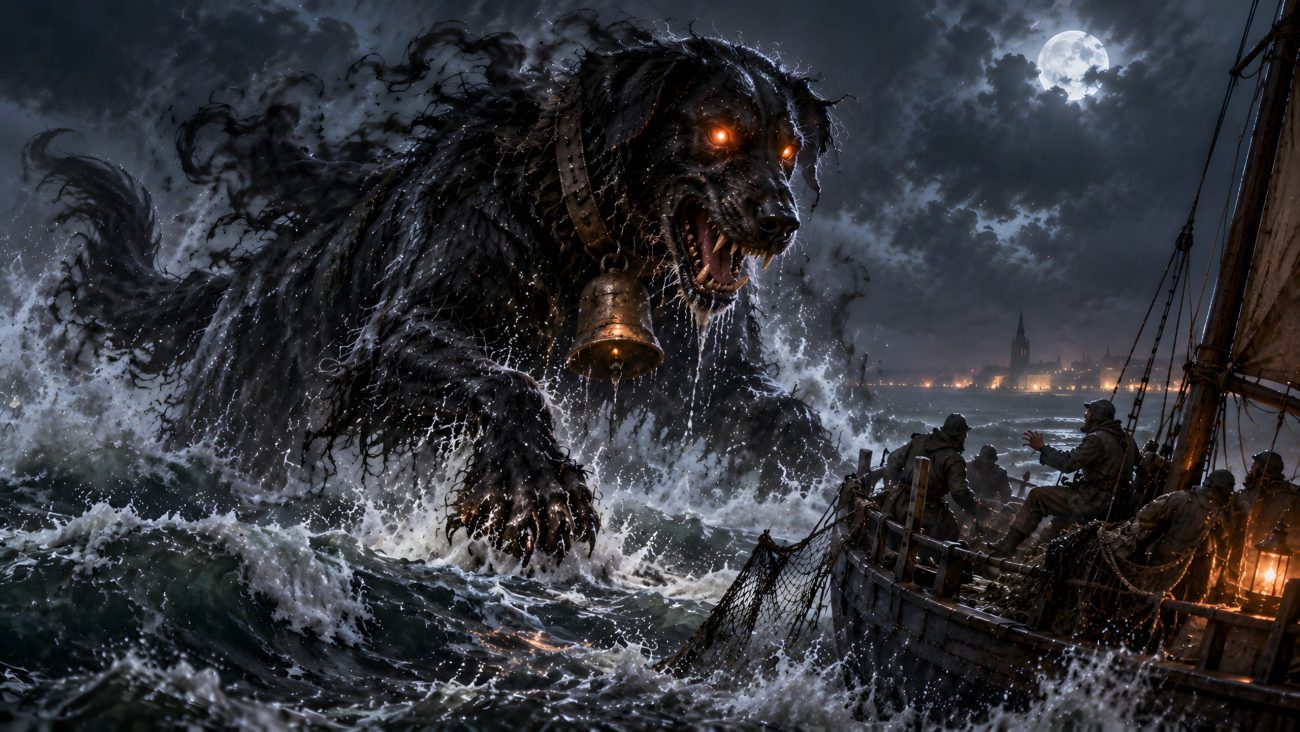
Roesschaert was the ghost of a burned witch. She could appear in several frightening forms, most notably as an enormous black dog with a bell around its neck. At other times she appeared as a cat or a donkey. Whatever form she took, her presence was accompanied by the sound “Roes, Roes, Roes,” from which her name was said to derive.

Roesschaert was especially troublesome to fishermen. She would destroy their fishing nets or try to overturn their boats, bringing danger to those working at sea.

She could also rise suddenly from the water itself, appearing without warning beside fishermen and sailors. From the sea she would seize them and drag them into the depths, making Roesschaert a particularly feared spirit along the Flemish coast.


Sources

“Aardmannetje tot zwarte juffer: een lijst van Nederlandse en Vlaamse elfen en geesten.” Abe de Verteller. Accessed September 30, 2026. https://abedeverteller.nl/van-aardmannetje-tot-zwarte-juffer-een-lijst-van-nederlandse-en-vlaamse-elfen-en-geesten/


Vurige Wagen

Tradition: Belgian Mythology, Dutch Mythology
Alternative Names: Korenwagen, Gloeiende Wagen, Hellewagen, Spookwagen
Category: Object


The Myth

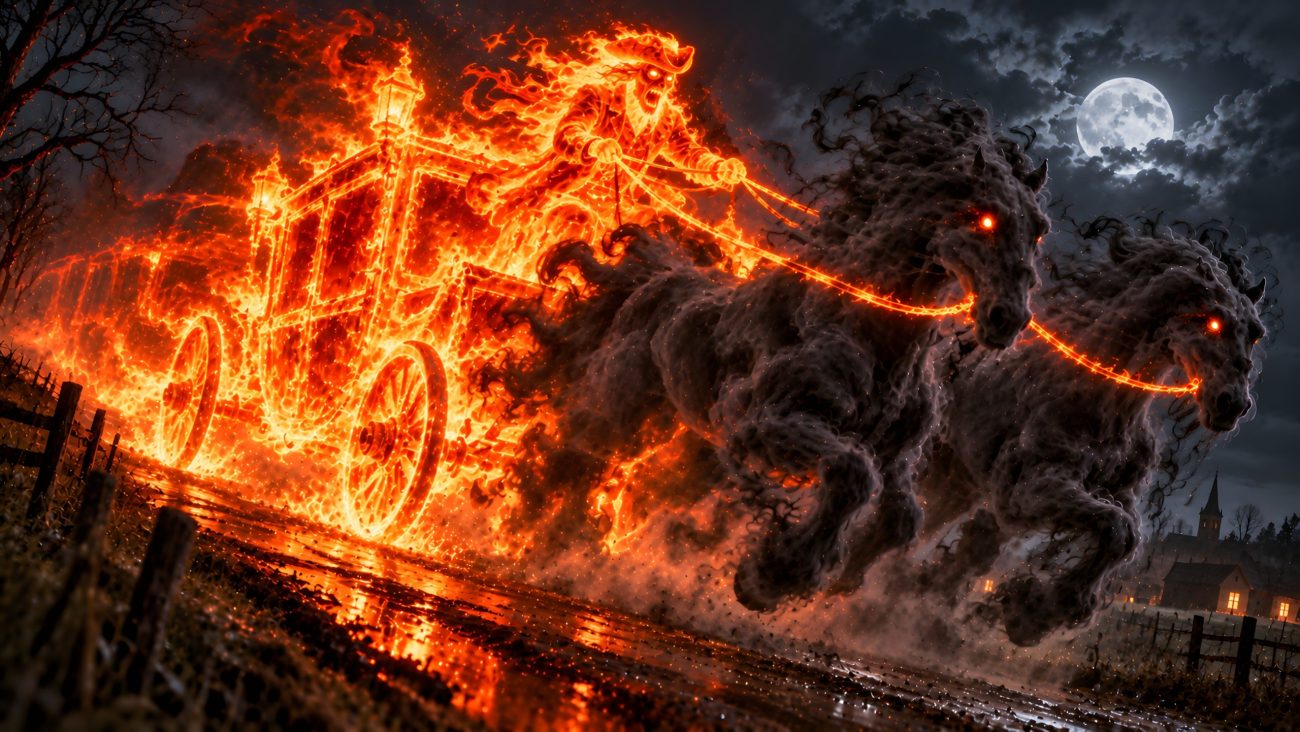
The Vurige Wagen is a glowing, fiery coach that appears at night, usually between midnight and one o’clock. It is drawn by black or invisible horses and sometimes rises into the air, racing through the darkness with an infernal roar.

Inside the coach, blood-red lights glow ominously, while the coachman himself shines with heat and spits fire. The terrifying vehicle is said to be the punishment of wealthy sinners who exploited and oppressed ordinary people during their lives.

One late-night traveller once heard the dreadful carriage thundering toward him. As the noise grew louder, he expected the fiery vehicle to rush past him, but when it came close, it suddenly vanished. Only a few metres farther away did it appear again, continuing its supernatural journey through the night.

The Vurige Wagen could also be understood as the restless spirit of a dissolute nobleman, condemned after death to drive eternally through the darkness in his blazing coach.


Sources

Reuland, Heinrich Adolph. Luxemburger Volksbücher: Geschichten und Sagen aus dem luxemburger Volksleben. Luxemburg: St. Paulus-Dr., 1892.


Affener Weiher

Tradition: Luxembourg Mythology
Alternative Names: Affener Weiher, Pitscher Weiher
Category: Bird


The Myth

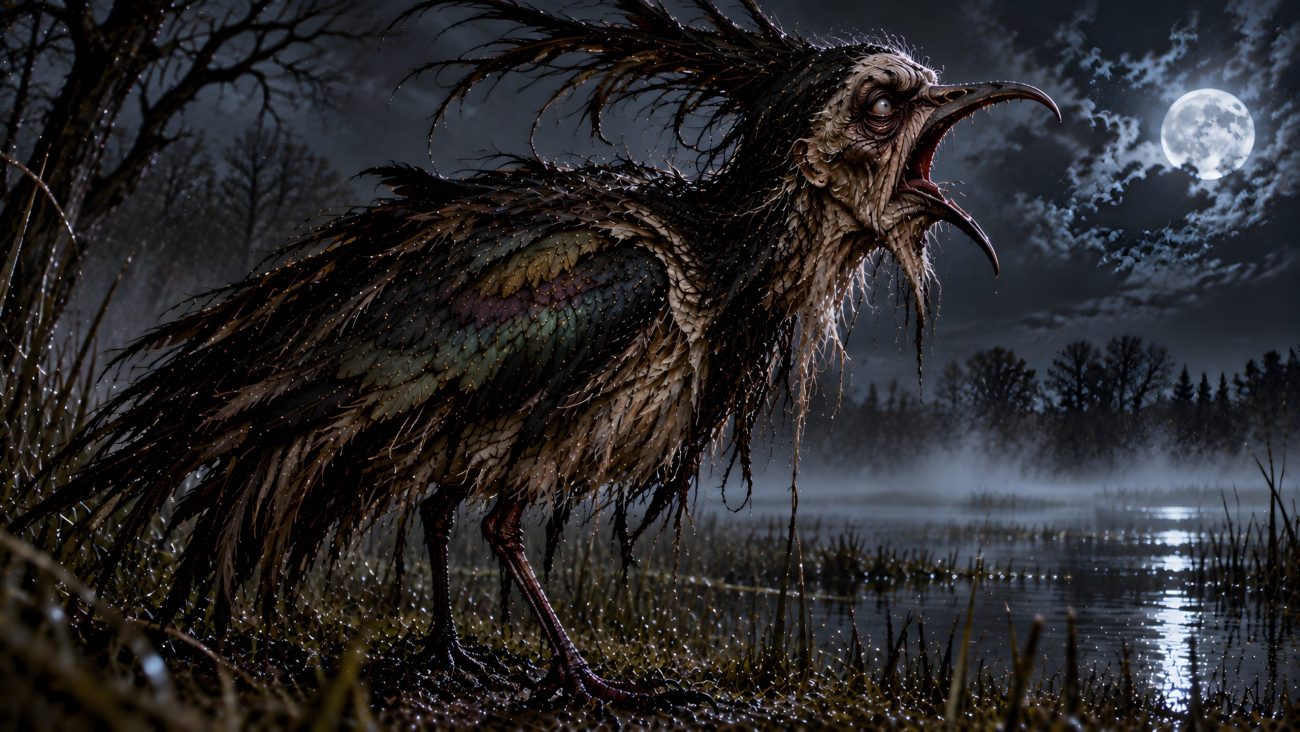
The Affener Weiher is a pond near the village of Affen, known in Walloon as Ponehs, in the municipality of Haechel in Luxembourg. Around its waters gather flocks of lapwings, calling out their characteristic “Kibitz! Kibitz!”

Yet these birds are said not to be true lapwings. They are old maidens who were transformed into birds and condemned to remain at the pond until the end of the world. There they must endlessly circle the water and cry out “Kibitz! Kibitz!” without ever escaping their enchantment.

The legend gave rise to a local saying about an unmarried girl who seemed unlikely to find a husband. People would say of her: “Das kommt auf den Affener Weiher” — “She is going to end up at the Affener Pond.”

The same story is also attached to the Pitscher Weiher, where the cries of the lapwings are likewise said to come from enchanted old maidens.


Sources

Reuland, Heinrich Adolph. Luxemburger Volksbücher: Geschichten und Sagen aus dem luxemburger Volksleben. Luxemburg: St. Paulus-Dr., 1892.


Ghostly Rider of Meysemburg

Tradition: Luxembourg Mythology
Alternative Names: The Ghostly Rider of the Meysemburg Forest, Der gespenstige Reiter
Category: Ghost


The Myth

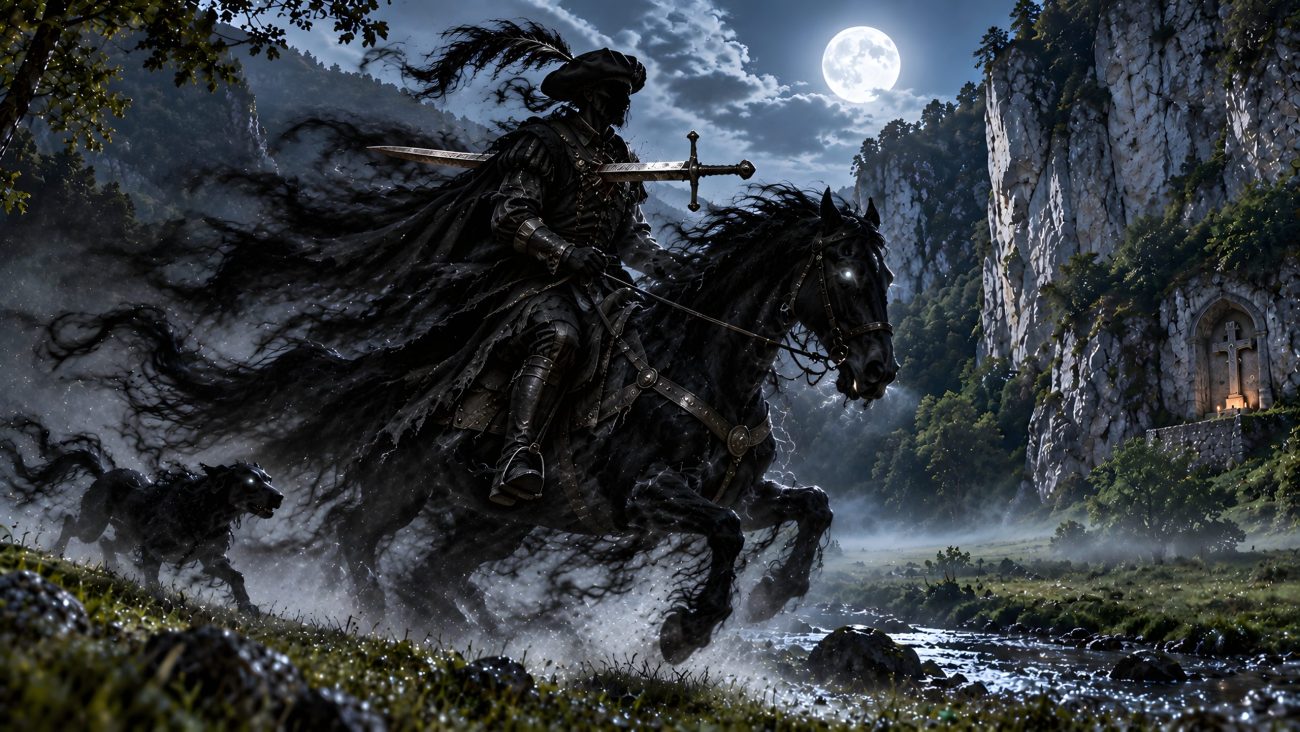
The ghostly rider appeared as the shadow of a mounted knight, wearing a beret decorated with a flowing feather. Most horrifying of all, a long sword pierced straight through his chest, its point protruding from his back. The black shadow would slide rapidly down the sheer face of the rocks and race through the meadow toward Meysemburg before disappearing into the dark woods beyond the stream.

Late travellers who encountered the apparition on bright moonlit nights were overcome with terror. They would cross themselves and scarcely dare to speak aloud. The rider was not confined to the rocks in the meadow either. He was also seen along high mountain ridges, always near the edge of the rocky forests. Sometimes the shadow of a small greyhound was seen running beside the spectral horse.

People disagreed about what the apparition truly was. Some believed it was the ghost of a notorious witch’s accomplice, while others said it was a cursed knight condemned to wander endlessly as punishment for a terrible crime.

The story behind the haunting began when several knights of noble birth competed for the hand of the beautiful daughter of the lord of Meysemburg. The knight who won her affection was the noble Lord of Linster, a virtuous and respected warrior, and the two were soon betrothed.

The other suitors withdrew, but one remained behind as a guest at the fortress of Meysemburg. He had conceived a treacherous plan to steal the bride from Lord Linster. Consumed by jealousy and hatred, he swore bloody revenge upon his successful rival and waited for an opportunity to carry out his terrible scheme.

That opportunity came during the autumn hunting season. The Baron of Meysemburg organized a great hunt through the heavily wooded countryside, where deer, roe deer, wild boar, and other game were plentiful. Lord Linster and his dangerous rival both joined the hunt, which led through the dark forests toward the territory of Fels.

While Lord Linster pursued a deer, unaware that his enemy was following close behind, the jealous knight suddenly attacked him. He drove his spear against the unsuspecting Linster and forced him backward toward the steep rock wall above the Manzenbach valley.

There was nowhere for Linster to escape. The force of the attack caused his horse to rear, and with no ground behind it, the animal toppled backward over the edge of the cliff, carrying the knight with it into the depths below.

The legend explains the ghostly rider as the restless spirit of this murdered knight, forever racing through the forests and meadows where his life was so treacherously ended.


Sources

Reuland, Heinrich Adolph. Luxemburger Volksbücher: Geschichten und Sagen aus dem luxemburger Volksleben. Luxemburg: St. Paulus-Dr., 1892.


Mavo

Tradition: Belgian Mythology
Alternative Names: Mahvot, Mahvo, Malhvo
Category: Lizard


The Myth

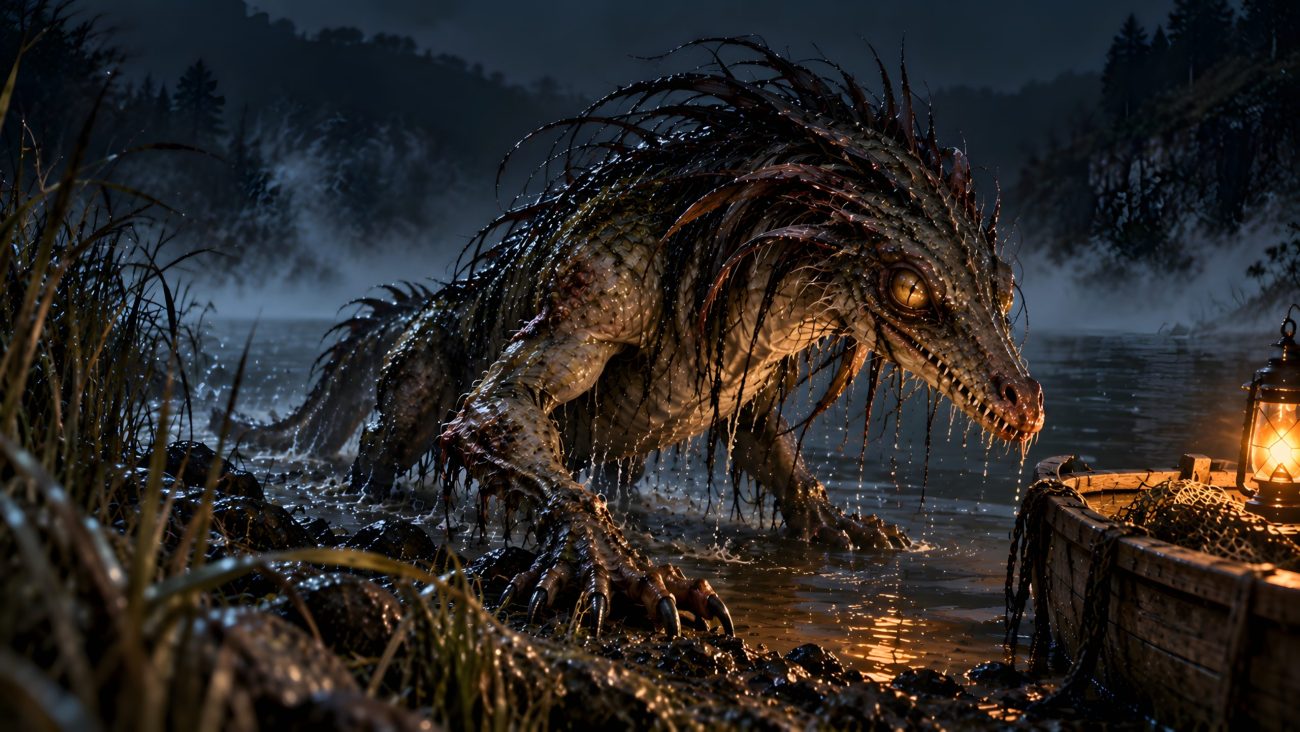
The Mavo is a monstrous amphibian resembling a giant lizard, said to be about the size of a calf. It inhabits the Meuse River in the Ardennes and scurries along the riverbed between Revin and Liège. The creature rarely comes onto land, but its appearance is considered a terrifying omen, for it is said to emerge shortly before great disasters such as destruction, plague, war, or pestilence.

A ninety-year-old woman, later deceased, was reportedly said to have seen the creature at Revin and Givet on a July night in 1870. The sighting became one of the tales surrounding the mysterious river monster that lurked beneath the waters of the Meuse.

The Mavo also serves a darker purpose in stories told to children. Angry mothers were said to call the creature from the water when their children misbehaved, using it to frighten them away from the river. The Mavo was imagined as a kind of water bogeyman that would drag into the water and devour any child foolish enough to play too close to the riverbank.

No one knows how many children the Mavo has supposedly eaten, but children were warned to fear it whenever their mothers invoked its name: “Here comes the Mahvo! And if you don’t shut up right now, he’ll eat you!” The threat was said to work without fail.


Sources

“Mavo.” New Bestiary (Bestiary.us). Accessed September 29, 2026. https://www.bestiary.us/Mavo


Deogen

Tradition: Belgian Mythology
Alternative Names: De-ohen, De Ochen
Category: Ghost


The Myth

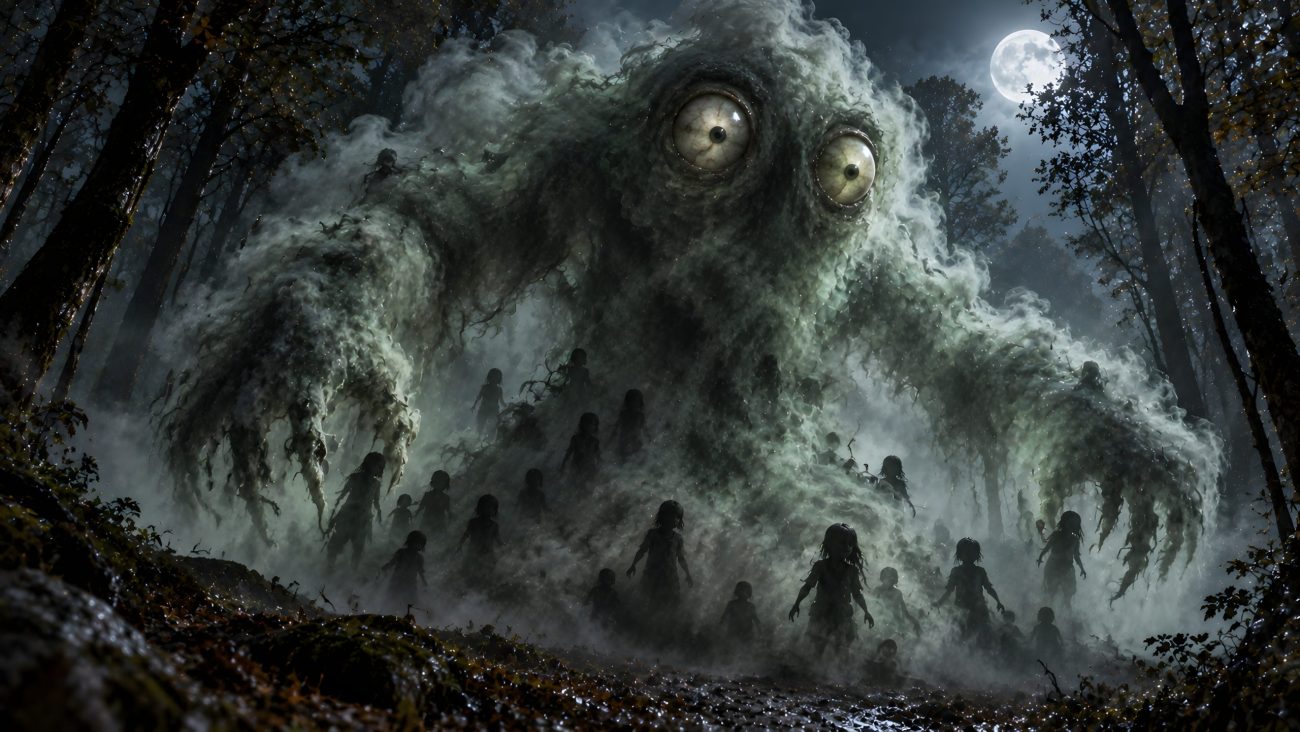
De-ohen appears as a huge, looming ghostly figure formed from a cloud of white or greenish fog. Its eyes bulge from the mist, giving the creature its name, derived from the Dutch “de ogen,” meaning “the eyes.” Alongside the towering figure come the shadowy forms of the children it has killed, their tiny silhouettes following behind it through the darkness.

The legend is associated with the Forêt de Soignes, the great forest on the southern outskirts of Brussels. Drivers travelling through the forest at night or at dusk, especially in foggy weather, were said to encounter black, ghostly figures darting through their headlights. Bloody handprints could appear on car windows, while the terrifying laughter and screams of invisible children seemed to surround the road. Behind the sounds came the tiny shadows of children, following in the footsteps of a huge, looming figure rising from the fog.

The story is tied to a tale of a local serial killer and his victims. As the legend spread, the number of children supposedly murdered in the forest grew enormously. A 1937 book, Children of the Haunted Forest, described how local nuns supposedly discovered the burned bodies of small children scattered throughout the Sonian Forest. The story claimed that as many as eighty children had been brutally murdered, their bodies burned and left throughout the woods.

De-ohen became a figure of frightening campfire stories, with people claiming that they had personally encountered the ghost in the forest. The tale presents the fog itself as something alive: a monstrous presence with enormous eyes, accompanied by the ghosts of the children lost within the woods.


Sources

“De Okhen.” New Bestiary (Bestiary.us). Accessed September 29, 2026. https://www.bestiary.us/de-okhen


Colôrobètch

Tradition: Belgian Mythology
Alternative Names: Colôrobètch, Colô Rodje Bètch, Red Beak, Red-Beaked Rooster
Category: Bird


The Myth

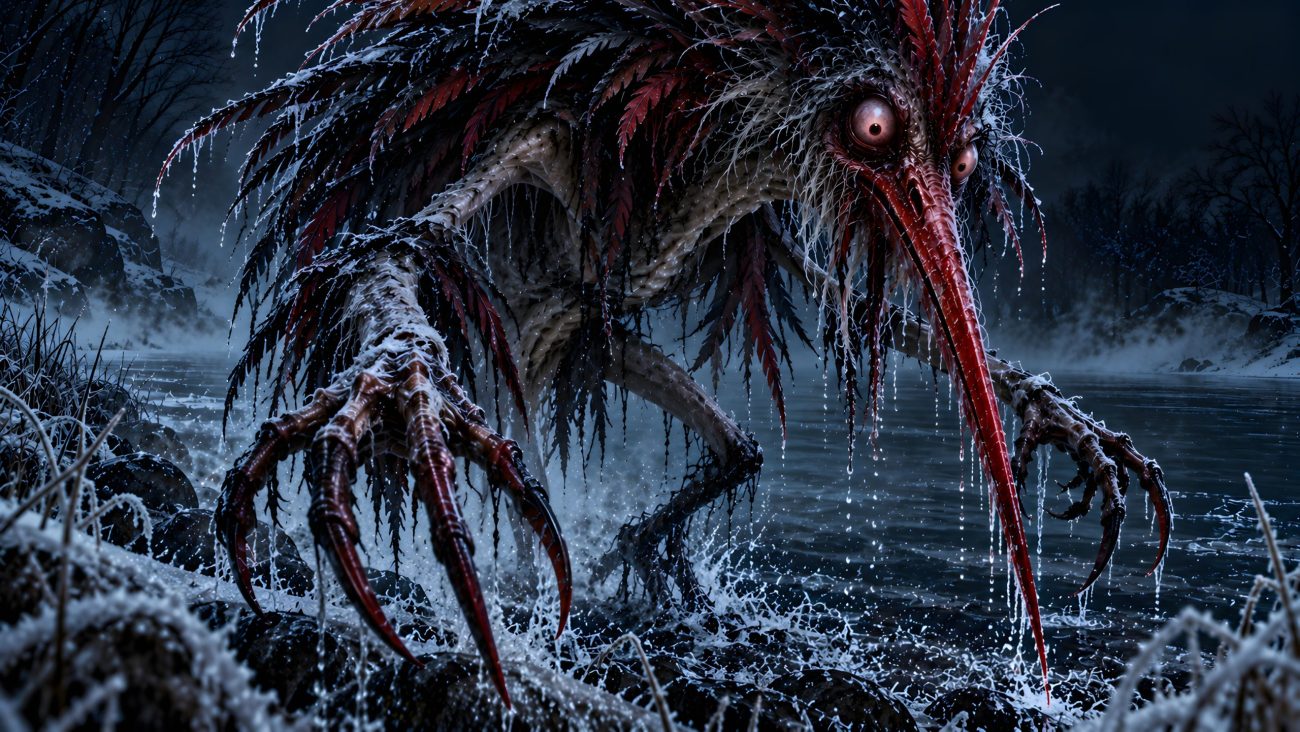
Colôrobètch is a frightening red-beaked creature used to embody childhood fears of the cold, punishment, and dangerous places. His most distinctive feature is his beak, stained red with blood, although it is uncertain whether he is truly a bird, a human being, or a grotesque mixture of the two.

Colôrobètch appears during winter, preying on children foolish enough to go outside without clothing warm enough to protect them from the icy wind. He nips at their exposed faces and hands until their skin becomes red, dry, cracked, and bleeding. His name is therefore tied directly to his blood-red beak and the injuries caused by the cold. He was a warning to children to protect themselves from the freezing winter air, which could bring frostbite to their noses and hands.

Around Andenne, Bastogne, Dinant, Huy, Neufchâteau, and Warsage, the creature is known as Colôrobètch. In On, Oignies, and Stavelot, he is simply called the Red Beak. His appearance changes from place to place: in Somme-Leuze he is imagined as a monstrous sparrow, while in Condroz and Hesbaye he takes the form of a pigeon. In Namur, he is specifically known as Colôrobètch or Colô Rodje Bètch, meaning the “Red-Beaked Rooster.”

In Andenne, the creature takes on an even darker form. There, Colôrobètch becomes a nocturnal water bogey who lurks around the Meuse and drags unwary children into its depths.


Sources

“Colorobetch.” A Book of Creatures. March 21, 2016. https://abookofcreatures.com/2016/03/21/colorobetch/


Hotteman

Tradition: Belgian Mythology
Alternative Names: Hotteman
Category: Ghost


The Myth

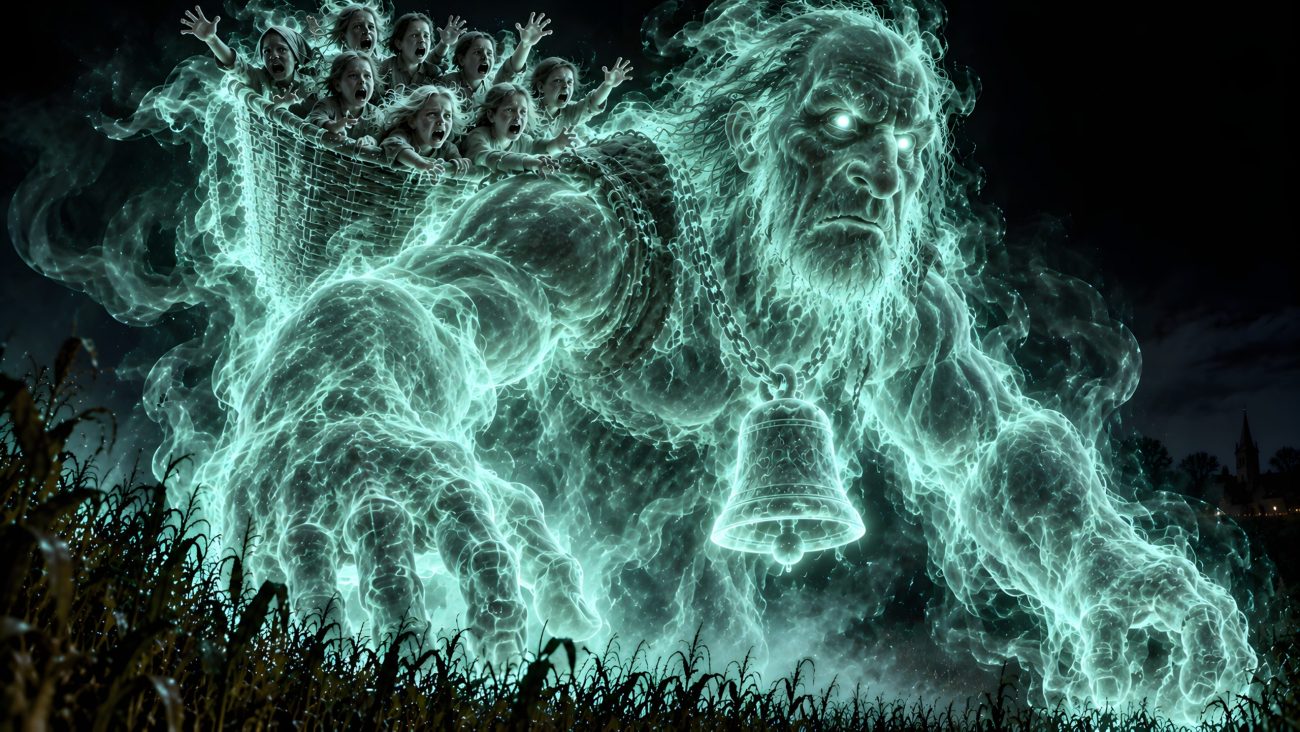
The Hotteman was the ghost of a pig herder. He was said to carry an enormous basket on his back, so large that it was as big as a table.

With this basket, the Hotteman would seize naughty children and carry them away. He was also said to cut off the toes of children who wandered into the grain fields. Mothers told their children these frightening stories to make them behave and keep them away from the crops.


Sources

“Aardmannetje tot zwarte juffer: een lijst van Nederlandse en Vlaamse elfen en geesten.” Abe de Verteller. Accessed September 29, 2026.
https://abedeverteller.nl/van-aardmannetje-tot-zwarte-juffer-een-lijst-van-nederlandse-en-vlaamse-elfen-en-geesten/


Heksen op Kruiwagenwielen

Tradition: Belgian Mythology
Alternative Names: Heksen op kruiwagenwielen
Category: Witch


The Myth

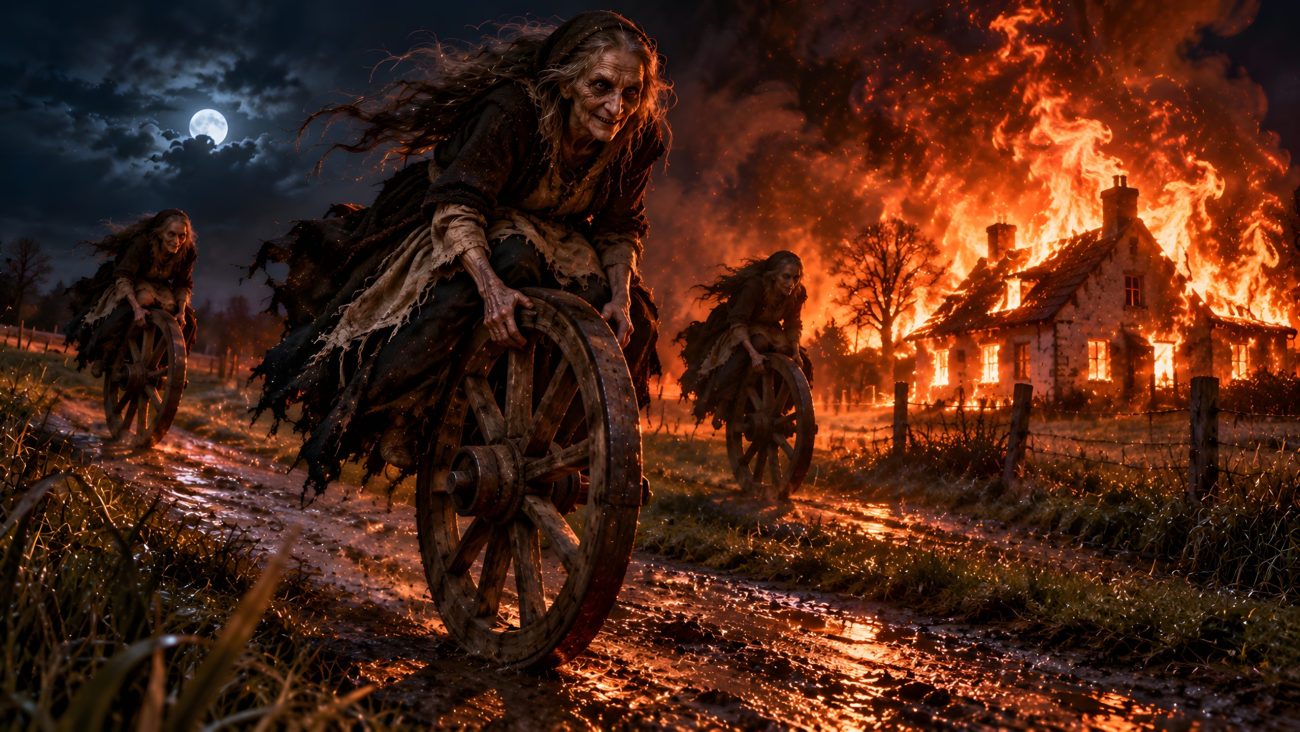
Three witches appeared at night riding upon the wheels of wheelbarrows. Two boys from Denderhoutem had gone to Steenhuize to court, but during their journey they lost their way in the darkness. After wandering for a long time, they reached an isolated house standing alone in the fields. There was no one to be seen, and not a single light burned inside.

A little farther along the road, they suddenly encountered a woman riding upon a wheelbarrow wheel. Without saying a word, she rode straight into the deserted house. The boys continued on their way, only to meet another woman riding upon a wheelbarrow wheel, and then a third.

When they had gone a little farther, curiosity and unease made them look back. The lonely house they had passed was now completely engulfed in flames and fire. Nearly dead with fright, the two boys hurried home.


Sources

De Cock, Alfons. Vlaamsche sagen uit den volksmond. Amsterdam: Maatschappij voor Goede en Goedkoope Lectuur, 1921.