Pozoj

Tradition: Croatian Mythology, Slovenian Mythology
Alternative Names: Pozoj, Črne Škole Dijak, Črnošolec, Grabancijaš Dijak
Category: Dragon


The Myth

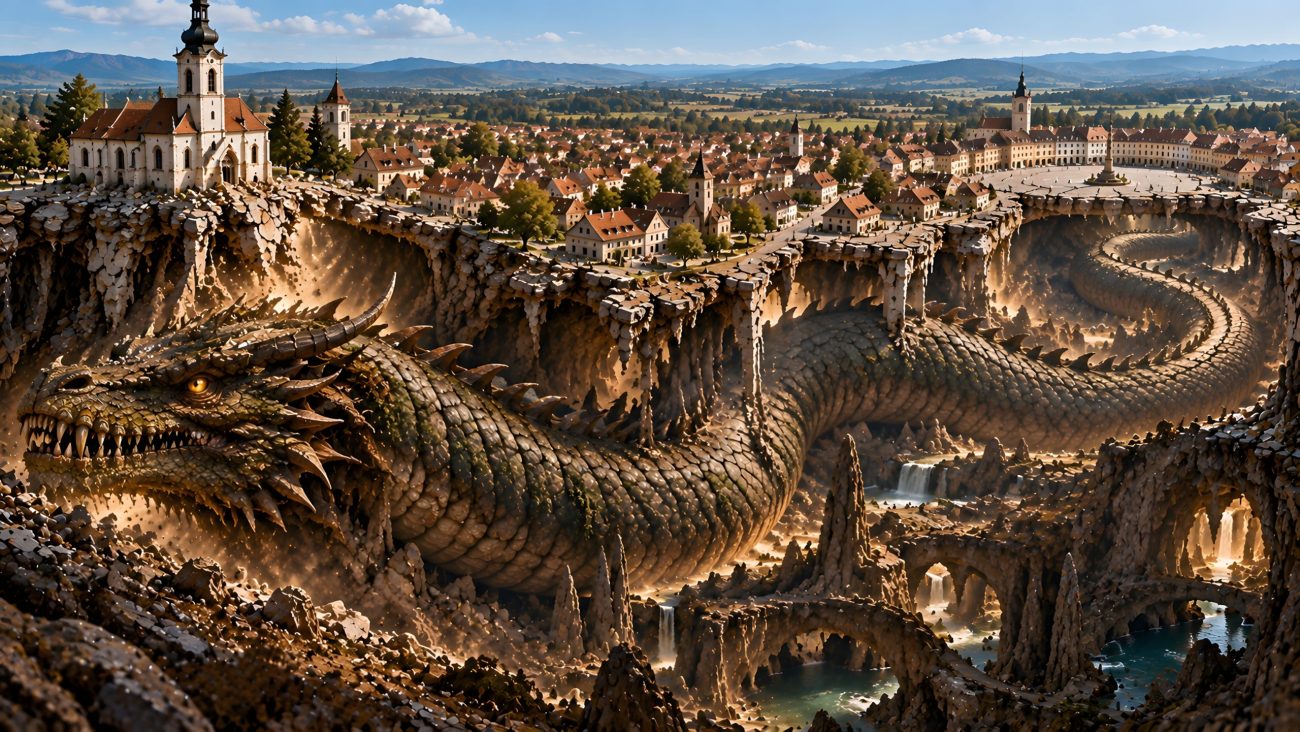
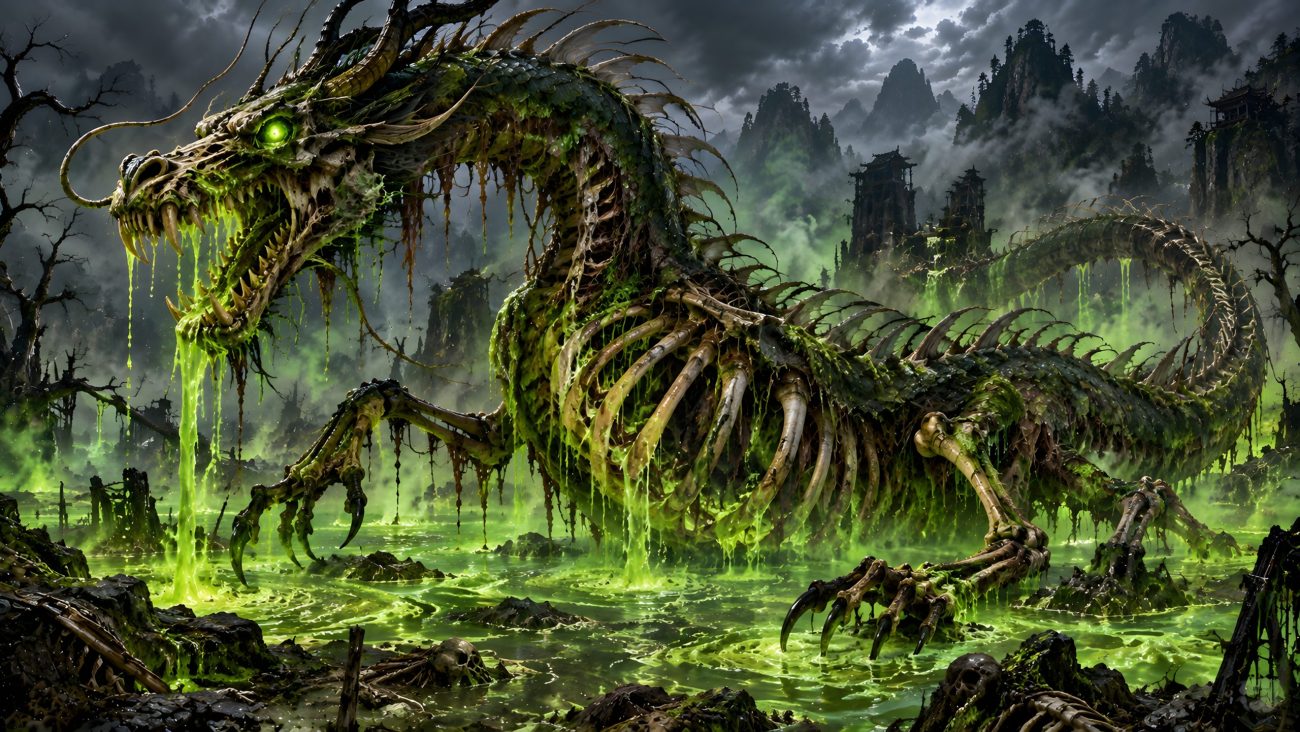
Pozoj is a great dragon said to dwell beneath cities and settlements, buried deep beneath the earth. In Čakovec in Međimurje County, the creature was believed to lie beneath the city with its head beneath the church and its enormous tail beneath the town square, although the positions could also be reversed.

The Pozoj could not be driven away by ordinary people. To defeat or remove it required a grabancijaš, a wandering scholar associated with the mysterious “black school” and the study of magic. Slovenian traditions similarly connect the dragon with the črne škole dijak, or “black school student,” also known as the črnošolec, the sorcerer’s apprentice.

Another Pozoj was said to lie beneath Zagreb. Whenever the enormous creature stirred or shrugged beneath the earth, it caused an earthquake above. The dragon therefore became a supernatural explanation for the violent movement of the earth beneath the city.

The Pozoj was also known in Slovenia, where dragons were generally regarded as dangerous creatures and were frequently associated with Saint George. The Slovenian hero Kresnik was likewise remembered as a dragon-slayer, placing the Pozoj within a broader tradition of monstrous dragons that must be overcome by a magical or heroic figure.


Sources

“Slavic dragon.” Wikipedia: The Free Encyclopedia. Wikimedia Foundation. Accessed October 3, 2026. https://en.wikipedia.org/wiki/Slavic_dragon


Nidhogg

Tradition: Norse mythology
Alternative Names: Níðhǫggr, Níðhöggr, Nidhöggur, Nidhug
Category: Dragon


The Myth

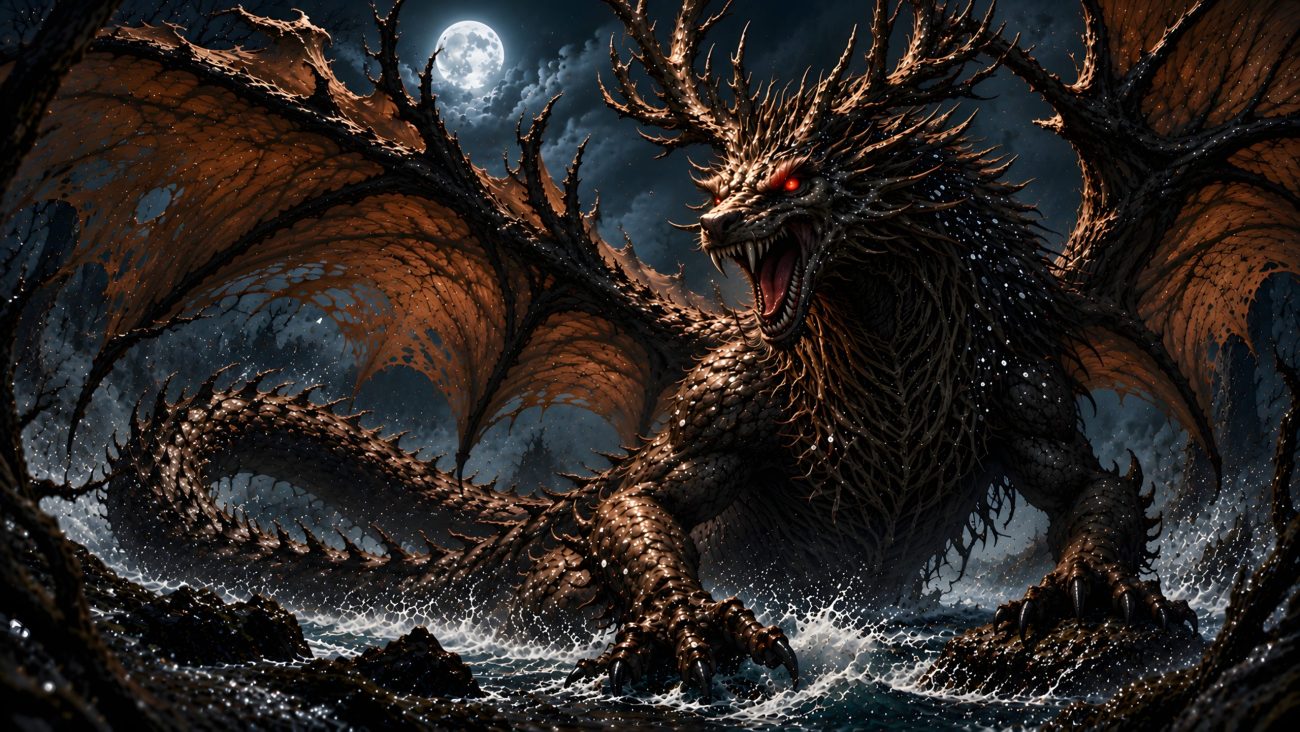
Nidhogg is a terrible dragon or serpent that dwells beneath Yggdrasil, the great World Tree. He gnaws endlessly at one of the tree’s great roots, the root that stretches over Niflheim. Beneath the world tree, he continually tears at its foundations while other creatures inhabit the branches above.

Nidhogg is also associated with the dead and the dark realms beneath the world. In the halls of Náströnd, where the wicked dead suffer, venom falls through the roof and the hall is woven from serpents’ spines. There Nidhogg feeds upon the corpses of those who committed murder, broke oaths, or betrayed those who trusted them. He is described as a creature of malice, a monstrous serpent that consumes the dead.

High above him, an eagle dwells among the branches of Yggdrasil. Between the eagle and Nidhogg runs the squirrel Ratatoskr, carrying hostile and envious words between the two creatures as it travels up and down the World Tree. Thus the great dragon beneath the roots is locked into an ancient struggle with the creature above.

Nidhogg’s most ominous appearance comes at the end of Völuspá. After the events surrounding Ragnarök, a dark dragon comes flying from the direction of Niðafjöll, described as a gleaming serpent carrying the corpses of the dead in its wings. The dragon is Nidhogg, rising from the darkness with the bodies of the dead as the world sinks. The meaning of this final appearance is uncertain, but it is commonly understood as an ominous image connected with Ragnarök.

His name itself is connected with biting or striking, and may evoke malice, darkness, or the act of gnawing below the roots of Yggdrasil. Whatever its precise meaning, Nidhogg’s role is unmistakable: beneath the World Tree waits a monstrous serpent, endlessly gnawing at its roots and feeding upon the dead.


Sources

“Níðhöggr.” Wikipedia: The Free Encyclopedia. Wikimedia Foundation. Accessed October 2, 2026. https://en.wikipedia.org/wiki/Nidhogg


Mao Long

Tradition: Chinese mythology
Alternative Names: Hairy Dragon
Category: Dragon


The Myth

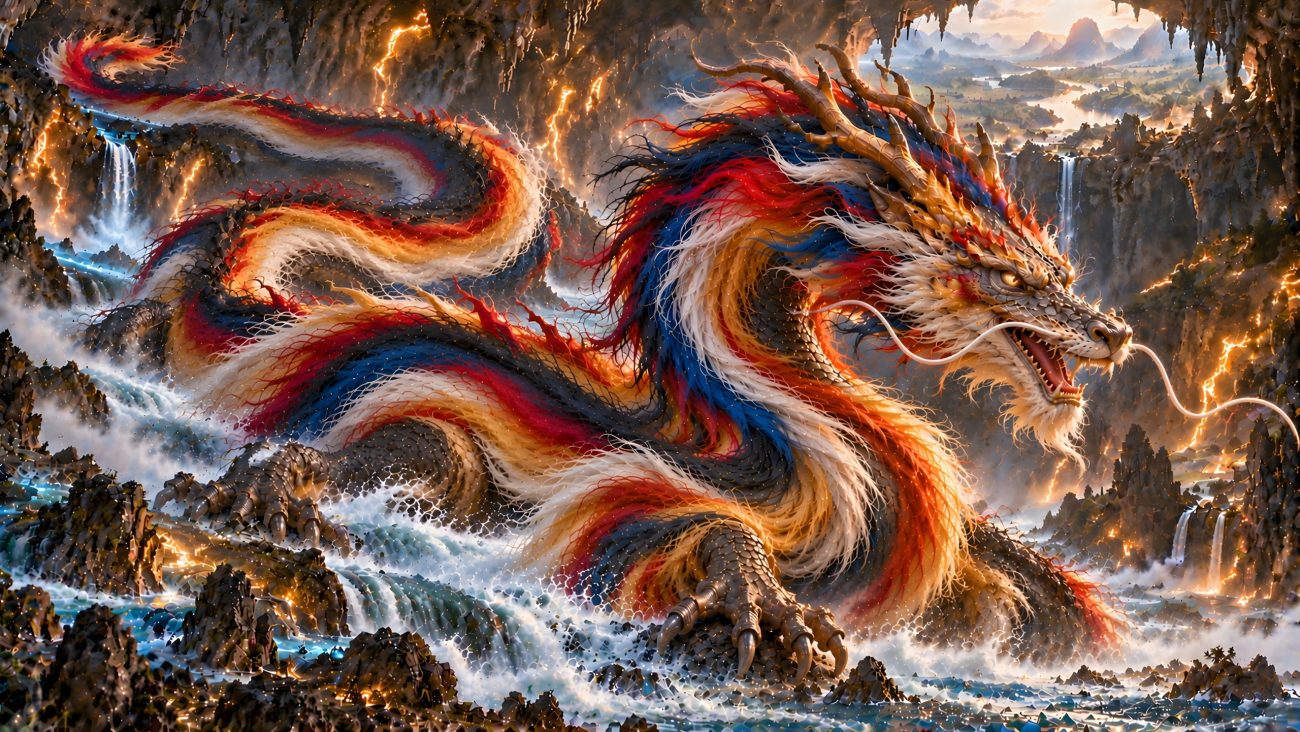
Mao Long is a strange dragon covered in hair of five different colors. It lived deep beneath the earth in a mysterious cave called Yin Yuan Li, located in the southern land of Nanxun. The cave was connected to the earth’s veins and was also inhabited by Mao Yu, a hairy fish. The hairy dragons and hairy fish lived together within the hidden cavern, while the bones of such creatures could sometimes be found scattered across the marshlands above.

During the time of Shun, the kingdom of Nanxun presented two Mao Longs to the rulers, one male and one female. Because of these remarkable dragons, a special palace was established for the raising and keeping of dragons. The tradition of raising dragons continued through the Xia Dynasty, and the clan associated with these dragon keepers took its name from the creatures.

When Yu undertook the great task of guiding the rivers, he rode upon a Mao Long. The hairy dragon carried him through the waters as he brought order to the rivers and helped bring peace to the four seas. Once the waters and the land had been brought under control, Yu released the dragon back into the waters, allowing it to return to its natural realm.


Sources

“毛龙 (Máolóng; Hairy Dragon).” Chinese Wikipedia. Wikimedia Foundation. Accessed October 2, 2026. https://zh.wikipedia.org/wiki/%E6%AF%9B%E9%BE%99


Poison Dragon

Tradition: Chinese mythology
Alternative Names: Dulong (毒龙)
Category: Dragon


The Myth

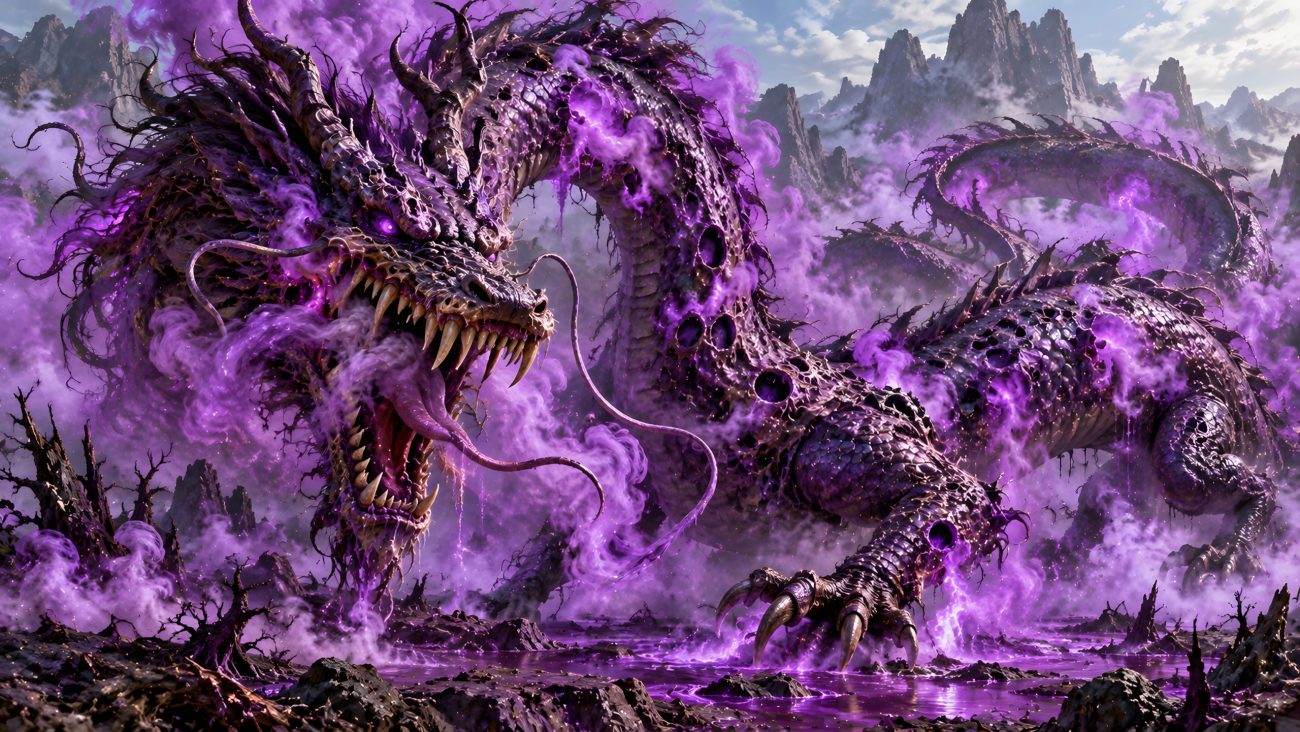
The Poison Dragon is an evil dragon of Chinese legend, a dangerous and malevolent creature associated particularly with the ancient Western Regions. Unlike benevolent dragons that govern rain and water, the Poison Dragon is remembered as a hostile supernatural being whose nature is expressed through its name: the poisonous dragon.

Ancient Chinese records repeatedly mention Poison Dragons. They appear in works such as the You Tianzhu Ji (Record of a Journey to Tianzhu), the Luoyang Qielan Ji (Record of the Buddhist Monasteries of Luoyang), and the Liang Jing Ji (Record of the Two Capitals). These accounts place the creatures especially within the lands of the ancient Western Regions, where encounters with strange dragons and supernatural beings formed part of the legendary landscape.

The Poison Dragon also appears in the later Xiuyun Ge, where Poison Dragon and other demons gather together after being summoned. The gathered creatures initially believe that they have been called together to fight the Daoist of Wanxing Terrace. Poison Dragon explains that this is not their purpose: they have instead been ordered by an immortal to assemble the demons and form a magical array against Sanjian.

Thus the Poison Dragon appears in Chinese legendary literature as a distinctly malevolent dragon, associated with poisonous and demonic forces rather than the protective or auspicious nature commonly attributed to other Chinese dragons.


Sources

“毒龙 (Dúlóng; Poison Dragon).” Chinese Wikipedia. Wikimedia Foundation. Accessed October 2, 2026. https://zh.wikipedia.org/wiki/%E6%AF%92%E9%BE%99


Lubia

Tradition: Albanian mythology
Alternative Names: Ljubi, Mother Lubia
Category: Dragon


The Myth

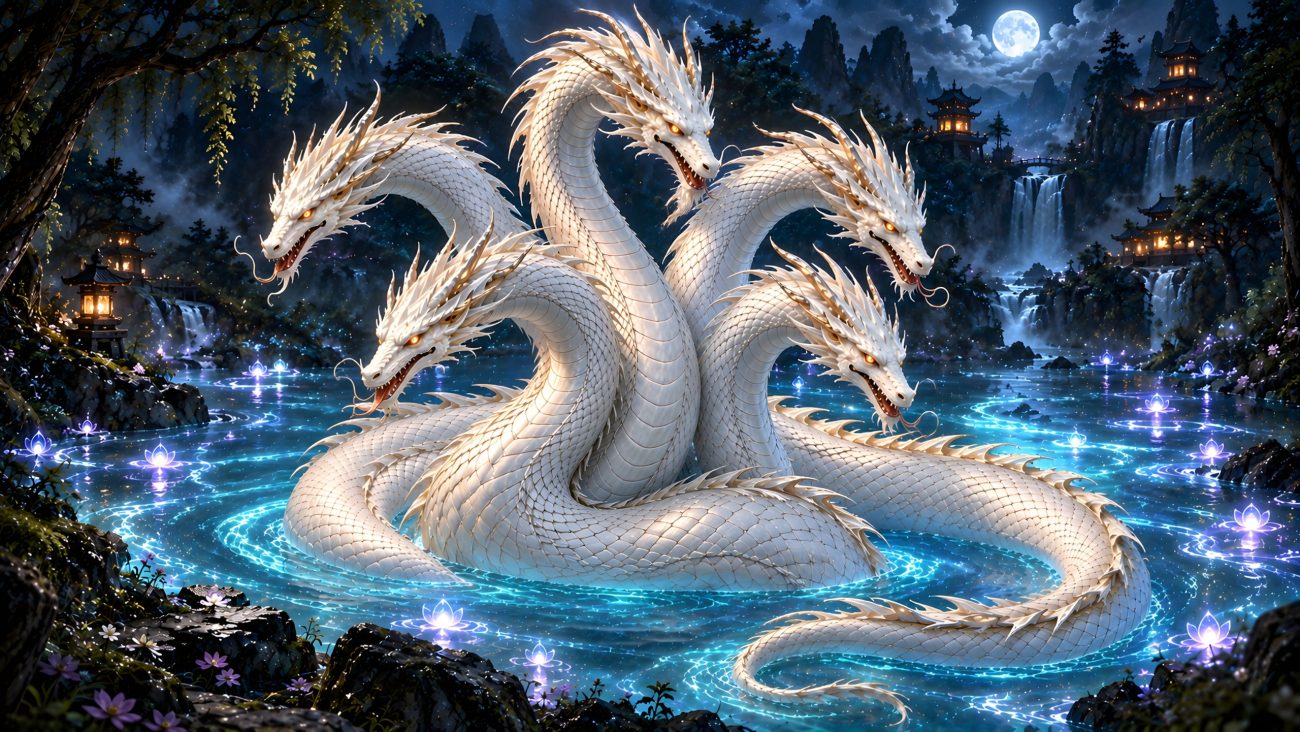
Lubia is a gigantic female serpent-dragon with numerous heads, a terrifying water and storm demon whose appearance reflects the violence of the sea during a storm. She is said to possess anywhere from seven to one hundred heads, and like the Hydra of Lerna, whenever one of her heads is cut off, another grows in its place. She has an enormous appetite and an especially fierce craving for human flesh, with little girls said to be among her favorite prey.

Lubia is believed to live in a magnificent vegetable garden, despite her monstrous nature. As a powerful spirit of water and storms, she can bring destruction upon the waters and is said to cause them to dry up unless a virgin is sacrificed to her. The people who feared her imagined the terrifying force of bad weather as a monstrous woman with an insatiable hunger, giving the storm a living and dreadful form.

In southern Albanian tradition, Lubia is regarded as a storm deity and is also called Mother Lubia. Her enormous appetite, strange personality, and terrible power all mirror the frightening impression of the sea when storms turn its waters violent.

Lubia closely resembles the Kulshedra, another enormous multi-headed female dragon of Albanian folklore. Like Lubia, the Kulshedra is associated with water and storms and must be placated through human sacrifice. The two beings are therefore sometimes treated as closely related or even as different names for the same kind of powerful dragon-demon, with Kulshedra possessing greater fame and power in Albanian tradition.

Her many heads and regenerative nature also recall the Lernaean Hydra, giving Lubia the form of an ancient multi-headed serpent whose destruction becomes nearly impossible as each severed head gives rise to another.


Sources

“Ljubi.” Wikipedia: The Free Encyclopedia. Wikimedia Foundation. Accessed October 2, 2026. https://en.wikipedia.org/wiki/Ljubi


Mizuchi

Tradition: Japanese mythology
Alternative Names: Mi-tsu-chi, Great Mizuchi, Water Dragon
Category: Dragon


The Myth

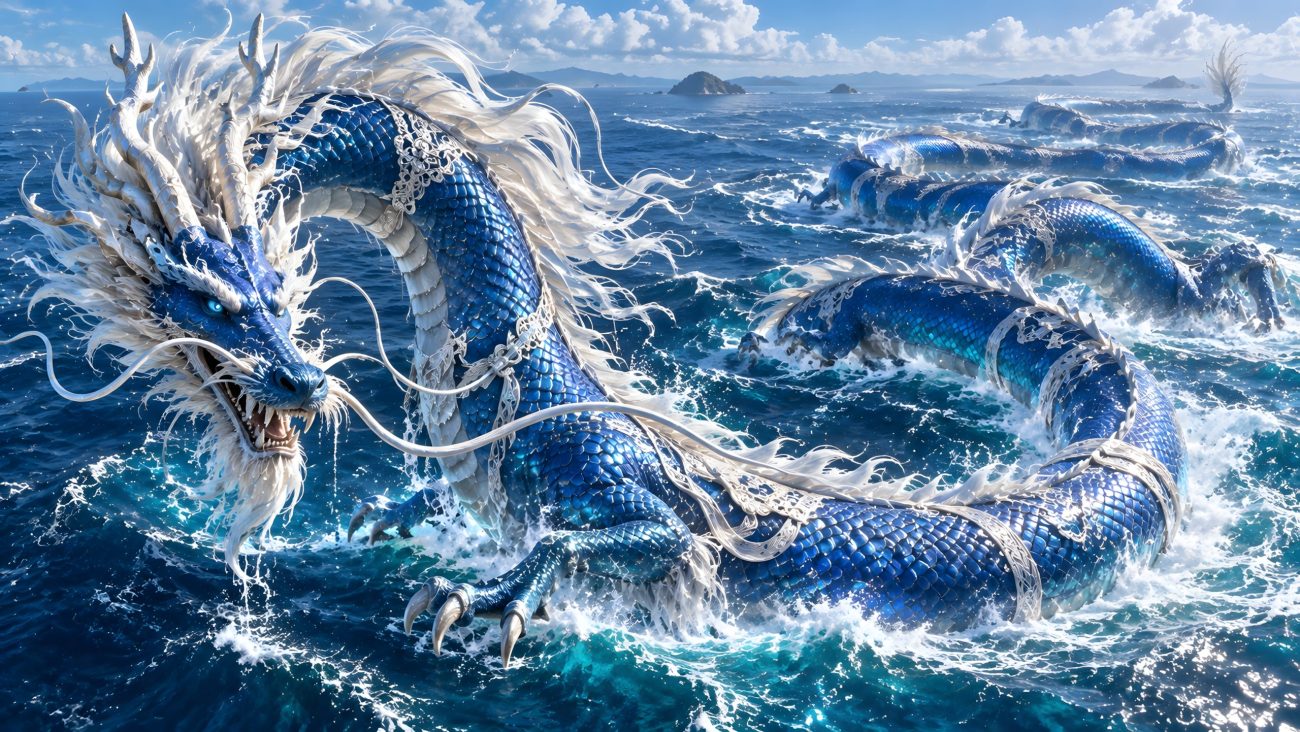
Mizuchi is a powerful water spirit appearing in the form of a great serpent or dragon, associated with rivers, pools, and dangerous waters. In ancient tradition, the creature was feared as a deadly being capable of poisoning those who came near its waters. The name itself was associated with water and spirit, and Mizuchi could be understood as a master or spirit of the water.

One of the oldest tales of the Mizuchi takes place in Kibi Province during the reign of Emperor Nintoku. At a fork in the Kawashima River lived a great water serpent that would breathe or spit venom, poisoning and killing people who passed by. The monster dwelt in a pool and had become a deadly menace to those who approached the river.

A man named Agatamori came to the pool determined to destroy the creature. Rather than simply attack it, he challenged the Mizuchi to prove its supernatural power. He threw three calabashes onto the surface of the water and declared that if the creature could make them sink, he would submit to it; if it failed, Agatamori would kill it.

The Mizuchi transformed itself into a deer and attempted to sink the floating gourds, but it could not. Agatamori then slew the monster. He searched the depths of the pool and discovered that the creature was not alone. A whole tribe of water dragons occupied a cavern beneath the water. Agatamori killed them all, and their blood turned the river red. The pool thereafter became known as Agatamori’s Pool.

Another ancient story tells of a River God whose waters repeatedly broke the great dikes along the Yodo River. An oracle commanded that two men be sacrificed to the river deity. One of them refused to accept his fate and used the same test of the floating calabash to challenge the supposed divine command. When a whirlwind came and tried to sink the gourd but failed, the man escaped his sacrifice through his own cleverness.

The River God in this story is associated by later interpreters with the Mizuchi, suggesting an ancient conception of water dragons not merely as monsters but as powerful spirits or gods of rivers who could demand offerings and even human sacrifice.

Mizuchi also appears in an ancient Japanese poem, where the speaker imagines possessing a sword powerful enough to ride into a green pool and slay the Mizuchi dwelling there. Thus the creature remained an embodiment of the dangerous and mysterious power believed to inhabit Japan’s waters.


Sources

“Mizuchi.” Wikipedia: The Free Encyclopedia. Wikimedia Foundation. Accessed October 2, 2026. https://en.wikipedia.org/wiki/Mizuchi


Marraco

Tradition: Catalan folklore, Spanish Mythology
Alternative Names: Lo Marraco
Category: Dragon


The Myth

Lo Marraco is a terrifying dragon-like creature from the folklore of Lleida, said to possess an enormous mouth capable of swallowing a person whole. In tales told to frighten children, the monster lurks as a frightening threat to those who misbehave, with adults warning that the Marraco will come and devour them.

The Marraco became one of the great frightening creatures of Lleida. Its gigantic jaws were imagined as large enough to swallow children whole, making it an especially effective bogeyman. Adults used the creature to frighten disobedient children into behaving, turning its monstrous appetite into a warning passed from one generation to the next.

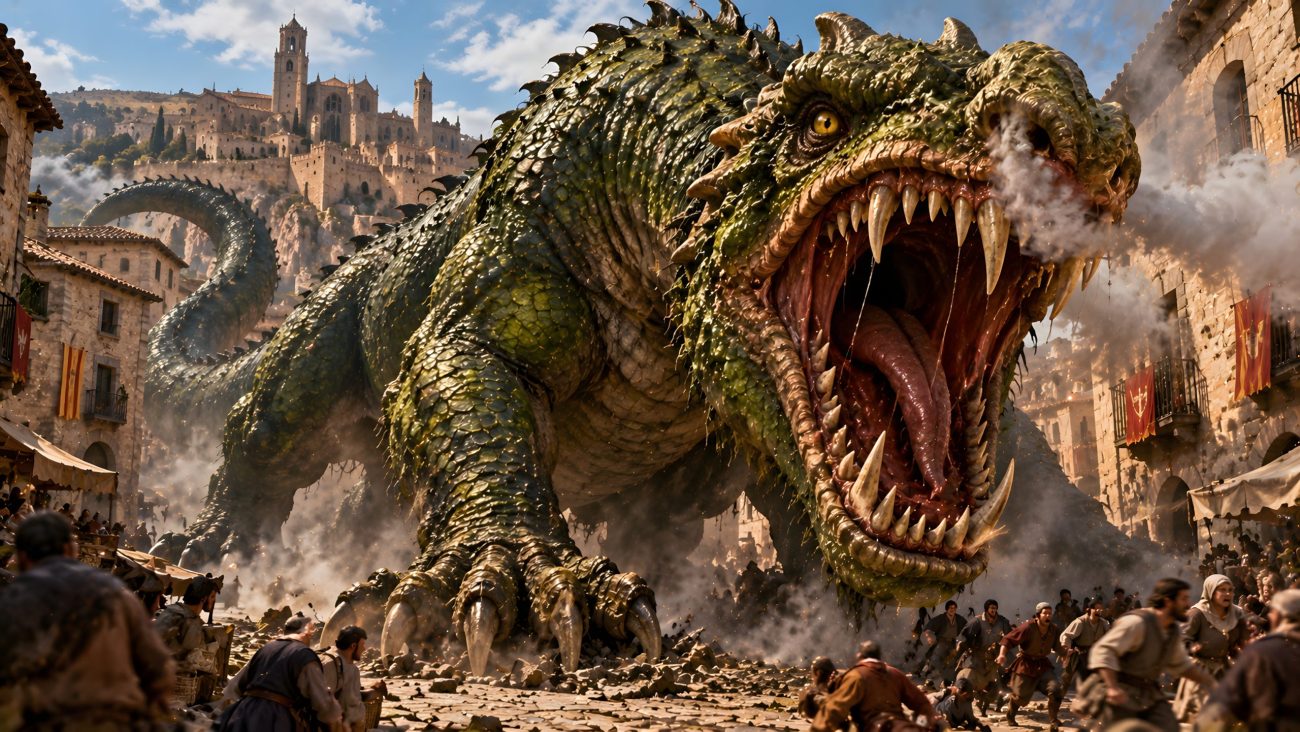
The creature eventually took physical form in the great processional monster of Lleida. A dragon figure had already appeared in the city’s religious processions in the sixteenth century, and another dragon was ordered to be built in 1671. In 1907, the Marraco was given a recognizable physical form as a large green dragon effigy mounted on wheels. It could emit smoke from its nostrils, giving the imaginary beast a frightening presence as it moved through the streets during celebrations.


Sources

“Marraco.” Wikipedia: The Free Encyclopedia. Wikimedia Foundation. Accessed October 2, 2026. https://en.wikipedia.org/wiki/Marraco


Lou Carcolh

Tradition: French Mythology
Alternative Names: Carcolh, The Carcolh
Category: Dragon, Mollusc


The Myth

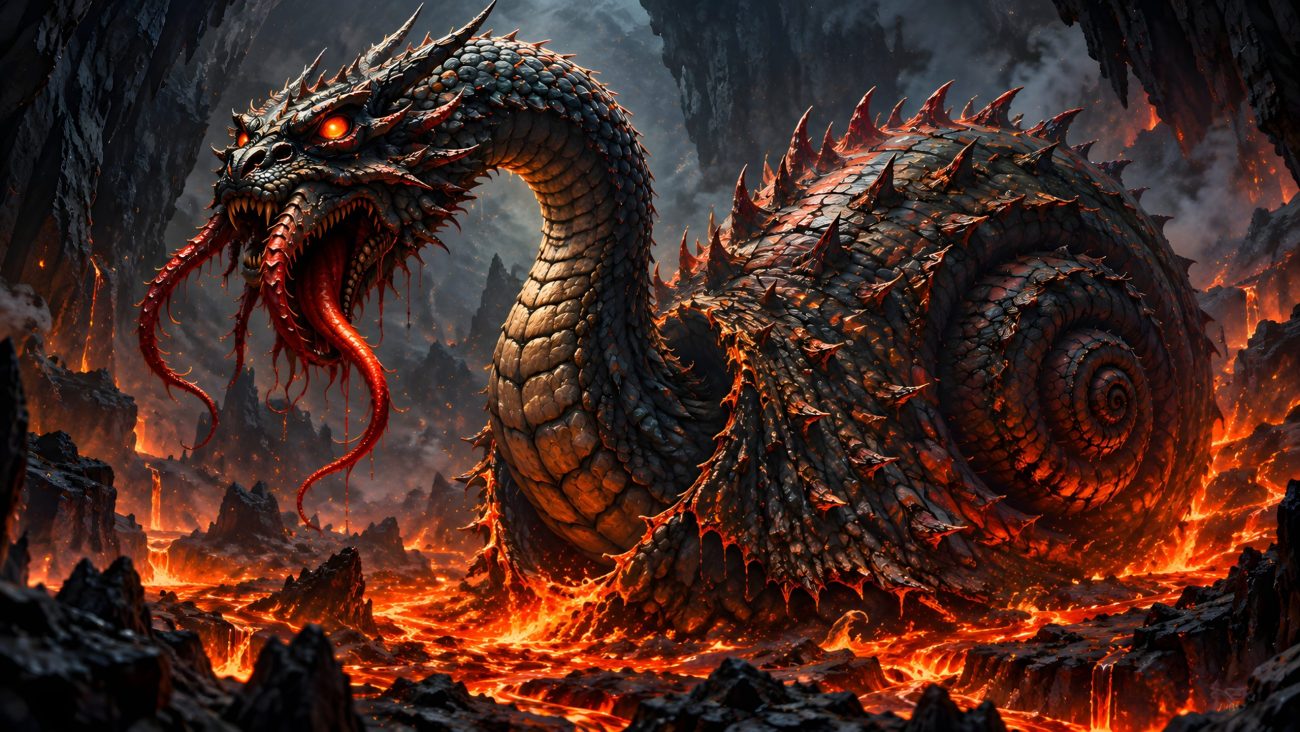
Lou Carcolh is a gigantic, slimy creature resembling a monstrous serpent combined with a snail. It has a huge shell upon its back and long, hairy tentacles capable of reaching far beyond its body. The creature is said to dwell in a cavern beneath Hastingues in the Landes of southwestern France.

The Carcolh’s approach could be detected before the beast itself appeared. A trail of thick slime would sometimes be seen stretching through the landscape, announcing that the enormous creature was drawing near. Its long tentacles were its most dangerous weapon. Hidden within or near its cavern, the Carcolh could stretch them out over a great distance, seize an unsuspecting person, and drag them back into its lair without ever revealing itself.

Hastingues itself became closely associated with the monster. The town sits upon a rounded hill, giving it the nickname “the Carcolh,” while local men were said to warn young and beautiful women with the ominous words that the Carcolh would catch them.


Sources

“Lou Carcolh.” Wikipedia: The Free Encyclopedia. Wikimedia Foundation. Accessed October 2, 2026. https://en.wikipedia.org/wiki/Lou_Carcolh


Lao Jian

Tradition: Chinese mythology
Alternative Names: Old Jian, Lao Jian, Jian Shi
Category: Dragon


The Myth

Lao Jian is a poisonous dragon of ancient Chinese mythology, a dangerous creature associated with floods and destructive waters. His presence could cause severe water damage, and his power was great enough that he had to be subdued by Li Bing, the governor and general of Shu.

During the Qin Dynasty, Li Bing confronted the poisonous dragon Jian Shi and subdued it, binding it with chains and locking it on the river. Once the dragon had been restrained, the flooding ceased.

The identity of Jian is connected with Nie Zi, a wicked dragon from the legend of Wang Niang Tan. When Nie Zi transformed himself into a dragon, his mother managed to hold onto one of his feet, preventing that foot from undergoing the transformation. He therefore remained lame, and this peculiar deformity gave rise to the name Jian.

The name is further connected with Nie Zi’s surname, Nie, which is said to echo the name of the dragon. Thus Lao Jian is remembered as the poisonous, crippled dragon whose watery power was finally restrained by Li Bing.


Sources

“老蹇 (Lǎojiǎn).” Chinese Wikipedia. Wikimedia Foundation. Accessed October 2, 2026. https://zh.wikipedia.org/wiki/%E8%80%81%E8%B9%87


Hydra of Lerna

Tradition: Greek mythology
Alternative Names: Lernaean Hydra, Hydra
Category: Dragon


The Myth

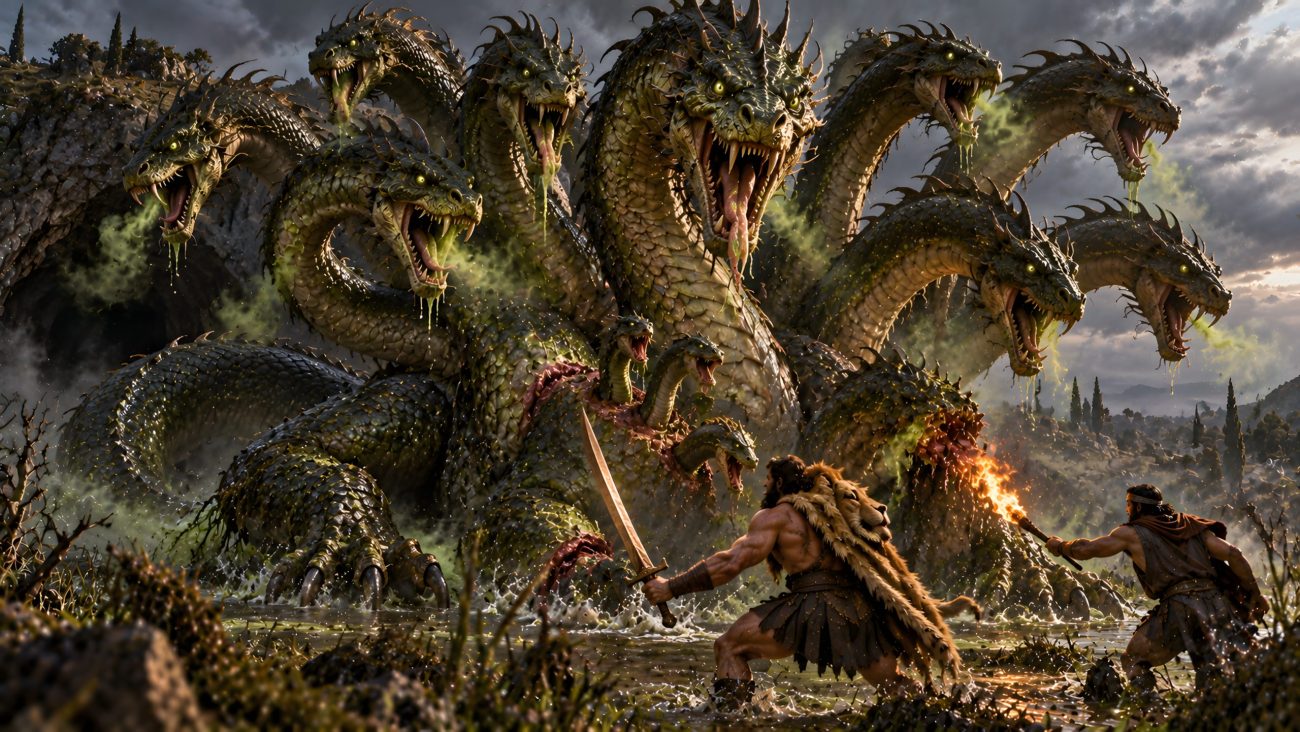
The Hydra of Lerna was a monstrous, many-headed serpent that dwelt in the waters and marshes of Lerna in the Argolid. It possessed poisonous breath and blood so deadly that even its scent could kill. Its lair was a deep cave near the spring of Amymone, from which the creature emerged to terrorize the surrounding villages. The exact number of its heads varied in ancient accounts, with different traditions giving it six, nine, fifty, or simply many heads.

The Hydra was said to be the offspring of Typhon and Echidna. Its most terrible power was the ability to regenerate its severed heads. When Heracles cut off one of them, two more could grow from the wound, making the creature seemingly impossible to destroy. In some traditions it possessed a single immortal head among its many mortal ones.

The Hydra was raised by Hera for the purpose of destroying Heracles. As the second of his Twelve Labours, Heracles was commanded by Eurystheus, king of Tiryns, to slay the monster. He came to the marshes of Lerna and covered his mouth and nose against the creature’s poisonous fumes. He then drove it from its lair by shooting flaming arrows into the cave.

Heracles attacked the Hydra with his weapon, cutting off its heads one after another. But each severed head was replaced by new ones, and the monster could not be defeated while its immortal head remained. Realizing that strength alone would not overcome it, Heracles called upon his nephew Iolaus for help.

Iolaus took a burning firebrand and, whenever Heracles severed a head, cauterized the exposed neck before another could grow. Thus the regenerative power of the Hydra was finally overcome. Hera tried to save the monster by sending a gigantic crab to distract Heracles, but he crushed it beneath his foot.

At last Heracles severed the Hydra’s immortal head with a golden sword given to him by Athena. The head remained alive and writhed even after it had been cut away, so Heracles buried it beneath a great rock beside the sacred road between Lerna and Elaius. He then dipped his arrows into the Hydra’s poisonous blood, giving them a deadly venom that would later bring death to other enemies.

The Hydra’s poison continued to haunt the stories of Heracles. He used his poisoned arrows against the Stymphalian Birds, Geryon, Ladon, and the centaur Nessus. The poisoned arrow that struck Nessus ultimately led to the death of Heracles himself, as the centaur’s tainted blood was later used upon the Tunic of Nessus. The poison was also said to have contaminated the river Anigrus in Elis, whose foul-smelling waters were believed to have become poisonous because of the Hydra’s venom.

After Heracles killed the creature, Hera placed the Hydra among the stars as the constellation Hydra. The crab she had sent to aid it was likewise raised into the heavens as Cancer.

The Hydra’s regenerative heads became a symbol of an enemy or problem that only grows more difficult when attacked carelessly. The ancient Greeks even used the expression “cutting off a hydra” for a task that seemed endlessly futile, since destroying one part only caused more to appear.


Sources

“Lernaean Hydra.” Wikipedia: The Free Encyclopedia. Wikimedia Foundation. Accessed October 2, 2026. https://en.wikipedia.org/wiki/Lernaean_Hydra