Torre Jeppe

Tradition: Swedish Mythology
Alternative Names: The Undecaying Corpse
Category: Ghost


The Myth

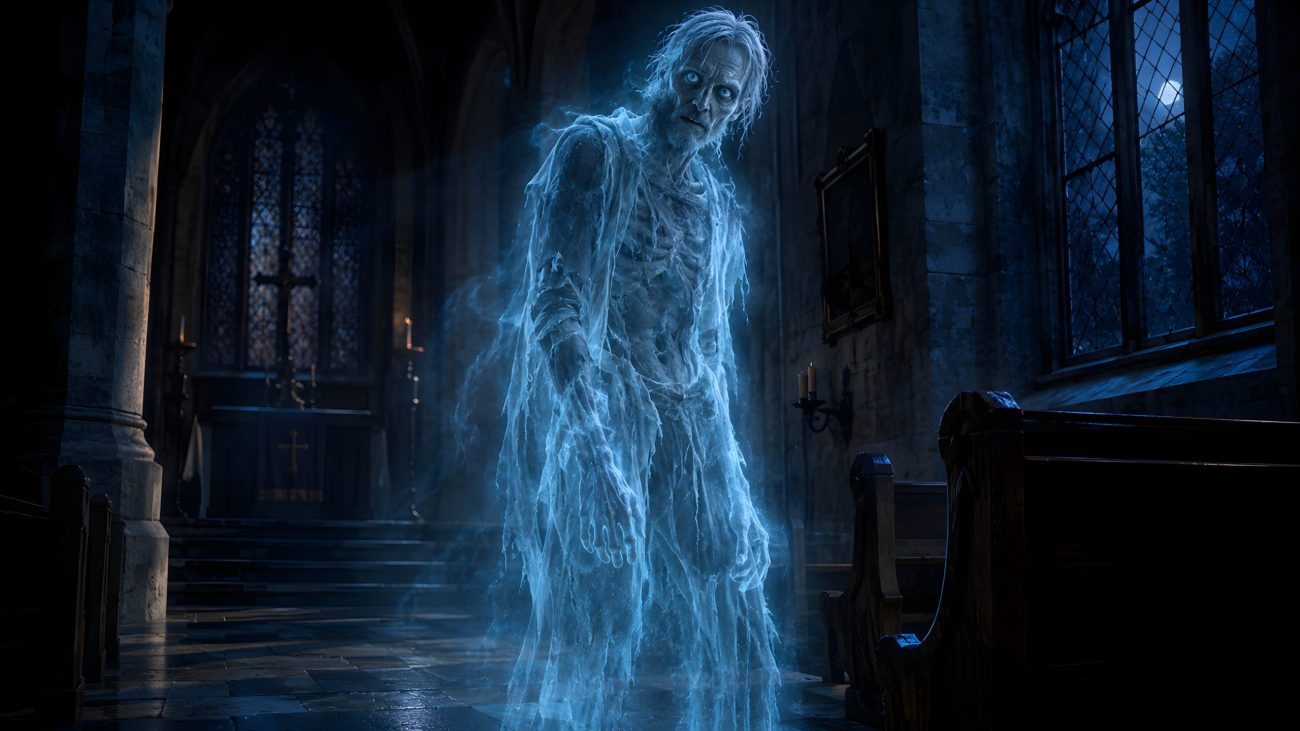
Torre Jeppe was a restless spirit whose body sat night after night in the nave of a church. His corpse had dried out but could not decay, leaving him trapped between death and eternal rest. One night, three tailors were working at a nearby farmstead, laughing and joking with a girl who was known for her courage. They challenged her to enter the church, fetch Torre Jeppe, and bring him back to the farm. In exchange, they promised her a dress made of homespun wool. The girl accepted their offer and went to the church, where she lifted the dried-up corpse onto her back and carried him home.

When she arrived, she sat Torre Jeppe on a bench beside the tailors. The men immediately moved away in fear, but the corpse shuffled after them, staring at them with his large eyes until they were nearly driven out of their minds. Desperate to escape the apparition, the tailors begged the girl in God’s name to take him away again. They promised her another dress if she would return him to the church. She agreed, lifted Torre Jeppe onto her back once more, and carried him away.

However, when she tried to put him back in his original place, Torre Jeppe refused to release her. He wrapped his arms tightly around her neck and would not let go, no matter how many times she ordered him to. At last, he explained that he would free her only if she promised to visit a nearby brook that very night and call out three times: “Anna Perstochter, do you forgive Torre Jeppe?” The girl agreed, and he immediately released her.

Although the brook lay more than a mile away, the girl went there and called out the words three times. After the third call, a woman’s voice rose from the water and answered, “If God has forgiven him, then I, too, forgive him!” The girl returned to the church and told Torre Jeppe what the woman had said. Overjoyed, he thanked her and promised that she would receive her reward if she returned before sunrise.

At dawn, the girl came back and discovered a bushel of silver coins where Torre Jeppe had once sat. She also received the two dresses promised by the tailors. Torre Jeppe, however, had vanished and was never seen again. Having obtained forgiveness from the woman he had wronged, the restless dead man was finally released from his earthly torment and allowed to find eternal peace.


Sources

Stroebe, Clara, ed. The Swedish Fairy Book. Translated by Frederick H. Martens, illustrated by George W. Hood. New York: Frederick A. Stokes Company, 1921. https://www.gutenberg.org/ebooks/37193

Alvas

Tradition: Icelandic Mythology, Norwegian Mythology, Swedish Mythology
Alternative Names: Álfar, Álfr, Alv, Ælfur, Ljósálfar, Dökkálfar, Svartálfar
Category: Elf


The Myth

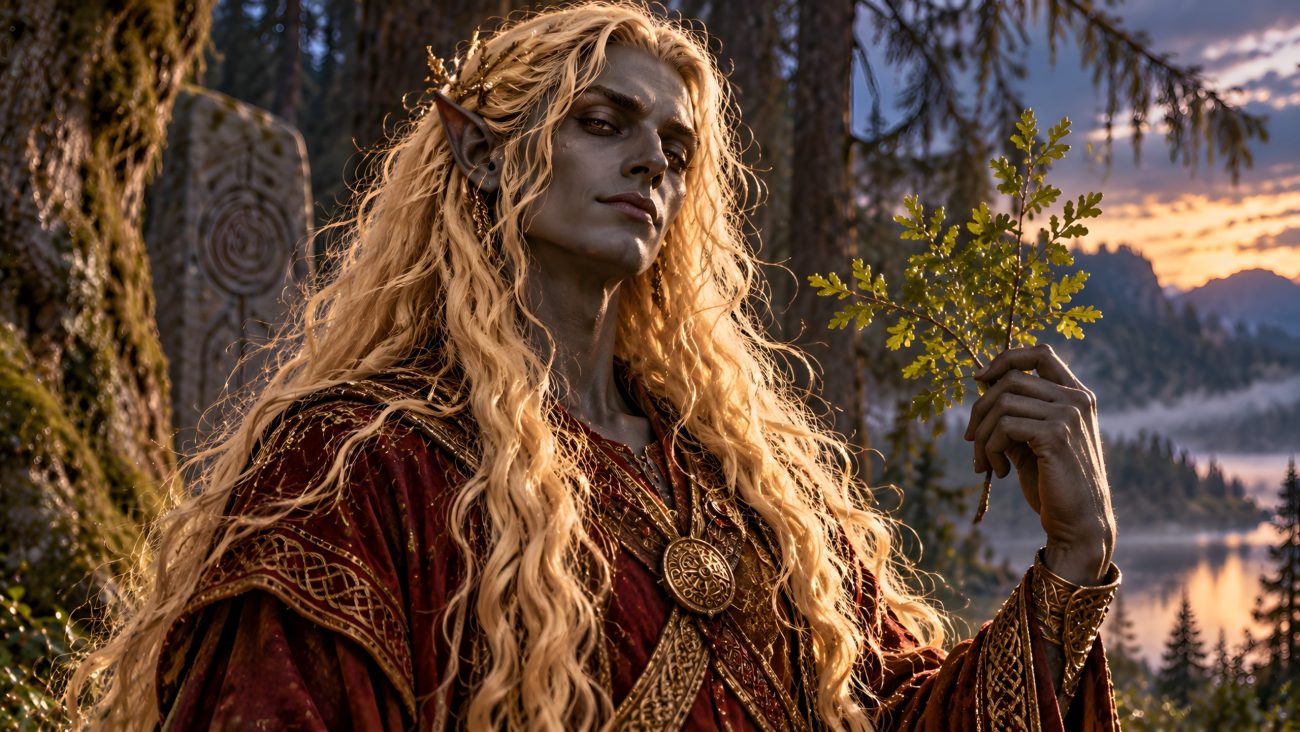
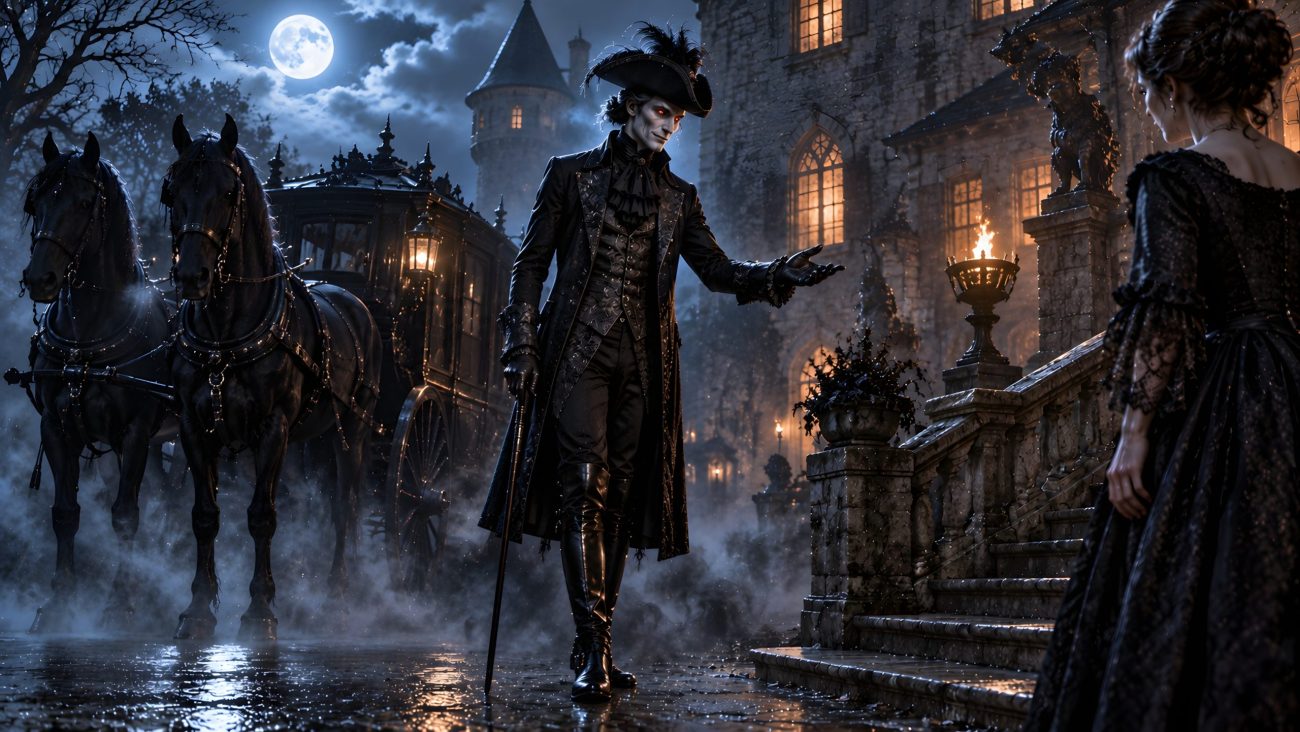
The Alvas were lower nature spirits of Scandinavian mythology and were regarded as the original beings behind the later tradition of elves. Their name appears in several Scandinavian forms: Ælfur in Icelandic, Álfar in Old Norse, Álvar in Swedish, and Alv in Norwegian. They were supernatural beings connected with nature, fertility, and the unseen world. The tradition also distinguished different kinds of elves, including the luminous Ljósálfar and the dark Dökkálfar or Svartálfar.

In the Elder Edda, the elves are presented as a distinct supernatural group alongside the Æsir, although the traditions sometimes blur the boundary between elves and dwarves. The distinction between light and dark elves gives the Alvas a divided nature: the Ljósálfar are associated with light, while the Dökkálfar and Svartálfar belong to the darker side of the supernatural world. The elves therefore occupied an important place among the various non-human beings of the Norse cosmos.

The Alvas were also associated with fertility and received their own cult in Scandinavian tradition. In the Elder Edda, the smith Völundr is called the “prince of the elves,” showing that the elves could possess their own hierarchy and prominent supernatural figures. They were consequently not simply small magical creatures, but a broader class of nature spirits inhabiting the supernatural world alongside gods, dwarves, and other beings.


Sources

“Alv.” New Bestiary (Bestiary.us). Accessed October 5, 2026.
https://www.bestiary.us/alv


Wild Man of the Forest

Tradition: Swedish Mythology
Alternative Names: Wild Man
Category: Dwarf


The Myth

The Wild Man is a small, ugly creature with the appearance of a troll. His body is dwarfish, while his hair is stiff and coarse like straw. He lives in a cave deep beneath the earth and possesses remarkable treasures, including magical suits of armor and magnificent horses.

A Swedish king once encountered the Wild Man while hunting. After an unsuccessful day in the forest, the king saw the strange little creature running through the trees. He chased him down and captured him. The Wild Man would not speak a single word, no matter what the king demanded of him, so the king had a strong wooden cage built beside his castle and kept him imprisoned there. People came from far and wide to stare at the mysterious creature, but he remained completely silent.

When the king went away to war, he entrusted the Wild Man’s cage to the queen. Their young son often wandered around the castle grounds and eventually began playing with the captive. One day the prince’s golden apple fell through the bars of the cage. The Wild Man threw it back, and the two played this game for some time until the Wild Man finally kept the apple for himself.

The prince begged for it back. The Wild Man agreed, but only if the boy would set him free. He instructed the prince to ask his mother to comb his hair and secretly take the key from her girdle. The boy followed his instructions, unlocked the cage, and freed the Wild Man. In return, the creature gave him his golden apple and promised that if the prince ever needed his help, he would repay the favor.

The king eventually returned and discovered that his prisoner had escaped. Furious, he demanded to know who had released him. When the young prince confessed, the king remembered his oath that whoever allowed the Wild Man to escape would die, even if that person were his own son. He ordered the prince to be taken into the forest and killed.

The servants could not bring themselves to murder the boy. Instead, they bought a pig from a swineherd, took its heart, and returned to the king pretending that it was the prince’s heart. The young prince was left alive and wandered through the forest until he eventually reached another kingdom, where he disguised himself as a farmhand and became a herdsman.

Years passed, and the prince grew into a strong and handsome young man. The king of this new land had a daughter who declared that she would marry only the man capable of riding to the summit of the Glass Mountain in full armor. The mountain was so steep and slippery that every suitor who attempted the climb fell back down.

Hearing the commotion from the forest, the young herdsman wished that he could take part. The Wild Man then appeared before him once again. Remembering the prince’s kindness, he led him beneath the earth into his hidden cave. There he revealed a magnificent suit of steel armor and a splendid horse. The prince mounted the horse and rode toward the Glass Mountain, but vanished into the forest after making a remarkable attempt.

At the next trial, the Wild Man provided him with silver armor and a white horse. Again the disguised prince rode up the mountain farther than any of the other challengers before disappearing into the woods. At the third trial, the Wild Man brought out armor forged entirely from gold and an extraordinary golden horse.

This time the prince reached the very summit. He greeted the princess, received the golden apple from her hand, and rode back down the mountain before disappearing into the forest.

The princess refused to forget the mysterious golden knight. Eventually the king ordered everyone in the kingdom to gather so that she could identify him. Among the crowd she noticed a humble herdsman wearing a gray mantle and hood. She pulled back his hood and immediately recognized him as the golden knight.

The supposed herdsman then cast aside his rough cloak and revealed himself as the prince he truly was, still carrying the golden apple. He married the princess and received half of her father’s kingdom.

After helping the prince fulfill his destiny, the Wild Man disappeared from the story, and nothing more was ever heard of him.


Sources

Stroebe, Clara, ed. The Swedish Fairy Book. Translated by Frederick H. Martens, with illustrations by George W. Hood. New York: Frederick A. Stokes Company, 1921.


Black Gentleman

Tradition: Swedish Mythology
Alternative Names: Black Gentleman
Category: Demon


The Myth

The Black Gentleman appears as a fine gentleman dressed entirely in black, arriving in a black coach drawn by two black horses. He comes to claim the wicked Lady of Pintorp and take her away for punishment.

The Lady of Pintorp was a cruel noblewoman who abused the people living on her estate. She imprisoned innocent people in underground dungeons, set vicious dogs upon children and beggars, and brutally punished workers who failed to arrive at the appointed time.

One morning, she ordered a farm-hand who had arrived late to cut down the largest oak on the estate and bring it to the castle courtyard before evening. When the man despaired over the impossible task, he encountered an old man in the woods who told him to sit upon the fallen tree. Invisible bearers then carried the tree rapidly to the castle. The Lady recognized that Erik Gyllenstjerna and Svante Banér were somehow helping the farm-hand, but responded with anger rather than remorse.

At that moment the earth shook, and the Black Gentleman arrived at the castle in his black coach. He descended, bowed to the Lady, and ordered her to prepare herself and follow him.

Knowing who he was, the Lady desperately begged for more time. She first requested three years, then three months, three weeks, and finally three days. The Black Gentleman refused every request and granted her only three minutes to put her affairs in order.

She then asked that her chaplain, chamber-maid, and valet accompany her. The Black Gentleman permitted this, and they entered the coach. The horses immediately carried them away with such supernatural speed that the people at the castle saw only a black streak.

After travelling for some time, they arrived at a magnificent castle. The Black Gentleman led the Lady inside, where she removed her costly clothes and put on a coarse coat and wooden shoes. He then combed her hair three times until she could no longer endure it and danced with her three times until she was exhausted.

After the first dance, the Lady gave her golden ring to her valet, but it burned his finger like fire. After the second, she gave her bunch of keys to her chamber-maid, but the keys seared the girl’s hand like red-hot iron.

After the third dance, a trapdoor suddenly opened in the floor. The Lady disappeared through it amid smoke and flames.

The chaplain looked down into the opening, and a spark rose from the depths and struck him in the eye, leaving him blind in that eye for the remainder of his life.

The Black Gentleman then allowed the three servants to return home, but warned them not to look behind them. They entered the coach and travelled along a broad, even road. Eventually, however, the chamber-maid could no longer resist her curiosity and looked back.

Immediately the coach, horses, and road disappeared. The three travellers found themselves in a wild forest, from which it took them three years to find their way back to Pintorp.


Sources

Stroebe, Clara, ed. The Swedish Fairy Book. Translated by Frederick H. Martens, with illustrations by George W. Hood. New York: Frederick A. Stokes Company, 1921. https://www.gutenberg.org/ebooks/37193

Di Sma

Tradition / Region: Swedish Mythology
Alternative names: Di Sma Undar Jordi, The Little Ones Underground
Category: Cave dweller


The Myth

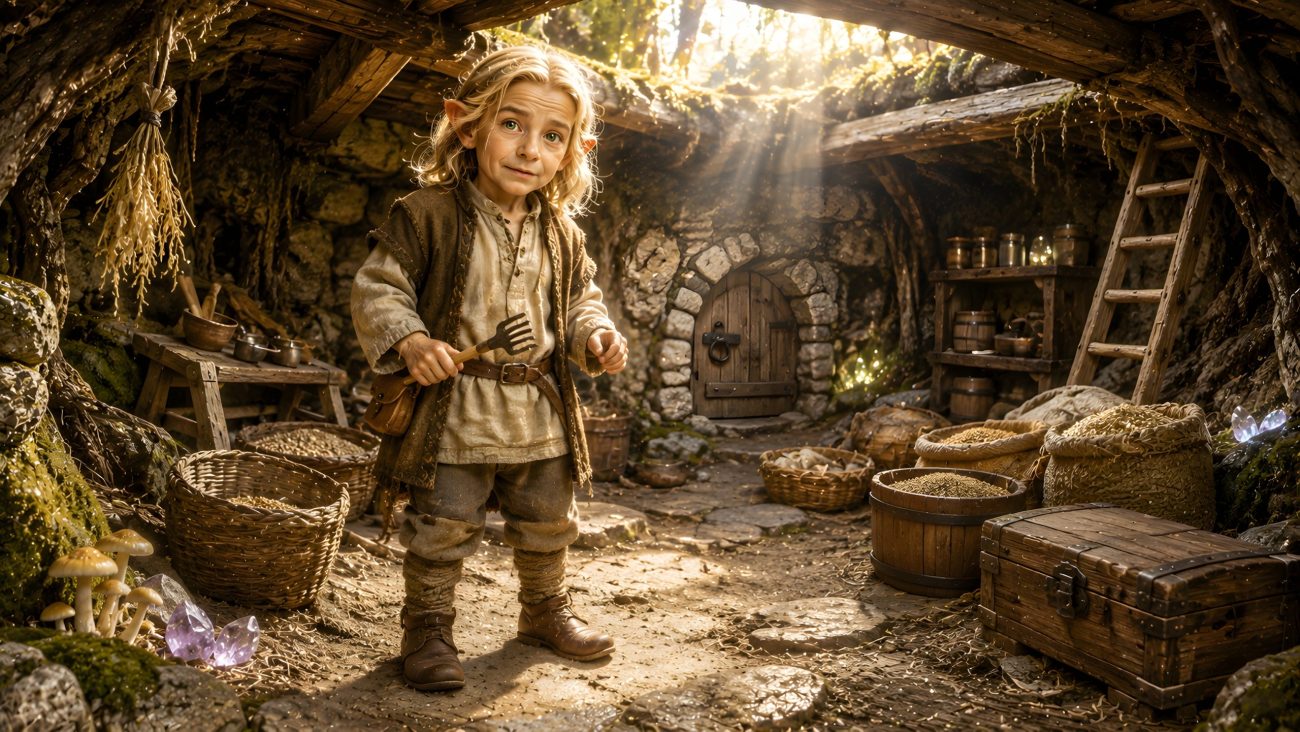
The Di Sma are small human-like beings said to live beneath the ground on the Swedish island of Gotland. They are usually invisible to humans and, according to tradition, can only be seen by looking through a hole in a sheet of paper.

According to Gotlandic folklore, the Di Sma live beneath farms, where they watch over the people, animals, and land. As long as they are treated with respect, they quietly care for the farm and its inhabitants.

One of the best-known warnings concerns throwing out boiling water. People believed that carelessly emptying hot water outdoors could scald the hidden beings living beneath the ground. Angering the Di Sma in this way could cause them to withdraw their protection from the farm.


Sources

“Di sma undar jordi.” Wikipedia: The Free Encyclopedia. Wikimedia Foundation. Accessed July 28, 2026. https://en.wikipedia.org/wiki/Di_sma_undar_jordi


Queen Crane

Tradition / Region: Swedish Mythology
Alternative names: Crane Queen
Category: Bird


The Myth

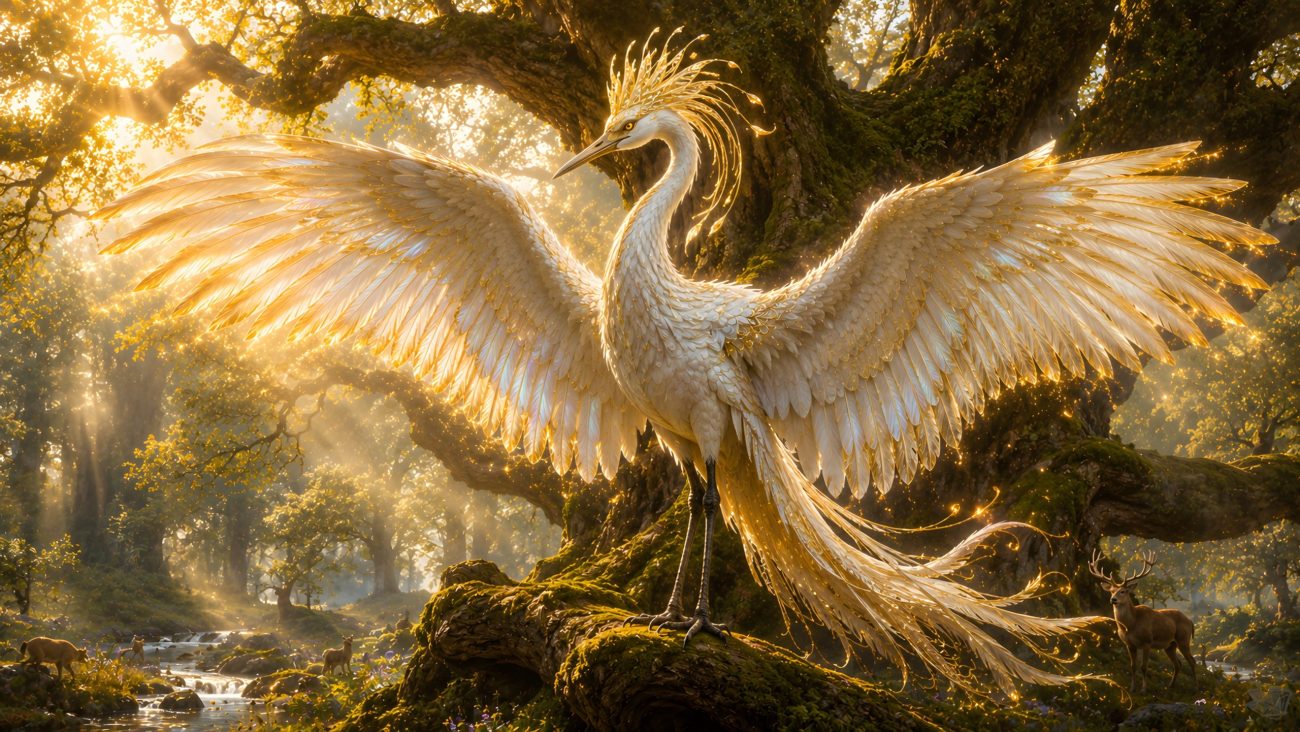
The Queen Crane appears in a Swedish fairy tale as the magical protector of a poor shepherd known as Sheep-Peter. When the youth once aims his crossbow at a crane resting in an oak tree, the bird begs him to spare her life. In return she promises to help him whenever he is in danger, instructing him to call, “God aid me, and Queen Crane stay by me, and I will succeed!” whenever he needs her assistance.

When war breaks out, Sheep-Peter secretly visits the oak where Queen Crane dwells after pretending that his worn-out horse has become stuck in a swamp. Each time she equips him with a magnificent warhorse, enchanted armor, and a magical sword. By invoking her name, he defeats the enemy armies, though everyone believes that a heavenly angel has come to save the kingdom. After each victory he returns the enchanted equipment to the crane and resumes tending his sheep, keeping his identity hidden.

Queen Crane later continues to aid the shepherd when three monstrous meer-women threaten to carry away the king’s daughters. She again provides him with enchanted steeds, weapons, and armor, allowing him to rescue each princess and slay the monsters. Although false heroes claim the credit, the youngest princess recognizes her true savior. Sheep-Peter eventually proves his deeds before the king through the tokens he collected during his adventures, wins the youngest princess’s hand in marriage, and inherits the kingdom, all through the faithful assistance of Queen Crane.


Sources

Stroebe, K. (Ed.). (1921). The Swedish fairy book (F. H. Martens, Trans.; G. W. Hood, Illus.). Frederick A. Stokes Company. Retrieved June 29, 2026, from https://www.gutenberg.org/ebooks/37193

Golden Queen’s Eagle

Tradition / Region: Swedish Mythology
Alternative names: Eagle of the Mount of the Golden Queen
Category: Bird


The Myth

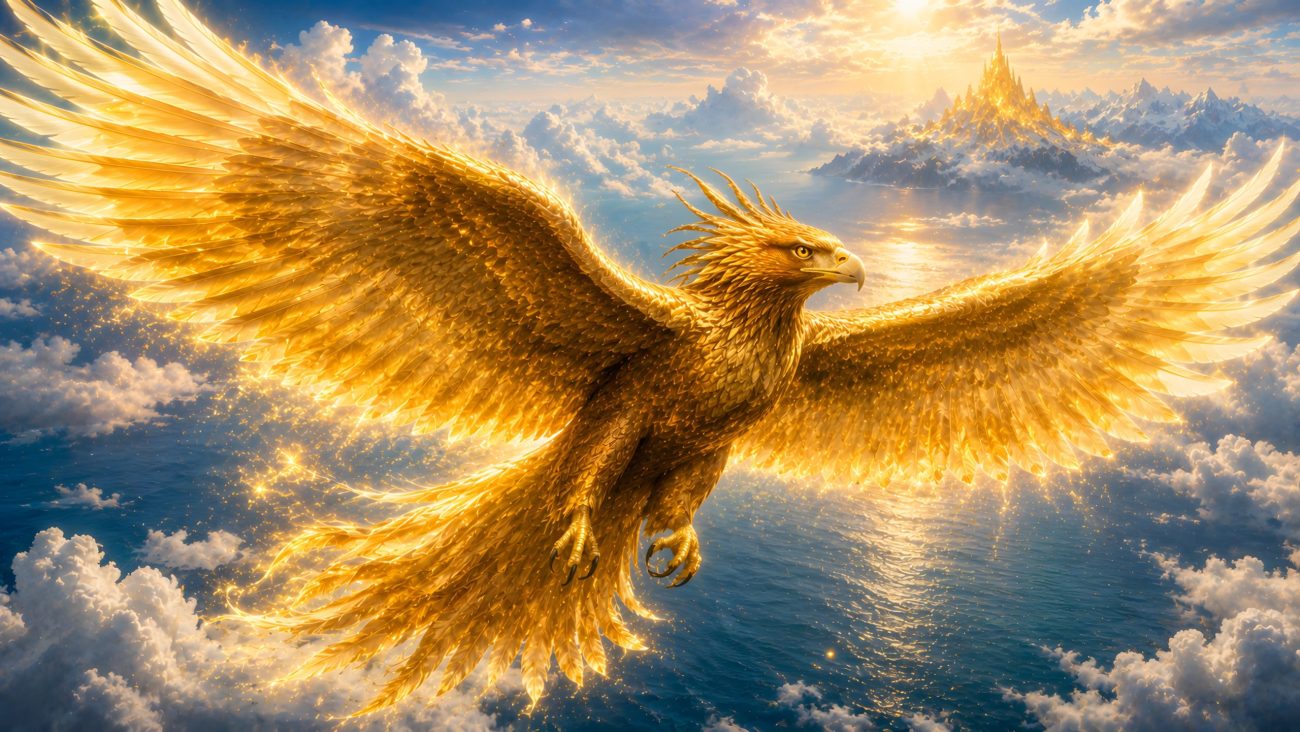
The Golden Queen’s Eagle appears in the Swedish fairy tale The Mount of the Golden Queen. During his quest to reach the mysterious mountain where the Golden Queen lives, a young herdsman seeks guidance from giants who summon every beast, fish, and bird in the world. While none of the animals know the mountain’s location, the eagle alone reveals that it has seen the hidden realm and agrees to carry the youth there at the giant’s request.

The eagle lifts the young man onto its back and flies over forests, mountains, and the endless sea. During the journey it repeatedly dips him into the ocean, first to his ankles and then to his knees, asking each time whether he is afraid. When the youth finally admits his fear, the eagle explains that the terror he now feels is the same fear the Golden Queen experienced when she secretly placed a letter and a golden band into his pocket while he slept, revealing that the eagle knew of the magical events that had set the quest in motion.

The eagle finally carries the youth to the Mount of the Golden Queen, a towering mountain sealed by a great iron door, before bidding him farewell and returning to its homeland. The youth presents the Queen with the golden band and the mysterious letter, breaking the enchantment upon the mountain. The mountain is transformed into a magnificent castle, and the Golden Queen is freed, fulfilling the purpose for which the eagle had guided the destined hero.


Sources

Stroebe, K. (Ed.). (1921). The Swedish fairy book (F. H. Martens, Trans.; G. W. Hood, Illus.). Frederick A. Stokes Company. Retrieved June 29, 2026, from https://www.gutenberg.org/ebooks/37193

Dog King

Tradition / Region: Danish Mythology, Swedish Mythology, Icelandic Mythology
Alternate Names: Raka, Rakke, Rakken, Saurr
Category: Dog


The Myth

In the old northern histories, there are tales of a strange and humiliating rule — the time when a dog was made king over men.

One version tells that after the deaths of the Danish rulers Haldan and Helgi, the Danes fell under the power of a foreign king from Sweden. Instead of sending them a prince or governor, the conqueror sent them a small dog and commanded that it should be their king. He warned that anyone who brought him news of the dog’s death would pay with his life.

The Danes were forced to accept the animal as their ruler. For a time the dog was treated with ceremony and obedience. But one day, when larger dogs began fighting, the small royal dog leapt among them and was torn apart.

No one dared announce what had happened. At last a herdsman named Snyo went to the foreign king’s court. Speaking in riddles and clever words, he maneuvered the king into declaring the dog dead himself. Because the king had spoken it, Snyo was spared and was then made king of Denmark in the animal’s place.

Another northern tale tells of a conqueror who invaded Norway and defeated its aged ruler. To shame the defeated people, he placed a dog upon the throne and ruled the country through officials who acted in the animal’s name. The dog was surrounded by nobles and guards, and strict laws were given that anyone who failed to show it proper honor would be punished. Thus the land was forced to bow before a beast.

A further story speaks of King Eysteinn, who conquered the region of Trondheim. After the people killed the son he had set over them, the king returned in anger and gave them a cruel choice: they must take either his slave Thorer or his dog Saurr as their new ruler.

Believing a dog would be easier to endure, the people chose Saurr.

The dog was treated as a true king. He was given a golden collar, a throne, attendants, and a great hall to dwell in. Judgments were issued in his name, and decrees were marked with the print of his paw. For three years the land lived under the rule of the animal king.

At last wolves broke into the fold where Saurr was kept and tore him to pieces. So ended the strange reign of the dog king.

Yet the memory of these tales remained strong enough that poets spoke of the time when men bowed to a dog, and songs were even sung in honor of the beast who had once worn a crown.


Sources

Wikipedia contributors. (n.d.). Dog king. In Wikipedia, from https://en.wikipedia.org/wiki/Dog_king


Bysen

Tradition / Region: Swedish Mythology
Alternate Names: –
Category: Gnome, Spirit


The Myth

In the forests of Gotland, people once feared a strange little being known as the Bysen. He was not born a spirit, but was believed to have once been human. Because of a grave crime committed in life, he was cursed after death and denied all rest. Instead of lying peacefully in the ground, he was condemned to wander the woods forever, half-man and half-spirit, bound to the land he had wronged.

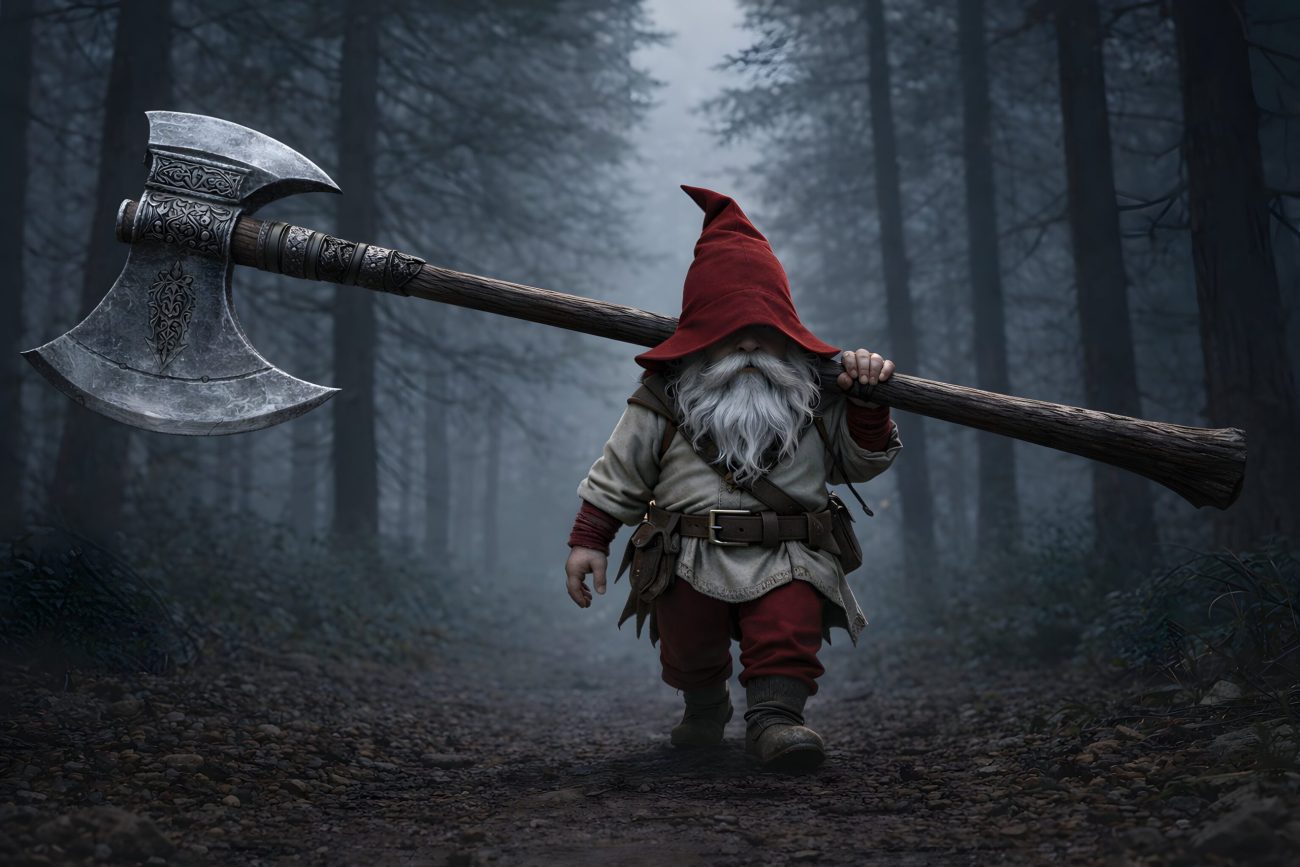
Bysen usually appeared as something easy to overlook: a grey stump, a twisted root, or a small, dull-looking man no taller than a child. Sometimes he wore a red woven cap and carried an axe. This axe was not for honest labor. It marked his role as a reluctant servant of the forest, slowly cutting down Gotland’s trees — so slowly that some said he felled only one tree in a hundred years. In this way, he became both a destroyer and a guardian of nature, bound to it as punishment.

He delighted in confusing people. Foresters hauling timber would suddenly see their loads tip over for no reason. Travelers found themselves wandering in circles, unable to recognize paths they had known all their lives. Those who felt an unseen presence tugging at their senses blamed the Bysen, who was said to lure people off their way and delay their work simply to trouble them.

One of the darkest beliefs about Bysen tied him to land theft. It was said that in life he had moved boundary stones, stealing land from others. As punishment, his spirit was forced to patrol the false borders endlessly. As he walked, he muttered to himself, “This is right… this is wrong,” shifting markers back and forth. If a living person followed him and corrected the stones, restoring the borders to their rightful place, the Bysen could finally be released and find peace.

Seeing Bysen was dangerous. If he noticed you watching him, he could twist your sight so that you would lose him completely and become lost yourself. The only way to break his spell was to turn a piece of clothing inside out or wear it crooked, confusing the spirit and restoring your vision.

Thus, the Bysen lived on in Gotland’s forests as a warning: land stolen brings no rest, nature remembers every wrong, and those who deceive others may wander forever, axe in hand, never finding their way home.


Sources

Wikipedia contributors. (n.d.). Bysen. In Wikipedia, The Free Encyclopedia, from https://en.wikipedia.org/wiki/Bysen


Trollgädda

Tradition / Region: Swedish Mythology
Alternate Names: Jättegädda; Krongädda; Skällgädda; Trollgäddor
Category: Fish


The Myth

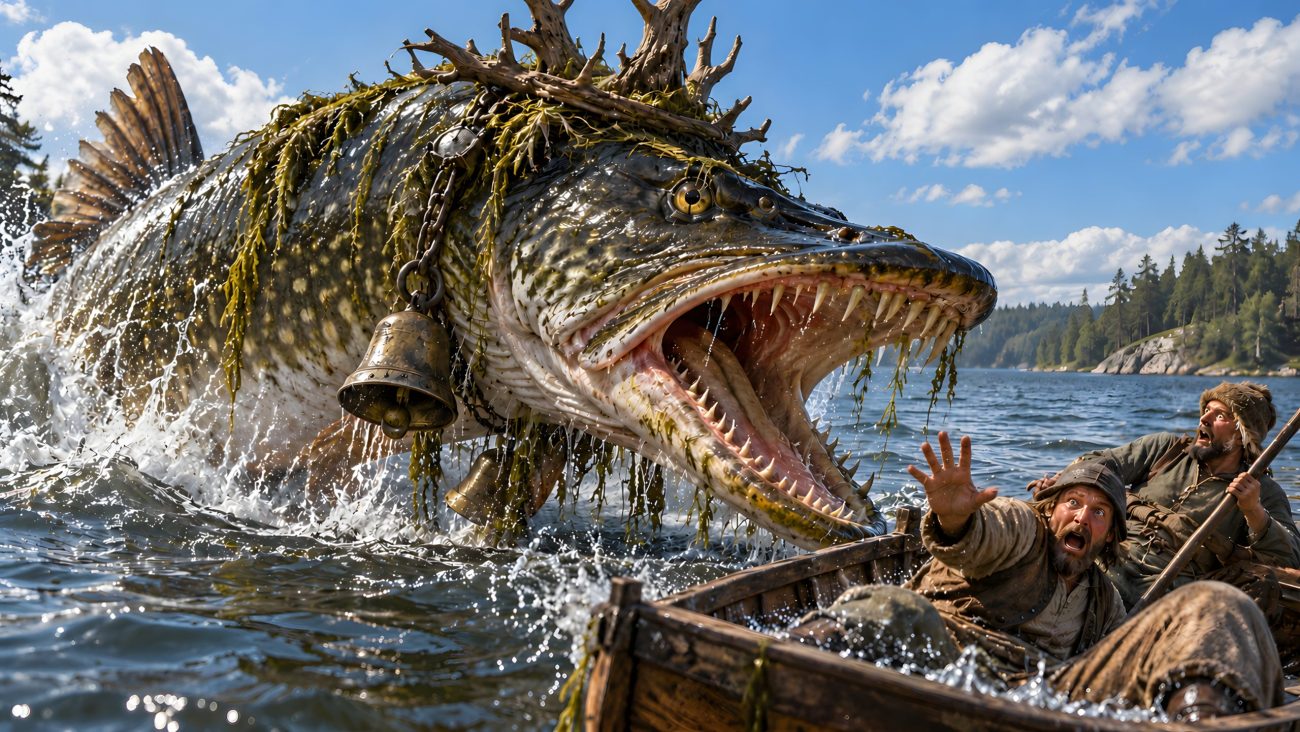
In the lakes and waterways of Sweden there live creatures known as Trollgäddor—troll pike—vast, uncanny fish that dwell beneath dark waters and trouble those who cross their domain. They appear as enormous pike, sometimes merely troublesome, sometimes deadly.

Many Trollgäddor are bound to the Sjörå, the Mistress of the Lake. Some are said to be her servants, others her beloved pets, and a few are believed to be the Sjörå herself in fish form. She adorns certain pike with bells, hanging from them like cattle bells, and these are known as Skällgäddor, the bell pike. If a fisherman catches such a fish and returns it unharmed to the water, good fortune follows and fishing becomes abundant. But those who kill one earn the Sjörå’s anger, and soon their livestock begin to sicken and die.

Among her most treasured creatures is the Krongädda, the crown pike. It bears what appears to be a crown upon its head, though no one can say for certain what this crown truly is. Some believe it to be the talons of a great bird, torn free when the pike dragged its would-be predator beneath the surface and drowned it.

Not all Trollgäddor show signs of their nature at first. In Lake Odensjön, a man once caught a large pike and carried it home. As he walked, the fish grew heavier with every step. By the time he entered his house, it had become so massive that he was forced to drop it. The pike began thrashing, growing until it threatened to tear the house apart. Realizing his mistake, the man opened the door, and the Trollgädda flopped its way back to the lake and vanished.

Across Sweden, the stories differ. In Kvittinge, a monstrous pike is said to claim a human life every year. In Lake Mjörn, a huge, hairy, bearded pike lies bound with an iron chain. In Skåne, pike as thick as wooden beams haunt the waters. In Dalsland, a Trollgädda with eyes like saucers and scales as large as roof tiles barely fits within the coves, and its appearance foretells a day of failed fishing.

The greatest of all is said to live in Lake Bolmen. It is so long that it spans the lake’s width and so old that a willow shrub grows from its head and neck. Its back rises from the water like a rocky island. Once, a daring fisherman attempted to catch it, using a rope as a line and a dead foal as bait. When the Trollgädda bit, the man tied the rope to a barn on the shore and went to fetch help. When they returned, the barn itself had been dragged into the lake.

Thus the Trollgädda remains a warning beneath the water: that some fish are not meant to be caught, and some depths belong to powers older and stronger than men.


Sources

A Book of Creatures contributors. (n.d.). Trollgadda. In A Book of Creatures, from https://abookofcreatures.com/2021/03/29/trollgadda/