Näcken

Tradition / Region: Swedish Mythology
Alternate Names: Strömkarlen, Bäckamannen, Kvarngubbe, Kvarnrå, Forskarlen, Dammapågen
Category: Water spirit


The Myth

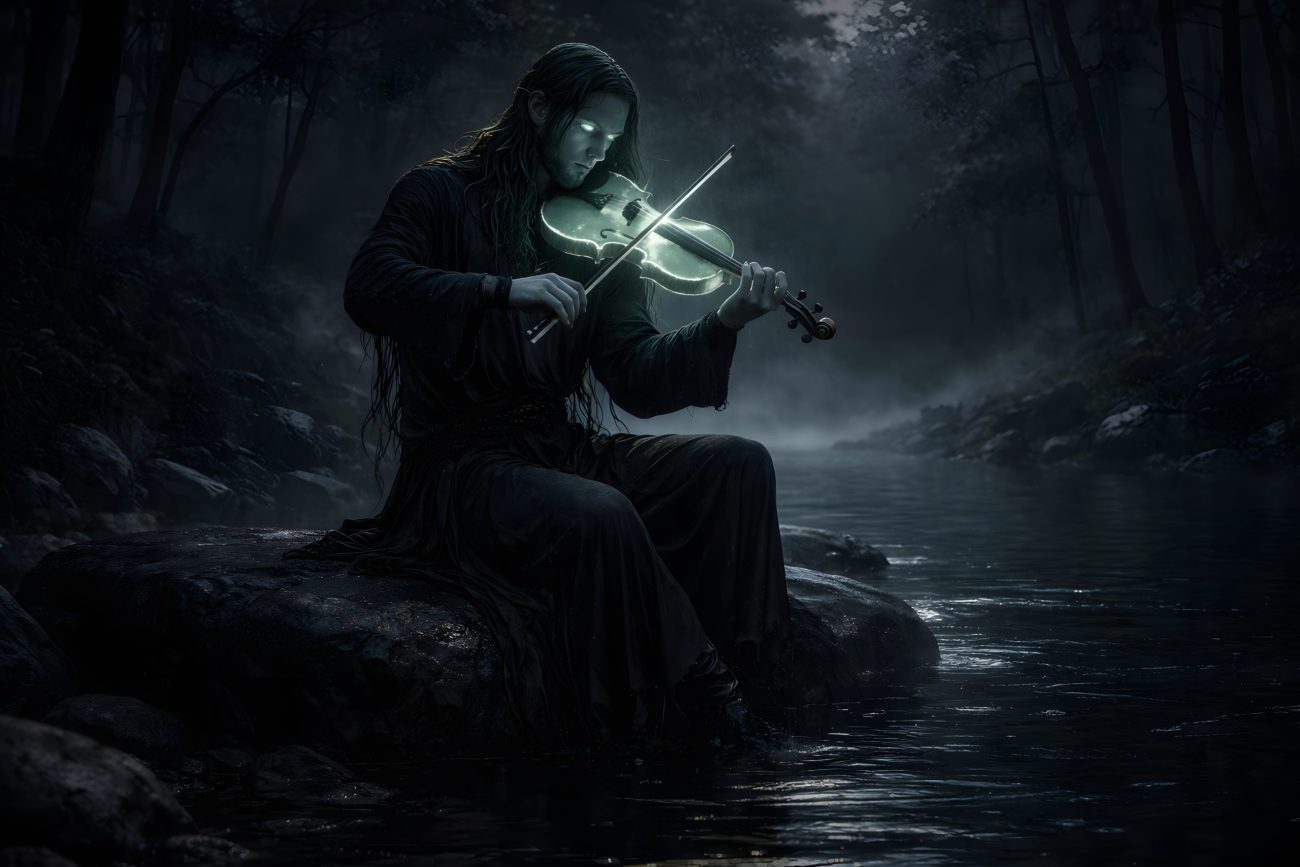
In Swedish folklore, Näcken dwelled in lakes, rivers, streams, and mill waters, haunting places where the current moved quietly or gathered strength beneath the surface. He was not a single spirit but a powerful water-being known by many names, feared and respected wherever people lived close to water.

Näcken most often appeared as a naked man, sometimes young and slender, sometimes old and bearded, seated upon a rock or at the water’s edge. His hair was said to be green or woven with foliage, as if grown from the river itself. In his hands he held an instrument, most often a violin, though he was also known to play horns, flutes, or other melodies. His music was said to be irresistibly beautiful. Those who heard it felt drawn toward the sound, their feet carrying them closer to the water without their will.

Näcken was a master of deception. Though water might seem shallow and harmless, he could seize a person’s footing, locking their legs in place and pulling them beneath the surface. Many drownings were blamed on him, and children were warned never to trust the calm of a stream or the beauty of music drifting across the water at dusk.

At times, Näcken took other forms. He could appear as animals — a black or white horse, a bull, a dog, or a cat — and these shapes often bore a subtle wrongness, such as having three legs instead of four. He could also disguise himself as floating objects or tempting treasures, lying in wait for the unwary.

Näcken was not merely a minor spirit, but a powerful force of the natural world, sometimes spoken of as nearly divine. He embodied the danger of water itself: beautiful, life-giving, and deadly. To encounter him was to be reminded that rivers and lakes were alive, watching, and never fully under human control.

Huldra

Tradition / Region: Norwegian Mythology, Swedish Mythology
Alternate Names: Skogsrå, Tallemaja, Ulda, Hulder
Category: Fox


The Myth

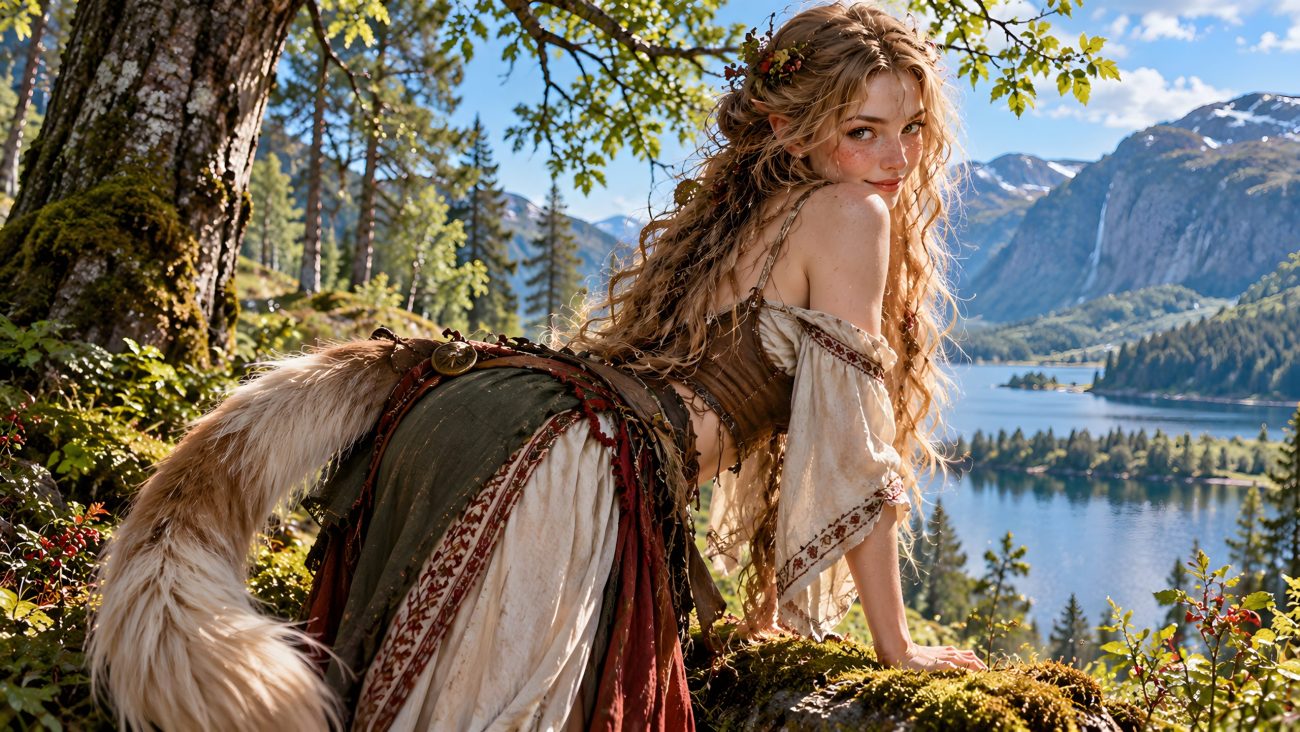
Deep within the Scandinavian forests, people spoke of the Huldra, a hidden woman who ruled the woods and the spaces between trees. She appeared as a beautiful young woman, dressed like a farmer’s daughter or forest maiden, her voice gentle and her manner inviting. Those who met her often believed they had encountered an ordinary human, for she moved easily among people and spoke their language. Yet the Huldra was never entirely what she seemed.

Those who looked too closely, or who followed her too far into the forest, might glimpse what she concealed. Beneath her skirt could be seen the tail of an animal, often that of a cow or fox, or her legs might be covered in coarse hair. Some said that if she turned her back, it was hollow like the inside of a rotting tree. For this reason she wore long clothing and kept her secrets well hidden, revealing them only to the careless or the doomed.

The Huldra was one of the rå, the wardens of the natural world, spirits who governed forests, waters, and mountains. As skogsrå, she claimed dominion over the woods and all who worked within them. Charcoal burners, who labored day and night tending their kilns, were said to be especially favored by her. While they slept from exhaustion, the Huldra would watch over the burning charcoal, waking them if danger threatened. In return, the men left food for her in a hidden place, knowing that respect earned protection.

Yet her kindness was matched by danger. Men who mocked her, tried to expose her secret, or followed her seduction without respect often lost their way in the forest, fell ill, or were never seen again. Some tales tell of men who were lured into marriage with a Huldra, only to discover her true nature too late. Others say that if she were treated well, baptized, or brought fully into the human world, her tail would fall away and she could live as a woman, though the forest would mourn her loss.

Thus the Huldra remained a presence both alluring and feared — a reminder that the forest was alive, watchful, and governed by powers older than humanity, rewarding respect and punishing arrogance in equal measure.


Sources

“Huldra.” Wikipedia, de vrije encyclopedie (Dutch Wikipedia). Wikimedia Foundation. Accessed October 12, 2026. https://nl.wikipedia.org/wiki/Huldra